
Reviewed · COOKING CLASSES
Lisbon: Pastel de Nata Baking Class
Lisbon’s famous custard tart is easy to eat and surprisingly tricky to make. This two-hour class takes you past the bakery counter and into the hands-on work: shaping flaky pastry, filling it with custard, and eating the warm results straight from the oven. Marta, Beatrice, Miyuki, and Miguel are among the instructors praised for clear, friendly teaching.
I like the mix of practical baking and Portuguese food culture, plus the local drinks served along the way. The class is social, too, with pair work and a group size that can be about 12 people. The main catch is that some ingredients are pre-measured and some preparation is done ahead, so this is a guided workshop rather than a fully independent pastry course.
Key points at a glance
- Make the pastry by hand: Feel and shape the dough before it becomes the tart’s crisp shell.
- Learn the custard and folding method: The instructor explains the parts that make pastel de nata different from an ordinary custard tart.
- Taste Portuguese drinks: Homemade juice, coffee, water, Porto wine, and a ginginha tasting are included.
- Work in pairs: You may share a station with another person, which suits social visitors but matters if you want to work alone.
- Eat warm tarts at the end: The best part is tasting your own pastries fresh from the oven and taking some away.
- Plan your route: Homecooking Lisbon HUB is easy to find for many people, but it is not right in central Lisbon.
Why a pastel de nata class works so well in Lisbon
You can buy pastel de nata all over Lisbon. That is part of the fun. You will see the small golden tarts in cafés, bakeries, hotel breakfast rooms, and pastry shops. But buying one tells you very little about how the crisp shell and soft custard come together.
This class gives you the missing piece. You handle the dough, watch the custard come together, and learn why the pastry needs careful shaping. The process makes the finished tart taste different. After working with the ingredients, you notice the contrast between the flaky outside and the creamy center.
I also like that the class is not only about copying a recipe. The chef talks about Portuguese gastronomy and the place of pastel de nata in local food culture. Several instructors add stories about family traditions, the origins of the dessert, and places in Lisbon where you can try it afterward.
That makes this a good early-trip activity. Take the class near the start of your stay, then spend the rest of your visit comparing the city’s tarts with a better understanding of what you are eating.
More Cooking Classes in Lisbon
- Lisbon: Traditional Portuguese Cooking Class
★ 4.9 · 592 reviews - Lisbon: 2-Hour Pastel de Nata Cooking Class
★ 4.8 · 461 reviews - Lisbon Portuguese Cooking Class with 3-Course Dinner
★ 5.0 · 445 reviews
Entering the Homecooking Lisbon HUB kitchen
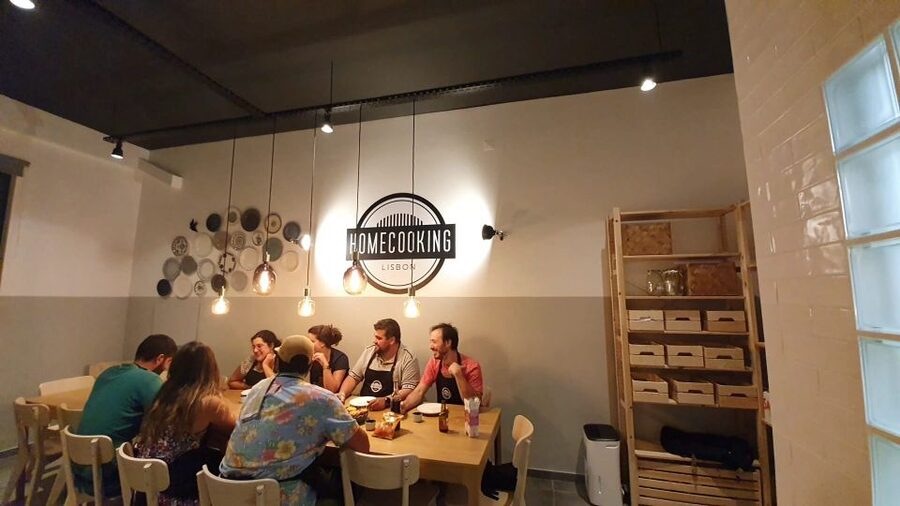
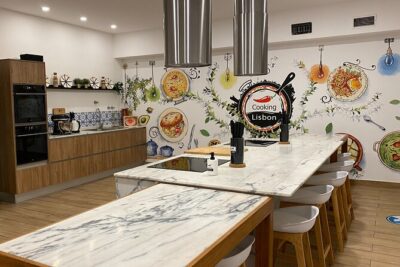
The meeting point is Homecooking Lisbon HUB, a clean, modern cooking space set up for instruction. The kitchen has been described as attractive, tidy, and well prepared, with a bus stop directly outside in some experiences.
Do not assume you can walk there quickly from the main tourist center. One class member found a taxi convenient and inexpensive because the location was farther from central Lisbon. Check the route before you leave your hotel, especially if you have a tight schedule before or after the class.
Once you arrive, the setting is more useful than fancy. You have room to work, cooking utensils are supplied, and the ingredients are ready. English is the teaching language, and the instructors are used to working with people who have very different levels of baking experience.
The welcoming tone matters. This is not a formal culinary school where you are expected to know your way around a kitchen. Instructors such as Beatrice and Miyuki have been praised for warmth and humor, while Marta is often singled out for keeping the class moving and making sure people stay involved.
The first steps: pastry, custard, and Portuguese context
The class begins with an explanation of the tart and the work ahead. You learn about the main components, then move into the pastry process.
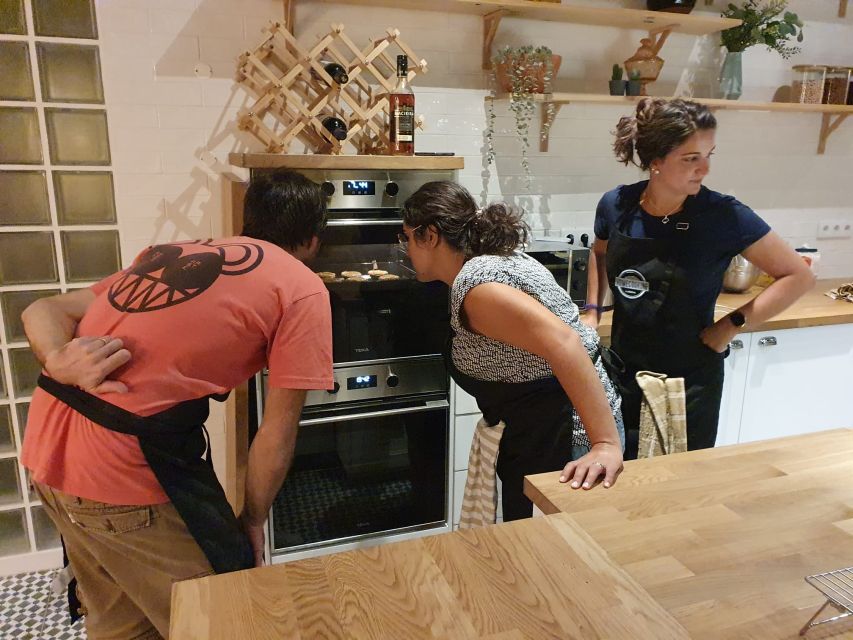
The dough is one of the most useful parts of the class because it gives you something to do with your hands. You feel its texture, shape it, and learn how the pastry is prepared for the small tins. This is where a demonstration alone would fall short. Seeing a chef fold dough is helpful, but handling it yourself makes the technique easier to remember.
The custard is covered as well. You learn how the filling is prepared and how it is paired with the pastry shell. The instructor explains the traditional method and the role of the ingredients, rather than rushing you straight to an easy shortcut.
A point worth understanding: not every part is done from zero in front of you. Ingredients are pre-measured, and some preparation may be completed ahead of time. That keeps a two-hour class moving and gives everyone a better chance of producing good tarts. It also means you should not book this expecting to make every component entirely from raw ingredients at your own pace.
For most people, that is a fair trade. You still take part in the key steps, and the chef explains why certain work has already been done. If your aim is a serious pastry apprenticeship, this will feel light. If your aim is to learn the method and have a good afternoon, the pacing makes sense.
Shaping the tarts with help close by
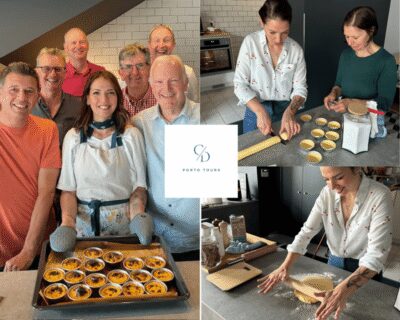
The pastry shaping is where the activity becomes most social. You may work in pairs, sharing ingredients, utensils, and the preparation area. Solo participants are paired with someone else, so this is worth knowing before you book.
Pair work can be a plus. It gives you someone to compare notes with and makes the class feel less like a private lesson. It can also be slightly limiting if you want full control over every tart. The instructors help keep the balance, stepping in when someone needs a hand and checking that everyone understands the next move.
This close guidance is one of the class’s strongest features. The teachers do not simply demonstrate from the front and leave you to guess. They move through the room, answer questions, and correct small mistakes before they become large ones.
That support is useful for beginners. Pastry can look simple on a recipe card and behave differently on a kitchen counter. Clear instructions, prepared ingredients, and hands-on help make the task manageable even if your home baking experience is limited.
Families with older children can also enjoy the work. Children under six are not suitable for the activity, but older children and teenagers have taken part successfully. One family with children aged 7, 9, and 12 found the process easy enough for everyone to follow. Another family with teenagers used the class as a shared afternoon activity.
More Food Tours in Lisbon
- Lisbon Small-Group Food Tour with 18 Tastings in Alfama District
★ 5.0 · 1,967 reviews - Lisbon: Baixa District Food Tour with Dinner and Drinks
★ 4.9 · 1,870 reviews - Devour Lisbon: The Ultimate Portuguese Food Tour
★ 5.0 · 1,782 reviews - Lisbon Food Tour with 10+ Tastings of Local Delicacies & Wines
★ 5.0 · 1,339 reviews
The oven wait comes with Portuguese drinks
While the tarts bake, the class shifts into a tasting and social break. Included drinks can include homemade juice, coffee, water, Porto wine, and ginginha, the sweet Portuguese cherry liqueur often written as ginjinha.
The drink selection gives the class a local touch without turning it into a separate wine tasting. Coffee works naturally with the finished tart. Porto and ginginha add a distinctly Portuguese note, though the exact drink service can vary. One person found there was no wine during the class, so do not book this primarily for the alcohol.
The pause also gives you time to talk with the people around you. The group may include couples, solo visitors, friends, and families from several countries. If you arrive alone, expect to share a station rather than sit apart. That can be a pleasant way to meet people, but those wanting a quiet, private activity may prefer a different format.
The two-hour length is well judged for a holiday schedule. It is long enough to teach the main steps and let you eat what you make, but short enough to fit between sightseeing plans. The final minutes can feel a little hurried if the class runs late, so allow yourself time afterward rather than arranging an immediate appointment across town.
Fresh pastel de nata straight from the oven
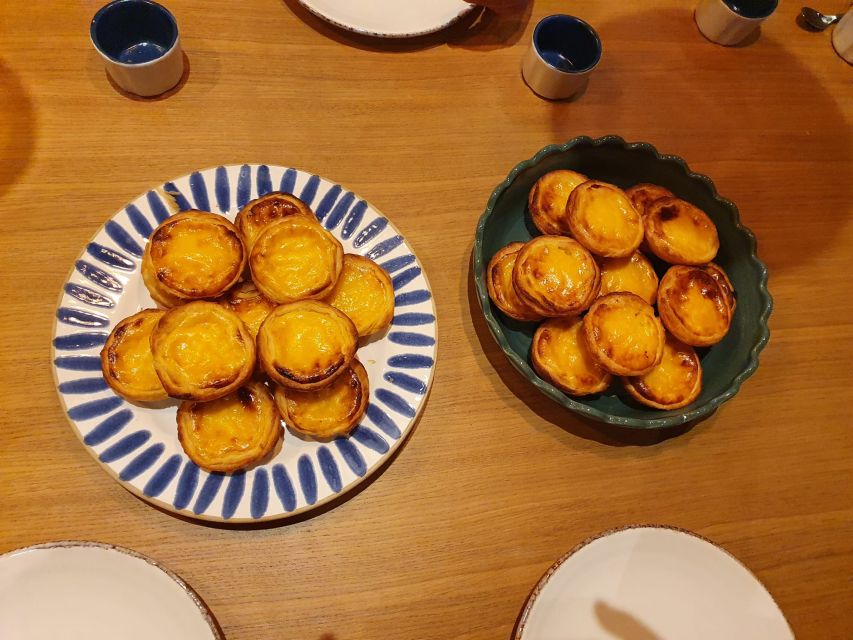
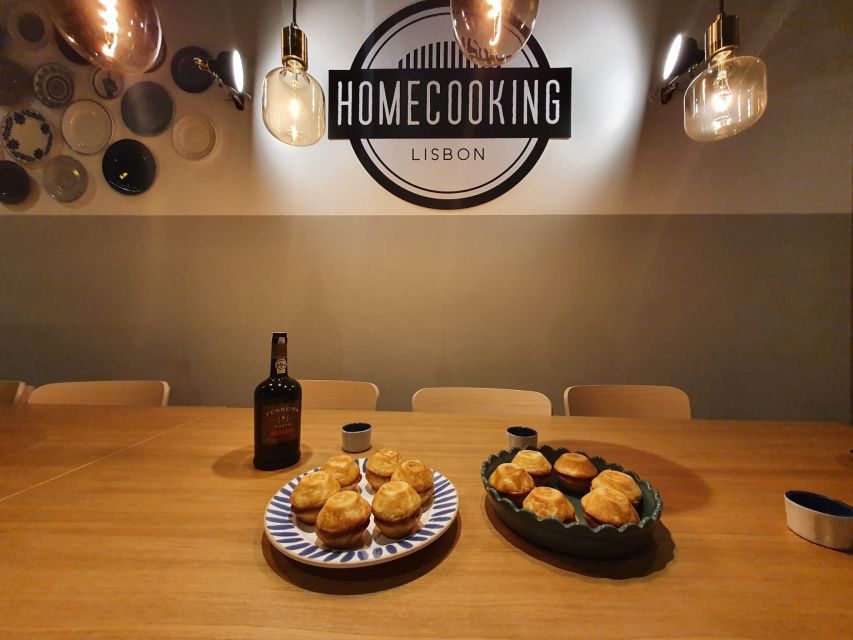
The payoff is simple: you eat the tarts you helped make. Warm pastry has a different appeal from a tart that has been sitting in a bakery case. The crust is crisp, the custard is soft, and the result gives you a clear sense of what each step was trying to achieve.
You generally have enough to taste and take some away. One family had extra tarts for the rest of their trip, while another participant took pastries back to the hotel and found they did not last long. Bring a container only if the provider specifically confirms that it is useful, since the supplied information does not promise special takeaway packaging.
This is also the moment when small imperfections become part of the fun. Your tarts may not look identical to the chef’s. That does not matter much if the pastry is crisp and the custard tastes right. The class is about learning the method, not producing a bakery display case full of identical pastries.
I would pay attention to the tasting instead of rushing through it. Try the tart first, then with coffee or one of the other included drinks. You will have a better reference point for the pastel de nata you order later in Lisbon.
What the $64 price really covers
At $64 per person, this is not the cheapest way to eat a pastel de nata. You could buy several pastries and coffees for far less.
The price makes more sense when you count what is included: ingredients, utensils, an English-speaking instructor or chef, the kitchen space, several drinks, insurance, and a two-hour activity. You are paying for instruction and a social experience, not just food.
The strongest value comes if you will actually use what you learn. The class explains the recipe clearly enough that many participants feel ready to try it at home. You may also receive recipes for the tarts and other Portuguese dishes, depending on the session.
The value is weaker if you want a fully independent, professional-level course. Pre-measured ingredients and advance preparation save time, but they also reduce the amount of technical work you perform. For a holiday activity, I see that as a sensible compromise. For serious bakers, it is a reason to check expectations before booking.
Who will enjoy this class most
I would recommend it to:
- First-time visitors who want more than a standard food tasting
- Couples looking for a shared activity
- Solo visitors comfortable working with a new partner
- Families with children aged six or older
- Anyone who enjoys food, local drinks, and practical demonstrations
- Home bakers who want a reliable introduction to the pastry
It is less suitable for very young children, people with mobility impairments, or anyone seeking a private lesson. The class requires hands-on kitchen work and shared participation.
It also suits people who like a little structure. The chef guides you through each stage, so you are not left to experiment freely. That makes the results more dependable, but it leaves less room for creative changes to the recipe.
Practical details before you book
The activity lasts two hours, and starting times vary, so check availability for your date. English is the stated language, and the instructors have been praised for speaking clearly and explaining the process step by step.
The meeting point is Homecooking Lisbon HUB. Hotel pickup and drop-off are not included. Plan your transport in advance because the kitchen may be outside the most central sightseeing area, although a bus stop has been reported directly outside the facility.
The class does not suit children under six or people with mobility impairments. If you have dietary restrictions, ask before booking because the supplied information does not specify substitutions or allergy arrangements.
Cancellation is flexible up to 24 hours before the class for a full refund. You can also reserve and pay later, which helps if your Lisbon schedule is still shifting.
Should you book the pastel de nata class?
Yes, if you want an easygoing, hands-on way to connect with Portuguese food. The best parts are the patient instruction, the chance to shape the pastry yourself, the local drinks, and the warm tasting at the end.
Book it early in your Lisbon stay if possible. You will understand the pastry better when you see it in cafés afterward, and you may want to return to a bakery with a more educated appetite.
Skip it if you only want to eat pastries, need a private cooking lesson, or dislike shared kitchen work. At $64, the class earns its price through teaching and atmosphere rather than food alone. For most couples, families with older children, and solo visitors who enjoy meeting people, it is a practical and tasty choice.
FAQ
How long is the pastel de nata baking class?
The class lasts two hours.
Where does the class meet?
The meeting point is Homecooking Lisbon HUB in the Lisbon District, Portugal.
What language is the class taught in?
The instructor teaches in English.
What is included in the price?
The price includes all ingredients, cooking utensils, an instructor or chef, drinks, and insurance.
Which drinks are included?
The listed drinks are homemade juice, coffee, water, Porto wine, and a ginginha tasting.
Is hotel pickup included?
No. Hotel pickup and drop-off are not included.
Can children take the class?
Children under six are not suitable for the activity. Older children have taken part in the class, including children aged 7, 9, and 12.
Do I need baking experience?
No specific baking experience is required. The instructor explains the process step by step and provides hands-on help.
Will I work alone or with other people?
You may work in pairs. Solo participants may be paired with another person, and one reported class had about 12 people.
Can I cancel for a full refund?
Yes. You can cancel up to 24 hours in advance for a full refund.
More Workshops in Lisbon
- Pastel de Nata Pastry Class: Bake and Enjoy Your Own Treats
★ 5.0 · 485 reviews - Lisbon: Azulejos’ Design Create Your Own Tile Workshop
★ 4.9 · 420 reviews - Lisbon: Surfing Lesson on Costa de Caparica Beach
★ 5.0 · 322 reviews - Traditional Portuguese Cooking Class in Lisbon
★ 5.0 · 287 reviews
New around Lisbon
- Arrábida, Setúbal, Sesimbra, Olive with wine tasting★ 5.0 · 75 reviews
- Lisbon: Sunset Sailing Boat Cruise with Wine★ 5.0 · 75 reviews
- Lisbon Half Day Private Tour★ 5.0 · 75 reviews
- Private Half Day Tour to Fatima from Lisbon★ 5.0 · 75 reviews
- Fátima, Nazaré and Óbidos Private Tour from Lisbon★ 5.0 · 76 reviews
- Central Lisbon 3-Hour Guided E-Bike Tour★ 4.8 · 76 reviews
- Lisbon Historic City Tour by Tuk-Tuk★ 5.0 · 76 reviews
- Sintra World Heritage and Cascais Village Private Deluxe Tour★ 5.0 · 76 reviews
Cooking Classes, compared.
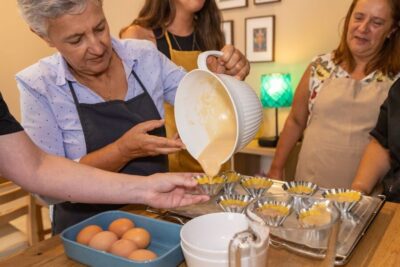
Pastel de Nata Cooking Class with Grandma’s Recipe
Read our review →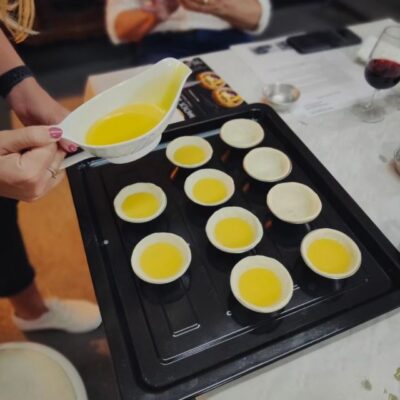
Pastel de Nata Cooking Class with Port Wine – Sé
Read our review →
Lisbon Portuguese Cooking Class with 3-Course Dinner
Read our review →
Pastel de Nata Cooking Class with Porto Wine (Sé do Porto)
Read our review →
Traditional Portuguese Cooking Class in Lisbon
Read our review →Browse the lists this tour appears in