
Reviewed · WORKSHOPS
Lisbon: Azulejos’ Design Create Your Own Tile Workshop
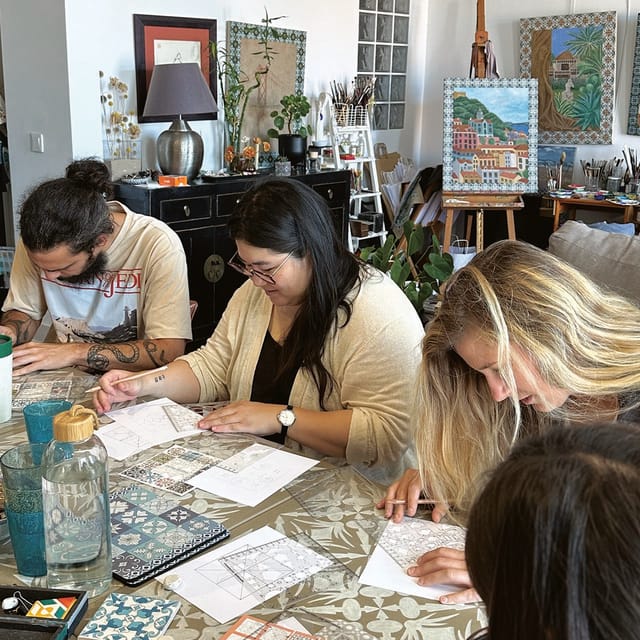
Lisbon’s famous azulejos usually decorate churches, palaces, railway stations, and ordinary apartment buildings. In this 2.5-hour workshop, you get to make a small piece of that tradition your own, using the clever Formettes method rather than struggling to draw a perfect pattern from scratch. I like the calm setting in painter Agathe’s home studio and the fact that your finished tile is ready to take with you the same day. The main consideration is that this is a design and transfer workshop, not a full traditional pottery class, so you will not be shaping or firing clay yourself.
I also like how friendly the format is for beginners. You can arrive with very little confidence, use the supplied tools, and still produce a polished-looking keepsake. The only firm age limit is 10 and above, and the small-group format means Agathe can offer personal help without taking over your design.
Key points at a glance
- Use Formettes, not freehand drawing: The method gives you a practical framework for creating a balanced azulejo pattern without formal art training.
- Work through three clear stages: Sketch in pencil, trace with a fine black marker, then erase the pencil before adding watercolor.
- Create in an artist’s home: The workshop takes place in Agathe’s welcoming space, which gives the session a cozy, personal feel.
- Take the tile home immediately: Your design is digitally prepared and heat-pressed onto a 10cm by 10cm ceramic tile after the drawing session.
- Choose your own level of creativity: You can make a traditional-looking pattern or something entirely personal, with guidance available throughout.
- Pay $64 for a finished souvenir: The fee includes instruction, materials, refreshments, and one tile. Extra personalized objects and additional tiles cost more.
Why Lisbon’s azulejos make such a good souvenir
Azulejos are one of Lisbon’s most recognizable visual features. You see them in blue and white panels, repeating geometric designs, floral motifs, and colorful scenes across the city. This workshop gives you a more useful connection to that style than simply buying a mass-produced magnet or a generic tile from a souvenir shop.
You are not just copying a finished panel. You create a design from the beginning, make choices about line and color, and then see it transferred to ceramic. That makes the final tile personal, even if your drawing skills are modest.
I especially like the small size. At 10cm by 10cm, the tile is easy to carry in luggage and does not demand much space at home. It works as a wall decoration, a small display piece, or a thoughtful gift. You should still pack it carefully, since it is ceramic and not indestructible.
The activity also suits different kinds of artistic personalities. You can follow examples and keep your design simple, or spend more time adjusting shapes and colors. The process does not require you to know how to draw, and the supplied tools help keep the design manageable.
A few other Lisbon half-days worth a look
- Lisbon: Pastel de Nata Baking Class
★ 4.9 · 2,106 reviews - Lisbon: Traditional Portuguese Cooking Class
★ 4.9 · 592 reviews - Pastel de Nata Pastry Class: Bake and Enjoy Your Own Treats
★ 5.0 · 485 reviews
Arriving at Agathe’s welcoming studio
The meeting point is Bell No. 2 in the Lisbon District. The workshop takes place in Agathe’s home studio rather than a large commercial classroom. That setting matters: you are working in an artist’s personal space, surrounded by the atmosphere of someone who actually paints and designs.
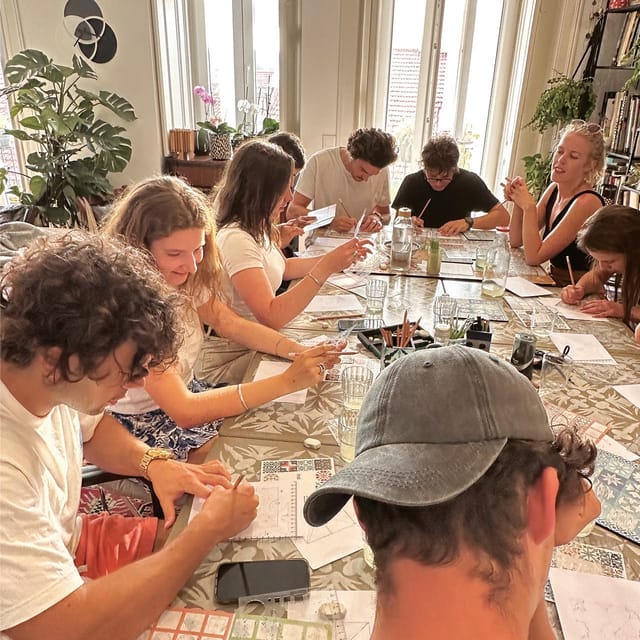
The room is described as comfortable and warm, with a relaxed mood that works well for a creative activity. Groups have been as small as three or four people, with other sessions reaching six. Private and small-group options are available, so the exact feel depends on the booking you choose.
Agathe teaches in French, English, and Portuguese. That language choice is helpful when you are learning a process with several stages, especially if you need advice about how to simplify or improve a design.
The class also includes tea or coffee and cookies. This is not a meal, but it is a pleasant touch during a session that asks you to slow down and concentrate. If you are looking for a lively sightseeing activity with constant movement, this will feel quiet. If you need a break from Lisbon’s hills and busy streets, that quiet is part of the appeal.
The short introduction to azulejo design
The session begins with a presentation about azulejos and the method you will use. This gives the activity a bit of cultural context before you start making marks on paper.
Do not expect a long lecture on Portuguese art. The useful point is learning how the repeating forms and decorative patterns associated with azulejos can be approached by a beginner. You get enough background to understand what you are making, then move fairly quickly into the practical work.
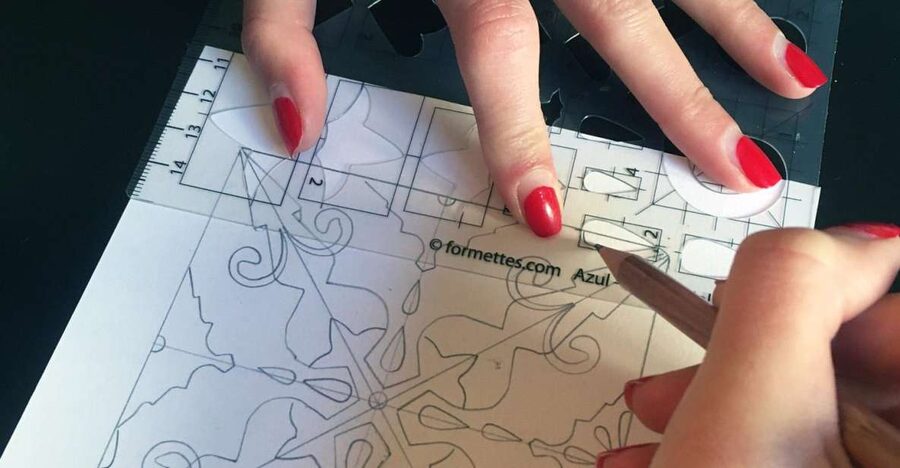
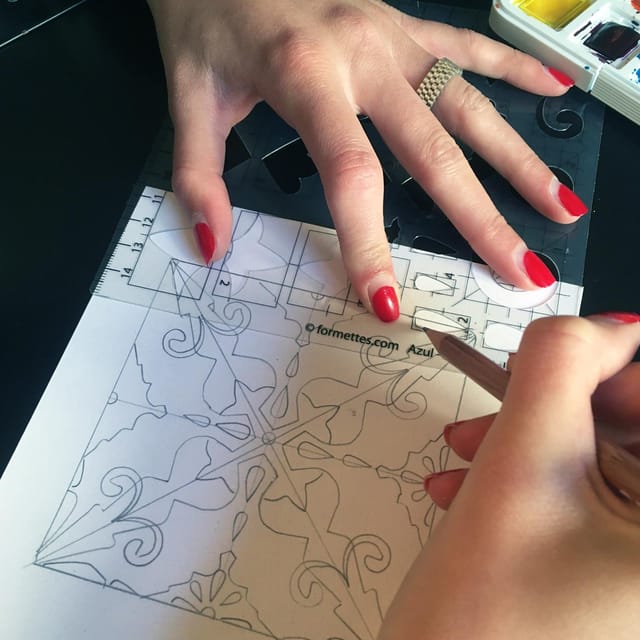
Agathe also introduces the Formettes tool. This is the key idea behind the workshop. Instead of asking you to invent a technically perfect pattern with no help, Formettes gives you a way to build and organize your design.
That makes the class less intimidating. You can focus on shapes, balance, and color rather than worrying about drawing ability. I find this especially useful for people who like creative activities but usually avoid them because they believe they are not artistic.
Building your pattern in three simple stages
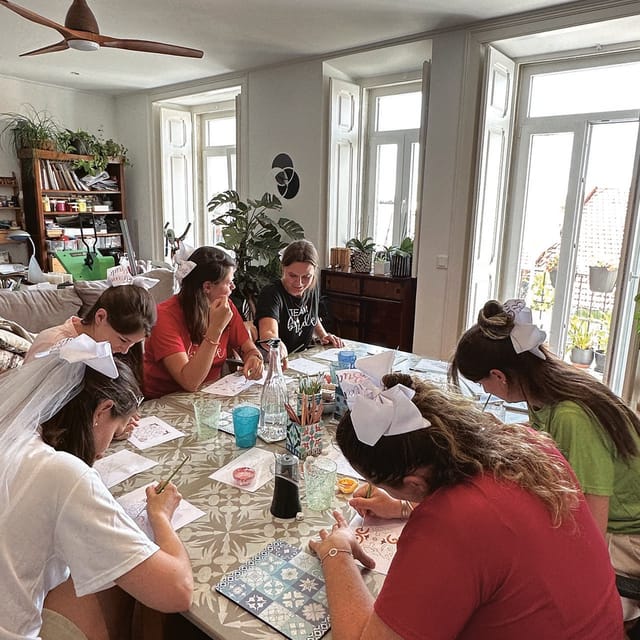
The first stage is pencil drawing. You use the available materials and Formettes method to create your design in light lines. Pencil is forgiving, so you can alter the pattern, test an idea, or start again without ruining the final image.
This is the point where you have the most freedom. You can create something close to traditional decorative tile work, or make a pattern based on your own taste. Advice is available, but the design remains yours.
The second stage is tracing with a fine black marker. Once the main lines are in place, you cover the pencil marks with the marker. Then you erase the remaining pencil.
That order is important. It leaves you with a clean line drawing that can be colored without the grey pencil marks muddying the design. The process feels more structured than a freehand painting class, which is good news if you prefer clear instructions.
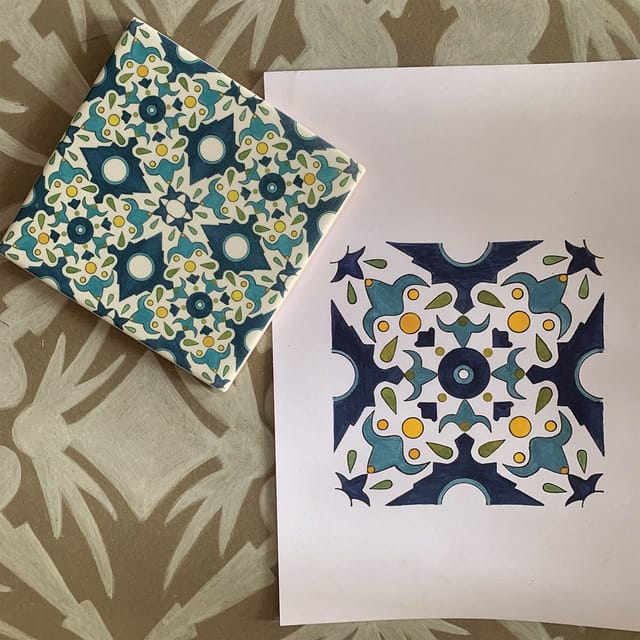
The third stage is coloring with watercolor. This adds the softness and variation that pencil and marker alone cannot provide. You choose the colors, and you can keep the palette restrained or make it brighter and more playful.
Watercolor also means the result may have small variations in tone. That is part of the charm. You are not producing a factory-perfect print on paper. You are making the artwork that will become your own ceramic tile.
The class is not rushed, according to the information provided. You have room to work at your own pace, while Agathe helps if a line, shape, or color choice needs attention. People with limited creative experience can still take part, and more confident artists have freedom to push the design further.
Same coastline, a completely different day out:
- Lisbon City Center Tour – The Unmissable Lisbon
★ 5.0 · 22,234 reviews - Lisbon: Sintra, Pena, Regaleira, Cabo da Roca & Cascais
★ 4.7 · 19,656 reviews - Lisbon: Jerónimos Monastery Entrance Ticket
★ 4.1 · 14,164 reviews - Lisbon: History, Stories and Lifestyle Walking Tour
★ 4.8 · 10,902 reviews
What happens after you finish the drawing
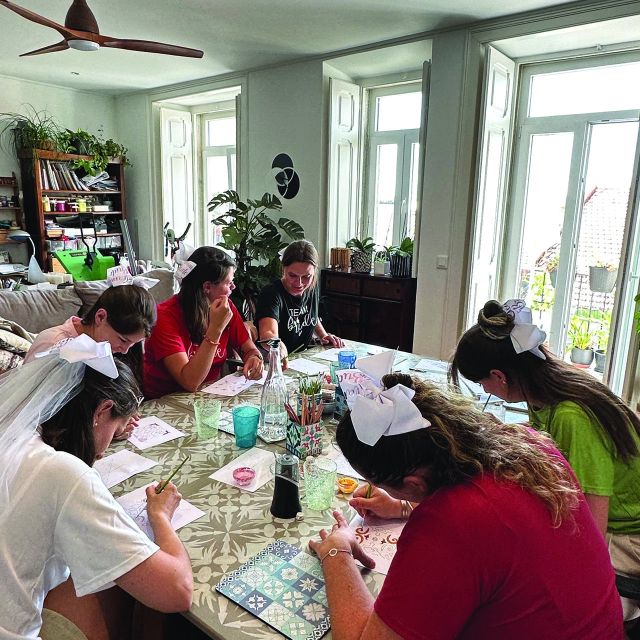
The tile you take home is not simply your watercolor sheet glued to ceramic. After the workshop, each drawing is worked on in Photoshop. The design can be slightly corrected if needed, then multiplied so it can be transferred properly.
This digital stage explains why the finished tile can look so neat even when your original drawing is made by hand. Small adjustments help prepare the design, while the repeated image creates the pattern needed for the ceramic surface.
A thermal press transfers the prepared design onto a 10cm by 10cm ceramic tile. The important practical benefit is speed. You do not have to wait days for a kiln firing or return to the studio later in your trip.
The same-day result is one of the strongest reasons to choose this workshop. You can place the tile safely in your luggage that evening, give it as a gift, or keep it with you as a physical reminder of Lisbon. It also makes the activity easier to fit into a short visit.
The process is different from making a tile entirely by hand from wet clay. If you want to learn glazing, kiln work, or traditional ceramic production, this will not meet that goal. If your priority is designing something personal and taking home a finished object quickly, the transfer method is a sensible choice.
Why the personal guidance matters
Agathe’s teaching style is central to the experience. She explains the steps clearly, gives practical suggestions, and lets you decide how far to take your design. That balance is important in a small creative class.
Too much instruction can make everyone’s tile look the same. Too little can leave beginners staring at a blank page. Here, you get a starting point and help when you need it, while keeping control of the final pattern.
The instructor’s patience is particularly useful during the design stage. A small adjustment to spacing or shape can make a tile look more balanced. You might not notice the problem yourself, but a quick suggestion can save you from being disappointed with the finished result.
The multilingual instruction also makes the class approachable for international visitors. French, English, and Portuguese are available, so you can ask questions and understand the technical steps without relying only on gestures.
Solo visitors should feel comfortable booking. The workshop format allows you to work independently while still sharing the room with others. It can be a good way to meet people without the pressure of a large group activity.
The value of a $64 Lisbon activity
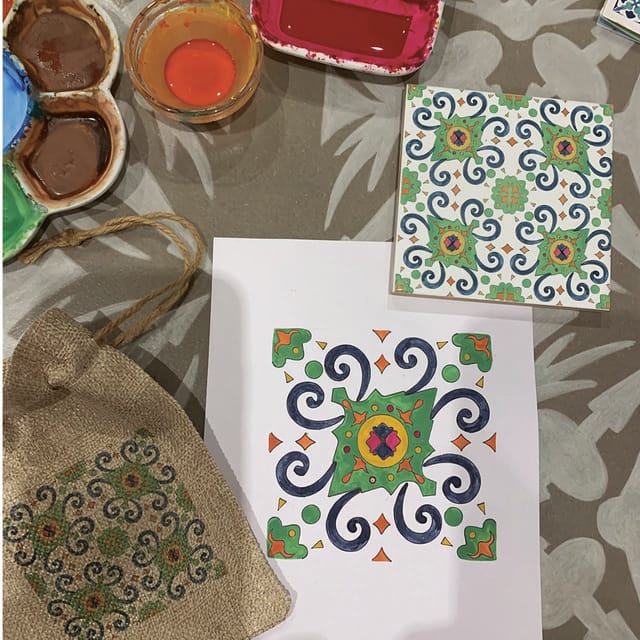
At $64 per person, this is not the cheapest way to spend a couple of hours in Lisbon. You could buy a ready-made decorative tile for much less. The price makes more sense when you count the instructor, all drawing and painting materials, tea or coffee, cookies, the digital preparation, the thermal pressing, and the finished ceramic tile.
You are paying for guided time and a personal object, not just raw materials. The instruction also reduces the risk of producing something you do not like. For many people, that is worth more than purchasing a tile from a shop with no connection to their own trip.
The value improves if you want a meaningful souvenir or a creative activity rather than another guided walk. The finished piece is small, personal, and easy to transport. It also avoids the delay found in many pottery workshops.
Additional personalized objects and extra tiles are not included. One participant paid an extra €10 for a second tile, but you should confirm the current price for extras before booking. If you are traveling with a partner or family member, the included tile is one per person.
The high 4.9 rating from 420 reviews supports the idea that the workshop delivers what it promises, especially for beginners. Still, value is personal. I would choose it if you care about the process and the story behind the souvenir, not if you only want the lowest-cost tile in Lisbon.
Who should book this workshop
I would recommend this activity to adults and children aged 10 or older who enjoy making things with their hands. It works well for couples, friends, families, solo visitors, and small groups marking a special occasion.
It is also a good choice for people who do not think of themselves as artistic. The Formettes method and staged instructions give you a way into the activity without demanding prior drawing experience. You can receive help, but you are not forced into a single template.
Families should note the minimum age. Children under 10 are not suitable for the activity, while older children have taken part successfully with adults. The class can also work for mixed-age groups, since one group included participants aged 12, 45, and 70.
I would be cautious about booking if you dislike sitting still, making detailed marks, or spending time on a design. The workshop is relaxed rather than fast-paced. It is also not the right pick for anyone hoping to throw clay, glaze pottery, or use a kiln.
Bad weather need not ruin the plan. A scheduling change was accepted for one participant, but you should use the stated cancellation and booking terms rather than assume every change will be possible.
Practical details before you book
The activity lasts 2.5 hours, and you should check the available start times when choosing a date. Since the work has several stages, allow yourself enough time to finish without hurrying to another appointment.
The meeting point is Bell No. 2. Check your booking information carefully for the exact meeting instructions, since the workshop is held in a private artist’s space rather than a standard museum or tour office.
The experience can be booked as a private or small-group session. A small group is a good compromise: you get a social atmosphere and still have a chance to receive individual advice. A private booking may suit families, couples, or friends who want the session to feel more personal.
Free cancellation is available up to 24 hours in advance for a full refund. You can also reserve now and pay later, which helps if your Lisbon schedule may change.
Wear something comfortable for drawing and painting. The supplied materials are included, and the studio provides a drink and cookies, so you do not need to bring art supplies or refreshments.
Should you book the azulejo workshop?
Book it if you want a calm, personal Lisbon souvenir and like the idea of creating rather than simply shopping. The best parts are the beginner-friendly Formettes method, Agathe’s patient guidance, the cozy home-studio setting, and the rare chance to take your finished tile away on the same day.
Skip it if you want a traditional hands-on ceramics course with clay, glaze, and kiln firing. That is not what this experience offers. This is a guided design, watercolor, digital preparation, and ceramic transfer workshop.
For most visitors, $64 is fair because the fee covers far more than a sheet of paper and a blank tile. You leave with something connected to Lisbon, made from your own design, and small enough to carry home without trouble. For a creative break from sightseeing, I would put this high on your list.
FAQ
How long does the azulejo workshop last?
The workshop lasts 2.5 hours.
How much does the activity cost?
The listed price is $64 per person.
What is included in the price?
The price includes the instructor, drawing and painting materials, tea or coffee, cookies, and one 10cm by 10cm ceramic tile.
Can I take my tile home the same day?
Yes. Your design is transferred to the ceramic tile with a thermal press, allowing you to leave with the finished tile immediately after the workshop.
Do I need drawing experience?
No. The Formettes method does not require drawing prerequisites, and the instructor guides you through the process.
What languages does the instructor speak?
Instruction is available in French, English, and Portuguese.
Are children allowed to participate?
Children under 10 are not suitable for the activity. Children aged 10 and above may participate.
Can I cancel my booking?
You can cancel up to 24 hours in advance for a full refund. The activity also offers a reserve-now-and-pay-later option.
New around Lisbon
- Arrábida, Setúbal, Sesimbra, Olive with wine tasting★ 5.0 · 75 reviews
- Lisbon: Sunset Sailing Boat Cruise with Wine★ 5.0 · 75 reviews
- Lisbon Half Day Private Tour★ 5.0 · 75 reviews
- Private Half Day Tour to Fatima from Lisbon★ 5.0 · 75 reviews
- Fátima, Nazaré and Óbidos Private Tour from Lisbon★ 5.0 · 76 reviews
- Central Lisbon 3-Hour Guided E-Bike Tour★ 4.8 · 76 reviews
- Lisbon Historic City Tour by Tuk-Tuk★ 5.0 · 76 reviews
- Sintra World Heritage and Cascais Village Private Deluxe Tour★ 5.0 · 76 reviews
Workshops, compared.
Pastel de Nata Cooking Class with Grandma’s Recipe
Read our review →
Pastel de Nata Cooking Class with Port Wine – Sé
Read our review →



Browse the lists this tour appears in