
Reviewed · COOKING CLASSES
Porto: Pastel de Nata Cooking Class with Grandma’s Recipe
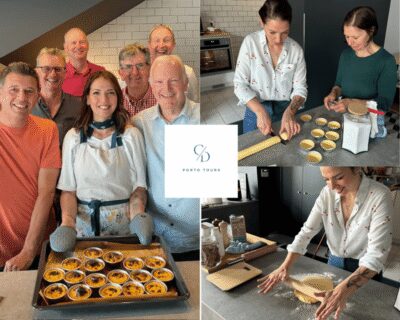
The best part of this Porto cooking class is that you make the pastel de nata pastry dough from scratch, not just pour custard into ready-made shells. Joana, often called Jo, teaches her grandmother’s recipe in her own home, then serves the warm tarts around a shared table.
I like the small group of up to 10, which gives everyone a real turn in the kitchen. I also like the relaxed finish with coffee, tea, orange juice, and fresh pastries. The main drawback is location: the home is about 10 minutes by car from central Porto and may require an extra ride or a longer public-transport trip.
Why this two-hour pastry class is worth your time
- A family recipe: Learn Joana’s grandmother’s method for both the pastry and creamy custard.
- A real home kitchen: You cook in a bright, comfortable apartment rather than a commercial studio.
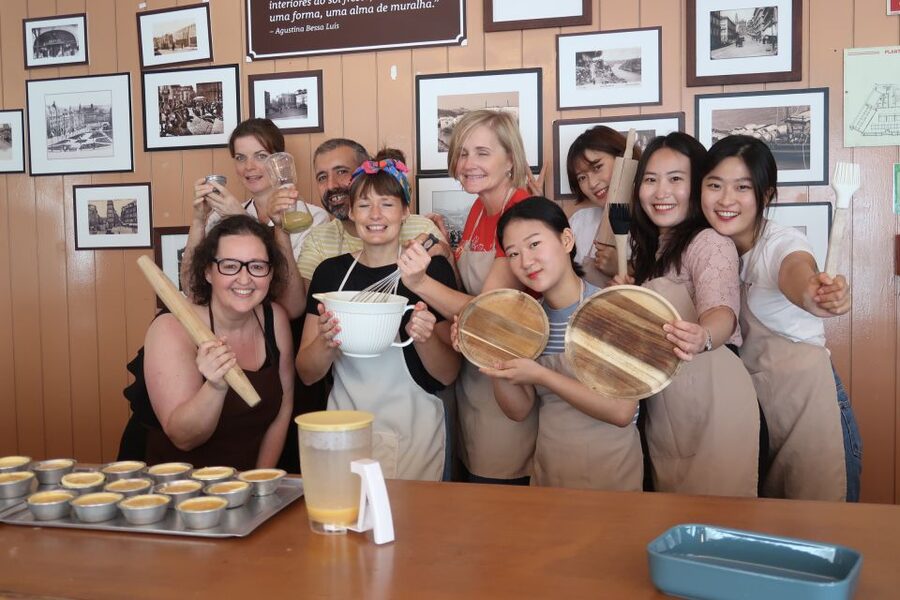
- Everyone takes part: The group works in teams or rotates through tasks so nobody simply watches.
- Warm pastries at the end: Eat your freshly baked pastel de nata with coffee, tea, juice, and sometimes Port wine.
- Easy for beginners: Joana explains each stage patiently and clearly in English.
- Good value: At $33 per person, the class includes ingredients, equipment, instruction, drinks, and pastries.
Walking into Joana’s Porto-area home
This experience begins with a short trip outside central Porto. Joana’s home is about 10 minutes away by car, so Bolt or Uber is the simplest choice. One practical point matters here: the activity is near Porto rather than in the historic center, and one taxi-style ride was reported at about $12, though your fare will depend on traffic, demand, and where you start.
If you are traveling with more than two people, a ride-hailing car can be both the fastest and most economical option. If you drive, free street parking is available near the house.
Public transport works, but it takes more planning. From Bolhão, bus 800 or 801 runs directly to a stop across from the house in about 20 minutes. You can buy the ticket on the bus, but you need coins. From Trindade Station, take the Orange Metro Line to Fânzeres. The ride takes about 30 minutes, followed by a walk of roughly 700 meters, or around 10 minutes.
At the address, ring the doorbell marked 2 Andar. Joana waits inside. This is worth noting because you are not meeting at a shopfront with a large cooking-class sign. You are entering someone’s home, so arriving with the correct doorbell detail saves a bit of confusion.
The setting is part of the experience. The kitchen is described as cozy and full of natural light, and the home has a personal, carefully arranged feel. Music may be playing from a record player, the table is laid out for the final tasting, and the room feels more like a friend’s kitchen than a classroom.
More food tours around Portugal:
- Lisbon: Pastel de Nata Baking Class
★ 4.9 · 2,106 reviews - Lisbon Small-Group Food Tour with 18 Tastings in Alfama District
★ 5.0 · 1,967 reviews - Lisbon: Baixa District Food Tour with Dinner and Drinks
★ 4.9 · 1,870 reviews
Getting acquainted before the baking begins
Joana starts by welcoming the group and talking about herself, her family, and the recipe that came from her grandmother. That opening gives the pastry a useful human context. Pastel de nata is not just a sweet found in every Portuguese bakery. Here, you learn one family’s way of preparing it and hear how the recipe has been kept and passed along.
The class is taught in English. Joana’s clear explanations and patient manner make the session suitable for beginners, while experienced home bakers still have something to learn from the technique. One especially useful feature is that you work through the pastry dough as well as the custard.
That detail separates this class from some pastry workshops, where the shells are prepared before the group arrives. You get to see the process from the start, including the part that creates the flaky layers. It takes more time and attention, but it gives you a recipe you can realistically try at home.
Making the pastry dough from scratch
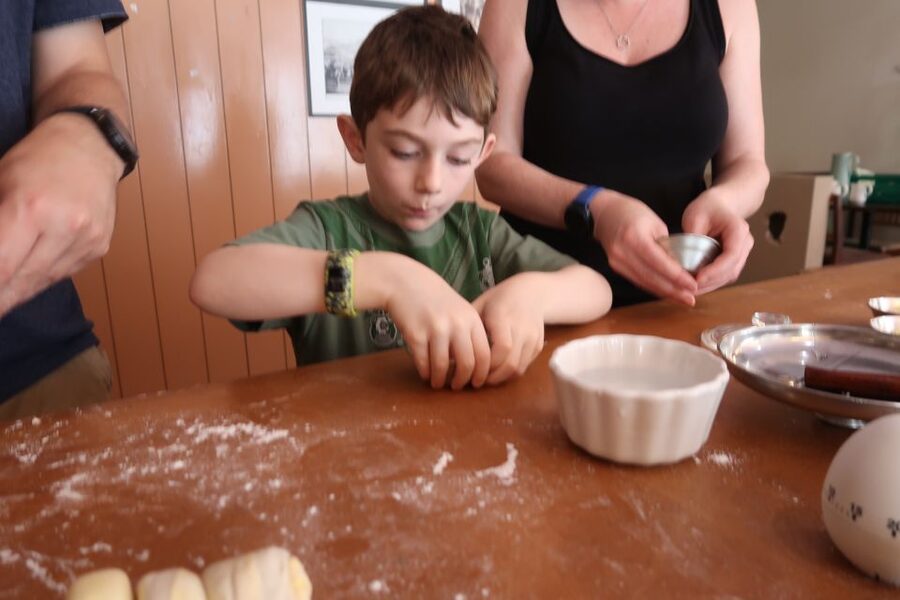
The pastry is the technical part of the class. Pastel de nata depends on a crisp, layered shell that can hold a soft custard without turning soggy. Joana demonstrates the stages and then has participants take turns handling the mixture and shaping the dough.
The group may divide into two teams or rotate through different jobs. This system keeps the class moving and lets everyone contribute. Still, a group of 10 means you will not personally handle every single step for the entire batch. One experienced baker found that completing both pastry and custard left limited time for each person to participate in every stage.
That is a fair trade-off. A private lesson would give you more control, but it would cost more and lack the easy social feel of a small group. Here, you learn by watching closely, taking your turn, and asking questions as Joana works around the kitchen.
I would pay close attention during the pastry demonstration. The final result depends less on complicated equipment than on following the method carefully. The ingredients and cooking utensils are provided, so you do not need to bring baking tools.
Preparing the creamy custard
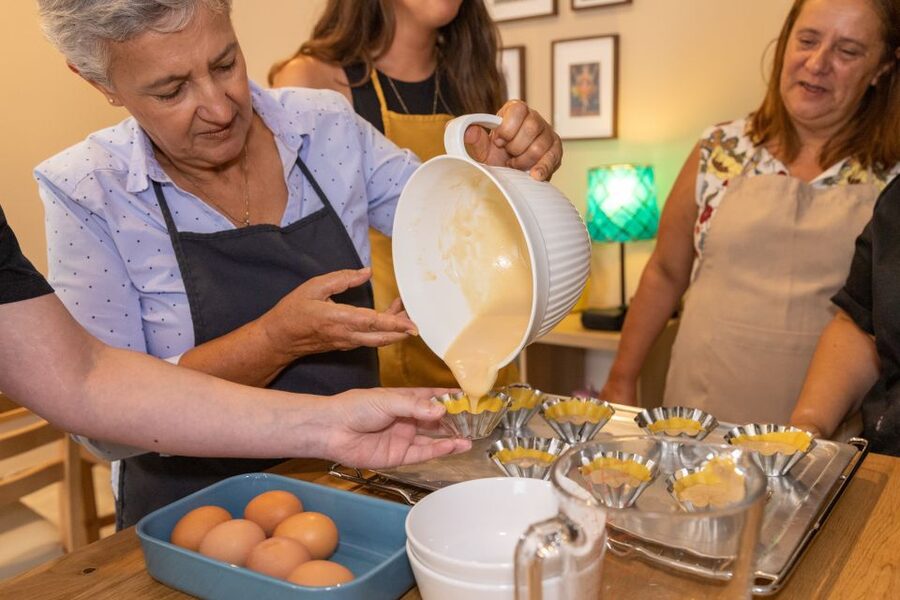
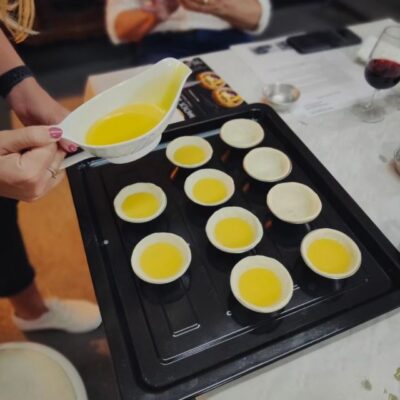
Once the pastry work is underway, the focus shifts to the custard. This filling needs to be smooth, creamy, and balanced enough to set in the oven without becoming heavy. Joana explains the process step by step and shares practical tips as the group prepares it.
The class gives you the chance to understand how the two parts work together. The pastry provides the crisp shell, while the custard brings the soft center and familiar Portuguese flavor. Since the recipe belongs to Joana’s family, the lesson feels more personal than a generic demonstration.
Joana’s teaching style is a strong part of the class. She is patient with different skill levels and checks that people understand the process. That matters when several people are cooking at once, especially if you have little baking experience or are working in a language that is not your own.
The group setting also makes the work less formal. You may arrive alone, but the rotating tasks encourage conversation. The class attracts people from different countries, and the shared jobs give everyone an easy reason to talk.
More cooking classes around Portugal:
- Porto: Pastel de Nata Cooking Class with Port Wine – Sé
★ 4.8 · 888 reviews - Lisbon: Traditional Portuguese Cooking Class
★ 4.9 · 592 reviews - Porto: Pastel de Nata Cooking Class from Scratch
★ 4.9 · 468 reviews - Lisbon: 2-Hour Pastel de Nata Cooking Class
★ 4.8 · 461 reviews
The oven delivers the main event
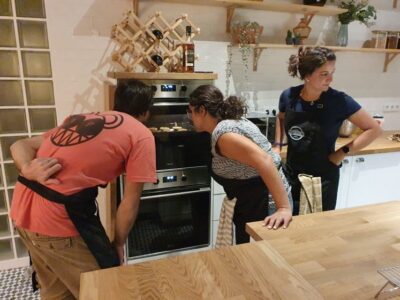
The payoff comes when the pastel de nata emerge warm from the oven. You can expect flaky pastry and a creamy custard center, served while the batch is still fresh.
This is not simply a tasting added to the end of a lesson. You have followed the recipe, shaped the pastry, prepared the filling, and watched the baking process. The flavor matters, but the sense of having made the pastries yourself is what turns this into a useful travel memory.
The warm tarts also help you understand why pastel de nata is best eaten fresh. A bakery tart can be excellent, but a pastry straight from the oven has a different texture. You get the contrast of crisp pastry and soft custard at its best.
The food is the clear highlight, but expectations should stay realistic. You are cooking in a home kitchen with a small group, not working in a professional pastry laboratory. The class is designed for participation and enjoyment, not advanced certification or intensive technical training.
Sitting down with coffee and new friends
The class ends around a laid table with your freshly baked pastries and non-alcoholic drinks. Coffee, tea, and orange juice are included. One participant also noted that Port wine was offered, but the listed inclusions guarantee non-alcoholic drinks, so treat Port as an occasional extra rather than a promised part of every session.
This final table time is more important than it may sound. It slows the experience down after the practical work and gives you a chance to talk with the rest of the group. If you are traveling alone, this is one of the better reasons to choose the class. You get a social meal-like moment without having to organize a group yourself.
Joana may also share food suggestions or Porto recommendations after the class. A recipe may be sent afterward as well, which adds value for anyone who wants to recreate the pastries at home.
I like the way the experience combines a practical skill with personal contact. You are not only consuming a local specialty. You learn how it is made, hear about the family connection, and leave with a method you can try again.
What the $33 price includes
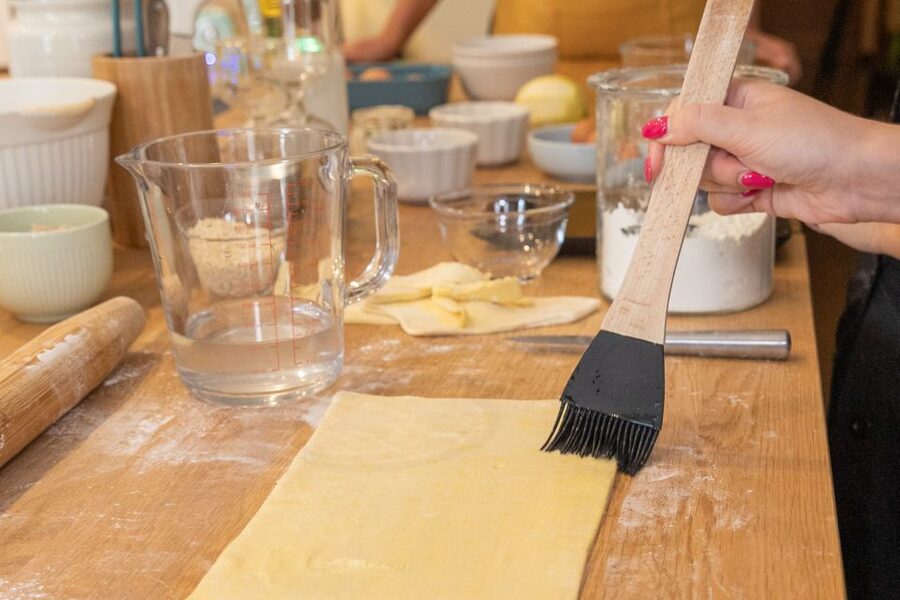
At $33 per person, the class is well priced for a two-hour food activity. The fee includes all ingredients, cooking utensils, guided instruction, drinks, and the pastries you make.
That is better value than a simple tasting because you receive both food and a hands-on lesson. It is also a reasonable choice for a rainy afternoon, when a walking tour may be less appealing. You spend the time indoors, learn something concrete, and finish with a snack.
The price does not include transportation. This is the main extra cost to consider. If you use Bolt or Uber, the ride to the home may add a noticeable amount, especially if you are traveling alone. For a group of three or more, splitting the fare makes the outing easier to justify.
Public transport can reduce that added cost, but the metro requires a walk and the bus requires coins. I would check the route before leaving central Porto and allow extra time, particularly if you have a fixed start time.
The booking terms also give you some flexibility. You can cancel up to 24 hours ahead for a full refund, and you can reserve now and pay later. Starting times vary, so check availability when choosing a date.
Who will enjoy this class most
I would recommend this experience to food lovers, couples, families with older children, solo visitors, and anyone who wants a more personal activity than a standard city tour. You do not need baking experience. The instructions are designed to be followed by beginners, and Joana’s patient approach helps keep the class calm.
It also suits experienced bakers who want to learn the pastry method used in this family recipe. The class is not only about mixing custard. You work with the pastry itself, which is the part many quick workshops prepare in advance.
Solo visitors should feel comfortable booking. The group format makes it easy to meet people, and the shared table at the end gives the class a natural social finish.
The experience may be less suitable if you want to remain in central Porto or have limited mobility. Wheelchair users cannot be accommodated, and the public-transport route involves a walk from the metro stop. Transportation is not included, and the home setting may not offer the same access features as a purpose-built cooking school.
A few practical tips before you book
Arrive with enough time to find the building. Because the class takes place in a private home, getting the doorbell detail right is important.
Use Bolt or Uber if convenience matters most. Bus 800 or 801 is direct from Bolhão, but bring coins for the onboard ticket. The metro route is direct from Trindade on the Orange Line, though it takes longer and includes a walk.
Wear comfortable clothes suitable for kitchen work. The class provides the tools and ingredients, so your main job is to listen, take part, and enjoy the process.
If you care most about making the pastry yourself, this is a particularly good choice. Ask questions during the dough demonstration, since the timing and technique may be the hardest parts to reproduce later.
Finally, save room for the tasting. The pastries are the reward, and the warm batch is the point of the whole exercise.
Should you book Joana’s pastel de nata class?
I would book it if you want a small, friendly, hands-on food experience and do not mind leaving central Porto for a couple of hours. Joana’s grandmother’s recipe, the home setting, the chance to make the pastry from scratch, and the shared table give the class a personal feel that a commercial bakery lesson may not match.
I would skip it only if your schedule is too tight for the transport or if you need wheelchair access. For $33, the class offers food, instruction, drinks, and a recipe to take home. Add the cost of getting there, then decide. If that extra trip fits your plans, this is one of Porto’s most useful and enjoyable pastry activities.
FAQ
How long does the pastel de nata cooking class last?
The class lasts two hours, including the cooking session and the final tasting with drinks and freshly baked pastries.
How much does the experience cost?
The listed price is $33 per person. Ingredients, cooking utensils, guided instruction, non-alcoholic drinks, and pastries are included.
Where does the class take place?
The class takes place in Joana’s home, about 10 minutes by car from Porto city center. You should ring the doorbell marked 2 Andar when you arrive.
How can I reach the host’s home by public transport?
From Bolhão, take bus 800 or 801 for a direct ride of about 20 minutes. The bus stops across from the house, and tickets can be purchased onboard with coins. From Trindade Station, take the Orange Metro Line to Fânzeres, then walk about 700 meters, or 10 minutes.
Is the class suitable for beginners?
Yes. Joana teaches the recipe step by step in English and provides patient guidance. You make both the pastry and custard, so beginners can learn the complete process.
Can wheelchair users join the experience?
No. The activity is not suitable for wheelchair users.
More Workshops in Portugal
- Porto: Pastel de Nata Pastry-Making Workshop
★ 4.9 · 1,542 reviews - Matosinhos: Surfing Lesson with Equipment
★ 4.8 · 704 reviews - Albufeira: Surf Lesson
★ 4.7 · 699 reviews - Porto: Small Group Surf Lesson with Transportation
★ 4.9 · 594 reviews
New around Portugal
- Exclusive Boat Tour to the Benagil Caves★ 5.0 · 74 reviews
- Surf’s Up in Albufeira: Learn to Ride the Waves★ 5.0 · 74 reviews
- Lisbon: Kayaking and snorkeling in Sesimbra with photos!★ 5.0 · 74 reviews
- Porto: City Bike Rental★ 4.6 · 75 reviews
- Arrábida, Setúbal, Sesimbra, Olive with wine tasting★ 5.0 · 75 reviews
- Private 4×4 Jeep Full Day Porto Moniz or Santana★ 5.0 · 75 reviews
- Douro Valley: Quinta do Tedo Wine Experience with Picnic★ 4.8 · 75 reviews
- Lagoa: Dolphins Expedition with biologist guide on board★ 5.0 · 75 reviews
Cooking Classes, compared.
Pastel de Nata Cooking Class with Port Wine – Sé
Read our review →
Lisbon Portuguese Cooking Class with 3-Course Dinner
Read our review →
Pastel de Nata Cooking Class with Porto Wine (Sé do Porto)
Read our review →
Traditional Portuguese Cooking Class in Lisbon
Read our review →Browse the lists this tour appears in