

Reviewed · COOKING CLASSES
Traditional Portuguese Cooking Class in Lisbon
Lisbon’s food culture makes more sense once you have handled the cod, stirred the greens, and folded a pastel de nata. This three-hour class at Homecooking Lisbon turns familiar Portuguese dishes into a shared meal, with wine, beer, and finger foods served as you work.
I like the small maximum of 10 people, since it gives you a fair chance to chop, stir, season, and ask questions. I also like the seasonal menus, which keep the cooking tied to what Portugal is actually using at that time of year. The main consideration is that the class prepares dishes family-style, so you may work on only parts of the meal rather than cook every dish from start to finish.
Key points before you book
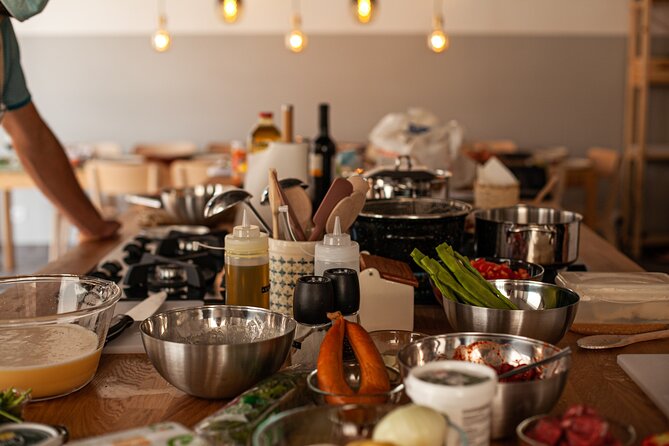
- A four-course Portuguese meal: Prepare a selection of traditional starters, mains, and desserts, then sit down to eat what the group has made.
- Pastel de nata included: You’ll prepare and bake Lisbon’s famous custard tart, using puff pastry that is already prepared.
- Small groups matter: The class accepts a maximum of 10 participants, with more room for personal help than a large demonstration.
- Seasonal cooking: The menu changes through the year, so expect dishes suited to the season rather than a fixed menu every time.
- Morning or evening timing: Pick a lunch-style class or an evening session, depending on your Lisbon plans.
- A social meal with drinks: Portuguese wines and beers are included for adults, with water, juice, or tea available for younger participants.
What the three-hour class is really about
This is not a formal chef-training session. It is a relaxed, hands-on introduction to Portuguese food, built around cooking together and then eating together.
You begin with snacks and drinks, which helps the group settle in before the work starts. The instructors guide you through the meal step by step, explaining basic Portuguese cooking methods and the place certain dishes hold in local food culture.
The class is conducted in English. Instructors have included Miguel, Pedro, Beatriz, Teresa, and Rita, and the teaching style is warm and involved. Beatriz, in particular, is described as personable and willing to add family stories and cultural details to the cooking. Miguel has also been praised for clear explanations and an easy manner with children and first-time cooks.
The atmosphere is meant to be friendly rather than strict. You will probably work alongside couples, families, friends, and solo participants. That mix is part of the appeal. The cooking gives everyone an easy reason to talk, and the final meal gives the group a natural place to keep chatting.
More Cooking Classes in Lisbon
- Lisbon: Pastel de Nata Baking Class
★ 4.9 · 2,106 reviews - Lisbon: Traditional Portuguese Cooking Class
★ 4.9 · 592 reviews - Lisbon: 2-Hour Pastel de Nata Cooking Class
★ 4.8 · 461 reviews
Arriving at R. Aliança Operária 54
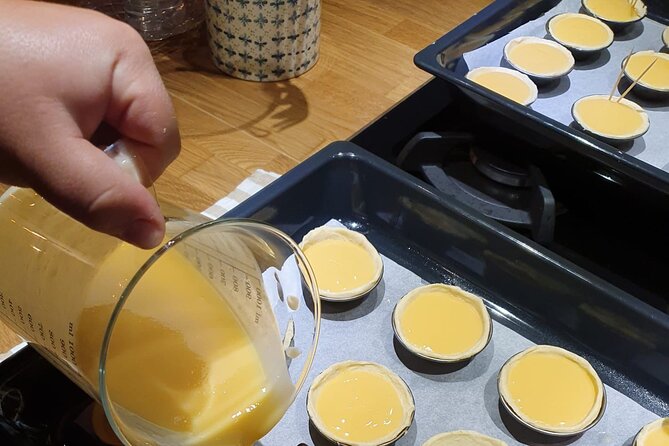
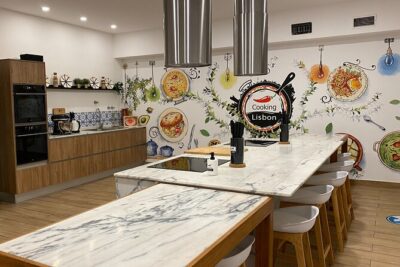
The class begins at R. Aliança Operária 54, 1300-049 Lisboa, and finishes at the same meeting point. The venue has been described as clean, modern, spacious, and inviting.
This address is not in the heart of Lisbon’s main tourist center. That is worth noting when planning your day. The location is near public transportation, and a taxi or bus can make the trip simple, but allow extra time so you are not racing in from Belém, Baixa, or another part of the city.
One useful warning: some booking information has caused confusion because there are two possible locations connected with the experience. Check the exact meeting point with Homecooking Lisbon before setting out. It is a small task that can prevent a needless dash across town.
Once inside, you can expect a modern kitchen and dining area rather than a rustic farmhouse setting. That may not provide the old-world backdrop some people picture when they think of Portuguese cooking, but it does make the work more comfortable and organized.
Starting with Portuguese snacks and drinks
The class eases you in with finger foods and beverages. Portuguese wine and beer are included for participants aged 18 and over, while water, juices, and tea are available for anyone who does not drink alcohol or is under 18.
This opening matters because the meal is prepared in stages. You are not expected to spend three straight hours concentrating over a cutting board. The drinks and snacks create a loose, social pace while the instructor organizes tasks and introduces the dishes.
The alcohol is part of the value, but keep the format in mind. This is a cooking class with drinks, not a dedicated wine tasting. You may have wine or beer during the preparation, along with soft drinks and water, but the focus remains on Portuguese food.
Cooking the starters: soup, pork, and clams
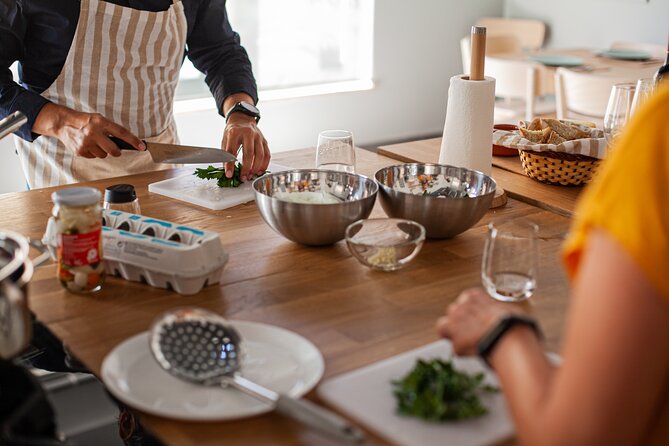
The starter choices can include caldo-verde, pica-pau, and amêijoas à Bulhão Pato. These dishes show three very different sides of Portuguese cooking.
Caldo-verde is a simple, comforting soup made around potatoes and finely cut greens. It is the sort of dish that teaches you how much flavor can come from a short ingredient list. The lesson is less about fancy technique and more about balance, texture, and the everyday side of Portuguese food.
Pica-pau is a small-bite pork dish, usually served as a sociable snack. It fits the class well because the food is designed to be shared and discussed rather than plated as an individual restaurant course.
Amêijoas à Bulhão Pato brings clams together with a garlicky, herb-filled sauce. It gives the meal a strong coastal note and helps explain why seafood is so central to Portuguese tables. If you have not cooked clams before, this is a useful chance to learn under guidance rather than guess your way through the process.
You probably will not personally prepare every starter. The format divides jobs among the group, with each person or small team taking responsibility for parts of the menu. That keeps the meal moving, but it also means you should not book this expecting a private lesson in each recipe.
More cooking classes around Lisbon:
- Lisbon Portuguese Cooking Class with 3-Course Dinner
★ 5.0 · 445 reviews - Pasteis de Nata Baking Class from Lisbon
★ 5.0 · 248 reviews - Portuguese Cooking Class in Lisbon
★ 5.0 · 141 reviews - Portuguese Cooking Experience in Lisbon
★ 4.5 · 140 reviews
The main dishes put cod at center stage
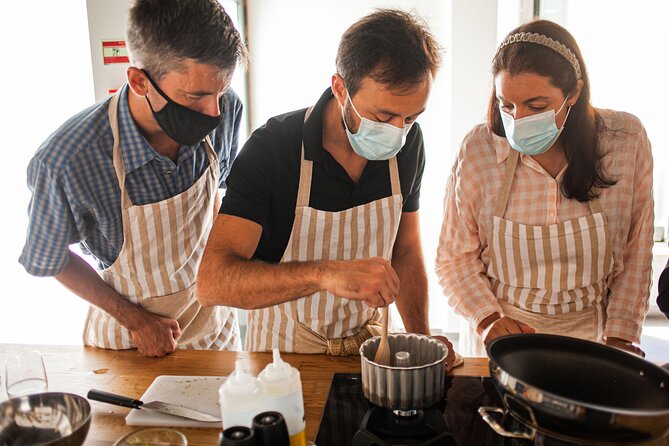
Portuguese cooking is closely tied to salted cod, and the class may feature bacalhau à Brás or pataniscas de bacalhau. These are excellent choices for understanding how one ingredient can take several forms.
Bacalhau à Brás combines cod with thin potatoes and eggs in a soft, filling dish. It is home-style food with a clever mix of textures. The process also shows how Portuguese cooks turn preserved fish into something warm and generous.
Pataniscas de bacalhau are cod fritters. They are more snack-like and give the group a chance to work with a mixture that must hold together without becoming heavy.
The class may also prepare carne de porco com amêijoas, pork with clams, or migas com entrecosto, pork ribs with migas. The first pairs land and sea in a way that feels especially Portuguese. The second brings in pork, bread, and a hearty side, offering a fuller look at regional home cooking.
The sample menu lists several starters, mains, and desserts, but it does not mean every dish appears in one single session. Menus change with the seasons, and the instructor selects what suits the day. Do not arrive with your heart set on one exact stew or cod dish. The changing menu is a benefit for freshness, but it does make the experience less predictable.
Making pastel de nata without pretending it is a pastry school
Pastel de nata is the class’s big dessert draw. You will take part in preparing and baking the tart, then eat it as part of the shared meal.
There is one important detail: the puff pastry is pre-prepared. You are learning how the dessert comes together, but you are not making laminated pastry from raw dough. That keeps the class within three hours and makes sense for a group setting.
The dessert is still valuable because pastel de nata is more than a photo stop in Lisbon. Working with it gives you a better feel for the contrast between crisp pastry and soft custard, and it lets you connect a famous bakery item with the wider cooking traditions around it.
Other possible desserts include arroz doce, Portuguese rice pudding, and torta de laranja, an orange roll. These are less obvious choices for a first visit to Lisbon, which is exactly why they add interest. The recipes sent after the class can help you try them again at home.
A family-style meal, not four private cooking stations
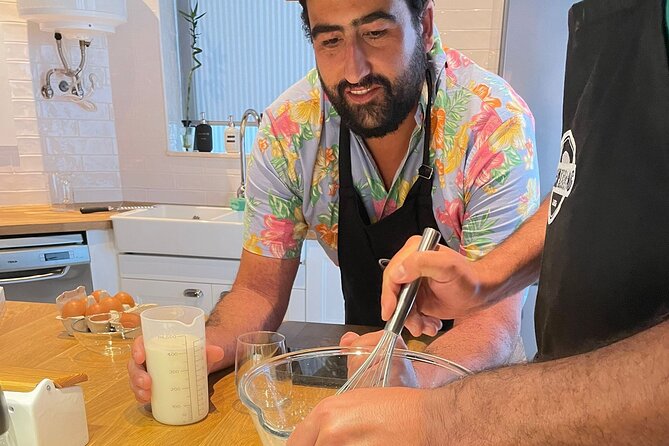
The meal is prepared communally and served family-style. You may chop vegetables, mix a batter, watch something simmer, prepare part of a dessert, or help with finishing touches. The instructor keeps the process moving and makes sure the different parts come together.
This arrangement has two clear advantages. First, it encourages conversation and lets solo participants meet people without forced small talk. Second, it avoids the stop-start feeling of a class where every person must make an entire plate alone.
The tradeoff is participation. A serious home cook who wants to master each recipe may find the format a little loose. You will not necessarily cook every component yourself, and some parts may be handled by the instructor or another member of the group.
For most people, that is a fair exchange. You get to see several dishes prepared, taste the full menu, and leave with recipes rather than spending the entire session repeating one technique. The cooking has enough structure to be useful, but it does not feel like an exam.
Why the small group improves the experience
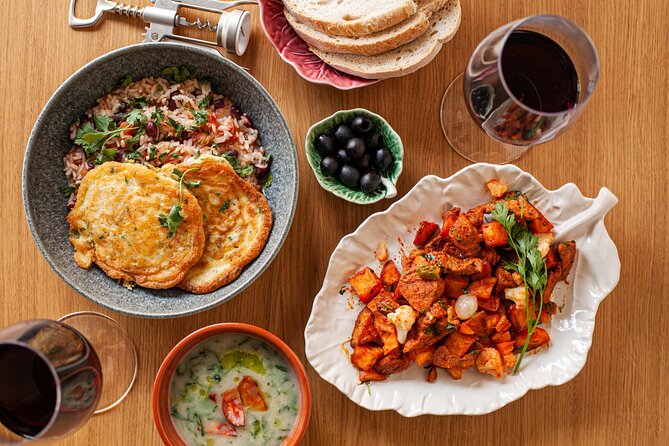
With a maximum of 10 people, this class is small enough for personal attention. That does not mean every participant receives a private lesson, but it does give the instructor a reasonable chance to correct a technique, answer a question, or bring you into the next task.
The class has also worked well for families. Children aged 10 and 12 have taken part successfully, and the activity is described as child-friendly. Younger cooks may enjoy the shared tasks and dessert work, though adults should decide if a three-hour food activity suits their children’s attention span.
Solo participation also makes sense here. The group format naturally gives you people to talk with, and the cooking is interactive without demanding advanced skill. I would choose this over a large classroom demonstration if you want a more social evening.
The space can become loud when two groups are working in one room. That is not a serious flaw, but it matters if you prefer quiet instruction or a highly polished, private atmosphere.
Morning lunch or evening class
You can choose a morning or evening start. The morning option works as a lunch class, giving you a substantial midday meal and leaving the rest of the day open. The evening class is a good fit if you want cooking to become your night’s main activity.
The approximate duration is three hours. That is long enough to prepare several dishes without turning the class into an all-day commitment. Still, keep your schedule flexible around the stated time. Cooking, eating, group conversation, and dessert can naturally vary by a few minutes.
The class ends back at the starting point, so you do not need to arrange a second pickup location. Since the venue is outside the main center, think about your return route before the class starts, especially if you are attending the evening session.
Is $102.84 a fair price?
At $102.84 per person, this is not a budget meal. The price needs to cover more than food: you are paying for an English-language instructor, a furnished cooking venue, the use of kitchen equipment, drinks, snacks, a three-hour activity, and the social value of the shared meal.
I see the strongest value in the amount packed into one session. You learn the basics of Portuguese gastronomy, help prepare several traditional dishes, make pastel de nata, eat a full meal, and receive recipes for later use. Wine, beer, and nonalcoholic drinks are included, which makes the cost easier to justify than a class where beverages are added separately.
The value is weaker if you want precise culinary training or a private chef’s lesson. The family-style format means your hands-on time is shared, and the menu may not include the specific dishes you had hoped to cook.
For a first visit to Lisbon, I think the price is reasonable for someone who values food, conversation, and cultural context more than formal technique. It can also replace a restaurant dinner, though you should compare the total price with what a good meal in Lisbon would cost for you.
Who should book this class?
I would recommend it to:
- First-time visitors who want a useful introduction to Portuguese food
- Couples and friends looking for an activity beyond sightseeing
- Solo participants who enjoy meeting people through a shared task
- Families with children who are comfortable with a three-hour cooking session
- Home cooks who want recipes and ideas to take home
- Anyone curious about cod, pork, clams, rice pudding, or pastel de nata
I would be more cautious if you need strict dietary control, though no dietary information is provided here. Ask the provider before booking rather than assuming the menu can be changed.
This is also not the best fit if your main aim is to cook every dish alone. The class is designed around cooperation, so some participants will handle one part of the meal while others work on another.
Booking, cancellation, and practical details
Your booking confirmation normally arrives at the time of booking. If you book within 12 hours of the start time, confirmation comes as soon as possible and depends on availability.
Free cancellation is available up to 24 hours before the start time for a full refund. Changes or cancellations made less than 24 hours ahead are not accepted for a refund. The cut-off uses local Lisbon time, so check the clock carefully if you are making last-minute plans.
The class requires a minimum number of participants and good weather. If the provider cancels because either condition is not met, you can choose another date or experience, or receive a full refund.
Should you book Homecooking Lisbon?
Book it if you want to eat Portuguese food while learning where it comes from, not simply watch a chef perform. The small group, included drinks, seasonal menu, friendly instruction, and pastel de nata make this a well-rounded Lisbon activity.
Go in expecting a shared kitchen rather than a private master class. You may not cook every recipe yourself, the room can get noisy, and the address requires a little planning outside the central tourist zone. For a relaxed introduction to cod, clams, pork, soup, and Portuguese desserts, those are manageable tradeoffs.
At this price, I would choose the class for a food-focused afternoon or evening, especially if you are traveling solo, with children, or with friends who want something social. Check the location before leaving, arrive ready to share the work, and let the seasonal menu be part of the surprise.
FAQ
Where does the Portuguese cooking class begin?
The class begins and ends at R. Aliança Operária 54, 1300-049 Lisboa, Portugal.
How long does the class last?
The experience lasts approximately three hours.
Is the class offered in English?
Yes. The cooking class is offered in English.
How many people can attend?
The activity has a maximum of 10 participants.
Are drinks included?
Yes. Portuguese wine and beer are included for participants aged 18 and over. Water, juice, or tea are available instead for participants under 18.
Will I make pastel de nata?
Yes. You will help prepare and bake pastel de nata, though the puff pastry is pre-prepared.
Can I cancel for a full refund?
Yes, if you cancel at least 24 hours before the experience start time. Cancellations or changes made less than 24 hours before the start time are not accepted for a refund.
More Workshops in Lisbon
- Pastel de Nata Pastry Class: Bake and Enjoy Your Own Treats
★ 5.0 · 485 reviews - Lisbon: Azulejos’ Design Create Your Own Tile Workshop
★ 4.9 · 420 reviews - Lisbon: Surfing Lesson on Costa de Caparica Beach
★ 5.0 · 322 reviews - Lisbon: 1.5-Hour Surf Lesson
★ 4.8 · 257 reviews
New around Lisbon
- Arrábida, Setúbal, Sesimbra, Olive with wine tasting★ 5.0 · 75 reviews
- Lisbon: Sunset Sailing Boat Cruise with Wine★ 5.0 · 75 reviews
- Lisbon Half Day Private Tour★ 5.0 · 75 reviews
- Private Half Day Tour to Fatima from Lisbon★ 5.0 · 75 reviews
- Fátima, Nazaré and Óbidos Private Tour from Lisbon★ 5.0 · 76 reviews
- Central Lisbon 3-Hour Guided E-Bike Tour★ 4.8 · 76 reviews
- Lisbon Historic City Tour by Tuk-Tuk★ 5.0 · 76 reviews
- Lisbon Cinematic Photoshoot with Top-Rated Photographer★ 5.0 · 76 reviews
Cooking Classes, compared.
Pastel de Nata Cooking Class with Grandma’s Recipe
Read our review →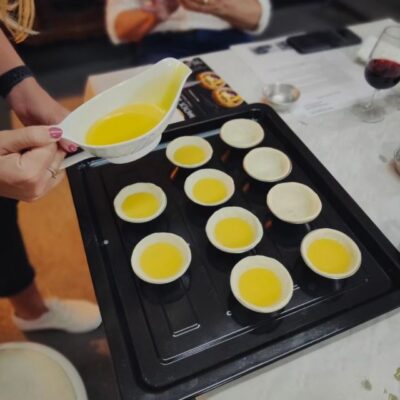
Pastel de Nata Cooking Class with Port Wine – Sé
Read our review →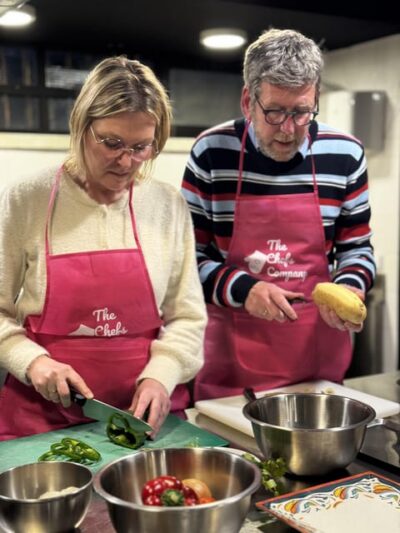
Lisbon Portuguese Cooking Class with 3-Course Dinner
Read our review →
Pastel de Nata Cooking Class with Porto Wine (Sé do Porto)
Read our review →Browse the lists this tour appears in