
Reviewed · FOOD TOURS
Devour Lisbon: The Ultimate Portuguese Food Tour
Lisbon’s food story is best understood one bite at a time, and this 3.5-hour walking tour gives you a full meal while moving through Baixa, Chiado, and Cais do Sodré. I like the mix of old shops and everyday places, especially the sour cherry liqueur, bifana sandwich, salted cod, and still-warm pastel de nata. I also like that guides such as Helena, Cecilia, Merritt, Alicia, and Natalia bring personal stories and practical advice for eating on your own.
The main catch is the food pace. With nine tastings and three drinks, you need to arrive hungry, and lunch may not impress every palate as much as the earlier snacks. Dietary planning matters too: vegan, gluten-free, and celiac needs cannot be handled on this tour.
Key points at a glance
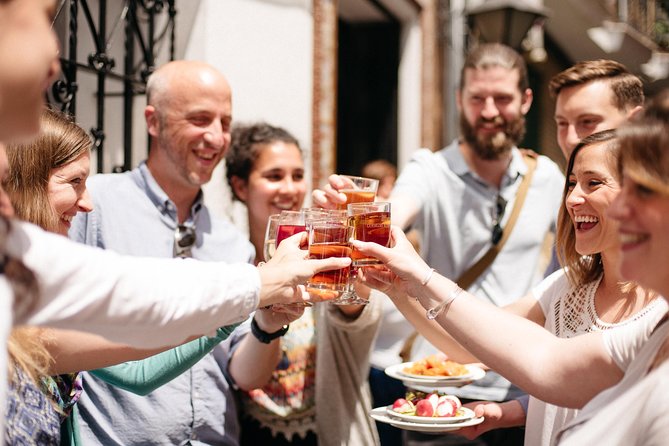
- Nine foods and three drinks: The tastings cover breakfast sweets, cured meats, sandwiches, seafood, cod, sausages, rice, coffee, wine, and ginjinha.
- Seven stops across central Lisbon: You walk through Baixa, Chiado, and Cais do Sodré rather than sitting in one restaurant.
- A small group of up to 10: This gives you a better chance to hear the guide and ask about dishes, shops, and Lisbon life.
- A proper Portuguese meal: The portions are intended to add up to breakfast and lunch, so do not eat a large breakfast first.
- Good first-day orientation: The route combines food, city sights, history, and useful restaurant tips.
- Limited dietary flexibility: Vegetarian, pescatarian, dairy-free, nonalcoholic, and pregnancy-friendly adjustments are possible with advance notice, but vegan and gluten-free diets are not suitable.
Why this works as a first taste of Lisbon
A food tour can be a parade of samples with little sense of place. This one has a more useful shape. You begin near Praça da Figueira, move through central neighborhoods, and finish at Time Out Market Lisboa by the river.
That route gives you a practical map of downtown. You pass through Baixa, the orderly central district rebuilt after the 1755 earthquake, then Chiado, known for its cafés and shops, and finally Cais do Sodré, the riverside area where the tour ends. The food provides the thread connecting these places.
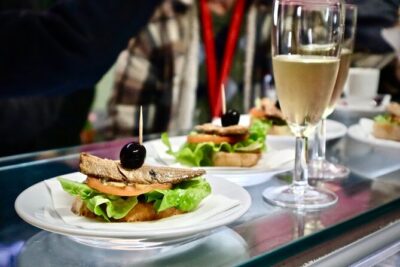
I especially like the range. You are not served only the famous custard tart and a plate of cod. The menu can include Iberian ham, canned sardines, bifana, alheira, bacalhau à Brás, fish rice, bean stew with pork, pastries, coffee, wine, and ginjinha. That gives you a better sense of Portuguese cooking: preserved foods, pork, seafood, bread, rice, strong coffee, and sweets all have a place.
Your guide also explains how dishes became part of Portuguese life. Past guides have included Helena, Cecilia, Merritt, Agatha, Alicia, Anastasiia, Nina, Natalia, Ann, Borja, and others. The strongest part of the experience depends on who leads your group, but the format gives a good guide room to connect food with Lisbon’s streets and customs.
More Food Tours in Lisbon
- Lisbon: Pastel de Nata Baking Class
★ 4.9 · 2,106 reviews - Lisbon Small-Group Food Tour with 18 Tastings in Alfama District
★ 5.0 · 1,967 reviews - Lisbon: Baixa District Food Tour with Dinner and Drinks
★ 4.9 · 1,870 reviews
Starting at Confeitaria Nacional
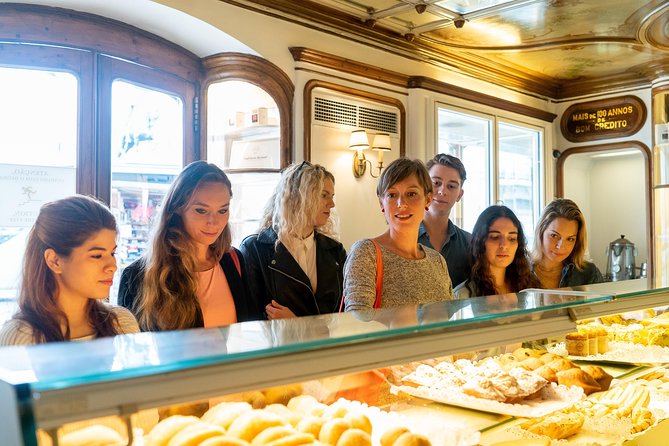
The meeting point is the Statue of John I near Praça da Figueira. This is a sensible place to begin because it is central and close to public transportation. Arrive with room in your stomach. The morning starts with food, and the tastings keep coming.
Confeitaria Nacional is one of Lisbon’s classic pastry stops. A traditional confectionery is more than a quick sugar hit here. It introduces the café culture that shapes the Portuguese day, where coffee and a small pastry can be a regular pause rather than a special occasion.
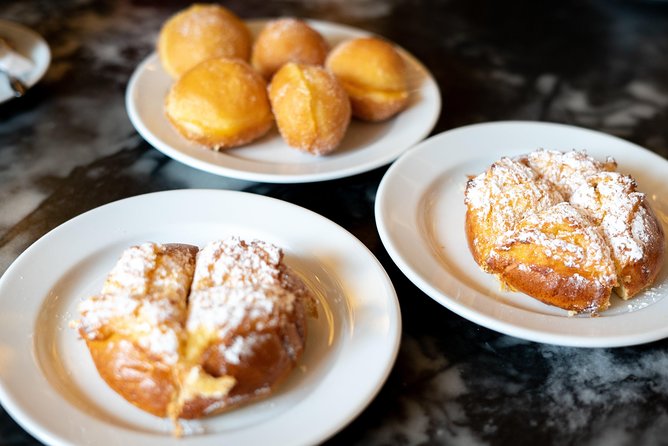
You may encounter sweets such as pão de Deus or bola de Berlim during the tour, along with coffee later in the route. These pastries show a different side of Portuguese baking from the better-known pastel de nata. Pão de Deus is a sweet bread associated with a coconut topping, while bola de Berlim is a filled doughnut-style pastry.
The setting is part of the point. You begin in an established downtown business instead of a purpose-built tasting room. That makes the first stop useful for understanding how Lisbon residents buy and enjoy everyday sweets.
Manteigaria Silva and the taste of preservation
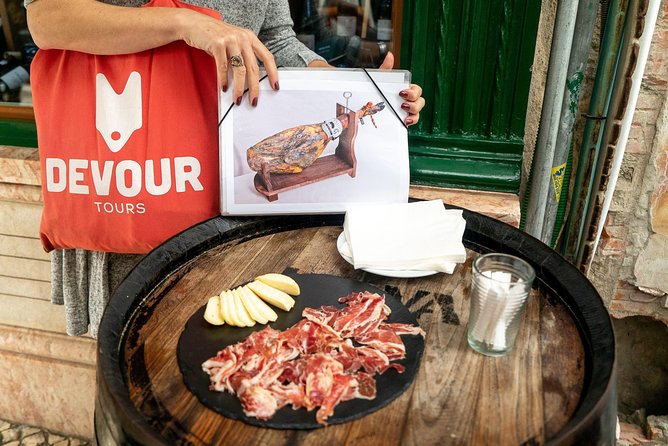
At Manteigaria Silva, the focus turns from pastry to traditional Portuguese provisions. Expect food such as Iberian ham, dried or salted cod, and canned sardines, depending on the day’s exact selection.
These foods explain a great deal about Portuguese eating. Curing, salting, drying, and canning made it possible to keep meat and fish for longer periods. They also created flavors that remain central to the cuisine today.
The sardines are especially tied to Lisbon’s food identity, though a tasting of canned fish is not for everyone. If you prefer delicate, mild flavors, this may be one of the stronger samples. If you enjoy salty foods and seafood, it is a useful introduction to a pantry staple you will see in shops across Portugal.
I like this stop because it can send you back into the city with an easy shopping idea. The included Devouring Lisbon guide provides places to eat and drink, and a can of sardines has sometimes been given as a take-home reminder. That small extra is practical rather than flashy.
Ginjinha Sem Rival and Lisbon’s sour cherry shot
Ginjinha Sem Rival brings a drink into the morning. Ginjinha, often shortened to ginja, is a sweet sour cherry liqueur strongly associated with Lisbon.
The serving is small, but the story is larger. This is the kind of local drink that makes more sense after a guide explains where it fits in Portuguese social life. It also breaks up the food with a quick taste that is distinct from wine or coffee.
Alcohol is included, but nonalcoholic options are available. Pregnant participants and anyone avoiding alcohol should contact the provider after booking so the guide can arrange suitable alternatives. Do not assume every stop will have a direct replacement.
More food tours around Lisbon:
- Lisbon Food Tour with 10+ Tastings of Local Delicacies & Wines
★ 5.0 · 1,339 reviews - Lisbon Private Food Tour – Taste 10+ Local Dishes & Wines
★ 5.0 · 896 reviews - Lisbon: Segway Food Tour of Alfama and Old Town Lisbon
★ 4.8 · 770 reviews - Lisbon: Tastes and Traditions Guided Food Tour
★ 4.8 · 718 reviews
O Trevo and the bifana
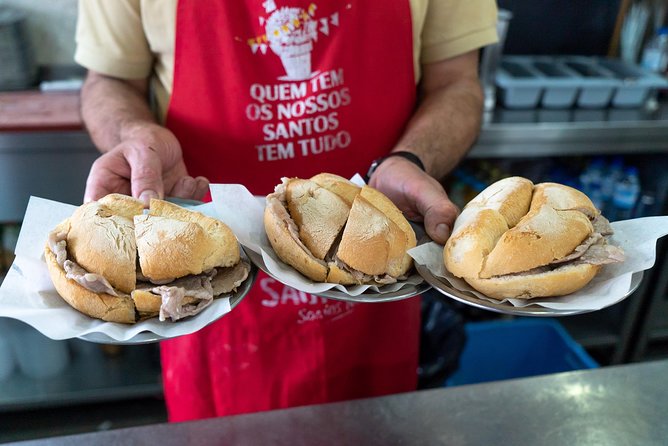
O Trevo is associated with the bifana, one of Lisbon’s essential quick meals. This is a pork sandwich, usually served in a simple bread roll with the meat’s cooking juices and seasoning.
The bifana is modest street food, not a plated dish meant to impress with decoration. That is exactly why it belongs on the tour. You get to taste something people can eat quickly at a counter, while the guide explains its place in Portuguese food culture.
Some descriptions of the tour identify the pork as having been cooked for a long time, producing a tender, strongly flavored filling. It is one of the early samples, and it can be surprisingly substantial. Pace yourself here. The sandwich looks small, but it is followed by several more foods and a sit-down meal.
This stop is also a good example of the route’s balance. The tour includes respected old establishments, but it is not limited to formal dining rooms. You are moving through the kind of central Lisbon places you could return to without a guide.
O Gaiteiro and the traditional tasca meal
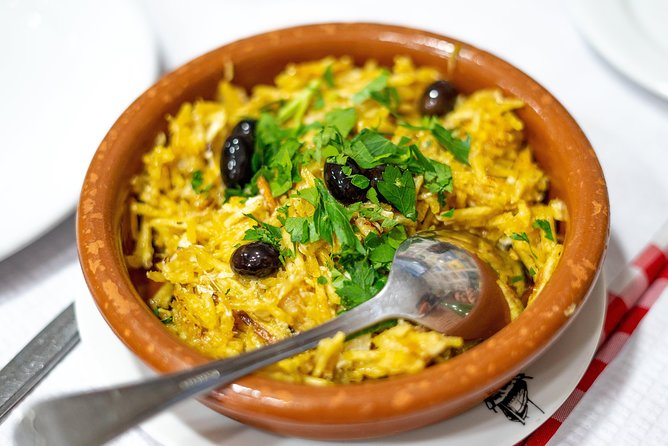
The sit-down meal at O Gaiteiro is the point where the tasting becomes lunch. The menu may include bacalhau à Brás, alheira, fish rice, and a bean stew with pork.
Bacalhau à Brás combines salted cod with potatoes and egg, often finished with onion and herbs. It is a comforting dish, and a good guide will explain why cod became so important in a country with such a long Atlantic coastline but no native cod fishery.
Alheira has a complicated story linked to Jewish communities in Portugal. The sausage was developed in a way that allowed people to avoid appearing to eat pork, and today it is served as a familiar Portuguese specialty. The historical explanation adds value because the dish is connected to religious pressure, adaptation, and survival, not just seasoning.
Fish rice offers another useful contrast. It is softer and more brothy than the cod dish, showing how rice can carry seafood flavors in a way that feels different from a grilled fish meal.
The lunch is generous enough to count toward a full meal. Still, this is the one part I would approach with measured expectations. The earlier snack foods may be more memorable than the main meal, and individual reactions to a shared selection can vary. The benefit is breadth: you sample several dishes rather than spending the whole tour on one entrée.
Time Out Market Lisboa and the final sweets
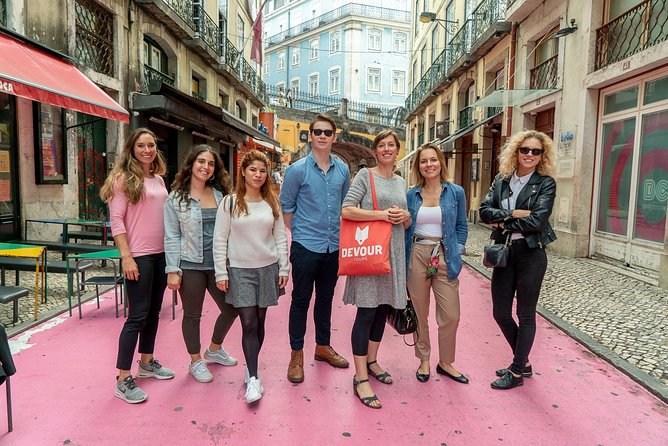
The route finishes at Time Out Market Lisboa in Cais do Sodré. The market is a lively food hall, so the ending feels more modern than the traditional shops at the start.
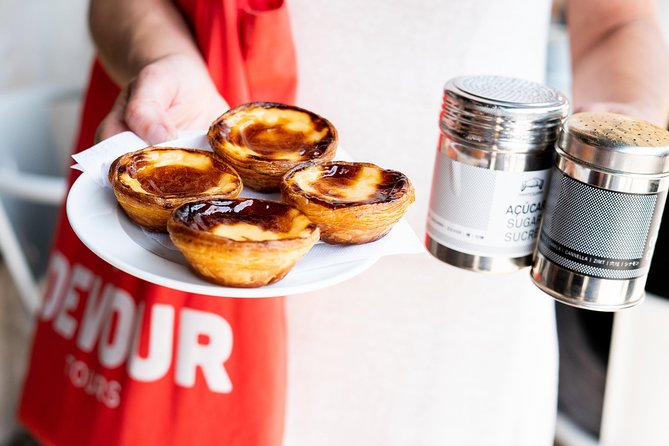
Manteigaria provides the pastry finale, most notably the pastel de nata. This flaky custard tart is one of Lisbon’s signature foods, and it is best appreciated warm and fresh. The contrast between crisp pastry and creamy custard makes it an easy favorite, but the guide’s explanation is just as useful as the bite itself. You learn why this pastry became such a fixture in Lisbon rather than treating it as a generic European tart.
Coffee may accompany the sweets. Portuguese espresso is small, direct, and stronger than some visitors expect. Pão de Deus and bola de Berlim may also appear, giving you a broader dessert range before the last drink.
Ending at the market is convenient if you want to continue eating, browse stalls, or use the riverside area as a base for the rest of your day. It is also a practical finish for anyone who wants to return to central Lisbon by public transportation.
What the walking and group size are really like
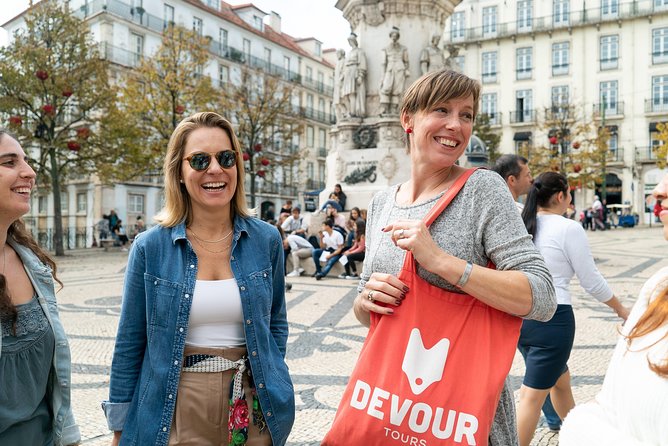
The tour lasts about three and a half hours and moves at a moderate walking pace. The stops are described as fairly close together and centralized, but you should still wear comfortable shoes and expect to be on your feet between tastings.
Lisbon has hills and uneven pavement in many parts of the city. The tour information does not promise a step-free route, so anyone with mobility concerns should ask the provider before booking. A moderate fitness level is required.
The maximum group size is 10. That is small enough for a guide to explain a dish without shouting across a large crowd, and it makes entering small food businesses easier. It also helps when a participant needs a dietary adjustment or wants to ask about a neighborhood.
The guide quality is an important part of the value. Past groups have praised Helena for bringing food and social history together, Cecilia for her welcoming energy, Merritt for finding locally operated places, and Nina for speaking clearly and helping a vegetarian receive food at each stop. Alicia and Natalia have also been singled out for combining food knowledge with useful Lisbon advice.
You cannot choose a particular guide from the information provided. Still, the repeated pattern is clear: the experience works best when your guide explains the background rather than simply naming each dish.
Price, timing, and value at $95.53
At $95.53 per person, this is not a cheap snack crawl. It is priced as a guided meal, city walk, and introduction to Portuguese cuisine in one package.
The value is strongest if you are new to Lisbon and want a fast orientation. You receive nine food tastings, three drinks, a sit-down meal, a local culinary guide, and a city route through three central neighborhoods. Buying all of that independently could be difficult because portions, ordering, and language may get in the way.
The value is weaker if you already know Portuguese food, dislike eating in the morning, or prefer to choose every dish yourself. You also pay for the guide’s explanations and access to selected businesses, so someone interested only in food quantity may find the price high.
The tour is often booked about 44 days ahead. That suggests you should reserve early if your Lisbon dates are fixed, especially if you want it near the beginning of your stay. The best timing is usually day one or two, since the guide’s restaurant advice can help shape the rest of your visit.
Free cancellation is available up to 24 hours before the start time. Changes made inside that window are not accepted, and poor weather can lead to a rescheduled tour or full refund. Since this is an outdoor walking experience, check the forecast and keep some flexibility.
Dietary needs and who should skip it
Vegetarians, pescatarians, people avoiding dairy, pregnant participants, and those choosing nonalcoholic drinks can be accommodated with advance notice. You need to email the Guest Experience team after booking, since a substitute may not be available at every stop.
This is not suitable for vegans, people with gluten intolerance, or anyone with celiac disease. Serious food allergies require an allergy waiver at the start, and you should contact the provider before arrival rather than relying on a last-minute conversation with the guide.
Families can fit the tour well if children are willing to walk and taste unfamiliar food. One 10-year-old was able to enjoy the experience, but the morning food volume and adult drink tastings may not suit every child. The small group also makes this more comfortable for families than a large coach-style outing.
Who should book this Lisbon food tour?
I would book it if you want a useful first look at Portugal through food, like walking between small businesses, and are happy to let a guide set the menu. It is especially good for curious eaters who want context for bacalhau, alheira, bifana, sardines, pastries, and ginjinha rather than a list of dishes without explanation.
I would skip it if you need vegan or gluten-free food, dislike pork or seafood, want a leisurely restaurant lunch, or prefer a dedicated dessert tour. The schedule is full, and the food comes in a steady stream.
For most visitors, the strongest plan is to schedule it early in your Lisbon stay, eat only a light breakfast, wear good shoes, and tell the company about dietary needs as soon as you book. That lets the tour do what it does best: give you a food map, a neighborhood orientation, and enough local knowledge to order with confidence later.
FAQ
Where does the tour begin?
It begins at the Statue of John I near Praça da Figueira, Lisbon, postal code 1100-240.
Where does the tour end?
It ends at Time Out Market Lisboa, also called Mercado da Ribeira, on Avenida 24 de Julho in Cais do Sodré.
How long does the tour last?
The tour lasts approximately three hours and 30 minutes.
How many people can join the tour?
The small group has a maximum of 10 participants.
What language is the tour offered in?
The tour is offered in English.
How much food is included?
The tastings are intended to provide enough food for breakfast and lunch, or a full meal overall.
What foods might be included?
Possible foods include Iberian ham, bifana, canned sardines, bacalhau à Brás, alheira, fish rice, bean stew with pork, pastel de nata, pão de Deus, and bola de Berlim.
What drinks are included?
The experience includes three drinks, which may include wine, coffee, and ginjinha. Nonalcoholic options can be arranged.
Can the tour accommodate dietary restrictions?
It can adapt for pescatarians, vegetarians, dairy-free diets, nonalcoholic choices, and pregnancy. You must email the Guest Experience team after booking, and a replacement may not be available at every stop.
Is the tour suitable for vegans or people with celiac disease?
No. The tour is not suitable for vegans, people with gluten intolerance, or people with celiac disease.
How far in advance can I cancel?
You can cancel at least 24 hours before the start time for a full refund. Cancellations or changes made less than 24 hours before the tour are not accepted for a refund.
What happens if bad weather cancels the tour?
If poor weather causes cancellation, you are offered a different date or a full refund.
New around Lisbon
- Arrábida, Setúbal, Sesimbra, Olive with wine tasting★ 5.0 · 75 reviews
- Lisbon: Sunset Sailing Boat Cruise with Wine★ 5.0 · 75 reviews
- Lisbon Half Day Private Tour★ 5.0 · 75 reviews
- Private Half Day Tour to Fatima from Lisbon★ 5.0 · 75 reviews
- Fátima, Nazaré and Óbidos Private Tour from Lisbon★ 5.0 · 76 reviews
- Central Lisbon 3-Hour Guided E-Bike Tour★ 4.8 · 76 reviews
- Lisbon Historic City Tour by Tuk-Tuk★ 5.0 · 76 reviews
- Sintra World Heritage and Cascais Village Private Deluxe Tour★ 5.0 · 76 reviews
Food Tours, compared.
Lisbon Small-Group Food Tour with 18 Tastings in Alfama District
Read our review →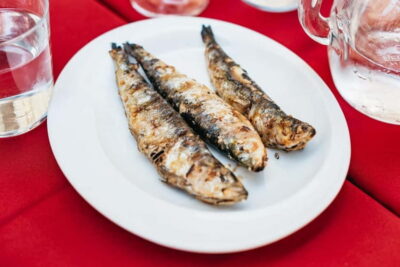
Baixa District Food Tour with Dinner and Drinks
Read our review →
Pastel de Nata Cooking Class with Grandma’s Recipe
Read our review →
Lisbon Food Tour with 10+ Tastings of Local Delicacies & Wines
Read our review →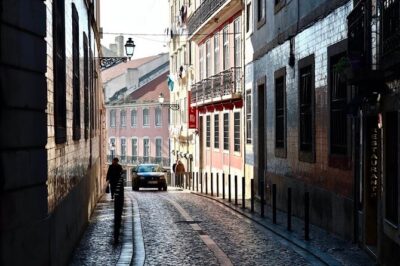
Lisbon Private Food Tour – Taste 10+ Local Dishes & Wines
Read our review →
Pastel de Nata Cooking Class with Port Wine – Sé
Read our review →Browse the lists this tour appears in