
Reviewed · COOKING CLASSES
Portuguese Cooking Class in Lisbon
The best part of this Lisbon cooking class is that you do not simply sit at a table and watch a chef work. You help prepare a three-course Portuguese meal, learn why the dishes matter, and then eat what you made with Portuguese wine. The class takes place at Lisbon Affair on Avenida de Roma and runs for about three and a half hours.
I like the friendly small-group format, capped at 12 people, and the way the class turns dinner into a social evening. I also like the practical recipes and the promise of digital copies, which means you can cook dishes such as Portuguese seafood, fish, meat, or vegetarian fare at home.
The main thing to consider is time. This is a long, unhurried meal and lesson, not a quick activity between sightseeing stops. Preparation may take the full three-plus hours, and the exact menu and teaching style can vary with the chef and group.
Key points to know before booking
- Three courses from Portuguese cooking: Prepare a starter, a typical main dish, and a traditional dessert, with the menu changing by season.
- A small class of up to 12 people: You should have a real role in the meal rather than simply watch from the side.
- Beatriz, Bernardo, and other local chefs: Chef assignments vary, but the class is taught in English by trained Portuguese chefs.
- Wine, snacks, and dinner included: Cheese, ham, bread, bottled water, soft drinks, coffee, tea, and moderate alcoholic service are part of the experience.
- Dietary flexibility is possible: Vegetarian dishes are available, and past menus have been adapted for guests who avoid pork.
- Allow the entire evening: The session lasts about 3 hours 30 minutes and ends where it begins.
Cooking Portuguese food instead of just eating it
Lisbon is a wonderful city for eating, but a cooking lesson gives you a better sense of what is behind the food on the plate. Here, you work with familiar Portuguese ingredients and learn how they fit into local cooking traditions.
The class begins with a welcome from a local chef. Beatriz, also called Bea, has led many sessions, while Bernardo, Fabio, Flavio, and Renardo have also been praised for their teaching and easy manner. Your chef may be different, so do not book this expecting one particular instructor unless the operator confirms it.
The teaching is in English, and the level is intended to suit beginners and intermediate cooks. You do not need professional kitchen skills. The useful part is the combination of simple methods, cultural explanation, and shared work. You might learn not only how to make a dish, but also why a certain herb, ingredient, or preparation method is common in Portugal.
That cultural layer gives the class more value than a standard dinner. Food becomes a way to understand local habits, family cooking, and the differences between Portuguese dishes from one region or tradition to another.
More Cooking Classes in Lisbon
- Lisbon: Pastel de Nata Baking Class
★ 4.9 · 2,106 reviews - Lisbon: Traditional Portuguese Cooking Class
★ 4.9 · 592 reviews - Lisbon: 2-Hour Pastel de Nata Cooking Class
★ 4.8 · 461 reviews
The welcome table: cheese, ham, bread, and Portuguese wine
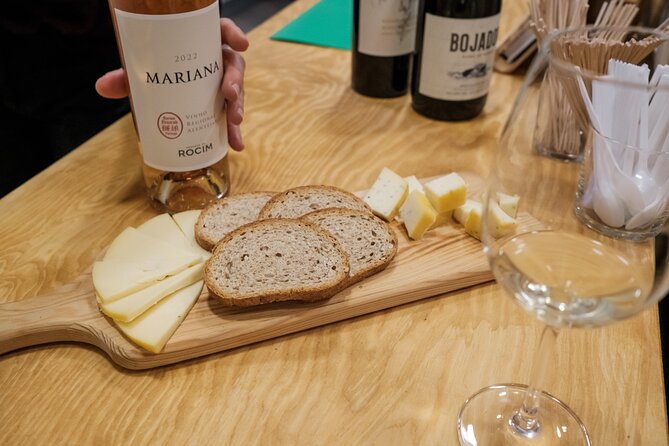
Before the cooking gets serious, the class includes typical Portuguese snacks. The sample menu lists a cheese and ham board with Portuguese bread, and several menus have included a charcuterie board as the group gets settled.
This is a smart beginning. You have something to eat while assignments are explained, and the shared table helps people start talking. The class often brings together people from different countries, which makes it a natural choice if you enjoy meeting others while on holiday.
Portuguese wine is served throughout the experience for participants aged 18 and over, in line with Portuguese law. Drinks are served in moderation, and non-alcoholic options are available. Bottled water, soda, coffee, and tea are also included.
I would still avoid arriving after a large lunch. The food begins with snacks and ends with a full meal, so come hungry. At the same time, do not expect to eat the main dinner immediately after walking through the door. The cooking and preparation take time.
Preparing the starter with seasonal ingredients
The first proper course is a Portuguese starter, and the ingredients may change with the season. This flexibility is a good sign. It allows the kitchen to use produce and seafood when they are at their freshest, though it means you cannot count on one fixed menu.
Past sessions have included soup as the first course. Other starters may be built around local ingredients, depending on the class date and the chef. The important point is that you are not being handed a pre-set restaurant plate. You take part in the preparation and see how the ingredients become a finished dish.
The work is divided among the group. In a full class, you may chop, stir, season, assemble, or help with another part of the meal. The exact amount of hands-on time can depend on class size and the dish being prepared.
That is worth keeping in mind if you want a technical cooking lesson with every minute planned around your own station. This is also a shared social meal, so some tasks are communal and some are assigned to different people. In a group of 11 or 12, the chef needs to spread the work around.
The main course: fish, seafood, meat, or vegetarian Portuguese food
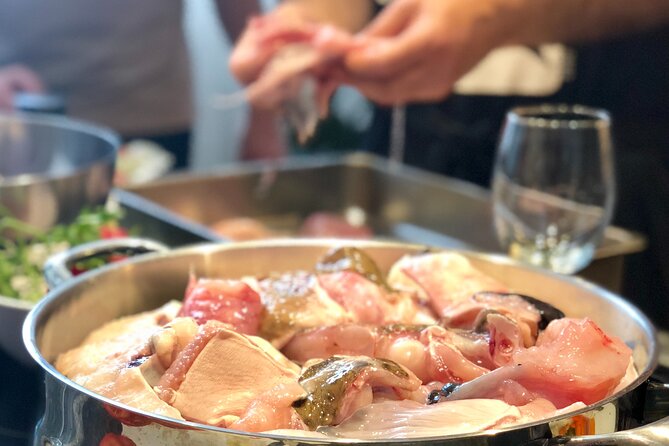
The main dish is the heart of the class. It may feature fish, seafood, or meat, with vegetarian options available. Examples from past menus have included clams and a cod casserole, but you should treat these as examples rather than a guarantee for your date.
Cod is central to Portuguese food culture, and a cod-based casserole gives you a good look at the country’s fondness for layered, comforting dishes. Clams show another side of Portuguese cooking, one that depends on fresh seafood and straightforward seasoning.
If you do not eat pork, tell the operator in advance. One family had its menu adjusted without difficulty, and vegetarian participants have also been given fully vegetarian Portuguese dishes. The supplied information does not promise that every restriction can be handled, so advance notice matters.
The class is designed to involve cooks of different ages and skill levels. Teenagers have taken part successfully, and chefs have worked to bring younger members into the action. If you are booking for a family, this is more engaging than a passive food tour, although younger children may need help with some kitchen tasks.
More cooking classes around Lisbon:
- Lisbon Portuguese Cooking Class with 3-Course Dinner
★ 5.0 · 445 reviews - Traditional Portuguese Cooking Class in Lisbon
★ 5.0 · 287 reviews - Pasteis de Nata Baking Class from Lisbon
★ 5.0 · 248 reviews - Portuguese Cooking Experience in Lisbon
★ 4.5 · 140 reviews
Dessert takes patience, then pays off

The last course is a traditional Portuguese dessert. Past menus have included poached pears and custard, and one session involved rice pudding. The dessert is not just an afterthought. It can be one of the longer parts of the class, especially when a slow cooking or stirring method is involved.
Most people will appreciate learning a recipe they can repeat at home. Custard in particular is a useful souvenir because it relies on accessible ingredients and gives you a clear taste of Portugal after you return home.
Still, dessert preparation is where the class may test your patience. One unhappy experience involved prolonged stirring and an instructor whose strict approach made the session feel stressful. That appears to be an exception to the more relaxed teaching described across the available feedback, but it is a fair warning: the quality of the evening depends partly on the chef leading your class and the mood of the group.
If you prefer a polished demonstration with little work, this may feel too hands-on. If you enjoy learning by doing, the slower pace is part of the point.
Eating the meal you helped make
Once the courses are ready, you sit down and eat together. Lunch or dinner is included, depending on the scheduled session, so the price covers both the activity and the meal at the end.
This final table is where the class becomes more than a recipe lesson. You have shared the work, tasted the wine, and watched individual ingredients turn into a proper dinner. The setting also gives you time to ask the chef questions that might not come up during the busy cooking period.
Portions have sometimes been generous. If your group is small or you are not a big eater, you may find the meal more than enough. That is a better problem than leaving hungry, but it means you should plan the rest of your evening with a little flexibility.
The food is intended to be traditional rather than modern or experimental. You are coming to learn Portuguese staples and home-style methods, not to sample a formal tasting menu.
What makes the chefs important
A cooking class lives or dies by its teacher. The strongest part of this experience is the personal style of the chefs, particularly Beatriz and Bernardo.
Bea is described as warm, funny, encouraging, and good at keeping a mixed group involved. She explains the dishes, adds stories about Portuguese food, and helps people who arrive with different levels of confidence. Bernardo has also been praised for working well with teenagers, explaining techniques clearly, and adapting food to vegetarian or pork-free needs.
Renardo has been described as an engaging host who brings genuine interest to the group, while Fabio and Flavio have also led enjoyable classes. You cannot select the exact personality or teaching method from the basic booking details, so keep your expectations realistic.
Most classes appear aimed at a friendly, relaxed atmosphere. One poor experience involved a stern teaching style and unclear instructions. I would not ignore that possibility, particularly if you dislike correction in a group setting. The much stronger pattern is a class where the chef encourages participation and helps everyone contribute, but no cooking activity can guarantee the same chemistry every night.
Group size, timing, and the Avenida de Roma meeting point
The maximum group size is 12. That is small enough for a chef to speak with each person, yet large enough to create a social table. A smaller group may feel more like a private lesson, while a full group can bring more energy and more chances to meet people.
The class starts and ends at Lisbon Affair, Avenida de Roma 87B, 1700-344 Lisboa. Private transportation is not included, but the location is near public transportation. You will need to make your own way there and back.
Plan your route before the start time. The experience runs for about 3 hours 30 minutes, and one session began with people arriving close to the start because of traffic. Since the cooking schedule is shared, late arrival can affect your own role and the group’s rhythm.
Do not pair this with a tightly timed evening reservation. If the class starts in the late afternoon or evening, leave the rest of the night open. The activity ends back at the meeting point, so you do not need to arrange a separate return transfer.
Is $114.93 a fair price?
At $114.93 per person, this is not a budget meal. The value depends on how you count the evening.
You are paying for a three-and-a-half-hour activity, instruction from a local chef, a three-course meal, snacks, wine, non-alcoholic drinks, and a small-group setting. You also receive digital recipes afterward, which adds lasting value if you really plan to cook the dishes at home.
Compared with paying for dinner alone, the class costs more. Compared with a private culinary lesson, it may be reasonable, especially if you want a social setting and drinks included. The cost makes the most sense for you if you value participation, conversation, and cultural context as much as the food itself.
The booking pattern also matters. This experience is often reserved well ahead of time, about 37 days in advance on average. If the date fits your Lisbon plans, booking early is sensible, especially during popular travel periods.
Free cancellation is available up to 24 hours before the start time for a full refund. Changes or cancellations inside that 24-hour window are not accepted or refunded. If the minimum number of participants is not reached and the class is canceled, you will be offered another date or experience, or a full refund.
Who will enjoy this Lisbon cooking class?
I would recommend it to you if you want an active evening and like the idea of learning through food. It suits solo visitors, couples, families with older children, and friends who enjoy meeting people from different places.
It is especially useful for:
- First-time visitors to Portugal: You get food, wine, and cultural background in one activity.
- Home cooks: The recipes are intended to be sent digitally, and several dishes are practical enough to repeat.
- Families with teenagers: Young people can take part rather than simply wait for dinner.
- Vegetarians and some guests with food restrictions: Alternatives have been provided, but you should give notice before the class.
- Solo visitors: The shared table makes it easy to meet people without arranging a separate group.
I would think twice if you want a fast class, a fixed menu, or a quiet meal. You should also be comfortable with shared kitchen work and the chance that the chef’s style may be more exacting than expected.
My verdict: book it for the table, not just the recipes
This Portuguese cooking class offers a good way to spend an evening in Lisbon when you want more than another restaurant meal. The food, wine, small group, and digital recipes give you clear practical value, while the stories about ingredients and traditions add a useful connection to Portugal.
Book it if you want to chop, stir, taste, ask questions, and sit down with new acquaintances at the end. Tell the operator about vegetarian needs or foods you avoid, arrive ready to eat, and keep your schedule open for the full three and a half hours.
Skip it if you are looking for a short demonstration or guaranteed dishes such as cod, clams, or custard. For the right kind of evening, though, this is a friendly, hands-on introduction to Portuguese cooking that can follow you home in the form of recipes and a better sense of what you tasted in Lisbon.
FAQ
Where does the Portuguese cooking class take place?
The class starts and ends at Lisbon Affair, Av. de Roma 87B, 1700-344 Lisboa, Portugal. The location is near public transportation.
How long does the cooking experience last?
The activity lasts approximately 3 hours 30 minutes. You should allow the full period because preparation and cooking take time before the meal is served.
Is the class taught in English?
Yes. Local, trained Portuguese chefs conduct the hands-on class in English.
What food is included?
The experience includes a Portuguese starter, a typical main dish that may feature fish, seafood, or meat, and a traditional Portuguese dessert. A sample starter is a cheese and ham board with Portuguese bread. The menu can change with the season.
Are drinks included?
Yes. Portuguese alcoholic drinks are served in moderation to participants aged 18 and over, according to Portuguese law. Non-alcoholic drinks, bottled water, soda, coffee, and tea are also available.
Can vegetarian dishes or dietary requests be accommodated?
Vegetarian options are available, and some dietary preferences can be accommodated. Contact the provider before the class so the menu can be planned appropriately.
More Workshops in Lisbon
- Pastel de Nata Pastry Class: Bake and Enjoy Your Own Treats
★ 5.0 · 485 reviews - Lisbon: Azulejos’ Design Create Your Own Tile Workshop
★ 4.9 · 420 reviews - Lisbon: Surfing Lesson on Costa de Caparica Beach
★ 5.0 · 322 reviews - Lisbon: 1.5-Hour Surf Lesson
★ 4.8 · 257 reviews
New around Lisbon
- Arrábida, Setúbal, Sesimbra, Olive with wine tasting★ 5.0 · 75 reviews
- Lisbon: Sunset Sailing Boat Cruise with Wine★ 5.0 · 75 reviews
- Lisbon Half Day Private Tour★ 5.0 · 75 reviews
- Private Half Day Tour to Fatima from Lisbon★ 5.0 · 75 reviews
- Fátima, Nazaré and Óbidos Private Tour from Lisbon★ 5.0 · 76 reviews
- Central Lisbon 3-Hour Guided E-Bike Tour★ 4.8 · 76 reviews
- Lisbon Historic City Tour by Tuk-Tuk★ 5.0 · 76 reviews
- Sintra World Heritage and Cascais Village Private Deluxe Tour★ 5.0 · 76 reviews
Cooking Classes, compared.
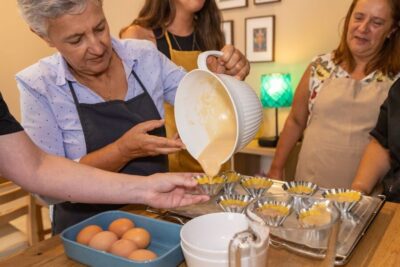
Pastel de Nata Cooking Class with Grandma’s Recipe
Read our review →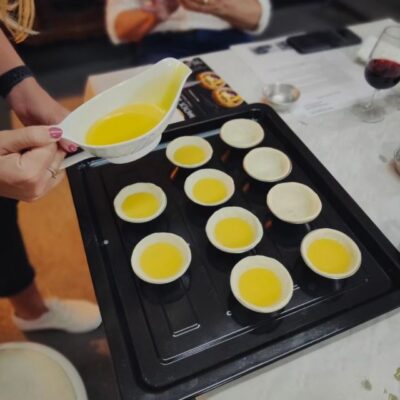
Pastel de Nata Cooking Class with Port Wine – Sé
Read our review →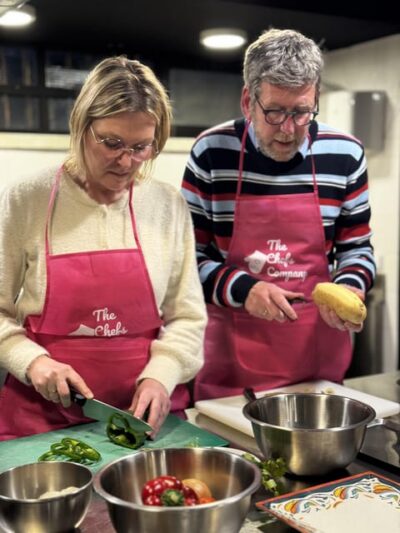
Lisbon Portuguese Cooking Class with 3-Course Dinner
Read our review →
Pastel de Nata Cooking Class with Porto Wine (Sé do Porto)
Read our review →Browse the lists this tour appears in