
Reviewed · COOKING CLASSES
Lisbon Market and Food Tour with Cooking Class and Lunch
Lisbon’s best food lesson starts before you reach the stove. You walk with a chef to a local market, inspect the day’s fish and shellfish, taste bread and cheese, and help choose the ingredients for lunch. Back at Cooking Lisbon, you turn those market finds into a traditional Portuguese meal.
I like the small group of up to 12, which gives you a real chance to chop, cook, ask questions, and handle the food yourself. I also like the mix of market culture and kitchen skills, from filleting fish to shucking oysters and learning why Portuguese home cooking uses such simple, fresh ingredients.
The main thing to consider is the timing. It is advertised at about four hours, but some sessions have lasted closer to six, so do not schedule a tight afternoon appointment. The 9:30 am start also makes this a morning commitment, not a casual drop-in.
Key points to know before you book
- The market comes first: You shop for fresh fish, seafood, vegetables, fruit, bread, and cheese with the chef.
- You do the cooking: This is a hands-on class, not a demonstration where you sit and watch.
- The menu is properly Portuguese: Expect dishes such as peixinhos da horta, seafood cataplana, and an Algarve orange dessert.
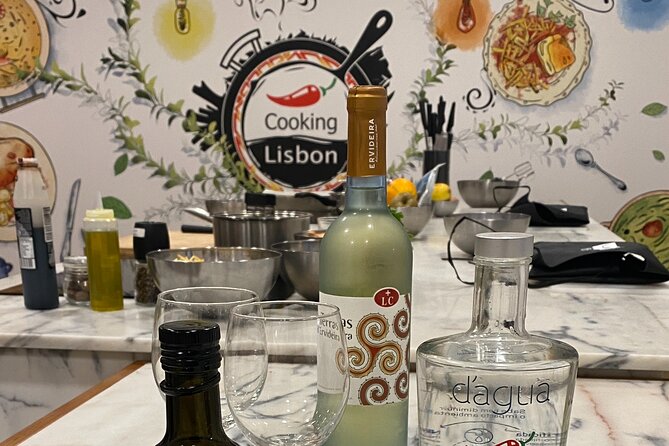
- Wine is part of lunch: Portuguese wine, along with water, juice, and snacks, is available during the experience.
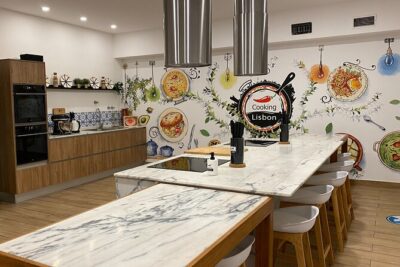
- The kitchen is built for teaching: It is described as a clean, well-equipped commercial kitchen with room for everyone to work.
- Plan for a flexible half-day: The official duration is about four hours, though some classes run longer.
Starting at R. Bernardim Ribeiro 9
You meet the chef at Cooking Lisbon, at R. Bernardim Ribeiro 9, at 9:30 am. The activity ends at the same place, which makes the morning easy to plan around. The meeting point is near public transportation, and a mobile ticket keeps check-in simple.
The class has been led by several chefs and hosts, including Renata, Filipa, Pedro, Paulo, Carina, Gui, Roberta, Rodrigo, and others named in the booking details. The exact chef depends on the date, but the format remains consistent: a local market visit followed by a practical cooking class and shared lunch.
That variety matters in a good way. You are not buying a silent, fixed script. The personality of the chef shapes the morning. Renata is described as lively and encouraging, while Pedro and Paulo are praised for their calm guidance and attention to questions. Carina and Fernanda have also adapted dishes for a gluten-free meal when requested.
I would arrive a few minutes early. The morning includes walking, market browsing, kitchen work, and a full meal, so comfortable shoes and a reasonably open schedule make sense. The supplied details do not promise hotel pickup, so plan to reach the meeting point on your own.
More Cooking Classes in Lisbon
- Lisbon: Pastel de Nata Baking Class
★ 4.9 · 2,106 reviews - Lisbon: Traditional Portuguese Cooking Class
★ 4.9 · 592 reviews - Lisbon: 2-Hour Pastel de Nata Cooking Class
★ 4.8 · 461 reviews
Shopping for lunch at a Lisbon market
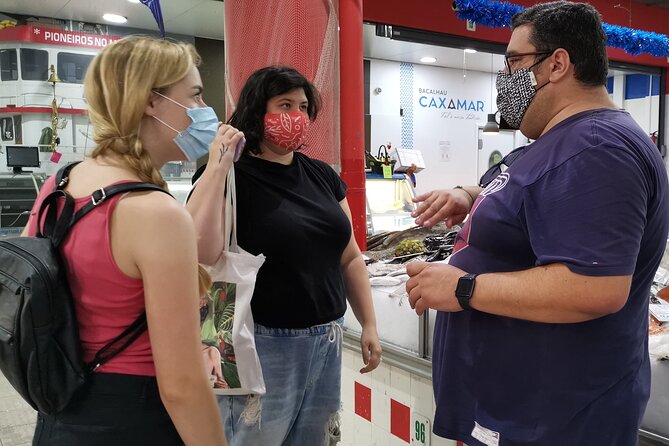
The short walk to the market is a useful opening act. Instead of beginning with a premeasured bowl of ingredients, you see what a Portuguese cook actually faces at the start of the day: rows of vegetables, fresh fish, shellfish, fruit, bread, and cheese.
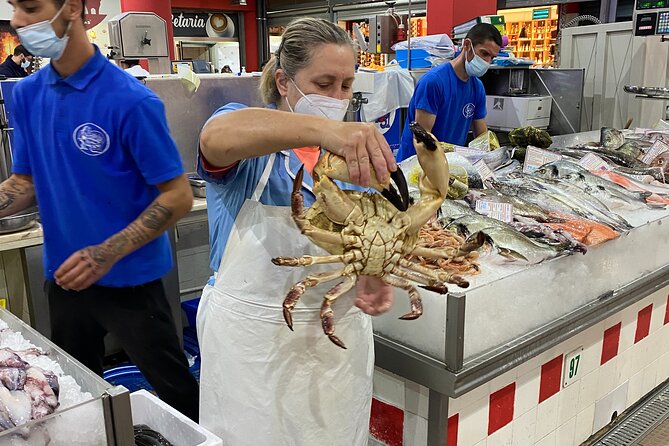
The fish counter is a major part of the experience. You might see a wide range of fish and seafood, then watch the chef select what will become your lunch. This gives the meal a stronger connection to Lisbon than a standard cooking class held entirely indoors. You are not simply following a recipe. You are learning how the food begins.
Market visits also add cultural context without turning the morning into a formal history lecture. The chefs explain how the market works, how to judge fresh ingredients, and how local shopping shapes Portuguese food. You may taste traditional bread and cheese, along with small snacks as you move through the stalls.
One useful feature is that the market portion is not just sightseeing. Your group helps purchase the supplies for the class. That makes the later cooking more meaningful, especially when the fish or shellfish on your cutting board is something selected only a short time earlier.
The market stop is also where the tour feels least polished in the best sense. Fish counters can be wet, busy, and strongly scented. If you want a spotless, quiet food presentation, this may feel rough around the edges. If you want to understand the ingredients before they reach the pan, it is exactly the right start.
Learning Portuguese recipes by doing the work
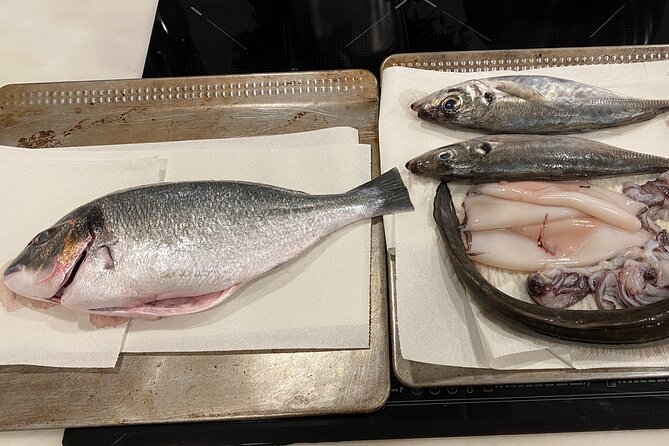
Back at the cooking facility, you put on your practical hat. The chefs guide you through chopping, slicing, preparing seafood, and assembling the dishes. Several sessions have included more advanced tasks, such as filleting a fish and shucking oysters. You can ask questions as you work, rather than trying to remember a fast demonstration.
That hands-on setup is one of the strongest reasons to choose this class. You are not merely watching someone cook cataplana while standing behind a counter. You take part in the preparation, with the chef moving around the stations to help and correct technique.
The setting is a commercial kitchen with extensive equipment. This is useful for a group class because there is room to work and enough tools for the different stages of lunch. It also gives the chef a proper place to demonstrate techniques that would be harder to show in a cramped home kitchen.
The instruction seems suited to mixed ability levels. You can learn basic chopping and kitchen organization, or pick up more specific skills such as handling fish and shellfish. The recipes are described as easy to follow, and the chefs are praised for being patient with both adults and teenagers.
Families should take note. One class got teenagers involved in the cooking, while another included a teenage daughter who enjoyed the work. The class is not only for serious cooks. It works well for curious beginners, provided they are happy to participate rather than sit back.
The pace also deserves a mention. The experience is designed to feel social, with time for jokes, snacks, drinks, and questions. At the same time, cooking several dishes from scratch requires real work. You will spend part of the morning standing, chopping, stirring, and waiting for dishes to finish.
What you actually eat for lunch
The sample menu gives you a clear idea of the food. The starter is peixinhos da horta, often described as Portuguese tempura. It is a simple vegetable dish, but it shows how a few fresh ingredients and a crisp coating can make a good first course.
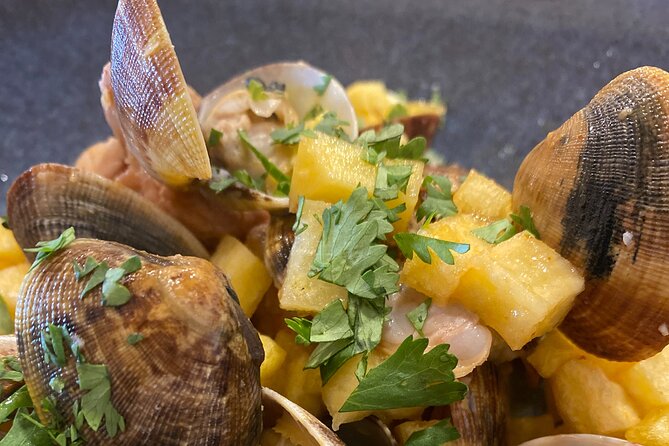
The main is seafood cataplana, one of the most recognizable dishes associated with Portuguese coastal cooking. A cataplana is prepared in a distinctive clam-shaped pan, allowing seafood to cook with its own juices and accompanying flavors. Here, the market visit gives the dish a practical reason to exist: the seafood is selected before you return to the kitchen.
Dessert is an orange roll from the Algarve. Other class menus have included orange cake or orange torte, so the exact form may vary by session. The common thread is a citrus dessert tied to southern Portugal, a fitting finish after a seafood-heavy lunch.
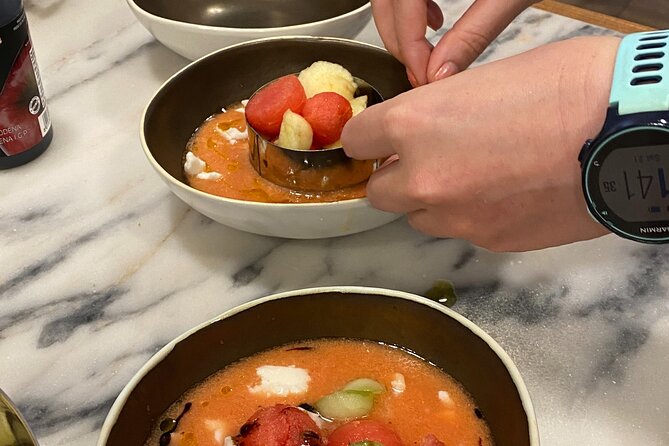
Some groups have prepared additional dishes, including soup, mussels, oysters, goose barnacles, or octopus and egg soup. Do not assume every item will appear on your date, but the examples show that the menu can change with the market and the chef.
You eat the meal together after the preparation is complete. Portuguese wine is served with lunch, and water and juice are also available. Snacks may appear throughout the morning, so this is not a tour where you should expect to leave hungry.
I particularly like the shared-table format. You cook alongside people you have just met, then sit down and eat the same meal. That creates a natural social rhythm, and it helps the class feel like a meal with new friends rather than a lesson that ends the moment the burners go off.
More Food Tours in Lisbon
- Lisbon Small-Group Food Tour with 18 Tastings in Alfama District
★ 5.0 · 1,967 reviews - Lisbon: Baixa District Food Tour with Dinner and Drinks
★ 4.9 · 1,870 reviews - Devour Lisbon: The Ultimate Portuguese Food Tour
★ 5.0 · 1,782 reviews - Lisbon Food Tour with 10+ Tastings of Local Delicacies & Wines
★ 5.0 · 1,339 reviews
The teaching style depends on your chef
The strongest part of this activity is the human element. Names such as Renata, Pedro, Paulo, Carina, Filipa, Gui, Roberta, and Rodrigo appear among the chefs and hosts associated with the experience, but you should not book expecting one particular person unless the provider confirms it.
The teaching style is warm and informal. Chefs explain the food, demonstrate techniques, and move from station to station to offer help. Some also add a quick introduction to Lisbon while walking to the market or explain the role of different ingredients in Portuguese cooking.
That flexibility can be a benefit. A chef may spend more time on fish preparation for a group that wants to improve its knife skills, or adapt a dish when someone has a food allergy. You are asked to provide allergy information so the class can adjust the meal where possible.
Still, adaptation has limits. The menu is built around Portuguese seafood and traditional recipes, so this may not be the best choice if you dislike fish, shellfish, or trying unfamiliar foods. The information confirms allergy adaptations, but it does not promise that every dietary preference can be accommodated.
The social atmosphere is another factor. Many of the chefs are described as funny, friendly, and encouraging. That makes the class inviting, but the experience is not intended to be silent or highly formal. You will likely get the most from it if you enjoy conversation and group participation.
Is $141.50 a fair price?
At $141.50 per person, this is not a budget lunch. The price covers a market visit, chef instruction, ingredients, kitchen use, the meal you prepare, and Portuguese wine. It also gives you a four-hour food and culture experience, with the possibility of a longer session.
I see the value most clearly if you treat it as three activities in one. You get a guided food market visit, a practical cooking lesson, and a generous lunch. Buying a similar meal in Lisbon would cost less, but it would not teach you how to fillet the fish, prepare cataplana, or choose the ingredients at the market.
The small group helps justify the cost. With a maximum of 12 people, the class remains manageable, though the amount of personal attention still depends on the group and the chef. Groups of around 10 have been described as comfortable, with enough people for a social meal without making the kitchen feel crowded.
If your main goal is sightseeing, you may find better value in a walking tour that covers more of Lisbon. If food is a major reason you visit Portugal, this price buys a useful memory and recipes you can try at home. One participant was still waiting for recipes to arrive, so ask the provider about recipe materials if taking the techniques home is important to you.
Who will enjoy this Lisbon food tour?
I would recommend it most strongly to:
- Food-focused visitors who want to understand Portuguese dishes by preparing them.
- First-time Lisbon visitors who want a short market-based introduction to local food.
- Families with older children or teenagers who are willing to chop, stir, and taste.
- Home cooks interested in fish, seafood, knife work, and traditional recipes.
- Couples and solo visitors who like meeting people around a shared table.
- Anyone with a free morning who wants an activity with lunch built in.
It is less suited to you if you want a quick, polished tasting with no kitchen work. It is also a poor fit for a rigid schedule, since the official four-hour estimate does not always reflect how long the full morning takes.
The activity is offered in English. The small group format and mobile ticket are practical advantages, especially if you are booking several weeks ahead. It is booked, on average, 46 days in advance, so popular dates may not remain open close to your visit.
Practical details that affect your morning
Wear clothes you can work in and shoes suitable for a short walk and several hours on your feet. The market and kitchen are the heart of the experience, so expect practical activity rather than a formal sit-down event from start to finish.
Tell Cooking Lisbon about food allergies when booking. The chefs have adapted meals, including a gluten-free menu, but you should share the information early rather than waiting until the class begins.
The activity starts and ends at R. Bernardim Ribeiro 9. It is near public transportation, but no pickup service is listed. Confirmation is provided when you book, and the mobile ticket is accepted.
Free cancellation is available if you cancel at least 24 hours before the 9:30 am start. Changes or cancellations inside that window are not accepted for a refund. The class also requires a minimum number of participants, and if the provider cancels because that minimum is not met, you are offered another date or experience, or a full refund.
Should you book the Cooking Lisbon class?
Book it if you want to eat Portuguese food and learn how it is made. The market visit gives the class a local starting point, the kitchen work keeps you involved, and the shared lunch rewards you at the end. The strongest parts are the fresh seafood, patient instruction, friendly chefs, and chance to learn skills you can use at home.
Skip it if you want to spend the morning visiting Lisbon landmarks, or if a long seafood-focused meal does not appeal to you. Also leave extra time after the scheduled finish. For food lovers, families, and curious cooks, $141.50 is a reasonable price for a market outing, cooking class, and wine-paired lunch in one package.
FAQ
How much does the Lisbon Market and Food Tour with Cooking Class cost?
The price is $141.50 per person.
How long does the experience last?
The listed duration is approximately four hours. Some sessions have lasted longer, so allow extra time when planning the rest of your day.
What time and where does the tour start?
It starts at 9:30 am at R. Bernardim Ribeiro 9, 1150-068 Lisboa, Portugal.
Where does the activity finish?
The experience ends back at the meeting point at R. Bernardim Ribeiro 9.
How many people can join the cooking class?
The maximum group size is 12 participants.
Can the class accommodate food allergies?
You should provide your food allergy information when booking so the class can adapt the meal where possible.
More Shopping Trips in Lisbon
- Private Lisbon Market Tour & Portuguese Cooking Class with Paula
★ 5.0 · 89 reviews - From Algarve: Lisbon City Tour with Shopping
★ 4.2 · 218 reviews - Porto Local Market Visit & Cooking Class / Showcooking
★ 5.0 · 206 reviews
More Lunch Experiences in Lisbon
- Wine and Cheese Tasting Lunch in Portuguese Wine Bar
★ 5.0 · 447 reviews - Lisbon: Portuguese Wine and Cheese Tasting with Lunch
★ 4.7 · 353 reviews - From Lisbon: Arrábida Natural Park Kayak Tour with Lunch
★ 4.8 · 320 reviews - Lisbon Hidden Gems Walk: Traditions, Lunch and Ferry ride
★ 5.0 · 279 reviews
New around Lisbon
- Arrábida, Setúbal, Sesimbra, Olive with wine tasting★ 5.0 · 75 reviews
- Lisbon: Sunset Sailing Boat Cruise with Wine★ 5.0 · 75 reviews
- Lisbon Half Day Private Tour★ 5.0 · 75 reviews
- Private Half Day Tour to Fatima from Lisbon★ 5.0 · 75 reviews
- Fátima, Nazaré and Óbidos Private Tour from Lisbon★ 5.0 · 76 reviews
- Central Lisbon 3-Hour Guided E-Bike Tour★ 4.8 · 76 reviews
- Lisbon Historic City Tour by Tuk-Tuk★ 5.0 · 76 reviews
- Sintra World Heritage and Cascais Village Private Deluxe Tour★ 5.0 · 76 reviews
Cooking Classes, compared.
Pastel de Nata Cooking Class with Grandma’s Recipe
Read our review →
Pastel de Nata Cooking Class with Port Wine – Sé
Read our review →
Lisbon Portuguese Cooking Class with 3-Course Dinner
Read our review →
Pastel de Nata Cooking Class with Porto Wine (Sé do Porto)
Read our review →Browse the lists this tour appears in