
Reviewed · FOOD TOURS
Porto: Pastel de Nata Pastry-Making Workshop
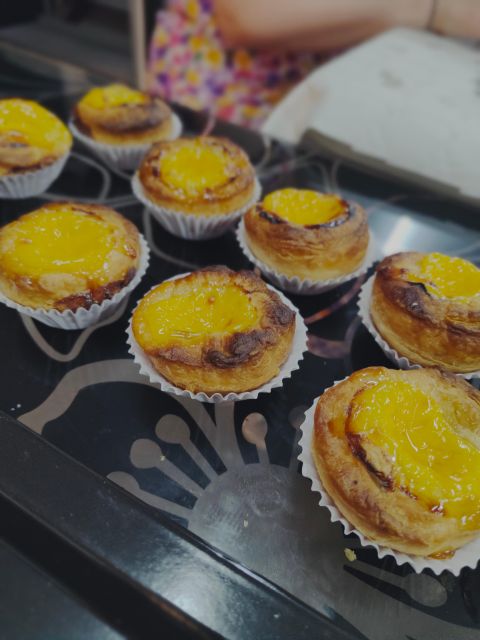
Porto’s famous custard tart gets a social, hands-on treatment in this 90-minute pastel de nata workshop at Boiler Studio, a short walk from the Cathedral. You roll the prepared pastry, help make the egg custard, and watch the tarts bake while sipping Port, wine, or a mimosa.
I like the warm, funny teaching style reported from hosts including Maria, Sara, Patricia, Ana, and Alice. I also like the useful take-home recipe and practical tips, which give you a real chance of making the tarts again at home. The main consideration is that the dough is prepared before class, so you do not make every stage from scratch.
Key points to know
- The studio sits on Rua Chã 77, in front of Porto Cathedral and close to São Bento Station and the Luís I Bridge.
- The dough is prepared ahead of time, since it needs about three hours to rest properly, but you roll it and shape the tart shells yourself.
- The group is capped at nine people, though larger parties should contact the provider before booking.
- You share the pastry-making stages, with participants taking turns at different parts of the process.
- Your booking includes a drink, with Port wine, regular wine, or a mimosa listed as the choices.
- You eat at least one fresh tart and take two or more away, usually in a small cardboard pastry box.
A pastry class beside Porto Cathedral
Boiler Studio is at Rua Chã 77, on a typical street directly in front of Porto Cathedral. That puts the class in a useful part of the old center, close to São Bento Train Station, the Luís I Bridge, and the Time Out Market.
I would pair this activity with a morning or afternoon of sightseeing in central Porto. The meeting point is not tucked away in a distant suburb, so you can reach it while exploring the cathedral area. Still, give yourself time to find Rua Chã, especially if you are navigating Porto’s steep lanes and stone paving.
The studio itself is described as bright, clean, and well laid out. It also has a small area with gifts for sale. That may matter if you like a workshop with a pleasant setting rather than a purely functional cooking room.
The class is conducted in English. Hosts vary by session, but the names that appear most often include Maria, Sara, Patricia, Ana, Alice, and Sarah. The teaching style is a key part of the appeal. You are not simply handed a recipe and left at a workbench. The host explains the process, keeps conversation moving, answers questions, and brings people into the activity.
More Food Tours in Porto
- Porto: Pastel de Nata Cooking Class with Port Wine – Sé
★ 4.8 · 888 reviews - Porto: 3-Hour Food Tour
★ 4.9 · 807 reviews - Workshops Pasteis de Nata in Porto, Portugal
★ 4.9 · 520 reviews
What happens during the 90 minutes
The class begins with an introduction to pastel de nata and its place in Portuguese food culture. You receive step-by-step guidance and a printed recipe, giving you something useful to mark up during the lesson.
The first practical job is working with the pastry. The dough is already prepared because it requires roughly three hours to reach the right condition. That is an important detail to understand before booking. The activity teaches you how to handle, roll, and shape the dough, but it does not show the full preparation from flour to finished pastry in real time.
This shortcut makes sense for a 90-minute class. A proper dough process would take much longer and would leave little time for baking, eating, and conversation. If your goal is to learn the complete recipe, you still receive the instructions for the dough and can prepare it at home. If your goal is to make and eat tarts during a short Porto break, the pre-prepared dough keeps the pace manageable.
You roll the pastry yourself and form the shells. The filling is an egg custard, and the host walks you through the mixture and the small details that affect the result. Several people may work on separate stages at different times, so you should not expect to control every step for every tart.
That shared format is both a strength and a limitation. It keeps the group connected and lets the host supervise the work, but it means this is not a private lesson where each person independently produces a full batch. If you want to take part in every stage, ask about a private workshop before booking.
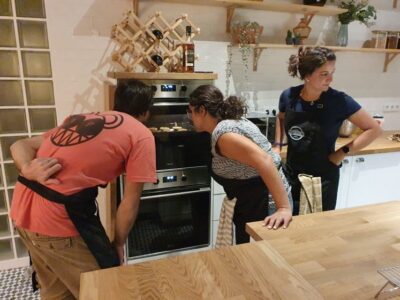
Once the tarts are ready for the oven, the class shifts into its most relaxed phase. You have time to talk with the other participants and ask the host about Porto. The local advice can include food stops and places worth adding to your plans, which is particularly handy early in a visit.
When the pastéis de nata come out, you eat the results while they are fresh and warm. Each person receives at least two pastries to take away, and the practical pattern described by several participants is three tarts each: one eaten in the studio and two packed for later. The exact amount is listed as two or more, so treat three as a likely result rather than a fixed guarantee.
The pastry is partly hands-on, not fully from scratch
Pastel de nata looks simple: flaky pastry, sweet custard, and a hot oven. Getting the balance right is less simple. The class gives you a useful look at how the pastry is shaped and how the custard comes together, with the host adding tips that are not always obvious from a printed recipe.
I especially like that the recipe is provided for taking home. Several class participants found the extra advice helpful when they later tried the tarts in their own kitchens. That makes the activity more than a one-time snack, provided you are willing to repeat the process.
Be clear about the wording from scratch. You make and shape the pastry in class, but the dough itself is ready before you arrive. This is not a criticism of the format. It is simply the difference between a compact workshop and a full baking course.
One useful home-baking warning came from a participant who planned to make a larger batch: one set of baking dishes may not be enough if you want to prepare many tarts in a reasonable amount of time. The lesson teaches the method, but your kitchen setup will affect how easily you can reproduce it.
The class is also a good place to ask questions. Hosts such as Patricia and Maria are praised for involving everyone and taking time with answers. That matters because the recipe alone cannot show you every visual cue, such as how the pastry should sit in the mold or when the custard looks ready.
A small group with a social rhythm
The maximum group size is nine people, and that is a useful limit for this kind of class. It allows the host to move around, explain the stages, and bring each person forward to participate.
You may not work continuously. The host shares the different tasks among the people present, and participants take turns coming to the front or joining a particular stage. Some people enjoy this format because it encourages conversation. Others may prefer more individual bench time.
The social side is not an extra decoration. It is built into the timing. While the tarts bake, you sit with people from different countries, enjoy a drink, and talk. Solo visitors can fit in comfortably because the activity gives you an easy reason to chat. Couples and friend groups also have plenty to do without needing to carry the whole conversation themselves.
The teaching tone is light. Past participants repeatedly describe hosts as funny, kind, inclusive, and good at putting people at ease. That does not mean every session will have the same personality, since the instructor changes, but the format gives the host plenty of room to make the class lively.
For groups of more than eight people, ask for details before booking. The standard setup is intended for a maximum of nine, and larger groups may need a different arrangement. Children over age 10 are welcome, but younger children cannot join.
More food tours around Porto:
- Porto: Pastel de Nata Cooking Class from Scratch
★ 4.9 · 468 reviews - Pastel de Nata | Workshop from scratch | Porto’s city center
★ 5.0 · 449 reviews - Taste of Porto: The Ultimate Full Meal Portuguese Food Tour
★ 5.0 · 357 reviews - Porto: Pastel de Nata Cooking Class with Porto Wine (Sé do Porto)
★ 5.0 · 340 reviews
Port wine, mimosa, or a regular glass
One drink is included, with Port wine, regular wine, or a mimosa listed as the choices. The drink gives the baking time a relaxed Porto flavor, especially when paired with a warm custard tart.
Some class participants describe receiving two alcoholic drinks during the session, but the formal inclusion is one glass. I would treat the second drink as something that may depend on the session or host, not as a promise when you book.
This detail also makes the workshop less suitable for anyone avoiding alcohol unless the host can offer a nonalcoholic option. The supplied details do not confirm alternatives, so ask before reserving if that is important to you.
The drink is not the reason to book. The pastry lesson and social setting carry the activity. Still, having a glass in hand while the tarts bake helps turn a short cooking lesson into a pleasant break from Porto’s hills and sightseeing.
Why the $41 price can make sense
At $41 per person, this is not the cheapest way to eat pastel de nata in Porto. You can buy a single tart for far less at a bakery. The value comes from the combination of instruction, a drink, a warm pastry in the studio, at least two pastries to take away, and local food suggestions.
I would judge the price by your interest in participation. If you simply want to taste the pastry, spend your money at a bakery. If you want a small activity that gives you a recipe, a social evening, and a direct introduction to one of Portugal’s best-known sweets, the cost is easier to justify.
The class also fills a useful 90-minute slot. It works on a rainy afternoon, during a break from sightseeing, or as a gentle activity after arriving in Porto. One particularly practical feature is the short duration. You do not give up half a day to attend, yet you still leave with something edible and repeatable.
The price includes the workshop, one listed drink, and two or more pastéis de nata to take away. It does not list transport, hotel pickup, or a full meal, so plan to reach the studio independently and eat elsewhere if you need more than a pastry.
Who should book this Porto activity
I would recommend it most strongly to people who enjoy food, conversation, and short creative activities. It suits couples, groups of friends, solo visitors, and families with children aged 10 or older.
Solo visitors should not worry about arriving without a companion. The shared stages and small group give you a natural way to meet people. The activity also works well for a group of friends because the hands-on format gives everyone a common task.
Families need to consider the age rule. Children under 10 cannot join, and even older children should be interested in following instructions and taking part in a shared class. This is not a free-play activity.
Baking enthusiasts should book with realistic expectations. You will learn the method and receive the recipe, but the dough is made in advance. For a full from-scratch pastry course, ask about a private option or seek a longer class.
I would also suggest booking early if the small group matters to you. With only nine places, a popular time can fill up. The provider allows cancellation up to 24 hours before the activity for a full refund, and you can reserve now and pay later, which gives you some flexibility while planning.
Tips for getting the most from the class
Arrive ready to take notes. The printed recipe is useful, but the host’s spoken tips are where much of the practical value lies. Write down any advice about pastry thickness, custard texture, and baking at home.
Ask questions during the mixing and shaping stages, not only at the end. Once the tarts are in the oven, you can focus on Porto suggestions, but the best moment to clarify technique is while the host is demonstrating it.
If you want to perform every stage yourself, contact the provider about a private workshop. In the standard group class, tasks are divided among participants so everyone can be involved, but no one person necessarily handles every step.
Wear something comfortable and expect to work with pastry and custard. The activity is relaxed rather than formal, and the bright, clean studio is set up for shared participation.
Finally, plan the rest of your day around the location. You are near the Cathedral, São Bento Station, the Luís I Bridge, and the Time Out Market, so the workshop can fit neatly between central Porto sights and meals.
Should you book the pastel de nata workshop?
Book it if you want more than a bakery stop. For $41, you get a friendly 90-minute class, a drink, warm pastries, a recipe, and at least two tarts to carry away. The hosts are consistently praised for humor, clear explanations, and making sure people take part.
Skip it if you want a private, fully individual lesson or insist on making the dough from the beginning. The shared format and prepared pastry will not meet those expectations.
For most food-focused visitors, this is a smart Porto activity: short, social, practical, and close to the city’s main sights. I would book it as a rainy-day plan, a solo-friendly evening activity, or a pleasant break between walks through the old center.
FAQ
Where does the workshop take place?
The class takes place at Boiler Studio, Rua Chã 77, in front of Porto Cathedral in central Porto. It is near São Bento Train Station, the Luís I Bridge, and the Time Out Market.
How long does the pastel de nata class last?
The workshop lasts 1.5 hours, or 90 minutes.
How much does the activity cost?
The listed price is $41 per person.
What drink is included?
One glass is included. You can choose Port wine, regular wine, or a mimosa.
How many pastries can I take home?
You receive two or more pastel de nata to take home. The amount is not stated as a fixed number, though some sessions provide three per person.
Do I make the pastry dough from scratch?
No. The dough is prepared before the workshop because it needs about three hours to be ready. You roll and shape the prepared dough, make the custard, and receive the recipe for home use.
What language is the workshop taught in?
The instructor teaches in English.
Can children attend the class?
Children over age 10 are welcome. Children under 10 are not permitted to take part.
More Workshops in Porto
- Matosinhos: Surfing Lesson with Equipment
★ 4.8 · 704 reviews - Porto: Small Group Surf Lesson with Transportation
★ 4.9 · 594 reviews - Porto: Tile-Painting Workshop with Porto Wine – Bainharia
★ 4.9 · 526 reviews - Port Wine class with 3 or 5 Port tasting and pairings
★ 4.9 · 441 reviews
New around Porto
- Porto: City Bike Rental★ 4.6 · 75 reviews
- Fado Concert with Welcome Drink★ 5.0 · 75 reviews
- Boat Trip to Régua Through the Douro Valley with Breakfast and Lunch★ 4.5 · 76 reviews
- Porto City Tour Half Day – Private★ 5.0 · 77 reviews
- Port : Private Cruise in the Douro — 6 Bridges & Sunsets★ 5.0 · 78 reviews
- Porto Private Airport Departure Transfer★ 4.5 · 78 reviews
- Douro Valley Small-Group Tour: 2 Wineries, Lunch, Optional Cruise★ 5.0 · 78 reviews
- Half-Day Walking Tour Tasting Local Food in Porto★ 5.0 · 78 reviews
Food Tours, compared.
Lisbon Small-Group Food Tour with 18 Tastings in Alfama District
Read our review →
Baixa District Food Tour with Dinner and Drinks
Read our review →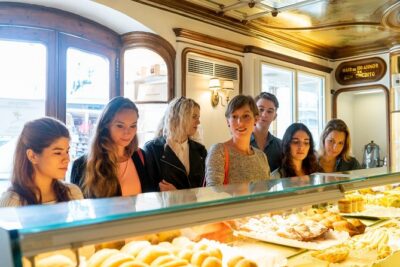
Devour Lisbon: The Ultimate Portuguese Food Tour
Read our review →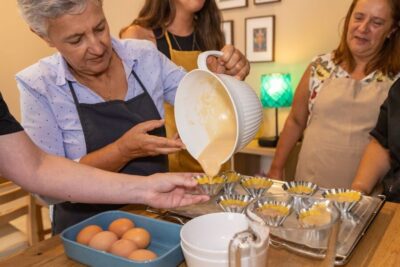
Pastel de Nata Cooking Class with Grandma’s Recipe
Read our review →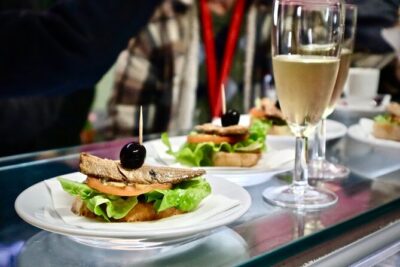
Lisbon Food Tour with 10+ Tastings of Local Delicacies & Wines
Read our review →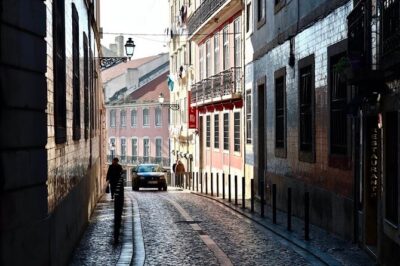
Lisbon Private Food Tour – Taste 10+ Local Dishes & Wines
Read our review →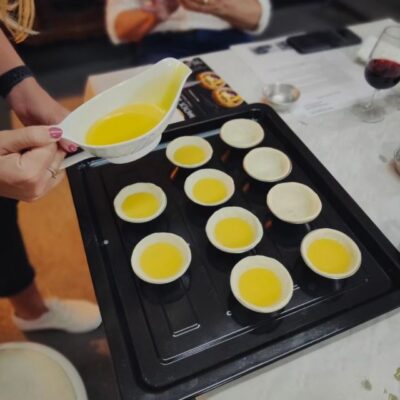
Pastel de Nata Cooking Class with Port Wine – Sé
Read our review →Browse the lists this tour appears in