
Reviewed · 1-DAY TOURS
Lisboa Story Centre: 1-Day Admission Ticket
Lisbon’s past comes alive here through reconstructed rooms, sound, film, and a carefully staged account of the 1755 earthquake. Instead of reading a long wall of dates, you move through six areas that show how the city grew, traded, suffered, and rebuilt itself.
I like the clear chronological route and the excellent choice of audio languages, including child-friendly Portuguese. I also like the mix of physical sets and multimedia, which gives children something to watch while adults pick up useful background. The main drawback is that the final section gives less attention to contemporary Lisbon, and the exhibition areas may feel warm because the building does not have air conditioning.
Key points to know before you go
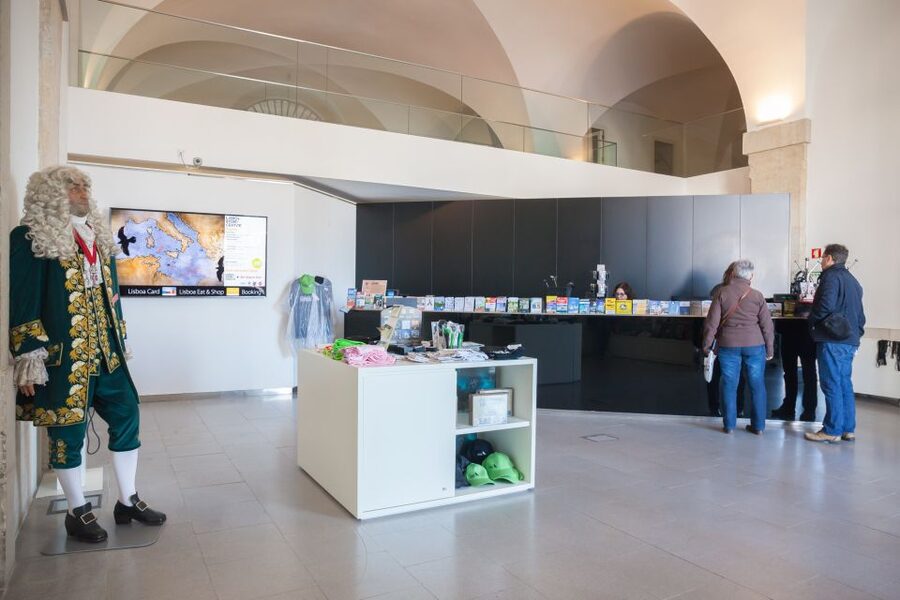
- A 60-minute history lesson: The main route moves in order from Lisbon’s earliest civilizations to the present.
- A powerful earthquake presentation: A staged account of All Saints’ Day in 1755 explains both the disaster and its effect on the city.
- A 16th-century warehouse set: You see the trading world of caravela ships and goods arriving from the New World.
- A useful audio guide: Choose from Portuguese, English, Spanish, French, Italian, German, Russian, Mandarin, or Japanese. Portuguese also has an adult and child version.
- A virtual city model upstairs: The sixth area helps you connect Lisbon’s architecture and neighborhoods with the city’s past.
- An easy central stop: The centre sits in the East Wing of Terreiro do Paço, is wheelchair accessible, and offers skip-the-ticket-line entry.
Starting at Terreiro do Paço
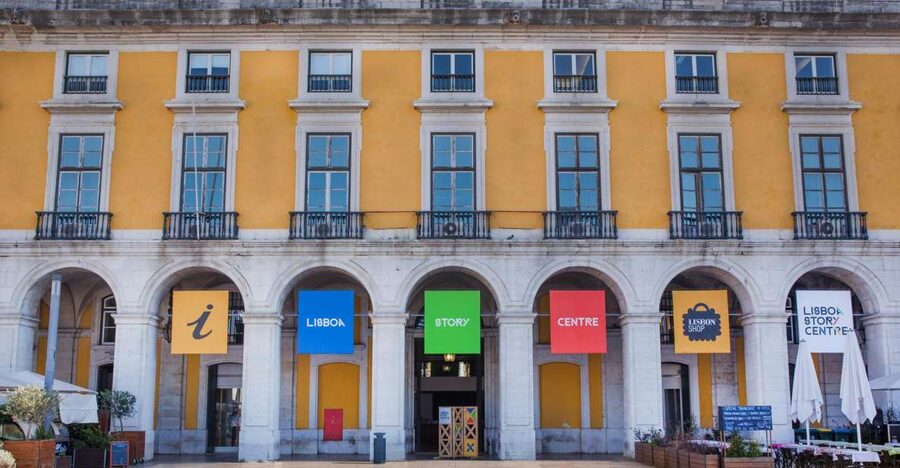
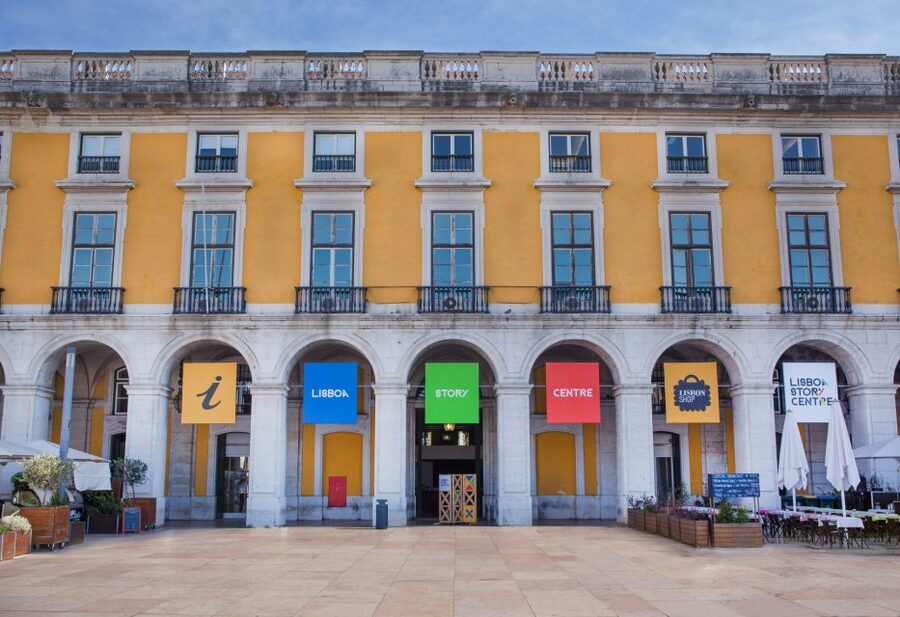
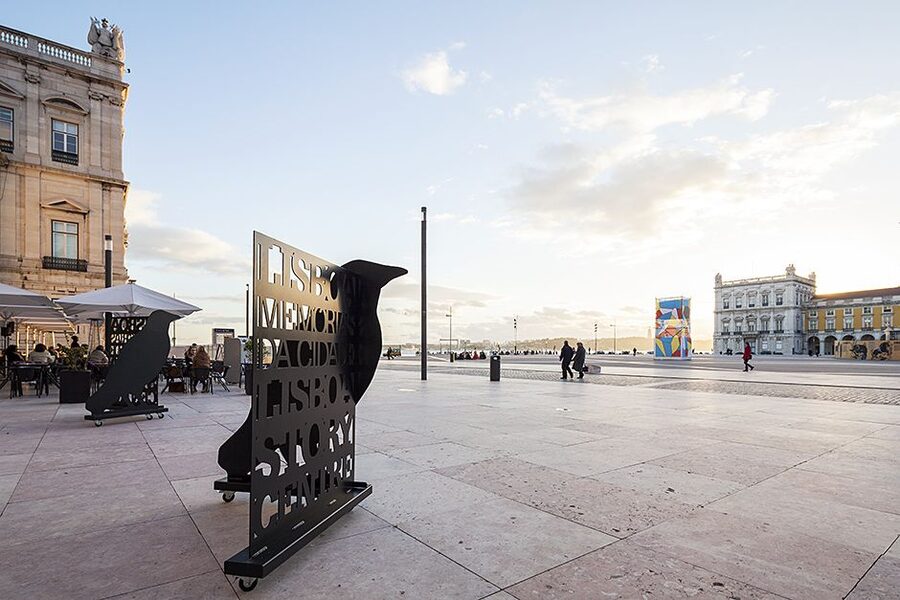
Lisboa Story Centre occupies the East Wing of the renovated Terreiro do Paço, Lisbon’s grand waterfront square. The address is Terreiro do Paço, 78-81, in the 1100-148 area of Lisbon, so it is easy to pair with a walk around the square and the Baixa district.
You enter with a ticket valid for one day, but the core visit itself takes about 60 minutes. That makes this a handy first stop, especially if you want a quick explanation of the city before walking through it.
The centre is open daily from 10:00 to 19:00, with the last entrance at 18:00. I would avoid arriving at the very end of the day. The centre is designed as a timed journey through several areas, and rushing the final rooms would weaken the experience.
The ticket includes the audio guide, so you do not need to arrange a separate guide. Audio is available in eight languages, with Portuguese offered in both adult and child versions. English, Spanish, French, Italian, German, Russian, Mandarin, and Japanese are also available.
A few other Lisbon half-days worth a look
- Sintra and Cascais Small-Group Day Trip from Lisbon
★ 5.0 · 7,018 reviews - Three Cities in One Day: Porto, Nazare and Obidos from Lisbon
★ 4.5 · 3,572 reviews - From Lisbon: Day Trip to Porto, Óbidos, and Nazaré
★ 4.5 · 1,311 reviews
Five rooms that build Lisbon’s story
The five main exhibition areas are on the ground floor. They are arranged in chronological order, which helps you follow the broad shape of Lisbon’s development without needing much prior knowledge.
A recorded multilingual storyteller guides you through the route. This is not a traditional tour led by a person who can answer questions as you go. Instead, you follow a fixed presentation with narration, sets, sound, and visual effects.
That format has a clear advantage: the story stays focused and moves at a steady pace. The tradeoff is that you have less freedom to linger over one subject or ask about a detail that catches your attention.
Early Lisbon and the city’s first chapters
The opening areas cover Lisbon from its earliest civilizations onward. The supplied information does not give a full list of every period or settlement presented, so you should think of this part as a broad introduction rather than a specialist archaeological display.
That broad approach works well if you are new to Lisbon. You get a sense that the city is the result of many layers, not simply a place defined by the Age of Discoveries or the earthquake.
The presentation is playful and designed for a general audience. I would not come expecting a quiet museum with case after case of original objects. The centre’s strength is the way it stages events and makes the city’s development easier to picture.
The 16th-century warehouse
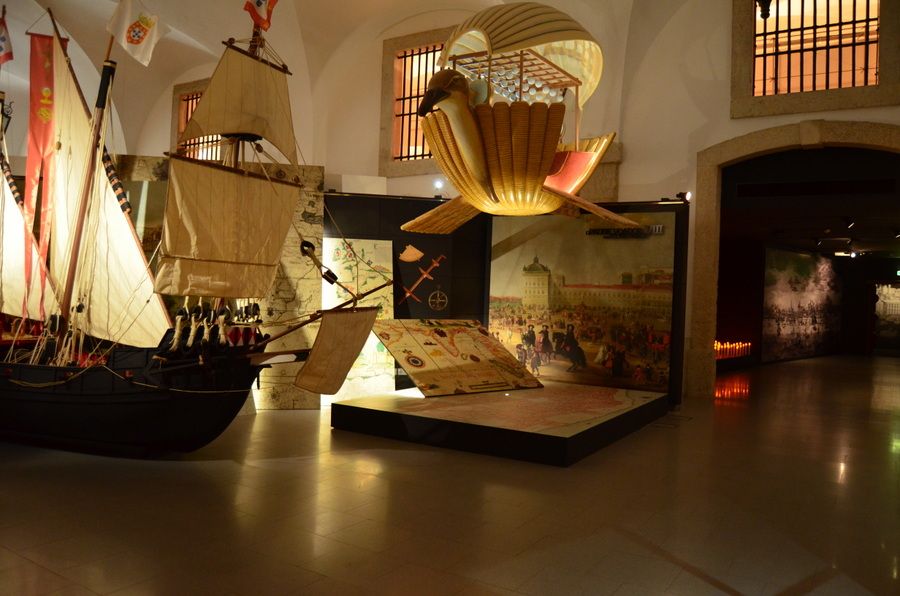
One of the most memorable settings is a reconstruction of a 16th-century warehouse. Here, you encounter goods linked to the New World and the trading activity carried by caravela ships.
This room gives useful scale to Lisbon’s maritime past. A date in a history book can feel remote. A warehouse, cargo, and ship imagery make the commercial side of the period more concrete.
It also helps explain why Lisbon became so important. The city was not shaped only by kings, monuments, and grand voyages. It was also shaped by goods moving through its port and by the people who handled them.
The centre presents this material in a staged way, so expect atmosphere rather than a complete display of shipbuilding or maritime history. For a first introduction, though, the warehouse is a strong choice because it turns an abstract trading network into a place you can picture.
Same coastline, a completely different day out:
- Lisbon City Center Tour – The Unmissable Lisbon
★ 5.0 · 22,234 reviews - Lisbon: Sintra, Pena, Regaleira, Cabo da Roca & Cascais
★ 4.7 · 19,656 reviews - Lisbon: Jerónimos Monastery Entrance Ticket
★ 4.1 · 14,164 reviews - Lisbon: History, Stories and Lifestyle Walking Tour
★ 4.8 · 10,902 reviews
The 1755 earthquake and Lisbon’s great turning point
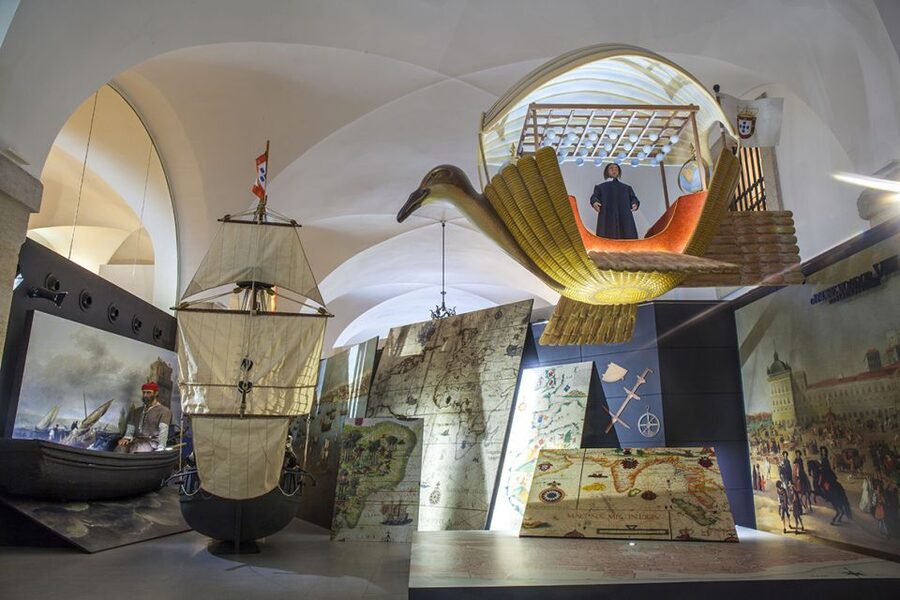
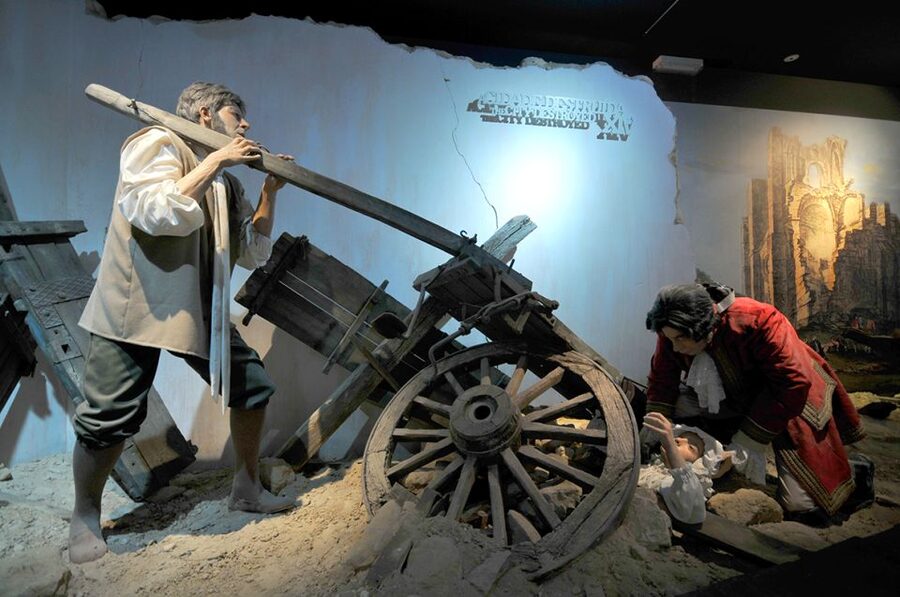
The most dramatic part of the visit deals with All Saints’ Day in 1755, when the earthquake and its consequences changed Lisbon. The centre recreates the disaster through a sensory presentation rather than simply describing it in text.
This section matters because the earthquake is not just one event in Lisbon’s past. It helps explain the shape of the central city and the rebuilding that followed. The presentation gives you a clearer reason to pay attention when you later walk through Baixa and Terreiro do Paço.
The effect is designed to be engaging, but it is still a serious subject. You should expect a theatrical treatment, not a detailed scientific lecture on earthquakes. The goal is to show the human and urban consequences of the disaster in a way that a wide age range can understand.
For families, this is likely one of the easiest sections to remember. For younger children, the sensory presentation may be more intense than the earlier rooms. If your child is sensitive to loud effects or dramatic scenes, keep that in mind.
Following the Marquis of Pombal’s rebuilding plan
After the earthquake presentation, the story turns toward reconstruction and the vision of the Marquis of Pombal. You see how the rebuilding of Lisbon became a major project, rather than a simple return to what had existed before.
This is a useful bridge between history and sightseeing. After the centre, the straight streets and planned character of Baixa make more sense. The attraction does not replace seeing the city on foot, but it gives you a framework for reading what you see.
I especially like this part because it shows that urban design can be a response to crisis. The story is not only about destruction. It is also about decisions, planning, and the attempt to create a different city afterward.
The presentation remains fairly simple and direct. That is part of its appeal for a short visit, though visitors wanting fine-grained political or architectural detail may find it introductory.
The sixth area and the virtual model upstairs
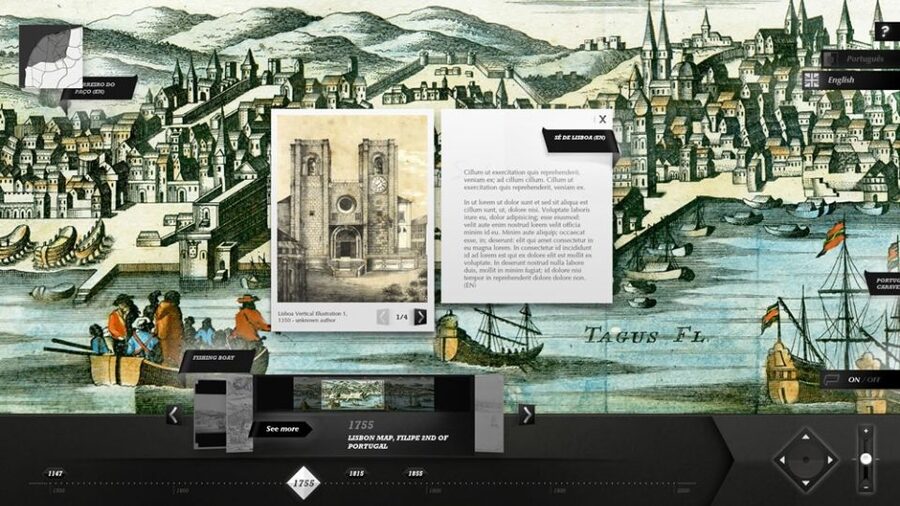
The sixth exhibition area is on the first floor and changes the pace. Instead of walking through a sequence of staged historical scenes, you examine a virtual scale model of Lisbon.
This model helps you see the city as a whole. It covers different types of architecture and adds more detail about Lisbon’s development. After the ground-floor route, the model gives you a chance to connect separate historical moments with the city’s wider form.
I would allow time for this area rather than treating it as an optional extra. The first five rooms tell you what happened. The virtual model helps you understand where those changes are visible.
The material also points you toward modern Lisbon and encourages you to discover the city beyond the historic centre. Still, the contemporary period receives less attention than the earlier chapters. If you want a strong account of Lisbon from the twentieth century to today, you will need another source.
A temporary exhibition area is also included. Its subject relates to the centre’s main themes, but the specific display can change. That means the temporary section is a bonus rather than something to plan your entire visit around.
How the audio guide shapes the experience
The audio guide is central to the visit. You move through the rooms while a recorded multilingual storyteller explains the scenes and events. This keeps the route easy to follow, even if you know little about Portuguese history.
The language selection is unusually useful for a family or mixed-language group. Portuguese has separate adult and child versions, while the other listed options include English, Spanish, French, Italian, German, Russian, Mandarin, and Japanese.
An audio guide also lets the centre present sound and narration as part of the show. That is more effective here than a silent handset in a conventional gallery because the rooms rely on atmosphere and staged action.
There is a limit, of course. A recording cannot adjust its explanation to your interests. You cannot ask it why a particular building looks the way it does or request more detail about a historical figure. If you want a personal guide, this is not that kind of experience.
For most visitors, the fixed narration is a good trade. It keeps a 60-minute visit moving and prevents the story from becoming a pile of disconnected facts.
Is it fun for children?
The centre uses a playful style, with elaborate sets and multimedia effects rather than dense text. That makes it a sensible choice for families who want some history without asking children to spend an hour in a quiet gallery.
The reconstructed warehouse, ships, and earthquake presentation give younger visitors clear visual anchors. The child version of the Portuguese audio guide is another useful touch for Portuguese-speaking families.
I would still set expectations. This is a history attraction, not a theme-park ride. Children who enjoy stories, models, and staged scenes should find enough to hold their attention, while children who need constant physical activity may lose interest during the narration.
A family visit may work best when you connect the centre to a short walk afterward. You can point out the square and central streets while the earthquake and rebuilding story is still fresh.
Comfort, access, and the practical details
The centre is wheelchair accessible, which makes it a practical option for visitors who need step-free access. The experience takes place across the ground floor and first floor, but the attraction specifically states that it is wheelchair accessible.
The lack of air conditioning is worth noting, particularly in warm weather. One recent comment found the installations well explained but felt the building was too warm. Plan your visit with that in mind, especially if you are already tired from walking Lisbon’s hills.
The attraction offers skip-the-ticket-line entry, which can save time at a busy central site. You still need to check the available starting times when booking, since the ticket is valid for one day but the visit follows scheduled entry arrangements.
Free cancellation is available up to 24 hours in advance for a full refund. You can also reserve now and pay later, which helps if your Lisbon plans are still shifting.
What the ticket is worth
The value depends on how you use it. Lisboa Story Centre is not a full-day museum. The principal route lasts around 60 minutes, so the ticket makes the most sense as a compact introduction rather than a major standalone attraction.
Its location improves the value. You can combine it with Terreiro do Paço, Baixa, and nearby central sights without spending time crossing the city. The centre gives you context before you see the rebuilt streets in person.
The audio guide is included, and the ticket also covers the virtual model and temporary exhibition area. That makes the admission more than a single short film, though the centre’s relatively small time commitment should remain part of your calculation.
I would consider it good value for a first visit if you want an organized overview, especially when traveling with children or when the weather makes an indoor stop welcome. If you already know Lisbon’s history well, you may find the presentation too basic.
The 4.5 rating from 140 reviews matches the experience described by the available comments: the centre is generally seen as interesting, well explained, and enjoyable for children. The main cautions are the warm interior and the limited treatment of contemporary Lisbon.
Who should book Lisboa Story Centre?
I would recommend it most strongly to:
- First-time visitors who want a quick history of Lisbon before sightseeing
- Families looking for a more active alternative to a traditional museum
- Visitors who prefer audio-guided attractions in their own language
- Anyone curious about the 1755 earthquake and the rebuilding of Baixa
- People with a spare hour near Terreiro do Paço
- Visitors who appreciate models and visual explanations of city planning
I would be more cautious if you want a scholarly museum, extensive original artifacts, or a detailed account of recent Lisbon. The centre uses theatre and technology to make history clear, so it favors broad understanding over academic depth.
Should you book it?
Book Lisboa Story Centre if you want Lisbon’s main historical chapters explained in a lively, compact format. The 16th-century warehouse, the New World cargo, the earthquake presentation, and the virtual model each add something different, and the central location makes the stop easy to fit into a day.
Skip it if your schedule is tight and you prefer to spend every hour outdoors, or if your main interest is modern Lisbon. For most first-time visitors, though, this is a sensible one-hour orientation, particularly with children. Go earlier in the day if possible, when you are less rushed and the warm interior will be easier to manage.
FAQ
How long does the Lisboa Story Centre visit take?
The main journey takes about 60 minutes. The attraction also includes a virtual scale model on the first floor and a temporary exhibition area, so you may spend additional time there.
Where is Lisboa Story Centre located?
It is located at Terreiro do Paço, 78-81, 1100-148 Lisboa, in the East Wing of the renovated Terreiro do Paço.
What are the opening hours?
Lisboa Story Centre is open every day from 10:00 to 19:00. The last entrance is at 18:00.
Is an audio guide included?
Yes. Admission includes an audio guide with a recorded multilingual storyteller.
Which audio guide languages are available?
Audio guides are available in Portuguese, English, Spanish, French, Italian, German, Russian, Mandarin, and Japanese. Portuguese has both adult and child versions.
Is Lisboa Story Centre wheelchair accessible?
Yes. The attraction is wheelchair accessible.
What historical periods does the centre cover?
The five main ground-floor areas cover Lisbon’s history from the earliest civilizations to the present. The displays focus on major events, including 16th-century trade, the 1755 earthquake, and the rebuilding led by the Marquis of Pombal.
Does the ticket include the virtual Lisbon model?
Yes. The sixth exhibition area, located on the first floor, features a virtual scale model of Lisbon and provides more detail about the city’s architecture and history.
Can I cancel my booking?
Yes. You can cancel up to 24 hours in advance for a full refund. The reserve-now, pay-later option is also available.
New around Lisbon
- Arrábida, Setúbal, Sesimbra, Olive with wine tasting★ 5.0 · 75 reviews
- Lisbon: Sunset Sailing Boat Cruise with Wine★ 5.0 · 75 reviews
- Lisbon Half Day Private Tour★ 5.0 · 75 reviews
- Private Half Day Tour to Fatima from Lisbon★ 5.0 · 75 reviews
- Fátima, Nazaré and Óbidos Private Tour from Lisbon★ 5.0 · 76 reviews
- Central Lisbon 3-Hour Guided E-Bike Tour★ 4.8 · 76 reviews
- Lisbon Historic City Tour by Tuk-Tuk★ 5.0 · 76 reviews
- Sintra World Heritage and Cascais Village Private Deluxe Tour★ 5.0 · 76 reviews
1-Day Tours, compared.
Sintra and Cascais Small-Group Day Trip from Lisbon
Read our review →

Three Cities in One Day: Porto, Nazare and Obidos from Lisbon
Read our review →
Best of Braga and Guimaraes Day Trip from Porto
Read our review →

Day Trip from Porto to Santiago de Compostela and Valença
Read our review →
Fatima Batalha Nazare & Obidos Small Group Day Trip
Read our review →Browse the lists this tour appears in