
Reviewed · FOOD TOURS
Pastel de Nata | Workshop from scratch | Porto’s city center
The best part of this Porto workshop is that you make the pastry dough, not just spoon custard into ready-made shells. You learn the full process behind pastel de nata, from pastry and cream to the final hot, crisp result, with a glass of local wine along the way.
I like the hands-on format, which gives you a useful recipe and techniques to try at home. I also like the small maximum group of 12, since instructors such as Vanessa, Ana, Clara, and Mariah can keep the class relaxed and involve people at different stages.
The main thing to consider is that this is a shared group lesson, not a private cooking class. You take turns with the tasks, and punctuality is strict: the door closes at the scheduled start time, with no late entry.
Key things to know before booking
- You make the pastry from scratch: The class covers the dough as well as the custard filling, which makes it more useful than a simple pastry demonstration.
- Warm pastel de nata are served at the end: The final tasting includes the pastries you helped prepare, with coffee or tea and local wine included.
- The class lasts about 2 hours and 30 minutes: That gives the pastry process time to unfold without making the session feel hurried.
- Groups can reach 12 people: You share the work, so this suits sociable visitors more than anyone wanting constant one-to-one instruction.
- The meeting point is central: You start and finish at R. do Souto 67, close to public transportation in Porto’s city center.
- Strict age and arrival rules apply: Children under 15 cannot attend or accompany booked participants, and anyone aged 15 to 17 must come with an adult.
Making Porto’s famous custard tart from the beginning
Pastel de nata looks simple: flaky pastry, soft custard, and a browned top. The work is in the details. Good pastry must be thin and layered, while the filling needs the right balance of sweetness and texture.
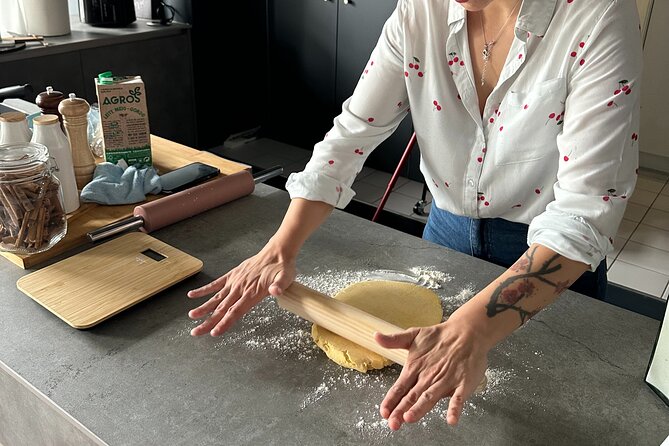
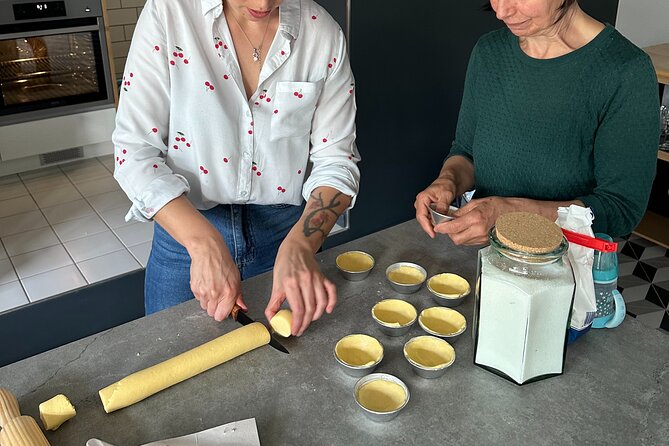
This workshop gives you the full route rather than a shortcut. You learn how the dough is prepared, how it is shaped into pastry shells, and how the custard is made before everything goes into the oven. That matters if you want to repeat the recipe at home, since the pastry is often the part home bakers find hardest.
The instructor demonstrates each stage, then gives members of the group turns with the practical work. You may not handle every single step from beginning to end, but you are not simply watching a chef work. The format is designed around shared participation.
That arrangement also gives the class a social feel. You are working beside other adults, talking as you go, and learning a few things about Portuguese food and culture. The local wine helps set an easy pace, though the workshop remains a cooking class rather than a wine tasting.
More City Tours in Porto
- The Unvanquished Tour in Porto City Center
★ 5.0 · 26,497 reviews - Porto: City Highlights 3-Hour Guided Electric Bike Tour
★ 4.8 · 3,092 reviews - Porto: City Train Tour, River Cruise & Wine Cellar
★ 3.9 · 2,601 reviews
The first steps: pastry, technique, and a glass of local wine
The session begins at the scheduled time, so arrive early enough to find R. do Souto 67 without rushing. This is especially important in central Porto, where short streets and busy walking routes can make a simple address take longer to locate than expected.
Once the class starts, the instructor introduces the process and begins with the pastry. The dough work is one of the most useful parts of the experience. One class member described learning rough puff pastry as a new technique, which is a good indication of the practical level: you do not need to arrive as an experienced baker.
The teachers have different personalities, but the strongest pattern is clear. Vanessa is described as funny, patient, and good at explaining each stage. Ana is a professionally trained pastry chef who shares tips for getting the dough and custard right. Clara is cheerful and clear, while Mariah brings an easy, engaging teaching style. Cat has also led the session and explains the pastry’s background as well as its method.
You may be assigned one task, then watch as someone else handles the next. That can be a drawback if you want to roll, shape, mix, and fill every tart yourself. It is also how the class keeps moving with a group of up to 12 people.
The custard stage is where the lesson earns its price
The filling is more than a quick mixture poured into pastry. You learn about the custard process, including the simple syrup stage and the practical details that can affect the final texture.
This is where a good instructor makes a real difference. The class leaders explain what they are doing, demonstrate the method, and offer small tips that are hard to pick up from a recipe alone. The relaxed teaching style is useful for beginners, but experienced home bakers may still find the pastry and syrup techniques worthwhile.
The food and cultural context add value, too. You learn how pastel de nata fits into Portuguese life while preparing the dessert itself. It is a modest cultural lesson, but a more memorable one than simply hearing a short explanation in front of a monument.
The local wine is included, along with coffee or tea. You can sip while the preparation continues, making the workshop feel like a Portuguese food experience rather than a formal baking examination. If you do not drink alcohol, the coffee and tea provide another included option.
Baking time turns the group work into a proper tasting
Once the shells and custard are ready, the pastries go into the oven. The waiting period helps the session feel unhurried, and the instructor can answer questions or offer more advice about making the recipe at home.
The reward is a plate of warm pastel de nata. Fresh from the oven, the pastry is at its best: crisp outside, soft inside, and still warm enough to make the final tasting feel like part of the lesson rather than a separate snack.
You should eat at least one soon after it comes out. One practical tip from the class experience is that pastel de nata loses some of its appeal when it cools, unless you have access to an oven for reheating. If you are staying in an apartment or hotel with suitable cooking equipment, you may have enough pastries to save some for breakfast the next day.
Coffee or tea rounds out the tasting. This is a simple finish, but it gives you time to enjoy the result and compare it with the pastel de nata you have eaten around Porto.
More Food Tours in Porto
- Porto: Pastel de Nata Pastry-Making Workshop
★ 4.9 · 1,542 reviews - Porto: Pastel de Nata Cooking Class with Port Wine – Sé
★ 4.8 · 888 reviews - Porto: 3-Hour Food Tour
★ 4.9 · 807 reviews - Workshops Pasteis de Nata in Porto, Portugal
★ 4.9 · 520 reviews
How much participation should you expect?
This point deserves attention before you book. The workshop is not an individual or paired lesson. It is a group activity, with up to 12 participants, and people alternate through the different phases.
In a smaller class, your turn may come often. Some sessions have had only four participants, creating a particularly intimate atmosphere. A full group of 10 or 12 can still work well, but the shared format means you should be comfortable watching for parts of the recipe and stepping in when invited.
I see this as a social cooking class, not a private pastry apprenticeship. You will learn the method and take part, but you should not expect uninterrupted access to the work surface.
If full participation is important to you, book a private lesson rather than this group experience. That is the clearest way to avoid disappointment.
The central Porto setting is useful, but plan your arrival
The address, R. do Souto 67, is in Porto’s city center and near public transportation. The activity begins and ends at the same location, so you do not need to arrange a transfer or find your way back to a separate finishing point.
Pickups and drop-offs are not included. In practice, that is not a serious problem for a central workshop, but you need to make your own way there.
Allow extra time before the start. The rules are unusually firm: once the class begins, the door closes and late entry is not permitted. No exceptions are made, and you cannot simply join halfway through the pastry preparation.
This also means the workshop is a poor choice if you are booking it between two uncertain activities. Give yourself a comfortable buffer, especially if you are coming from another part of Porto.
Is $48.36 a fair price?
At $48.36 per person, this is not the cheapest way to eat a pastel de nata in Porto. You can buy the pastry itself for much less. The value comes from the lesson, the ingredients, the instructor’s guidance, the local wine, and the warm tasting at the end.
The price makes the most sense if you want to learn a skill you can repeat at home. Making the dough from scratch is the key distinction. A class that only demonstrates the custard or supplies prepared pastry would offer less practical value.
It also works well as a two-and-a-half-hour break from sightseeing. You get food, conversation, and a little Portuguese culinary background in one sitting. For couples, friends, and solo visitors who enjoy meeting people, that combination can justify the cost.
The value is lower if you dislike group activities or have no interest in baking after your trip. In that case, a pastry stop at a local café may suit you better.
The experience is booked an average of 23 days ahead, so popular dates may fill early. Free cancellation is available if you cancel at least 24 hours before the start time. Changes or cancellations inside that window are not accepted for a refund.
Who will enjoy this pastel de nata workshop?
I would recommend it most strongly to:
- First-time bakers: The instructors explain and demonstrate the process in a way that makes the recipe approachable.
- Food-focused visitors: You learn about a famous Portuguese food while preparing and eating it.
- Couples and friends: The shared tasks make it easy to participate together without needing advanced cooking skills.
- Solo visitors: The group format gives you a natural way to meet other adults during your Porto stay.
- Home cooks: The dough, syrup, and custard advice can be useful long after the class ends.
- People with limited time: The workshop takes about two and a half hours and returns you to the same central meeting point.
I would not choose it for young children. The class is for adults, children under 15 are not allowed to participate or accompany booked participants, and those aged 15 to 17 must attend with an adult.
It is also unsuitable if you are intolerant to gluten or lactose. Animals, including service animals, are not permitted in the workshop space. Only people with reservations may enter, so you cannot bring a nonparticipating companion to wait inside.
Small details that can make the experience better
Book a time that leaves room around the class. Since late entry is impossible, arriving early is more important here than at a casual food stop.
Wear something comfortable for a hands-on kitchen session, and plan to eat the pastries while they are warm. The class includes enough food for a proper tasting, but the central attraction is learning the process, not replacing a full meal.
Pay attention during the dough stage. The custard is the part most people associate with the tart, but the pastry gives it structure and texture. If you want to recreate the experience at home, take mental notes about how the instructor handles the dough, the syrup, and the filling.
Finally, accept the shared rhythm. You may not get a turn at every moment, but watching another participant can make the technique easier to see. The best attitude is to treat it as a cooperative kitchen lesson, not a private exam.
Should you book it?
Yes, if you want more than a quick taste of Porto’s signature pastry. The full dough-to-custard process, warm final tasting, local wine, and central location give this workshop a strong mix of food and culture for the price.
Book with care if you need private instruction, have strict dietary needs, or are likely to arrive late. For everyone else, especially visitors who want a practical souvenir they can make at home, this is one of the more enjoyable ways to spend two and a half hours in Porto.
FAQ
How long does the pastel de nata workshop last?
The experience lasts approximately 2 hours and 30 minutes.
Where does the workshop start and finish?
It starts at R. do Souto 67, 4050-595 Porto, Portugal, and finishes back at the same meeting point.
Is wine included?
Yes. Local wine is included, along with coffee and/or tea.
How many people can join the class?
The group can include a maximum of 12 participants.
Can children attend the workshop?
Children under 15 are not permitted to participate or accompany people with reservations. Participants aged 15 to 17 may attend only when accompanied by an adult.
What happens if I arrive late?
Late entry is not permitted. The door closes at the scheduled start time, and no exceptions are made.
More Workshops in Porto
- Matosinhos: Surfing Lesson with Equipment
★ 4.8 · 704 reviews - Porto: Small Group Surf Lesson with Transportation
★ 4.9 · 594 reviews - Porto: Tile-Painting Workshop with Porto Wine – Bainharia
★ 4.9 · 526 reviews - Porto: Pastel de Nata Cooking Class from Scratch
★ 4.9 · 468 reviews
New around Porto
- Porto: City Bike Rental★ 4.6 · 75 reviews
- Fado Concert with Welcome Drink★ 5.0 · 75 reviews
- Boat Trip to Régua Through the Douro Valley with Breakfast and Lunch★ 4.5 · 76 reviews
- Porto City Tour Half Day – Private★ 5.0 · 77 reviews
- Port : Private Cruise in the Douro — 6 Bridges & Sunsets★ 5.0 · 78 reviews
- Porto Private Airport Departure Transfer★ 4.5 · 78 reviews
- Douro Valley Small-Group Tour: 2 Wineries, Lunch, Optional Cruise★ 5.0 · 78 reviews
- Half-Day Walking Tour Tasting Local Food in Porto★ 5.0 · 78 reviews
Food Tours, compared.
Lisbon Small-Group Food Tour with 18 Tastings in Alfama District
Read our review →
Baixa District Food Tour with Dinner and Drinks
Read our review →
Devour Lisbon: The Ultimate Portuguese Food Tour
Read our review →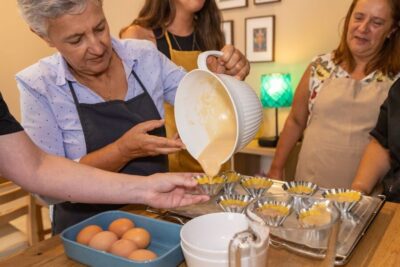
Pastel de Nata Cooking Class with Grandma’s Recipe
Read our review →
Lisbon Food Tour with 10+ Tastings of Local Delicacies & Wines
Read our review →
Lisbon Private Food Tour – Taste 10+ Local Dishes & Wines
Read our review →Browse the lists this tour appears in