
Reviewed · FOOD & DRINK
Private group Lisbon Roots, Food & Cultural Walk
Lisbon’s best introduction may be found between a cup of coffee, a glass of wine, and the old lanes of Mouraria. This private food and culture walk links downtown squares with the neighborhood where Fado took root, while more than 10 tastings give you a practical feel for Portuguese eating and drinking.
I like the small-scale format, since your guide can adjust the pace and answer the questions that matter to your group. I also like the mix of food and difficult history, from the scarred São Domingos Church to the memorial for the victims of the 1506 massacre. The main drawback is physical: two kilometers can feel like more on steep cobblestones and steps.
Key points to know before booking
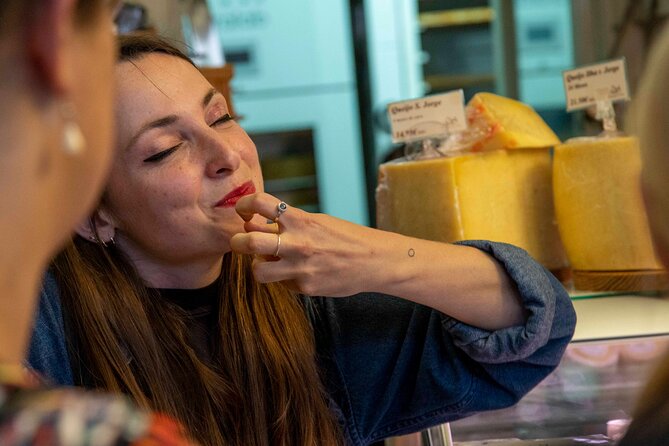
- More than 10 tastings: Food, wine, coffee, tea, snacks, and other alcoholic drinks are included.
- Mouraria at the center: You explore Lisbon’s most multicultural neighborhood and the birthplace of Fado.
- Private group setting: Only your party takes part, with a more personal pace than a large group tour.
- Six food stops in about 3.5 hours: The route covers downtown and Mouraria without using transport between sights.
- History comes with the snacks: São Domingos Church, the 1506 massacre memorial, and the Chapel of Our Lady of Health add weight to the walk.
- Moderate fitness required: The route includes uphill walking, uneven cobbles, and stairs.
A food walk with Lisbon’s past underfoot
This is not simply a crawl from one restaurant to the next. The route begins in the old downtown area and moves toward Mouraria, using food as a way to explain how Lisbon developed from the 12th century to the present.
That approach matters because Portuguese food is tied to trade, migration, religion, poverty, and sea travel. The food stops include familiar Portuguese staples and influences shaped by the country’s contact with Africa, India, Madeira, and other parts of the wider Portuguese world.
You will spend about three and a half hours walking roughly 1.2 miles, or 2 kilometers. That distance looks modest, but old Lisbon rarely offers flat, easy pavement. Plan for uphill sections, cobblestones, and steps leading down through older streets.
The walk is private, so it suits families, couples, and groups of friends who want to ask questions freely. It also gives the guide room to explain local customs rather than rushing everyone through a fixed script. Guides associated with this experience include Pedro, Dani, Daniela, Daniel, and Ricardo. The exact guide depends on the date and booking.
More Walking Tours in Lisbon
- Lisbon: History, Stories and Lifestyle Walking Tour
★ 4.8 · 10,902 reviews - Best of Lisbon Small-Group Guided Walking Tour
★ 5.0 · 4,869 reviews - Lisbon: Food and Wine Small Group Walking Tour
★ 4.9 · 4,082 reviews
Starting at São Domingos Square
The meeting point is Largo de São Domingos, a useful place to begin because it brings several layers of Lisbon together in a small area. The square is used by local residents and Lisbon’s African community, and it is also home to cafés, shops, a memorial mural, and the famous A Ginjinha cherry-brandy shop.
This is a good first lesson in how Lisbon works. Tourist sights, everyday commerce, immigrant communities, and painful history sit close together here. You are not being led straight toward the postcard views and then sent away. Instead, the walk begins in a place where the city’s present and past overlap.
The guide then helps connect the square to the surrounding downtown. Expect an introduction to Portuguese food customs and the broader story of Lisbon before the route moves toward its tasting stops.
São Domingos Church and Rossio Square
The São Domingos Church dates from the 13th century and has endured earthquakes, war, and a major fire. Its interior is especially striking because the restoration after the 1959 fire did not try to hide every scar. The simple finish still recalls the destruction.
You spend only about five minutes here, but that is enough to understand why the church matters. It is not merely an old building to photograph. Its damaged interior gives you a direct sense of how often Lisbon has had to rebuild.
From the church, the route reaches Rossio, officially King Pedro IV Square. This has been one of Lisbon’s central meeting places since the Middle Ages, used over time for celebrations, revolts, bullfights, and executions. Today, flower sellers, shoppers, commuters, and visitors cross the square throughout the day.
Rossio is an easy place to orient yourself. The wave-pattern pavement, grand buildings, and open space make a sharp contrast with the narrow lanes ahead. If your guide pauses here, take a moment to notice how much of Lisbon’s daily life passes through one square.
Santa Justa and the shape of old Lisbon
The Santa Justa Lift is one of downtown Lisbon’s most recognizable structures. Built in 1902, it rises 45 meters and links the lower streets with the higher Bairro Alto area. Its iron design reflects the post-Eiffel style of the period, and its architect, Raoul de Mesnier du Ponsard, was born in Portugal and apprenticed to Gustave Eiffel.
The walk gives you a look at the lift rather than a ride to the top. Admission is not included, and the itinerary allows only about two minutes at the stop. That is worth knowing if you have imagined a long visit or a panoramic viewpoint.
Still, the lift is useful in the story of Lisbon because it shows the city’s basic problem: important neighborhoods sit on hills. It also explains why walking routes that look short on a map can require real effort.
A few other Lisbon half-days worth a look
- Winner 2025 Undiscovered Lisbon Food & Wine Tour by Eating Europe
★ 5.0 · 6,390 reviews - Lisbon Small-Group Food Tour with 18 Tastings in Alfama District
★ 5.0 · 1,967 reviews - Lisbon: Baixa District Food Tour with Dinner and Drinks
★ 4.9 · 1,870 reviews - Devour Lisbon: The Ultimate Portuguese Food Tour
★ 5.0 · 1,782 reviews
Following Fado into Mouraria
The route next points toward Mouraria, a neighborhood often described as Lisbon’s most multicultural. It is also closely tied to Fado, the city’s expressive musical tradition.
At the Monumento Mouraria Berço do Fado, a carved Portuguese guitar honors the neighborhood and the singers who made Fado part of Lisbon’s identity. The monument recalls Maria Severa, an early Fado diva who lived and died in Mouraria in the 19th century, as well as Fernando Maurício, a major 20th-century singer. It also recognizes the many famous and unknown voices connected with the district.
This is one of the walk’s most useful cultural stops because it gives Fado a place and a social setting. The music did not emerge from a polished concert hall. It grew in the alleys of a working neighborhood, shaped by hard lives, longing, and strong local identity.
The route also includes a historic church whose surviving 17th-century chancel endured the 1755 earthquake. The exact name is not specified in the tour details, but its inclusion reinforces the pattern of Lisbon: earthquake, fire, rebuilding, and continued use.
Praça da Figueira and the city’s food market past
Praça da Figueira once served as Lisbon’s main food market. Before the 1755 earthquake, the site held All Saints Hospital. After the Marquis of Pombal redesigned downtown, the square became a major center for food trading, later gaining a covered market in 1885. That market was demolished in the 1950s.
Today, the square is surrounded by hotels, cafés, and shops rather than market stalls. A bronze equestrian statue of King João I provides its central landmark.
This stop helps explain why the food walk is based in downtown rather than confined to Mouraria. Lisbon’s food culture has always depended on public markets, movement, and exchange. You can see the physical setting where that activity once happened before tasting the modern version of the city’s food traditions.
Martim Moniz and Lisbon’s many influences

Martim Moniz Square forms a gateway to Mouraria and looks toward São Jorge Castle. It is also the starting point for Tram 28, the regular city tram that crosses some of Lisbon’s oldest districts. Since the tram is popular with sightseers, queues can be long, but this walk does not depend on boarding it.
The square is often associated with Lisbon’s Asian communities and is sometimes described as a small Chinatown. That detail fits the wider food theme: the neighborhood reflects the movement of people and flavors through the city.
You also pass the ornate Rossio Train Station, whose horseshoe-shaped entrances and decorative stonework draw on Portuguese Manueline architecture. The station connects Lisbon with Sintra, making it useful for future planning even if you do not take the train during this walk.
A nearby 19th-century theater adds another cultural note. Its main hall has large portraits of actresses, and the building now includes tours, a bookstore, and a café-restaurant. The route does not turn this into a full theater visit, but the stop shows how Lisbon’s old cultural institutions have changed from elite spaces into places open to a wider public.
The Chapel of Our Lady of Health
The Chapel of Our Lady of Health is one of the walk’s more unusual landmarks. Built in 1505 by artillerymen from Lisbon’s garrison, it was first dedicated to Saint Sebastian, a protector against war, famine, and plague.
The chapel took its current name in 1569, when it was dedicated to Our Lady of Health. Its image arrived in 1662, and the building was repaired after the 1755 earthquake. The portal, attributed to João Antunes, dates from the early 18th century.
The chapel remains tied to local tradition. On the first Sunday of May each year, a thanksgiving procession honors the Virgin’s protection, continuing a custom that began in the 16th century.
This is the sort of stop that can disappear from a standard Lisbon sightseeing route. You will not spend long inside, but it adds a human scale to the city’s past. Instead of only seeing grand churches and famous viewpoints, you get a smaller place linked to fear, illness, faith, and neighborhood tradition.
Largo de São Domingos and the 1506 massacre
The final historical stretch returns to Largo de São Domingos, where the walk examines one of Lisbon’s darkest episodes. In April 1506, during a period of drought, hunger, and plague, a claim of religious miracle helped spark violence against New Christians and the city’s Jewish population.
The massacre began after a worshipper interpreted a vision of Christ as a miracle. When another person offered a different explanation, he was beaten to death. The violence spread, and Jewish residents were accused of heresy. The square later became associated with the Portuguese Inquisition as well, since people condemned to execution waited nearby before being burned at Rossio.
A memorial mural installed in 2008 carries Lisbon, City of Tolerance in 34 languages and honors the Jewish victims. This part of the walk is not light entertainment, and it should not be treated as a quick backdrop for a food stop. It gives the tour moral weight and reminds you that Lisbon’s multicultural character has not always been peaceful.
The guide’s role matters here. The best experience will connect the memorial to the city today without flattening the subject into a short anecdote. Guides such as Pedro, Dani, Daniel, and Ricardo have been praised for explaining Lisbon’s history, food, and cultural influences in an engaging way.
What you will eat and drink
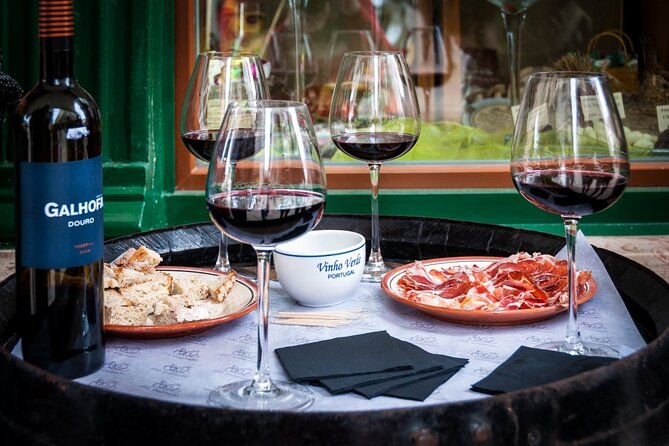
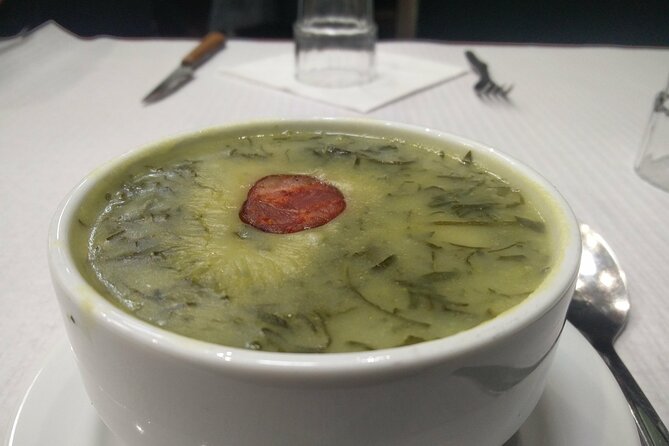
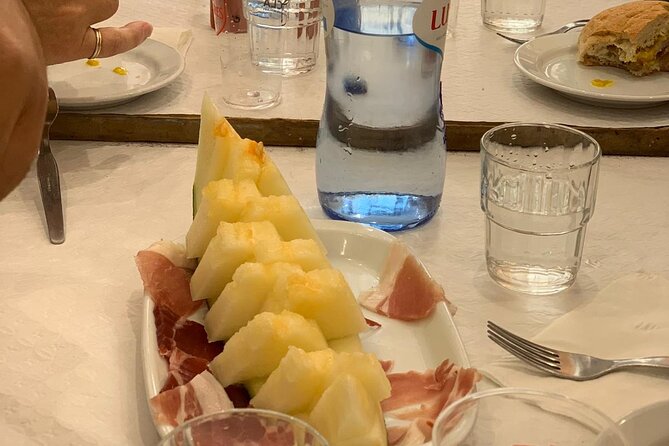
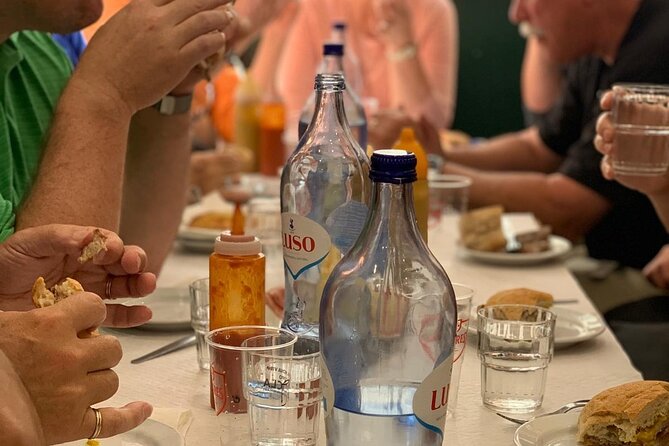
The food program includes six stops and more than 10 tastings. The exact menu can vary, but the experience includes Portuguese appetizers, soup, tapas-style samples, dessert, coffee, snacks, wine, port tasting, and other alcoholic drinks. Coffee and tea are also included.
This is enough food to replace a meal for many people, so arrive hungry. It is not a formal sit-down lunch with one large main course. Instead, you sample across several locations and learn how each bite fits into Portuguese food culture.
The wine component is useful for anyone who wants more than a checklist of dishes. You get a chance to compare food with Portuguese drinks and understand how wine and port fit into local hospitality. Coffee and dessert at the end provide a natural finish, with the route ending at Confeitaria Nacional on Praça da Figueira.
Alcohol deserves a practical warning. Several tastings may include alcoholic drinks, and one person on a recent tour was surprised by how much alcohol appeared at the stops. If you do not drink, or you plan to walk in hot weather, tell the company when booking and ask what alternatives are available.
Dietary needs must also be given in the booking form. The company says it cannot adapt the tastings on the day if restrictions were not provided in advance. Vegetarian needs have been accommodated before, but you should still list them clearly rather than depend on a last-minute change.
Is $325.60 per person good value?
At $325.60 per person, this is not a bargain walk. You are paying for a private experience, a local guide, multiple food and drink tastings, and several hours of cultural explanation rather than simply buying a meal.
The value improves if your group cares about personal attention. A private guide can spend more time on your questions, adjust the pace, and explain unfamiliar foods or historical subjects in a way that fits your interests. That matters especially for families or groups with mixed food preferences.
The price is harder to justify if you mainly want a cheap way to sample Portuguese snacks. You could spend less by eating independently in downtown Lisbon, but you would lose the route design, the local context, and the connection between Mouraria, Fado, migration, religion, and food.
Group discounts are offered, though the exact savings are not provided. Ask for the total price for your full party before booking. Since the tour is private, splitting the cost across several people may make more sense than booking for only one or two.
Pace, transport, and practical planning
The walk starts at Largo São Domingos and ends at Confeitaria Nacional, Praça da Figueira 18B. Hotel pickup and drop-off are not included, and transportation to and from attractions is not included, so you should plan to reach the starting point independently.
Pickup is listed as an available feature, but the detailed inclusions exclude hotel pickup and drop-off. Confirm the exact arrangement before assuming a vehicle will collect you.
Wear shoes with a firm sole. Lisbon’s cobblestones can be slippery, and the route includes uphill walking and steps. The stated physical level is medium, with a moderate fitness level recommended.
A mobile ticket makes arrival simple, and the meeting area is close to public transport. Still, give yourself enough time to find Largo São Domingos. The route lasts about three and a half hours, though some previous outings have taken closer to four hours, depending on the pace and conversation.
Free cancellation is available if you cancel at least 24 hours before the start time. Cancellations inside that window are not refunded, and changes are not accepted within 24 hours.
Who will enjoy this Lisbon walk?
I would choose this for a first or second day in Lisbon. It gives you bearings in Baixa and Mouraria, introduces foods you can seek out later, and points you toward places that are easy to miss on your own.
It is particularly good for people who want food with a story. You get far more than restaurant recommendations. You learn why Mouraria matters, how Fado grew there, how markets shaped downtown, and how Portugal’s difficult past still appears in public spaces.
Families can enjoy the variety, and the private format helps if children need a slower pace. But the hills, steps, and alcohol tastings may not suit every family. Older participants or anyone with limited mobility should ask about the route before paying.
This is also a strong choice for food lovers who have taken tours in other cities. The focus is not only on eating. It is on moving through different venues, tasting a broad range of foods and drinks, and meeting Lisbon through its neighborhoods.
Should you book the Roots, Food & Cultural Walk?
Book it if you want a guided introduction to Lisbon that combines local food, Fado, and serious history. The guides, including Pedro, Dani, Daniel, Daniela, and Ricardo, are known for warmth, humor, and strong command of Portuguese culture, though your assigned guide will depend on availability.
Skip it if you dislike hills, prefer a seated meal, avoid alcohol completely, or mainly want famous sights such as the Santa Justa Lift from the inside. For everyone else, the price buys a well-shaped introduction rather than a simple list of tastings.
Arrive hungry, send dietary information with your booking, wear sensible shoes, and confirm the pickup details. If those conditions suit you, this walk can give your first days in Lisbon a useful flavor and a much clearer sense of how the city became itself.
FAQ
How long does the Lisbon Roots, Food & Cultural Walk last?
The experience lasts approximately 3 hours and 30 minutes. Some outings may run longer depending on the walking pace and time spent with the guide.
How far do you walk?
The route covers about 1.2 miles, or 2 kilometers. It includes uphill sections, cobblestones, and steps, so a moderate level of fitness is recommended.
What food and drinks are included?
More than 10 tastings are included across six stops. The inclusions cover food tastings, snacks, wine, other alcoholic beverages, coffee, and tea. Previous menus have included appetizers, soup, tapas, port tasting, dessert, and coffee.
Where does the walk start and finish?
The meeting point is Largo São Domingos in Lisbon. The walk ends at Confeitaria Nacional at Praça da Figueira 18B.
Is this a private tour?
Yes. Only your group participates, making it possible to enjoy a more personal experience with your guide.
Can dietary restrictions be accommodated?
You must provide dietary restrictions in the booking form. The company states that it cannot adapt tastings on the day if the information was not supplied in advance.
New around Lisbon
- Arrábida, Setúbal, Sesimbra, Olive with wine tasting★ 5.0 · 75 reviews
- Lisbon: Sunset Sailing Boat Cruise with Wine★ 5.0 · 75 reviews
- Lisbon Half Day Private Tour★ 5.0 · 75 reviews
- Private Half Day Tour to Fatima from Lisbon★ 5.0 · 75 reviews
- Fátima, Nazaré and Óbidos Private Tour from Lisbon★ 5.0 · 76 reviews
- Central Lisbon 3-Hour Guided E-Bike Tour★ 4.8 · 76 reviews
- Lisbon Historic City Tour by Tuk-Tuk★ 5.0 · 76 reviews
- Sintra World Heritage and Cascais Village Private Deluxe Tour★ 5.0 · 76 reviews
Food & Drink, compared.
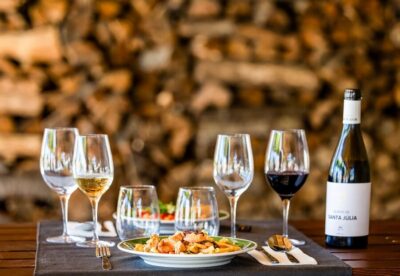
Douro Valley w/ Boat Tour, Wine Tasting & Lunch
Read our review →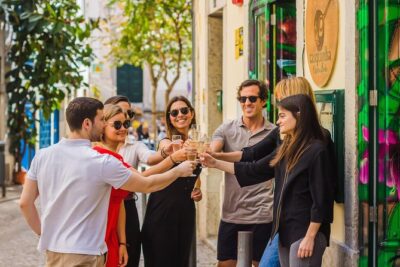
Winner 2025 Undiscovered Lisbon Food & Wine Tour by Eating Europe
Read our review →
Cálem Cellar Tour, Interactive Museum & Wine Tasting
Read our review →
Douro Valley Small-Group Tour with Wine Tasting, Lunch and Boat
Read our review →

Browse the lists this tour appears in