
Reviewed · WALKING TOURS
Best of Lisbon Small-Group Guided Walking Tour
Lisbon’s story comes together on foot: independence from Spain, the 1755 earthquake, the Carnation Revolution, fado, and the city’s grand riverfront all appear in one half-day route. You begin at Rossio Square and finish at Commerce Square, with time for a pastry, wine, tapas, and several good views along the way.
I like the small maximum of 14 people, which gives your guide room to answer questions and keep the group together. I also like the route’s range, from the grand Baixa grid to the crooked lanes of Alfama. The main catch is that this is a brisk overview, not an in-depth visit inside Lisbon’s museums or churches. You will also need comfortable shoes and enough fitness for hills, stairs, and several hours on pavement.
Key points before you book
- A useful first-day route: Rossio, Restauradores, Chiado, Baixa, Alfama, and Commerce Square give you a clear map of central Lisbon.
- Small-group format: The tour caps participation at 14 people, making questions and personal tips easier.
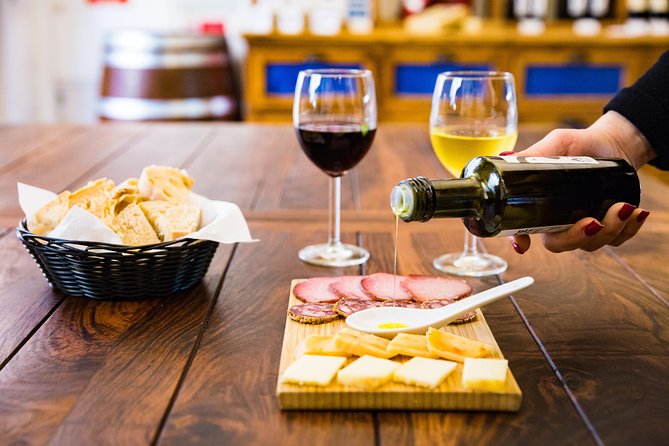
- Three local tastes included: You receive a pastel de nata, wine tasting, and a tapa.
- History with a strong timeline: The walk links the Restoration of Independence, the 1755 earthquake, and the 1974 Carnation Revolution.
- Moderate physical effort: Baixa is fairly level, but Alfama and the viewpoints bring hills and uneven streets.
- A practical ending: You finish by the Tagus at Praça do Comércio, well placed for continuing your sightseeing.
Why this makes a good first look at Lisbon
At $23.94 per person, this is priced as an affordable introduction rather than a luxury guided outing. The value comes from the amount of ground covered and the guide’s local explanations. On your own, you could walk through these areas, but you might miss the meaning behind a square, pass a revolution site without realizing it, or spend time figuring out Lisbon’s steep streets.
The route lasts about three to four hours. That is long enough to get your bearings, but short enough to leave part of the day open. I would book it early in a Lisbon visit, then use the guide’s suggestions to plan restaurants, viewpoints, museums, and evening plans.
The group size matters here. A large walking group can turn city streets into a slow-moving crowd, while 14 people gives you a better chance to hear the guide and ask about things you notice. Guides named in the feedback include Felipe, Maria, Jose, Joana, Filipa, Flavia, Catarina, Carlos, Daniel, Franco, Guillermo, and Katerina. Your exact guide will depend on the departure, but the repeated pattern is clear: expect a personal, story-led walk rather than a script delivered from a distance.
More Walking Tours in Lisbon
- Lisbon: History, Stories and Lifestyle Walking Tour
★ 4.8 · 10,902 reviews - Lisbon: Food and Wine Small Group Walking Tour
★ 4.9 · 4,082 reviews - Best of Lisbon Walking Tour: Rossio, Chiado & Alfama
★ 4.9 · 2,700 reviews
Rossio Square begins the city lesson
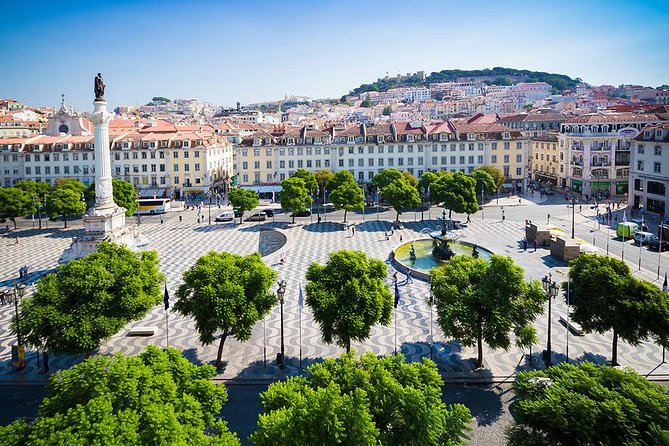
The meeting point is Praça Dom Pedro IV, better known as Rossio Square. This is a smart place to start because it sits at the center of Lisbon’s Baixa district and connects several important streets and neighborhoods.
Your guide explains the square’s distinctive Portuguese stone paving, laid in patterns that recall ocean waves. Look down as well as around you. The pavement is not just decoration, and it sets up one of the tour’s useful themes: Lisbon often expresses its relationship with the sea through design, monuments, and public spaces.
From Rossio, the walk pauses at Igreja de São Domingos. The stop is short, only about five minutes, so you should think of it as a quick historical marker rather than a full church visit. The tour does not include entry to museums or monuments, and the church is not presented as an extended interior stop.
The group then passes an upscale Lisbon avenue before reaching Restauradores Square. The unnamed avenue is described as one of the city’s most expensive and fashionable streets, giving you a quick look at Lisbon’s grander commercial side before the route returns to political history.
Restauradores and Rossio Station explain Portugal’s past
In Restauradores Square, the central obelisk commemorates Portugal’s restoration of independence from Spain in 1640 after 60 years of Spanish rule. Its inscriptions refer to battles from the Portuguese Restoration War. This is a compact stop, but it helps you place Portugal’s national story before moving into the city’s architecture.
Next comes Rossio Central Station, one of the historic center’s most striking buildings. Its exterior draws on Manueline architecture, the ornate style associated with Portugal’s great maritime age. Your guide also points out the railway connection toward Sintra and explains the engineering involved in sending trains into the tunnel.
This is one of the route’s better details because the station is easy to treat as a pretty facade and walk past. Instead, you get a reminder that Lisbon’s transport network also belongs to the city’s architectural and technical story. The stop lasts about five minutes, so you will learn the main idea without lingering inside.
Carmo Square connects a convent to revolution

Largo do Carmo has two very different historical associations. One is the Carmo convent, founded in the 14th century. The other is the Carnation Revolution of 1974, when Portugal’s 48-year dictatorship came to an end.
This pairing gives the tour a welcome modern turn. Lisbon is not only about tiled facades, explorers, and old streets. The guide explains how the revolution unfolded and why the square marked such an important break in Portugal’s recent past.
The visit here lasts about 10 minutes. You should expect an outdoor explanation and time to look around, not a detailed architectural tour of the convent. The short stop works well in a broad city orientation, though anyone especially interested in the revolution will likely want more time elsewhere.
Nearby, the route reaches the Santa Justa Lift. This iron structure is among the most recognizable monuments in central Lisbon and offers a high viewpoint over the historic center. The tour includes about 10 minutes here, enough to admire the structure and take photographs.
The lift itself is not included as an admission attraction, so do not assume this tour places you inside or takes you on a paid ride. The guide uses the monument and its views as part of the walk. That keeps the price low, but it also means the experience is about seeing and understanding the lift rather than making it a full attraction visit.
More walking tours around Lisbon:
- Age of Discoveries Walking Tour in Belém
★ 5.0 · 1,513 reviews - Sintra & Cascais Day Tour with Pena Palace Entry and Gardens Walk
★ 5.0 · 962 reviews - Lisbon Roots – Small group Food & Culture Walking Tour w/tastings
★ 5.0 · 910 reviews - Lisbon: Starter Walking Tour to the highlights in German
★ 4.9 · 781 reviews
Chiado adds cafés, shops, and city style
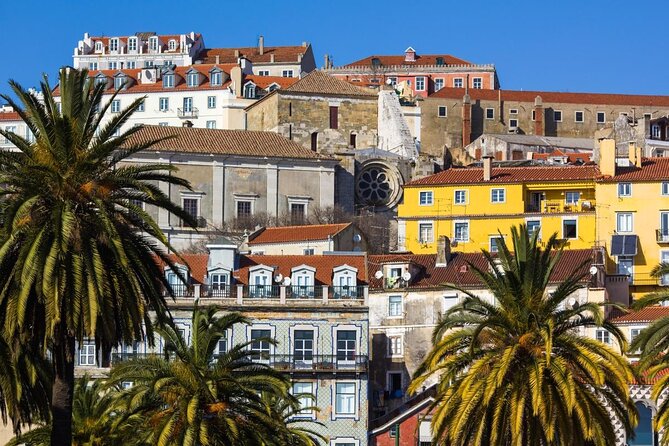
From Carmo, the route moves into Chiado. This elegant neighborhood developed in the 19th century for Lisbon’s intellectual and wealthy classes. Its boutiques, theaters, bookstores, and old cafés give the walk a change of mood after the political and engineering stories around Rossio and Carmo.
I like Chiado as a walking stop because it rewards simple observation. You can study shopfronts, facades, and cafés while the guide explains how the district became associated with Lisbon’s cultural life. The stop lasts about 10 minutes, which is enough to get a feel for the area but not enough for browsing or shopping.
That limitation is worth knowing. If you want time in a bookstore, café, or boutique, save Chiado for a later visit. During the tour, you are moving with the group and following a larger route.
Baixa reveals Lisbon’s earthquake plan
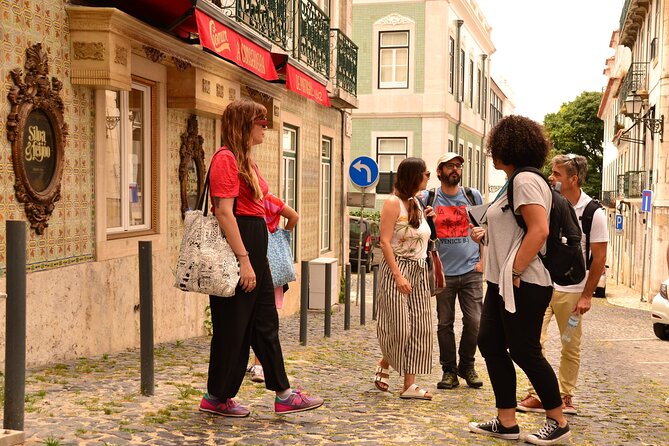
Rua Augusta leads you into the heart of Baixa, Lisbon’s downtown. This main central street points toward Commerce Square and gives the group a direct look at the city’s orderly rebuilding.
The reason Baixa looks so different from Alfama is the 1755 earthquake. Much of the old city was destroyed, and the downtown district was rebuilt under new urban rules. The plan used a regular street grid and anti-seismic construction ideas that were innovative for the 18th century.
Your guide explains how this rebuilding shaped the Lisbon you see today. The point is not simply that an earthquake happened. You learn how disaster led to a new form of city planning, with wider streets, organized blocks, and a more controlled downtown.
The Baixa stop lasts around 15 minutes, while Rua Augusta receives a shorter pause. Baixa is relatively flat, which helps make the route manageable, especially after the earlier climbs. Still, you are walking for most of the half-day, and the pavement can be tiring if you wear thin sandals or poor walking shoes.
A viewpoint gives you a useful pause

The route includes Miradouro Chão do Loureiro, a panoramic viewpoint with about five minutes for photographs and a look across the city. A brief viewpoint stop can make a big difference on a walking tour. It breaks up the history talk and lets you understand Lisbon’s slopes and layered neighborhoods with your own eyes.
The schedule does not promise a long rest here. Treat it as a scenic pause, not a place to settle in. If the weather is poor, the view may be less rewarding, though the stop still helps you see how the city rises away from the downtown grid.
One practical strength of the guides is their handling of pace. Felipe, for example, was praised for using public elevators and escalators when available to reduce unnecessary effort. Other guides were noted for allowing time to climb hills and making well-timed stops. That does not remove the physical demands, but it can make the walk feel much more reasonable.
Alfama brings the route into old Lisbon
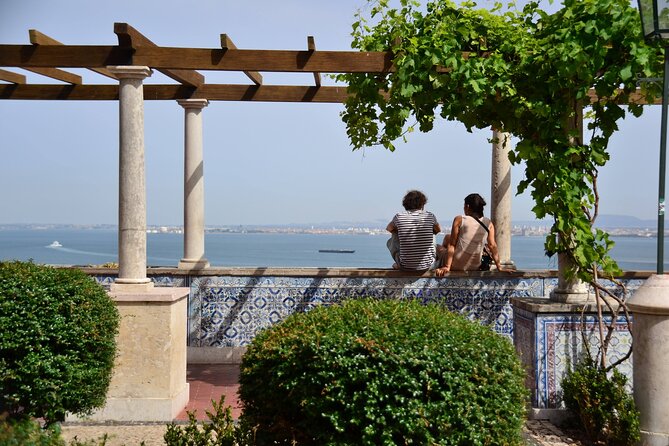
The move into Alfama is the biggest change in the walk. Baixa is planned and open. Alfama is old, narrow, winding, and shaped by a much older pattern of streets. It is also linked with Moorish heritage and fado music.
You walk through lanes where fado restaurants sit between the alleys. Your guide explains fado as Portugal’s famously melancholic musical tradition and adds context about life in the Alfama district. This is the part of the tour where the city feels least like a set of monuments and most like a lived neighborhood.
The Alfama stop lasts about 20 minutes, the longest scheduled stop after Baixa. Even so, you should not expect a full fado performance. The tour introduces the music and its setting, but it does not include a dedicated evening fado show.
Alfama also brings the route’s toughest footing. The district is known for winding streets, and the tour requires a moderate level of fitness. A review noted that comfortable shoes are essential, while another described the walk as a hill exercise. That is fair. You do not need to be an athlete, but you should be prepared for uneven surfaces, slopes, and a few hours of walking.
The itinerary also refers to King José I, known as the Reformer, who ruled Portugal from 1750 until his death. The guide connects him with Lisbon’s rebuilding era and his interests in hunting and opera. This kind of small royal detail adds texture to the larger earthquake and downtown story.
One omission may matter to some people: the route does not include Lisbon Cathedral, even as an exterior highlight. If the cathedral is high on your list, you will need to visit it separately, perhaps during your own time in Alfama.
Food stops keep the history grounded
The included pastel de nata is a welcome part of the experience. This classic Portuguese custard pastry gives you a taste of a national favorite without requiring a separate bakery stop or extra planning.
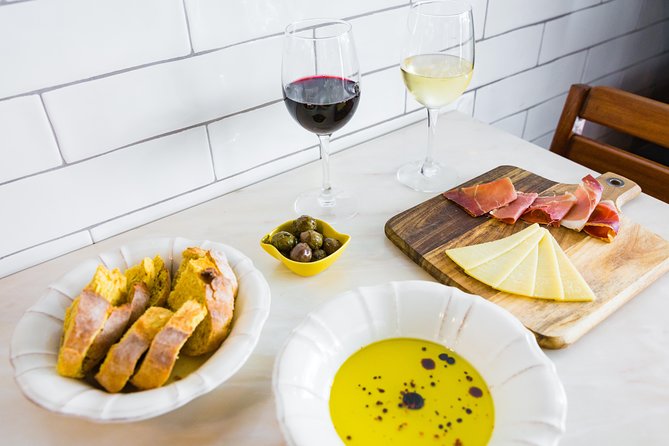
The tour also includes a wine tasting and a tapa. These are small food and drink experiences, not a meal, so do not arrive expecting lunch. The value is in adding local flavor to a walking route and giving the group a relaxed moment between historical stops.
Vegetarian needs were accommodated during one tour, but the information does not promise a fixed menu or broad dietary coverage. If you have a food restriction, raise it when booking or at the start of the experience. Food and drinks beyond the listed pastry, wine tasting, and tapa are not included.
Commerce Square is a strong finish
The walk ends at Praça do Comércio, beside the Tagus River. The square was once the site of the Ribeira Palace, also called the royal palace, before the 1755 earthquake destroyed it.
After the disaster, Commerce Square was rebuilt as part of the Pombaline downtown plan. The broad open space feels very different from Alfama’s tight lanes, and ending here gives the route a clear visual payoff. Your guide explains how the square’s reception hall welcomed people arriving from the Atlantic, linking Lisbon’s riverfront to trade, travel, and royal power.
The official stop lasts about 10 minutes. After that, you are on your own, but the location is useful for continuing through central Lisbon. You can treat the square as a final photo stop, a place to pause by the river, or a starting point for the next part of your day.
What the $23.94 price really buys you
At $23.94, the tour offers strong value if you want structure and context. You get a local guide, a route through several major neighborhoods, a pastry, wine tasting, and tapas, all for less than the cost of many standalone sightseeing activities.
The real saving is time. You do not need to plan a route that links Rossio, Restauradores, Carmo, Chiado, Baixa, Alfama, and Commerce Square. You also avoid spending your first day constantly checking a map.
The tradeoff is depth. Entry to museums and monuments is not included, and the schedule gives most stops only five to 20 minutes. If you prefer to study one church, museum, or viewpoint at length, this is not the right format. It is a broad orientation with food and local stories, not a specialist tour.
Practical details for a smoother walk
The meeting point is Praça Dom Pedro IV, and the tour ends at Praça do Comércio. Hotel pickup and drop-off are not included, so plan your own way to Rossio and from the riverfront afterward. The tour is offered in English and uses a mobile ticket.
Wear comfortable shoes. That advice is more important here than it sounds, because the route combines flat Baixa streets with Alfama’s slopes and winding lanes. Bring water and dress for the weather, since the experience is outdoors for most of its duration.
The tour permits service animals and is near public transportation. Confirmation is provided at booking. Free cancellation is available up to 24 hours before the start time, based on Lisbon local time. Changes or cancellations made within 24 hours are not refunded, and the tour can be canceled if its minimum number of participants is not reached.
Who will get the most from this Lisbon walk
I would choose this for a first visit, a short stay, or the first full day after arriving. It gives you a working map of central Lisbon and a set of useful questions to carry into the rest of your trip.
It also suits solo visitors. The small group and guide-led pace make it easier to feel included, and one guide was specifically praised for taking care with solo participants. Couples, families with older children, and active adults should also find the format appealing if they are ready for the walking.
I would be more cautious if you already know central Lisbon well. One participant felt the tour repeated familiar squares, the lift, and Alfama. That criticism is fair for repeat visitors. The route focuses on iconic central sights, so it is best for orientation rather than lesser-known neighborhoods.
Should you book the Best of Lisbon walking tour?
Book it if you want an affordable, well-organized introduction to Lisbon with a strong mix of history, neighborhoods, views, and small food tastings. The guide’s personality will shape the day, but guides such as Jose, Maria, Felipe, Joana, and Franco have been praised for clear English, humor, patience, useful advice, and enthusiasm for Lisbon.
Skip it if you want museum entries, a cathedral visit, a full fado performance, or long periods at each stop. For most first-time visitors, though, the route is a sensible way to get your bearings fast, learn how Lisbon fits together, and finish near the river with the rest of the day still available.
FAQ
How long is the Best of Lisbon Small-Group Guided Walking Tour?
The tour lasts approximately three to four hours.
Where does the tour begin?
It begins at Praça Dom Pedro IV, also known as Rossio Square, at 1100 Lisbon, Portugal.
Where does the tour end?
The tour ends at Praça do Comércio, near the Tagus River, at 1100-148 Lisbon, Portugal.
How many people can join the tour?
The maximum group size is 14 travelers.
Is the tour offered in English?
Yes. The experience is offered in English.
What food and drink are included?
The tour includes a pastel de nata pastry, a wine tasting, and a tapa.
Are museum and monument entry fees included?
No. Entry to museums and monuments is not included.
How physically demanding is the walk?
A moderate level of physical fitness is recommended. Baixa is relatively flat, but the route also includes hills, winding streets, and extended walking in Alfama.
Can I cancel for a full refund?
Yes, if you cancel at least 24 hours before the experience starts. Cancellations or changes made less than 24 hours before the start time are not refunded.
New around Lisbon
- Arrábida, Setúbal, Sesimbra, Olive with wine tasting★ 5.0 · 75 reviews
- Lisbon: Sunset Sailing Boat Cruise with Wine★ 5.0 · 75 reviews
- Lisbon Half Day Private Tour★ 5.0 · 75 reviews
- Private Half Day Tour to Fatima from Lisbon★ 5.0 · 75 reviews
- Fátima, Nazaré and Óbidos Private Tour from Lisbon★ 5.0 · 76 reviews
- Central Lisbon 3-Hour Guided E-Bike Tour★ 4.8 · 76 reviews
- Lisbon Historic City Tour by Tuk-Tuk★ 5.0 · 76 reviews
- Lisbon Cinematic Photoshoot with Top-Rated Photographer★ 5.0 · 76 reviews
Walking Tours, compared.



Porto Walking Tour, Lello Bookshop, River Cruise and Cable Car
Read our review →
Best of Lisbon Walking Tour: Rossio, Chiado & Alfama
Read our review →
Experience Porto’s Charm: 3-Hour Guided Walking Tour
Read our review →
Enjoy a Guided Levada Walk in the Rabaçal Valley
Read our review →
Browse the lists this tour appears in