
Reviewed · WORKSHOPS
Porto: Tile Painting Workshop with Porto Wine (Sé do Porto)
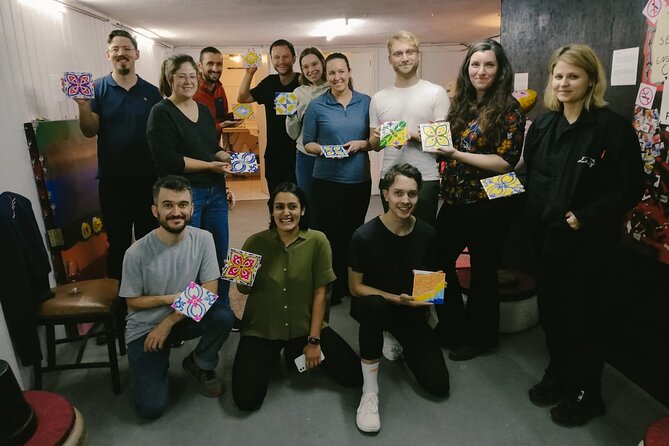
Portuguese tiles are more than pretty blue squares on old buildings. They help tell the story of Porto, from church facades to grand railway stations and everyday homes. This workshop lets you work with that tradition yourself, painting a ceramic tile in a private downtown studio before taking it home as a souvenir.
I like two things right away: you do not need artistic skill, and you get real help from an instructor rather than being left alone with a brush. I also like the easy social setting, with coffee, snacks, juice, water, and Port wine served while you paint. The main catch is practical: your tile must be baked before you can collect it, so do not schedule this for your final few hours in Porto.
Key points before you book
- Choose a traditional Porto pattern: Select from designs copied and documented from tiles around the city, or create your own.
- Expect patient, hands-on teaching: Beatriz, Fernanda, Rita, Francisco, Daniella, Pablo, and other instructors have each received strong praise for clear guidance and a friendly manner.
- Plan for a second visit: Your tile may be ready about an hour and a half later, or the next day, depending on the workshop schedule.
- Enjoy more than a craft lesson: Port wine, coffee, tea, juice, bottled water, and sweet and savory snacks are included.
- Good for mixed abilities: Families, couples, solo participants, groups, and people who consider themselves non-artistic can all take part.
- Allow for class-size variation: The stated maximum is 15 people, though one class was described as larger, so ask ahead if a small group matters to you.
Why painting an azulejo fits a Porto visit
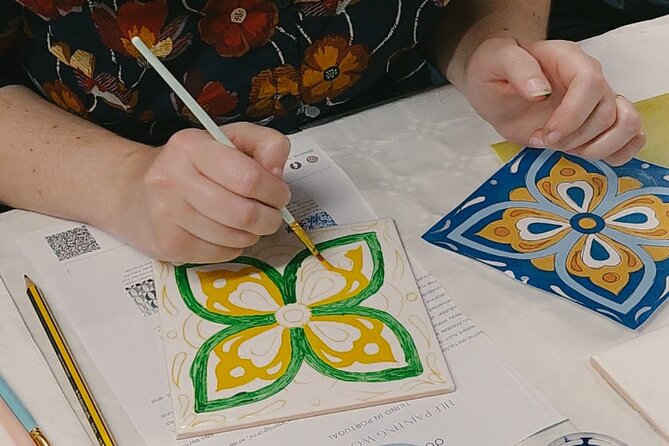
Porto is a city where decoration is part of daily life. Blue and white tiles cover churches, station walls, houses, and shopfronts. They are not simply museum objects. They are built into the streets you walk every day.
The workshop starts with a short introduction to Portuguese azulejos. You learn about their origins and their role in the identity of Porto and Lisbon. This is not meant to be a full art-school course, but it gives your brushwork a useful setting. You begin to see why repeated patterns, strong outlines, and limited color combinations appear so often on Portuguese buildings.
I find this context valuable because the activity does not feel like a generic craft class. You are making a small object linked to the place you are visiting. Later, when you pass a tiled facade, you will have a better idea of how such patterns are designed and painted.
The history talk is brief, so set your expectations properly. If you want a detailed study of ceramic production, pigments, kilns, and the development of azulejo art across Portugal, this will feel too light. If you want a clear introduction followed by a relaxed hands-on session, the balance works well.
A few other Porto half-days worth a look
- Porto: Pastel de Nata Pastry-Making Workshop
★ 4.9 · 1,542 reviews - Porto: Pastel de Nata Cooking Class with Port Wine – Sé
★ 4.8 · 888 reviews - Matosinhos: Surfing Lesson with Equipment
★ 4.8 · 704 reviews
Finding Domus Arte near Porto Cathedral
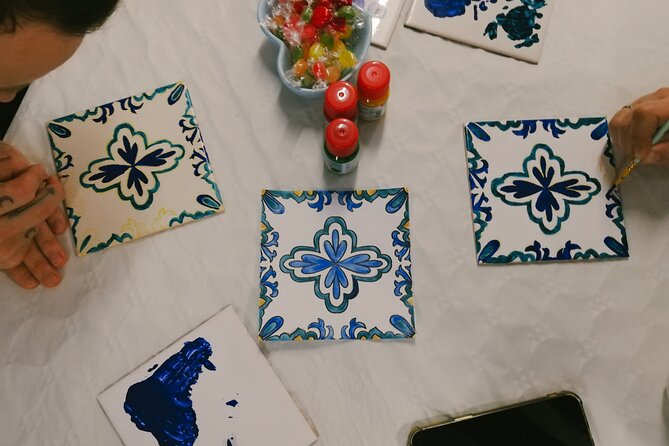
The meeting point is Domus Arte | Concept Store at Rua da Bainharia 135, 4050-084 Porto. The itinerary also identifies Porto Cathedral, or Sé do Porto, as the stop connected with the activity. The workshop begins and ends at the meeting point rather than taking you around the city by vehicle.
That central location makes this an easy activity to pair with sightseeing in the historic core. You can place it between visits to nearby sights, though you should leave enough time to return for the finished tile. The address is close to public transportation, bathrooms are available, and a mobile ticket is accepted.
The setting is designed for making and browsing. Along with the workshop, you may see modern and traditional handicrafts and souvenirs at the concept store. That gives the experience a little more local character than a class held in a plain rented room.
The class is offered in English, with morning and afternoon start times. The scheduled duration is about two hours, though the painting itself can take longer for careful artists. One session began 30 minutes late while waiting for people to arrive, so avoid booking it immediately before a train, flight, timed museum entry, or dinner reservation.
The short introduction to Portuguese tile art
Once seated, you receive an overview of Portuguese tile painting. The instructor explains the place of azulejos in Porto and Lisbon and gives you a basic idea of how tiles are made and painted.
The best part is that the talk connects directly to the work ahead. You are not just hearing dates and terms, then moving to an unrelated activity. You learn enough to understand the patterns placed in front of you and the reason tile art matters so much in Portugal.
The instructors use an approachable tone. Beatriz has been praised for mixing humor with her explanation, while Rita and Daniella are noted for patient instruction. Fernanda is especially good at guiding people through patterns and color choices. Names and instructors can change, but the experience clearly depends on the person leading your class, so the quality may vary slightly by session.
Do not expect a long formal lecture. The appeal is the quick transition from learning about tiles to making one.
Choosing your design and transferring it
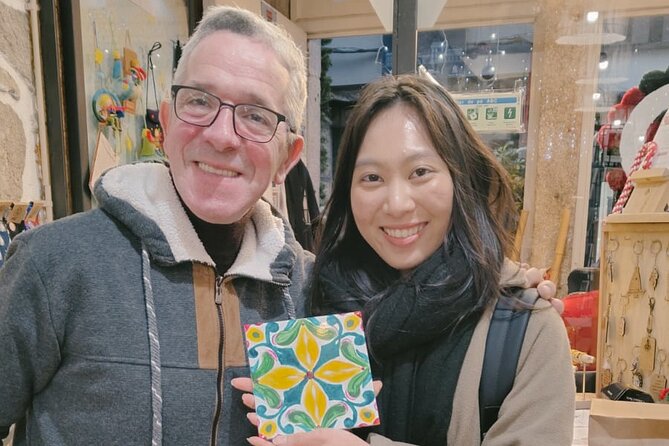
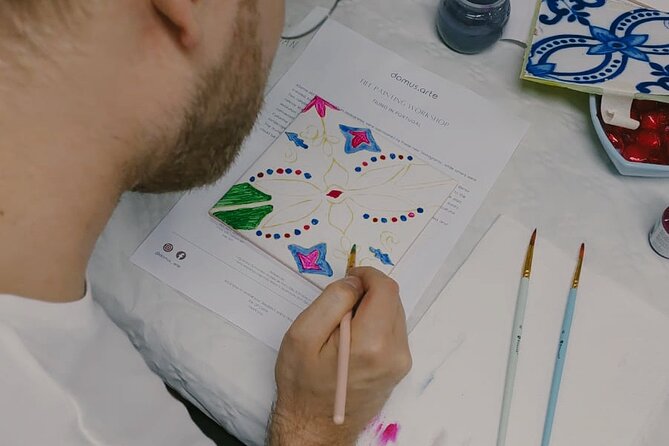
After the introduction, you receive a white ceramic tile. You can choose one of the traditional patterns selected by the workshop team from designs found on the streets of Porto. These patterns give you a helpful starting point, especially if you arrive with no idea what to draw.
You can also create an original design. That option suits you if you want a personal symbol, a simple geometric pattern, or something connected to your trip. Still, the traditional templates are worth a look. They connect your finished tile more directly to the city’s visual style.
The design is transferred to the tile with carbon paper. This matters if you are worried about drawing freehand. You trace the pattern first, then paint inside the lines. The method makes the activity accessible to children, beginners, and anyone whose artistic confidence is limited.
You still need patience. A simple pattern can take time if you want neat edges and even color. The process is easy to understand, but it is not entirely effortless. That is part of the fun. Your tile will show your choices and your hand, rather than looking like something lifted from a souvenir shelf.
Same coastline, a completely different day out:
- The Unvanquished Tour in Porto City Center
★ 5.0 · 26,497 reviews - From Porto: Douro Valley w/ Boat Tour, Wine Tasting & Lunch
★ 4.7 · 19,061 reviews - Complete Douro Valley Wine Tour with Lunch, Wine Tastings and River Cruise
★ 5.0 · 12,920 reviews - Porto: Six Bridges Cruise
★ 4.2 · 11,680 reviews
Painting with help from the instructor
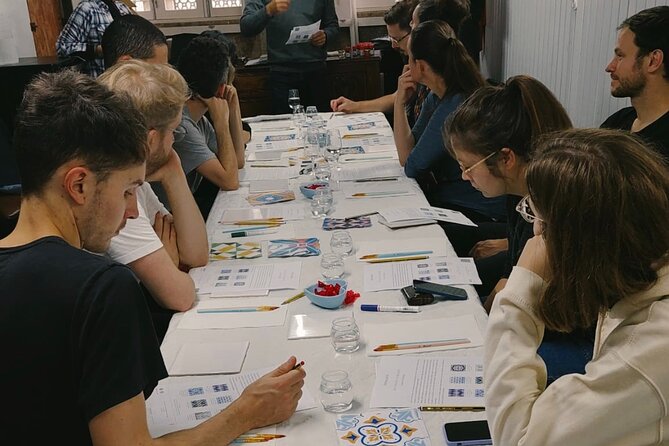
The instructor demonstrates brush techniques and helps you work through the design. You can ask about color combinations, brush strokes, and small corrections as you go. Several instructors have been praised for giving individual attention and for stepping in without taking over the piece.
That balance is important. A good craft class should help you succeed while leaving the final result yours. The guidance here is aimed at making the process comfortable, not turning every tile into a perfect replica.
Color mixing is one of the more useful parts of the lesson. One instructor mixed three paints to create orange for a participant, and Rita has helped people find the colors they wanted. You may have a familiar palette in mind, but the chance to alter shades gives the tile a more personal look.
You also get to see how different people interpret the same type of pattern. One person may follow a traditional design closely, while another changes the colors or adds a new detail. That shared table setting gives the class a friendly, low-pressure feel.
The workshop is described as private, but the advertised maximum is 15 participants. The size may be comfortable enough for personal help, though one class was described as having around 20 people. If the word private is central to your decision, confirm the exact arrangement before booking. It may mean a private workshop setting rather than a one-to-one lesson.
Port wine, coffee, and a relaxed pace
The refreshments are not the reason to book, but they improve the rhythm of the class. You can pause with coffee or tea, drink water or juice, and enjoy sweet and savory snacks while your tile takes shape. Port wine adds a clear Porto touch.
This makes the activity a pleasant break from walking steep streets and visiting churches. You sit down, concentrate on a small task, and have time to talk with the people around you. The setting can work well for a couple, a family, or a group of friends who want something different from another guided walk.
The wine is also worth considering for timing and personal preference. If you are traveling with children or do not drink alcohol, the other refreshments are included. The activity does not depend on wine to be enjoyable.
For bachelor and bachelorette parties, team events, and larger private groups, the social format may be especially useful. The activity gives everyone a shared project without requiring prior skill. It is more structured than simply going for drinks, but less demanding than a formal class.
Collecting the fired tile

The most important planning detail is the finished piece. Your painted tile needs to be baked so the paint cures. Depending on the day and the workshop schedule, it may be ready roughly an hour and a half after class or on the following day.
Some people have collected their tiles later the same day. Others have returned the next day. You should ask the instructor when your particular tile will be ready and build that return trip into your plans.
This is the one part of the experience that can catch you off guard. The activity description presents a souvenir at the end, but you may not physically receive it when the painting session ends. If you are leaving Porto that night, check the collection timing before you book.
Do not schedule this for the final morning unless the workshop can confirm that the tile will be ready before you depart. A handmade souvenir is much less useful if it has to remain behind. If you have a spare afternoon, a second visit is easy to manage because the workshop returns to its original meeting point.
The finished tile is small, personal, and easy to value precisely because you made it. It will not replace a large piece of Portuguese ceramic art, but it gives you a tangible reminder of the city and the time spent making it.
What the $42.33 price includes
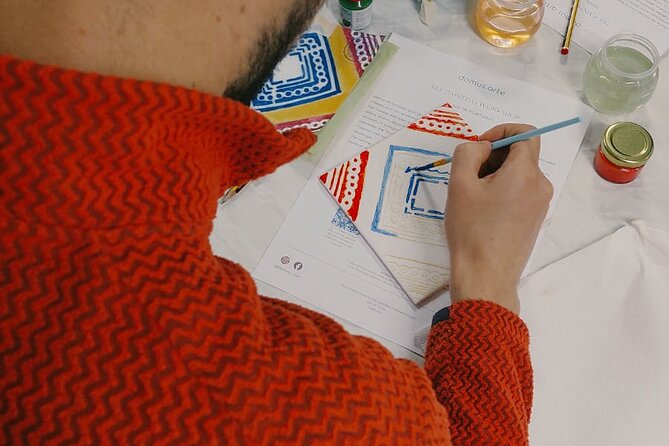
At $42.33 per person, this is not the cheapest way to spend two hours in Porto. You are paying for instruction, a ceramic tile, painting materials, firing, refreshments, and a central workshop setting. The value is strongest if you want both an activity and a souvenir.
If you only want to buy a tile, shops will offer faster and simpler options. If you want to understand the basic process, choose a design, paint it yourself, and receive guidance along the way, the price is more reasonable.
The full attention of the instructor is another part of the value, though class size may affect how much individual time you receive. The consistently high rating and full recommendation rate suggest that the teaching and relaxed atmosphere have been reliable for many bookings, but I would still treat the actual instructor and group size as factors worth confirming.
For a family, the price can work well because adults and children can take part in the same activity. For a solo visitor, it provides a ready-made social setting. For a team, the included materials and clear format reduce the work needed to organize an event.
Who will enjoy this Porto activity most
I would recommend the workshop to you if you like bringing home something made rather than something bought. It suits people who want a cultural activity with a creative element but do not want a demanding art lesson.
It is also a good rainy-day plan. You stay indoors, the materials are provided, and the activity has enough structure to fill about two hours. Families can participate together, and the tracing method means children and beginners are not forced to draw from scratch.
Couples may like the shared project. Friends can compare designs and colors. Solo visitors can join a social class without needing to arrange a group in advance. Teams can use it as a hands-on activity that encourages conversation without requiring athletic ability or specialist knowledge.
You might want something else if you are looking for a small, highly private lesson with uninterrupted one-to-one instruction. You may also be disappointed if you expect a detailed technical course in ceramic production. This is a guided introduction and creative souvenir session, not professional training.
Practical timing and cancellation advice
Morning and afternoon sessions make it easier to fit the class around sightseeing. I would choose an earlier slot if you want to collect the tile later that day, but ask about firing time before assuming that is possible.
The activity is near public transportation and has bathrooms. Service animals are allowed, and most people can participate. The experience is offered in English, and confirmation is provided when you book.
You can cancel for a full refund if you do so at least 24 hours before the start time. Changes or cancellations made less than 24 hours before the local start time are not accepted for a refund. That policy makes it wise to settle your Porto schedule before the cutoff.
Should you book the Porto tile painting workshop?
Book it if you want a calm, hands-on break from sightseeing and a souvenir with a real connection to Portuguese culture. The short azulejo introduction, helpful instructors, simple tracing process, refreshments, and chance to mix your own colors create a good experience for beginners.
I would book it earlier in your Porto stay rather than on the last day. That gives you room to collect the fired tile and avoids turning a pleasant craft session into a race against your departure time.
The price is fair for the materials, instruction, firing, drinks, snacks, and central setting, though it is not a bargain activity. For a memorable, low-pressure experience that works across ages and artistic abilities, it is a solid choice. Just confirm the group size and collection time if those details matter to you.
FAQ
Where does the Porto tile painting workshop begin?
It begins at Domus Arte | Concept Store, Rua da Bainharia 135, 4050-084 Porto, Portugal.
Where does the activity end?
The activity ends back at the original meeting point.
Is Porto Cathedral part of the itinerary?
Porto Cathedral, also called Sé do Porto, is listed as the itinerary stop connected with the activity.
How long does the workshop last?
The workshop lasts approximately two hours.
What is included in the price?
The price includes the ceramic tile, painting materials, instruction, tea or coffee, bottled water, juice, Port wine, and sweet and savory snacks.
Is the workshop offered in English?
Yes. The activity is offered in English.
Can beginners join the class?
Yes. You can choose a traditional pattern and trace it onto the tile, so previous painting experience is not required.
Can I make my own design?
Yes. You can either copy one of the selected traditional Porto patterns or create an original design.
Do I take the finished tile home immediately?
Not always. The tile must be baked, and collection may be about an hour and a half later or the next day. You should leave time to return to the meeting point.
What is the cancellation policy?
You can cancel at least 24 hours before the local start time for a full refund. Cancellations or changes made less than 24 hours before the start time are not accepted for a refund.
New around Porto
- Porto: City Bike Rental★ 4.6 · 75 reviews
- Fado Concert with Welcome Drink★ 5.0 · 75 reviews
- Boat Trip to Régua Through the Douro Valley with Breakfast and Lunch★ 4.5 · 76 reviews
- Porto City Tour Half Day – Private★ 5.0 · 77 reviews
- Port : Private Cruise in the Douro — 6 Bridges & Sunsets★ 5.0 · 78 reviews
- Porto Private Airport Departure Transfer★ 4.5 · 78 reviews
- Half-Day Walking Tour Tasting Local Food in Porto★ 5.0 · 78 reviews
- Douro Valley Small-Group Tour: 2 Wineries, Lunch, Optional Cruise★ 5.0 · 78 reviews
Workshops, compared.
Pastel de Nata Cooking Class with Grandma’s Recipe
Read our review →
Pastel de Nata Cooking Class with Port Wine – Sé
Read our review →



Browse the lists this tour appears in