
Reviewed · SURFING LESSONS
Lisbon: Surf Lesson
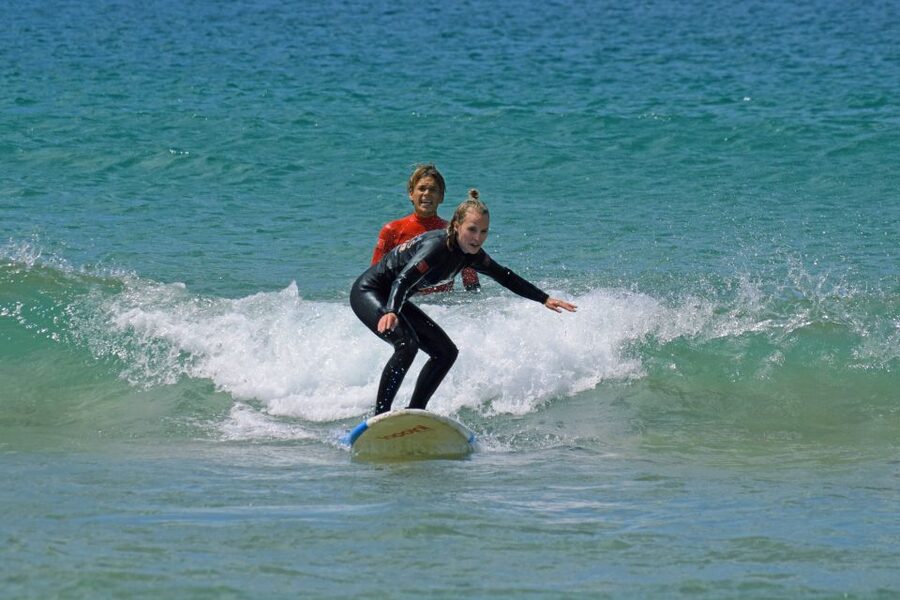
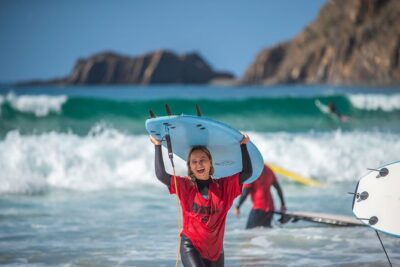
Carcavelos is where Lisbon meets the Atlantic, and this two-hour lesson gets you into the water quickly. You begin with a wetsuit, board, and safety briefing, then practice paddling and standing up before trying to catch a real wave. The group limit of five students per instructor gives beginners useful attention.
I like the flexible beach choice, since the lesson can move from Carcavelos to Guincho when conditions call for it. I also like the practical setup: equipment, insurance, an instructor, and beach transport when needed are included in the $47 price. The main caution is that beach conditions and crowds can affect your time in the water, and this is a first lesson, not a full surf course.
Key points for your Lisbon surf lesson
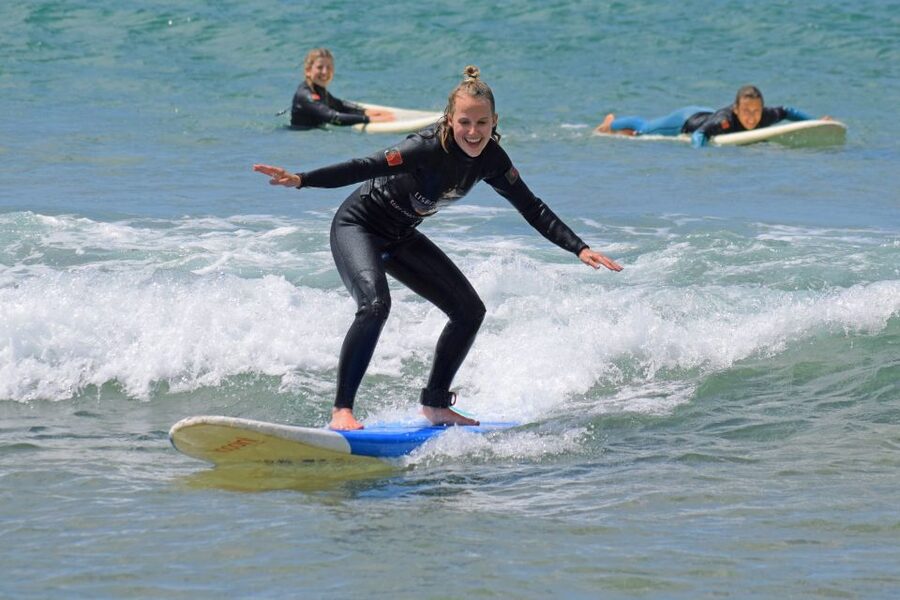
- Small teaching groups: One instructor works with no more than five people, leaving room for individual corrections.
- Two possible beaches: The class uses Carcavelos or Guincho, based on the most suitable weather and ocean conditions.
- Real beginner instruction: You learn safety, ocean reading, wave choice, paddling, and the move from lying down to standing.
- Useful inclusions: Your board, wetsuit, insurance, instructor, and transport to the beach when necessary are covered.
- Several language choices: Instruction is available in English, Portuguese, Spanish, and French.
- A reasonable first try: At $47 for two hours, the lesson includes the main gear and coaching you would otherwise need to arrange separately.
Starting beside Carcavelos Beach
Your meeting point is Lisbon Surfaris, directly beside Carcavelos Beach and next to Bar o Moinho. That location keeps the beginning simple. You do not need to find a distant beach office or wait for a hotel transfer. You arrive at the surf school, check in, and get fitted with your equipment.
The school provides a wetsuit and surfboard. Bring a towel and sunscreen, along with your passport or ID card. Food and drinks are not included, so take care of those before or after the lesson rather than expecting a beach snack stop as part of the two hours.
Carcavelos is a practical place for a first lesson because it is close to Lisbon and has an established surf-school setting. The meeting point is especially useful if you are staying in the city and do not have a rental car. One couple reached the school easily by metro, which makes this a workable outing without private transport.
The exact starting time depends on availability. That matters more for surfing than it would for a museum visit, since the sea is part of the schedule. You should check the available time before booking and keep your wider day reasonably flexible.
More surf lessons around Portugal:
- Matosinhos: Surfing Lesson with Equipment
★ 4.8 · 704 reviews - Albufeira: Surf Lesson
★ 4.7 · 699 reviews - Porto: Small Group Surf Lesson with Transportation
★ 4.9 · 594 reviews
Choosing between Carcavelos and Guincho
The lesson may take place at Carcavelos or Guincho Beach. The instructor chooses according to the most favorable weather conditions on the day. That is a sensible arrangement, because a beginner needs a manageable teaching area more than a fixed photo opportunity.
Carcavelos is the convenient home beach for the school. It is also popular, and one participant found it crowded. A busy beach can mean more boards and people in the water, so do not expect a completely private stretch of ocean during a standard shared session.
Guincho offers the alternative when conditions make it the better teaching choice. The supplied information does not promise a particular view, wave size, or beach setup there, so it is best to treat the second location as a safety and teaching decision rather than an added sightseeing stop.
Transport to the beach is included if it is needed. Hotel pickup and drop-off are not included, so you make your own way to the surf school. That distinction is easy to miss when planning a Lisbon day, especially if you assume the price covers door-to-door transport.
The safety briefing comes before the fun
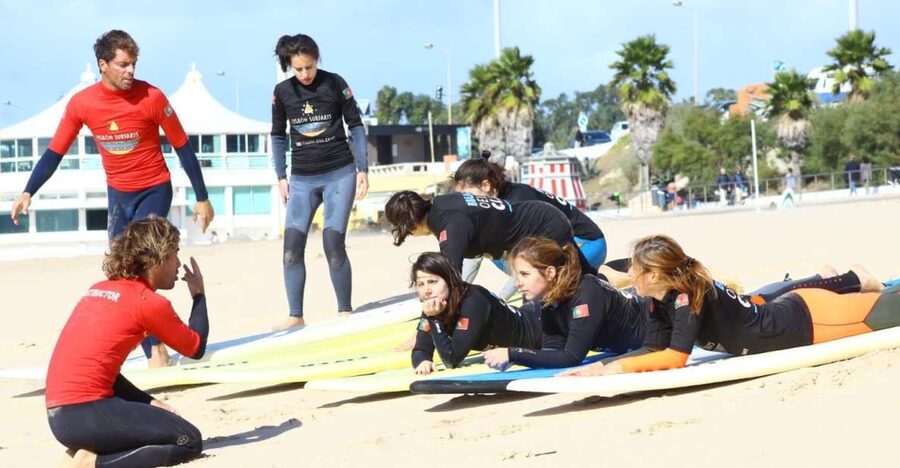
A good first surf lesson starts on land. Your instructor explains basic safety, how to use the board, and how to read the ocean before you are sent into the water. This is not wasted time. It gives you a few simple rules to follow when the Atlantic feels larger and stronger than it looked from shore.
You learn how to choose a wave and how to position yourself. The class also covers practical board skills, including paddling and the movement needed to get from lying on the board to standing up. You are not just handed equipment and told to copy someone else.
Safety instruction was an important part of the experience for several participants. The instructors stayed close, checked that everyone was all right, and gave corrections while the group practiced. That close supervision is particularly useful for people who are nervous in open water or who have never handled a surfboard.
The school limits groups to one instructor and five people at most. That is a strong feature at this price. A larger class might be cheaper, but you could spend much of the lesson watching other people attempt waves. Here, the structure allows the instructor to give each person practical feedback.
Getting your first wave
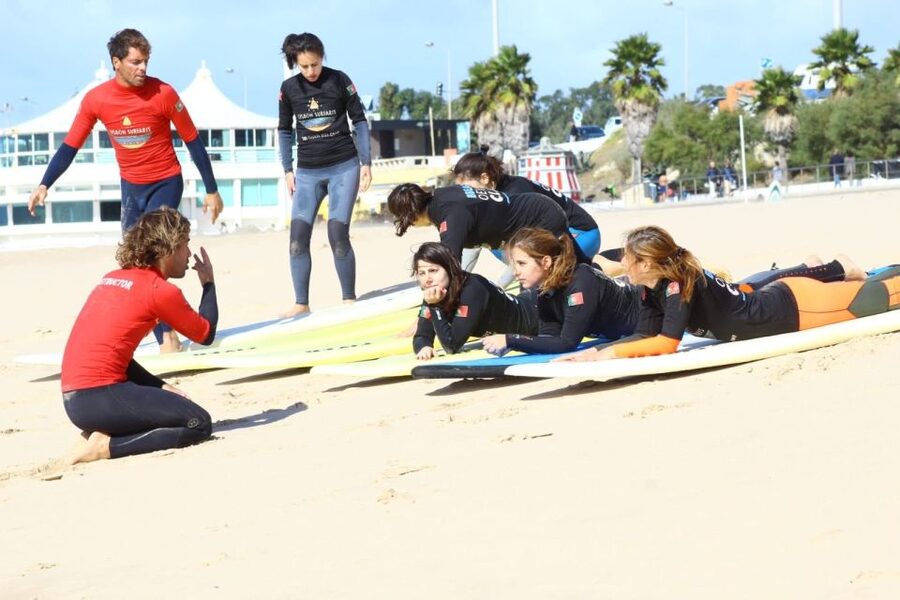
After the briefing and warm-up, you move into the water and begin trying the techniques. The goal is not polished surfing. The goal is to understand the timing, catch a small wave, and experience the basic rhythm of surfing.
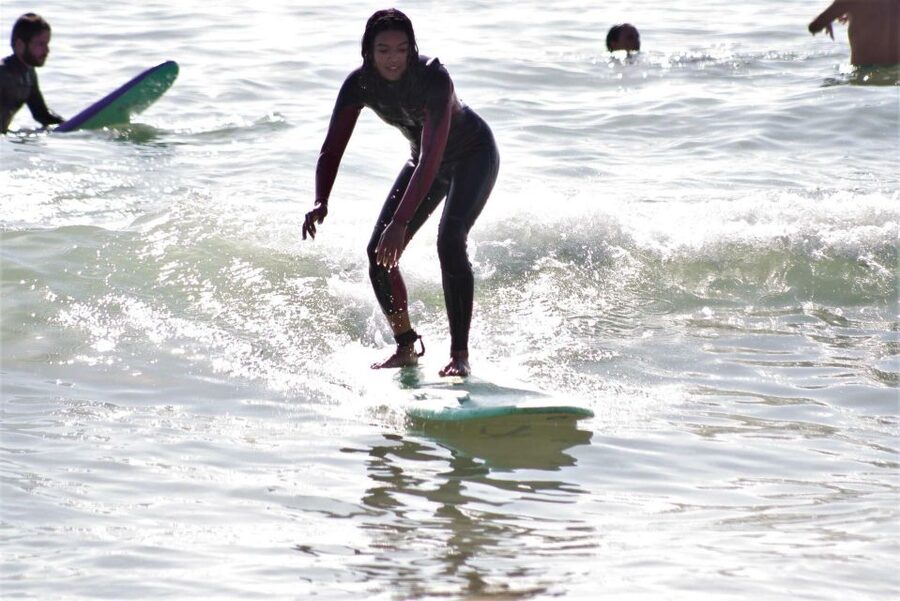
Your instructor helps you decide when to paddle and when to try standing. The first attempts can be awkward, and falling off is part of the lesson. The useful measure is progress: you learn how to position your body, how to keep the board moving, and how to make another attempt with a small adjustment.
Many beginners reached the standing stage during the session, including people taking their first lesson. That is possible because the instruction focuses on simple movements rather than too much theory. You can expect demonstrations, repeated attempts, and short corrections as you go.
The two-hour length feels well suited to a first outing. It gives you enough time for an explanation, practice, and several attempts without turning the day into a demanding endurance test. Surfing uses muscles you may not normally work, so a short lesson is a sensible introduction.
Do not judge the experience only by how long you remain standing. Ocean conditions, your fitness, your balance, and the crowd all affect the result. Some people may catch several waves, while others mainly learn how to paddle, position the board, and make a controlled attempt.
A few other Portugal half-days worth a look
- Lisbon: Pastel de Nata Baking Class
★ 4.9 · 2,106 reviews - Porto: Pastel de Nata Cooking Class with Grandma’s Recipe
★ 5.0 · 1,565 reviews - Porto: Pastel de Nata Pastry-Making Workshop
★ 4.9 · 1,542 reviews - Porto: Pastel de Nata Cooking Class with Port Wine – Sé
★ 4.8 · 888 reviews
What the instructors add
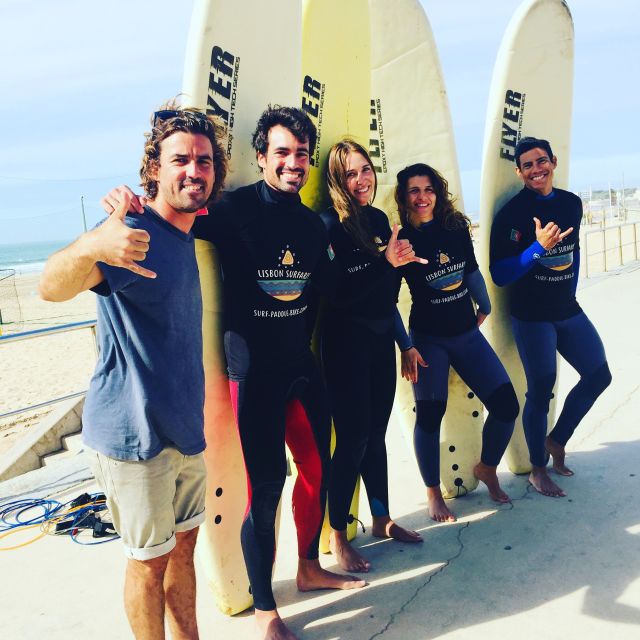
The strongest feature here is the personal coaching. The available instructors speak English, Portuguese, Spanish, or French, so you can ask questions and receive corrections in a language you understand comfortably.
Several instructors received individual praise, including Ivo, Patrick, Tiago, and PePe. Tiago was described as energetic and careful with explanations, while Patrick was patient with a complete beginner during a private lesson. Those details point to a teaching style that combines clear instruction with a relaxed tone.
That matters because beginners often need the same explanation more than once. You may understand paddling on the beach but lose the sequence once a wave approaches. A patient instructor can break the movement into smaller parts and tell you exactly what to change on the next attempt.
The maximum one-to-five ratio also helps the teaching feel personal. During a shared lesson, you will not have an instructor entirely to yourself, but you should still receive direct feedback. One participant particularly valued being told how to improve rather than simply being encouraged to try again.
Private lessons are available if you want more focused attention. The supplied information does not state a separate private price, so check the current option when you book. A private format may suit a nervous first-timer, a couple with different abilities, or someone trying to build on an earlier lesson.
Equipment, wetsuits, and Atlantic water
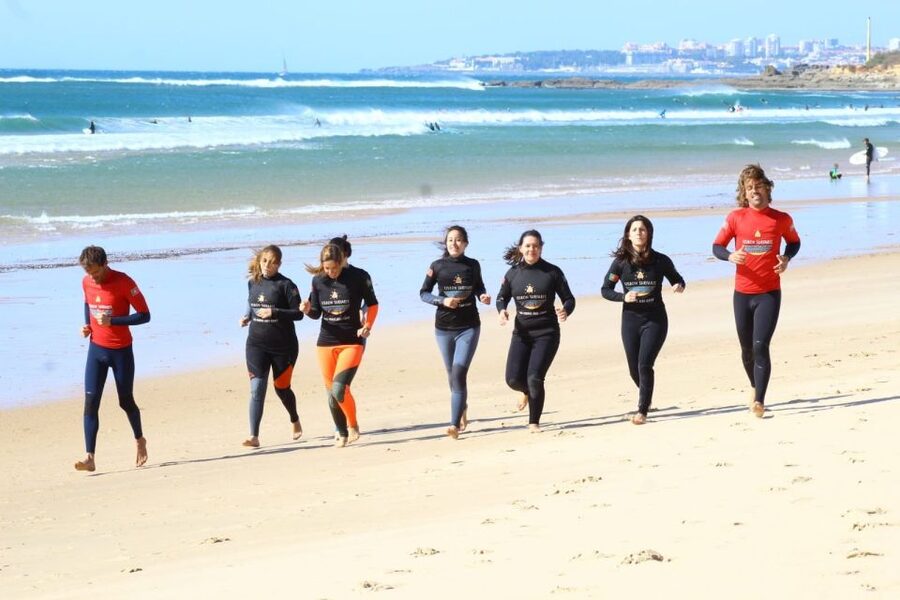
The $47 price includes the main equipment you need for the session. You receive a surfboard and wetsuit, plus the instructor and insurance. Wetsuits are available in different sizes and thicknesses, which is useful during cooler spring conditions and for anyone worried about the Atlantic water.
You still need to bring your own towel and sunscreen. Those are small items, but they make the transition after the lesson much easier. Bring identification too, since a passport or ID card is listed among the required items.
The equipment setup removes one of the biggest barriers for a first lesson. You do not need to guess which board to rent, find a wetsuit shop, or arrange insurance separately. You arrive as a beginner and use gear supplied for the activity.
The details do not promise a changing-room arrangement, lockers, or showers, so do not build your expectations around facilities that are not specified. Keep your personal belongings simple and confirm any storage questions with the school if you plan to bring more than the basics.
Is $47 good value for two hours?
At $47 per person, this is a fair entry price for someone who wants to try surfing without committing to a longer program. You receive two hours of instruction, a board, a wetsuit, insurance, and beach transport if required. Those inclusions make the price more useful than a bare equipment rental.
The small group limit improves the value. You are paying for coaching, not just access to the sea. A lesson with one instructor for five or fewer students gives you a reasonable chance to receive corrections and make repeated attempts.
The price makes the most sense if you are a complete beginner. You learn the safety basics and the main body movements in one sitting, then decide if you want to continue with more lessons or independent practice.
It may be less attractive if you already surf confidently. In that case, you may not need an introductory explanation of wave choice, paddling, or standing up. The experience is built around first attempts and basic skills, so experienced surfers should ask about a more advanced option before booking.
There are a few extra costs to remember. You arrange your own way to the meeting point, and food and drinks are not included. Hotel pickup and drop-off are also outside the price.
Who should book this lesson?
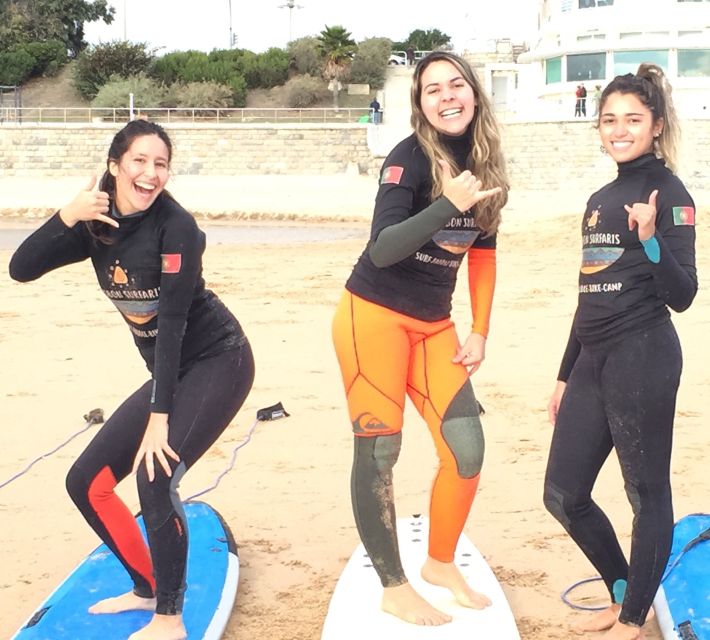
This is best for first-time surfers, cautious beginners, and families with older children. The minimum age is six, and one family found the lesson suitable for a seven-year-old. Children under six cannot join, and the activity is not suitable for pregnant women or people with mobility impairments.
It also suits friends or couples who want an active break from Lisbon’s streets and museums. The lesson is short enough to fit into a day plan, though you should allow extra time around the fixed two-hour activity for getting to the school, changing, and returning to the city.
A shared lesson works well if you enjoy a social setting and want the lower stated price. Choose a private lesson if personal attention is your main concern or if people in your party have very different confidence levels.
The class is not ideal if you need guaranteed waves, a quiet beach, or a polished surfing result. The school can choose the more suitable beach, but no beginner lesson can control the ocean. You should arrive ready to learn, fall, laugh, and try again.
Booking details worth knowing
You can cancel up to 24 hours before the activity for a full refund. A reserve-now, pay-later option is also available, which helps if your Lisbon schedule is still changing.
The lesson lasts two hours, but the starting times vary. Check availability before you plan transport or book another activity immediately afterward. Since Carcavelos and Guincho may be used according to conditions, allow a little flexibility in your plans.
The school offers shared and private formats. The standard group has no more than five people per instructor. Languages include English, Portuguese, Spanish, and French, giving you a practical choice if you are not comfortable taking technical instructions in English.
Should you book the Lisbon surf lesson?
I would book this if you want a well-supported first taste of surfing near Lisbon. The strongest reasons are the five-person group limit, the clear safety teaching, and the fact that board, wetsuit, insurance, and necessary beach transport are included.
I would also choose it for a family with children aged six or older, a couple looking for an active morning, or a solo visitor who wants an easy introduction without renting equipment alone. The two-hour format gives you a real chance to catch a wave while keeping the commitment modest.
Think twice if you want a guaranteed location, private beach space, or advanced coaching. Carcavelos can be crowded, and the ocean decides how much progress you make. For most beginners, though, Lisbon Surfaris offers a practical way to meet the Atlantic, learn the basics, and find out if surfing deserves a place in your holiday plans.
FAQ
Where does the Lisbon surf lesson meet?
You meet at Lisbon Surfaris, directly at Carcavelos Beach beside Bar o Moinho.
How long is the surf lesson?
The activity lasts two hours.
How much does the lesson cost?
The listed price is $47 per person.
Which beach will the lesson use?
The lesson can take place at Carcavelos Beach or Guincho Beach, depending on the most favorable weather conditions on the day.
Is surf equipment included?
Yes. Surfing equipment, including a wetsuit and board, is included.
Is transport to the beach included?
Transportation to the beach is included if necessary. Hotel pickup and drop-off are not included.
What languages do the instructors speak?
Instruction is available in English, Portuguese, Spanish, and French.
How many people are in each group?
Groups consist of one instructor and a maximum of five people.
What should I bring?
Bring a passport or ID card, a towel, and sunscreen.
Who cannot join the activity?
The lesson is not suitable for children under six, pregnant women, or people with mobility impairments.
New around Portugal
- Exclusive Boat Tour to the Benagil Caves★ 5.0 · 74 reviews
- Surf’s Up in Albufeira: Learn to Ride the Waves★ 5.0 · 74 reviews
- Lisbon: Kayaking and snorkeling in Sesimbra with photos!★ 5.0 · 74 reviews
- Porto: City Bike Rental★ 4.6 · 75 reviews
- Arrábida, Setúbal, Sesimbra, Olive with wine tasting★ 5.0 · 75 reviews
- Private 4×4 Jeep Full Day Porto Moniz or Santana★ 5.0 · 75 reviews
- Douro Valley: Quinta do Tedo Wine Experience with Picnic★ 4.8 · 75 reviews
- Lagoa: Dolphins Expedition with biologist guide on board★ 5.0 · 75 reviews
Surfing Lessons, compared.
Beginner Surf Lesson at the Beautiful Algarvian West Coast
Read our review →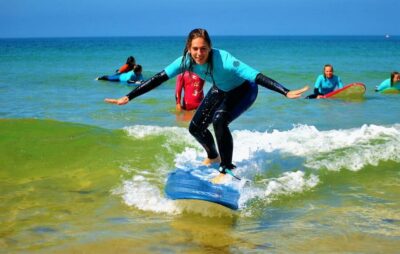
Browse the lists this tour appears in