
Reviewed · PICO TOURS
Pico Mountain: Climb the Highest Point of Portugal 2351m
Pico Mountain is not a casual hill walk. It is a 7-hour climb to 2,351 meters, Portugal’s highest point, over rough volcanic rock with an average slope of about 30 percent. The final push to Piquinho adds a hands-on scramble before the reward: wide views across the Azores and, on a clear day, neighboring islands.
I like the personal help from guides such as Raisa, Isabel, Nunu, and Haise, plus the practical gear provided at Casa da Montanha. I also like that the tour includes photos, videos, walking poles, insurance, and safety locators. The main concern is simple: this is a serious physical effort, and a mixed-ability group can make the climb or descent take longer than seven hours.
Key points before you book
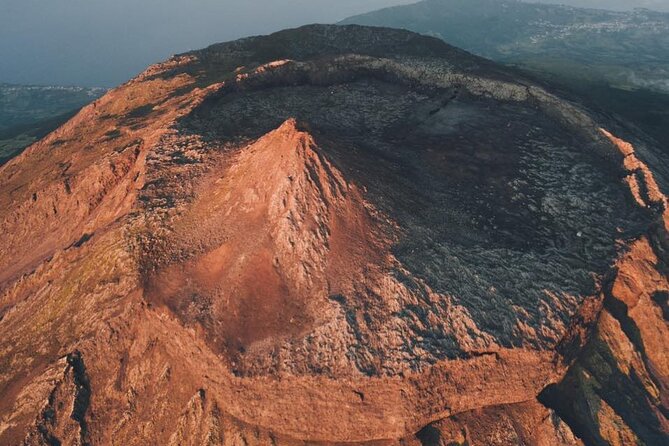
- Portugal’s highest summit: Reach the 2,351-meter top of Pico Mountain, with the final section leading to Piquinho.
- Volcanic rock from start to finish: Expect steep, uneven footing rather than a smooth mountain path.
- Experienced local guides: Raisa, Isabel, Nunu, and Haise are among the guides praised for pacing, encouragement, safety, and island insight.
- Useful equipment included: Hiking poles, personal insurance, safety locators, and quality photos and videos are provided.
- Small-group format: The stated maximum is 10 people, although group size may vary, so confirm the number for your date.
- Strong fitness required: You need stamina, balance, good hiking boots, food, water, and confidence on steep ground.
Starting at Casa da Montanha at 1,200 meters
Your day begins at Casa da Montanha, at about 1,200 meters above sea level. The address is Caminho Florestal nº 9, Candelária, near Madalena on Pico Island. This is not just a place to gather. It is where the guide briefs the group, checks the equipment, and issues safety locators before you set off.
Pay attention during the opening briefing. The guide will explain the route, the volcanic footing, the expected pace, and how to use the equipment. You also get walking poles, which become especially useful on the descent, when tired legs and loose rock make every step less certain.
The first part of the trail is also a practical test. The climb quickly changes your breathing and balance. If you are already struggling badly at this stage, the guide may decide that the full ascent is not suitable for you. That can feel disappointing, but it is a sensible safety check rather than a failure. Pico is a mountain, not a sightseeing stop with a steep entrance.
The meeting point is also the end point, so you return to Casa da Montanha after the climb. Meals are not included, and the tour information does not list transport, so plan your own way to the meeting point and bring everything you need for the day.
A few other Portugal half-days worth a look
- Pico Island: Whale Watching Experience from Lajes
★ 4.9 · 492 reviews - Pico Island: Azores Whale & Dolphin Watching on Zodiac Boat
★ 4.8 · 408 reviews - Whale and Dolphin Watching in Pico Island – Half Day
★ 4.5 · 157 reviews
Eight kilometers of volcanic rock
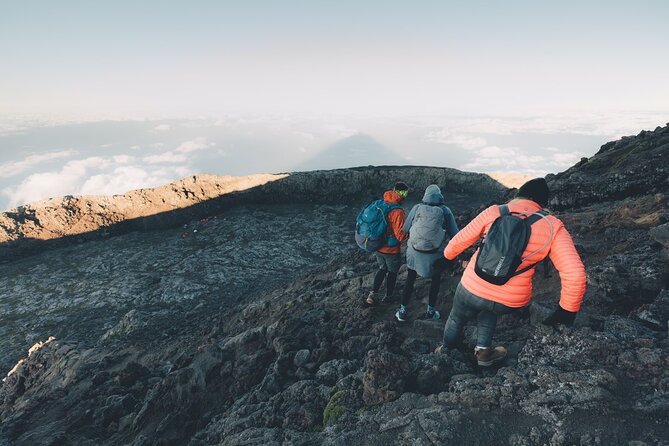
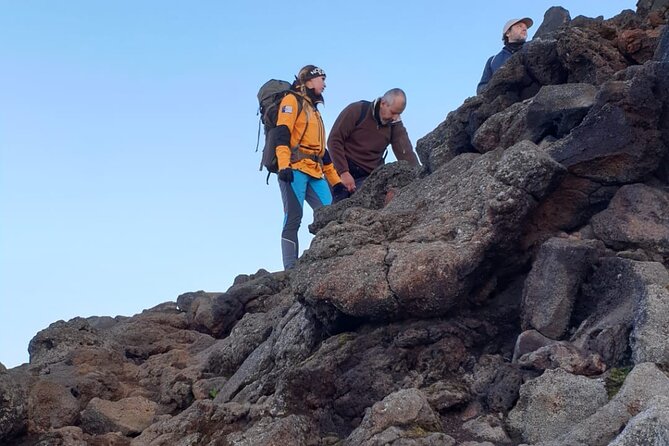
The route is about 8 kilometers in total, up and down. It is made of volcanic rock, with an average slope of around 30 percent. That description matters. You are not walking on a broad, even trail. You will need to place your feet carefully, keep your balance, and use your arms and poles for stability.
The route gains height steadily, and the effort builds. Early on, you may feel strong and eager to move quickly. Resist that impulse. A steady rhythm is more useful than a fast start, especially because the descent demands plenty of energy and concentration.
Guides divide the climb into manageable sections, with short pauses for water, snacks, photographs, and breathing. One longer rest is also part of the rhythm. These breaks are not wasted time. They help keep the group together and reduce the chance that you burn through your energy before the upper slopes.
If your group includes people with different fitness levels, the pace may feel stop-and-start. One account described frequent waits and an outing lasting about 8.5 hours. The advertised duration is approximately seven hours, but weather, group pace, rest breaks, and time at the summit can all change the total.
The hard work before the summit
Pico’s challenge comes from the combination of steepness, altitude, and footing. You are climbing from 1,200 meters to 2,351 meters, so you gain about 1,151 meters before returning to the starting point. The trail itself is only about 8 kilometers, which tells you how steep the route is.
You do not need mountaineering experience, but you do need a strong level of fitness. The experience is intended for people in good physical condition. Children under 12 and people over 60 are not placed in the regular groups, though a private activity can be requested at another price.
That age rule should not be read as a complete measure of difficulty. A fit person within the age range may manage the climb well, while a less active person may find it too much. If you rarely hike or have trouble with steep stairs, this is probably not the right first mountain outing.
Wear proper hiking boots with good grip. The rough rock is hard on casual shoes, and the descent is where poor footwear becomes a real problem. Bring water, snacks, and serious sun protection. A long day on exposed volcanic ground can leave you tired and sunburned, even when the air feels cool early in the morning.
The summit at 2,351 meters
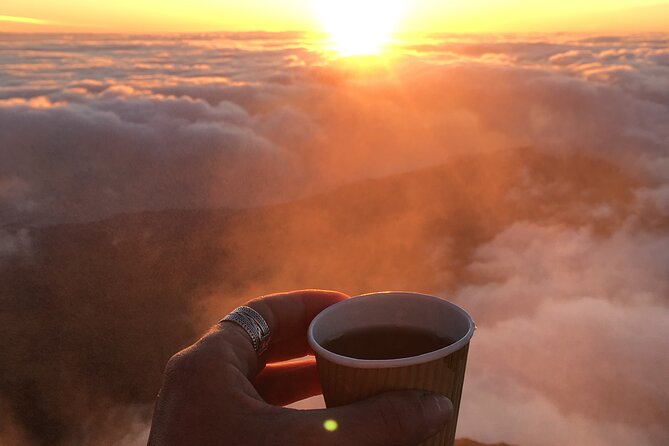
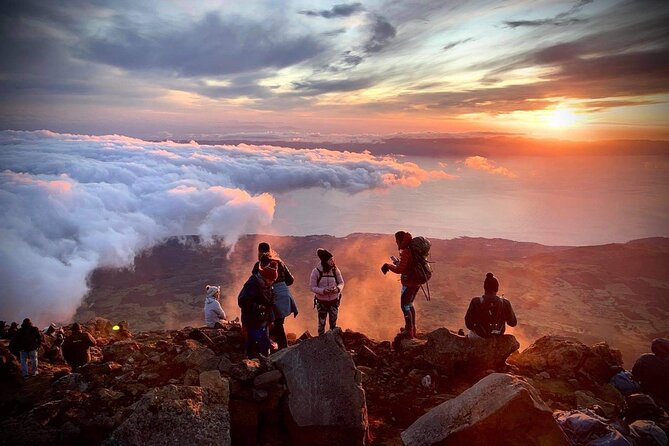
The high point is the reason to take on the route. At 2,351 meters, Pico is the highest point in Portugal. On a clear day, the top gives you a broad view over the Atlantic and the surrounding Azorean islands. The exact view depends on the weather, but clear conditions have allowed sightlines toward Terceira and Graciosa.
The final section to Piquinho is especially memorable. It is steeper and more hands-on than the lower trail, with a short scrambling feel as you work your way over the rock. This is the part that can make the summit feel earned rather than simply reached.
At the top, you may also notice warmth from volcanic steam in cracks between the rocks. That small detail gives the summit a physical reminder that this is a volcanic peak, not just a high lookout. It is worth taking a moment to enjoy it, but do not linger carelessly near unstable ground or cracks.
The guides are an important part of this section. Nunu has been praised for getting the group up and down safely while sharing stories about Pico’s people, food, culture, and surrounding islands. Raisa has been praised for patience, upbeat encouragement, clear pacing, and careful attention to each person’s needs. Isabel and Haise have also been singled out for responsible guiding and good control of the group.
The operator supplies photos and videos, which is a useful addition. You can focus more on moving safely instead of trying to document every step yourself. Still, bring your own phone if you want personal photos during rest stops.
Same coastline, a completely different day out:
- The Unvanquished Tour in Porto City Center
★ 5.0 · 26,497 reviews - Lisbon City Center Tour – The Unmissable Lisbon
★ 5.0 · 22,234 reviews - Lisbon: Sintra, Pena, Regaleira, Cabo da Roca & Cascais
★ 4.7 · 19,656 reviews - From Porto: Douro Valley w/ Boat Tour, Wine Tasting & Lunch
★ 4.7 · 19,061 reviews
The descent is not an afterthought
Many people think the summit is the hard part. On Pico, the way down can be just as demanding. Your legs are tired, and volcanic rock requires careful foot placement. A slip on the descent is more likely when concentration fades, so keep your pace controlled even when you can see the finish.
Walking poles are especially valuable here. Use them for balance rather than leaning heavily on them. Keep space between yourself and the person ahead, and watch for loose footing.
A mixed group can make the descent slow. That is frustrating if you are fit and ready to move, but it also gives everyone a safer pace. One group was allowed to split into a smaller subgroup for a faster descent after reaching the halfway point down. That option may depend on the guide and conditions, so do not count on it, but it shows why group management matters.
Plan mentally for a full day, not a quick morning walk. Seven hours is the approximate duration, and an 8.5-hour outing is possible. The return to Casa da Montanha marks the official end, but you may still need time to change shoes, eat, and recover.
Sunrise starts and changing mountain weather
Some outings begin before sunrise. An early start has clear advantages: the lower trail can be cooler, the ascent may be less exposed to strong sun, and you can reach the upper mountain with more of the day ahead. One outing began at 6:30 a.m., while another expected start time had been 8:30 a.m., so confirm your exact meeting time before the night before.
Mountain weather can change the whole experience. The activity requires suitable weather, and poor conditions can lead to a new date or a full refund. If the minimum group size is not reached, you are also offered another date or experience, or a full refund.
Do not book the climb as the only fixed point in a tightly packed Azores itinerary. Weather can affect the summit, and the activity may take longer than expected. Build in some flexibility around it.
What the $90.74 price includes
At $90.74 per person, this is a reasonable price for a guided ascent of Pico, especially if independent permits are unavailable. The price includes all fees and taxes, personal insurance, an experienced professional guide, hiking poles, safety locators, and quality photos and videos.
The biggest value is the guide. A permit may let you enter the mountain, but it does not give you the same help with pacing, group safety, route decisions, or morale. For a person climbing alone, or for anyone unsure about the terrain, that support can make the difference between a successful summit and an early retreat.
The included equipment also reduces the amount you need to arrange. You still need good boots, food, water, and sun protection. Meals are not included, so bring enough to cover the climb and descent.
The tour is often booked about 28 days ahead. That suggests you should not assume you can decide at the last minute, especially in a busy period. Booking early also gives you more room to adjust if the weather changes.
Who should choose this Pico climb
I would recommend it to a fit hiker who wants to reach Portugal’s highest point but prefers guidance over going alone. It works particularly well for solo hikers who want company, people uncertain about the route, and visitors who cannot find an available independent permit.
You will get the most from it if you enjoy a demanding physical challenge and do not need constant comfort or a fast, predictable schedule. The guide-led format adds encouragement and local context, not just route finding.
I would hesitate to recommend it to anyone with limited hiking experience, poor balance, or low fitness. It is also a poor match if you want a gentle nature walk, a relaxed seven-hour outing, or a tour with meals and transport included.
Age restrictions matter too. The regular group does not include children under 12 or people over 60. A private activity may be possible at a different price, but you must request it separately.
Booking, cancellation, and group size
Confirmation is provided at booking, but the reservation depends on available space at Casa da Montanha. The advertised maximum is 10 people. Since one account described a group of 12, confirm the expected group size if a compact group is important to you.
The activity is offered in English and uses a mobile ticket. You must provide all requested personal information for the reservation to be completed.
Free cancellation is available up to 24 hours before the start time for a full refund. Changes or cancellations inside that 24-hour window are not accepted and are not refunded. If poor weather cancels the climb, you are offered another date or a full refund. The same applies if the minimum number of participants is not met.
Should you book GOclimb Azores?
Book this experience if standing on Portugal’s highest point matters to you and you are ready for a steep, rocky, full-day effort. The guides, safety equipment, poles, and included media add real value to the $90.74 price.
Before booking, be honest about your fitness. Bring sturdy hiking boots, plenty of water, snacks, and strong sun protection. Confirm the start time and group size, then leave space in your schedule in case the climb runs beyond seven hours.
If you want an easy walk, skip it. If you want a demanding Azorean mountain day with strong guide support and a genuine summit goal, this is one of the better ways to tackle Pico.
FAQ
How high is Pico Mountain?
Pico Mountain reaches 2,351 meters and is the highest point in Portugal.
How long does the Pico climb take?
The activity lasts approximately seven hours, including the ascent and return. The total time can be longer depending on weather, rest stops, and group pace.
How far is the trail?
The full route is approximately 8 kilometers and includes the climb and descent.
Where does the activity begin?
The group meets at Casa da Montanha, Caminho Florestal nº 9, Candelária, 9950-000 Madalena, Portugal, at about 1,200 meters.
Where does the tour end?
The activity ends back at Casa da Montanha, the same place where it begins.
Do I need mountaineering experience?
Mountaineering experience is not required, but you need a strong level of physical fitness. The trail is steep and made entirely of volcanic rock.
What equipment is included?
The experience includes hiking poles and safety locators. It also includes personal insurance, a professional guide, and photos and videos.
Are meals included?
No. Meals are not included, so you need to bring your own food and water.
Can I cancel for a full refund?
Yes. You can cancel at least 24 hours before the start time for a full refund. Poor weather or failure to meet the minimum group size may also result in another date or a full refund.
New around Portugal
- Exclusive Boat Tour to the Benagil Caves★ 5.0 · 74 reviews
- Surf’s Up in Albufeira: Learn to Ride the Waves★ 5.0 · 74 reviews
- Lisbon: Kayaking and snorkeling in Sesimbra with photos!★ 5.0 · 74 reviews
- Porto: City Bike Rental★ 4.6 · 75 reviews
- Arrábida, Setúbal, Sesimbra, Olive with wine tasting★ 5.0 · 75 reviews
- Private 4×4 Jeep Full Day Porto Moniz or Santana★ 5.0 · 75 reviews
- Douro Valley: Quinta do Tedo Wine Experience with Picnic★ 4.8 · 75 reviews
- Lagoa: Dolphins Expedition with biologist guide on board★ 5.0 · 75 reviews
Pico Tours, compared.
Pico Island: Whale Watching Experience from Lajes
Read our review →
Pico Island: Azores Whale & Dolphin Watching on Zodiac Boat
Read our review →
Whale and Dolphin Watching in Pico Island – Half Day
Read our review →
Tours on Pico Island – Cultural and Natural Landscape
Read our review →
Browse the lists this tour appears in