
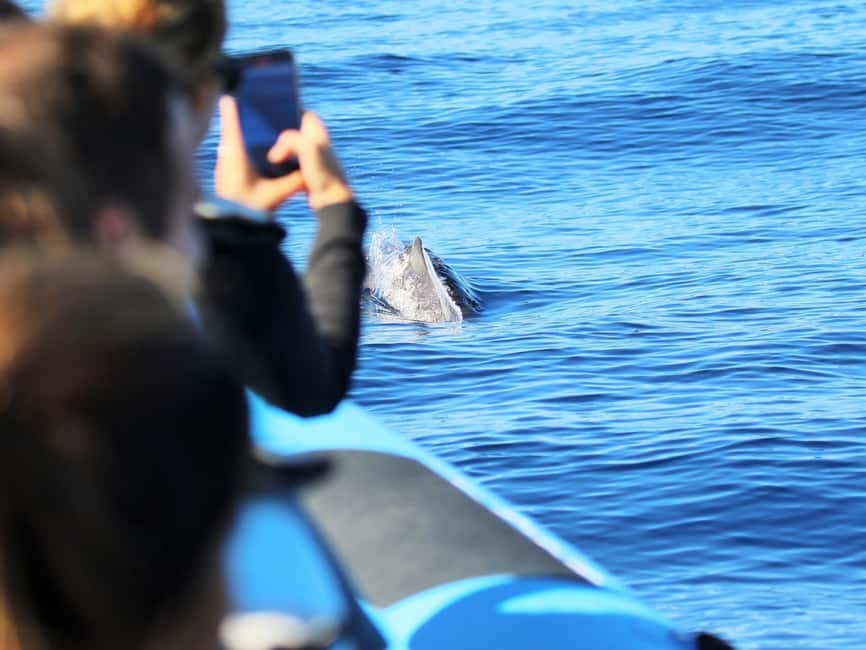
Reviewed · DOLPHIN & WHALE WATCHING
Pico Island: Whale Watching Experience from Lajes
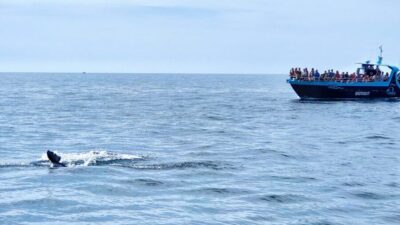
The Atlantic around Pico can produce the sort of wildlife moment that stops conversation: a sperm whale surfacing nearby, a pod of dolphins cutting across the bow, or, in the right season, a blue whale passing through. This three-hour trip from Lajes uses marine biologists and a fast Zodiac-style boat to search for animals in the wild, not in a tank.
I especially like the clear briefing on animal behavior and the crew’s effort to keep a respectful distance. I also like that the boats can cover ground quickly, while land-based spotters help direct the skipper toward wildlife. The main drawback is simple: nature sets the schedule. Rough seas can cancel the trip, and even a well-run outing cannot promise whales.
- Marine biologists lead the trip: Guides such as Nadja, Nadia, and Lynn have been praised for lively explanations of species, behavior, and conservation.
- The fast Zodiac-style boat covers water well: You spend about 2 hours and 45 minutes searching at sea after a 15-minute safety briefing.
- Wildlife sightings can be varied: Possible sightings include sperm whales, pilot whales, blue whales, beaked whales, several dolphin species, turtles, seabirds, flying fish, and Portuguese man o’ war.
- Animal welfare comes first: The crew explains how to watch without chasing, crowding, or stressing the animals.
- The harbor setting is practical: You check in at Futurismo Whale Watching in Lajes do Pico, with free parking about a 5 to 10-minute walk away.
- The price is reasonable for a specialist outing: At $68 per person, the trip includes the boat, guide, life jacket, briefing, and rain gear when needed.
Why Pico is such a strong place for whale watching
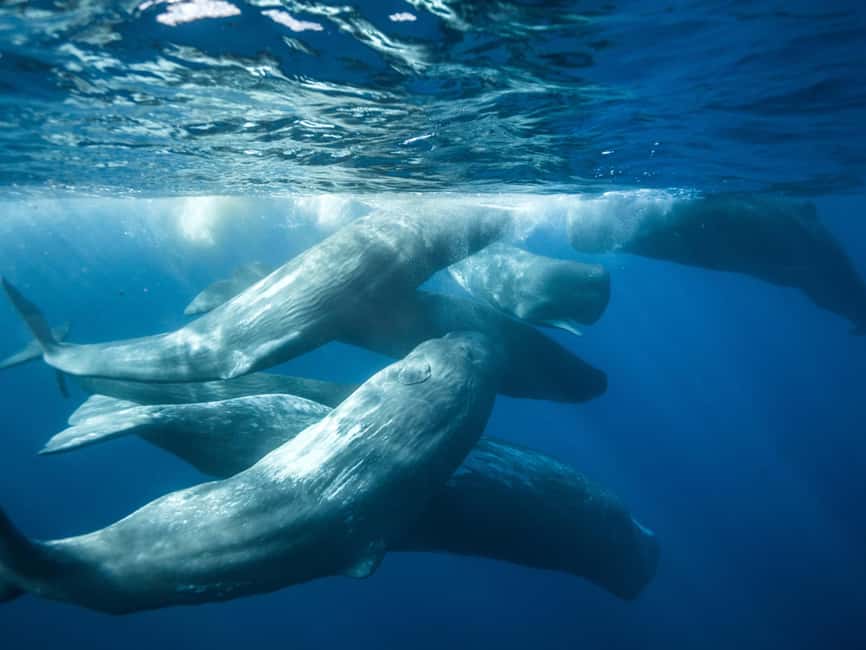
The Azores sit in the middle of the Atlantic, along routes used by many whale and dolphin species. More than a third of the world’s whale and dolphin species are permanent residents or pass through these waters, so Pico is not simply offering a scenic boat ride with a slim chance of wildlife.
That does not mean you are guaranteed a blue whale every afternoon. It means the surrounding waters have real ecological importance, and the possibility of seeing several species in one outing is credible. Sperm whales, pilot whales, common dolphins, Atlantic spotted dolphins, bottlenose dolphins, and beaked whales have all been seen on trips like this.
The season matters. One outing in September produced sperm whales and several dolphin species but no blue whales, with spring identified as the better period for blue whale sightings. You should treat this as useful context, not a promise. The animals are wild, and their movements change from day to day.
I like that the trip treats the sea as a living place rather than a stage set for a guaranteed performance. The crew’s job is to help you find wildlife while allowing the animals to choose the distance and duration of the encounter.
Checking in at Lajes do Pico
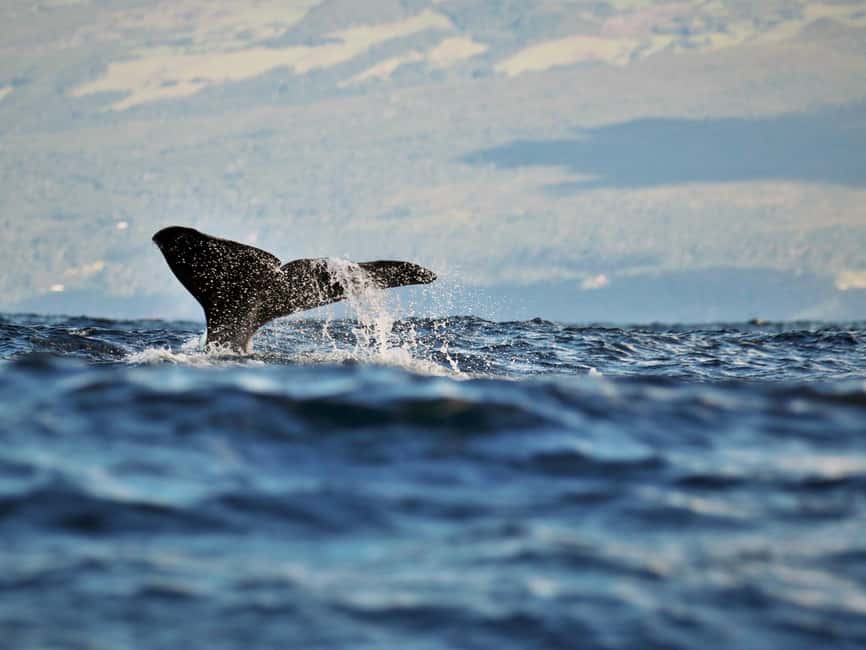
Your meeting point is Futurismo Whale Watching at Lajes do Pico harbor. Check in at the ticket counter before the departure time. Free parking is available, but it is about a 5 to 10-minute walk from the shop, so do not arrive at the last second if you have a rental car, children’s gear, or bulky bags.
The whole activity lasts three hours. The exact starting times depend on the date and availability, so check the schedule before building the rest of your day around it. The trip returns to the same harbor, and there is no hotel pickup or drop-off.
Lajes is a useful base for this outing because you are already at the water’s edge when the trip begins. There is no long transfer from another part of Pico, which keeps the experience focused and helps if you are planning other island activities later.
Bring comfortable shoes, comfortable clothes, and a windbreaker. The Atlantic air can feel cooler on the water than it does on land. The operator supplies a raincoat and trousers if needed, along with a life jacket.
High heels are not allowed, which is sensible on a moving boat. Pets, drones, and alcoholic drinks in the vehicle are also not allowed. A face mask or protective covering is listed among the items to bring.
More dolphin and whale trips around Portugal:
- Albufeira: 2.5-Hour Benagil Caves & Dolphin Watching
★ 4.6 · 10,710 reviews - Albufeira: Benagil Caves & Dolphin Watching Speed Boat Tour
★ 4.6 · 6,316 reviews - From Funchal: Ecological Catamaran Dolphin Whale Watching
★ 4.5 · 5,771 reviews
The 15-minute briefing sets the tone
Before heading out, you receive a safety briefing lasting about 15 minutes. The marine biologist explains how to board and behave on the boat, then introduces species you may encounter and the history of whale watching in the Azores.
This part is more important than it may sound. A whale-watching trip works best when everyone understands why the boat may slow down, change direction, or leave an animal alone. You learn that a close approach is not automatically a better approach, and that the crew may move away if the animals seem uncomfortable.
The guides also explain how to recognize different marine species. That gives you something useful to watch for once the boat is moving. Instead of seeing only a fin on the horizon, you have a better chance of understanding whether you are looking at a sperm whale, pilot whale, bottlenose dolphin, or Atlantic spotted dolphin.
The guides named in the feedback include Nadja, Nadia, and Lynn. You may not have one of these people on your departure, but the consistent theme is a guide who combines scientific information with obvious excitement for Pico’s wildlife. The best guides make the briefing feel like the beginning of the outing, not a formality to rush through.
About 2 hours and 45 minutes searching at sea
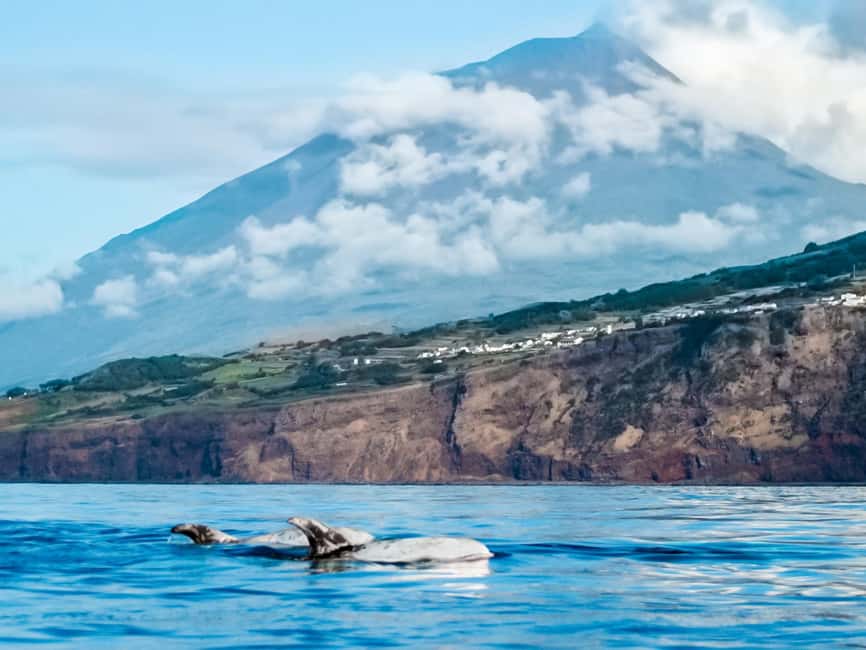
After the briefing, you board the boat and head out from Lajes. The trip includes about 2 hours and 45 minutes of guided cruising and wildlife watching, giving the crew time to search rather than turn around after a short look near the harbor.
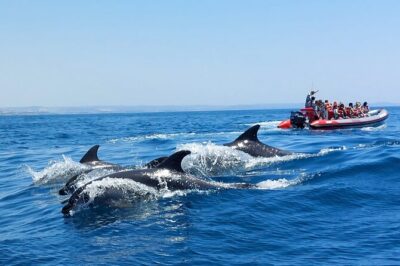
The boat described in the feedback is a fast Zodiac-style craft. That matters because whale watching often involves covering open water between sightings. A quick boat can reach a reported sighting without spending as long in transit, though speed also means you should be ready for wind, spray, and motion.
The coast of Pico provides a scenic backdrop as you leave land behind. You see dark basalt formations and green vegetation along the shore, then increasingly open water. The ride is part of the experience, but it is not a calm sightseeing cruise. If you have back problems, are pregnant, or are uncomfortable with a rough ride, this outing is not suitable.
The crew uses information from spotters to help locate animals. These observers share sightings with the skipper, allowing the boat to search efficiently without simply charging after every animal it sees. That system is one reason the experience can feel active without becoming a chase.
Expect periods of waiting and scanning. You may spend time looking at empty water before a dorsal fin appears. That is normal and worth accepting in advance. The ocean is not a zoo, and patience is part of the price of seeing wildlife on its own terms.
What you might see from the boat
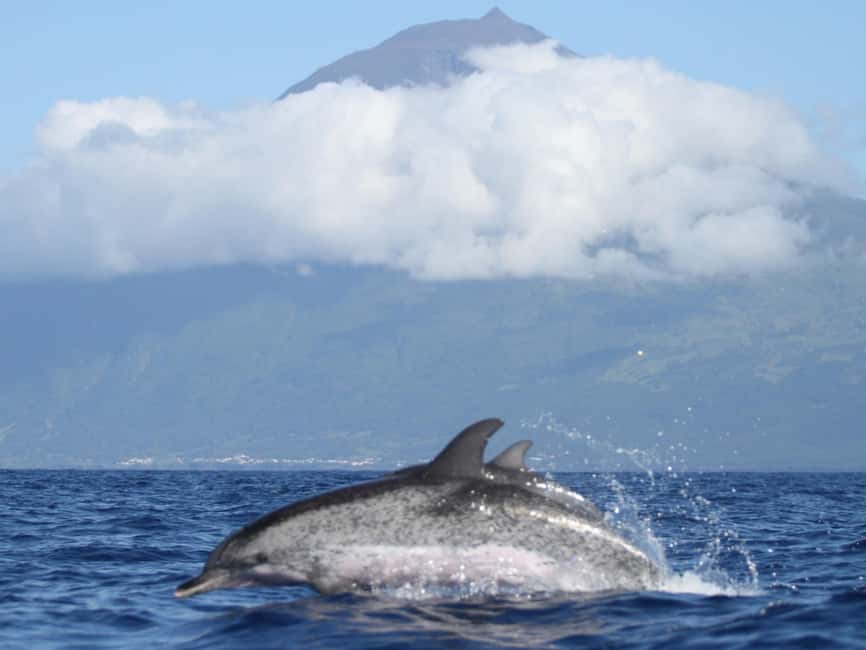
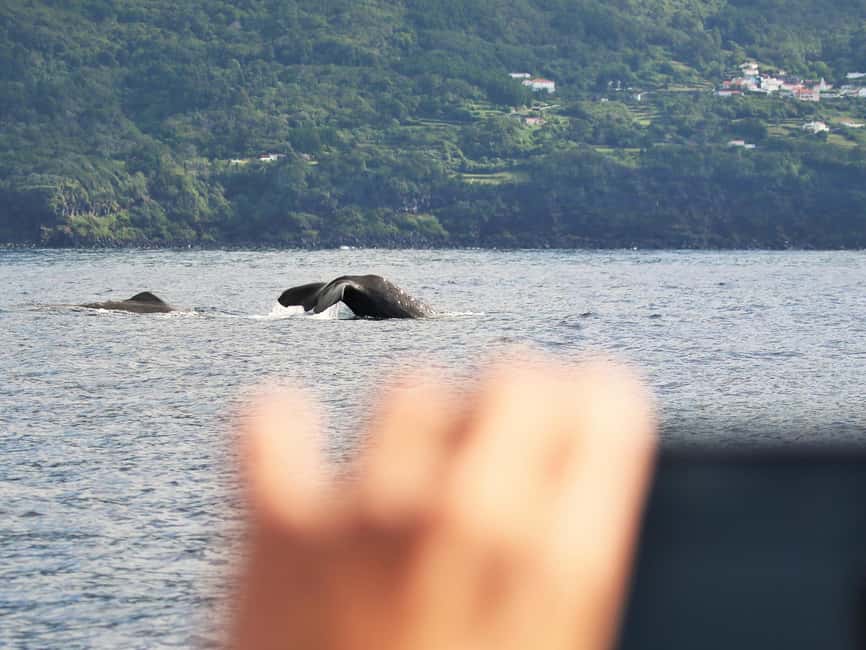
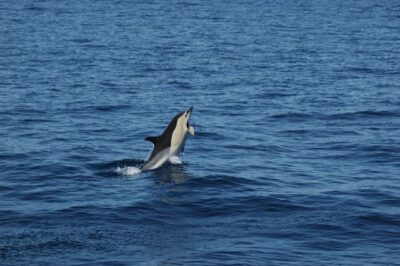
The list of possible sightings is unusually broad. Sperm whales are a major draw around Pico, and several outings have also produced pilot whales and beaked whales. Dolphins may include common, Atlantic spotted, and bottlenose species.
The variety can be impressive. One trip recorded seven species and a turtle. Other outings included four dolphin species, sea turtles, flying fish, and Portuguese man o’ war. Blue whales have also been seen, especially during the spring period, though you should never book on the assumption that one will appear.
The best encounter is not always the largest animal. A pod of dolphins can bring fast movement and repeated action, while a sperm whale may offer a quieter but more dramatic sighting as it surfaces and disappears again. Your guide helps explain these different behaviors so the trip does not become a frantic hunt for the biggest fin.
Bring your attention, not just your camera. Wildlife often surfaces briefly, and the person who watches the water instead of staring at a screen may see more. You can take photographs, but the crew’s instructions and animal welfare rules come first.
The trip can produce emotional moments, but it can also produce a quiet stretch with little activity. That is the honest trade-off. A perfect trip is possible, as several outings have shown, but no responsible operator can control the sea.
A few other Portugal half-days worth a look
- Pico Island: Azores Whale & Dolphin Watching on Zodiac Boat
★ 4.8 · 408 reviews - Pico Mountain: Climb the Highest Point of Portugal 2351m
★ 5.0 · 187 reviews - Whale and Dolphin Watching in Pico Island – Half Day
★ 4.5 · 157 reviews - Tours on Pico Island – Cultural and Natural Landscape
★ 4.8 · 115 reviews
Responsible viewing is a real part of the experience
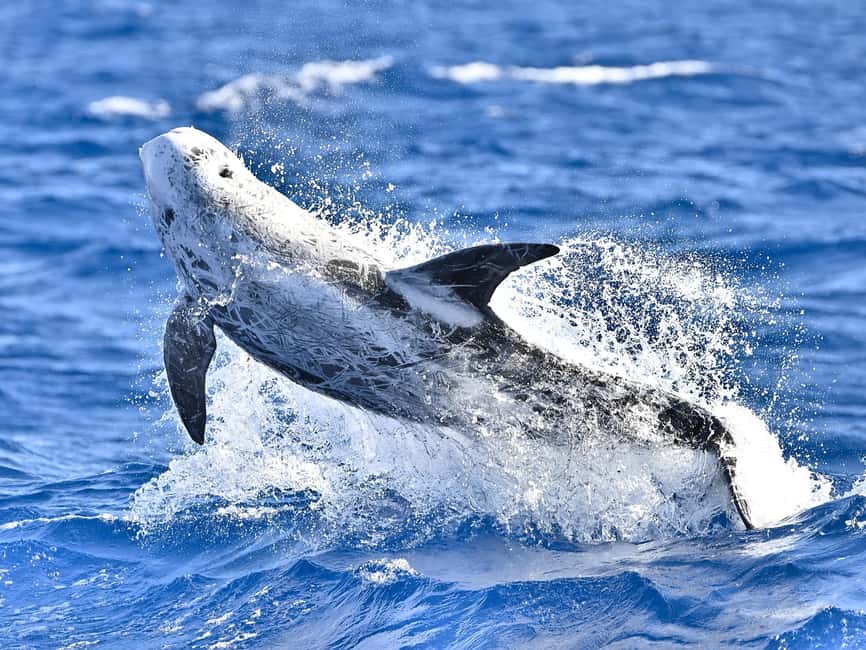
The strongest feature here is the emphasis on respectful wildlife watching. The guides explain how to interact with marine animals without disturbing them, and the skipper avoids chasing or crowding wildlife.
If the animals move away or show signs that they do not want the boat nearby, the crew leaves them alone. That may mean your viewing time is shorter than you hoped, but it is exactly the right rule for wild animals.
You also benefit from guides who connect sightings with conservation. Lynn, Nadja, and Nadia have been praised for explaining animal behavior in an engaging way, while keeping the focus on protecting the sea and its creatures. The information is not just academic. It helps you understand why the boat changes position and why distance matters.
I would choose this kind of operation over one that promises a close approach at any cost. You want a strong sighting, but you also want to leave knowing the animals were not stressed for your photograph.
What the $68 price includes
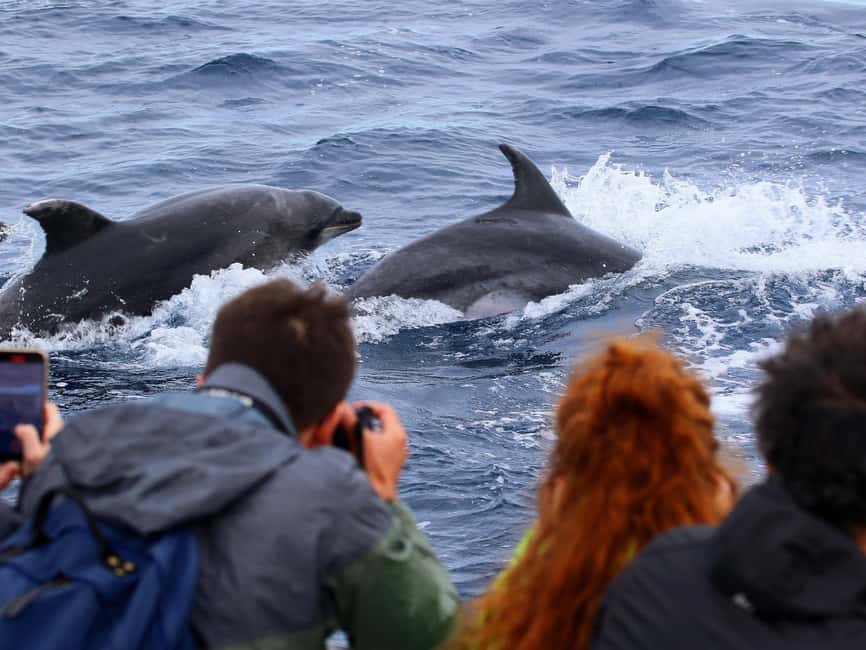
At $68 per person, this is a fair price for a three-hour marine wildlife trip with specialist guides. The fee includes the boat ride, life jacket, pre-tour briefing, marine biologist guides, and rain gear if conditions require it.
The value improves if you care about learning as much as spotting animals. You are not paying only for transport from the harbor. You are paying for crew experience, species identification, search time, and a system that uses spotters to help locate wildlife.
Food and drinks are not included, so eat beforehand and bring what is permitted. Alcoholic drinks are not allowed in the vehicle. Hotel transportation is also not included, but the activity begins and ends at the Lajes meeting point.
The flexible booking terms are useful for an island trip. You can reserve now and pay later, and cancellation is free up to 24 hours before the activity for a full refund. Weather can still force a change close to departure, since sea conditions determine if the boat can operate safely.
Who should book this Pico boat trip
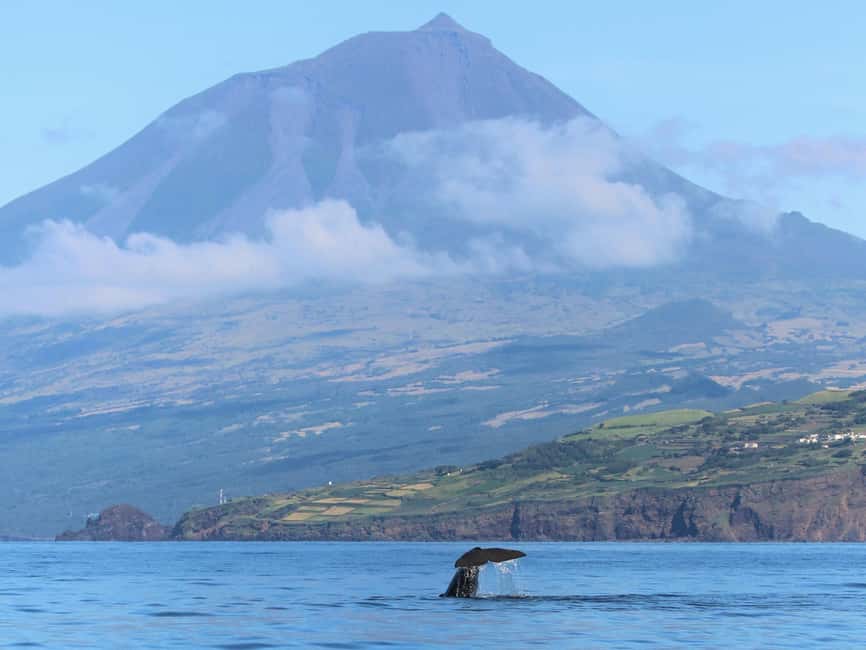
This outing suits adults, older children, and anyone who wants an active introduction to Azores marine life. Children under eight cannot join, and the boat is not suitable for wheelchair users, pregnant women, or people with back problems.
You should be comfortable sitting in a small boat for several hours and dealing with wind, spray, and possible motion. Wear practical clothing and shoes, and expect the conditions to change once you leave the shelter of the harbor.
It is a particularly good fit if you want:
- A guided wildlife outing led in Portuguese or English
- Direct explanations from marine biologists
- A fast boat that can search a broad area
- A strong focus on conservation and animal welfare
- A compact three-hour activity from Lajes
- A chance to see several kinds of marine life in one trip
It may be less suitable if you need a smooth, quiet cruise, a guaranteed sighting, or a fully accessible vessel. You should also leave room in your schedule in case weather affects the departure.
Small details that can improve your day
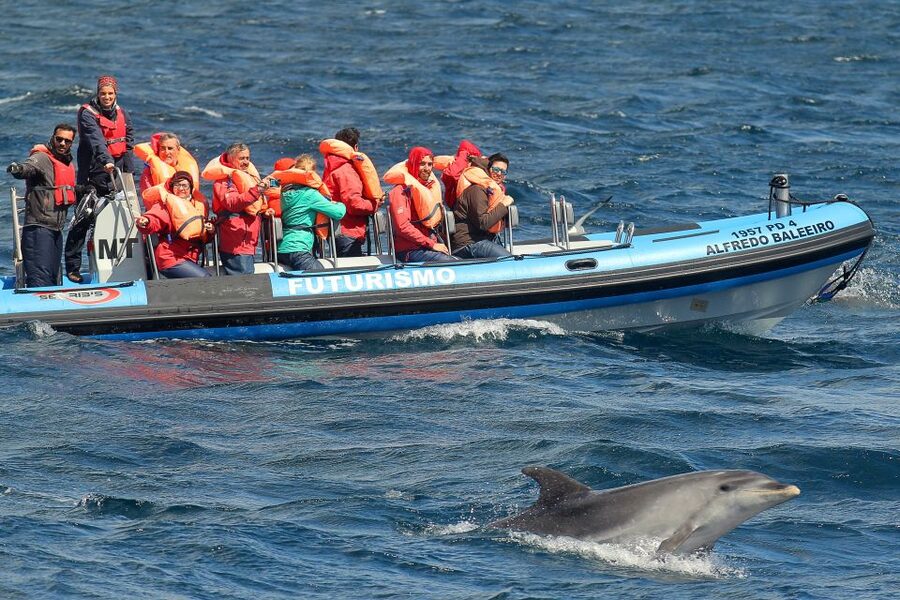
Arrive early enough to walk from the parking area and complete check-in without rushing. Wear layers, since the sea breeze can make the ride feel colder than the harbor.
Keep your expectations realistic. You might see several species, including dolphins, sperm whales, turtles, and seabirds. You might also spend time scanning open water. The guides can improve your odds, but they cannot schedule an animal to surface.
If your main target is a blue whale, consider the season carefully. Spring is associated with better chances, while a September outing did not produce one despite seeing a range of other species.
Listen closely during the briefing. The more you understand about behavior and identification, the more satisfying a brief surfacing becomes. A good guide turns a distant fin into a meaningful sighting.
FAQ
How long is the Pico whale-watching trip?
The activity lasts three hours. This includes a 15-minute safety briefing and about 2 hours and 45 minutes of guided boating and wildlife watching.
Where does the tour start?
You meet at Futurismo Whale Watching in Lajes do Pico. Check in at the ticket counter before departure.
Where does the activity end?
The boat returns to the same meeting point at Futurismo Whale Watching in Lajes do Pico.
Is parking available?
Yes. Free parking is available about a 5 to 10-minute walk from the Futurismo shop.
What languages are available?
The live guides speak Portuguese and English.
Are marine biologists included?
Yes. Marine biologist guides lead the briefing and the boat trip.
What wildlife might I see?
Possible sightings include whales, dolphins, sea turtles, seabirds, flying fish, and Portuguese man o’ war. Species seen on outings include sperm whales, pilot whales, blue whales, beaked whales, common dolphins, Atlantic spotted dolphins, and bottlenose dolphins.
Is a wildlife sighting guaranteed?
No. The animals are wild, and sightings depend on conditions and their movements. Weather and sea conditions can also cancel or reschedule the activity.
What should I bring?
Bring comfortable shoes, comfortable clothing, a windbreaker, and a face mask or protective covering. Raincoat and trousers are provided when necessary.
Who cannot join the activity?
The trip is not suitable for children under eight, pregnant women, people with back problems, or wheelchair users. High-heeled shoes, pets, drones, and alcoholic drinks in the vehicle are not allowed.
Should you book it?
I would book this trip if you want a serious wildlife outing with clear guidance and a strong respect for the animals. The $68 price is sensible for three hours on the water, a marine biologist guide, a fast boat, and the chance to see several species.
Book with patience, not with a checklist. The best reason to go is the possibility of meeting wild animals on their own terms, whether that means a sperm whale, a pod of dolphins, or a brief glimpse of a turtle. If you can accept changing weather, open-water motion, and no guarantees, this is one of Pico’s more rewarding ways to experience the Atlantic.
New around Portugal
- Exclusive Boat Tour to the Benagil Caves★ 5.0 · 74 reviews
- Surf’s Up in Albufeira: Learn to Ride the Waves★ 5.0 · 74 reviews
- Lisbon: Kayaking and snorkeling in Sesimbra with photos!★ 5.0 · 74 reviews
- Porto: City Bike Rental★ 4.6 · 75 reviews
- Arrábida, Setúbal, Sesimbra, Olive with wine tasting★ 5.0 · 75 reviews
- Private 4×4 Jeep Full Day Porto Moniz or Santana★ 5.0 · 75 reviews
- Douro Valley: Quinta do Tedo Wine Experience with Picnic★ 4.8 · 75 reviews
- Lagoa: Dolphins Expedition with biologist guide on board★ 5.0 · 75 reviews
Dolphin & Whale Watching, compared.

Benagil Caves & Dolphin Watching Speed Boat Tour
Read our review →
Dolphins Search and Benagil Caves from Albufeira
Read our review →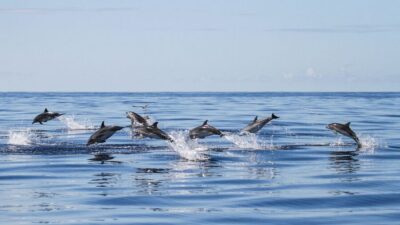
Benagil Caves & Dolphins Watching with Biologist
Read our review →Browse the lists this tour appears in