
Reviewed · PICO TOURS
Tours on Pico Island – Cultural and Natural Landscape
Pico Island is best understood as a place shaped by volcanic stone, vineyards, and whaling. This full-day tour links all three, taking you from Lagoa do Capitão in the island’s interior to lava fields, coastal villages, the UNESCO-listed vineyard culture area, and the Whaling Museum.
I like the small-group format, limited to eight people, and the way Norberto gives you time at the stops instead of rushing from one photo point to the next. I also like the practical pickup service, especially if you arrive by ferry and want to see Pico without renting a car.
The main drawback is the length. At 8.5 hours, this is a full day on the road, and food and drinks are not included. If you prefer long walks or a single focused activity, this broad island tour may feel too vehicle-based.
Key points to know before booking
- Lagoa do Capitão brings you into Pico’s interior, with views of endemic island vegetation.
- The UNESCO vineyard area shows how people farmed black volcanic ground, using stone walls to protect the vines.
- Cachorro and Lajido reveal Pico’s lava coast, where the island’s volcanic character is especially clear.
- The Whaling Museum adds difficult but important history, explaining an industry that once shaped local life.
- Norberto is the guide to look for, with strong local knowledge, careful driving, and a flexible approach to stops.
- The tour suits ferry passengers and car-free visitors, with hotel pickup, drop-off, and transfers to and from public transport.
One day, three towns, and Pico’s changing scenery
This tour follows Estrada Regional roads along Pico’s north and south coasts. The route takes in Madalena, São Roque do Pico, and Lajes do Pico, giving you a useful sense of how the island’s communities differ.
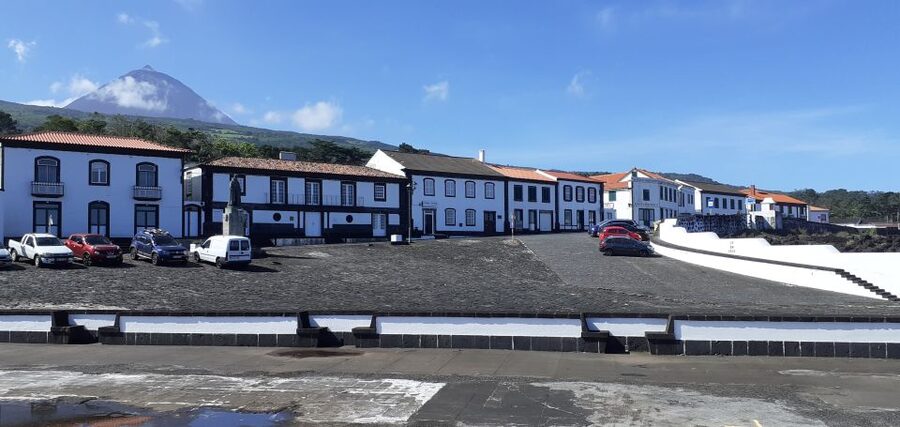
Madalena is a natural starting point for many visitors, particularly if you arrive from Faial by ferry. It is also closely tied to Pico’s wine production and western coastal setting. São Roque do Pico gives you another view of island life, with its connection to the sea and whaling past. Lajes do Pico, farther south, is especially important for whaling heritage.
I like this three-town structure because it keeps the day from becoming a string of unrelated viewpoints. You see how the interior, coast, vineyards, and old industries fit together. The tradeoff is that this is an overview rather than a slow visit to each village. You will not have unlimited time in every town.
The vehicle matters here. Pico is a large island with sights spread along the coast and inland roads. A small group in a comfortable van lets you cover ground without the work of driving, parking, and checking directions at every turn. Previous bookings also describe the van as spacious, clean, and safe.
A few other Portugal half-days worth a look
- Pico Island: Whale Watching Experience from Lajes
★ 4.9 · 492 reviews - Pico Island: Azores Whale & Dolphin Watching on Zodiac Boat
★ 4.8 · 408 reviews - Pico Mountain: Climb the Highest Point of Portugal 2351m
★ 5.0 · 187 reviews
Lagoa do Capitão and Pico’s high interior
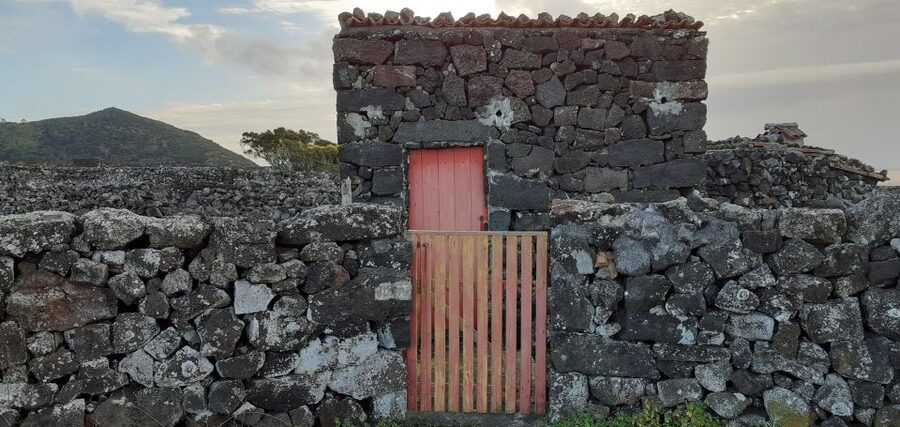
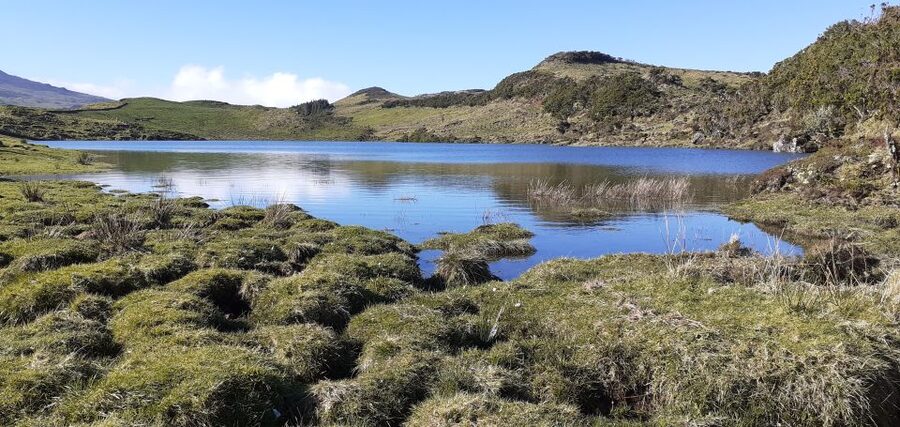
One of the most memorable stops is Lagoa do Capitão. The lake sits in Pico’s higher interior, away from the coastal villages and black-rock shore. Here, you get a chance to see the island’s endemic vegetation, not just its famous vineyards and lava.
This stop gives the day a useful change of pace. Much of Pico’s identity is tied to the sea and to exposed volcanic ground, while Lagoa do Capitão shows a quieter, greener side of the island. The contrast helps you understand that Pico is not one single type of scenery.
Weather can affect this stop. Pico’s higher areas may be cloudy or foggy, and visibility is not guaranteed. Norberto has adjusted the route when mist blocked a planned view, sometimes adding another stop when time allowed. That flexibility is valuable, but you should still approach the day with a little weather patience.
If Lagoa do Capitão is high on your wish list, mention it when booking and keep your schedule flexible. One especially useful detail is that the tour can work well for solo visitors, since the operator accepts individual bookings rather than requiring you to form your own group.
The UNESCO vineyards, built from black volcanic rock
Pico’s vineyard culture area is the heart of the tour for many people. It has UNESCO World Heritage status because of the unusual way generations of islanders made vineyards work on harsh volcanic ground.
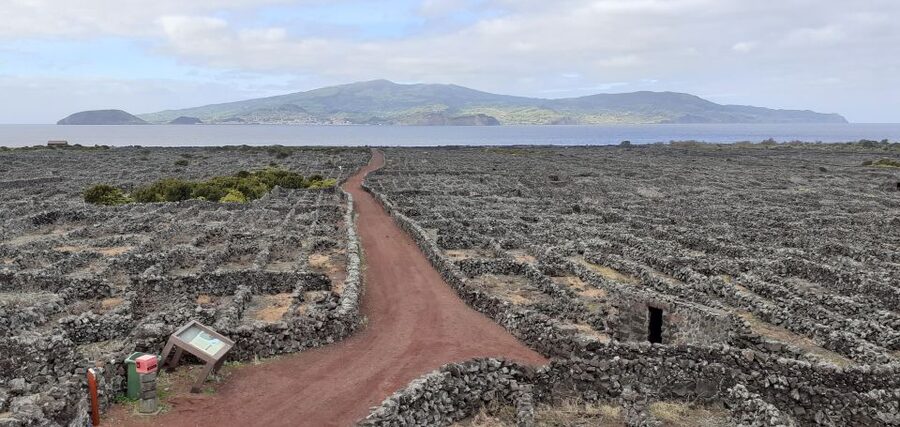
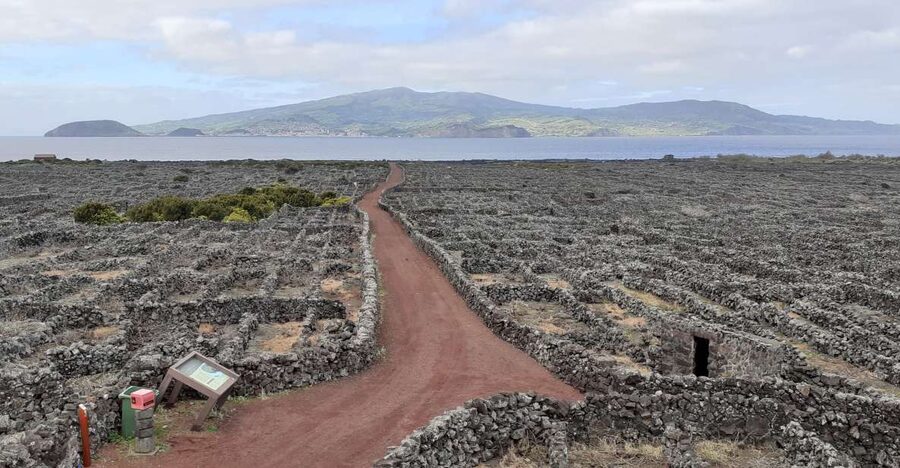
The vines are protected by countless low stone walls. These walls divide the fields into small plots and help shelter the plants from wind and sea air. The dark stone also stores heat, an advantage in Pico’s changeable climate. You do not need to be a wine expert to appreciate the skill involved. The entire setting shows human work written into the ground.
I like this part because it is not simply a vineyard visit. It explains why the island looks the way it does. Pico’s wine country is a record of adaptation: people used what the volcano left behind and built an agricultural system around it.
The tour includes the popular areas of Cachorro and Lajido. At Lajido, you can take in the vineyard culture and coastal setting together. Cachorro is known for its lava formations and stone-built character. The black rock can look severe at first, but it becomes more interesting when your guide explains how it supports both homes and agriculture.
You should expect walking at some stops, but the supplied details do not promise a set walking distance or a formal vineyard tasting. If wine tasting is your main goal, confirm exactly what is planned before you book. This experience is broader than a wine tour.
Cachorro, Lajido, and the lava coast
Along the seashore, Pico’s volcanic origin is impossible to ignore. Vast lava fields reach toward the water, creating a rough coastline with dark rock formations and uneven ground.
Cachorro and Lajido are useful stops because they make geology visible without requiring a technical excursion. You can see where old lava flows cooled, hardened, and became part of daily life. Stone paths, walls, buildings, fields, and shore all connect to the same material.
This is also where a guide adds real value. A quick drive past a lava field may give you a striking photograph, but it does not explain how the Mistérios shaped Pico. These lava flows left areas of new rock and helped define local settlement and farming patterns. Norberto’s commentary connects the physical island to its past and present.
Do not expect a soft beach day. The coast is rocky and volcanic, and the tour is designed for sightseeing rather than swimming. Wear shoes suitable for uneven surfaces and bring a light layer. The weather can change quickly, particularly when the route moves between exposed coast and higher ground.
Same coastline, a completely different day out:
- The Unvanquished Tour in Porto City Center
★ 5.0 · 26,497 reviews - Lisbon City Center Tour – The Unmissable Lisbon
★ 5.0 · 22,234 reviews - Lisbon: Sintra, Pena, Regaleira, Cabo da Roca & Cascais
★ 4.7 · 19,656 reviews - From Porto: Douro Valley w/ Boat Tour, Wine Tasting & Lunch
★ 4.7 · 19,061 reviews
Whaling culture and the Whaling Museum
Pico’s whaling heritage is one of the most important historical parts of the day. The route includes emblematic whaling sites and a visit to the Whaling Museum.
Whaling was not a small footnote in island life. It provided work, shaped coastal communities, and influenced local identity. At the same time, it is a difficult history to face from a modern point of view. A good visit should help you understand the people and economy of the period without turning the subject into simple nostalgia.
The museum gives the history a stronger foundation than a passing roadside explanation. You can expect historical information about the industry and facts about Pico today. That combination matters because the island is not frozen in its whaling past. It has moved toward a different future while keeping the memory of that work visible.
I would give this part your full attention, even if your main interest is nature. The tour is strongest when it links the lava, vineyards, villages, and whaling economy into one story. Pico’s character comes from the way these parts overlap.
Norberto’s guiding style and the small-group advantage
Norberto is repeatedly described as courteous, patient, and deeply familiar with Pico. More important than labels, his guiding style appears practical: he drives carefully, explains local history and present-day life, and allows time to explore at stops.
That last point can make or break an island tour. A packed itinerary may sound efficient, but you do not want every visit reduced to ten minutes beside a van. Norberto has allowed extra time when conditions required it, and he has adjusted stops for solo guests or small groups. He has also helped visitors with flexible pickup and drop-off points.
The group limit is eight people. That is small enough to make questions easier and changes in the route more realistic than on a large coach tour. It also makes the van a better fit for solo visitors, couples, and families who want company without a crowd.
The tour is offered in English and Portuguese. If you need detailed explanations in another language, this is not the right choice. The guide’s personal stories and local perspective are part of the appeal, so it helps to be comfortable following spoken commentary during a long day.
Timing, meals, and what the $111 price means
At $111 per person, the tour is not the cheapest way to spend a day on Pico, but it can be good value if you do not have a rental car. The price includes hotel pickup and drop-off, transfers to and from public transportation, entry to the listed places, insurance, a guide, and transport for roughly 8.5 hours.
A rental car may cost less for two or more people, particularly if you are happy planning your own route. But you would take on the driving, navigation, parking, and research. You would also lose the context Norberto provides at the vineyards, lava fields, villages, and museum.
The tour does not include food or drinks. Lunch is arranged during the day, with restaurant choices available. One past arrangement included a buffet costing about €13 per person with drinks, but prices and choices can change. Bring money for lunch and refreshments, and ask the guide what is available that day.
The full-day schedule is a benefit if you have only one day on Pico. It is a drawback if you have a tight ferry connection or want a relaxed afternoon. The tour has returned guests to ferries on time, but you should still give the operator your exact transport details and avoid booking a connection with no margin.
Who will get the most from this Pico tour
I would choose this tour if you want a first look at most of Pico in one day. It is particularly useful if you are staying in a hotel, arriving by public transport, traveling solo, or visiting without a rental car.
It also suits you if you want more than scenery. The day covers geology, agriculture, village life, wine culture, and whaling history. Norberto’s local stories make those subjects easier to connect.
The tour may be less suitable if you want a serious wine tasting, a long hike, whale watching, or an entire day devoted to Mount Pico. None of those is the central focus here. This is a broad cultural and natural tour, with many stops reached by vehicle.
Accessibility needs deserve a direct conversation before booking. One booking worked well for a visitor with a partially sighted mother, with the guide providing assistance around the island. That is encouraging, but the tour includes volcanic ground and varied stops, so ask what support is possible for your specific needs.
Cancellation is free up to 24 hours before the start, and you can reserve now and pay later. Those terms are useful on the Azores, where weather and ferry plans can affect an island schedule.
Should you book Tours on Pico Island?
Book it if you want a well-rounded introduction to Pico and value a local guide more than complete independence. The mix of Lagoa do Capitão, UNESCO vineyards, Cachorro, Lajido, lava fields, three towns, and the Whaling Museum gives you a substantial picture of the island in one day.
I would especially recommend it to car-free visitors and anyone arriving from Faial by ferry. Norberto’s careful driving, flexible pickup service, and willingness to give stops the time they need add practical value to the $111 price.
Skip it if you want a slow, self-directed day or a specialist wine, hiking, or marine excursion. For everyone else, this is a sensible way to meet Pico through its land, people, and past.
FAQ
How long does the Pico Island tour last?
The tour lasts approximately 8.5 hours, or about eight hours according to the described itinerary.
What places does the tour visit?
The route includes Madalena, São Roque do Pico, and Lajes do Pico, as well as Lagoa do Capitão, Cachorro, Lajido, the UNESCO-listed vineyard culture area, lava fields, whaling sites, and the Whaling Museum.
Is hotel pickup included?
Yes. Hotel pickup and drop-off are included, along with transfers from and to public transportation.
Is food included in the price?
No. Food and drinks are not included. Lunch choices are available during the tour, but you pay for your meal separately.
What languages does the guide speak?
The live guide service is offered in English and Portuguese.
How large is the group?
The tour is limited to eight participants.
Can I cancel the booking?
Yes. You can cancel up to 24 hours in advance for a full refund. You can also reserve now and pay later.
New around Portugal
- Exclusive Boat Tour to the Benagil Caves★ 5.0 · 74 reviews
- Surf’s Up in Albufeira: Learn to Ride the Waves★ 5.0 · 74 reviews
- Lisbon: Kayaking and snorkeling in Sesimbra with photos!★ 5.0 · 74 reviews
- Porto: City Bike Rental★ 4.6 · 75 reviews
- Arrábida, Setúbal, Sesimbra, Olive with wine tasting★ 5.0 · 75 reviews
- Private 4×4 Jeep Full Day Porto Moniz or Santana★ 5.0 · 75 reviews
- Douro Valley: Quinta do Tedo Wine Experience with Picnic★ 4.8 · 75 reviews
- Lagoa: Dolphins Expedition with biologist guide on board★ 5.0 · 75 reviews
Pico Tours, compared.
Pico Island: Whale Watching Experience from Lajes
Read our review →
Pico Island: Azores Whale & Dolphin Watching on Zodiac Boat
Read our review →
Pico Mountain: Climb the Highest Point of Portugal 2351m
Read our review →
Whale and Dolphin Watching in Pico Island – Half Day
Read our review →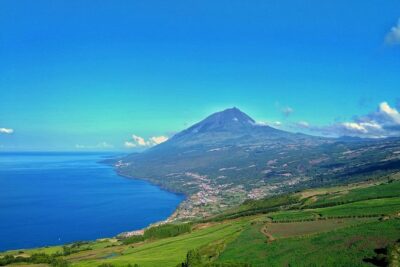
Browse the lists this tour appears in