
Reviewed · COIMBRA TOURS
Conimbriga and The Roman Tour
Conímbriga gives you some of Portugal’s finest Roman ruins, but its scattered walls and half-buried rooms make far more sense with a guide beside you. This private outing links the ruins with the spring and aqueduct at Alcabideque and two museums, so you see both the stonework and the story behind it. The mosaics and working fountains are the stars, while Alfredo’s Roman expertise has earned especially strong praise.
I like the small-group format, which lets you set a comfortable pace rather than trail behind a large crowd. I also like the route itself: the quiet village pond at Alcabideque is an unexpected part of the Roman story, and the museums give useful context before you walk through the ancient city. The main catch is that museum admission costs extra, and PO.RO.S is closed on Mondays, so check the day before booking.
Key points to know before booking
- See Roman engineering at its source: Alcabideque preserves the spring basin and remains of the aqueduct’s cleaning basin.
- Expect a private outing: Only your group participates, with bookings limited to 10 people.
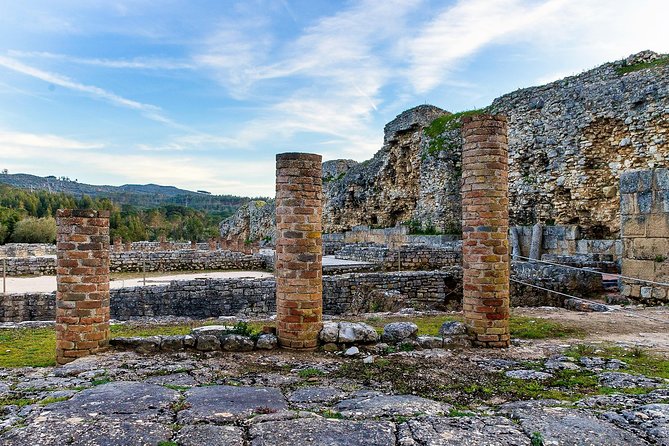
- Focus on mosaics and water systems: Conímbriga’s houses, fountains, baths, and aqueduct are the visual highlights.
- Count on strong guiding: Alfredo is often the guide, though the tour may be led by another multilingual guide.
- Allow for extra costs: Admission to PO.RO.S and the Conímbriga museum is not included.
- Plan around Monday closures: PO.RO.S does not open on Mondays, which can shorten the museum portion.
Why Conímbriga deserves a half-day from Coimbra

Coimbra is famous for its university, riverfront, and old lanes, but Conímbriga gives you a different key to central Portugal. The Roman settlement lies outside the city, near Condeixa-a-Nova, and its remains cover far more ground than a quick stop might suggest.
The site was inhabited before Roman rule, then occupied by Roman troops in 139 BC. Under Emperor Augustus, the town grew into an important urban center in Lusitania, the Roman province that covered much of present-day Portugal. Forums, baths, an amphitheatre, a basilica, and large private houses followed.
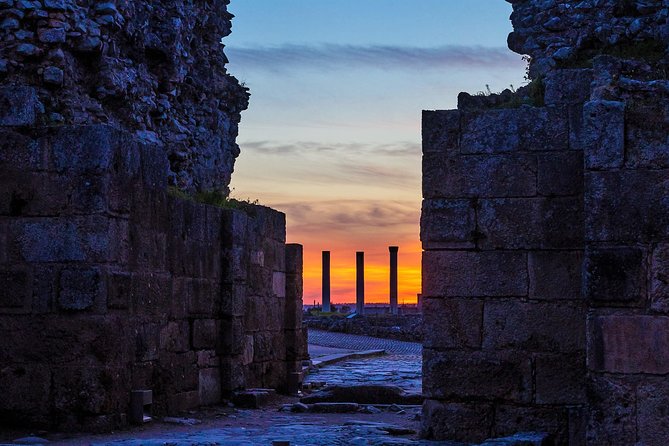
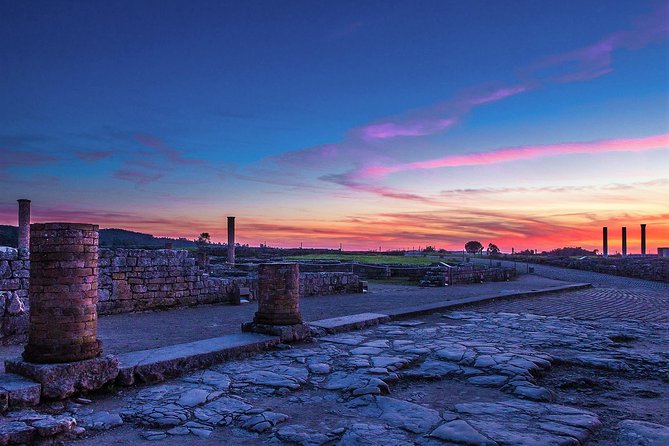
You will not see a fully rebuilt Roman city here. That is part of the appeal. You walk among foundations, streets, walls, columns, fountains, and floors that have survived in place. The scale becomes clear as you move from one section to another, especially when you reach the larger houses with elaborate mosaics.
A guide helps you read these remains as a city rather than a collection of old stones. Alfredo is repeatedly singled out for his Roman knowledge, humor, patience, and ability to explain what you are seeing. That matters at Conímbriga, where the best details are easy to miss if you simply follow the paths and read a few signs.
A few other Coimbra half-days worth a look
- Coimbra: Live Fado Show with Glass of Port Wine
★ 4.7 · 998 reviews - University of Coimbra guided tours without queue
★ 5.0 · 518 reviews - Guided tour of the University and city of Coimbra.
★ 5.0 · 377 reviews
Alcabideque: start with the water supply
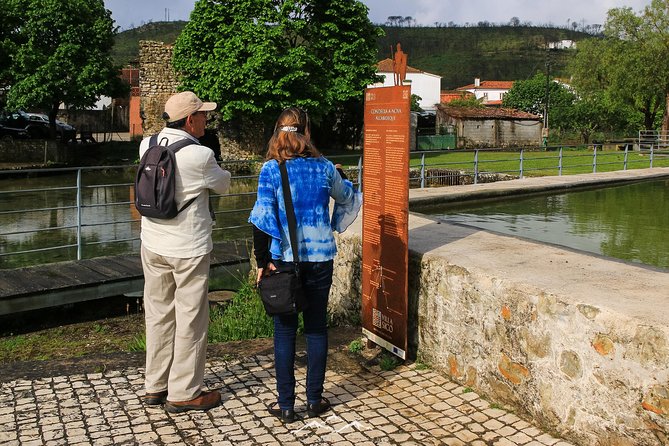
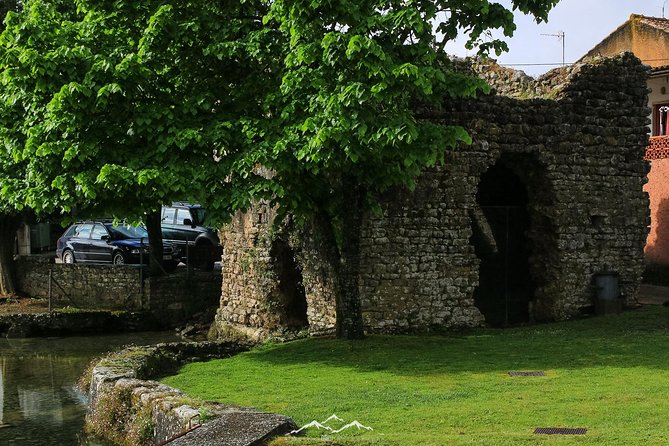
The first stop is Alcabideque, a small village connected to the Roman water system. The spring’s original collecting basin still serves as the local pond, which gives this stop a pleasing everyday quality. Ancient engineering is not sealed away in a display case here. Water still gathers where it once began its journey toward Conímbriga.
Beside the pond are the remains of a castellum, a structure that helped clean and control the spring water. From there, the aqueduct carried water for about 3.5 kilometers toward the Roman town. Parts of the route used a raised substructure before the water reached a more complex distribution basin, the castellum aquae, at Conímbriga.
The stop lasts about 30 minutes and admission is free. It is not a grand ruin in the way the main site is, but it adds meaning to everything that follows. When you later see fountains, baths, and water channels at Conímbriga, you understand that those features depended on a carefully managed supply.
I especially like this opening because it starts with function. Roman cities needed clean water for drinking, bathing, fountains, and daily work. Seeing the source first gives you a practical sense of how the settlement operated.
The setting is also quieter than the main ruins. If you prefer monumental sights at every stop, Alcabideque may seem modest. If you enjoy the small details that explain how a city worked, it is a fine beginning.
PO.RO.S explains Roman Portugal through screens and objects
The next stop is PO.RO.S, the Roman Portugal Museum in Sicó. It is a newer museum belonging to the municipality of Condeixa and forms part of the Roman heritage route connected to Conímbriga.
The museum uses multimedia and virtual displays to place the Roman period in a wider setting. That can be useful before entering the archaeological site, especially if you want a clearer idea of how Conímbriga fit into Roman Portugal rather than viewing it in isolation.
Plan for about one hour here. Admission is not included, so keep money aside for both museums. The supplied tour details specifically note that PO.RO.S is closed on Mondays. This is easy to miss, and one booking on a Monday lost part of the planned museum visit because of the closure. Choose another day if this stop is important to you.
The museum is also a good buffer between the small aqueduct stop and the much larger ruins. You get a chance to gather the basic story, then apply it outdoors. That sequence is one of the tour’s strengths: first the water source, then interpretation, then the city itself.
The exact balance of time can depend on the guide, the day, and museum access. If you are booking mainly for the excavated houses and mosaics, do not treat PO.RO.S as a reason to skip Conímbriga. It is best seen as added context, not the main event.
Conímbriga reveals a Roman city room by room
The main visit takes about two hours at the Monographic Museum of Conímbriga and the National Museum. The archaeological site is the heart of the outing, and it rewards a slow walk.
Conímbriga had public buildings that shaped everyday Roman life. The forum served as a civic center. The amphitheatre points to public spectacles. Thermal baths show how much attention Romans gave to bathing and social life. A three-nave basilica was later built in the center of town, adding another layer to the city’s changing role.
The houses are often the most memorable part. Their surviving mosaics show geometric patterns and decorative scenes, while fountains and garden features hint at private wealth. Several people who took this tour were struck by how well preserved the mosaics are, and that reaction makes sense once you reach the residential areas.
The fountains are a special pleasure because some still work. Water moving through an ancient garden feature makes the Roman design feel less remote. You can better imagine these houses as lived-in places rather than silent foundations.
Look closely at the water channels, baths, and building materials. The remains show the practical side of Roman construction, not just decoration. Walls, arches, and drainage systems reveal how much planning went into a city that needed to house people, move water, manage public space, and support private homes.
The site is large enough that a self-guided visit can become a little confusing. You may see a beautiful mosaic but miss why it belonged to a particular house, or pass a water feature without connecting it to Alcabideque. A guide provides the links between separate remains.
One useful feature of the private format is flexibility. A family of four can make up the whole booking, or your own small party can move at a pace that suits you. Guides have adjusted the walking plan for people with limited mobility or vision, although the available information does not promise a specific accessibility program. If walking is a concern, explain your needs when booking and confirm what can be adapted.
Same coastline, a completely different day out:
- Coimbra: Mondego River Kayaking Tour
★ 4.7 · 324 reviews - Coimbra: Guided tour with a local student
★ 5.0 · 170 reviews - Portugal dos Pequenitos entry ticket
★ 4.2 · 167 reviews - University of Coimbra Walking Tour
★ 4.9 · 140 reviews
The museum completes the picture
The museum at Conímbriga is not just an exit display. Its rooms cover daily life, religion, architecture, manor houses, decoration, and activity around the forum. Objects found during years of excavation help put names and uses to the structures outside.
This indoor portion is especially helpful on a warm day, when the exposed ruins can feel tiring. It also gives you a closer look at pieces that would be too fragile or small to understand in the open site.
I would give the museum enough attention to connect it with the walk. When you have just seen the house plans, mosaics, fountains, and baths, objects in the display cases become easier to place. The site shows the scale of the town; the museum fills in its habits and possessions.
The two museums do serve different purposes. PO.RO.S offers a newer multimedia presentation of Roman Portugal and the local area. The Conímbriga museum is more directly tied to excavated objects and the ancient town. If time is reduced by a closure or other disruption, the main museum and ruins are the portions I would protect first.
A private guide changes the experience
The tour is sold as a private activity, with only your group taking part, and a maximum of 10 people per booking. That is a much better fit for an archaeological site than a large coach outing. You can ask why a wall was built in a certain way, stop at a mosaic, or spend longer at the fountains without worrying about a crowd.
Alfredo is the guide most often named in the supplied information. He is also the company owner, and his role appears to go beyond driving from Coimbra to the ruins. His explanations cover Roman history, construction, water systems, and the purpose of individual buildings. He has also been described as friendly, patient, and easy to talk with.
That said, guide experiences can vary. The activity may be operated by a multilingual guide, and not every guide will have the same style. One lower-rated account found Alfredo abrupt, while another concern involved a misunderstanding about hotel pickup. These points do not outweigh the very high overall score, but they are reminders to confirm pickup details and state what you want from the visit.
A guide can also help when plans change. On one occasion, a sudden strike closed the main site buildings. The guide still took the group around the accessible ruins, brought them close to mosaics, and added nearby sights connected with local mosaic work and Roman walls. You should not count on every disruption being handled in the same way, but a private guide gives you a better chance of salvaging the day than a rigid group schedule.
Transport, timing, and the real cost
The tour lasts about four hours. Transport is by private, air-conditioned vehicle, and hotel pickup and drop-off can be included if you select that option. Pickup is available from most hotels in central Coimbra, Condeixa-a-Nova, and Penela when parking is possible.
The listed meeting point is Largo da Portagem in Coimbra. Pickup from other locations may cost an additional 10 to 20 euros. Confirm this before paying, especially if your accommodation is outside the central areas or the vehicle cannot stop directly outside your hotel.
At $102.80 per person, this is not the cheapest way to reach Conímbriga. You are paying for private transport, a driver-guide, a small party, and a guided route that combines three different stops. For a family or group that fills the vehicle, the price makes more sense because the cost buys privacy and flexibility as well as transport.
Admissions to PO.RO.S and the Conímbriga museum are extra. Food and drinks are also not included. There is one souvenir photo included, while logo-free souvenir photos can be purchased separately. Since one booking did not receive the expected photo, clarify with the guide at the start if this item matters to you.
The tour is booked, on average, 53 days ahead. That suggests planning early, especially if you want a certain date or need hotel pickup. Confirmation is normally sent at booking. If you book within seven days of the date, confirmation may take up to 48 hours and remains subject to availability.
Who will get the most from this outing
I would choose this tour if Roman sites interest you but you do not want to rent a car or work out the route between Coimbra, Alcabideque, and Conímbriga. It is also a strong choice if you want the site explained rather than simply photographed.
It suits:
- Couples and families who prefer a private pace
- History fans who want detail on Roman buildings and engineering
- Visitors based in Coimbra for only a few days
- People who value door-to-door transport
- Anyone drawn to mosaics, fountains, baths, and ancient water systems
It may be less suitable if you want a full-day excursion, a food stop, or a long walk through several Roman locations. Four hours gives you a solid introduction, not an exhaustive archaeological study.
Wear shoes suited to uneven outdoor surfaces and dress for the weather. The tour runs in all weather conditions, although poor weather can lead to a changed date or full refund. Sun protection and water are sensible on warm days, since much of the main visit is outside.
Should you book Conímbriga and The Roman Tour?
Yes, if you are staying in Coimbra and want to understand why Conímbriga matters. The strongest parts are the private format, the aqueduct stop at Alcabideque, the preserved mosaics and fountains, and the detailed explanations often provided by Alfredo.
Book with two checks in mind: confirm where pickup will happen and avoid Monday if you want to visit PO.RO.S. Also budget for the separate museum tickets. With those details sorted, the $102.80 price is fair for private transport and a four-hour guided visit that turns an impressive ruin into a readable Roman city.
FAQ
How long does the tour last?
The tour lasts approximately four hours.
Where does the tour start?
The listed meeting point is Largo da Portagem, 3000-337 Coimbra, Portugal. The activity ends back at the meeting point.
Is hotel pickup available?
Pickup is offered from most hotels in central Coimbra, Condeixa-a-Nova, and Penela when parking is available. Pickup from other locations may cost an additional 10 to 20 euros, and you must select the relevant pickup option.
Is the tour private?
Yes. Only your group participates, and each booking can include a maximum of 10 people.
Are museum admissions included?
No. Admission to PO.RO.S and the Museu Monográfico de Conímbriga is not included in the tour price.
Is PO.RO.S open every day?
No. PO.RO.S is closed on Mondays. If you want to visit it, choose a different day.
Can I cancel for a full refund?
You can cancel at least 24 hours before the experience start time for a full refund. Changes or cancellations made less than 24 hours ahead are not accepted or refunded. If poor weather causes the experience to be canceled, you will be offered another date or a full refund.
New around Coimbra
- Discovering the charms and places of Coimbra★ 5.0 · 78 reviews
- Lousa Mountain Private Tour★ 5.0 · 88 reviews
- An adventure through the Schist Villages of Lousã★ 5.0 · 98 reviews
- Convent of Christ Tour “Portugal in the Map” – Visit Tomar with a local guide!★ 5.0 · 105 reviews
- Schist Villages at Lousa Mountain★ 5.0 · 127 reviews
- Coimbra: Barca Serrana Traditional Boat Trip★ 4.6 · 127 reviews
- Joanina Library & Coimbra University | Private Former Alumni Tour★ 5.0 · 135 reviews
- University of Coimbra Walking Tour★ 4.9 · 140 reviews
Coimbra Tours, compared.

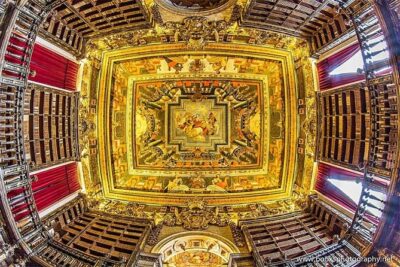
University of Coimbra guided tours without queue
Read our review →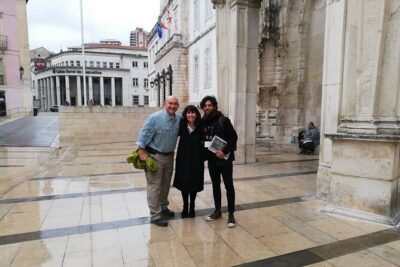
Guided tour of the University and city of Coimbra.
Read our review →



Joanina Library & Coimbra University | Private Former Alumni Tour
Read our review →Browse the lists this tour appears in