
Reviewed · COIMBRA TOURS
Schist Villages at Lousa Mountain
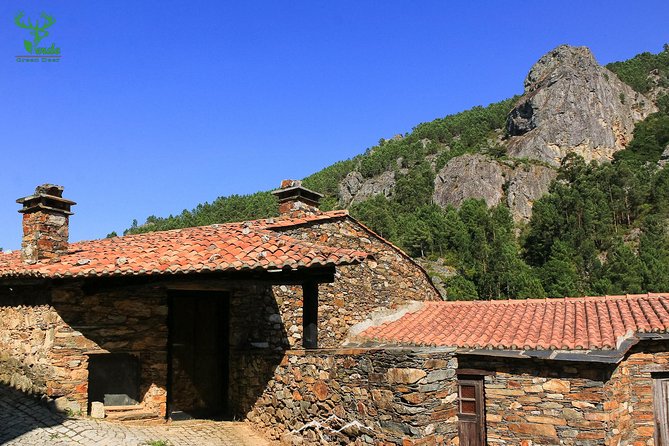
The most striking part of this experience is how quickly you leave Coimbra behind and enter a quieter Portugal of slate houses, forest roads, and mountain springs. Lousã Mountain’s villages feel far removed from the city, even though they are close enough for a practical half-day outing.
I like the flexible private format, especially if you want to pause for photographs, walk slowly, or ask plenty of questions. I also like Alfredo’s mix of local history and nature knowledge. He has pointed out deer, plants, trees, and mountain details that are easy to miss from a car window. The main consideration is the terrain: expect steep steps, uneven lanes, unpaved roads, and some narrow mountain driving.
Key points to know before booking
- Restored slate villages: Cerdeira, Candal, Talasnal, Gondramaz, and other mountain communities each have a different feel.
- Private and adjustable: Your group travels alone, with a maximum of 10 people, and can alter the pace and schedule.
- Half-day or full-day choice: The longer version adds Aigra Velha, Aigra Nova, and Pena.
- Mountain driving included: You are not responsible for navigating steep roads, rough tracks, or routes without guardrails.
- Short walks with real slopes: The villages are easy to reach, but their steps and hills require steady footing.
- Local touches matter: Optional food stops, mountain coffee, local drinks, and a souvenir photo add character to the outing.
Why Lousã Mountain Feels So Different From Coimbra
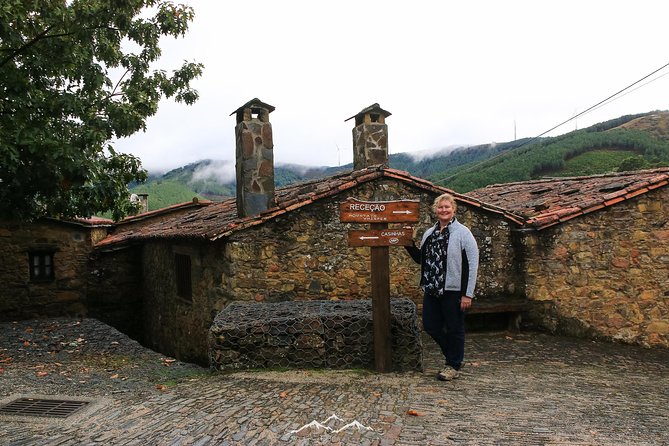
Coimbra is a city of university buildings, churches, cafés, and busy streets. Lousã Mountain offers another side of central Portugal: small settlements built from local schist, wooded slopes, springs, and wide views from high ground.
The villages are not all polished in the same way. Some have been carefully restored, some are still being brought back to life, and others were abandoned after fire and rural depopulation. That mix gives the route more meaning than a simple photo stop. You see both the beauty of the old construction and the effort needed to keep these communities alive.
The private format is useful here. Alfredo can explain why a village developed where it did, point out local building materials, and slow down when a path or doorway deserves a closer look. You are not being moved from one stop to the next on a strict large-group timetable.
The tour is offered in English, though the guide may be multilingual. The advertised group limit is 10 people, but the private arrangement means only your own party takes part. That makes this a good choice for couples, families, or friends who want a quiet day in the hills.
A few other Coimbra half-days worth a look
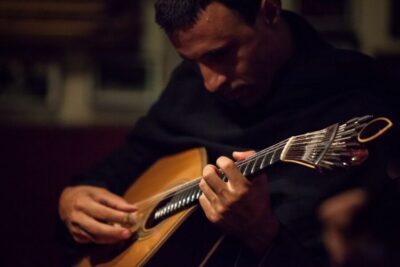
- Coimbra: Live Fado Show with Glass of Port Wine
★ 4.7 · 998 reviews - University of Coimbra guided tours without queue
★ 5.0 · 518 reviews - Guided tour of the University and city of Coimbra.
★ 5.0 · 377 reviews
Cerdeira, Where Art Meets Forest
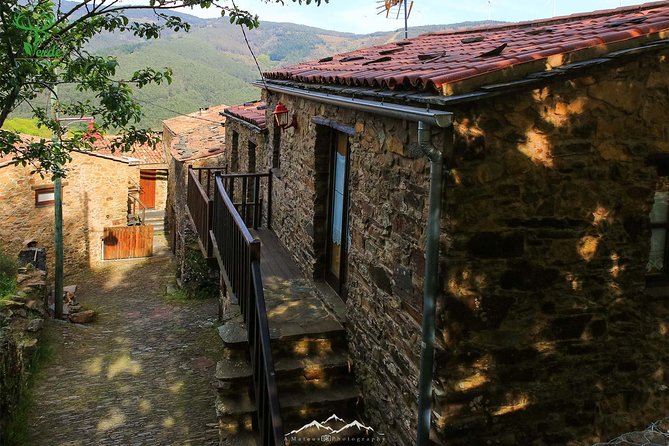
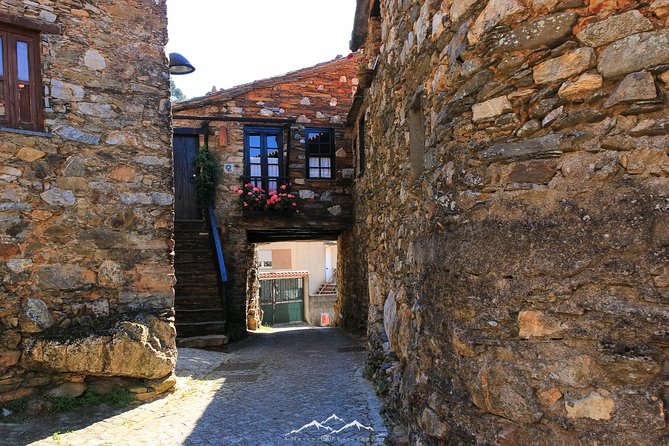
Cerdeira makes a memorable first stop. A small bridge at the entrance leads toward a compact group of houses partly screened by foliage. The approach feels almost theatrical, as if the village begins only after you cross into it.
A slate path leads toward a spring hidden among thick vegetation. The setting is one of the prettiest on the route, with steep slopes and watercourses shaping the village’s position. Bring shoes with a firm sole, since the paths can be uneven and the tour operates in all weather.
Cerdeira has also gained new life through art and creative projects. At certain times of year, events bring together art and botany, giving the village a purpose beyond preserving old walls. You may find it especially appealing if you like places where restoration includes culture, not just repaired roofs and fresh stonework.
The stop is listed at about 30 minutes. That is enough to see the central paths and absorb the setting, but not enough for a long walk through the surrounding hills. If you want extended time here, the private format gives you a better chance of discussing options with Alfredo.
Candal, The Most Accessible Mountain Village
Candal is generally considered the most developed and most visited of the mountain villages. Its position near the National Highway makes it easier to reach than the smaller settlements, and it has long been accustomed to weekend visitors and holiday traffic.
That accessibility is both its strength and its limitation. You will find a more established village atmosphere here, but it may feel less secluded than Cerdeira or Casal Novo. Candal works well as a contrast: after a tucked-away first stop, you see how road access changes a mountain community.
The tour allows around 30 minutes. Use that time to look closely at the houses, lanes, and surrounding slopes rather than treating the village as a quick roadside photograph. Alfredo’s local knowledge helps connect what you see with the lives still being lived in these communities.
Talasnal, The Route’s Best-Known Village
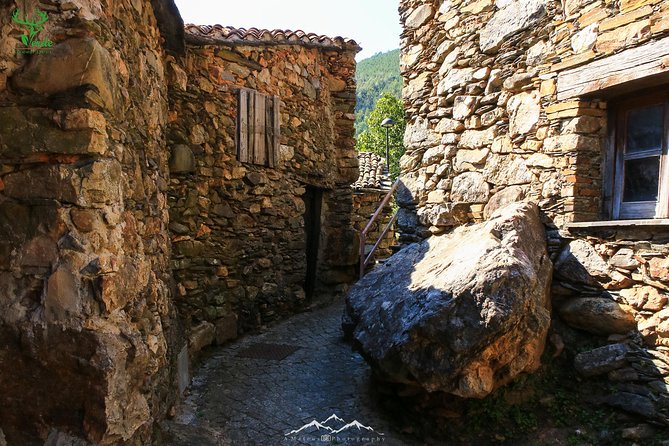
Talasnal is one of the most recognizable schist villages on Lousã Mountain. Its restored houses and carefully handled details have brought it much attention, and it is easy to understand why once you begin walking through its narrow streets.
Here, the appeal is architectural as much as scenic. Schist walls, small openings, sloping paths, and clustered buildings show how the village adapted to a steep mountain site. The setting also makes photography rewarding, though the same slopes create plenty of steps and uphill walking.
Food is part of Talasnal’s appeal. The village is known for local cooking, and the full experience may include a food stop or lunch, but meals are optional and paid separately. One dish that has made a strong impression on tour participants is chanfana, a traditional regional goat dish. If it is available and suits your plans, it can turn a scenic stop into a more complete taste of the area.
You have about 30 minutes listed at Talasnal, but the day’s exact rhythm can be adjusted on a private tour. If you want time for a meal, ask about it when booking rather than assuming lunch is included.
Same coastline, a completely different day out:
- Coimbra: Mondego River Kayaking Tour
★ 4.7 · 324 reviews - Coimbra: Guided tour with a local student
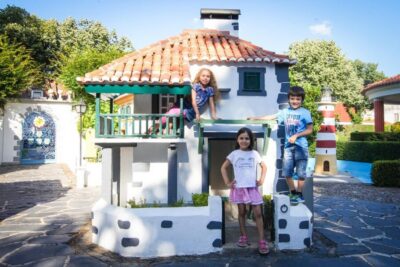
★ 5.0 · 170 reviews - Portugal dos Pequenitos entry ticket
★ 4.2 · 167 reviews - University of Coimbra Walking Tour
★ 4.9 · 140 reviews
Casal Novo, Easy to Miss on the Unpaved Road
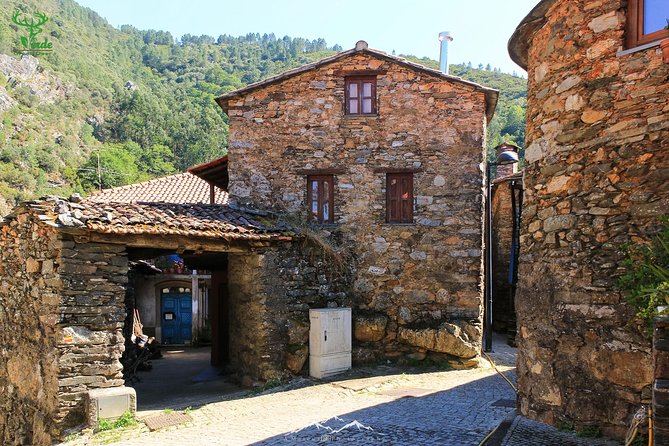
Casal Novo is not presented as a grand arrival. Passing along an unpaved road, you might almost miss it. The village sits in a fold on a steep, north-facing hillside, and surrounding woodland hides much of its outline.
That modest approach is part of its value. Casal Novo gives you a sense of how scattered and private these settlements can be. Not every stop is designed for a long visit or a postcard view. Some are glimpses into the way villages once fit into the mountain rather than announcements aimed at visitors.
The rough road also explains why having a local driver is useful. A car with a driver who knows the area saves you from studying directions while handling steep grades and unpaved surfaces. One practical warning remains: the road conditions can feel demanding, and one published account raised concerns about driving safety. Most comments praise Alfredo’s driving, but if narrow mountain roads make you uneasy, mention that before setting out.
Gondramaz, A Restored Village With a Coffee Stop
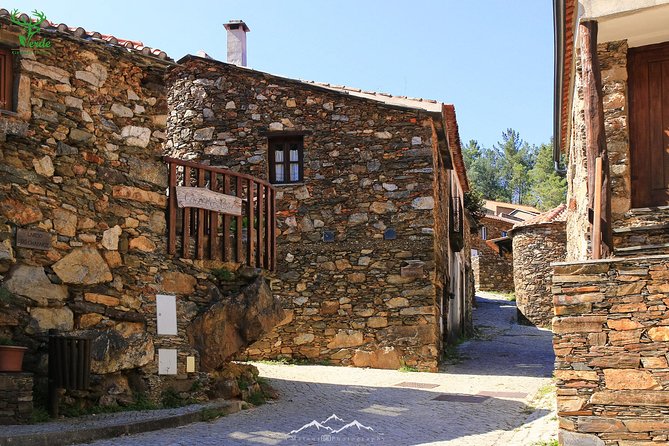
Gondramaz is a fully restored schist village of about 50 houses. It includes a tourist resort, and the tour makes time for a coffee there.
This is a comfortable pause in the route. After walking steep lanes and rougher paths, a coffee stop gives you a chance to rest, take stock, and enjoy the village without rushing. The restoration also makes Gondramaz useful for understanding what a successful revival can look like.
Do not expect every village to feel untouched or empty. Gondramaz is prepared for tourism, and that is part of the story. Restoration needs visitors, income, and practical uses for old buildings. At the same time, a restored village may feel more organized and less raw than abandoned Cadaval Cimeiro and Cadaval Fundeiro.
Cadaval Cimeiro and Cadaval Fundeiro on Foot
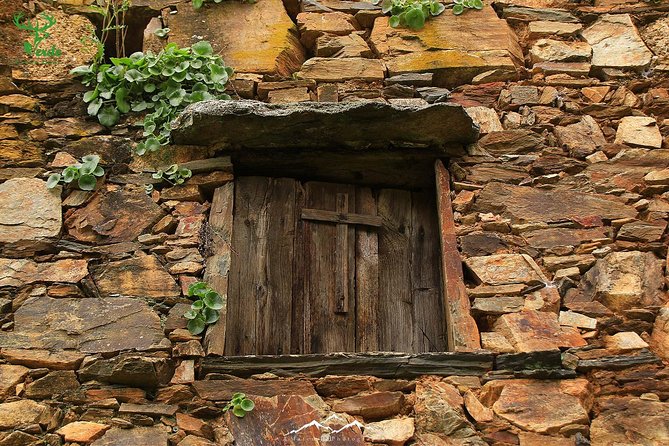
These two abandoned schist villages burned twice in the 1980s. The route includes a hike between them, making this one of the more active sections of the experience.
The walk lets you see the contrast between villages brought back into use and places left exposed to time and fire. It is also a chance to experience the mountain at walking speed, with the quiet broken only by natural sounds and your own group.
The itinerary gives about 30 minutes for this stop, so the walk is not presented as a long trek. Still, short does not mean flat. Across the route, you should expect steps, steep lanes, and uneven ground. The guide can help set a comfortable pace, but you should be able to walk independently on mountain paths.
This section will suit you if you want more than a drive-by tour. It may not suit you if you need fully level paths or have difficulty with stairs.
The Full-Day Route Reaches Higher Ground
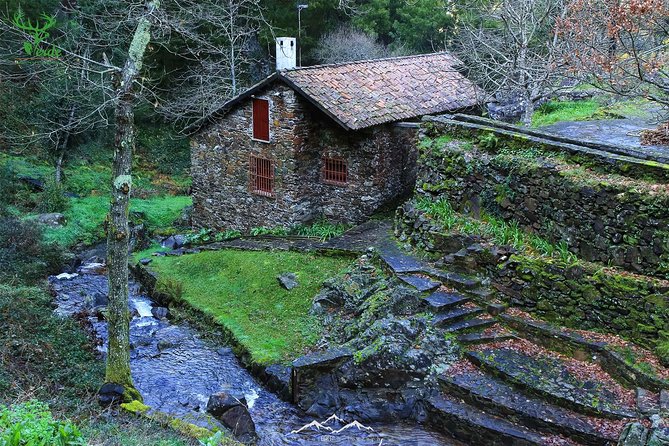
The full-day tour adds three villages: Aigra Velha, Aigra Nova, and Pena. These stops give the longer version a wider range of scenery and village life, but they also make for a much longer day of driving and walking.
Aigra Velha at 770 Metres
Aigra Velha is the highest schist village on the route, at 770 metres above sea level. It lies close to the summits of Lousã Mountain but remains fairly easy to reach by road.
The village itself is small. Its reward is the open setting and broad horizons around it. The buildings and daily life follow a simpler pattern, closely tied to the seasons and the surrounding land.
This stop is especially good for anyone who enjoys quiet mountain places rather than busy attractions. You may find fewer things to do in the formal sense, but the open views and sense of distance are the point.
Aigra Nova, A Living Rural Community
Aigra Nova has three small streets lined with low schist buildings. Its spring and mild climate support vegetable gardens, pastures, livestock, donkeys, and other rural activity.
That makes Aigra Nova different from a village preserved only as a historic display. It is described as a living community, and you can look for signs of everyday work rather than only restored façades.
The stop lasts about 30 minutes. Keep your expectations grounded: this is a small place, not a major attraction with a long list of facilities. Its value lies in seeing how mountain communities continue to use the land.
Pena, Schist and Quartzite on a Steep Promontory
Pena combines schist and quartzite in its construction. An old chestnut tree marks the entrance, while the village follows a promontory so steep that the houses seem to cling to the slope.
The local stream adds another element. Its clear water runs beside the village, and the Penedos de Góis nearby offer more ambitious outdoor possibilities for people looking for adventure.
Pena is a strong final addition to the full-day route because it combines building styles, dramatic topography, water, and mountain views. As with the other villages, you should be ready for steps and uneven surfaces.
What the Guide Adds to the Day
The guide can make or break a rural tour, and Alfredo’s role goes beyond driving. He explains village history, local customs, restoration work, trees, flowers, and animals. Several tour accounts describe him as warm, patient, and easy to talk with, including when pickup arrangements became confusing.
His nature skills are a real bonus. He has spotted wild animals, including a large deer close to the walking route, and uses binoculars supplied as part of the experience. Wildlife is never guaranteed, but the equipment and local attention give you a better chance of noticing what is around you.
Alfredo also seems comfortable with different kinds of groups. He has handled private outings for just one person, couples, and small groups, and he can help keep conversation flowing when people speak different languages. The best approach is to tell him what interests you: buildings, village life, food, plants, wildlife, or photography.
A professional photographer guide is listed, along with one souvenir photo. Additional souvenir photographs can be purchased, but food and drinks are not included unless specifically arranged.
How Much Value Do You Get for $102.80?
At $102.80 per person, this is not the cheapest way to see a few mountain villages. The price makes more sense when you consider what is included: private transport, a driver-guide, all listed activities, binoculars, and hotel pickup and drop-off when that option is selected.
You are also paying to avoid a difficult driving day. The roads can be steep, unpaved, and lacking guardrails. If you rented a car, you would need to manage navigation, parking, road conditions, and the pace of the group yourself.
The value improves for a small group sharing the private vehicle. It also improves if you want explanations rather than simply taking photographs. If your main goal is independent hiking, you may prefer to spend the money on a longer self-guided outing, but the route and village connections are easier with Alfredo handling the driving.
The half-day version suits a tight Coimbra schedule. Choose the full-day version if you want Aigra Velha, Aigra Nova, and Pena, plus more time for a meal or slower walking. Lunch and other food stops are optional and paid separately, so budget for those if local cooking is part of your plan.
Practical Advice for Comfort and Timing
The meeting point is Largo da Portagem in Coimbra. Pickup is available from most hotels in central Coimbra, Lousã, Miranda do Corvo, Condeixa-a-Nova, and Penela if parking is available. Pickup from other locations can be arranged for an additional fee of roughly 10 to 20 euros.
Wear shoes with good grip and clothes suited to changing weather. The tour runs in all weather conditions, and a weather-related cancellation can lead to a new date or a full refund, but you should still dress for rain, wind, or cooler mountain air.
Plan around the walking, not just the driving. The listed stops are about 30 minutes each, but the day includes paths, steps, and short hikes. If anyone in your group needs frequent rests, say so at the start. The private setup makes a relaxed pace more realistic than it would be on a large coach outing.
Service animals are allowed, and most people can participate. The experience is near public transportation, but the tour itself uses a private vehicle.
You can cancel for a full refund up to 24 hours before the start time. Cancellations or changes inside that window are not accepted, except when poor weather causes the provider to cancel.
Who Should Book This Mountain Tour?
I would choose this tour if you want a countryside break from Coimbra, enjoy old villages and quiet roads, and prefer having someone else drive. It is also a strong match for photographers, nature lovers, history fans, and anyone curious about how rural communities are being restored.
The full-day option is best for you if the mountain itself is the destination. The half-day option works better if you want a taste of the villages without giving up an entire day in the Coimbra region.
I would hesitate if you dislike uneven ground, steep steps, rough roads, or flexible rural timing. This is not a polished city excursion with level pavements and constant facilities. It is a mountain outing, and the rough edges are part of its character.
Should You Book the Schist Villages Tour?
Yes, if you want to see a side of Portugal that most city itineraries skip. The strongest reasons are the private pace, the range of village types, and Alfredo’s ability to connect architecture with nature and everyday life.
Choose the half-day route for a focused introduction. Choose the full day for higher villages, wider views, more walking, and a better chance to include a local lunch. Pack sensible shoes, leave room for weather changes, and expect the mountain roads to be part of the experience rather than a minor transfer between attractions.
FAQ
Where does the tour begin?
The meeting point is Largo da Portagem, 3000-337 Coimbra, Portugal. The activity ends back at the meeting point.
Is hotel pickup available?
Pickup is available from most hotels in central Coimbra, Lousã, Miranda do Corvo, Condeixa-a-Nova, and Penela if parking is available. Pickup from other locations may be arranged for an additional fee of 10 to 20 euros.
Is this a private tour?
Yes. Only your group participates, with a maximum of 10 people per booking.
How long does the experience last?
The half-day experience lasts about four hours. A full-day option is also available.
Which villages are included?
The route includes Cerdeira, Candal, Talasnal, Casal Novo, Gondramaz, Cadaval Cimeiro, and Cadaval Fundeiro. The full-day tour also includes Aigra Velha, Aigra Nova, and Pena.
Is food included?
Food and drinks are not included unless specifically stated. Meals may be arranged as optional additions and are paid separately on site.
Is the tour available in English?
Yes, the tour is offered in English. The guide may also be multilingual.
What happens if the weather is poor?
The experience requires good weather. If the provider cancels because of poor weather, you will be offered another date or a full refund.
New around Coimbra
- Discovering the charms and places of Coimbra★ 5.0 · 78 reviews
- Lousa Mountain Private Tour★ 5.0 · 88 reviews
- An adventure through the Schist Villages of Lousã★ 5.0 · 98 reviews
- Convent of Christ Tour “Portugal in the Map” – Visit Tomar with a local guide!★ 5.0 · 105 reviews
- Coimbra: Barca Serrana Traditional Boat Trip★ 4.6 · 127 reviews
- Conimbriga and The Roman Tour★ 5.0 · 132 reviews
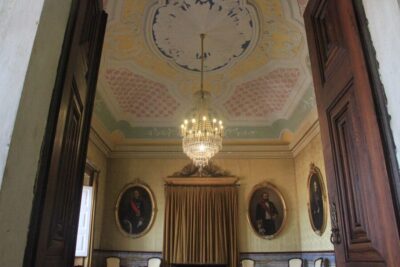
- Joanina Library & Coimbra University | Private Former Alumni Tour★ 5.0 · 135 reviews
- University of Coimbra Walking Tour★ 4.9 · 140 reviews
Coimbra Tours, compared.

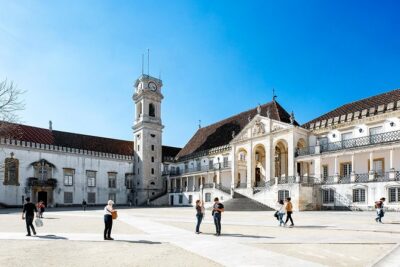
University of Coimbra guided tours without queue
Read our review →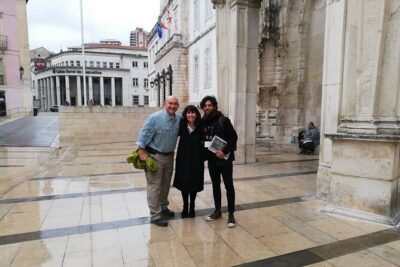
Guided tour of the University and city of Coimbra.
Read our review →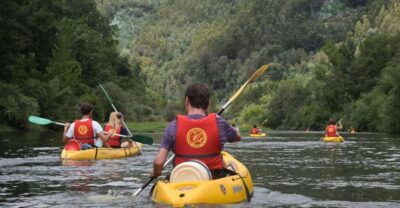

Joanina Library & Coimbra University | Private Former Alumni Tour
Read our review →Browse the lists this tour appears in