

Reviewed · COIMBRA TOURS
Coimbra: Guided tour with a local student
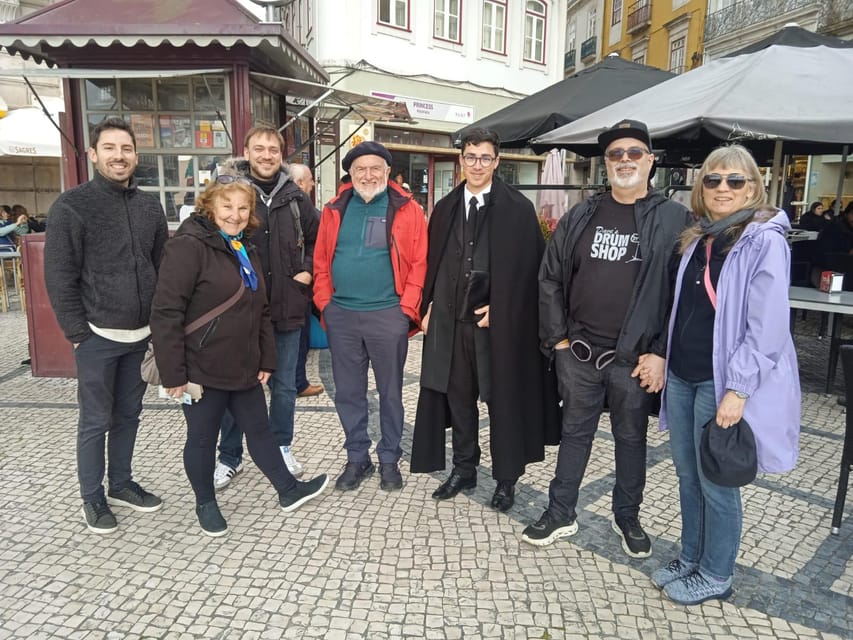
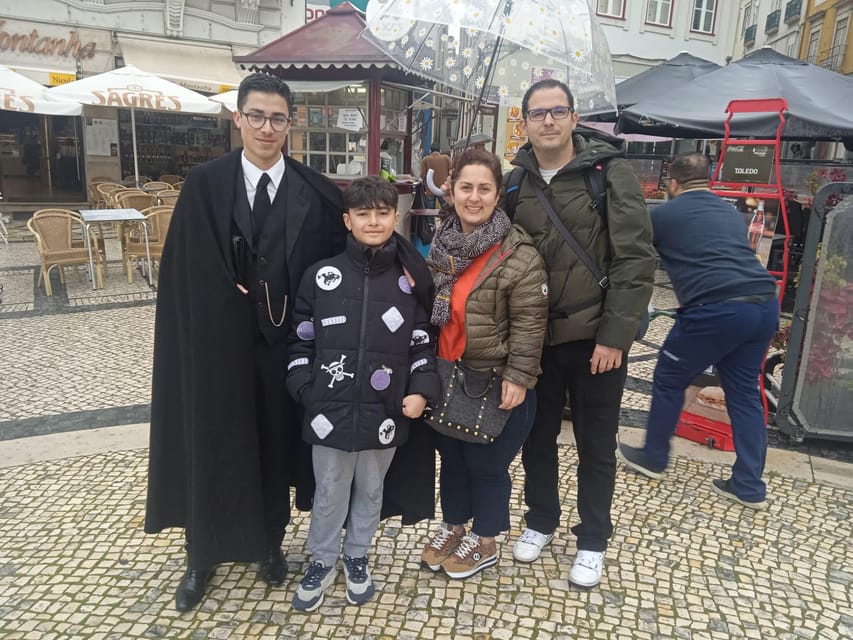
Coimbra’s best story is told by someone who is living part of it. This walking tour pairs the city’s Roman, medieval, and modern past with the everyday world of a University of Coimbra student. Your guide, Daniel or Filipe, wears the traditional black cape and explains customs, study life, social habits, and old student rituals along the way.
I like the small group of eight and the chance to ask real questions instead of listening to a fixed speech. I also like the route’s mix of major sights and student-only perspective, including tips on places to eat and hang out. The main drawback is clear: you do not enter the University buildings or Joanina Library, so this works best as a city and culture tour, not as a substitute for an interior university visit.
Key points to know before you book
- A student guide in traditional dress: Daniel or Filipe gives you the university from an insider’s point of view.
- A 150-minute uphill walking route: Expect Coimbra’s steep old streets, steps, and uneven pavement.
- University history without interior entry: You see the Royal Palace and university area from outside, but paid buildings and the library are not included.
- Student customs take center stage: Learn how students dress, socialize, study, and keep old rituals alive.
- Useful local advice at the end: Ask where to eat, what else to visit, and which student spots suit your plans.
- A very small group: With no more than eight participants, the guide can adjust the pace and answer questions.
Why a student guide changes the Coimbra walk
Coimbra is not simply a pretty hill town with an old university on top. The university shapes the city’s rhythm, clothing, traditions, and social life. A guide who studies there can connect the grand buildings to the people who use them today.
That is the strength of Daniel and Filipe’s approach. You hear about the University of Coimbra’s creation and long development, then move from formal history to the student world around it. Expect explanations of traditional dress, student social life, study routines, customs, rituals, and even superstitions linked to university life.
Daniel is the guide most often named in the supplied feedback, and the descriptions of his style are consistent: friendly, patient, humorous, and eager to answer questions. He is also a history student, which helps explain why the tour reaches beyond dates and building names. Several guests found his passion for Coimbra as memorable as the facts themselves.
The group size matters. A maximum of eight people gives you room to ask about details that interest you, such as student traditions or Portuguese life. One family specifically appreciated that the guide adapted to teenagers who wanted to hear about student rituals. That sort of flexibility is harder to get on a large city tour.
A few other Coimbra half-days worth a look
- University of Coimbra guided tours without queue
★ 5.0 · 518 reviews - Guided tour of the University and city of Coimbra.
★ 5.0 · 377 reviews - Convent of Christ Tour “Portugal in the Map” – Visit Tomar with a local guide!
★ 5.0 · 105 reviews
Praça da República: begin where student life feels close
The meeting point is the middle of Praça da República. Look for a guide wearing the long black student cape. This makes the start easy, even if you are new to Coimbra and have not yet learned the city’s steep streets.
The square is a useful place to begin because the tour’s student theme is established right away. You are not just meeting a guide who happens to know the university. You are meeting a current student who can explain what the clothing means and how student life fits into the city.
The first section lasts about 30 minutes and combines guided walking with an introduction to Coimbra’s history. Use this time to ask questions. If you are curious about the cape, daily routines, student groups, or how old traditions fit with modern university life, this is the right moment to raise it.
I would arrive ready for a walking tour rather than a formal lecture. The experience is designed to be personal and adapted to the group, so your questions can help shape the conversation. English, Portuguese, and French are available.
The Royal Palace and University of Coimbra
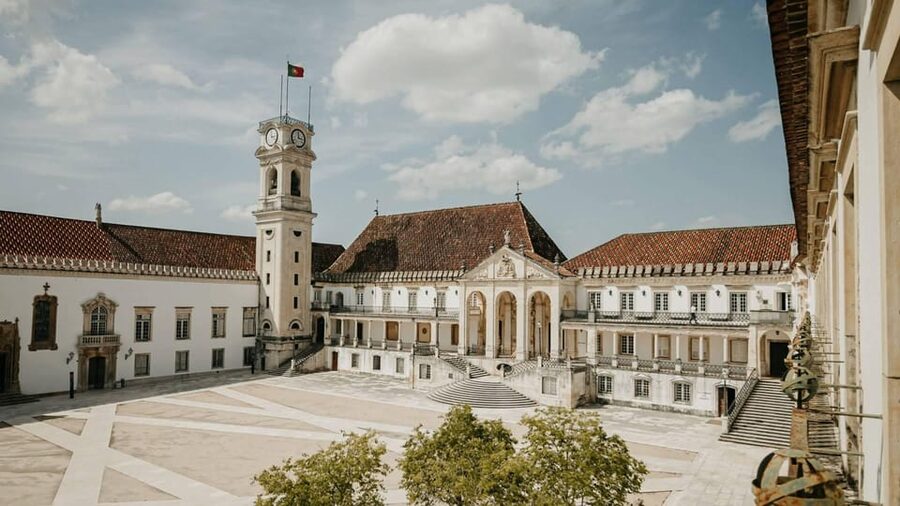
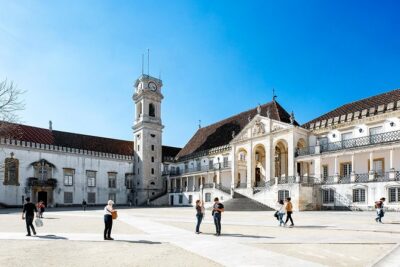
The Royal Palace and University area is the historical center of the route. The visit lasts about 30 minutes, giving you time to hear how the institution was created and how it changed over the centuries.
The University of Coimbra is one of Europe’s most famous universities and the oldest in Portugal. Its importance is not limited to academic history. It helped shape Coimbra’s identity, and its traditions remain part of the city’s public life.
Here, your guide can give you the broad story, then add the personal details that make the site easier to understand. You may hear how students socialize, what their traditional dress represents, and how the university’s customs affect daily life. The supplied feedback also points to stories about rituals and superstitions, details you would be unlikely to notice by simply walking past the buildings.
There is an important limitation. This tour does not take you inside the university buildings. It also excludes the Joanina Library and other paid museums or activities. If the library is high on your list, plan a separate visit and check its arrangements independently. One group used this walking tour to get oriented before seeing the library on its own, which is a sensible way to combine both experiences.
Sé Nova: a shorter stop with a useful change of pace
The route continues to Sé Nova de Coimbra for about 15 minutes. This is a shorter stop, but it helps show how the upper city combines religious buildings with university life.
The guide’s role here is not just to point out the church. He places the monument in the wider story of Coimbra, linking the city’s religious and academic past. The route is designed to move through major landmarks while keeping the focus on how the city developed around them.
Because the tour covers a lot in two and a half hours, some stops will feel like introductions rather than long visits. That is not a flaw if you want a broad first look at Coimbra. If you prefer extended time inside every monument, you may want to return later and explore selected sites at your own pace.
Same coastline, a completely different day out:
- Coimbra: Live Fado Show with Glass of Port Wine
★ 4.7 · 998 reviews - Coimbra: Mondego River Kayaking Tour
★ 4.7 · 324 reviews - Portugal dos Pequenitos entry ticket
★ 4.2 · 167 reviews - University of Coimbra Walking Tour
★ 4.9 · 140 reviews
Alta da Cidade: Coimbra’s upper town and student setting

Alta da Cidade means the upper part of Coimbra, and this section takes about 15 minutes. You should expect uphill walking, uneven surfaces, and the kind of streets that reward sensible shoes more than stylish ones.
This part of the route helps you understand the city’s shape. Coimbra’s old center is not flat, and moving between the upper university district and the lower parts of town takes effort. The climb is part of the experience, but it can be tiring, especially in warm weather or rain.
The guide can also make this area feel less like a collection of old buildings. Student traditions are tied to real streets and routines. You hear about how students live and socialize, not only what happened centuries ago. Several people particularly valued this current student point of view, calling it something they could not get by walking alone.
Bring water and dress for changing conditions. The tour runs in various weather, and the positive response to rainy outings suggests that the guide keeps the mood going when the sky does not cooperate. Still, good humor does not make wet stone less slippery, so take care.
Sé Velha: medieval Coimbra in a compact stop
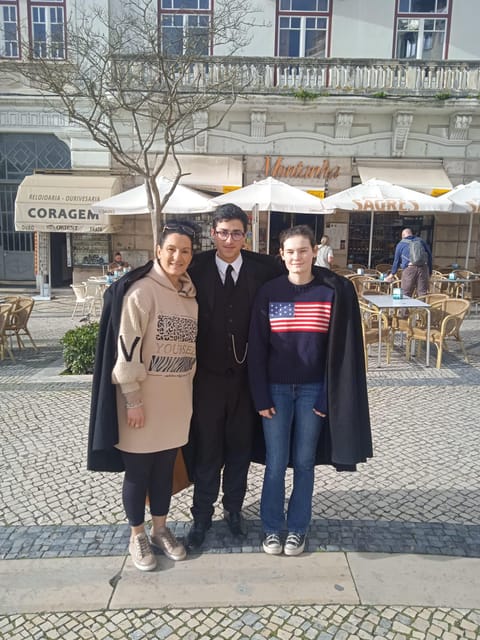
The Old Cathedral, or Sé Velha, receives another 15-minute visit. This is one of the places where the medieval side of Coimbra comes forward.
By this point, the tour has moved from the university’s academic story to a much older city. The guide traces Coimbra through Roman, medieval, modern, and contemporary periods, helping you see that the university is only one chapter in a much longer tale.
A 15-minute stop will not cover every architectural detail. The value is the connection between the monument and the city’s changing role over time. If you enjoy history, ask your guide to clarify the timeline or explain how the cathedral fits into Coimbra’s development.
I also appreciate that the tour does not treat history as a list of disconnected dates. The route gives you a sense of time moving through the streets, from ancient foundations to the living university community above them.
Santa Cruz Monastery: finish with city history and practical advice

The final listed stop is Santa Cruz Monastery, with about 15 minutes of guided sightseeing and walking. It gives the route a strong historical finish and brings you back toward the lower part of the city.
The monastery helps widen the focus beyond university tradition. You have heard about student life and the upper town, but Coimbra also has religious and political history that shaped Portugal. Your guide’s job here is to connect the monument to the larger story of the city.
The end of the tour is also a good time to ask for practical advice. Included in the experience are suggestions about what to visit next and where to eat. One particularly useful detail from the feedback is that Daniel recommended places popular with students, including his preferred local hangouts. I would save a few questions for the final stop, especially if you still need lunch or an evening plan.
What the student traditions add to the tour
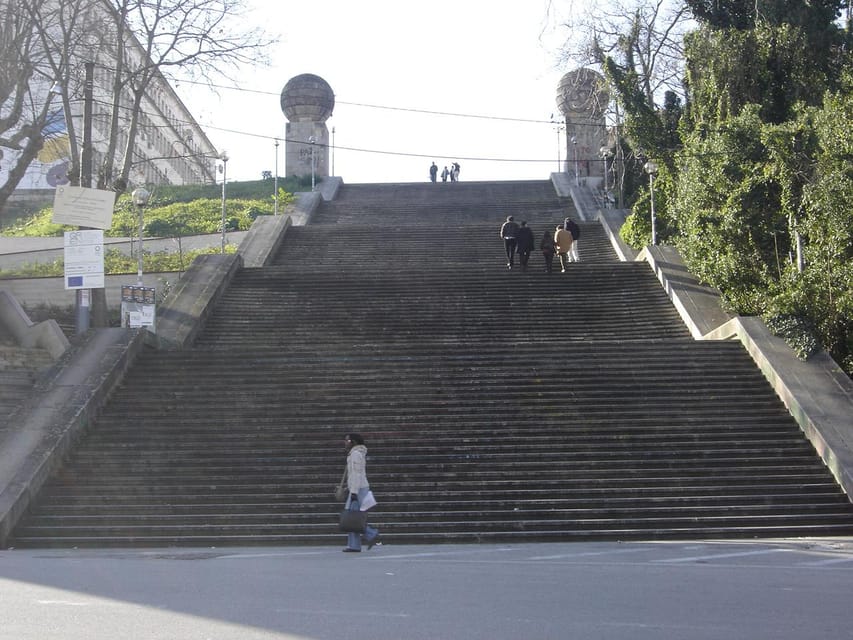
The city’s buildings are easy to see. The harder part is understanding how the university remains a living institution rather than a museum piece. That is where this experience earns its price.
Your guide explains how students dress and socialize, what their day-to-day life is like, and how old traditions continue. The black cape is not a costume added for tourists. It is part of the visual identity your guide is explaining, and wearing it gives the conversation a direct connection to university life.
The most interesting material may be the customs that do not appear on a standard sightseeing route. The supplied comments refer to rituals, hazing traditions, and superstitions. These subjects can be amusing, but they also show how strong the university’s shared culture is.
The tone appears to be light without becoming shallow. Daniel is repeatedly described as good-humored and open, and one guest noted that he used extra visuals when helpful. That is useful when a historical point is hard to picture from the street.
Price, pace, and what you actually receive
At $23 per person, the tour is fairly priced for 150 minutes with a live guide and a group capped at eight. You are paying for interpretation, conversation, and access to a current student’s point of view, not for admission to the university or its library.
That distinction matters. If your main goal is to see the Joanina Library, this is not the complete experience you need. You will have to arrange paid interior visits separately. But if you want to understand Coimbra before choosing which buildings deserve your admission money, the tour offers useful context.
The pace should suit most people who enjoy a steady city walk. The route includes several 15-minute stops and a longer university section, but the total time is long enough to cover a lot of ground. You will want comfortable clothes, supportive shoes, and water.
The tour is not suitable for people with mobility impairments or wheelchair users. It is also not suitable for people with hearing impairments. The combination of slopes, steps, and old paving makes this a real consideration, not a minor footnote.
Who should book this Coimbra experience?
I would choose this tour if you want the university explained by someone connected to it now. It suits first-time visitors who want a clear orientation to the old city, history fans who enjoy stories alongside monuments, and families with older children or teenagers interested in student customs.
It is also a good fit if you prefer a conversational walk to a large group tour. The limited group gives you a better chance to ask about Portuguese life, university rituals, food, and places to visit after the tour.
You may want another option if you need interior access, have limited mobility, or prefer a tour focused almost entirely on architecture. The route visits the university and major landmarks, but several stops are brief and the paid interiors are not included.
Practical tips for getting the most from the walk
Meet in the center of Praça da República and look for the black cape. Wear shoes that can handle uphill streets and uneven pavement. Coimbra’s weather can change, so bring a light layer and be ready for rain or sun.
Bring water and a camera. You will have chances to photograph the old streets, major monuments, and university views, although the tour’s main value is the explanation that comes with them.
Think of this as a first visit, not the final word on Coimbra. Afterward, use the guide’s food and sightseeing suggestions to choose where to spend more time. If the library or another paid site matters to you, leave room in your schedule for a separate visit.
Free cancellation is available up to 24 hours before the start time, and you can reserve now while paying later. Those terms help if your Portugal route is still changing, but the more important booking decision is deciding if an outside-only university tour suits your plans.
Should you book it?
Book this tour if you want Coimbra to feel like a living university town, not just a row of old monuments. Daniel and Filipe’s format gives you history, student customs, practical food advice, and plenty of room for questions in a small group.
Skip it only if entering the university and Joanina Library is your main reason for visiting. For everyone else, especially on a first day in Coimbra, this is a useful and personal way to get your bearings before exploring the city further.
FAQ
How long does the Coimbra student tour last?
The activity lasts 150 minutes, or two and a half hours.
How much does the tour cost?
The price is $23 per person.
Where does the tour meet?
The meeting point is in the middle of Praça da República in Coimbra. The guide wears a long black cape, part of the traditional student clothing.
Who leads the tour?
The experience is provided by Daniel and Filipe. Daniel is identified as a history student at the University of Coimbra, and the guide may be Daniel or Filipe.
What languages are available?
The tour is available in English, Portuguese, and French.
How large is the group?
The group is limited to eight participants.
Do you enter the University of Coimbra or Joanina Library?
No. The tour does not include entry to the university buildings, Joanina Library, paid museums, or other paid activities.
What should I bring?
Wear comfortable shoes and clothes suitable for walking and changing weather. Bring water and a camera.
Is the tour suitable for wheelchair users?
No. The activity is not suitable for people with mobility impairments, wheelchair users, or people with hearing impairments.
New around Coimbra
- Discovering the charms and places of Coimbra★ 5.0 · 78 reviews
- Lousa Mountain Private Tour★ 5.0 · 88 reviews
- An adventure through the Schist Villages of Lousã★ 5.0 · 98 reviews
- Convent of Christ Tour “Portugal in the Map” – Visit Tomar with a local guide!★ 5.0 · 105 reviews
- Schist Villages at Lousa Mountain★ 5.0 · 127 reviews
- Coimbra: Barca Serrana Traditional Boat Trip★ 4.6 · 127 reviews
- Conimbriga and The Roman Tour★ 5.0 · 132 reviews
- Joanina Library & Coimbra University | Private Former Alumni Tour★ 5.0 · 135 reviews
Coimbra Tours, compared.


University of Coimbra guided tours without queue
Read our review →
Guided tour of the University and city of Coimbra.
Read our review →

Joanina Library & Coimbra University | Private Former Alumni Tour
Read our review →
Browse the lists this tour appears in