Reviewed · PRIVATE
Tour of Lisbon in a Private Tour
Lisbon is a city of hills, viewpoints, tiled streets, and far-flung sights. This private tour tackles nearly all of them in one long day, from the Santa Justa Lift and Alfama to Christ the King and the Belém monuments. The big advantage is range: you can see old Lisbon, the rebuilt Baixa district, and the Age of Discoveries without piecing together several buses and taxis.
I like the one-to-one attention and the freedom to adjust the pace. Guides such as João, Anastasia, Jorge, Ana, Anna, and John have been praised for explaining the city clearly, changing plans when roads closed, helping older visitors, and offering useful ideas for the rest of a Lisbon stay. I also like the hotel, apartment, or cruise-port pickup, especially when you are new to the city.
The main consideration is time. Eight hours is a lot, and this route includes hills, narrow lanes, churches, viewpoints, and short stops across the city and across the river. Lunch is not included, and most monument visits are exterior or brief, so this works best as a broad first look rather than a slow, museum-heavy day.
Key points to know before booking
- Santa Justa Lift begins the day with a classic Lisbon view: Admission is included, and the top looks over Baixa, the Tagus, the Castle, and the Carmo ruins.
- Alfama gets real walking time: You have about an hour to explore Lisbon’s oldest neighborhood, where steep lanes and everyday life matter as much as the postcard views.
- The private vehicle saves time on Lisbon’s hills: Hotel, apartment, and cruise-port pickup are included, along with air conditioning and WiFi.
- Christ the King adds a different perspective: Across the Tagus, the monument gives you a wide view of Lisbon and the 25 de Abril Bridge.
- Belém is covered in a quick sweep: You see the Discoveries monument, Jerónimos Monastery church, and Belém Tower, though the tower is a panoramic stop.
- The guide makes the difference: João and Anastasia are recurring guide names, but the assigned guide can vary. The strongest part of the experience is the ability to ask questions and adjust the day.
A full Lisbon overview in one private day
The tour starts at 8:30 a.m. with pickup from your hotel, apartment, or cruise port. That early start is useful in central Lisbon, where popular sights and narrow streets can become crowded as the morning goes on.
You travel in a private, air-conditioned vehicle rather than joining a large coach group. That matters here. Lisbon is compact on a map but awkward in practice, with steep streets, one-way roads, tram traffic, and viewpoints scattered over several hills. A vehicle lets you cover more ground, while the walking sections give you a closer look at the city.
The tour is sold at $118.56 per person. Its value depends on the size of your party. For one or two people, the private format costs more than a shared sightseeing bus, but you receive hotel transport, a full day with a guide, private transportation, and the ability to set the pace. For a family or small group, the price can make more sense, particularly with group discounts available.
A few other Lisbon half-days worth a look
- True 4Hour Private Tuk Tuk Tour: Discover Lisbon with a Local!
★ 5.0 · 8,008 reviews - Lisbon: Private Guided Tuk-Tuk Tour with Hotel Pickup
★ 4.9 · 4,552 reviews - Private Lisbon Sightseeing Tuk-Tuk Tour: Alfama, Belém & More
★ 5.0 · 4,277 reviews
Santa Justa Lift and the Carmo ruins
The day opens at the Elevador de Santa Justa, one of Lisbon’s most recognizable structures. Designed by Mesnier du Ponsard, the neo-Gothic lift connects Rua do Ouro with Largo do Carmo. Its brass details and wood-lined cabins give the ride an old-fashioned feel.
The included visit is scheduled for about 20 minutes. From the upper platform, you can look across the Baixa district toward the Tagus and the Castle, while the ruins of the Carmo convent add a dramatic frame to the view.
This is a smart first stop because it introduces Lisbon’s vertical character right away. You see how the lower commercial streets relate to the higher neighborhoods, and your guide can give you a useful map of the city before the route moves on.
The short timing is also a limitation. You should not expect a long visit to the Carmo Archaeological Museum or an extended wait at the viewpoint. The plan is to ride, see the view, and keep moving.
Portas do Sol and an hour in Alfama
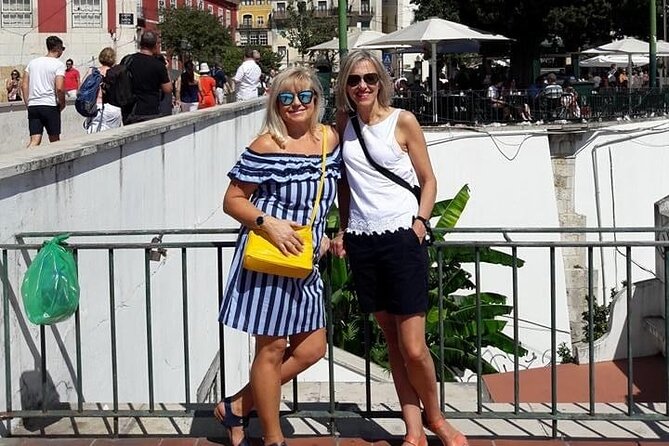
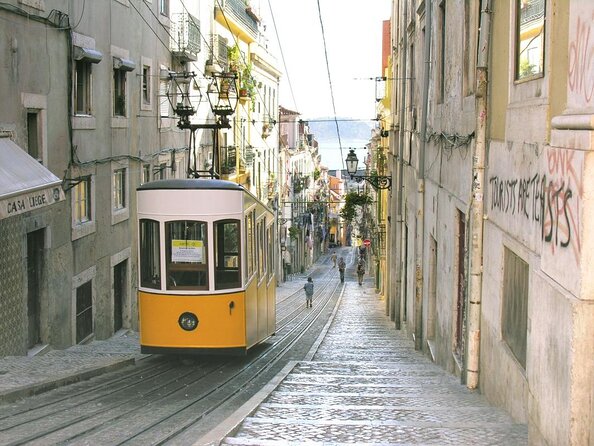
At Miradouro das Portas do Sol, the stop is brief, about five minutes, but the view is worth your attention. It looks across the eastern side of Alfama and toward the Tagus, with church domes, rooftops, stairways, and the famous route of Tram 28 below.
You may have time for a coffee at the kiosk, but do not count on a relaxed café break during this short scheduled stop. The viewpoint is also a good place to notice the statue of Saint Vincent, Lisbon’s patron saint.
The heart of this part of the tour is Alfama, where you have about an hour. This old quarter survived the 1755 earthquake in large part because it rises on firm, high ground. Its lanes still feel more like a small village or medina than a modern capital.
Here, I would put away the camera for a few minutes and pay attention to ordinary details. You might see laundry hanging from balconies, hear Fado from a restaurant, smell fish grilling, or spot old tile panels on a wall. The point is not only to check off a neighborhood. It is to understand how Lisbon feels at street level.
Alfama is also where a private guide earns the fee. You can ask about the neighborhood’s former Jewish quarter, fishing traditions, Fado, food, or the earthquake. The guide can also help you manage the steep lanes and decide how much walking feels comfortable.
Do not expect Alfama to be flat or effortless. The streets are uneven, and the tour later includes another high viewpoint. One advantage of having a vehicle is that you can walk through selected sections without needing to climb every hill between sights.
Senhora do Monte and Lisbon from above

Miradouro da Senhora do Monte is one of the highest viewpoints in the city. It looks across Lisbon from the Graça area, with a tile panel identifying major sights and a small image of the Virgin Mary giving the viewpoint its name.
The scheduled stop lasts about 15 minutes. That is enough for photographs and a quick explanation, but not enough to linger beneath the olive trees, cypresses, and stone pines. The view is especially popular around sunset, though this morning or daytime itinerary gives you a better chance of fitting it into a full sightseeing day.
A small chapel behind the statue dates from the 18th century and is usually closed. The viewpoint also has a local legend involving a stone chair and easier childbirth, a detail your guide may explain if it fits your interests.
The two viewpoints serve different purposes. Portas do Sol places you directly over Alfama and the river. Senhora do Monte gives you a wider view across the city. Together, they help you understand Lisbon’s hills better than a simple drive-by tour.
Same coastline, a completely different day out:
- Lisbon City Center Tour – The Unmissable Lisbon
★ 5.0 · 22,234 reviews - Lisbon: Sintra, Pena, Regaleira, Cabo da Roca & Cascais
★ 4.7 · 19,656 reviews - Lisbon: Jerónimos Monastery Entrance Ticket
★ 4.1 · 14,164 reviews - Lisbon: History, Stories and Lifestyle Walking Tour
★ 4.8 · 10,902 reviews
Santo António, Lisbon Cathedral, and the old city
The Church of St. Anthony is linked to the saint’s birthplace. It sits near the former Porta do Mar, once part of medieval Lisbon’s defensive wall, and a small museum next door is dedicated to him.
The visit is scheduled for about 15 minutes. This is a compact stop, but it adds a personal and religious layer to the old city. If you enjoy church art and local traditions, you will appreciate the connection between the building and Lisbon’s most famous saint.
The Lisbon Cathedral follows, with about 10 minutes planned. Construction began in the second half of the 12th century after Lisbon was taken from the Moors by Afonso Henriques. The cathedral’s appearance combines several architectural styles, reflecting centuries of rebuilding and change.
The short timing means you should treat both churches as focused introductions. Admission is listed as free for these stops, but the itinerary does not promise a long interior visit or access to every area.
Baixa and Praça do Comércio
The Baixa district was rebuilt after the 1755 earthquake according to a strict street plan. Its straight roads and ordered blocks were an early example of large-scale earthquake-resistant urban planning, and the street names recall the trades once practiced here, including shoemakers, saddlers, and gold workers.
This is one place where a guide can turn architecture into a story. You are not simply walking through a neat grid. You are seeing a planned response to one of Europe’s greatest earthquakes and a district that later lost residents as offices and banks took over.
The area has since returned as a shopping and sightseeing center. Pedestrian streets link Rossio, Commerce Square, and other important plazas, making this a pleasant place to walk even if you do not stop at every shop.
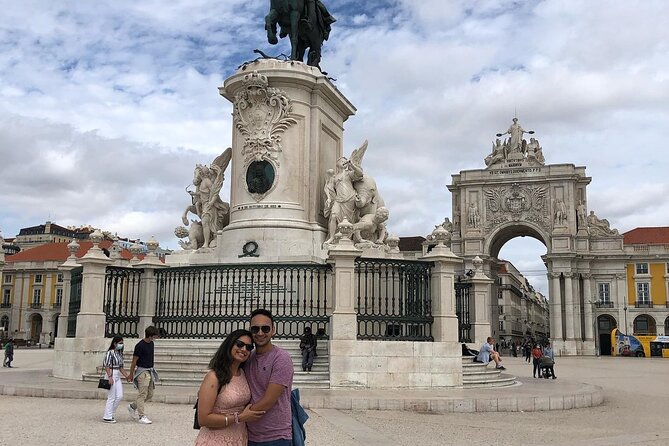
Praça do Comércio is the main showpiece. Built where the royal palace once stood, it opens toward the Tagus on its southern side. Yellow buildings with long arcades form the other three sides, creating a grand riverfront space that once served as Lisbon’s commercial gateway.
The scheduled visit is about 15 minutes. You will have time to see the square, the river, and the surrounding arcades, but not necessarily enough for a full café stop or a detailed walk through every corner.
Avenida da Liberdade and the modern city
The route also passes along Avenida da Liberdade, Lisbon’s grand, tree-lined avenue between Restauradores and Marquês de Pombal. Portuguese cobblestone patterns cover the sidewalks, while theaters, older buildings, luxury shops, and newer construction line the route.
This section helps balance the tour. Lisbon is not only medieval lanes and old churches. The avenue shows the city’s more formal, commercial side, including surviving Art Nouveau buildings and the elegant urban expansion north of the historic center.
The itinerary describes this as a panoramic section rather than a long walking stop. That is sensible, since the avenue is best understood from the vehicle unless you specifically want time for shopping or architecture.
Crossing to Christ the King
The tour then heads across the Tagus to the National Sanctuary of Christ the King in Almada. The monument sits 133 meters above the river and combines an 82-meter pedestal and portico with a 28-meter statue of Christ with open arms facing Lisbon.
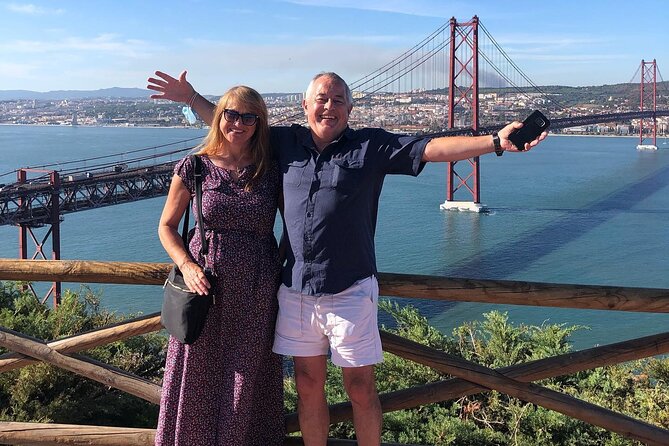
The visit lasts about 30 minutes and is listed as free. Its value is the viewpoint. From here, you can see Lisbon spread along the river and get a strong view of the 25 de Abril Bridge.
This stop changes the rhythm of the day. After the close streets of Alfama and the formal squares of Baixa, you get open space and a broad view. It also gives you a better sense of Lisbon’s relationship with the Tagus, which shaped the city’s trade, defense, and overseas expansion.
The crossing takes time, so this is not a minor add-on. It is one reason the private vehicle is useful. Public transportation can get you to Almada, but fitting it into a day that also includes Alfama and Belém requires more planning.
The Discoveries monument in Belém
Back on the Lisbon side, the route reaches Belém and the Padrão dos Descobrimentos, or Monument to the Discoveries. The monument is shaped like a stylized caravel, with Prince Henry the Navigator at the front and 32 figures representing navigators, cartographers, warriors, religious figures, writers, and artists.
The planned visit is panoramic and lasts about 15 minutes. You will see the exterior and learn how the monument presents Portugal’s overseas expansion. This is a good place to ask questions about how Portugal remembers the Age of Discoveries, since the subject includes both national achievement and the harder realities of colonization.
The short stop is practical for a city overview. If you want to go inside or spend time on the terrace, you will need to confirm whether that can be added to your private schedule.
Jerónimos Monastery church and Belém Tower
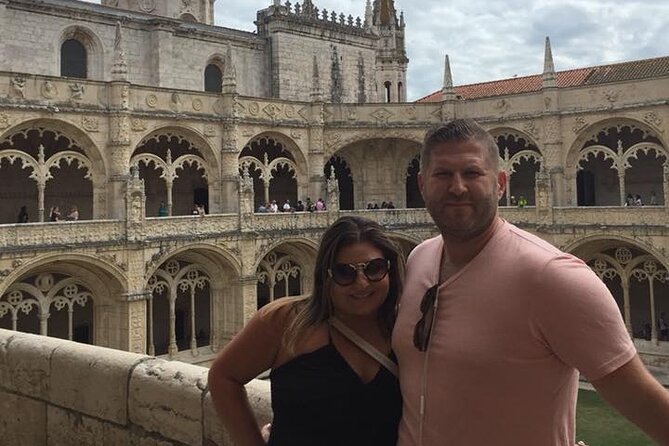
At Jerónimos Monastery, the visit is limited to the monastery church. The cloisters are famous for their detailed stonework, but they are not part of the stated visit. Vasco da Gama is buried inside the church, linking this stop directly to the maritime age celebrated throughout Belém.
Allow about 20 minutes. That gives you time to see the church and hear the main story, but not enough for a slow architectural study. This distinction matters because many people associate Jerónimos with the cloisters first.
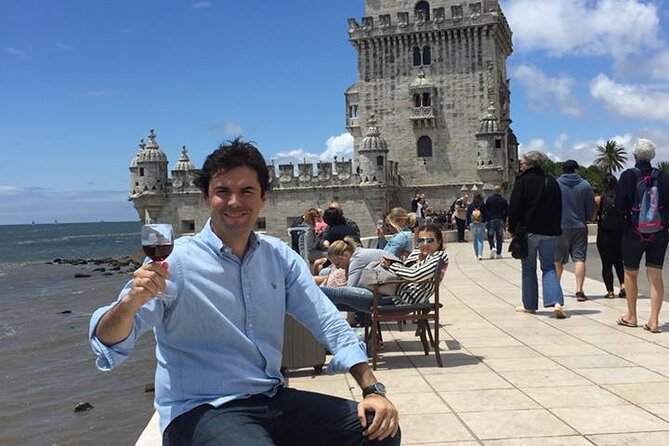
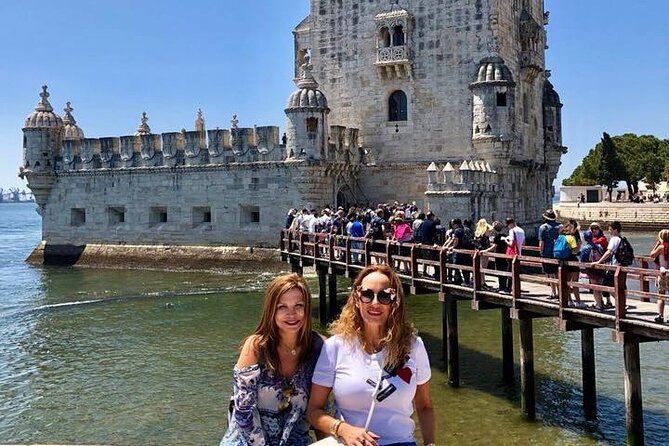
The final major sight is Belém Tower, visited panoramically for about 15 minutes. The small fortified tower looks almost theatrical beside the river and is one of Lisbon’s defining monuments from the Age of Discoveries.
Again, the plan is to view it from outside rather than spend time inside. That keeps the day moving, but anyone focused on interiors should plan a separate Belém visit.
What the private format changes
The strongest feature here is not simply the number of sights. It is the ability to shape the day around your group. Guides have adjusted routes for road closures, slowed down for people with back problems, carried small purchases, supplied umbrellas when rain arrived, and offered advice for the rest of a Portugal trip.
Guide names connected with this experience include João, Anastasia, Anastasiya, Jorge, John, Ana, and Anna. The spelling varies in the available information, and your guide will depend on the assignment. What you should expect is a private guide who also drives, rather than a large coach with a separate guide at each stop.
The private setting makes questions easier. You can ask for more detail on architecture, local life, churches, Fado, food, or viewpoints instead of following a fixed lecture. You can also tell the guide if you need a slower walking pace or want to spend less time at a particular monument.
The tradeoff is that a private day can become very full. Several stops last only 10 to 15 minutes, and the route covers both sides of the Tagus. Think of it as a well-organized city orientation with selected walks, not an unhurried archaeological tour.
Lunch, comfort, and practical planning
Lunch is not included. You should ask the guide early in the day how much time is available and where a stop can fit, especially since the schedule already includes about eight hours of sightseeing. Some descriptions of the day include a midday lunch break, but the meal itself remains your responsibility.
The vehicle is air conditioned and includes WiFi. That is useful in Lisbon’s hot summers, and one account describes a full day in 38-degree weather made more manageable by the cool vehicle and early start. Still, you will need comfortable shoes, water, and a willingness to walk on slopes and cobblestones.
Pickup and drop-off are available at hotels, apartments, and the cruise port. Confirmation is provided at booking, and the tour is offered in English. Most people can participate, but the route’s hills and uneven streets make it sensible to tell the provider about mobility concerns before the day begins.
The activity has a five-star rating from 160 reviews and is recommended by 99 percent of customers. That level of approval supports the idea that the guides and private format are the main strengths, but it should not make you expect every stop to be lengthy or every interior to be open.
Free cancellation is available up to 24 hours before the 8:30 a.m. start time for a full refund. Changes or cancellations inside that window are not accepted for a refund, and the experience requires a minimum number of participants.
Who should book this Lisbon tour?
I would choose this tour if you have only one or two days in Lisbon, are arriving by cruise ship, or want someone else to handle the city’s hills and cross-river logistics. It is especially useful for families, small groups, older visitors, and anyone who prefers a private conversation to a fixed group schedule.
It also suits first-time visitors who want a clear framework for later exploring. At the end of the day, you will know where Alfama, Baixa, Belém, Avenida da Liberdade, and Almada fit together. The guide’s local tips can then help you decide what deserves a second visit.
I would hesitate if your priority is a slow visit to museums, the Jerónimos cloisters, or the inside of Belém Tower. The route gives you a strong overview, but several sights are panoramic or brief. Independent visitors who enjoy public transportation and want to linger may get better value from choosing two or three districts on their own.
Is the private Lisbon tour worth $118.56?
For a packed first day, the price is reasonable if you value private transport and a guide who can adapt the route. You are paying for coverage, convenience, and local explanation rather than a long admission list. Santa Justa is the only clearly included paid admission in the stated itinerary, while most other stops are free or viewed from outside.
I especially like the mix of major sights and ordinary streets. The tour does not stay only in polished squares. Alfama, the viewpoints, the churches, and the river crossings give you a sense of how Lisbon works.
Book it for breadth and personal attention. Skip it if you want depth at fewer sights. For everyone in between, this is a practical way to get your bearings, see the city’s major viewpoints, and leave Lisbon with a useful plan for the days that follow.
FAQ
How long is the private Lisbon tour?
The tour lasts approximately eight hours. Some descriptions of completed days indicate that it can run close to nine hours, so you should keep the rest of your schedule flexible.
What time does the tour start?
Pickup begins at 8:30 a.m.
Where can pickup and drop-off take place?
Pickup and drop-off are offered at your hotel, apartment, or cruise port.
Is transportation private?
Yes. The tour includes private transportation in an air-conditioned vehicle.
Is the tour offered in English?
Yes, English is one of the listed tour languages.
Is lunch included?
No. Lunch is not included in the tour price.
Is this a group tour?
No. This is a private activity, and only your group participates.
Which Lisbon sights are included?
The route includes the Santa Justa Lift, Portas do Sol, Alfama, Senhora do Monte viewpoint, Church of St. Anthony, Lisbon Cathedral, Baixa, Praça do Comércio, Avenida da Liberdade, Christ the King in Almada, the Discoveries monument, Jerónimos Monastery church, and a panoramic visit to Belém Tower.
Are admissions included?
Admission to the Santa Justa Lift is included. The stated itinerary lists the other stops as free or panoramic, and the Jerónimos visit is limited to the monastery church.
Can I cancel for a full refund?
Yes, if you cancel at least 24 hours before the experience start time. Cancellations or changes made less than 24 hours before the start are not refunded, and the provider may offer a new date or full refund if the minimum number of participants is not met.
New around Lisbon
- Arrábida, Setúbal, Sesimbra, Olive with wine tasting★ 5.0 · 75 reviews
- Lisbon: Sunset Sailing Boat Cruise with Wine★ 5.0 · 75 reviews
- Lisbon Half Day Private Tour★ 5.0 · 75 reviews
- Private Half Day Tour to Fatima from Lisbon★ 5.0 · 75 reviews
- Fátima, Nazaré and Óbidos Private Tour from Lisbon★ 5.0 · 76 reviews
- Central Lisbon 3-Hour Guided E-Bike Tour★ 4.8 · 76 reviews
- Lisbon Historic City Tour by Tuk-Tuk★ 5.0 · 76 reviews
- Sintra World Heritage and Cascais Village Private Deluxe Tour★ 5.0 · 76 reviews
Private, compared.

True 4Hour Private Tuk Tuk Tour: Discover Lisbon with a Local!
Read our review →
Private Lisbon Sightseeing Tuk-Tuk Tour: Alfama, Belém & More
Read our review →
Lisbon Highlights: Private Tuk Tuk Tour Adventure Sightseeing
Read our review →
Discover Porto’s Highlights on a 2-Hour Private Electric Tuk Tuk
Read our review →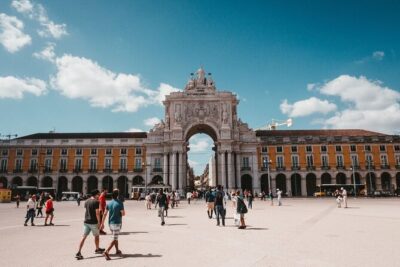
Welcome Lisbon Tour with Local Guide in Private Eco Tuk Tuk
Read our review →
Sintra Full-Day Private Tour – A Journey through Wonderland
Read our review →