
Reviewed · LISBON TOURS
Lisbon: 3-in-1 Hop-On Hop-Off Bus and Tram Tours
Lisbon’s old yellow tram is the star here. You ride through the city’s steep historic quarters, then use two open-top bus routes to reach far-flung Belém and modern Parque das Nações. It is a handy way to get your bearings before choosing which places deserve more time.
I like the 48-hour ticket, which gives you room to ride a full loop, get off for lunch or sightseeing, and return later. I also like the free public tram access and the free entrance to the Carris Museum, useful extras when Lisbon’s hills and traffic make walking tiring.
The main drawback is timing. The buses stop running in the late afternoon, and the Hills Tramcar Tour has no hop-on, hop-off stops. Commentary can also be basic, while roadworks, narrow streets, and traffic lights may slow the ride.
Key points to know before you book
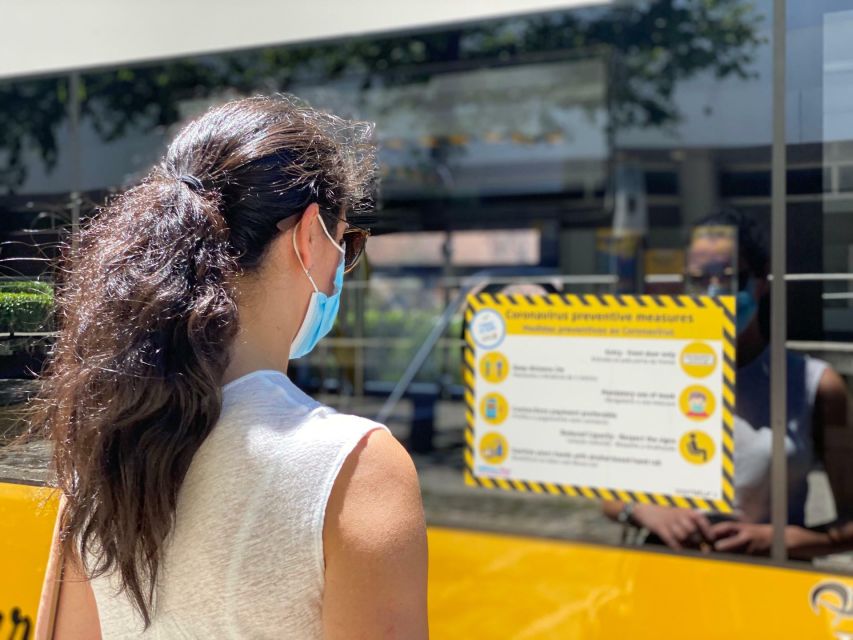
- Three ways to see Lisbon: Combine the Belém route, Modern Lisbon route, and Hills Tramcar Tour on one 48-hour ticket.
- The vintage tram is a real highlight: It passes Alfama, Mouraria, Baixa, Graça, São Vicente, and the Lisbon Cathedral area.
- Belém takes you beyond central Lisbon: See Jerónimos Monastery, Belém Tower, the Monument to the Discoveries, MAAT, and the Coach Museum.
- The Modern route changes the mood: Ride past the Tile Museum, Oceanarium, Vasco da Gama Shopping, FIL, and Vasco da Gama Tower.
- Public trams are included: Use Yellow Carris trams during the ticket’s validity, giving you more freedom after the tour buses finish.
- Plan around the last departures: The Belém bus runs until 5:30 p.m., the Modern bus until 5:15 p.m., and the Hills tram until about 5:05 p.m.
What this 48-hour Lisbon ticket actually gives you

At $44 per person, this is not simply a sightseeing loop. You get two separate double-decker bus tours, one historic tram ride, multilingual audio on all three services, access to Yellow Carris public trams, and free entry to the Carris Museum with a valid ticket.
I would judge the price by how much you use the pass. If you complete both bus routes and the tram ride, then add a few public tram journeys, the ticket can make good sense. If you only ride one short section and spend most of your time walking, it becomes harder to justify.
The 48-hour validity is the important part. You do not need to squeeze Lisbon into one long day. Use the first day for a full orientation ride and Belém, then return to the central districts or take the Modern route on day two.
The ticket does not include admission to Jerónimos Monastery, Belém Tower, the Oceanarium, MAAT, or other museums and monuments. Think of the buses as transport and sightseeing, not as a package of entrance tickets.
A few other Lisbon half-days worth a look
- Lisbon City Center Tour – The Unmissable Lisbon
★ 5.0 · 22,234 reviews - Lisbon: Sintra, Pena, Regaleira, Cabo da Roca & Cascais
★ 4.7 · 19,656 reviews - Lisbon: Jerónimos Monastery Entrance Ticket
★ 4.1 · 14,164 reviews
Starting at Restauradores and Praça do Comércio
Both bus routes begin at Restauradores Square, near the Eden Theatre. This is a central, practical starting point close to Rossio and Avenida da Liberdade. Look at the sign in the front window before boarding: the Belém route uses a blue sign, while the Modern Lisbon route uses a pink sign. The buses themselves are yellow.
The Hills Tramcar Tour begins at Praça do Comércio, close to the great arch. This is a short walk from the riverfront and a useful place to begin if you are already exploring Baixa.
The different starting points are easy enough once you know them, but Lisbon’s squares can feel confusing at first. I would take a moment to confirm the route with staff before boarding, especially if you are trying to fit all three services into one day.
The buses depart every 30 minutes. Belém operates from 9 a.m. until 5:30 p.m., and the Modern route runs from 9:15 a.m. until 5:15 p.m. The Hills tram departs every 35 minutes, from 9:30 a.m. until 5:05 p.m.
Those intervals are workable, but they reward planning. If you get off at a stop, note the next departure time. Missing one bus can cost you 30 minutes, and the late final departures leave little room for a leisurely last stop.
The Belém route, Lisbon’s grand riverfront story
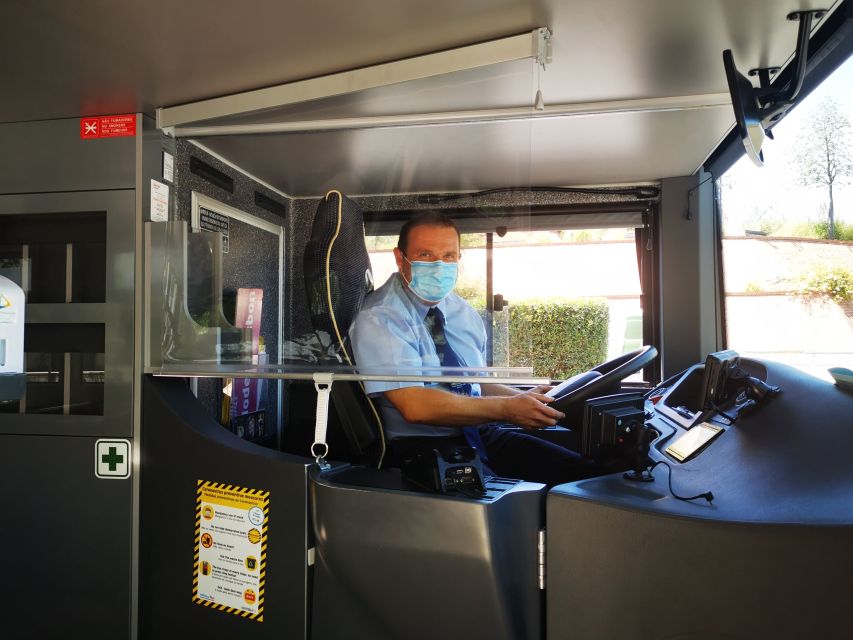
The Belém bus is the route to choose for Lisbon’s best-known monuments. It begins at Restauradores, passes through Rossio and Marquês de Pombal, then heads toward the western district of Belém.
The early stops show you central Lisbon in quick succession:
- Restauradores Square and Rossio Square put you near the city’s central squares and pedestrian streets.
- Marquês de Pombal opens onto Avenida da Liberdade and the upper end of the central area.
- El Corte Inglés is useful for shopping, though it is less important as a sightseeing stop.
- Parque Eduardo VII gives you a broad city view and a break from the older streets.
- Amoreiras Shopping is another modern shopping stop.
- Basílica da Estrela brings you near one of Lisbon’s notable churches and the leafy Estrela area.
- Pilar 7 offers access to the bridge experience in the Alcântara area, though any separate admission is not included.
The route then reaches the Coach Museum in Belém. The museum is known for its historic royal carriages, but you need to pay the entrance fee if you want to go inside.
Jerónimos Monastery is one of the major stops. Its ornate stonework and connection to Portugal’s seafaring era make it one of the most worthwhile places to visit along the route. Give it proper time rather than treating it as a quick photograph from the bus.
From there, the bus continues to Belém Tower, the Monument to the Discoveries, and MAAT. These stops are close enough to form a good walking stretch, but you should still watch the clock. A stop at each site, plus museum visits and lunch, can easily consume most of a day.
Belém Tower is the postcard view, a small fortified tower set beside the river. The Monument to the Discoveries celebrates Portugal’s maritime expansion and provides a striking riverfront landmark. MAAT offers a modern counterpoint, with architecture and technology replacing the stonework of the monastery.
The route also calls at the Docas Cruise Terminal and Jardim da Estrela before returning to Restauradores. The return loop is useful if you prefer to stay on board for an overview, but it can feel slow when traffic is heavy. Narrow roads and frequent traffic lights are part of Lisbon’s reality, not a flaw unique to this tour.
The Modern Lisbon route, from the Tile Museum to Parque das Nações
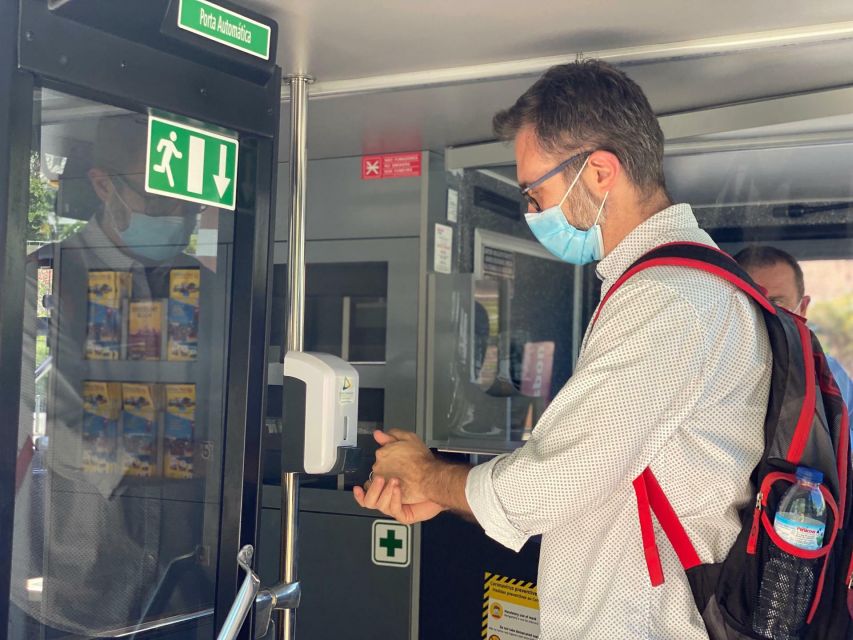
The Modern Lisbon bus changes the subject completely. Instead of focusing on old quarters and maritime monuments, it takes you east toward Lisbon’s newer districts.
The route begins at Restauradores and Rossio, then travels along Avenida da Liberdade. This gives you another look at central Lisbon before heading toward the cruise terminal and the eastern side of the city.
The Tile Museum is one of the more distinctive stops. Portugal’s painted ceramic tiles are a major part of the country’s visual identity, and this is the place to explore that tradition in more detail. Admission is not included, so decide ahead of time if you want to make a proper visit or simply use the stop as part of the bus circuit.
The Oceanarium is the route’s biggest family attraction. It is in the Parque das Nações district, the former Expo area, where broad modern spaces replace Lisbon’s tight historic lanes. The Oceanarium requires a separate entrance ticket.
The bus continues to Vasco da Gama Shopping, FIL, and Vasco da Gama Tower, beside the Myriad Hotel. This part of Lisbon is modern, open, and planned around the river. It offers a useful contrast with Alfama and Baixa, especially if you want to see more than the postcard version of the city.
One practical issue is frequency. The Modern route may leave you waiting longer than the other line, so start early if you want time at the Oceanarium or Tile Museum. The last bus is around 5:15 p.m., which makes an evening return trip impossible through this service.
Same coastline, a completely different day out:
- Lisbon: History, Stories and Lifestyle Walking Tour
★ 4.8 · 10,902 reviews - Lisbon: Sunset Boat Party Cruise with DJ and Open Bar
★ 4.5 · 10,378 reviews - Lisbon: Pena Palace, Sintra, Cabo da Roca, & Cascais Daytrip
★ 4.7 · 9,981 reviews - Lisbon: Oceanário de Lisboa Entrance Ticket
★ 4.6 · 9,943 reviews
The Hills Tramcar Tour, Lisbon’s most characterful ride
The tram is the most atmospheric part of the ticket. It starts and finishes at Praça do Comércio, making a circuit through the older hills and neighborhoods.
Unlike the buses, this is not a hop-on, hop-off route. There are no regular stops where you can leave the tram and rejoin later. You ride the circuit, listen to the audio guide, and take in the streets from the window.
The route passes near Portas do Sol, Lisbon Cathedral, Graça, São Vicente, the National Pantheon, and Martim Moniz. These are some of the city’s most rewarding areas, but the tram does not stop at them. If you want to explore Alfama or visit the cathedral, plan a separate walk or use the included public tram access where practical.
The tram’s value is the experience itself. You see the tight streets, old houses, churches, and steep neighborhoods from a traditional Lisbon vehicle. One especially memorable part of the ride is hearing the driver explain how the tram works, including the mechanics of changing cable lines. The driver is clearly proud of the job, and that practical detail adds more than a standard recorded explanation.
The ride also gives you a sense of Lisbon’s hills before you tackle them on foot. I would use it near the beginning of your visit, then return to Alfama, Mouraria, or Graça later with more time.
Audio guides, staff, and the feel of the ride

Audio commentary is included in Spanish, Chinese, Dutch, English, French, German, Italian, Japanese, Portuguese, and Russian. You get the most detail on the buses and the Hills Tramcar Tour, where the commentary helps explain the squares, avenues, monuments, and districts passing outside.
The English version has been described as thorough, but the quality may vary by bus. Some passengers have found the narration too basic, and some audio units have not worked properly. Music is part of the presentation, though it does not always match the buildings or subjects outside.
I prefer a live guide, but the recorded system has one clear advantage: you can listen in your own language and stop paying attention when you want to study a view or take a photograph. Staff at the stops are generally helpful, and the route signs make the buses fairly easy to identify.
Bring your own headphones if you prefer them, but do not count on making a meal of the ride. Food, drinks, and alcohol are not allowed on the vehicles.
Using the public trams after the tour bus stops
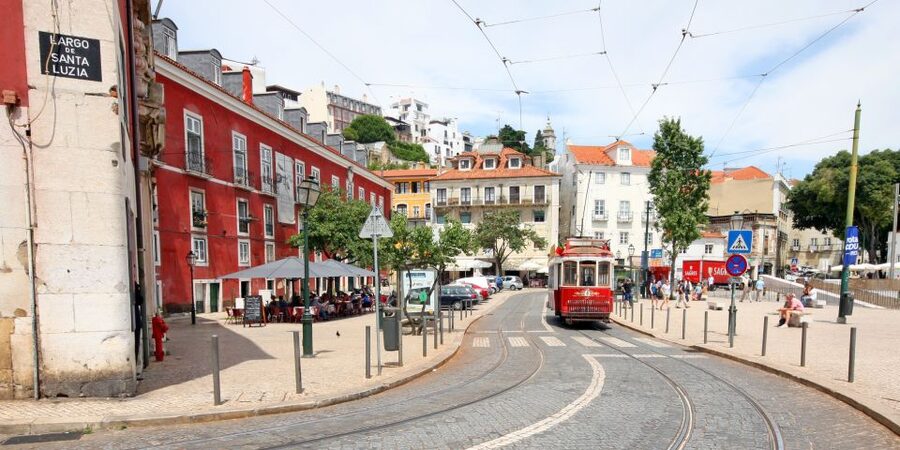
The included Yellow Carris tram access is one of the ticket’s most useful extras. Lisbon’s central streets are hilly, and public trams can help you cover ground after the sightseeing buses have stopped for the day.
Make sure you understand that this is separate from the hop-on, hop-off bus routes. The Hills Tramcar Tour itself has no stops, while public tram service gives you more flexibility around the central neighborhoods.
This can also save you from waiting for a Yellow Bus vehicle when a regular tram is available. Check with staff about which public services are covered and how to use them before setting off. The free entry to the Carris Museum adds another small benefit, particularly if you want more context about Lisbon’s tram system.
The pass does not include hotel pickup or drop-off. You make your own way to Restauradores or Praça do Comércio, and you should allow extra time if roadworks or traffic affect the route.
A practical two-day plan

I would use the ticket in a deliberate order rather than trying to complete everything at once.
Day one: Lisbon overview and Belém
Start with the Belém bus from Restauradores. Stay on for a broad orientation if you are still learning the city, then get off around Jerónimos Monastery, Belém Tower, and the Monument to the Discoveries. Add MAAT if modern architecture interests you.
Do not attempt every museum in Belém unless you have an early start. The monuments are spread along the riverfront, and time disappears quickly between walking, meals, queues, and bus waiting.
Day two: the tram and modern Lisbon
Take the Hills Tramcar Tour from Praça do Comércio in the morning. After the circuit, walk around Baixa or use public trams toward the historic neighborhoods you want to explore more closely.
Use the Modern Lisbon bus in the afternoon if you mainly want an overview of Parque das Nações. If the Oceanarium or Tile Museum is a priority, make that the first stop of the day instead. The route’s final departure comes early enough that a late start may leave you with only a partial ride.
This plan gives you both the old and new sides of Lisbon without turning the ticket into a race.
Who will get the most from this ticket

I recommend it most for first-time visitors, short stays, families, and anyone who finds Lisbon’s hills difficult. It is also useful if you are arriving by cruise ship and want a quick look at several districts without arranging separate transport.
The ticket suits you if you like to see a city first and choose your detailed visits afterward. You can spot places that deserve a return visit, then use public trams or ordinary walking routes to explore them more closely.
It is less suitable if you already know Lisbon well, dislike recorded commentary, or want a slow, local neighborhood experience. The bus offers a useful overview, but it cannot replace wandering through Alfama, Mouraria, or Baixa on foot.
I would also think twice if your visit is limited to one day. You can still get value, but the early last departures mean you must choose between routes and attractions. A 48-hour ticket works best when you can use both days.
Booking details worth keeping in mind
The price is $44 per person, and you can cancel up to 24 hours before the activity for a full refund. A reserve-now, pay-later option is available, which helps if your Lisbon schedule is still moving around.
Roadworks can temporarily suspend service, so check current updates with the Yellow team before you leave for a stop. This matters more in Lisbon than it might in a flatter city, since a closed road can affect a whole route.
Keep the route colors straight: blue for Belém and pink for Modern Lisbon. Confirm the Hills tram departure point at Praça do Comércio, close to the arch, rather than assuming it leaves from Restauradores.
Should you book the Lisbon 3-in-1 tour?
Book it if you want a reliable first look at Lisbon, need help with the hills, or have two days to combine transport with sightseeing. The historic tram, Belém route, public tram access, and 48-hour validity give the ticket more practical value than a single panoramic bus loop.
Skip it if you prefer to explore every neighborhood slowly or if your schedule allows only one afternoon. In that case, walking Baixa and Alfama, then choosing one paid attraction, may suit you better.
For most first visits, I would book the 3-in-1 ticket and use it strategically: ride the tram early, reserve a full half-day for Belém, and treat the Modern route as your look at Lisbon’s newer eastern districts. That approach leaves room for real exploring instead of keeping you on a bus all day.
FAQ
How long is the ticket valid?
The ticket is valid for 48 hours.
Where does the Belém bus start?
The Belém Lisbon Bus Tour starts at Restauradores Square near the Eden Theatre.
Where does the Modern Lisbon bus start?
The Modern Lisbon Bus Tour also starts at Restauradores Square near the Eden Theatre.
Where does the Hills Tramcar Tour start?
The Hills Tramcar Tour starts at Praça do Comércio, close to the arch.
Does the ticket include museum entrance?
It does not include entrance fees to museums or monuments. It does include free entry to the Carris Museum when you show a valid ticket.
What languages are available for the audio guide?
The audio guide is available in Spanish, Chinese, Dutch, English, French, German, Italian, Japanese, Portuguese, and Russian.
New around Lisbon
- Arrábida, Setúbal, Sesimbra, Olive with wine tasting★ 5.0 · 75 reviews
- Lisbon: Sunset Sailing Boat Cruise with Wine★ 5.0 · 75 reviews
- Lisbon Half Day Private Tour★ 5.0 · 75 reviews
- Private Half Day Tour to Fatima from Lisbon★ 5.0 · 75 reviews
- Fátima, Nazaré and Óbidos Private Tour from Lisbon★ 5.0 · 76 reviews
- Central Lisbon 3-Hour Guided E-Bike Tour★ 4.8 · 76 reviews
- Lisbon Historic City Tour by Tuk-Tuk★ 5.0 · 76 reviews
- Sintra World Heritage and Cascais Village Private Deluxe Tour★ 5.0 · 76 reviews
Lisbon Tours, compared.

Lisbon City Center Tour – The Unmissable Lisbon
Read our review →
Sintra, Pena, Regaleira, Cabo da Roca & Cascais
Read our review →


Sunset Boat Party Cruise with DJ and Open Bar
Read our review →
Pena Palace, Sintra, Cabo da Roca, & Cascais Daytrip
Read our review →