
Reviewed · WALKING TOURS
Aveiro: Stories, Canals, and Azulejos Guided Walking Tour
Aveiro’s canals are only the beginning. This two-hour walk connects the city’s azulejo-covered façades, salt trade, churches, lagoon boats, and Art Nouveau buildings into one readable story. Tony Walker, also known as António, guides the route with local knowledge, humor, and the ease of someone showing you his own hometown.
I like two things in particular. First, the tour helps you notice details you could easily miss alone, from black-and-white calçada patterns to symbols on church façades. Second, it goes beyond the postcard version of Aveiro, explaining how canals, saltpans, ceramics, and traditional boats shaped the city. The main consideration is physical: expect steady walking, and the tour is not suitable for wheelchair users, people with mobility impairments, young children under 10, or anyone with a low level of fitness.
Key points to know
- A canal tour without a boat: You learn how Aveiro’s waterways work on foot, including the roles of moliceiros and mercanteis.
- Churches with very different personalities: The small Carmelite Convent Church, Aveiro Cathedral, and São Gonçalinho each reveal a different part of local culture.
- Azulejos are a central theme: The route includes historic tile panels, Art Nouveau façades, and later decorative work.
- A local guide makes the difference: Tony Walker, or António, is a retired teacher and certified guide who uses stories, questions, and humor.
- A good value at $20: All stops are walk-through or free entry, so most of the price pays for interpretation rather than admissions.
- Plan for weather and walking: The tour runs rain or shine. Bring comfortable shoes, sunscreen, and suitable clothing.
Why Aveiro makes sense with a guide
Aveiro can look simple at first glance. You see canals, colorful boats, painted buildings, and tiled façades, then wonder if the town can fill two hours. It can, but much of its character is easy to overlook unless someone points it out.
This walk gives you the missing connections. You learn why the canals exist, how the lagoon supported local work, what the boats were designed to carry, and why Aveiro’s fortunes changed so sharply over the centuries. The result is a city that feels less like a collection of pretty views and more like a working place shaped by water, trade, religion, and industry.
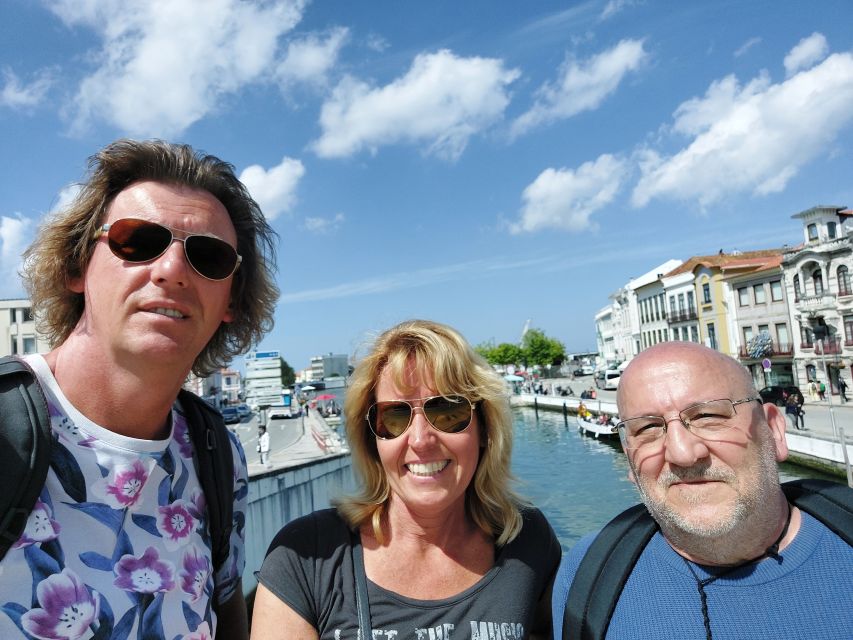
The tour has a strong local voice. Tony Walker, also called António, has lived in Aveiro for more than 20 years and is a retired teacher. That background matters. His approach is not just a list of dates. He answers questions, adds observations about present-day Aveiro, and uses humor to keep the information moving.
One useful feature is the small-group feel that can happen when bookings are light. Some participants have had what felt like a private walk, with time for questions and a slower pace. Group size is not specified, so do not book expecting a private tour, but the guide’s conversational style should suit people who like discussion rather than a formal lecture.
More walking tours around Portugal:
- Lisbon: History, Stories and Lifestyle Walking Tour
★ 4.8 · 10,902 reviews - Best of Lisbon Small-Group Guided Walking Tour
★ 5.0 · 4,869 reviews - Lisbon: Food and Wine Small Group Walking Tour
★ 4.9 · 4,082 reviews
Praça da República and Aveiro’s urban starting point
The tour begins at Praça da República, near the statue in the center of the square. Look for the guide wearing a yellow and blue badge. The square gives you an immediate introduction to central Aveiro, with the Town Hall and Misericórdia Church nearby.
This is a sensible place to begin because it puts civic and religious power side by side. The Town Hall represents the city’s public life, while the Misericórdia Church introduces the decorative tradition that appears again and again during the walk.
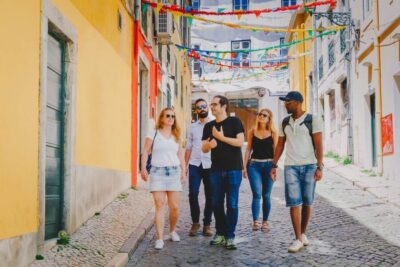
From here, you move along Rua de Coimbra and examine calçada à portuguesa, Portugal’s familiar pavement made with contrasting stones. In Aveiro, the black-and-white pattern is more than something under your feet. The guide explains how its design and appearance fit into Portugal’s wider street tradition.
I appreciate this early stop because it teaches you how to look. Once you understand that even pavement can carry design choices and local identity, the tiles, ironwork, and façades later in the route become easier to read.
The Carmelite Convent Church in Marques de Pombal Square
At Marques de Pombal Square, the group enters the Carmelite Convent Church. It is a small building, but its scale makes the decoration feel concentrated rather than overwhelming. The tour presents it as a Baroque jewel, and the description fits the experience: this is a compact interior with plenty to inspect.
The church gives the route one of its clearest changes of mood. Outside, Aveiro’s center is open and urban. Inside, the focus narrows to religious decoration and historical detail. Your guide explains what you are seeing instead of leaving you to guess at the layers of ornament.
The church is a free-entry stop, but opening hours can affect what you see. One participant found that museums and similar sites were closed on a Monday, while another happened to visit during a festival when more places were open. The walking route continues either way, but if interior access matters to you, check the date and local opening conditions before booking.
Tiles, convent history, and Santa Joana
The route continues past the tile panels at Casa de Santa Zita and Sapataria Leão. These façades help show why Aveiro is such a rewarding place for azulejo fans. Tiles appear not only on grand churches but also on ordinary urban buildings and shopfronts.
Your guide points out how tile decoration changed over time. You will see early modern examples alongside Art Nouveau and Art Deco influences, as well as more recent work. The value is in comparison. A tile panel is attractive on its own, but the sequence lets you notice changes in color, line, subject, and purpose.
Next comes the Dominican Convent of Jesus. Here the story turns to Princess Santa Joana, Aveiro’s patron saint. Her connection to the city is a major part of its religious identity, and the guide uses her story to explain why the convent and the city’s people remain linked.
The route then passes Aveiro Cathedral. You may not spend long inside every religious building, but the walk gives you a useful sense of how churches fit into the city center. It also keeps the focus on storytelling rather than trying to turn the afternoon into a string of formal admissions.
A few other Portugal half-days worth a look
- Porto: Guided Tour by Tuk-Tuk & Optional Douro River Cruise
★ 4.5 · 5,980 reviews - Lisbon: Private Guided Tuk-Tuk Tour with Hotel Pickup
★ 4.9 · 4,552 reviews - Benagil: Guided Kayaking Tour to the Benagil Cave
★ 4.7 · 3,135 reviews - Porto: City Highlights 3-Hour Guided Electric Bike Tour
★ 4.8 · 3,092 reviews
Canal da Fonte Nova and the working side of Aveiro
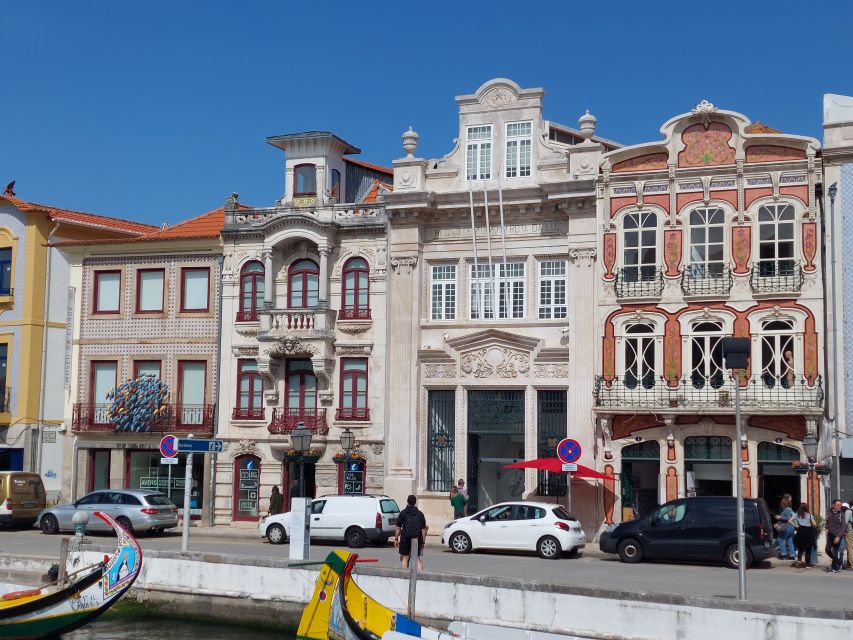
The Canal da Fonte Nova shows a different Aveiro from the polished central streets. Beside the water is a surviving building from one of the ceramics factories that once operated in the area. That single structure offers a way into the city’s industrial past.
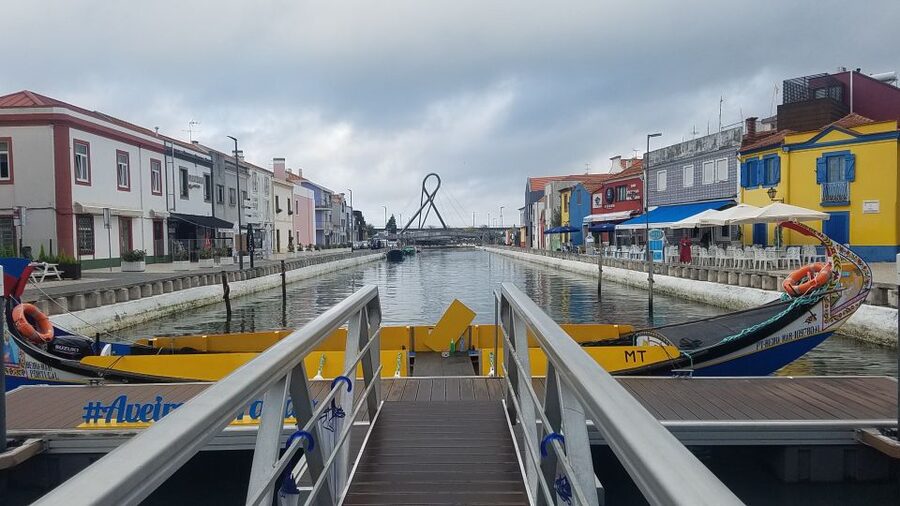
This is where the tour becomes especially useful for visitors who have already seen the main canal. The famous boats and façades are pleasant, but the canal system had practical purposes. Your guide explains how the waterways came into being and how they served the city and the surrounding lagoon.
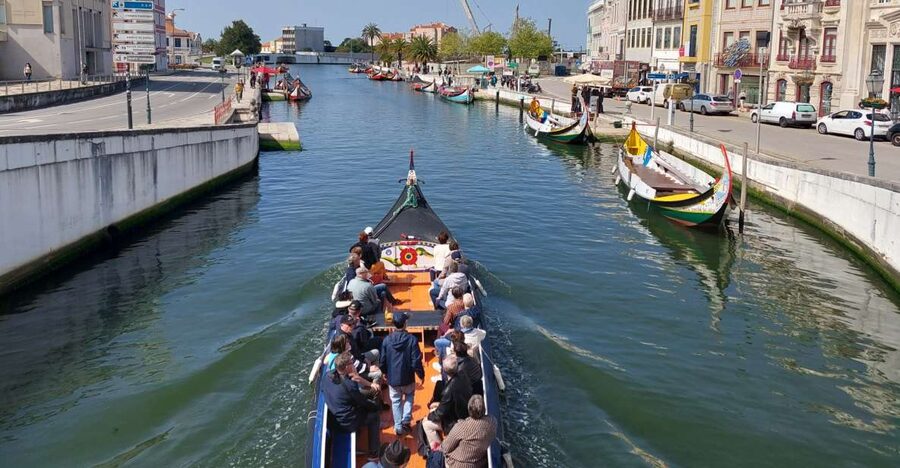
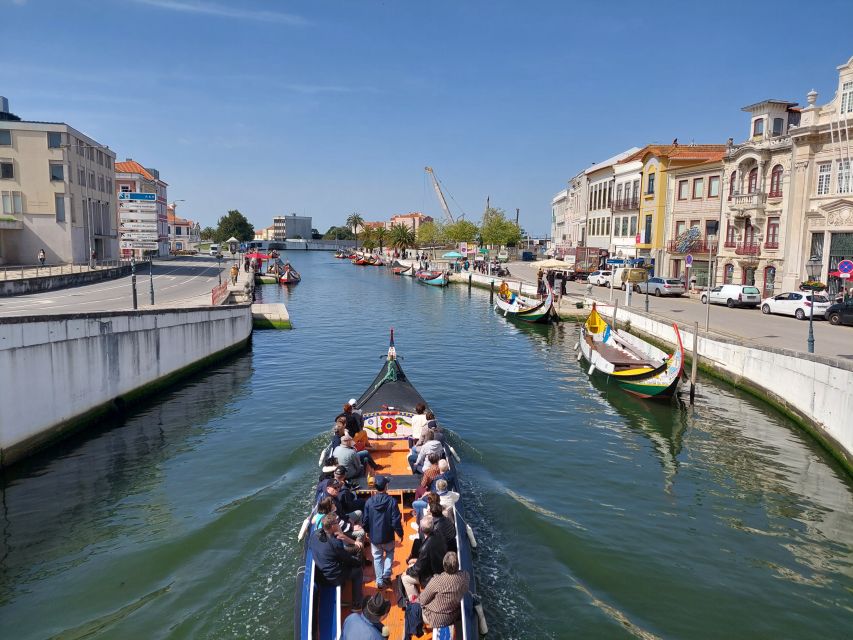
You also learn to identify traditional boats from the Ria de Aveiro. Moliceiros are the best known, with their distinctive painted decoration, while mercanteis served different working needs. Knowing the names and functions helps you see the boats as part of local life rather than as scenery made only for photographs.
The walk does not include a boat ride. That is worth noting before you book. If you want to cruise the canals, you can arrange a boat trip separately. Several people have found value in taking this walking tour first, then deciding if they also want time on the water.
Beira Mar, Art Nouveau, and ironwork
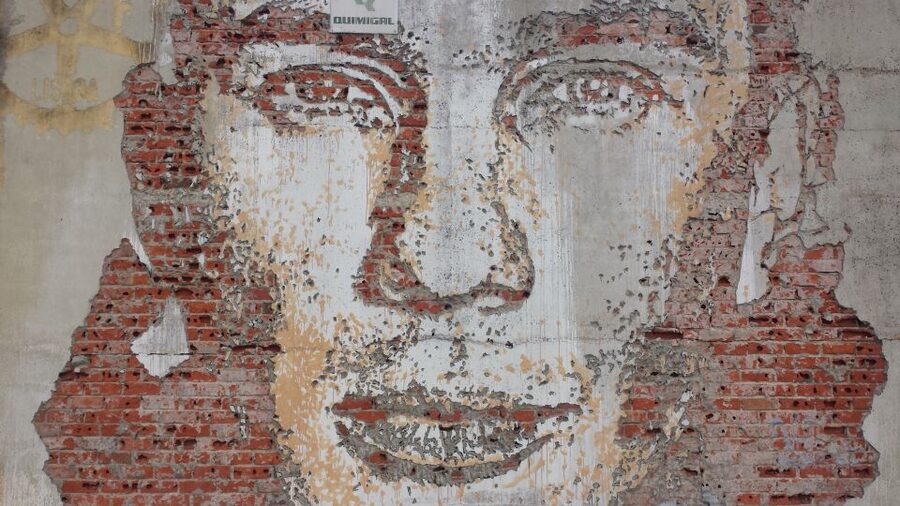
The Beira Mar neighborhood brings together many of the tour’s visual themes. Tiles cover your view, but the guide also highlights Art Nouveau, Art Deco, and iron architecture from the turn of the 19th to the 20th century.
Aveiro’s Art Nouveau details can be easy to miss when you are watching for canals. Look up and across, not only straight ahead. Decorative ironwork, curved forms, tile patterns, and façades can tell you when a building was made and what style its owners wanted to project.
The route includes both façades of the Museum of Art Nouveau. You may not enter the museum, since the itinerary emphasizes free or walk-through sites, but seeing both sides gives you a better sense of the building’s design.
This section rewards people who enjoy architecture but do not want a highly technical lecture. The guide explains styles in plain terms and links them to Aveiro’s growth. His teaching background is useful here, since the details are presented as a story you can follow rather than as a list of architectural labels.
Aveiro’s fortunes from medieval power to modern revival
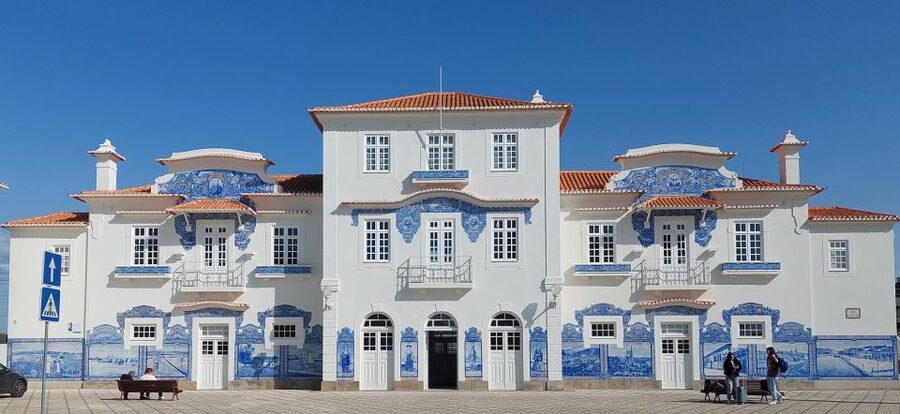
The walk also places Aveiro on a longer timeline. You hear about the city’s power from the 11th through the 15th centuries, its difficult period in the 17th and 18th centuries, and its revival in the 19th century.
That arc gives the canals and old buildings more meaning. Aveiro was not always the easygoing canal town you see today. Its position near the lagoon brought opportunity, but the city’s fortunes shifted over time. The guide’s explanation helps you understand why local salt, boats, ceramics, and trade matter so much.
The route heads toward the saltpans, then turns back toward the center. The supplied information does not promise a full visit to a saltpan or a working demonstration, so think of this section as an introduction to the salt economy rather than a dedicated salt excursion.
You will smell the lagoon and salt as you walk. That sensory detail is part of the appeal. Aveiro is not only about painted façades. Its water and salt traditions remain part of the city’s identity.
Food stories on the way back
On the return route, the guide introduces local food, including eel stew and Aveiro’s famous ovos moles. Food and drinks are not included, so this is a conversation about local specialties rather than a tasting stop.
Ovos moles are the better-known souvenir, made with a sweet egg filling associated with Aveiro. The tour also mentions a traditional treat connected with the São Gonçalinho festival, a hard and heavy sweet thrown over the heads of worshippers during the January celebration.
This is a memorable detail because it shows how food can be part of ritual as well as everyday eating. The guide does not treat local cuisine as a shopping list. He connects dishes and sweets to the city’s customs, celebrations, and relationship with the lagoon.
If you want to try anything during the walk, bring your own budget for food. Nothing is included in the $20 price.
Finishing at São Gonçalinho
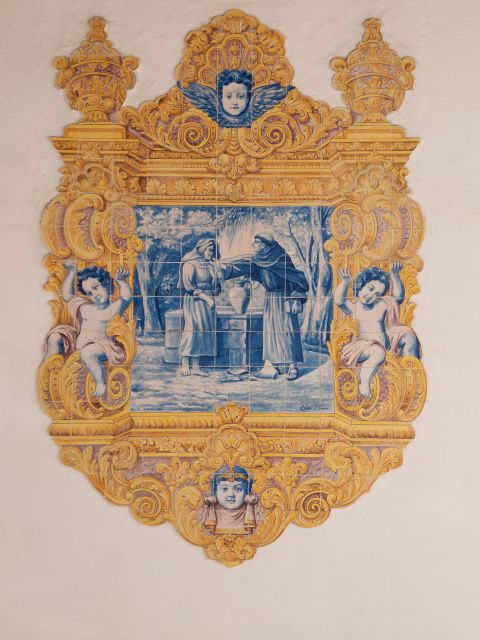
The tour ends back at the meeting point, finishing at the Church of São Gonçalinho. The church is tied to the January festival honoring the saint, when the traditional hard sweets are thrown from above while people below try to catch them.
Even outside festival time, the story gives the church a strong sense of place. It is not simply another stop for photographs. It becomes a way to understand Aveiro’s mix of devotion, humor, public celebration, and local tradition.
Ending here works well because it leaves you with something more distinctive than a final architectural fact. You finish with an image of a joyful, slightly chaotic festival and a better sense of how Aveiro’s customs continue beyond its canals and façades.
What the $20 price includes
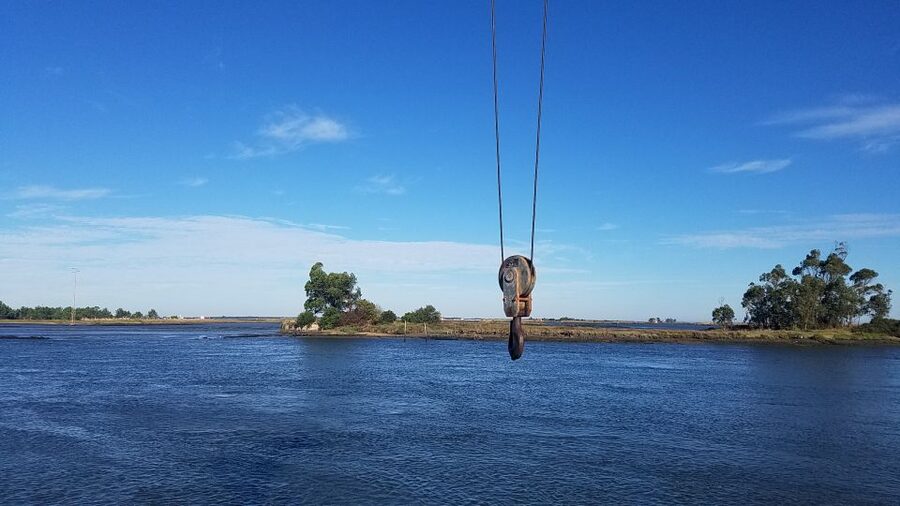
At $20 per person, this is a good-value orientation walk. The price includes a two-hour guided route and access to sites that are either free entry or viewed from the outside. You are mainly paying for the guide’s interpretation, route planning, and local context.
The value is strongest if you are new to Aveiro or if you have already walked around and felt that the city looked attractive but did not yet make sense. A guide can show you details in two hours that might otherwise take several visits to piece together.
The price is less compelling if you want a boat ride, museum admissions, food, or a slow photography tour. None of those are included. The walk is designed to explain the city while moving through it.
You can cancel up to 24 hours before the activity for a full refund, and reserve now while paying later. The tour is offered in Portuguese, French, English, and Spanish.
Practical advice before you book
Wear comfortable shoes. The route covers central streets, canalside areas, and the Beira Mar neighborhood, so this is not a short stroll between two nearby sights.
Bring sunscreen and weather-appropriate clothing. The tour runs rain or shine, and the information provided does not promise shelter throughout the route. A small personal bag is sensible, but large bags and luggage are not allowed.
Bikes, baby carriages, alcohol, and drugs are not permitted. Unaccompanied minors are not allowed, and the activity is not suitable for children under 10. It is also not suitable for pregnant women, wheelchair users, people with mobility impairments, or people with a low level of fitness.
The meeting point is easy to identify: meet near the statue in the middle of Praça da República and look for the yellow and blue badge. The activity finishes back at that meeting point.
Should you book the Aveiro walking tour?
Book it if you want Aveiro explained rather than simply photographed. I would especially recommend it for first-time visitors, architecture fans, people curious about the lagoon economy, and anyone who enjoys local stories more than a fast checklist of sights.
The strongest part is the guide. Tony Walker, or António, brings a teacher’s patience and a local’s affection to the route. His humor, detailed answers, and willingness to spend extra time on questions can turn a standard walk into something more personal.
Skip it if you are looking for a canal cruise, included food, or guaranteed museum entry. Also think twice if two hours of walking will be tiring. For most visitors who want context, though, $20 is a sensible price for a well-planned introduction to Aveiro’s churches, tiles, boats, salt, and neighborhood life.
FAQ
Where does the Aveiro walking tour start?
It starts in Praça da República, near the statue in the center of the square. Look for the guide wearing a yellow and blue badge.
Where does the tour end?
The activity ends back at the meeting point after finishing at the Church of São Gonçalinho.
How long does the tour last?
The guided walk lasts two hours. Starting times vary, so check availability when choosing a date.
Which languages are available?
The tour is offered in Portuguese, French, English, and Spanish.
Is a boat ride included?
No. The tour explains Aveiro’s canals and traditional boats, including moliceiros and mercanteis, but it does not include a boat trip.
Are food and drinks included?
No. Food and drinks are not included. Local specialties discussed along the route include eel stew and ovos moles.
Is the tour suitable for wheelchair users or people with mobility impairments?
No. The activity is not suitable for wheelchair users, people with mobility impairments, pregnant women, or people with a low level of fitness. Comfortable shoes are recommended, and the tour takes place rain or shine.
New around Portugal
- Exclusive Boat Tour to the Benagil Caves★ 5.0 · 74 reviews
- Surf’s Up in Albufeira: Learn to Ride the Waves★ 5.0 · 74 reviews
- Lisbon: Kayaking and snorkeling in Sesimbra with photos!★ 5.0 · 74 reviews
- Porto: City Bike Rental★ 4.6 · 75 reviews
- Arrábida, Setúbal, Sesimbra, Olive with wine tasting★ 5.0 · 75 reviews
- Private 4×4 Jeep Full Day Porto Moniz or Santana★ 5.0 · 75 reviews
- Douro Valley: Quinta do Tedo Wine Experience with Picnic★ 4.8 · 75 reviews
- Lagoa: Dolphins Expedition with biologist guide on board★ 5.0 · 75 reviews
Walking Tours, compared.
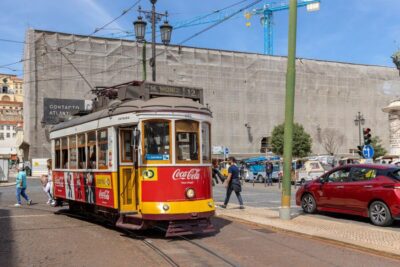

Best of Lisbon Small-Group Guided Walking Tour
Read our review →

Porto Walking Tour, Lello Bookshop, River Cruise and Cable Car
Read our review →
Best of Lisbon Walking Tour: Rossio, Chiado & Alfama
Read our review →
Experience Porto’s Charm: 3-Hour Guided Walking Tour
Read our review →
Enjoy a Guided Levada Walk in the Rabaçal Valley
Read our review →Browse the lists this tour appears in