
Reviewed · HISTORICAL TOURS
Half Day Historical Walking Tour about the Slave Trade in Lisbon
Lisbon’s polished Age of Discovery story leaves out too much. This three-hour walking tour puts slavery and Portugal’s colonial past at the center, taking you through Alfama, the old commercial waterfront, Baixa, Rossio, and the streets where enslaved people lived and worked.
I like two things here: the small group, limited to eight, gives you room to ask hard questions, and the route ties difficult history to actual places instead of keeping it in a classroom. Rui Fernandes is especially good at using images and historical documents to make the subject clear. The main drawback is simple: this is serious material, and the walking route is not suited to anyone with walking difficulties.
Key points to know before booking
- A rare focus on Lisbon’s slave-trade past: The tour looks beyond the familiar Age of Discovery story and explains Portugal’s role in the Atlantic system.
- A route through Alfama and Baixa: You visit Lisbon’s oldest neighborhood, former commercial centers, religious sites, and locations tied to the end of Portuguese colonial rule.
- Rui Fernandes leads with evidence and context: His approach covers religious, political, economic, and family influences on slavery, with photographs and documents used during the walk.
- A genuinely small group: With no more than eight people, you can hear clearly and ask questions without holding up a large crowd.
- A useful route for first-time visitors: The walk links several major parts of central Lisbon, so you learn difficult history while getting your bearings in the old city.
- Comfortable shoes matter: The tour lasts about three hours and requires moderate physical fitness, even though the route includes pauses.
Why this tour changes the way you see Lisbon
Most introductions to Lisbon begin with ships, explorers, royal wealth, and the so-called Age of Discovery. This walk asks you to look at the human cost behind that story. Portugal became involved in the Atlantic slave trade in the mid-15th century, and the tour places that involvement within a wider history of enslavement practiced by societies from Roman times through the period of Moorish rule.
That broader frame is useful. It does not excuse Portugal’s actions or blur the specific scale of the Atlantic trade. Instead, it helps you see how slavery was supported by law, religion, commerce, political power, and ordinary social structures over many centuries.
I also like the connection to present-day Lisbon. You are not only hearing about distant plantations or ocean voyages. You are walking through districts where enslaved captives lived, worked, worshiped, and were part of the city’s economy. The route shows how Africa helped shape Portuguese culture and how the effects of colonialism continued long after the trade itself changed.
The subject can be painful, especially for Black visitors and for anyone whose family history connects directly to the Atlantic slave trade. The guide’s reported approach is direct and evidence-based, without softening uncomfortable facts. That makes this a serious tour, but also a respectful one.
More Historical Tours in Lisbon
- Lisbon: History, Stories and Lifestyle Walking Tour
★ 4.8 · 10,902 reviews - Lisbon: Live Fado Show with Port Wine in Historic Center
★ 4.7 · 4,166 reviews - Lisbon: Fado Show with Wine in a Historic Venue
★ 4.8 · 1,294 reviews
Starting at Largo do Chafariz de Dentro
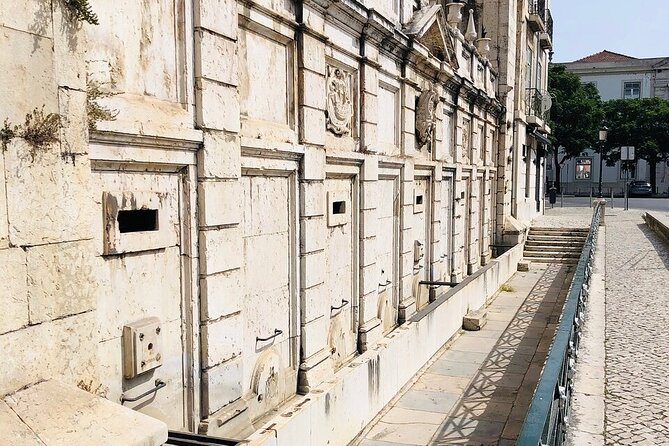
The meeting point is Largo do Chafariz de Dentro, at number 30, in the Alfama district. The tour begins with an introduction to its main theme, giving you a clear idea of the questions that will guide the next three hours.
This is a sensible starting point because Alfama is one of the oldest parts of Lisbon. Its narrow streets and old buildings are often presented as picturesque, but the tour asks you to see the neighborhood as a place shaped by many peoples, occupations, and systems of power.
The opening stop lasts about 10 minutes. That may sound brief, but it helps establish the tone before you begin walking. You should arrive ready to listen rather than expecting a quick list of landmarks.
If you are meeting Rui, he may contact you before the tour with directions and then again when he reaches the meeting point. That kind of simple communication is helpful in Alfama, where a wrong turn can put you on a completely different street.
Alfama and the long history of enslavement
The Alfama section lasts about 30 minutes and provides the historical foundation for the rest of the route. You learn how slavery existed under earlier civilizations in Portugal, including the Romans and the Moors, before turning to Portugal’s role in the Atlantic slave trade from the mid-15th century onward.
This is one of the most important parts of the walk because it prevents a common mistake: treating the Atlantic slave trade as if it appeared suddenly, separate from earlier systems. At the same time, the tour connects Portugal’s earlier practices to the later ocean trade, where Africans were captured, transported, sold, and forced into labor across different parts of the Atlantic world.
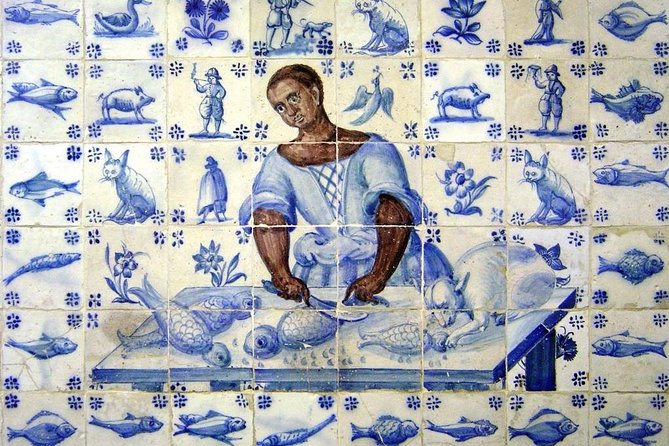
Rui’s use of visual material is valuable here. A photograph or historical document can help you follow a complicated explanation while standing in a district that otherwise invites you to focus only on tilework and views.
The pace includes pauses, and the route is described as moderate rather than punishing. Still, you need a reasonable level of fitness. Lisbon is hilly in many areas, and you should wear comfortable shoes even if this particular route does not involve constant steep climbs.
Campo das Cebolas and the question of public memory
At Campo das Cebolas, the group stops at the future location of a monument to the victims of the slave trade. The stop lasts around 10 minutes.
The importance here is less about a finished attraction and more about what the planned monument represents. Lisbon has long celebrated maritime expansion, yet public recognition of the people harmed by that expansion has been slower and more contested.
This gives you a chance to think about how cities choose what to mark. A monument can honor victims, correct an incomplete public story, or prompt arguments about responsibility and memory. The stop also links the history lesson to Lisbon today, rather than leaving the subject safely in the past.
Do not expect a museum visit or an elaborate monument experience at this point. The value comes from the explanation and the setting, not from a large physical exhibit.
More Walking Tours in Lisbon
- Best of Lisbon Small-Group Guided Walking Tour
★ 5.0 · 4,869 reviews - Lisbon: Food and Wine Small Group Walking Tour
★ 4.9 · 4,082 reviews - Best of Lisbon Walking Tour: Rossio, Chiado & Alfama
★ 4.9 · 2,700 reviews - Age of Discoveries Walking Tour in Belém
★ 5.0 · 1,513 reviews
Praça do Comércio and the business of empire
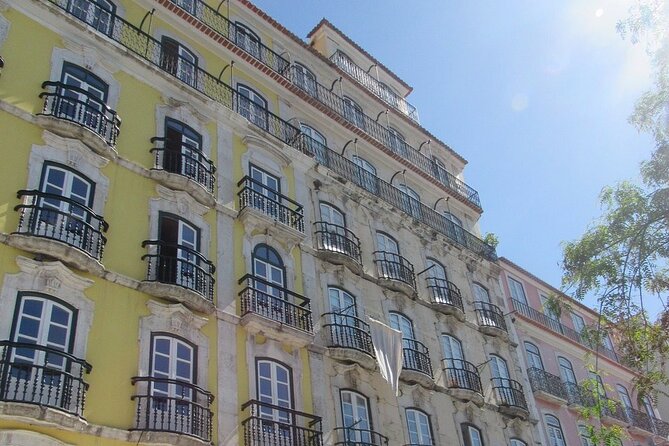
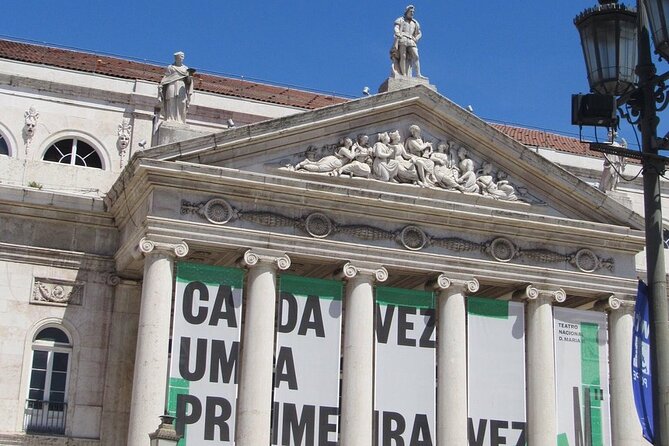
The next major stop is Praça do Comércio, also called Terreiro do Paço. You spend about 15 minutes learning how this grand waterfront square functioned as a commercial center and how slavery fit into colonial trade.
This is where the connection between human suffering and finance becomes especially clear. Enslavement was not only a matter of individual cruelty. It was tied to shipping, colonial production, trade networks, taxation, and the interests of institutions and wealthy families.
The square is one of Lisbon’s most impressive public spaces, so it is easy to admire its architecture and riverfront position while missing the economic forces behind the city’s growth. The tour asks you to hold both views at once: this is a beautiful urban setting, and it was part of a commercial system that treated human beings as property.
For me, this is the kind of stop that makes a walking tour worthwhile. The location already matters to anyone seeing Lisbon for the first time. The added context changes what you notice the next time you pass through.
Baixa, Rossio, and Restauradores: slavery in daily life
The longest section of the route covers Baixa, Rossio, and Restauradores, with about 30 minutes devoted to the daily lives of enslaved captives from Africa and other parts of the world who lived in Lisbon.
This shifts the focus from ships, monarchs, and trade routes to people’s daily existence. You learn about slavery as part of city life, not just as a colonial policy or economic system. That is an important correction to history lessons that focus mainly on laws and cargo figures.
The route through central Lisbon also shows how close the past is to ordinary urban spaces. Streets used today for shopping, eating, and getting between sights once had very different social roles. The tour helps you consider who performed domestic work, manual labor, and other tasks, and how race and legal status shaped a person’s options.
Rui’s style, based on the details provided about his tours, involves answering questions directly and using evidence rather than making the topic theatrical. That matters here. A subject this serious does not need dramatic performance. It needs clear language, careful distinctions, and time for questions.
This section is likely to be especially useful if you have already taken a standard Lisbon city tour. You will recognize some of the central locations, but you will understand them differently.
Igreja de São Domingos and religious institutions
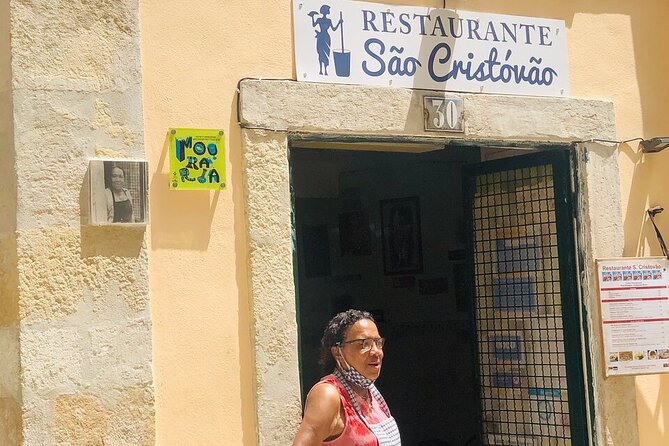
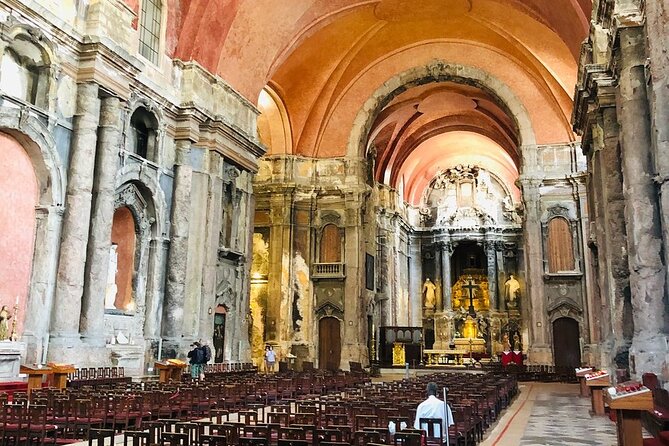
At Igreja de São Domingos, the tour spends around 10 minutes discussing how enslaved captives interacted with Lisbon’s religious organizations.
Religion played a major role in the lives of people living under slavery, but the relationship was not simple. Religious institutions could offer community, ritual, and a place for social contact, while religious ideas and organizations could also be used to defend or organize systems of enslavement.
The stop gives the wider story a human and moral dimension. It asks you to consider how people maintained identity, belief, and relationships under coercive conditions. It also examines how institutions responded to slavery, rather than treating religion as separate from economics and law.
The church itself provides a strong setting for this discussion, but remember that this is an outdoor historical walk. The supplied details do not indicate a dedicated interior visit or a separate admission ticket, so you should think of the church as a place for interpretation rather than a standard church tour.
Largo do Carmo and the end of Portugal’s empire
The final stop is Largo do Carmo, where the tour ends after about 15 minutes. This location is associated with the coup and revolution of April 25, 1974, commonly called the Carnation Revolution.
The connection to the slave trade may not be obvious at first, but it is essential. The revolution helped bring down Portugal’s authoritarian regime and led to the rapid end of the country’s colonial empire during the mid-1970s. The route therefore connects earlier systems of enslavement with the political changes that finally dismantled Portuguese colonial rule.
This ending keeps the tour from becoming a lesson only about the distant past. It shows that colonial power had a long afterlife, and that Portugal’s relationship with Africa continued to shape politics, identity, and public memory.
Largo do Carmo is also a practical endpoint. From here, you can continue exploring central Lisbon, find a meal, or make your way to another sight. Rui has also provided restaurant recommendations to some groups, which can be a useful bonus at the end of a long, serious walk.
What makes the small group valuable
The maximum group size is eight people. That is a major advantage for this subject.
A small group makes it easier to ask about sensitive issues without trying to speak over a crowd. It also lets the guide adjust his explanation when people need more context. Several parts of the tour cover complex links between medieval institutions, European trade, Africa, Brazil, the Americas, colonialism, and modern Portugal. You get more from that material when the guide can pause and clarify.
The group size also matters at street corners and busy squares. You are less likely to be pushed to the back or lose sight of the guide while looking at a document or image.
The tradeoff is that small tours can fill quickly. The experience is booked well ahead of time on average, about 36 days in advance. If your Lisbon dates are fixed, booking early makes sense.
Price, duration, and physical effort
At $39.78 per person, this is not the cheapest way to spend three hours in Lisbon, but the value is strong if you want focused historical interpretation. You are paying for a professional guide, a carefully planned route, visual material, and access to a subject that is rarely handled in ordinary sightseeing tours.
The tour does not include food, drinks, hotel pickup, or hotel drop-off. That keeps the price fairly clear, but you need to arrange your own way to Largo do Chafariz de Dentro and from Largo do Carmo.
The route lasts about three hours and requires moderate physical fitness. It is not suitable for people with walking difficulties. Comfortable shoes are essential, and you should be prepared to remain outdoors for much of the experience.
The route is near public transportation, which helps with the start and finish. Service animals are allowed. Confirmation is received when you book, and free cancellation is available up to 24 hours before the start time. Changes or cancellations made inside that window are not accepted for a refund.
Who will get the most from this walk
I would choose this tour if you want a more honest account of Portugal’s past than the usual explorer-and-palace story provides. It suits history fans, students, educators, and anyone interested in the links between Africa, Portugal, Brazil, and the wider Atlantic world.
It is also a strong choice for Black visitors who want slavery acknowledged as part of Lisbon’s own history rather than treated only as an American subject. The tour’s direct treatment of the past can be meaningful, though the material may also be emotionally heavy.
Families with older children and teenagers may find the format effective. One particularly useful feature is the combination of real places, images, and open questions. Younger children may find the subject and three-hour walking time difficult.
You should skip it if you want a light introduction to Lisbon, a food-focused outing, or a tour centered mainly on architecture. This is not a cheerful sightseeing loop with a few historical facts added. It asks you to pay attention and think.
Should you book it?
Book this tour if you want to understand how slavery shaped Lisbon’s economy, institutions, neighborhoods, and modern political story. Rui Fernandes brings strong preparation, clear explanations, and a willingness to tackle questions without hiding behind a polished version of the past.
I especially recommend it after, or instead of, a conventional Age of Discovery tour. You will still see Alfama, Praça do Comércio, Baixa, Rossio, Restauradores, São Domingos, and Largo do Carmo, but you will read those places through a wider human story.
Bring comfortable shoes, allow three hours, and come ready for serious discussion. If that sounds like the kind of learning you want from Lisbon, the $39.78 price is fair for a small-group experience with this much focus.
FAQ
Where does the tour begin?
The tour begins at Largo do Chafariz de Dentro 30, 1100-605 Lisboa, Portugal.
Where does the tour end?
It ends at Largo do Carmo, 1200-092 Lisboa, Portugal.
How long does the walking tour last?
The tour lasts approximately three hours.
What language is the tour offered in?
The tour is offered in English.
How many people can join the tour?
The group has a maximum of eight travelers.
What is included in the price?
The price includes local taxes and a professional guide.
Are food and drinks included?
No. Food and drinks are not included.
Does the tour include hotel pickup or drop-off?
No. Hotel pickup and drop-off are not included.
Is the tour suitable for people with walking difficulties?
No. It is not recommended for people with walking difficulties, and participants should have a moderate level of physical fitness.
Can I cancel for a full refund?
Yes. You can cancel at least 24 hours before the experience start time for a full refund. Changes or cancellations made less than 24 hours before the start time are not accepted for a refund.
More Historic Sites in Lisbon
- Explore Lisbon by Tuk Tuk: History and Viewpoints
★ 5.0 · 840 reviews - Lisbon: Daytime or Sunset Boat Cruise with History and Wine
★ 4.9 · 819 reviews - Private Tuk Tuk Tour Through Lisbon’s Historical Streets
★ 5.0 · 734 reviews - Lisbon Sunset Sailing with Portuguese Wine and History
★ 5.0 · 668 reviews
New around Lisbon
- Arrábida, Setúbal, Sesimbra, Olive with wine tasting★ 5.0 · 75 reviews
- Lisbon: Sunset Sailing Boat Cruise with Wine★ 5.0 · 75 reviews
- Lisbon Half Day Private Tour★ 5.0 · 75 reviews
- Private Half Day Tour to Fatima from Lisbon★ 5.0 · 75 reviews
- Fátima, Nazaré and Óbidos Private Tour from Lisbon★ 5.0 · 76 reviews
- Central Lisbon 3-Hour Guided E-Bike Tour★ 4.8 · 76 reviews
- Lisbon Historic City Tour by Tuk-Tuk★ 5.0 · 76 reviews
- Sintra World Heritage and Cascais Village Private Deluxe Tour★ 5.0 · 76 reviews
Historical Tours, compared.
Historical Sites, Wine Experience, Lunch & Cruise
Read our review →
Live Fado Show with Port Wine in Historic Center
Read our review →

Browse the lists this tour appears in