Reviewed · LISBON TOURS
Lisbon’s Post-Colonial Feast
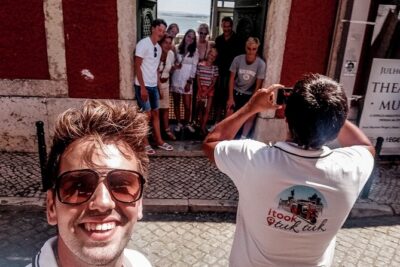
Lisbon’s Post-Colonial Feast treats food as a record of power, migration, and cultural exchange. Over about five hours, you walk through central Lisbon with a guide, stopping for chocolate, chorizo stew, and dishes connected to former Portuguese territories. The history is not brushed aside: slavery, repression, and exploitation are part of the conversation.
I like the small maximum of seven, which gives you a real chance to ask questions and talk with the guide. I also like the mix of food and streets. You are not sitting in one restaurant for an afternoon. You move through Paço da Rainha, Campo dos Mártires da Pátria, Avenida da Fonte Luminosa, Jardim do Torel, and Largo de São Domingos, with each stop adding another piece to the story.
The main drawback is that this is not a standard Lisbon food crawl built around cod, custard tarts, and wine. The focus is Portugal’s connections with Brazil, Goa, Angola, and other former colonies, and one Angolan restaurant recently closed unexpectedly. The route also includes serious material, so book it for cultural insight as much as for lunch.
Key points to know before booking
- Five hours of walking and tasting: Plan for a half-day rather than a quick snack stop.
- A maximum of seven people: The small group suits anyone who prefers conversation over a large tour crowd.
- Food from Portugal’s post-colonial connections: Expect chocolate, chorizo stew, Brazilian and Goan influences, and other regional specialties.
- A difficult historical subject: The guide discusses slavery, repression, exploitation, and the effects of colonization on food and communities.
- Five Lisbon locations: The route includes Paço da Rainha, Campo dos Mártires da Pátria, Avenida da Fonte Luminosa, Jardim do Torel, and Largo de São Domingos.
- A $150 price tag: The value depends on how much you want the historical context and small-group format, not just the food.
Why this Lisbon food tour takes a different route
Many food walks in Lisbon stay close to familiar Portuguese favorites. This one asks a more interesting question: how did Portugal’s long contact with Africa, Asia, and South America shape what people eat in Lisbon today?
That question gives the tour its purpose. You taste food, but the guide also explains the conditions behind those culinary links. The story includes colonial control, forced movement, exploitation, and the ways communities carried ingredients and cooking traditions across borders.
That makes the experience useful for two kinds of visitors. If you care about food, you get a wider view of Portuguese cuisine than a checklist of local specialties. If you care about history, the tastings give the subject a daily, human scale.
The tone may not suit anyone looking only for a light, cheerful afternoon. The subject is serious. Yet that seriousness is part of the value. Food can make difficult history easier to discuss without making it less important.
A few other Lisbon half-days worth a look
- Lisbon City Center Tour – The Unmissable Lisbon
★ 5.0 · 22,234 reviews - Lisbon: Sintra, Pena, Regaleira, Cabo da Roca & Cascais
★ 4.7 · 19,656 reviews - Lisbon: Jerónimos Monastery Entrance Ticket
★ 4.1 · 14,164 reviews
Starting at Praça do Chile at 11 a.m.
The meeting point is Praça do Chile 2, with the walk beginning at 11 a.m. The tour ends back at the same meeting point, which makes the day easier to plan than a route that leaves you across town.
The starting point is near public transportation, another practical advantage. You do not need to build a complicated transfer into your morning. Still, allow enough time to arrive early, since the supplied details do not include a late-arrival policy.
The walk is offered in English. With only seven places available, the guide can usually keep the group together in a way that feels more like a guided conversation than a procession.
You should expect movement between stops, outdoor sightseeing, and food breaks. The itinerary lists four 45-minute stops followed by a one-hour visit at Largo de São Domingos, while the full experience takes about five hours. That extra time likely covers walking and tasting, so do not schedule a tight afternoon appointment immediately afterward.
Paço da Rainha: beginning with Lisbon’s setting
The first stop is Paço da Rainha, where you begin taking in Lisbon’s streets and sights on the way to a less obvious food discovery. The stop lasts about 45 minutes and has no separate admission charge.
This opening section matters because it gives the tour a sense of place before the food takes over. You are not simply handed a dish and told where it came from. The guide starts connecting the city around you with the people and traditions that have shaped it.
The wording of the itinerary leaves the exact tasting here unspecified. That is worth keeping in mind if you want a precise menu in advance. You should expect the food to be revealed as part of the walk rather than presented as a fixed restaurant course list.
Campo dos Mártires da Pátria and the city’s difficult past
The second stop, Campo dos Mártires da Pátria, lasts another 45 minutes. Here the emphasis turns toward Lisbon’s history and culture.
This is likely one of the more serious parts of the walk. The wider theme includes Portugal’s role in slavery, repression, and exploitation, and this stop helps place those subjects in the city itself rather than treating them as distant events.
I appreciate that approach because colonial history can become too abstract when it is reduced to dates and names. A city square, street, or neighborhood gives the discussion a physical setting. You can listen, look around, and consider how the past sits beside ordinary modern life.
Do not expect a polished heritage tour that avoids uncomfortable details. The experience is designed to connect food traditions with the systems that moved people, products, and power. That may be challenging, but it should also give your meal more meaning.
Same coastline, a completely different day out:
- Lisbon: History, Stories and Lifestyle Walking Tour
★ 4.8 · 10,902 reviews - Lisbon: Sunset Boat Party Cruise with DJ and Open Bar
★ 4.5 · 10,378 reviews - Lisbon: Pena Palace, Sintra, Cabo da Roca, & Cascais Daytrip
★ 4.7 · 9,981 reviews - Lisbon: Oceanário de Lisboa Entrance Ticket
★ 4.6 · 9,943 reviews
Avenida da Fonte Luminosa and the main theme
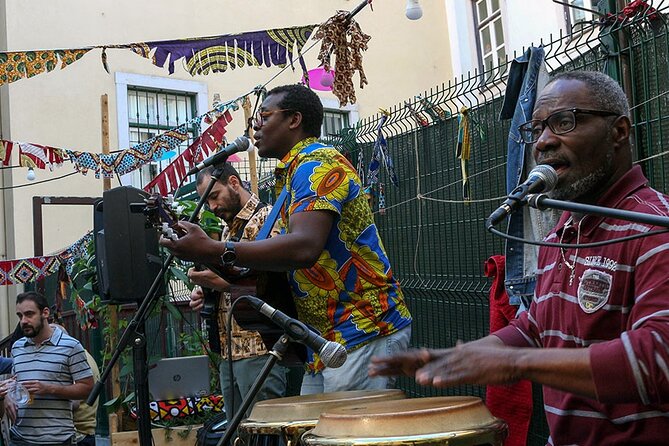
At Avenida da Fonte Luminosa, the guide continues the day’s central discussion while you take in the surroundings. The stop is planned for about 45 minutes and does not require an admission ticket.
This is where the tour’s subject should become clearer as a whole. Portuguese cuisine is not a sealed tradition. It has been shaped by contact with other places, and those contacts did not all happen on equal terms.
The guide’s job here is to show both sides of that exchange. Recipes and ingredients crossed borders, but so did unequal power, forced labor, and political control. The tour does not treat cultural influence as a simple, cheerful blend. That distinction is important, especially if you want a more honest account of how cuisines change.
The food also gives you something concrete to remember. One of the strongest features of this experience is that you do not just hear about Brazilian or Goan influence. You may taste examples of those traditions and consider how they became part of Lisbon’s food scene.
Jardim do Torel: a scenic pause with another bite
The fourth stop is Jardim do Torel, scheduled for about 45 minutes. The garden provides a change of pace from the city streets, and the tour uses the setting to introduce the next bite.
The exact item is not specified, so you should not book this expecting a particular dish at this particular location. What you can expect is another food stop tied to the tour’s wider theme, with the guide explaining why it belongs in the story.
This is also a useful point to judge your appetite. The experience includes a wealth of regional delicacies, and the food continues into the final stop. If you tend to fill up quickly, pace yourself rather than treating the first taste as the main event.
A garden stop can also break up the rhythm of a food walk. Five hours is a long time to spend moving from one indoor venue to another. A place such as Jardim do Torel lets you pause, listen, and take in Lisbon between tastings.
Largo de São Domingos and the biggest food stop
The final stop, Largo de São Domingos, lasts about one hour. The square is where you find more specialties and likely spend the most concentrated time eating and discussing the food.
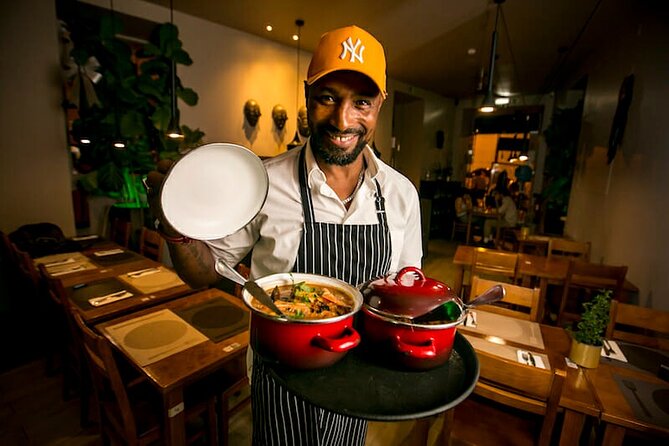
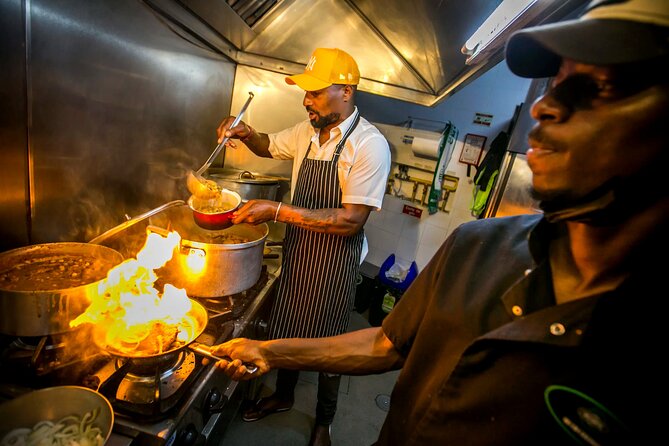
The menu described for the experience includes chocolate, chorizo stew, and a range of regional dishes. Brazilian and Goan food are part of the tour’s focus, and the wider story includes influences from former Portuguese colonies. An Angolan restaurant connected with the route had closed unexpectedly, so the precise tasting lineup can change.
That change is not necessarily a flaw, but it means you should think of the tour as a food and history experience rather than a guaranteed list of restaurants. The group described by the supplied feedback was disappointed to miss the Angolan stop, yet still had more than enough food. That is a useful warning for anyone with a small appetite.
The square also adds a social finish. In a group of up to seven, you have time to compare impressions and ask about dishes that may be unfamiliar. The guide can explain not only what you are eating, but also how those food traditions relate to Lisbon today.
What the guide adds to the food
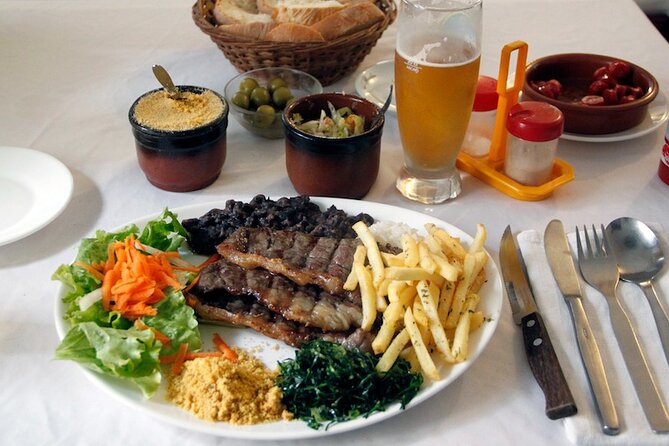
A guide is especially important on this tour because the dishes need context. Without explanation, Brazilian, Goan, or African influences could seem like random additions to a Portuguese menu. The guide links them to migration, colonial history, and the movement of communities.
Celia, one guide named in the supplied feedback, was described as warm and well informed. If she leads your walk, expect a personal, engaged style. Guides can change, so you should not book on the assumption that Celia will be present, but her role shows what makes the experience work: the food needs a clear human story.
The small format helps here. With seven people or fewer, you can ask why a dish appears in Lisbon, how a community has influenced local food, or what Portugal’s former colonies contributed to the country’s kitchens. In a group of 20 or 30, those questions are harder to fit in.
The tour also suits mixed-interest groups. A person who cares about food can enjoy the tasting, while someone more interested in politics or social history has plenty to think about. That makes it a good option for friends or families who do not all want the same kind of sightseeing.
How good is the $150 value?
At $150 per person, this is not a cheap way to grab lunch. You are paying for about five hours, a guide, several tastings, a small group, and a carefully chosen subject. The price makes the most sense if you value the explanation and the access to less familiar food traditions.
If you compare it only with the cost of buying a stew, chocolate, or a snack on your own, it will seem expensive. But reproducing the route, finding appropriate places, and understanding the historical links would take time and research. The guide turns separate dishes into one connected experience.
The maximum of seven is a real part of the value. You are not paying for a large bus tour or a standard scripted walk. You are paying for a more personal format, though the quality still depends on the guide and the exact food arrangements on the day.
I would choose this early in a Lisbon visit if food is a major reason for your trip. It can shape what you order later and point you toward cuisines you might otherwise overlook. The experience is booked an average of 55 days ahead, so it is sensible to reserve early if your dates are fixed.
Who should book Lisbon’s Post-Colonial Feast?
I would recommend it to you if you want:
- Food linked to history rather than isolated tastings
- Brazilian, Goan, Angolan, and other post-colonial influences
- A small group where questions are welcome
- A serious discussion of Portugal’s colonial past
- A five-hour experience with walking, sightseeing, and multiple food stops
I would think twice if you want only classic Portuguese dishes, a short tasting session, or a relaxed meal with no difficult subject matter. The route is also not ideal for anyone who dislikes uncertainty in the menu, since one restaurant has already closed and the exact substitutions are not stated.
Most people can participate, and the route is near public transportation. Since the experience requires good weather, keep your schedule flexible. Free cancellation is available up to 24 hours before the start time, but changes or cancellations inside that window are not refunded.
Should you book it?
Book Lisbon’s Post-Colonial Feast if you want to understand how Lisbon’s food reflects Portugal’s connections with the wider world. The strongest reasons are the small group, the serious historical framing, and the chance to taste Brazilian and Goan influences alongside Portuguese specialties.
Skip it if you want a predictable menu of familiar Lisbon classics. For the right person, $150 buys more than food. It buys a guided way to see the city’s past in the dishes people eat today, with enough time to ask questions and make the subject personal.
FAQ
How long does Lisbon’s Post-Colonial Feast last?
The experience lasts approximately five hours.
What time does the tour begin?
The tour begins at 11 a.m.
Where does the tour start?
It starts at Praça do Chile 2, 1170 Lisboa, Portugal.
Where does the tour end?
The activity ends back at the meeting point.
What language is the tour offered in?
The tour is offered in English.
How many people can join the tour?
The group has a maximum of seven participants.
What food can I expect to taste?
The experience includes chocolate, chorizo stew, and a selection of regional delicacies. Brazilian and Goan influences are part of the food focus. The exact selection can change, and an Angolan restaurant on the route had recently closed.
Can I cancel for a full refund?
Yes. You can cancel at least 24 hours before the experience start time for a full refund. Cancellations or changes made less than 24 hours before the start time are not refunded or accepted.
What happens if bad weather cancels the tour?
If poor weather causes cancellation, you will be offered another date or a full refund. If the minimum number of participants is not reached, you will be offered another date or experience, or a full refund.
New around Lisbon
- Arrábida, Setúbal, Sesimbra, Olive with wine tasting★ 5.0 · 75 reviews
- Lisbon: Sunset Sailing Boat Cruise with Wine★ 5.0 · 75 reviews
- Lisbon Half Day Private Tour★ 5.0 · 75 reviews
- Private Half Day Tour to Fatima from Lisbon★ 5.0 · 75 reviews
- Fátima, Nazaré and Óbidos Private Tour from Lisbon★ 5.0 · 76 reviews
- Central Lisbon 3-Hour Guided E-Bike Tour★ 4.8 · 76 reviews
- Lisbon Historic City Tour by Tuk-Tuk★ 5.0 · 76 reviews
- Sintra World Heritage and Cascais Village Private Deluxe Tour★ 5.0 · 76 reviews
Lisbon Tours, compared.
Lisbon City Center Tour – The Unmissable Lisbon
Read our review →
Sintra, Pena, Regaleira, Cabo da Roca & Cascais
Read our review →

Sunset Boat Party Cruise with DJ and Open Bar
Read our review →
Pena Palace, Sintra, Cabo da Roca, & Cascais Daytrip
Read our review →