
Reviewed · WALKING TOURS
Lisbon Downtown & Alfama with a guide Walking tour
Lisbon’s story is written into its hills, tiled walls, Moorish lanes, earthquake-planned streets, and tiny squares. This walk links those pieces in one useful route, beginning in grand Baixa and finishing among the steep, crooked lanes of Alfama.
I like the low price, which makes a guided introduction almost a no-brainer, and I like the route’s mix of major sights and everyday corners, including the canned-fish shop and the old market area. The catch is that the description calls this a full-day tour in places, while the stated duration is about two hours. You should plan for a focused walking tour, not a full Lisbon day.
The strongest guide praise goes to Bruno, Marina, Miguel, Ines, and Daniel, all noted for clear explanations, friendly manner, and flexibility with walking speed or questions. Still, the exact guide is not guaranteed, and one account describes a different vehicle-based day tour, so check the details before you set out.
Key points to know before walking
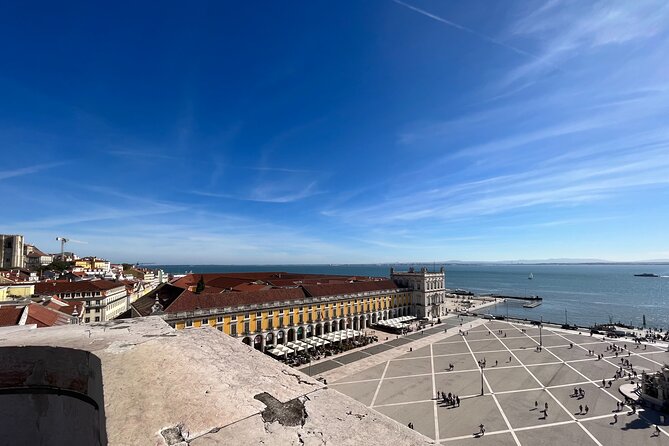
- Praça do Comércio opens the story: Learn how Lisbon’s waterfront palace square changed after the 1755 earthquake.
- Alfama is the heart of the route: Expect medieval lanes, steep walking, old walls, churches, and fine city views.
- The tour ends at Rossio: The start is near Rua dos Douradores, while the finish puts you in a useful central location.
- Groups can reach 20 people: That is small enough for a personal guide, but not necessarily an intimate private walk.
- Several famous sights are exterior stops: The itinerary names the Fado Museum, National Pantheon, cathedral, and churches, but admission is not included.
- Bring proper shoes and water: Lisbon’s paving, hills, and uneven lanes make footwear more important than the bargain price suggests.
Starting in Baixa, Lisbon’s earthquake-rebuilt center
Meet at Rua dos Douradores at either 9:45 a.m. or 1:45 p.m. The street sits in Baixa, the central district rebuilt after the great earthquake of 1755. This is a good starting point because the city’s layout changes dramatically as you walk: first orderly and broad, then old, narrow, and irregular.
The route heads toward Praça do Comércio, Lisbon’s huge waterfront square. In earlier centuries, this was Terreiro do Paço, the palace yard beside the Tagus. The royal Paço da Ribeira once occupied the site, but the earthquake destroyed it along with much of central Lisbon.
The square you see today belongs to the rebuilding ordered by the Marquis of Pombal. Its broad arcades, pale facades, and open space were part of a new plan for Baixa. I find this stop useful because it gives you a clear before-and-after picture of Lisbon. The medieval city was not simply repaired. Large parts of it were redesigned with straighter streets and more controlled construction.
You can look south toward the Tagus and north through the streets of Baixa. The scale is impressive, but do not expect a long interior visit here. Admission is free, and the value comes from the guide’s explanation of how power, trade, disaster, and urban planning shaped the square.
More Walking Tours in Lisbon
- Lisbon: History, Stories and Lifestyle Walking Tour
★ 4.8 · 10,902 reviews - Best of Lisbon Small-Group Guided Walking Tour
★ 5.0 · 4,869 reviews - Lisbon: Food and Wine Small Group Walking Tour
★ 4.9 · 4,082 reviews
Beneath the Augusta Street Arch
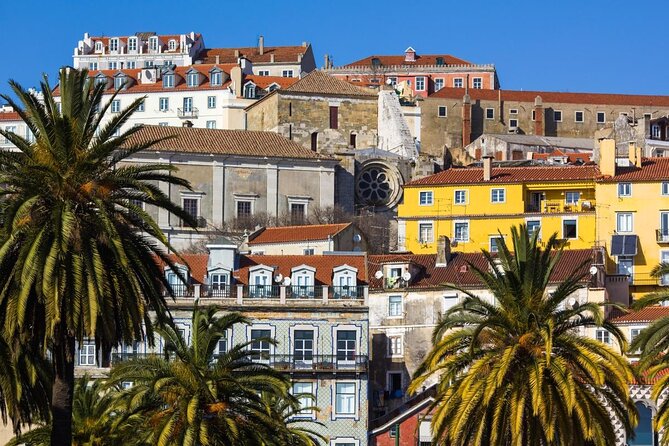
From Praça do Comércio, you pass under or near the Augusta Street Arch, one of Lisbon’s most recognizable gateways. Its statues and symbols celebrate Portuguese figures and episodes from the country’s past.
The arch is sometimes interpreted as a grand entrance with biblical associations, including links to the idea of Solomon’s Temple. Your guide can help separate poetic symbolism from documented history. That is one reason a walk like this works better than simply taking photographs. A monument that first looks decorative becomes a compact lesson in national identity.
The arch also frames Rua Augusta, one of Baixa’s main pedestrian streets. From here, you get a feel for the Pombaline grid before the route turns toward older districts. Pay attention to the contrast: Baixa feels planned and open, while Alfama feels shaped by centuries of gradual change.
The walking pace matters. Guides praised in the feedback, including Bruno and Marina, were noted for adding small explanations rather than rushing from one landmark to the next. You should still expect stops to be brief. In two hours, the route covers a lot of ground.
Casa dos Bicos and the Fado Museum
One stop is a striking 16th-century building originally completed in 1521. Its pointed, diamond-shaped stone facade makes it easy to recognize. Today it houses the José Saramago Foundation, devoted to Portugal’s only Nobel Prize-winning author.
This is a worthwhile pause for architecture lovers, though the tour does not list entry to the foundation. The building’s appearance reflects Lisbon’s links with Renaissance design and maritime-era wealth. It also reminds you that the city’s cultural story is not limited to castles and churches.
The route also includes the Fado Museum, which preserves the history and influence of fado, Portugal’s guitar-led urban music. Fado is tied closely to Lisbon, especially to older working neighborhoods such as Alfama and Mouraria. The museum is therefore more than a general music stop. It gives context to the sound you may hear later in restaurants and evening performances.
The supplied details do not promise an interior museum visit or a fado performance. Treat it as a landmark and cultural reference unless your guide confirms otherwise. One guide, Marina, was praised for playing fado from her phone during the walk. That kind of small touch can make the subject easier to understand, but it depends on the guide and should not be treated as a guaranteed feature.
Entering Alfama through lanes that survived 1755
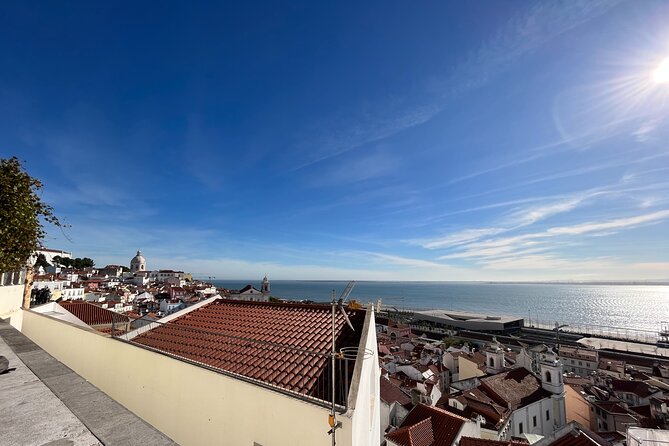
Alfama is the main event. Built on dense bedrock, much of the district survived the 1755 earthquake that devastated Baixa and other parts of Lisbon. Its narrow lanes, stairways, old homes, and irregular turns offer a sharp contrast to the planned streets below.
You will not cover every corner in twenty minutes, despite the short timing attached to this stop. The route is best understood as a brief guided introduction to the district, with a few carefully chosen landmarks and viewpoints. If Alfama interests you, return later and wander at your own pace.
This is also the point where the physical demands become clear. Lisbon is hilly, and the pavement can be uneven. Wear tennis shoes or another comfortable pair with good grip. Bring water, sunscreen in summer, and a jacket in winter. A moderate level of fitness is expected, and a considerable amount of walking is involved.
The guide’s pace can make a real difference. Marina was specifically praised for slowing down for a less speedy participant. That suggests the small-group format can help, but the group may still include people moving at different speeds. Ask early if you need a slower pace or a short pause.
More walking tours around Lisbon:
- Best of Lisbon Walking Tour: Rossio, Chiado & Alfama
★ 4.9 · 2,700 reviews - Age of Discoveries Walking Tour in Belém
★ 5.0 · 1,513 reviews - Sintra & Cascais Day Tour with Pena Palace Entry and Gardens Walk
★ 5.0 · 962 reviews - Lisbon Roots – Small group Food & Culture Walking Tour w/tastings
★ 5.0 · 910 reviews
The National Pantheon and Feira da Ladra

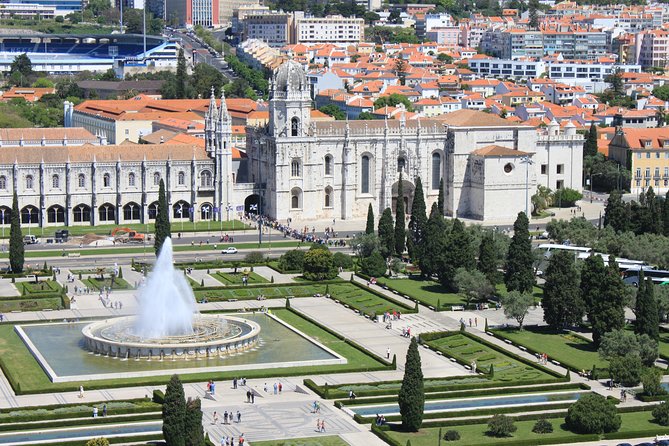
The National Pantheon is set among Alfama’s old lanes. The building took more than 280 years to complete and now serves as the resting place of important Portuguese figures. Its long construction period helps explain why Lisbon’s churches and monuments often combine several styles rather than presenting one neat architectural period.
Again, the listed experience does not include admission. You may see the exterior and hear the story, then return independently if you want more time inside. That is a common pattern on a short city walk: the guide gives you the setting and the reason to care, while you decide which sites deserve a separate ticket.
Nearby, Feira da Ladra takes place on Tuesdays and Saturdays around Campo de Santa Clara. This traditional flea market is aimed at both locals and tourists, with the usual mix of old household goods, curiosities, and secondhand finds. The market is not a daily stop, so the atmosphere depends strongly on your tour day.
If you visit on another day, you still see the area, but not the full market scene. If your schedule allows, the Tuesday or Saturday departure may give this portion extra interest. Do not expect a dedicated shopping session. The tour continues on foot, and the market can be crowded when operating.
Moorish walls, viewpoints, and Lisbon’s steep reward
Several stops focus on views. One viewpoint uses an old gate in the Cerca Moura, the former Moorish city wall. From there, you can look across important Lisbon landmarks along the route between São Jorge Castle and the cathedral.
Another viewpoint includes a church first built by the Knights of Malta in the 12th century. The precise angle of the view matters less than the pattern you begin to see: red roofs, the Tagus, church domes, and the city rising and falling around you.
Lisbon rewards effort with outlooks, but the route’s hills are not a minor detail. Some city walks sell the view and underplay the climb. Here, you should assume stairs, slopes, and pauses. The walk may be manageable for anyone with moderate fitness, but it is not a flat stroll through a museum district.
The viewpoints also give you a chance to orient yourself. From above, Baixa’s straight streets make sense, as do the riverfront and the higher castle area. I like this part because it turns Lisbon from a collection of pretty streets into a city with a readable shape.
Lisbon Cathedral and Saint Anthony
The cathedral, commonly known as Sé, was commissioned by King Afonso I in 1150 on the site of a mosque from the period of Moorish rule. It is the city’s most important Catholic building and has been changed many times after collapses, repairs, and renovations.
That history explains its mixed appearance. You are not looking at one perfectly preserved style, but at a building shaped by different periods and repeated rebuilding. The cathedral is a strong exterior stop because it connects the city’s Roman Catholic identity with its Islamic past and medieval foundations.
The route then reaches the church built over the reported birthplace of Saint Anthony of Lisbon. Saint Anthony is associated with marriage and newlyweds. A local tradition says that single women may toss a coin toward his statue in hope of marrying within a year.
This is a light, human moment after the larger political and religious stories. It also shows how Lisbon’s history survives through customs, not only dates and monuments. You can enjoy the tradition without treating it as a promise.
Smaller squares, old gates, and everyday Lisbon
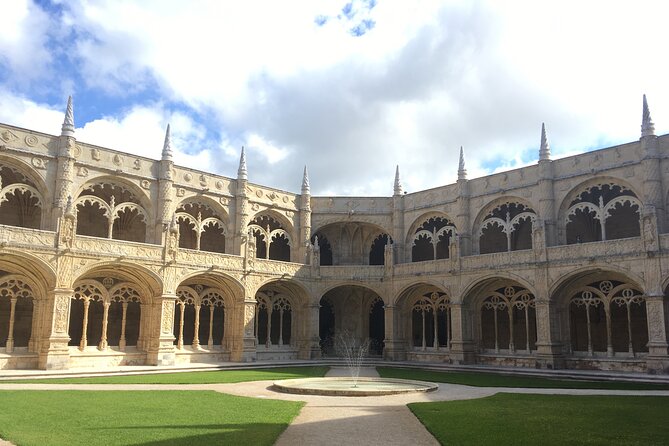
The walk includes a small plaza within about 500 meters of São Jorge Castle. The castle itself is not listed as an included entry, so do not book this tour expecting a castle visit. The point is to move through the historic setting and understand how the upper districts connect.
Another stop is known as the Door of the Sea. It was once one of the main entrances into fortified Lisbon from the beach and harbor. This detail helps explain why the city’s old defenses faced not only inland threats but also the working waterfront below.
The route finishes with a family-owned grocery shop specializing in canned fish. It is a modest stop, but it gives the walk a useful everyday note. Lisbon is not only palaces, viewpoints, and churches. Canned fish remains part of the city’s food culture and makes a practical souvenir, though personal purchases are not included.
From there, the walk ends at Rossio Square. This is convenient for continuing your afternoon, with central Lisbon around you and public transportation nearby. It is also a good place to stop for lunch or a drink after the hills of Alfama.
What the $3 price really gives you
At $3, this is unusually inexpensive for a guided city walk. The professional guide, Portuguese-law insurance, multilingual audio commentary, and five self-guided walks in the Vox City app add useful value. The app can help you keep exploring after the guide leaves, provided you have a compatible mobile device and data or downloaded content.
The phone itself is not included. Food, drinks, tips, personal spending, hotel pickup, and hotel drop-off are also excluded. Those omissions are normal for a walking tour, but the low price should not lead you to expect entrance tickets or refreshments.
The group limit is 20 people. That is more manageable than a large coach group, and guides such as Bruno and Ines were praised for clear explanations and a friendly approach. It is not a private tour, though, and a group of 20 can be harder to keep together on narrow Alfama streets.
The language options are English, Spanish, and Portuguese all year. Audio commentary is also available in French, Italian, Spanish, Chinese, German, and English through the app. Confirm the language arrangement when booking if live guiding in a language other than English, Spanish, or Portuguese matters to you.
Who should book this Lisbon walk?
I would choose this tour for a first visit, especially if you want a quick orientation before exploring alone. It gives you the basic city structure, explains why Baixa looks different from Alfama, and points out places worth revisiting.
It suits people who enjoy history in short portions, photographers seeking viewpoints, and anyone who wants local context without paying for a long private tour. It also works well for budget-minded visitors. At this price, even a short route can pay off if it helps you avoid missing the meaning behind the sights.
I would think twice if you want interior visits, long time at each monument, a food tour, or a full-day outing. Some feedback attached to the experience describes vans, Belem, custard tarts, lunch, and other day-long stops. Those details do not match the stated two-hour walking format, so confirm exactly what you have booked rather than assuming those extras are included.
The tour runs in light rain and is canceled only when official warnings or alerts require it. Contact the company at least 24 hours before departure to check that it will run, especially in uncertain weather. Free cancellation is available up to 24 hours before the start time; within 24 hours, there is no refund.
Should you book it?
Book this walk if you want an inexpensive, guided introduction to central Lisbon and Alfama, and you are ready for hills. The route offers real historical range, from Moorish walls and medieval churches to earthquake-era city planning, fado, markets, and canned fish.
Skip it if you need a full-day sightseeing program or guaranteed museum and monument entry. For most first-time visitors, I see it as a useful starting point, not a complete Lisbon tour. Schedule it early in your stay, take notes on the places that deserve a second visit, and use the Vox City walks to keep exploring afterward.
FAQ
How long does the walking tour last?
The stated duration is approximately two hours. Although some descriptions use the phrase full-day tour, the provided schedule and walking-tour details point to a roughly two-hour experience.
Where does the tour start and finish?
The meeting point is Rua dos Douradores, 16, in Lisbon. The walk ends at Rossio Square.
What departure times are available?
The listed meeting times are 9:45 a.m. and 1:45 p.m.
Is food or drink included?
No. Food and drinks are not included unless specifically stated, and personal expenses and gratuities are also excluded.
How many people can join the tour?
The maximum group size is 20 people.
What should I bring?
Wear tennis shoes or other suitable footwear and bring water. Sunscreen is recommended in summer, while a jacket is useful in winter. A moderate level of physical fitness is required because considerable walking is involved.
New around Lisbon
- Arrábida, Setúbal, Sesimbra, Olive with wine tasting★ 5.0 · 75 reviews
- Lisbon: Sunset Sailing Boat Cruise with Wine★ 5.0 · 75 reviews
- Lisbon Half Day Private Tour★ 5.0 · 75 reviews
- Private Half Day Tour to Fatima from Lisbon★ 5.0 · 75 reviews
- Fátima, Nazaré and Óbidos Private Tour from Lisbon★ 5.0 · 76 reviews
- Central Lisbon 3-Hour Guided E-Bike Tour★ 4.8 · 76 reviews
- Lisbon Historic City Tour by Tuk-Tuk★ 5.0 · 76 reviews
- Sintra World Heritage and Cascais Village Private Deluxe Tour★ 5.0 · 76 reviews
Walking Tours, compared.


Best of Lisbon Small-Group Guided Walking Tour
Read our review →

Porto Walking Tour, Lello Bookshop, River Cruise and Cable Car
Read our review →
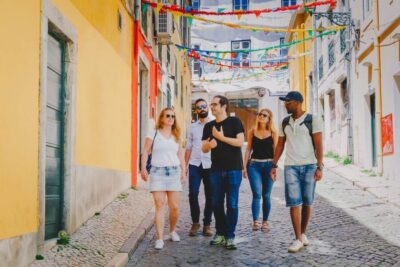
Best of Lisbon Walking Tour: Rossio, Chiado & Alfama
Read our review →
Experience Porto’s Charm: 3-Hour Guided Walking Tour
Read our review →
Enjoy a Guided Levada Walk in the Rabaçal Valley
Read our review →Browse the lists this tour appears in