Reviewed · LISBON TOURS
Lisbon Revelation Tour
Lisbon reveals its story best on foot, and this tour follows a smart route from the grand riverfront square to a hilltop overlook. You’ll trace the city’s rebuilding after the 1755 earthquake, hear how the 1974 revolution unfolded, and finish above the rooftops. I especially like the small maximum group of 16 and the morning timing, which leaves your afternoon open.
The guides, including Philippa, Filipa, Hugo, Alex, Mia, and José, are praised for clear historical storytelling and useful advice for the rest of a Lisbon stay. The main drawback is physical: you cover a lot of ground, with some steps and hills, so good shoes, water, and moderate fitness matter.
Key points at a glance
- A strong first look at central Lisbon: The route connects Praça do Comércio, Rossio, Chiado, Carmo, and São Roque.
- History gives the walk its shape: You learn about the earthquake, royal power, the Age of Discoveries, Baroque art, and the 1974 democratic revolution.
- The final view is a real payoff: São Pedro de Alcântara looks over the Castle Hill and much of downtown Lisbon.
- Good use of a morning: The 10:00 am start and roughly 3 to 4 hour duration leave much of the day free.
- A small-group setting: With no more than 16 people, it should be easier to hear the guide and ask questions.
- A modest food bonus: The included tasting is either a pastel de nata or a small ginjinha experience.
Why this is a useful first walk in Lisbon
This is not a tour built around entering major paid attractions. Instead, it gives you the city’s central framework: where royal power once gathered, where the rebuilt downtown took shape, where Lisbon’s literary and artistic life grew, and how the city rises toward its viewpoints.
I like that the route has a clear historical arc. You begin beside the Tagus at Praça do Comércio, walk through the orderly streets of Baixa, then climb toward Carmo and Chiado before reaching São Roque and São Pedro de Alcântara. The changing streets help explain Lisbon better than a string of unrelated photo stops.
The guide is an art historian, so you can expect more than basic directions and dates. The strongest part of the experience is the way buildings, public squares, churches, and political events are tied together. Guides such as Philippa, Alex, Hugo, Filipa, Mia, and José have been singled out for thoughtful explanations, good pacing, and practical suggestions for later sightseeing.
At $30.25 per person, the value is strongest if you want an orientation walk rather than a series of admissions. The price includes the guide and a pastel de nata or ginjinha, but not entry tickets. Since most stops are public squares and exterior viewpoints, you are paying mainly for the guide’s interpretation, the route, and the time saved planning your own first day.
A few other Lisbon half-days worth a look
- Lisbon City Center Tour – The Unmissable Lisbon
★ 5.0 · 22,234 reviews - Lisbon: Sintra, Pena, Regaleira, Cabo da Roca & Cascais
★ 4.7 · 19,656 reviews - Lisbon: Jerónimos Monastery Entrance Ticket
★ 4.1 · 14,164 reviews
Starting at Praça do Comércio, Lisbon’s royal front door
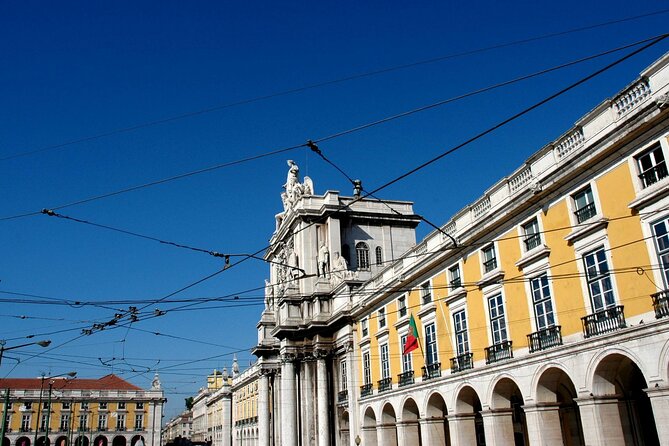
Meet at Cervejaria Antártida Lisboa, at the west side of the former royal palace area on Praça do Comércio. The address is Ala Poente do Palácio Real, Praça do Comércio, R. C 20-23. The tour starts at 10:00 am, so give yourself enough time to reach the square and find the meeting point.
Praça do Comércio is an excellent opening scene. It is broad, formal, and open to the river, with the feel of a capital built to impress. The square was the everlasting center of power, and the guide uses it to explain Lisbon’s royal and civic past.
You spend about 20 minutes here. That is enough to understand the setting without lingering so long that the tour loses momentum. Admission is not included, but the stop itself does not require a paid ticket.
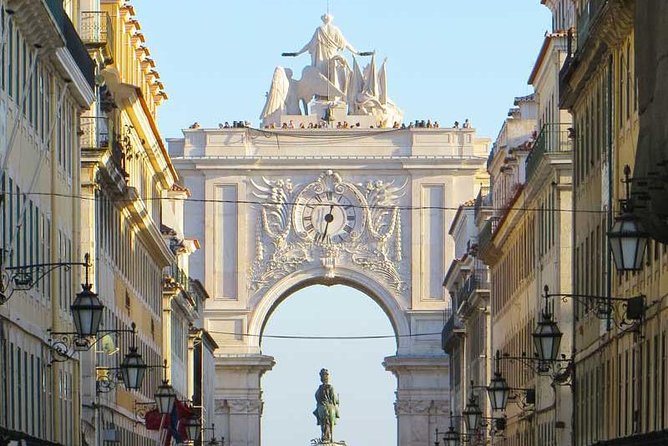
From here, the route turns into Baixa, the downtown district rebuilt after the 1755 earthquake. This gives the tour one of its most useful lessons: Lisbon’s central streets are not simply old streets that survived unchanged. Much of Baixa was planned and reconstructed after disaster, with a more regular layout than the older quarters on the hills.
Baixa, Rossio, and Restauradores after the earthquake
The walk through Baixa, Rossio, and Restauradores takes about 30 minutes. This is where the city begins to feel like a European capital, with grand squares, straight streets, and busy connections between the river and the upper districts.
Praça da Figueira follows as a brief five-minute stop. It is Lisbon’s traditional market square, and the guide places it within the everyday life of the downtown area. Do not expect a long market visit here. The value is in understanding how the square fits into the city’s commercial pattern.
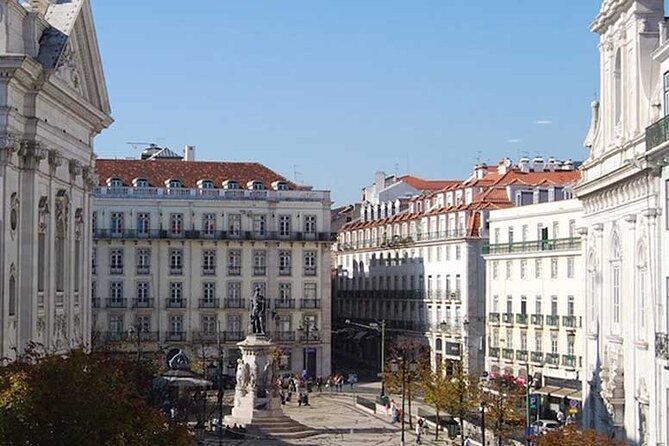
At Praça dos Restauradores, the focus shifts toward national identity and the image of a capital. Then comes Praça Dom Pedro IV, usually called Rossio, the heart of downtown. The name on the itinerary may use the formal title, but your guide will help connect it with the familiar Rossio name.
These stops are close together, which keeps the morning efficient. You are not spending half the tour on transport. The tradeoff is that the pace can feel brisk if you want to study every façade or take many photographs.
Santa Justa and the climb toward Carmo
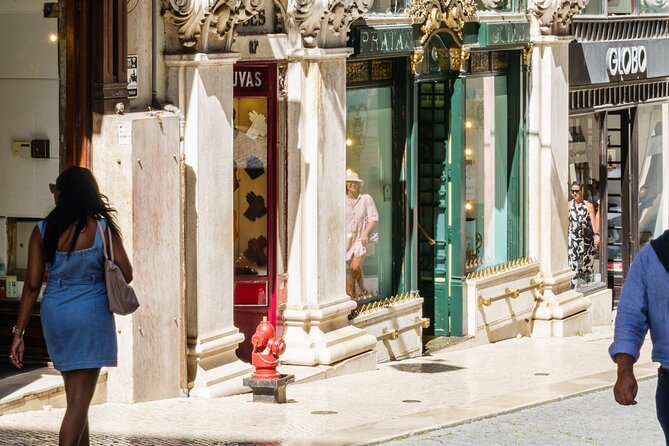
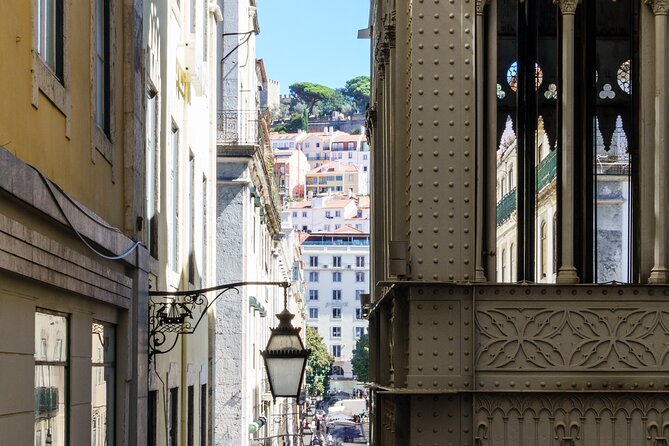
The Elevador de Santa Justa is one of the route’s most recognizable sights. The stop lasts about 10 minutes and focuses on the 360-degree view over downtown. Admission is listed as free for the stop, but the tour does not promise a ride or include a ticket, so treat this as an exterior and viewpoint visit rather than a guaranteed elevator experience.
That distinction matters. If riding the lift is high on your list, you may need to return independently and check the current access arrangements. On this walk, the main purpose is to understand how the elevator links lower Baixa with the higher Carmo area and to look across the downtown district.
Next comes Largo do Carmo, a small square with a large political story. It was the setting for Portugal’s democratic revolution in 1974. This is a good example of the tour’s style: an ordinary-looking urban space becomes much more meaningful once you know what happened there.
The route continues through Chiado and Carmo, where you see the city’s only Gothic monument. The stop is about 10 minutes. The district also introduces a different Lisbon, one associated with writers, cafés, shops, and the city’s bohemian character.
The itinerary includes a tribute to the poet of the Discoveries epic and a stop in the lively bohemian district, though these entries are not given separate numbered stop details. Your guide fills in the connections between the formal downtown, the literary quarter, and Portugal’s seafaring past.
Same coastline, a completely different day out:
- Lisbon: History, Stories and Lifestyle Walking Tour
★ 4.8 · 10,902 reviews - Lisbon: Sunset Boat Party Cruise with DJ and Open Bar
★ 4.5 · 10,378 reviews - Lisbon: Pena Palace, Sintra, Cabo da Roca, & Cascais Daytrip
★ 4.7 · 9,981 reviews - Lisbon: Oceanário de Lisboa Entrance Ticket
★ 4.6 · 9,943 reviews
São Roque, Baroque detail, and a small taste
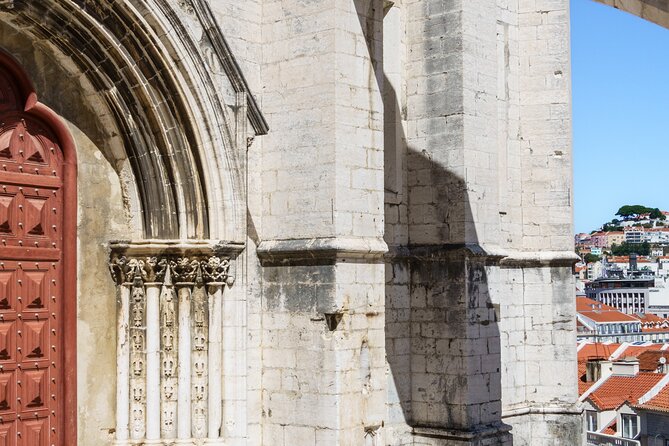
Iglesia de São Roque is the most important church stop on the route. You have about 10 minutes to see its Baroque extravagance. The tour describes the church as a place where art and religious display take center stage, and the art historian guide can help you notice details you could easily miss on your own.
This is one reason the tour works better than a simple orientation stroll. A quick look at a church can be forgettable. A short explanation of its art, setting, and place in Lisbon’s story gives the stop a purpose.
The included food tasting adds a pleasant local touch. You receive either a pastel de nata, the familiar custard tart, or a ginjinha, a cherry liqueur. Because the information does not specify which option each group receives, do not book this expecting both.
The tasting is small, but it fits the morning well. It gives you a first taste of two Lisbon staples without turning the tour into a food tour. If you do not drink alcohol, the pastel de nata option is the obvious choice, though you should clarify the available choice with the provider if that matters to you.
Finishing at São Pedro de Alcântara
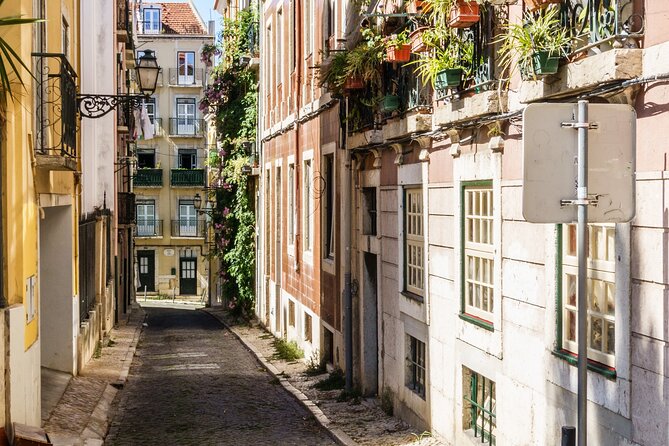
The final stop is Miradouro de São Pedro de Alcântara, reached after the walk through the upper districts. The view looks across toward the Castle Hill and over central Lisbon. It is a fitting finish because you can look back at the area you have just crossed on foot.
Several parts of the route are short, but the final viewpoint gives the morning a clear payoff. You finish with a sense of how Lisbon is arranged: riverfront and Baixa below, older hills rising around it, and viewpoints offering a different reading of the city.
The tour ends here rather than returning to Praça do Comércio. That is useful if you want to continue around Bairro Alto, Chiado, or the viewpoint area. It also means you should plan your next move from São Pedro de Alcântara instead of assuming you will be returned to the start.
The stop lasts about 10 minutes. You may want to stay longer after the official finish, especially if the light is good or you want to take photographs. The tour schedule leaves enough of the day for a museum, lunch, or a return visit to any square that caught your attention.
How hard is the walk?
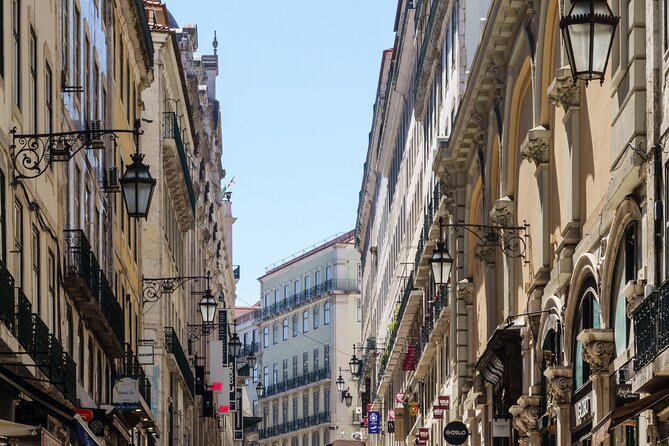
The physical demand is moderate rather than extreme, but do not treat this as a flat stroll. Lisbon’s central districts include slopes, steps, and uneven sections. The route climbs from the lower downtown area toward Carmo, Chiado, São Roque, and the final viewpoint.
Wear walking shoes with a secure sole and bring water. One of the most useful details from the experience is that the elevation is manageable, but it is still noticeable. If you have trouble with hills or long periods on your feet, the 3 to 4 hour duration may feel tiring.
The tour operates in all weather. Dress for the forecast, and remember that wet paving and hills can make the walk less comfortable. Children must be accompanied by an adult, and the stated fitness requirement is moderate.
The small group limit of 16 is a practical advantage. A guide can usually keep the group together more easily than on a large city walk, and you have a better chance of hearing explanations in busy public areas. The experience is offered in English. One guide, José, also helped a Portuguese-speaking participant with translation, but that should not be treated as a standard feature of every departure.
Guide quality and the value of the storytelling
The guide makes or breaks a history walk, and this tour depends heavily on that human element. The most praised qualities are clear explanations, warmth, strong historical links, and attention to questions.
Philippa is described as attentive to the group’s interests and especially good at bringing Lisbon’s builders, families, and ways of life into the story. Alex is praised for tying historical facts together, while Hugo is noted for his explanations and for ending at a memorable viewpoint. Filipa is also praised for giving useful tips for the rest of a Lisbon trip.
Those names do not guarantee who will lead your departure. Still, they show the kind of guide experience you can expect from Lisbon Walker: a person who interprets the city rather than simply pointing out buildings.
There is one practical caution. A separate booking account describes a guide failing to appear, though that account refers to Porto’s University rather than the Lisbon meeting point for this tour. Because the details do not match this experience, it may be an error or a different activity, but I would still arrive at the exact Praça do Comércio address and keep your booking confirmation available.
Who should book this tour?
I would choose the Lisbon Revelation Tour if you are visiting Lisbon for the first time and want the city explained before exploring it on your own. It is especially useful for people who enjoy history, architecture, public squares, and viewpoints but do not want a long museum-heavy outing.
It also suits a short Lisbon stay. The morning schedule gives you a usable afternoon, and the route helps you decide what deserves a closer look later. You might return to Carmo, explore São Roque at greater length, or spend more time in Chiado after learning the basic story.
You should think twice if you want a completely flat route, guaranteed access to the Santa Justa elevator, or extended time inside attractions. This is a walking overview, not a ticketed sightseeing package. The short stops keep the tour moving, but they limit your time for detailed photography and independent exploration.
Practical details before you book
The tour costs $30.25 per person and lasts approximately 3 to 4 hours. It is booked, on average, 62 days ahead, so reserve early if your Lisbon dates are fixed.
A mobile ticket is accepted, and confirmation is sent within 48 hours, subject to availability. Service animals are allowed, and the meeting point is near public transportation.
Free cancellation is available up to 24 hours before the 10:00 am start for a full refund. Changes or cancellations made inside that window are not accepted and are not refunded. The experience also requires a minimum number of participants, so a cancellation by the provider may result in another date or experience, or a full refund.
Should you book the Lisbon Revelation Tour?
Book it if you want a well-organized first morning with strong historical context, a small group, and a satisfying city view at the end. The route covers a lot, and the guide’s storytelling is the main reason to pay for it rather than walk these areas alone.
Skip it if you already know central Lisbon well, dislike hills, or want time inside major attractions. For most first-time visitors, though, $30.25 is a fair price for a guided introduction that leaves the rest of the day free and gives you a clearer sense of how Lisbon fits together.
FAQ
How long does the Lisbon Revelation Tour last?
The tour lasts approximately 3 to 4 hours.
What time does the tour start?
It starts at 10:00 am.
Where does the tour begin?
The meeting point is Cervejaria Antártida Lisboa, at Ala Poente do Palácio Real, Praça do Comércio, R. C 20-23, 1100-038 Lisboa, Portugal.
Where does the tour end?
The tour ends at Miradouro de São Pedro de Alcântara, R. de São Pedro de Alcântara, 1250-238 Lisboa, Portugal.
Is the tour offered in English?
Yes. The tour is offered in English.
What food or drink is included?
The experience includes either a pastel de nata or a ginjinha, a cherry liqueur.
Is the tour suitable for people with limited mobility?
The tour requires a moderate level of physical fitness and includes elevation and walking. Good walking shoes are advised.
Is the tour available in bad weather?
Yes. It operates in all weather conditions, so you should dress appropriately.
Can I cancel for a full refund?
Yes. You can cancel at least 24 hours before the start time for a full refund. Cancellations or changes made less than 24 hours before the start are not refunded.
New around Lisbon
- Arrábida, Setúbal, Sesimbra, Olive with wine tasting★ 5.0 · 75 reviews
- Lisbon: Sunset Sailing Boat Cruise with Wine★ 5.0 · 75 reviews
- Lisbon Half Day Private Tour★ 5.0 · 75 reviews
- Private Half Day Tour to Fatima from Lisbon★ 5.0 · 75 reviews
- Fátima, Nazaré and Óbidos Private Tour from Lisbon★ 5.0 · 76 reviews
- Central Lisbon 3-Hour Guided E-Bike Tour★ 4.8 · 76 reviews
- Lisbon Historic City Tour by Tuk-Tuk★ 5.0 · 76 reviews
- Sintra World Heritage and Cascais Village Private Deluxe Tour★ 5.0 · 76 reviews
Lisbon Tours, compared.
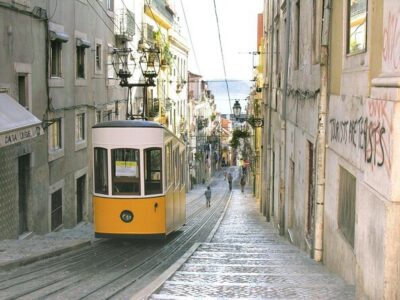
Lisbon City Center Tour – The Unmissable Lisbon
Read our review →
Sintra, Pena, Regaleira, Cabo da Roca & Cascais
Read our review →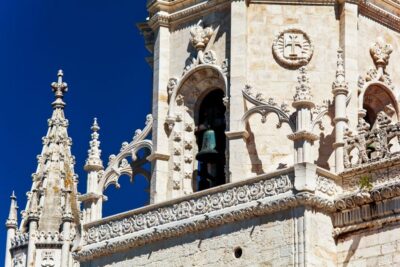
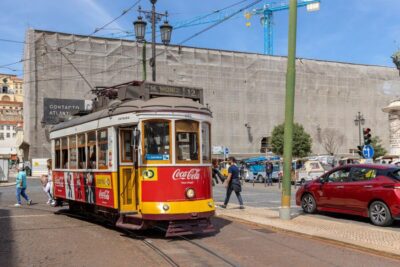

Sunset Boat Party Cruise with DJ and Open Bar
Read our review →
Pena Palace, Sintra, Cabo da Roca, & Cascais Daytrip
Read our review →