
Reviewed · HISTORICAL TOURS
Lisbon Essential Walking Tour: History, Stories and Lifestyle
Lisbon’s story comes into focus as you walk it: from Bairro Alto’s post-earthquake rebuilding to the Carnation Revolution, then through Alfama’s old lanes and fado tradition. I like the way this tour links major sights with city stories, rather than treating each monument as an isolated photo stop. I also like the Tram 28 ride and the simple coffee-and-pastry break.
The main catch is the walking. This is a hilly route of roughly three hours, and one account measured it at close to four miles. Comfortable shoes and water are essential, and the tour may not suit you if hills or extended walking are difficult.
Key points to know before you book
- A strong first-day introduction: You cover Bairro Alto, Baixa, Alfama, and several of Lisbon’s key monuments in one outing.
- History with local perspective: Guides such as Ricardo, Beatrice, Paulo, Ana, and Sofia connect architecture with Portugal’s political and cultural past.
- Views come early: São Pedro de Alcântara gives you a fine look over Baixa and the Tagus before the walk heads downhill.
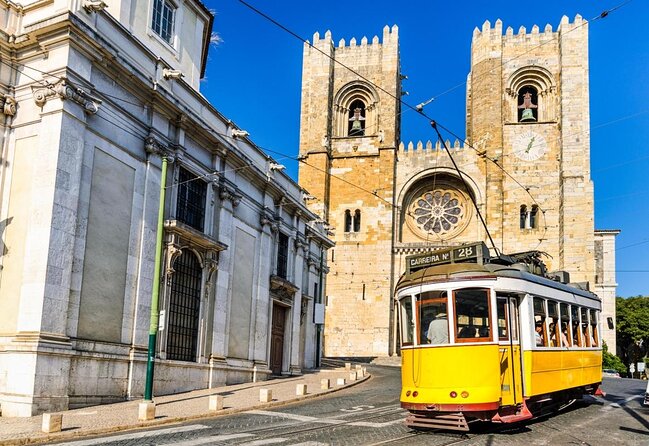
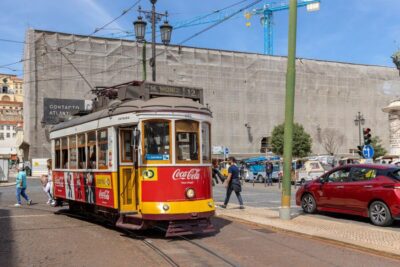
- Tram 28 is included: The ride adds a useful taste of Lisbon’s famous public transport and helps connect the central districts.
- The group is capped at 15: That is small enough for questions and easier movement through narrow streets.
- Budget-friendly extras: The $30.25 price includes the guide, tram ride, coffee, pastry, and insurance, but not the Santa Justa elevator ticket or transport to the meeting point.
Why this tour works best on your first day
Lisbon can be confusing at first. Its neighborhoods sit on steep hills, names change from one block to the next, and the city’s history stretches from medieval conquest to dictatorship and democratic change. A good walking tour gives you a mental map before you start exploring alone.
This route does that well. You begin high in Bairro Alto, pass through viewpoints and old churches, descend toward Baixa, take a tram uphill, and finish in Alfama near Lisbon Cathedral. In three hours, you see how the city fits together physically and historically.
I would book it near the start of a Lisbon visit. You can use the guide’s restaurant and fado suggestions later, and the route helps you decide which areas deserve a longer return visit. Guides have offered practical advice on food, places to hear fado, and navigating Tram 28, which can be just as useful as the formal sightseeing.
The tour costs $30.25 per person. That is fair value for a small-group city walk with a professional guide, a tram fare, and a café stop. You are not paying for a long list of admission tickets, since most stops are viewed from outside or visited without a separate charge. Still, the value is in the interpretation and route planning, not in included attractions.
More Historical Tours in Lisbon
- Lisbon: History, Stories and Lifestyle Walking Tour
★ 4.8 · 10,902 reviews - Lisbon: Live Fado Show with Port Wine in Historic Center
★ 4.7 · 4,166 reviews - Lisbon: Fado Show with Wine in a Historic Venue
★ 4.8 · 1,294 reviews
Starting in 500-year-old Bairro Alto
Bairro Alto is a good place to begin because the neighborhood gives you an immediate sense of Lisbon’s layered past. The tour uses this five-century-old district to explain how the city changed after the 1755 earthquake.
Families from Baixa and nearby districts moved into the area, helping renew and reshape it. Your guide can use the streets here to explain how Lisbon developed across its hills and why the city feels like a collection of distinct quarters rather than one uniform center.
The opening section is relatively short, about 15 minutes, but it sets up the rest of the walk. You are not simply being shown a neighborhood. You are being given a reason for its layout and a starting point for understanding Lisbon’s recovery.
São Pedro de Alcântara gives you the first great view
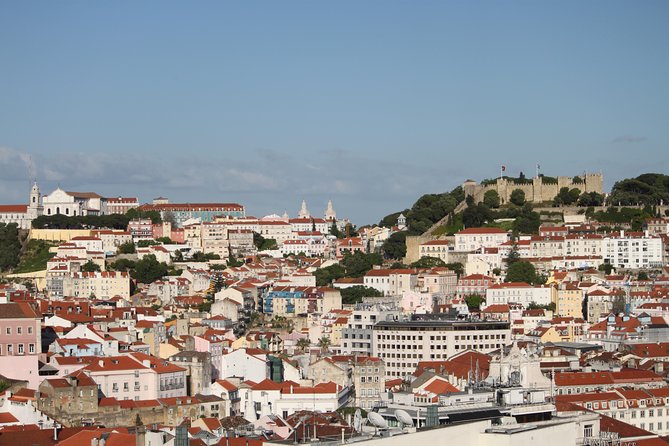
The garden at Miradouro de São Pedro de Alcântara is one of the route’s best early stops. From here, you look across Baixa toward the south bank of the Tagus River.
This is a useful viewpoint because your guide can point out the districts you will visit later. Take a moment to orient yourself. Lisbon’s hills can make the city feel fragmented when you first arrive, and this broad view helps connect the pieces.
You spend about 15 minutes here. That is enough for photos and an explanation, though not enough for a long, quiet pause. If you want extra time at the overlook, return on your own later.
San Roque hides a lavish interior
The Church and Museum of San Roque makes a sharp contrast with the open viewpoint. Its outside is restrained, but inside you find gilding, tiles, and paintings connected to Mannerist and Baroque design.
The church was built by the Jesuits and was among the first Jesuit churches in Portugal, as well as one of the earliest in the world. That detail gives the stop a wider purpose. You are not only looking at decoration. You are seeing how religious orders shaped art and public life.
The visit lasts about 20 minutes. That is a useful amount of time for a guided look, especially if your guide explains what you are seeing rather than rushing you through the interior. Keep expectations realistic, though. This is a short stop within a larger walk, not a full museum visit.
Several guides have been praised for making these details clear and engaging. Ricardo, Paulo, Beatrice, Ana, and Sofia have each been singled out for strong storytelling and a good command of Lisbon’s past. The assigned guide changes, so you should not book on the assumption that one particular person will lead your group.
More Walking Tours in Lisbon
- Best of Lisbon Small-Group Guided Walking Tour
★ 5.0 · 4,869 reviews - Lisbon: Food and Wine Small Group Walking Tour
★ 4.9 · 4,082 reviews - Best of Lisbon Walking Tour: Rossio, Chiado & Alfama
★ 4.9 · 2,700 reviews - Age of Discoveries Walking Tour in Belém
★ 5.0 · 1,513 reviews
Carmo connects Gothic ruins with the 1974 revolution
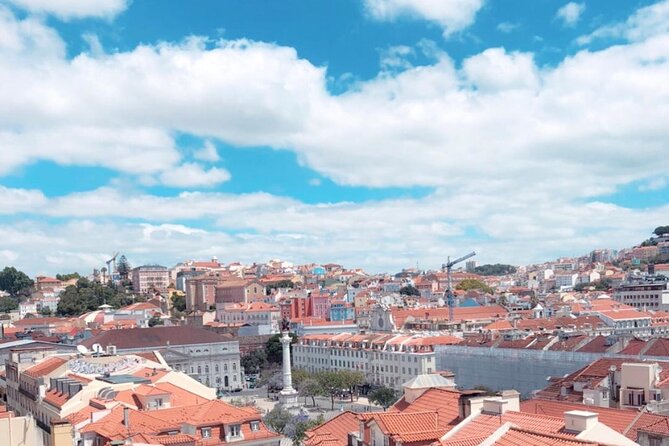
The Carmo convent and church brings together two very different chapters of Lisbon’s story. The buildings are important examples of Gothic architecture, while the site also connects directly to the Carnation Revolution of 1974.
That revolution ended nearly five decades of dictatorship in Portugal. Your guide explains that this was where the movement began, giving the stop a modern political edge that many quick city tours skip.
You have about 20 minutes here. The value is less about checking off another church and more about understanding how a historic site remained part of the country’s recent political life. If you care about European history, this may be one of the most meaningful stops on the route.
The walk downhill from Carmo also changes the pace. You leave the upper neighborhoods and begin moving toward the rebuilt center. This is where good footwear matters. Lisbon’s hills and uneven streets are part of the experience, but they are not effortless.
Santa Justa is impressive, but the ticket is extra
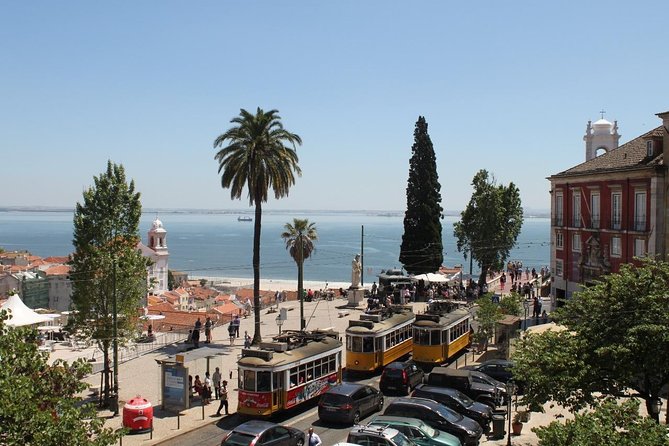
The Santa Justa elevator appears as you continue toward Baixa. Built in the Gothic Revival style, it is one of Lisbon’s most recognizable structures and offers one of the city’s best viewpoints.
The tour does not include the admission ticket for the elevator. That matters when you compare this experience with a package that includes more entries. You may see the structure and hear its story without riding or accessing every viewpoint.
At roughly 15 minutes, this is another brief stop. Your guide can explain the elevator’s place in the city, and you will have time for photographs. If you want to ride it, plan for the extra cost and possible waiting time separately. Do not assume the group’s schedule allows a long queue.
Baixa brings in coffee, cake, and a break
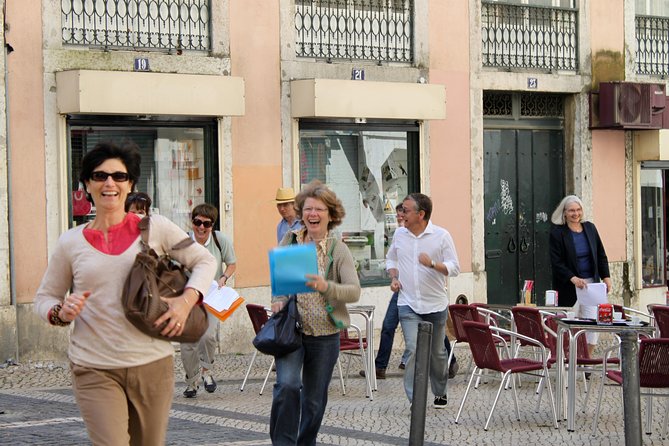
The walk reaches Baixa, Lisbon’s central district, for a coffee and pastry stop in a local café. This is a small inclusion, but I consider it one of the tour’s smartest choices.
Three hours of hills and city streets can become tiring, especially in warm weather. A seated break lets you rest, ask questions, and watch daily life around you. The pastry also gives you a first taste of a simple Portuguese café habit without turning the tour into a food excursion.
The break lasts about 15 minutes. Coffee and cake are included, while other food and drinks are not. The exact pastry is not specified, so you should not book this expecting a full meal or a broad tasting menu.
This pause also keeps the tour from feeling like a nonstop lecture. The best guides use it to offer useful suggestions for later, including restaurants and places to hear fado. Paulo, Ricardo, and Beatrice have been especially effective at giving personal recommendations that fit naturally into the conversation.
Praça da Figueira leads to Tram 28
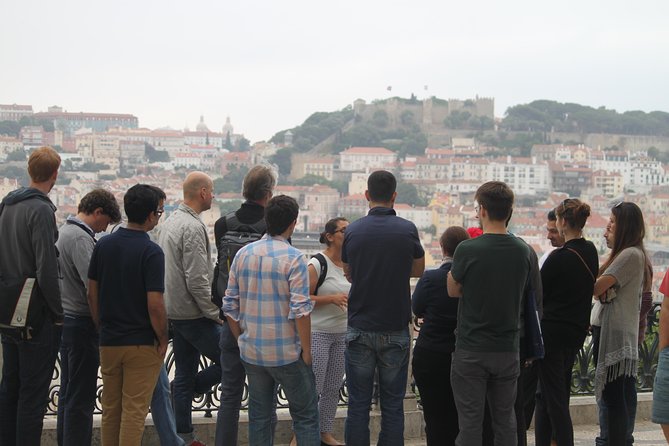
After Baixa, the route continues through the central area around Praça da Figueira. You then take a tram uphill from the castle area toward Portas do Sol.
The tram ride is included, and it adds something a standard walking route cannot. You experience one of Lisbon’s classic forms of transport while moving between the central streets and Alfama. The ride also gives your feet a short rest, though you should still think of the whole outing as a walking tour.
The schedule allows about 15 minutes for this section. Tram conditions can affect the feel of the ride, and the tour is not designed as a long, leisurely tram journey. Treat it as a practical and scenic link in the route.
The tram element has been one of the most memorable parts for several people who otherwise wanted a history-focused walk. It gives you a taste of Tram 28 without requiring you to plan the route yourself. Just keep your belongings secure and stay ready to follow the guide when the group exits.
Alfama shows Lisbon at its oldest and most traditional
At Portas do Sol, the tour opens onto views and then turns into the narrow streets of Alfama. You can see the Monastery of São Vicente de Fora, the National Pantheon, and the district spreading down toward the Tagus.
Alfama is one of Lisbon’s oldest neighborhoods. Its lanes, fado houses, and saint festivals, especially the celebrations connected with St. Anthony, give the area a distinct local identity.
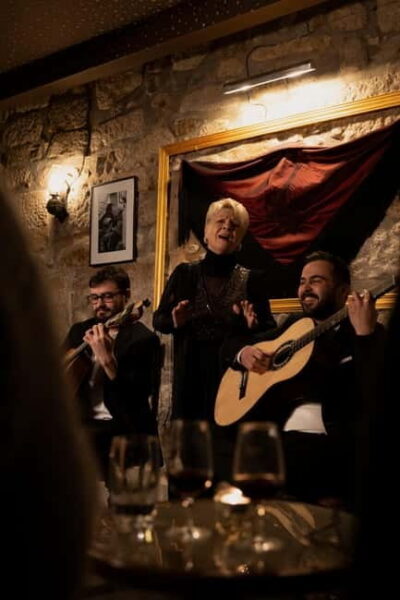
This is where the tour’s title about lifestyle makes the most sense. You are not only seeing monuments. You are walking through a neighborhood associated with music, festivals, and long-established customs. The guide can explain the origins of fado and point out how the district differs from Baixa’s planned streets.
Allow about 20 minutes for the formal stop, though the route itself includes the walk through Alfama’s narrow lanes. The area can feel crowded and confusing, so staying close to the group is wise. The streets are also uneven and hilly in places.
Lisbon Cathedral is a fitting finish
The tour ends at Lisbon Cathedral, built in 1150, three years after the city was taken back from the Moors. Later changes left the building with a mix of architectural styles.
Ending here gives the route a clear historical endpoint. You have moved from the rebuilding of Bairro Alto and Baixa to Lisbon’s medieval foundations. The cathedral also sits in a useful area for continuing your own sightseeing in Alfama.
The end point is in Lisbon, but transport back to your hotel is not included. You should check the exact meeting and end details when booking, since the supplied information identifies Lisbon generally rather than a precise street address.
Walking demands, group size, and guide quality
This tour is physically more demanding than its three-hour length may suggest. Lisbon is built on hills, and the route includes downhill and uphill sections, narrow streets, and extended time on foot. One account put the total at close to four miles.
Wear shoes with good grip and bring water. If you have trouble walking for several hours, this is not the right introduction to Lisbon. The group size is limited to 15, which helps the guide manage narrow lanes and gives you a better chance to ask questions.
Guide quality matters here because much of the tour’s value comes from explanation. The strongest accounts describe Ricardo as a professor-level history guide with an engaging manner. Beatrice is noted for care, humor, city tips, and clear handling of the tram route. Paulo is described as friendly and lively, while Ana is praised for knowing the back streets and connecting them to Lisbon’s past.
There has been at least one administrative problem involving an incorrect meeting place and a booking not reaching the guide. It was resolved, but I would still check your confirmation carefully and arrive early. The operator is Lisboa Autêntica, and the tour is offered in more than one language, with the language selected during booking.
Most people can take part, and service animals are allowed. The experience is near public transportation, but transfers to and from the meeting point are not part of the price.
Who gets the best value from this walk
I would recommend this tour to a first-time Lisbon visitor who wants context before exploring alone. It is also a good fit if you like history but do not want a formal museum-heavy outing.
Families can manage it if everyone is ready for the hills. A review from a family with a 14-year-old daughter found the route worthwhile, but you should still judge your own group’s walking ability. The mix of views, churches, tram travel, stories, and a pastry break helps hold attention across different ages.
You may want something else if you already know central Lisbon well, dislike group walks, or want long interior visits at each monument. The tour covers a lot of ground, so most stops are introductions rather than detailed explorations.
Should you book the Lisbon Essential Walking Tour?
Book it if you want a well-priced first look at Lisbon’s central historic districts, with strong emphasis on Portugal’s past and useful local advice. The combination of São Pedro de Alcântara, San Roque, Carmo, Santa Justa, Baixa, Tram 28, Alfama, and Lisbon Cathedral gives you a lot for $30.25.
Skip it if hills, stairs, or four miles of walking would make the day unpleasant. Also budget separately for any Santa Justa ride, extra food, and your transport to and from the start.
For most first visits, I would schedule it on day one and use the rest of your stay to return to the places that catch your interest. Free cancellation is available up to 24 hours before the start time, which gives you some planning flexibility.
FAQ
How long is the Lisbon Essential Walking Tour?
The experience lasts approximately three hours. The route includes several uphill and downhill sections, and one account described the walk as close to four miles.
What sights are included?
The route includes Bairro Alto, São Pedro de Alcântara viewpoint, the Church and Museum of San Roque, Carmo convent and church, Santa Justa elevator, Baixa, Praça da Figueira, Alfama, and Lisbon Cathedral.
Is the Tram 28 ride included?
Yes. The tram trip is included in the tour price and connects the central area with the Portas do Sol and Alfama section.
Are food and drinks included?
A coffee and pastry break is included. Other food and beverages are not included.
Is the Santa Justa elevator ticket included?
No. The Santa Justa elevator admission ticket is not included.
How many people can join the tour?
The group has a maximum of 15 people. The tour is offered in multiple languages, which you select when booking.
More Historic Sites in Lisbon
- Explore Lisbon by Tuk Tuk: History and Viewpoints
★ 5.0 · 840 reviews - Lisbon: Daytime or Sunset Boat Cruise with History and Wine
★ 4.9 · 819 reviews - Private Tuk Tuk Tour Through Lisbon’s Historical Streets
★ 5.0 · 734 reviews - Lisbon Sunset Sailing with Portuguese Wine and History
★ 5.0 · 668 reviews
New around Lisbon
- Arrábida, Setúbal, Sesimbra, Olive with wine tasting★ 5.0 · 75 reviews
- Lisbon: Sunset Sailing Boat Cruise with Wine★ 5.0 · 75 reviews
- Lisbon Half Day Private Tour★ 5.0 · 75 reviews
- Private Half Day Tour to Fatima from Lisbon★ 5.0 · 75 reviews
- Fátima, Nazaré and Óbidos Private Tour from Lisbon★ 5.0 · 76 reviews
- Central Lisbon 3-Hour Guided E-Bike Tour★ 4.8 · 76 reviews
- Lisbon Historic City Tour by Tuk-Tuk★ 5.0 · 76 reviews
- Sintra World Heritage and Cascais Village Private Deluxe Tour★ 5.0 · 76 reviews
Historical Tours, compared.
Historical Sites, Wine Experience, Lunch & Cruise
Read our review →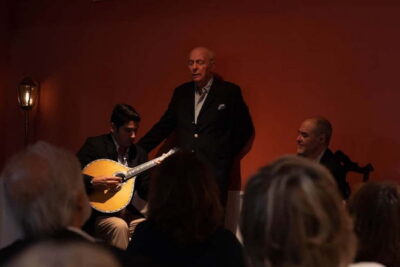
Live Fado Show with Port Wine in Historic Center
Read our review →

Browse the lists this tour appears in