Reviewed · TICKETS
CCVAlgarve Individual Ticket
The Algarve Life Sciences Center turns science into something you can feel, test, and sometimes get wet near. The Ria Formosa aquarium and its sensitive seahorses are the star, while the touch tank gives you a close look at animals from the lagoon’s intertidal zone.
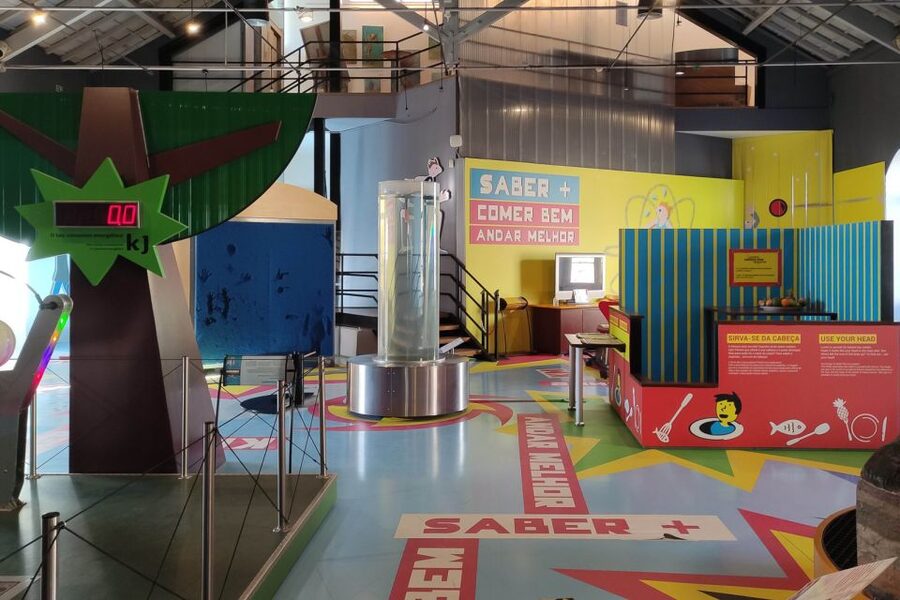
I like the mix of hands-on physics and local nature. You can feel an earthquake, watch a live tornado form, check your weight on other planets, and then shift to questions about food, calories, and coastal ecosystems. The main drawback is size: this is a compact museum, so you may finish in a couple of hours rather than spend a full day inside.
Key points to know before you go
- Ria Formosa seahorses: See animals from the Algarve’s own coastal lagoon in an aquarium designed around its subtidal environment.
- A real touch tank: Interact with animals commonly found in the Ria Formosa intertidal zone.
- Science you can feel: Test earthquake effects, watch a tornado, and explore physics, geology, meteorology, and volcanos.
- Two very different aquariums: Compare a tropical aquarium with the one representing the nearby coastal lagoon.
- Strong value at $5: The ticket includes admission for one day and covers all the museum areas described here.
- Easy indoor option: The air-conditioned center is useful on a hot Algarve afternoon and is wheelchair accessible.
Why this small Faro museum is worth your time
The Algarve Life Sciences Center, or Centro Ciência Viva do Algarve, is a good example of a museum that does not ask you to stand quietly and read wall panels. It wants you to press buttons, watch things move, make guesses, and see what happens.
That matters when you are visiting with children. Science becomes less abstract when you can feel the motion of an earthquake or see a tornado spinning in front of you. Even adults tend to pause at the exhibits about planetary weight and food calories because they turn familiar ideas into quick personal tests.
The local setting gives the museum its strongest purpose. The Ria Formosa is not just a name on a display. It is the coastal lagoon environment represented in one of the aquariums, and it is home to the delicate seahorses you can see there.
I especially like that the center connects aquarium life to the wider coastal system. You learn about animals, their life cycles, and how they relate to the intertidal zone instead of seeing fish as isolated decorations in a tank.
A few other Algarve half-days worth a look
- Algarve: Zoomarine Amusement Park Entry Ticket
★ 4.6 · 2,524 reviews - Albufeira: MiniGolf Adventure Park Entry Ticket
★ 4.5 · 804 reviews - Algarve: Krazy World Interactive Park Entry Ticket
★ 4.2 · 377 reviews
Finding the entrance beside Faro’s castle walls
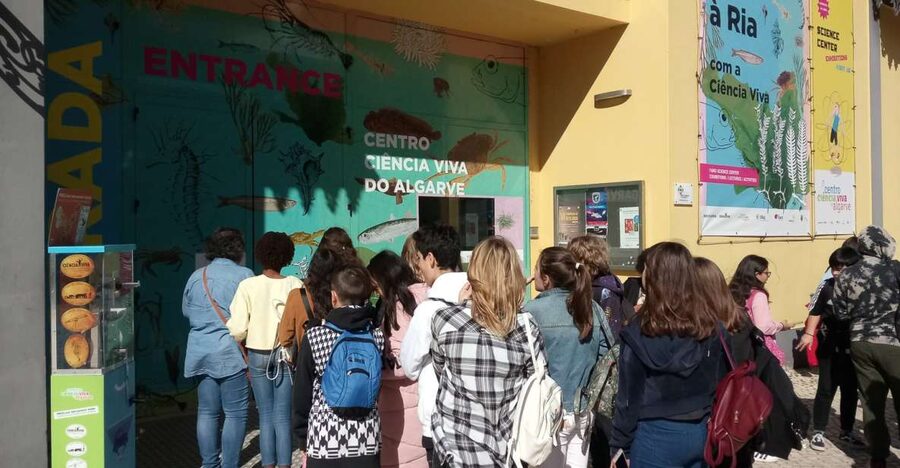
You enter the Algarve Life Sciences Center through a large yellow building. The entrance is in the middle of the building, directly in front of the castle walls, and you show your ticket at the reception counter.
That location makes the museum easy to combine with time in Faro’s old center. You do not need a separate meeting point or transport arrangement for this ticket. It is a self-guided admission, so you can set your own pace and spend longer at the displays that catch your attention.
Because the ticket is valid for one day, you have some flexibility with timing. The supplied information does not give a fixed starting hour, so check availability when you book. Once inside, you can move between the aquariums and the science sections rather than follow a timed group schedule.
The two aquariums: tropical life and the Ria Formosa
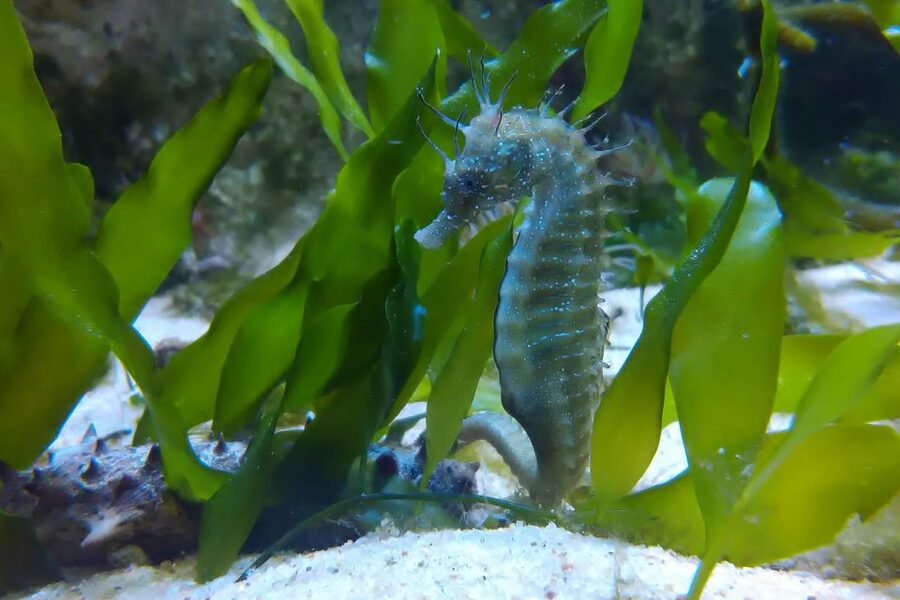
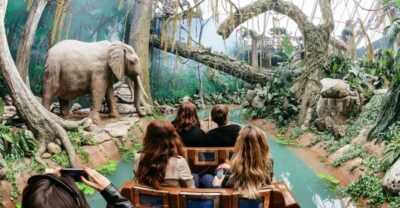
The aquarium section gives you two clear points of comparison. One aquarium is tropical, while the other represents the sub-real environment of the Ria Formosa coastal lagoon.
The tropical aquarium offers the familiar appeal of colorful aquatic life from warmer seas. It is likely to be the easy crowd-pleaser, especially for younger children who want to spot fish and watch movement in the water.
The Ria Formosa aquarium has more local meaning. It focuses on an environment you can encounter around the Algarve itself, with sensitive seahorses from the lagoon. That local connection makes the display more useful than a standard tropical tank because it helps you understand the water, animals, and coastal habitat close to Faro.
Seahorses are a particularly good choice for this setting. Their slow, delicate appearance invites you to look carefully rather than simply scan the tank for the biggest animal. The exhibit also introduces the idea that a coastal lagoon can be productive and full of life while remaining sensitive to disturbance.
Do not expect a large public aquarium with rows of enormous tanks. The center is described as not very big, and that is important when planning your day. You are paying for a compact science center with aquariums, not a major marine attraction that takes half a day on its own.
The touch tank and the life of the intertidal zone
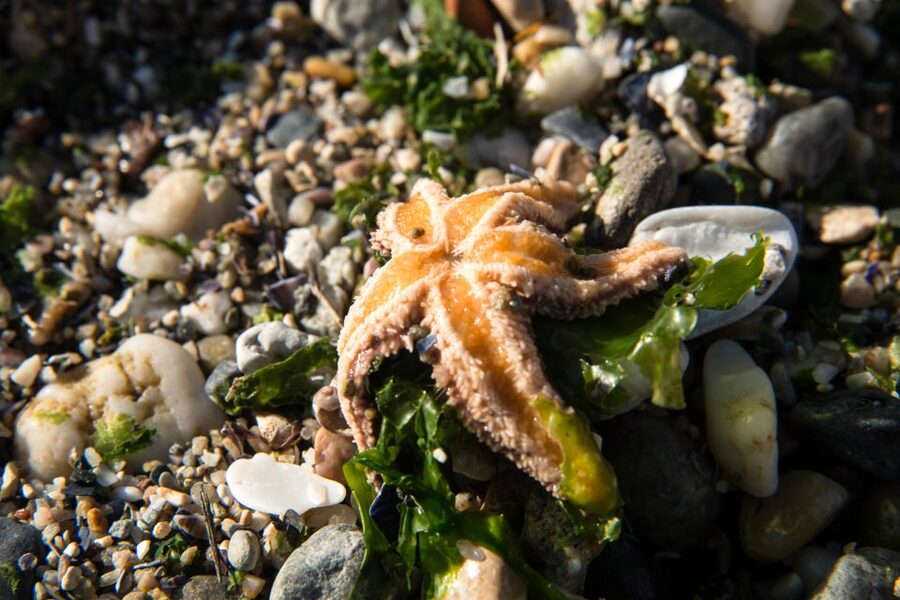
The touch tank is likely to be the most memorable section for children. It lets you interact with animals usually found in the Ria Formosa intertidal zone, the area covered and uncovered by changing tides.
This direct contact gives you a better sense of what lives along the lagoon’s edges. Instead of seeing the Ria Formosa as scenery, you begin to think about the small animals that survive in water, mud, and shallow coastal areas.
The center also explains animal life cycles and the way these creatures relate to their environment. That context is useful because the touch tank is not just a handling activity. It connects the animal in front of you with the larger system around it.
You should follow the center’s instructions carefully and treat the animals gently. The information provided does not specify which species are in the tank or exactly how the interaction works, so expect a supervised educational display rather than a free-for-all pool.
This is one of the places where the museum’s modest size works in its favor. A family can spend focused time at the tank, ask questions at the center, and then move on when younger attention spans begin to fade.
Same coastline, a completely different day out:
- Albufeira: 2.5-Hour Benagil Caves & Dolphin Watching
★ 4.6 · 10,710 reviews - Portimão: Benagil Caves Speed Boat Tour with Sunset Option
★ 4.8 · 9,329 reviews - Portimão: Benagil Sea Caves Speedboat Adventure Tour
★ 4.8 · 6,546 reviews - Albufeira: Benagil Caves & Dolphin Watching Speed Boat Tour
★ 4.6 · 6,316 reviews
Earthquakes, tornadoes, and the fun of testing a guess
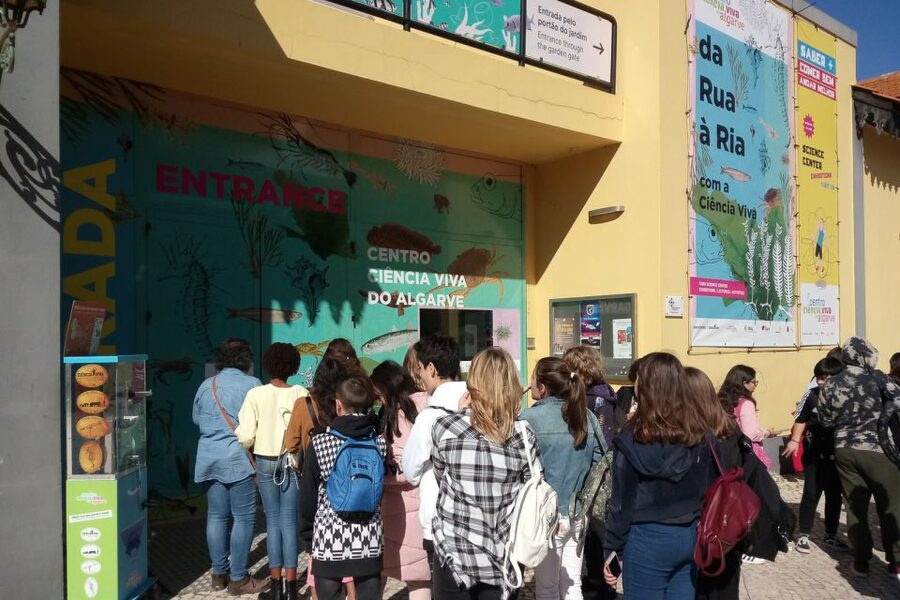
The science section covers physics, geology, food, meteorology, and volcanos. Its best feature is the number of ideas presented as actions rather than lectures.
You can experience the feeling of an earthquake. That gives you a physical reference for a subject that is often reduced to numbers on a news report. The exhibit does not turn seismic activity into a theme-park ride. Instead, it helps you understand that the ground beneath you is not always as fixed as it feels.
You can also see a live tornado. A visible spinning column makes meteorology easier to grasp, particularly for children who may not follow a long explanation of air pressure and rotation. The exact display mechanics are not specified, so I would think of it as a short demonstration you can watch and repeat, not a large weather show.
The planetary weight station is another quick hit. You find out how much you would weigh on other planets, which turns astronomy into a personal question. It is simple, but that is the point: you do not need advanced science to start wondering how gravity works.
The geology and volcano sections add another layer to the museum’s science coverage. You can move from earth movement to volcanic processes, then into weather and coastal systems. The variety keeps the center from feeling like an aquarium with a few extra panels attached.
The pizza calorie question and the 3-D printer
The food section brings science into ordinary life. You can take a guess at how many calories are in a pizza, then compare your instinct with the information provided.
This works because pizza is familiar. You do not need to know technical nutrition terms to make a guess, and the question can lead to a useful discussion about portion size and energy. It is a small display, but it gives families an easy way to connect museum learning with what they eat.
The 3-D printer adds a modern technology angle. The supplied information confirms that one is included among the activities, although it does not specify what it prints or whether you operate it yourself. You should expect to see 3-D printing as part of the science center rather than assume you will take home a printed object.
Together, the food and printer displays widen the visit beyond animals and weather. You get a compact look at nutrition, technology, earth science, and marine biology under one roof.
How long to allow and who will enjoy it most
The ticket is valid for one day, but the center is not very large. I would plan on a relaxed visit of a few hours, depending on how long you spend at the touch tank and interactive stations.
A family with children around elementary-school age is probably the best match. The earthquake, tornado, planetary weight, pizza, and touch tank sections give children repeated chances to do something instead of simply look.
Older children and adults can also enjoy it, especially if you are interested in the Ria Formosa. The local aquarium and ecosystem displays give the visit a stronger sense of place than a general science center would have.
The museum is also a practical choice when the Algarve sun is too strong or the weather is not cooperating. The center is air-conditioned, so you can take a comfortable indoor break without giving up on learning about the region.
If your main goal is a huge aquarium, a long guided program, or a full day of entertainment, this may feel limited. The compact scale is the central trade-off. You get a focused visit at a low price, but not a massive attraction with endless exhibits.
The $5 price and what you receive
At $5 per person, this is an unusually inexpensive ticket for a family activity. Admission includes the center’s exhibits, aquariums, interactive science modules, and touch tank described here.
The value is strongest when you want a short, flexible activity in Faro. A family can spend much less than at a major aquarium or theme park, while still getting several different types of hands-on learning.
Price alone should not create unrealistic expectations. The center’s size is limited, and you should not measure it against a large national museum. Think of it as an affordable local science center with a clear focus on the Ria Formosa and practical demonstrations.
The low cost also makes it easy to pair with other plans. You can visit the museum, continue exploring Faro, or use it as an indoor pause during a hot day. Since cancellation is allowed up to 24 hours before the visit for a full refund, and you can reserve now and pay later, the booking terms add some useful flexibility.
Access, rules, and practical details
The center is wheelchair accessible, which is important for families and visitors who need step-free access. The ticket is for one day, and you show it at reception when you arrive.
Pets are not allowed, although assistance dogs are permitted. Alcohol and drugs are also not allowed inside.
The available information does not list guided tour times, guide names, transportation, parking, or a café. I would not plan on a guide-led visit unless the center confirms one separately. The format described is a self-paced museum visit with interactive displays and staff at the center who can help explain the exhibits.
For the smoothest visit, arrive with enough time to explore both aquariums and the science area without rushing. If children are with you, give them time at the touch tank and let them choose several stations. The museum works best when you treat it as a place to test ideas, not a quick room you pass through on the way to the next sight.
Who should book the Algarve Life Sciences Center?
I would book this if you are staying in or near Faro, want an affordable indoor activity, or are visiting the Ria Formosa and would like more context about its wildlife.
It is especially well suited to families with children who enjoy pressing buttons, watching demonstrations, and handling approved animals under supervision. The combination of seahorses, a touch tank, a tornado, an earthquake, and planetary weight gives you enough variety to hold attention.
I would skip it if you are looking for a large aquarium, a long guided excursion, or an attraction that fills an entire day by itself. For most people, the best approach is to see it as a compact, good-value science stop with a strong local focus.
At $5, the risk is low. If you are already exploring Faro, the Algarve Life Sciences Center offers a useful break from sightseeing and a memorable way to understand the Ria Formosa beyond its shoreline views.
FAQ
Where is the Algarve Life Sciences Center?
It is in the Algarve, in a large yellow building with the entrance in the middle, directly in front of the castle walls.
How much does admission cost?
The individual ticket costs $5 per person.
How long is the ticket valid?
The ticket is valid for one day.
What aquariums are inside the center?
There are two aquariums. One is tropical, and the other represents the sub-real environment of the Ria Formosa coastal lagoon.
Can I see seahorses?
Yes. The Ria Formosa aquarium includes sensitive seahorses from that coastal lagoon environment.
Can I touch animals at the center?
Yes. A touch tank allows interaction with animals usually found in the Ria Formosa intertidal zone.
Is the center wheelchair accessible?
Yes, the Algarve Life Sciences Center is wheelchair accessible.
Can I bring a pet?
Pets are not allowed, but assistance dogs are permitted.
New around Algarve
- Exclusive Boat Tour to the Benagil Caves★ 5.0 · 74 reviews
- Surf’s Up in Albufeira: Learn to Ride the Waves★ 5.0 · 74 reviews
- Lagoa: Dolphins Expedition with biologist guide on board★ 5.0 · 75 reviews
- 2-hour Bird Watching Guided Boat Trip in Ria Formosa from Faro Algarve★ 4.5 · 75 reviews
- Lagos/Praia da Luz: Wine Tour, Tastings, Tapas, and Music★ 4.8 · 75 reviews
- Sunset Benagil Caves Boat Tour from Armacao de Pera★ 5.0 · 76 reviews
- Visit Secret Caves, Hidden Beaches and Snorkel in Alvor, Portugal★ 5.0 · 76 reviews
- Lagoa: 2.5-Hour Vineyard Dinner with Winetasting★ 4.5 · 77 reviews
Tickets, compared.



Quinta da Regaleira Skip-the-Ticket-Line Entry & Audioguide
Read our review →
Luz Stadium Tour & SL Benfica Museum Ticket w/Scarf
Read our review →