Reviewed · LISBON TOURS
Alfama and Mouraria Tour – The oldest neighbourhoods in Lisbon
The best thing about this walk is the way it links Lisbon’s grand riverfront with its oldest uphill quarters. You begin beneath the broad arch of Praça do Comércio, then work your way through Alfama and Mouraria, where the city becomes a maze of lanes, viewpoints, churches, and fado connections. Walter, Tiago, José, Kate, and other local guides lead the English-language walks, so the tone can vary by guide.
I like the strong historical sweep, from King José I and St. Anthony to Moorish Lisbon and the origins of fado. I also like the price: at the listed $1.25 per person, it offers remarkable value if you want orientation before exploring on your own. The catch is the hills. This is a real uphill walk with stairs, and admission to places such as the cathedral and castle is not included simply because the stops are listed at no charge.
Key points to know before you go
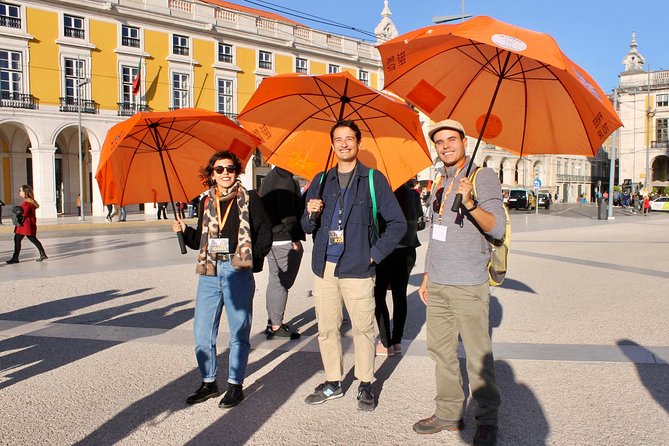
- Start at Praça do Comércio: Find the guide with an orange umbrella between the great arch and the King José I statue.
- Expect hills and stairs: The walk climbs through Alfama and reaches viewpoints near São Jorge Castle.
- See Lisbon’s oldest quarters: Alfama and Mouraria provide the main character, with narrow streets and fado connections.
- Plan for about two and a half hours: The group can include up to 20 people, with frequent stops for history and photographs.
- Entry tickets are separate: The walk pauses at the cathedral and castle, but those attractions may charge admission.
- Finish near Rossio: The tour ends at Praça do Rossio, a useful central point for lunch, transport, or more sightseeing.
From Praça do Comércio to the old hill quarters
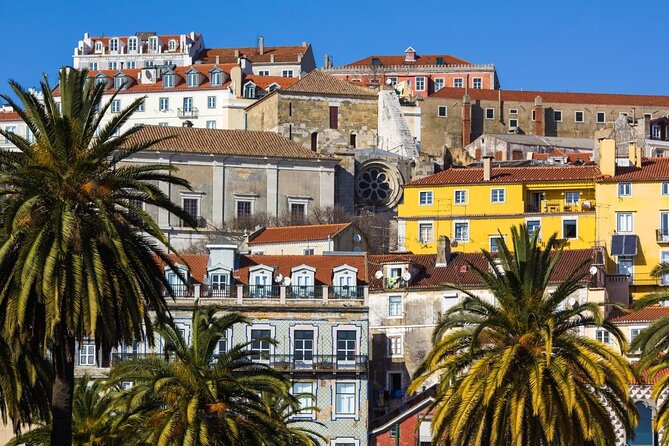
This is a useful first walk in Lisbon because it shows you how the city fits together. Praça do Comércio opens toward the Tagus and feels formal, spacious, and planned. Alfama and Mouraria are the opposite: tight, steep, and shaped by centuries of rebuilding, daily life, and changing communities.
The group meets at the Statue of D. José I, in the middle of Praça do Comércio. Look for the orange umbrella between the arch and the statue. That detail matters. Praça do Comércio is large, and a loose meeting instruction can leave you searching in the wrong corner. Arrive early and stay near the statue until you see the guide.
The tour is offered in English and uses a mobile ticket. Confirmation arrives when you book. The advertised maximum is 20 people, large enough to create a little group energy but still manageable on city streets. It is not a private walk, so you should expect the guide to balance different walking speeds and interests.
The route finishes around Rossio Square rather than returning to the river. That is convenient if you want to continue through central Lisbon, but plan your day around a one-way walk. You will not finish where you started.
A few other Lisbon half-days worth a look
- Lisbon City Center Tour – The Unmissable Lisbon
★ 5.0 · 22,234 reviews - Lisbon: Sintra, Pena, Regaleira, Cabo da Roca & Cascais
★ 4.7 · 19,656 reviews - Lisbon: Jerónimos Monastery Entrance Ticket
★ 4.1 · 14,164 reviews
Praça do Comércio and Lisbon’s royal waterfront
The opening stop is the Statue of D. José I, a monument to the Portuguese king. It gives the guide a natural starting point for explaining Lisbon’s royal past and the city center around it.
You then spend time in Praça do Comércio, one of Lisbon’s most important squares. The ten-minute pause is short, but the setting is big enough to make a first impression. This is a place for orientation: you can see the scale of the riverfront before the route turns inland and uphill.
Do not expect an extended architectural tour here. The strength of the stop is its position in the larger story. The square feels like a gateway between Lisbon and the Tagus, while the rest of the walk explains what happened in the older quarters behind it.
St. Anthony, Casa dos Bicos, and the city’s layered past
The Church of St. Anthony is tied to the city’s most famous saint. It occupies the place where St. Anthony of Padua was born, giving the stop a personal connection that is easy to miss if you simply walk past the building.
Next comes Casa dos Bicos, one of Lisbon’s oldest houses. Its Manueline style makes it different from the broad squares and later streets around it. The building is now associated with the Museu de Lisboa, but this experience treats it as an exterior landmark during the walk, not as a museum visit.
These early stops are valuable because they prevent the tour from becoming only a viewpoint hunt. You get religious, royal, and architectural history before entering Alfama itself. The limitation is time. Ten minutes at each place means you receive a focused explanation, not a full visit inside every site.
Walking through Alfama’s narrow streets
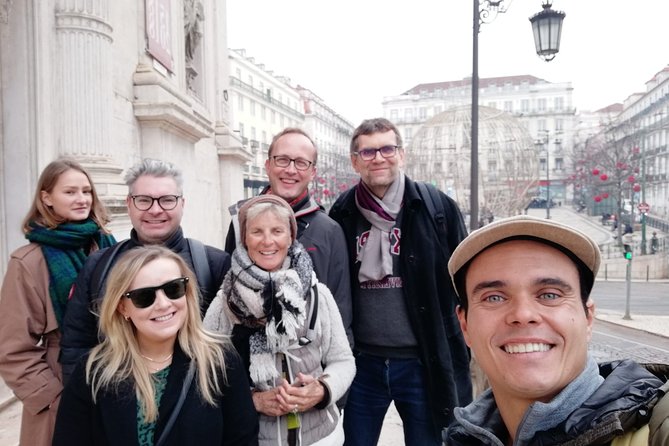
Alfama is the heart of the walk. The group spends about 20 minutes moving through its older streets, and this is where the experience becomes less about individual monuments and more about the feel of the neighborhood.
The lanes can turn quickly, rise sharply, and open without warning into small squares or views. A guide helps you understand the area instead of treating it as a maze to cross. José has been praised for connecting the old districts with present-day Lisbon, while Tiago is noted for taking the climb in stages and making room for questions.
That pacing is important. Several people enjoyed the stops and breaks, but the walk still includes uphill sections and stairs. You may be standing while the guide speaks, and there are not always places to sit. Wear shoes with a firm grip, carry water, and do not treat this as a flat stroll along the river.
Alfama is also the sort of place where a local guide can add useful practical advice. Kate has been singled out for restaurant suggestions and good viewpoints, and Tiago has also shared eating tips. Since the walk ends near Rossio, you can ask about where to eat before saying goodbye.
Same coastline, a completely different day out:
- Lisbon: History, Stories and Lifestyle Walking Tour
★ 4.8 · 10,902 reviews - Lisbon: Sunset Boat Party Cruise with DJ and Open Bar
★ 4.5 · 10,378 reviews - Lisbon: Pena Palace, Sintra, Cabo da Roca, & Cascais Daytrip
★ 4.7 · 9,981 reviews - Lisbon: Oceanário de Lisboa Entrance Ticket
★ 4.6 · 9,943 reviews
Lisbon Cathedral and the climb toward the viewpoints
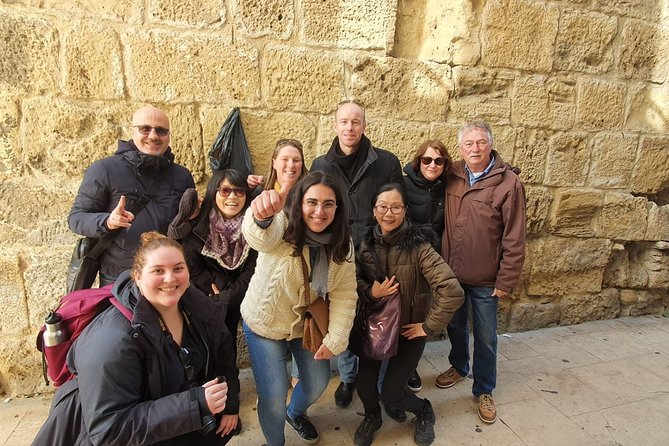
Lisbon Cathedral, known as Sé, is introduced as the oldest church in Lisbon. It is one of the route’s major landmarks and an important pause after the lanes of Alfama.
The stop is listed as free, but that does not mean every part of the cathedral is free to enter. The tour can take you to the site and explain its place in the city, while any paid interior areas or ticketed sections remain your responsibility. The same principle applies to São Jorge Castle later in the walk.
From the cathedral, the route continues upward toward the National Pantheon. The stop at the Panteão Nacional is extremely brief, only about a minute, so consider it a passing landmark rather than a proper visit inside. If you want to see the building in detail, you will need to return independently.
This is also the point where the physical demands become more obvious. The walk is designed to reach the viewpoints and castle area, so the climb is not an accidental inconvenience. It is part of seeing old Lisbon from above.
Portas do Sol and Santa Luzia: the visual reward
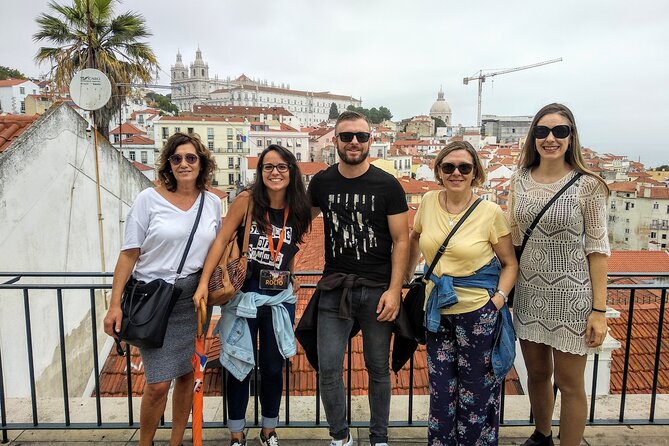
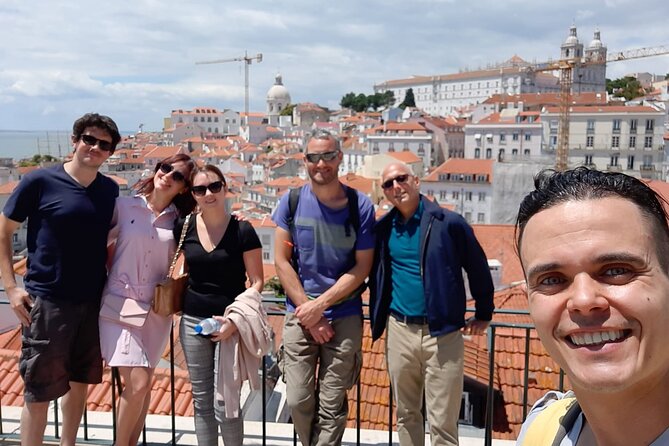
Miradouro das Portas do Sol is one of the strongest stops on the route. The viewpoint gives you a broad look over Lisbon’s old rooftops and the river setting. After walking through compressed streets, the open view provides a welcome change.
You get about ten minutes here, enough for photographs and a compact explanation of what you are seeing. On a hot day, the guide may use shade and breaks to make the stop more comfortable, as Tiago has done for groups before. Still, bring your own water and sun protection rather than relying on perfect weather or a shady pause.
Miradouro de Santa Luzia follows as another scenic viewpoint. It is often considered one of the city’s most charming outlooks, and the stop gives you more time to enjoy the visual side of Alfama.
The two viewpoints are close in spirit but not identical in purpose. Portas do Sol gives you the grand orientation. Santa Luzia feels more intimate and decorative. Together, they help explain why Alfama is one of Lisbon’s most photographed quarters.
São Jorge Castle and the limits of the visit
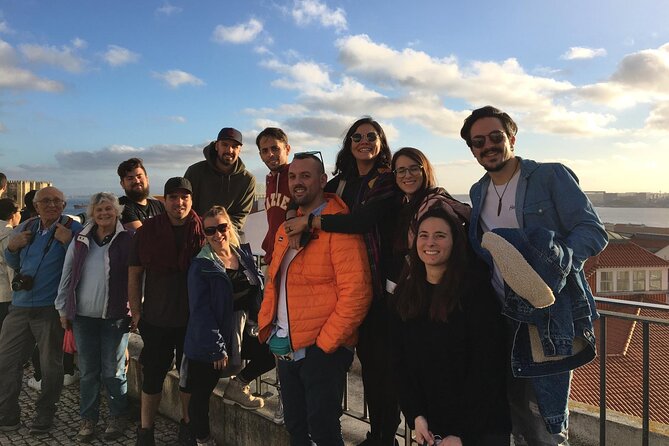
The route reaches São Jorge Castle, described as an old fortress built by the Moors in the eighth century. This is one of the most important historical sites in the area, but the scheduled stop is only about five minutes.
That timing tells you exactly what to expect. You will receive an outside explanation and a sense of the castle’s position above Lisbon, not a full castle tour. If you want walls, courtyards, museum displays, and a longer look around, you must buy a separate admission ticket and return with more time.
One complaint about this experience came from someone who expected the castle and cathedral to be free to enter. Avoid that misunderstanding. The tour price covers the guided walk, while entry charges at attractions are separate. Also, a guide’s judgment about whether a paid site is worth visiting may not match your own interests. History fans may want to go inside even if the group only pauses outside.
Mouraria and the roots of fado
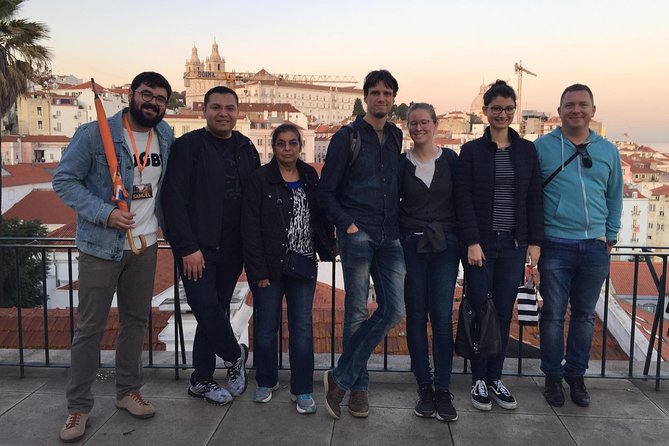
After Alfama, the walk turns toward Mouraria. The Monumento Mouraria Berço do Fado introduces the neighborhood’s connection with fado, Lisbon’s mournful and expressive musical tradition.
The group spends around 20 minutes walking through Mouraria’s streets. This is one of the most worthwhile parts for anyone who wants more than postcard Lisbon. The quarter has a different feel from the formal waterfront and the famous viewpoints, and the guide can connect its streets with the city’s cultural life.
The walk also gives you a chance to see how Alfama and Mouraria differ. Alfama is strongly associated with the hill, the cathedral, and the viewpoints. Mouraria adds another layer, linking local streets with music and the city’s mixed cultural past.
The experience ends with a brief stop at Igreja de São Vicente de Fora, a church built in honor of St. Vincent. Like the National Pantheon stop, this is more of a final landmark than a full interior visit. You then continue toward Rossio Square.
Guides, pace, and the human side of the walk
The guide can make a large difference. José has been praised for setting a comfortable pace and offering thoughtful views of both old and modern Lisbon. Tiago is known for answering questions, building in breaks, finding shade on hot days, and taking the climb in manageable stages.
Walter has received especially warm attention for his humor, architecture knowledge, and enthusiasm for Lisbon’s past. Hugo has been described as funny and professional, while Ann-Elisa and Kate have been appreciated for making the walk both informative and personal. Rita has also been praised for being cheerful and helpful to solo visitors.
These names are useful, but you cannot choose the guide in advance from the information provided. The important point is to expect a local walking guide whose approach may range from brisk and fact-filled to more conversational.
There have also been a few serious complaints. One person lost the group after falling behind, and another left early after finding the commentary too quiet and the pace or structure unsatisfying. Introduce yourself to the guide, stay within sight, and speak up immediately if you need a slower pace. In narrow streets, a group can turn a corner quickly.
Is $1.25 good value for Lisbon?
At the listed $1.25 per person, this is an unusually inexpensive way to get a two-and-a-half-hour introduction to central Lisbon. Even if you later explore the same areas alone, the route can save you time by showing how Praça do Comércio, Alfama, the castle hill, Mouraria, and Rossio connect.
The real value is orientation and context, not admission to attractions. You are paying for a guided walk through historic districts, with explanations at churches, houses, viewpoints, and cultural markers. Budget separately for any paid entry to Lisbon Cathedral or São Jorge Castle.
The rating is listed at 4.9 from 466 reviews, with 97 percent recommending the experience. That is a strong record, but it should not hide the practical truth: this is a physically active group walk. At the price, it is an easy choice for a first look at Lisbon if you understand what is included.
Free cancellation is available up to 24 hours before the start time. Changes or cancellations inside that window are not accepted for a refund. The activity depends on good weather and a minimum number of participants, with another date or a refund offered if the provider cancels for either reason.
Who should book this walk?
I would choose it for a first visit to Lisbon, especially if you want the old quarters explained rather than simply photographed. It suits solo visitors, couples, and curious families who can manage hills and stairs.
It is also a good opening activity for a longer stay. After the walk, you will know which viewpoints deserve a return visit, whether you want to pay for the castle, and where Alfama gives way to Mouraria.
I would hesitate if you have limited mobility, dislike standing for explanations, or want long interior visits at the cathedral, pantheon, and castle. The route is not described as wheelchair accessible, though service animals are allowed and most participants can take part. Public transport is nearby, but the walk itself is on foot.
Should you book the Alfama and Mouraria Tour?
Book it if you want a low-cost, history-focused introduction to Lisbon’s oldest neighborhoods and are ready for a real climb. The views at Portas do Sol and Santa Luzia, the streets of Alfama and Mouraria, and the fado connection make the route more substantial than a simple monument checklist.
Go in with the right expectations. You will not receive castle admission, a museum tour, or a flat city walk. Stay close to the guide, confirm the orange umbrella meeting point at Praça do Comércio, bring water, and ask questions. With those basics handled, this is a smart way to get your bearings and find the parts of old Lisbon you will want to explore at your own pace.
FAQ
Where does the tour start?
It starts at Praça do Comércio in Lisbon, at the Statue of D. José I. Look for the guide with an orange umbrella between the large arch and the statue.
Where does the tour end?
The walk ends around Rossio Square, at Praça do Rossio in central Lisbon.
How long does the experience last?
The walk lasts approximately two hours and 30 minutes.
Is the tour offered in English?
Yes. English is the listed language for the experience.
Are entry tickets to the cathedral and castle included?
No. The walk stops at Lisbon Cathedral and São Jorge Castle, but those attractions may charge separate admission fees.
How many people can join the walk?
The maximum group size is 20 participants.
Can I cancel for a full refund?
Yes, if you cancel at least 24 hours before the experience start time. Cancellations or changes made less than 24 hours before the start are not refunded.
New around Lisbon
- Arrábida, Setúbal, Sesimbra, Olive with wine tasting★ 5.0 · 75 reviews
- Lisbon: Sunset Sailing Boat Cruise with Wine★ 5.0 · 75 reviews
- Lisbon Half Day Private Tour★ 5.0 · 75 reviews
- Private Half Day Tour to Fatima from Lisbon★ 5.0 · 75 reviews
- Fátima, Nazaré and Óbidos Private Tour from Lisbon★ 5.0 · 76 reviews
- Central Lisbon 3-Hour Guided E-Bike Tour★ 4.8 · 76 reviews
- Lisbon Historic City Tour by Tuk-Tuk★ 5.0 · 76 reviews
- Sintra World Heritage and Cascais Village Private Deluxe Tour★ 5.0 · 76 reviews
Lisbon Tours, compared.
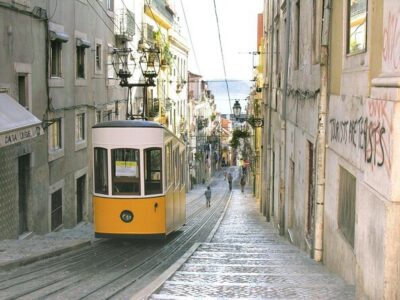
Lisbon City Center Tour – The Unmissable Lisbon
Read our review →
Sintra, Pena, Regaleira, Cabo da Roca & Cascais
Read our review →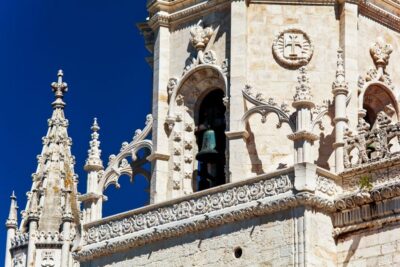
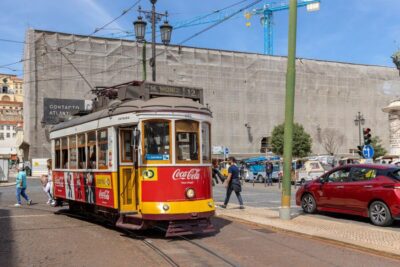

Sunset Boat Party Cruise with DJ and Open Bar
Read our review →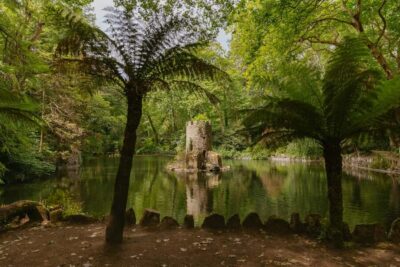
Pena Palace, Sintra, Cabo da Roca, & Cascais Daytrip
Read our review →