
Reviewed · FOOD & DRINK
Tavira Olive Experience Factory Tour and Tasting
The best part of the Tavira Olive Experience is that it takes you inside a real, small-scale factory rather than stopping at a pretty grove. Andreia explains how olives become the cured table olives you eat, including the work behind their salt, texture, pits, and preservation. The tasting afterward feels less like a token sample and more like a generous Portuguese snack spread.
I like the family-run setting, where the work of three women gives the visit a personal face. I also like the way the factory tour leads into a shared tasting of olives, bread, cheese, honey, marmalade, oil, and wine. The main thing to keep in mind is that this is primarily a table-olive experience, not a tour of olive-oil production, and the machines may be idle outside the harvest season.
Key points to know
- Table olives are the focus: You learn how olives are prepared for eating, not just how they are picked.
- Andreia leads an engaging tour: Her clear explanations and humor help bring a small working facility to life.
- The tasting is generous: Expect olives, cheese, meat, bread, honey, marmalade, olive oil, and wine.
- Production is seasonal: Olive processing generally takes place in September and October, and not every day.
- The factory is small and local: This is a direct look at a family business rather than a large commercial plant.
- Plan for the address carefully: Some mapping apps have made the facility hard to find, so allow extra time.
A small Tavira factory with a very specific purpose
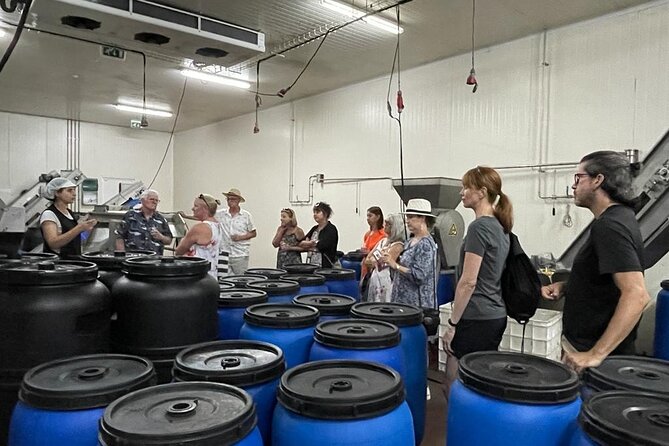
This experience works because it deals with an everyday food in a practical way. Olives look simple on a plate, but the journey from fruit to edible snack involves sorting, treatment, salt, storage, and careful handling. Inside the Olive Factory Tavira, you get an explanation of those steps beside the equipment used in the process.
The facility is a small family operation, managed by three women. That scale matters. You are not walking through a polished museum display with a recorded speech. You are seeing the machines and work areas of a functioning local business, with the staff explaining what each part does and how the products reach your table.
The tour is offered in English, and Andreia is the main name to know. She is described as warm, funny, and good at keeping the explanation moving even when production is stopped. On one occasion, she even helped with directions when mapping apps failed to locate the factory properly. That sort of personal help is useful in rural or industrial corners of the Algarve, where a pin on a phone screen may not tell the whole story.
The meeting point is Olive Factory Tavira, at Hélder Madeira, Estrada do Arraial Ferreira Neto S/N, 8800-228 Tavira. The scheduled start is 4:00 pm, and the activity lasts about 90 minutes. It ends at the same place.
A few other Faro half-days worth a look
- Tour & Wine tasting – Authentic Algarve Flavours by Quinta da Tôr
★ 5.0 · 343 reviews - From Porto: Douro Valley w/ Boat Tour, Wine Tasting & Lunch
★ 4.7 · 19,061 reviews - Winner 2025 Undiscovered Lisbon Food & Wine Tour by Eating Europe
★ 5.0 · 6,390 reviews
What happens during the factory walk
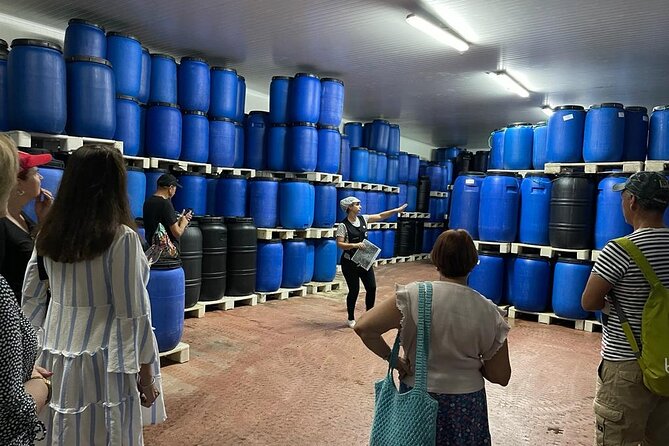
The first part is an explanation of olives and the machines used to process them. You will hear about how olives are prepared for consumption, why salt matters, and how different treatments affect the final product. The details are especially useful if you usually think of all olives as the same.
You can expect attention to questions such as why some olives keep their pits, how texture changes, and what is involved in preserving the fruit. One particularly memorable topic is the amount of manual work required in a small operation. The factory gives you a better sense of the hands-on effort behind a jar or bowl of olives.
The walk itself is casual rather than formal. Andreia explains the process as you move around the facility, pointing out machinery and production stages. Her style is part classroom, part conversation. She uses humor, which helps when the subject turns technical or when you are standing beside equipment that is not running.
Here is the important distinction: the tour is about olive processing for the table. It is not an olive grove visit, and it is not mainly a tour of an olive-oil mill. Olive oil is part of the discussion and tasting, but if your main interest is pressing fresh olives into oil, this may not be the right choice.
Why the harvest calendar changes the visit
Olive processing generally takes place in September and October, during the olive-picking season. Even then, production does not happen every day. Outside that period, or on a non-production day, you may see the machines without watching olives pass through them.
That sounds like a drawback, but it does not make the visit pointless. The explanation covers the process, the equipment, the role of salt, and the work involved. Several comments describe the guide as able to keep the tour interesting even when the factory floor is quiet.
Still, you should set your expectations correctly. If moving machinery and active production are essential to your plans, check the timing before booking. If you are happy with a behind-the-scenes explanation and a food tasting, an off-season visit can still make a good rainy-day activity or a change from the usual sightseeing routine.
The seasonal point also gives you a useful glimpse of how small food businesses operate. Production is tied to the harvest and cannot simply be switched on for every appointment. That limitation makes the visit more honest than a staged factory show, but it also means the experience can vary.
The tasting is the real second half
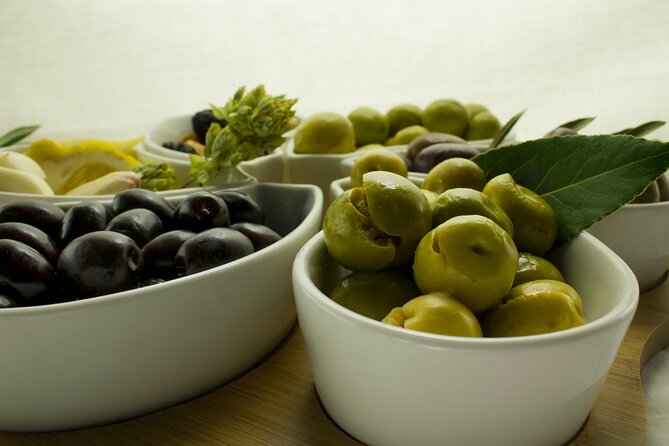
After the factory explanation, you sit down to taste a spread of local products. The included food is listed as snacks, but that description understates what is provided. You can expect several types of olives, special bread with sauce or oil, cheese, meat, honey, orange marmalade, and olive oil.
Wine is included as part of the tasting, and other drinks may be available. The food is not just a quick bite to keep you occupied. It gives you a chance to compare flavors and see how the products work together. A simple piece of bread becomes a useful way to taste the oil. Cheese and meat balance the salty olives. Honey and marmalade bring in a sweeter side of Portuguese food.
The tasting has a social feel. You share the table with other people from the group, and the relaxed pace makes it easy to ask more questions after the tour. This is where the experience shifts from factory lesson to informal food gathering.
I particularly like that the tasting connects directly to the tour. You have just heard about preservation, salt, texture, and olive products. Then you can test those ideas for yourself. It is a better approach than a lecture followed by a random snack plate.
The spread may also include lupini beans, peas, homemade bread, sauces, and other local items. The exact selection can vary, but the central idea stays the same: you taste products made or selected by the small business you have just visited.
Same coastline, a completely different day out:
- 4 Stops | 3 Islands & Ria Formosa Natural Park – From Faro
★ 5.0 · 3,080 reviews - From Faro: Benagil Cave, Marinha Beach, Algar Seco & More
★ 4.7 · 2,027 reviews - Ria Formosa – Boat trip to the 3 Islands: Armona | Culatra Island | Lighthouse
★ 5.0 · 1,872 reviews - Ria Formosa Natural Park and Islands Boat Cruise from Faro
★ 5.0 · 1,314 reviews
A chance to support a small local producer
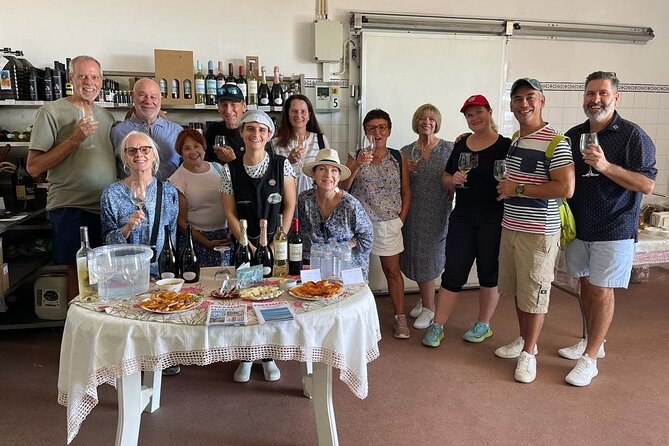
The factory is not presented as a grand agricultural attraction. Its appeal comes from meeting the people behind a modest local business and seeing the work at close range. The fact that much of the process is manual gives you a clearer sense of the care involved.
The visit also offers a direct connection between food and place. Tavira and the eastern Algarve are strongly tied to olive growing and traditional food production, but you do not need expert knowledge to appreciate this tour. Andreia explains the subject in plain terms, and the tasting gives you an immediate way to understand the products.
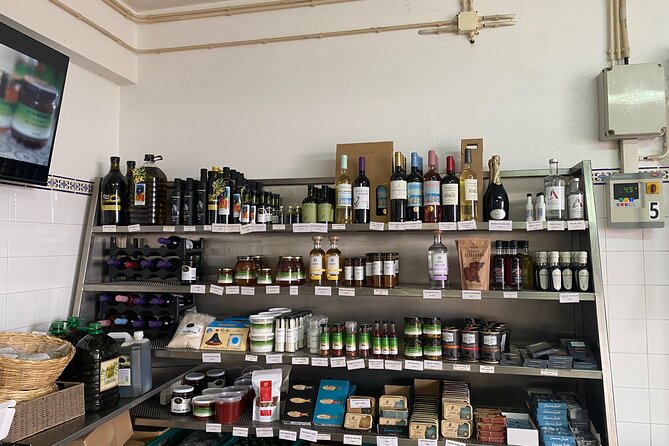
I would recommend the factory shop at the end, especially if you find an olive, oil, sauce, or sweet preserve you enjoy. Souvenirs are not included and may cost up to about €15 or €20. Buying something gives you a practical souvenir and supports the local business, but you should not feel obliged to purchase.
The shop is also useful because food makes a better souvenir than a generic object. A jar of olives or a bottle of oil can bring the memory of the tasting back to your kitchen. Just check how much room you have in your luggage.
Price, timing, and practical value
The price is about $35.09 per person for roughly an hour and a half. That is not the cheapest short activity in the Algarve, but the value depends on how you count the second half of the visit. You are paying for a guided factory explanation plus a substantial tasting with wine and several local foods.
If the machines are operating, the price buys access to a working production setting and a live explanation of the process. If they are not operating, the tasting becomes an even more important part of the value. The food spread is described as generous, not merely a few olive samples on a saucer.
The four o’clock start works well with a day in Tavira. You can spend the earlier part of the day exploring town, then make your way to the factory for the afternoon visit. Since the activity ends at the meeting point, you need to arrange your own way there and back.
The group can include up to 30 people. That is large enough for a lively tasting table, but it may feel less personal than a very small private visit. The tour is generally suitable for most people, and it is offered with a mobile ticket in English.
If you arrive early, you can come up to one hour before the scheduled start and order a drink at the bar. Those drinks are charged separately, so do not assume they are part of the included tasting.
Finding Estrada do Arraial Ferreira Neto
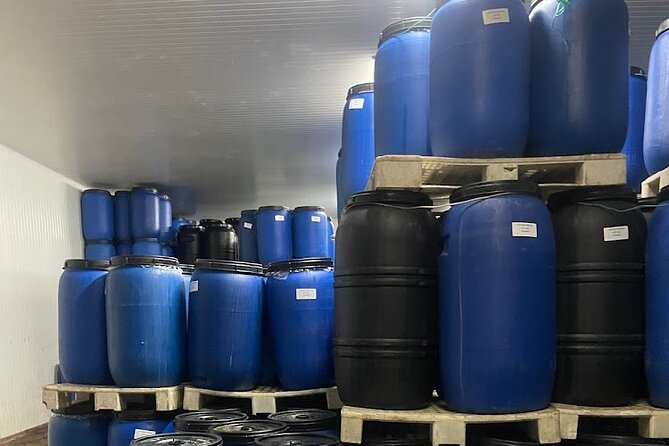
Allow extra time for the journey to the meeting point. The address is specific, but mapping apps have reportedly struggled to find the factory. Google Maps and Apple Maps may not always guide you cleanly to the entrance.
I would save the full address before leaving and avoid arriving at the last minute. If you have trouble, contact the operator rather than circling the area. Andreia has helped people reach the facility by phone, which is reassuring, but it is still better to build in a little extra time.
The activity begins at 4:00 pm. Confirmation arrives when you book, and the mobile ticket makes check-in straightforward. The tour returns to the same meeting point, so there is no separate drop-off location to arrange.
Who will enjoy this experience most
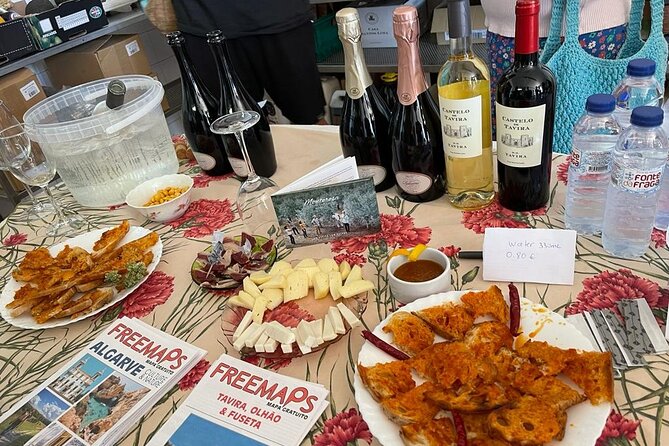
This tour is a strong match for you if you like food, small businesses, and short activities with a clear local connection. It also suits anyone who wants something different from monuments, beaches, and standard city tours.
Families may find the machinery and tasting appealing, though the supplied information does not specify a child rate or a special children’s program. Most people can participate, but you should contact the operator directly if you have a particular mobility, dietary, or access concern.
Food allergies deserve advance attention. The team has accommodated an allergy by discussing it beforehand, so tell them before the visit rather than waiting until the tasting begins. The tasting includes several foods, and the staff may be able to help explain what is in each item.
This may not suit you if you want a long agricultural tour, a walk through olive groves, or a full lesson in commercial olive-oil pressing. It is also less suitable if you need guaranteed active production. The factory makes clear that operation depends on both season and schedule.
Should you book the Tavira Olive Experience?
Book it if you want a friendly, food-centered look at how table olives are prepared and you value meeting a small local producer. The combination of practical explanations, Andreia’s lively presentation, and the generous tasting gives the 90 minutes a good rhythm.
Book with more caution if your main goal is to watch olive oil being made. This is an olive-processing visit, with olive oil included in the tasting and discussion, not an olive-oil mill tour.
My best advice is to ask about production before you go, save the address carefully, and arrive with room for a proper tasting rather than a quick sample. If those points fit your plans, this is a useful and enjoyable addition to a Tavira itinerary, especially on an afternoon when you want local food and a little insight into the work behind it.
FAQ
Where does the Tavira Olive Experience begin?
It begins at Olive Factory Tavira, Hélder Madeira, Estrada do Arraial Ferreira Neto S/N, 8800-228 Tavira, Portugal.
What time does the tour start?
The scheduled start time is 4:00 pm.
How long does the experience last?
The tour lasts approximately 1 hour and 30 minutes.
Is olive oil production the main focus?
No. The main focus is processing olives for consumption as table olives. Olive oil is discussed and included in the tasting, but this is not mainly an olive-oil production tour.
Will the machines be operating during the visit?
Not always. Production generally takes place during the olive-picking season in September and October, and processing does not happen every day.
What food and drinks are included?
The tasting includes olives, special bread, sauce, cheese, honey, orange marmalade, olive oil, snacks, and wine. Other bar drinks may be purchased separately.
Can I cancel for a full refund?
Yes. You can cancel up to 24 hours before the local start time for a full refund. Changes or cancellations made less than 24 hours before the start are not accepted for a refund.
New around Faro
- 2-hour Bird Watching Guided Boat Trip in Ria Formosa from Faro Algarve★ 4.5 · 75 reviews
- Faro – Ria Formosa tour with visit to 2 islands (Deserta, Farol) 3.5 hours★ 5.0 · 78 reviews
- Highlights & Hidden Gems of Faro Private Tour★ 5.0 · 78 reviews
- Olhão: Ria Formosa 3 Islands Guided Day Trip by Boat★ 4.6 · 84 reviews
- From Faro: Ria Formosa Eco Tour guided by Marine Biologist★ 5.0 · 87 reviews
- From Faro: Benagil, Marinha Beach, 7 Hanging Valleys, Algar Seco★ 5.0 · 88 reviews
- From Faro : Benagil, Algar Seco, 7 Hanging Valleys & Navy★ 5.0 · 92 reviews
- Boat trip from Faro to Ilha Deserta by Ferry★ 4.5 · 97 reviews
Food & Drink, compared.
Douro Valley w/ Boat Tour, Wine Tasting & Lunch
Read our review →
Winner 2025 Undiscovered Lisbon Food & Wine Tour by Eating Europe
Read our review →
Cálem Cellar Tour, Interactive Museum & Wine Tasting
Read our review →
Douro Valley Small-Group Tour with Wine Tasting, Lunch and Boat
Read our review →

Browse the lists this tour appears in