
Reviewed · WALKING TOURS
Best of Lisbon Walking Tour: Rossio, Chiado & Alfama
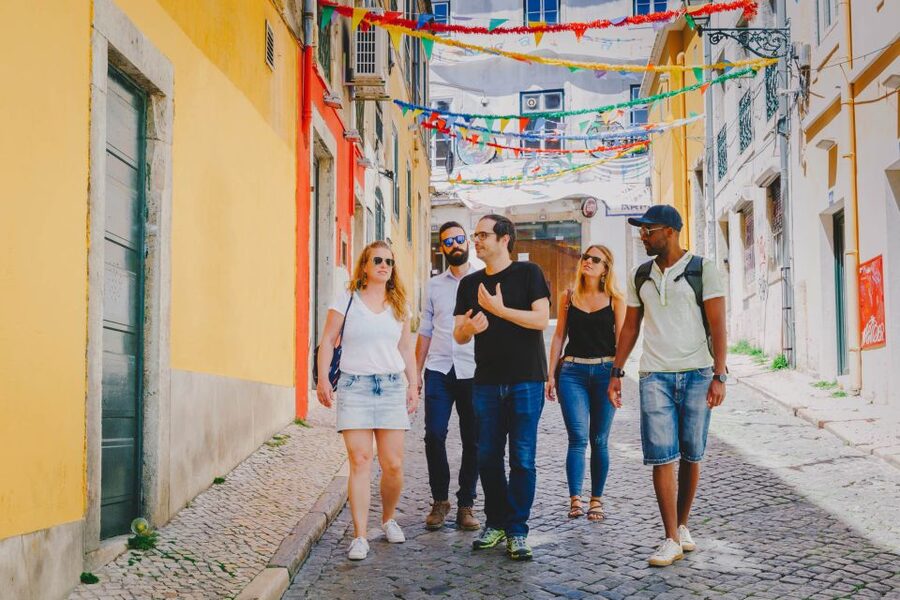
Lisbon’s story comes together nicely on foot here, from the grand squares of Baixa to the crooked lanes of Alfama. You’ll see the places that shaped modern Portugal, then pause for a pastel de nata, another local snack, and a glass of wine. The route gives you a useful first map of the city, not just a string of photo stops.
I like the way the tour connects the 1974 Carnation Revolution at Carmo Square with Lisbon’s older stories of monarchy, earthquake, and Moorish influence. I also like the food breaks: the custard tart and savory tasting make the history feel tied to daily life. The main consideration is the walking itself. Three hours through Lisbon means hills, uneven streets, and limited time inside attractions, since entry fees and interior guiding are not included.
Key points to know before you book
- Four central districts in three hours: Walk through Rossio, Baixa, Chiado, and Alfama, ending at Praça do Comércio.
- History with a modern turning point: Carmo Square provides the setting for the Carnation Revolution, which ended 48 years of dictatorship in 1974.
- Three included tastes: You receive one pastel de nata, one savory snack, and one wine tasting, with codfish cake and green wine appearing in recent tour experiences.
- English-speaking local guides: Guides have included Filipa, Filipe, Maria, Daniel, Carlos, Joana, Martin, and others. The strongest feedback centers on warmth, humor, clear explanations, and practical advice.
- A useful orientation walk: Start at Rossio Square and finish at Commerce Square, so you can begin learning Lisbon’s layout right away.
- Good value at $23: The price is modest for three hours of guiding plus food and drink, though this is not an attraction-entry tour.
Why this route works as a first look at Lisbon
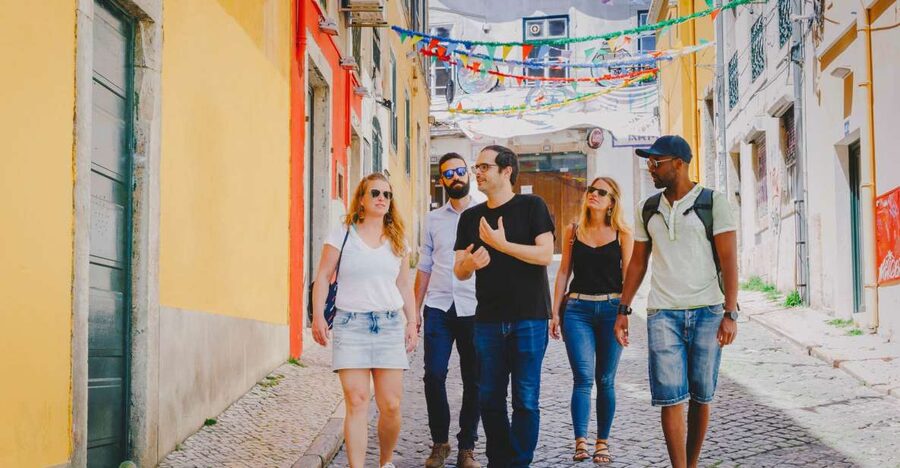
I would place this walk near the beginning of a Lisbon stay. It covers enough ground to help you understand how the center fits together, and guides often add tips about restaurants, shortcuts, and places to explore later.
The route is also sensibly arranged. You begin at Estátua de D. Pedro IV in Rossio Square, move through the central districts, then finish beside the Tagus at Terreiro do Paço, also called Praça do Comércio. That progression takes you from the city’s inland heart to its grand riverfront gateway.
You are not simply ticking off monuments. The guide explains why Lisbon looks the way it does, how the city changed after the 18th-century earthquake, and how Portugal moved from dictatorship to democracy. That context is the real value of the walk.
The guiding style appears to be one of the experience’s strongest features. Daniel is praised for humor and for making Portuguese history personal. Maria, Filipa, Joana, Martin, Carlos, and others are described as warm, engaging, and ready with local suggestions. Guide assignments can change, so book this for the route and format rather than for one particular person.
More Walking Tours in Lisbon
- Lisbon: History, Stories and Lifestyle Walking Tour
★ 4.8 · 10,902 reviews - Best of Lisbon Small-Group Guided Walking Tour
★ 5.0 · 4,869 reviews - Lisbon: Food and Wine Small Group Walking Tour
★ 4.9 · 4,082 reviews
Rossio Square and the city’s central meeting place
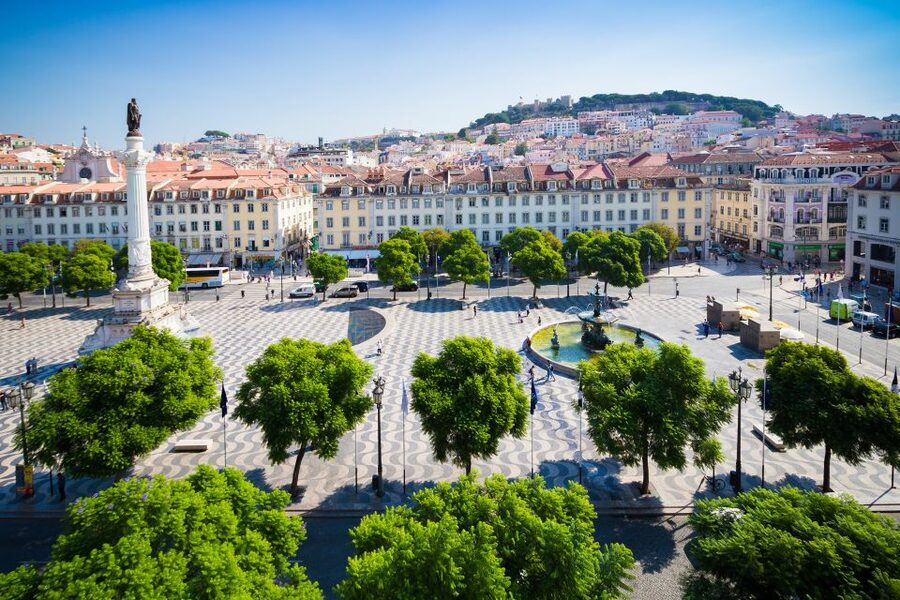
Meet near the statue of D. Pedro IV in Rossio Square. This is an easy central starting point, and it puts you right in the middle of Lisbon’s old and rebuilt city center.
The square gives your guide a natural place to explain Lisbon’s layers. Look down at the patterned pavement and across at the surrounding buildings as the walk begins. The focus is not only on what looks attractive, but on how Rossio has worked as a public space through different periods of Portuguese life.
From here, you move toward St. Dominic’s Square. The stop is short, around ten minutes, but it adds another piece to the city’s social and historical story. The group pauses for photographs and a guided explanation before continuing.
This opening section is useful for getting your bearings, but it is not a slow architectural study. If you want long stretches for independent photography, you may find the pace brisk. The advantage is that the tour keeps moving and covers a wide part of central Lisbon.
Restauradores and the railway station’s ornate facade
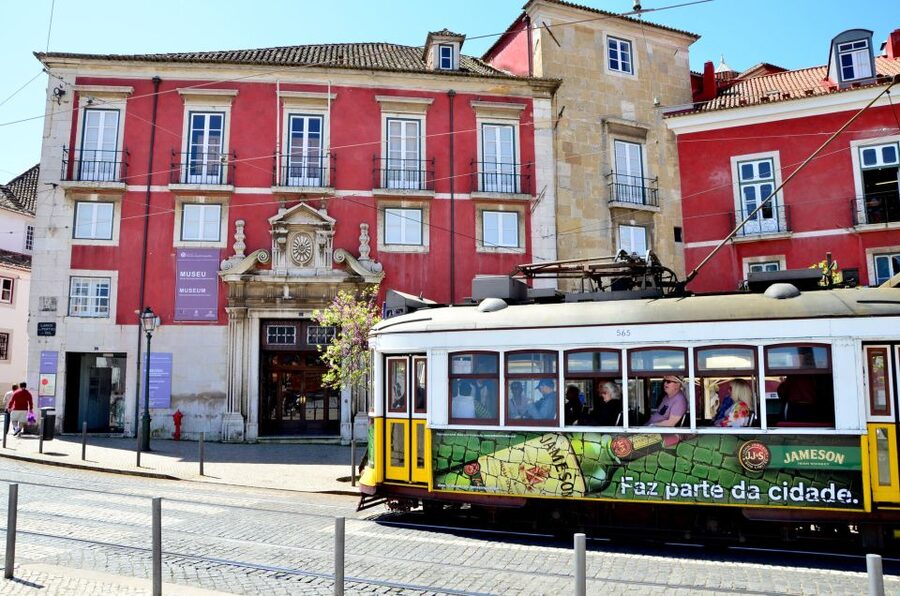
At Restauradores Square, the central obelisk commemorates Portugal’s restoration of independence from Spain. It is a compact monument with a large national story behind it, and the guide uses the square to explain that turning point.
The nearby Rossio Railway Station is one of the route’s most photogenic stops. Keep an eye out for its neo-Manueline facade, especially the elaborate horseshoe-shaped entrances. You do not need a train ticket or an attraction admission for this part. The station is viewed from the outside, with time for photographs and explanation.
I like this pairing because it gives you both political history and architecture within a few minutes. You see how Lisbon uses public spaces to remember important events, then look at a building that reflects Portugal’s distinctive decorative style.
The walk remains outdoors, so your experience depends partly on the weather. A few recent participants completed the route in heavy rain and still found the guide kept the visit engaging, but comfortable clothing and shoes remain essential.
Carmo Square and the Carnation Revolution
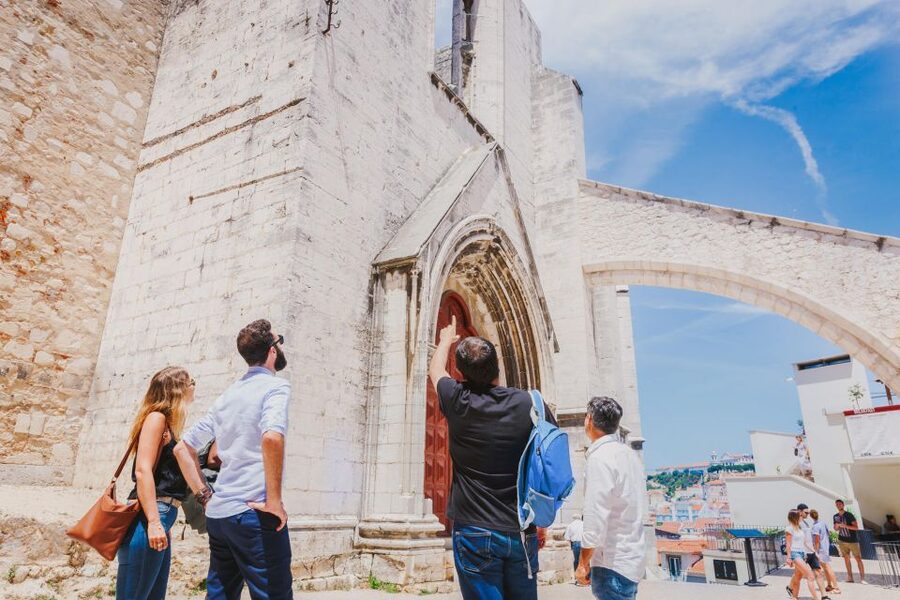
Carmo Square is one of the most important stops for understanding recent Portugal. Here, the guide explains the Carnation Revolution of 1974, the peaceful military-led movement that ended 48 years of dictatorship.
This is where the tour moves beyond old monuments and into living political memory. The square’s connection to the revolution gives the story a physical setting, helping you understand that Lisbon’s modern identity was shaped not only by explorers, kings, and earthquakes, but also by a recent shift toward democracy.
The stop lasts about 15 minutes and includes a walk, guided explanation, and photo opportunity. You may also get a viewpoint along this section, with scenic views over the city. The route does not include entry into attractions or ruins, so you should not expect an interior visit as part of the $23 price.
The guide’s delivery matters here. A dry lecture could make the subject feel distant, while a good guide can explain the event in a clear, human way. Several guides are praised for finding that balance between facts, humor, and conversation. You can ask questions rather than simply listen to a memorized speech.
More walking tours around Lisbon:
- Age of Discoveries Walking Tour in Belém
★ 5.0 · 1,513 reviews - Sintra & Cascais Day Tour with Pena Palace Entry and Gardens Walk
★ 5.0 · 962 reviews - Lisbon Roots – Small group Food & Culture Walking Tour w/tastings
★ 5.0 · 910 reviews - Lisbon: Starter Walking Tour to the highlights in German
★ 4.9 · 781 reviews
Chiado’s cafes, bookshops, and elegant streets
From Carmo, the route continues into Chiado. This district is known for old cafes, boutiques, theaters, and bookstores, and it provides a change of mood after the political focus of Carmo Square.
Chiado feels more polished and literary than Alfama. You pass through rather than spend the whole tour shopping or entering businesses, but the streets give you a good sense of Lisbon’s urban character. The guide can point out how this part of town fits into the wider center and suggest places to return to later.
The stop is listed at about 15 minutes, with the tour passing through scenic streets. That makes it best for orientation, not a detailed visit to every cafe or shop. If you have a particular bookstore, theater, or cafe in mind, note it during the walk and return independently.
This is also a helpful moment to notice the changes in street level. Lisbon is not flat, and the route links districts with different heights. A guide may offer shortcuts up the hills, but you should still expect a fair amount of walking.
Baixa and the city rebuilt after the earthquake
Baixa is the most orderly part of the route. Unlike the winding streets of Alfama, this central district was rebuilt after the devastating 18th-century earthquake according to new urban planning rules.
The guide explains the logic behind the broad streets, regular blocks, and construction methods intended to improve safety. This gives you more than a pretty view of downtown. You learn why Baixa looks different from older parts of Lisbon and how a disaster reshaped the capital.
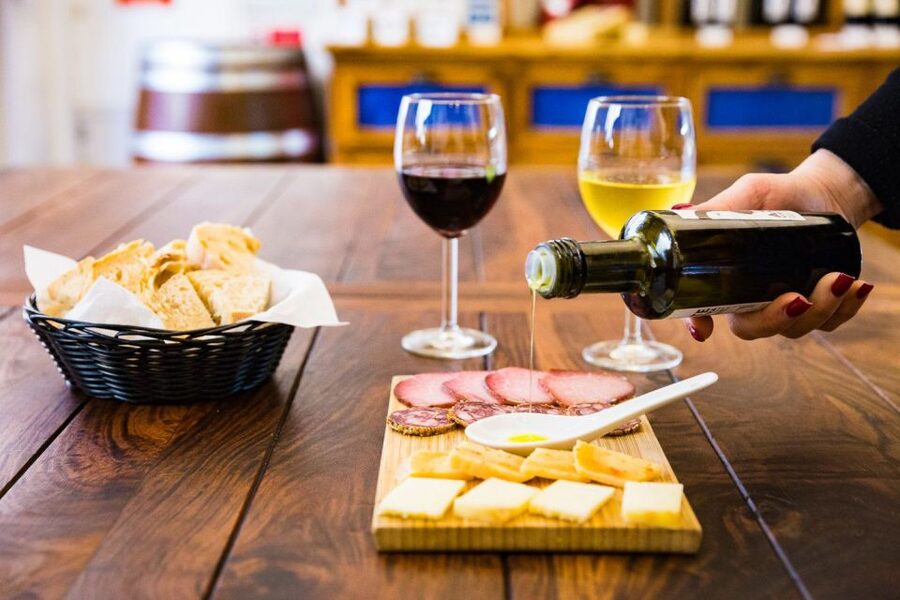
A food tasting takes place in Baixa. The included pastel de nata is the obvious star, but the savory snack is just as useful for getting a small taste of everyday Portuguese food. Codfish cake has featured in the tasting, though the exact snack may vary.
At $23, these inclusions make a noticeable difference. A custard tart and a small snack will not replace a meal, but they break up the walk and add local flavor without requiring you to stop and pay separately. The tasting also gives the guide a natural chance to discuss food customs and local recommendations.
After the tasting, you continue through Baixa for another guided walk and photo stop. The pace gives you a broad view of the district rather than a detailed architectural survey. That is a fair trade for a route that also reaches Alfama in the same morning.
Viewpoints and the changing shape of Lisbon
Several stops are listed simply as viewpoints, with time for photographs and scenic views. These moments matter because Lisbon’s streets can feel confusing when you are moving between squares, slopes, and narrow lanes.
A viewpoint helps you see the city as a whole. You can better understand the relationship between the central districts, the hills, and the riverfront. Exact viewpoints can vary with the guide and route, so treat these as scenic pauses rather than a promise of one named lookout.
The breaks also help manage the three-hour walk. You will hear another piece of the city’s story, take photographs, and catch your breath before moving on. Still, do not mistake a viewpoint stop for a long rest. The tour keeps a steady rhythm.
Wear shoes with good support. Comfortable clothes are specifically recommended, and that advice is practical here. The route crosses historic streets and includes uphill sections, particularly as you move toward Alfama.
Alfama, Fado, and a final local tasting

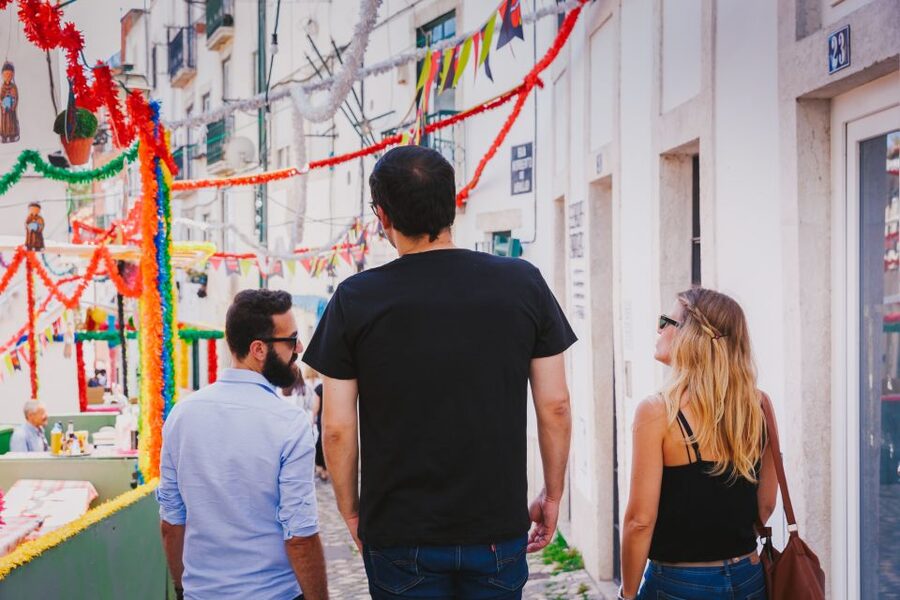
The last major district is Alfama, Lisbon’s oldest neighborhood. Its narrow alleys and winding streets feel very different from the straight planning of Baixa and the grand spaces near Rossio.
Here, the guide introduces you to the world of Fado, Lisbon’s distinctive musical tradition. The tour does not promise a full Fado performance, so think of this as cultural context and an up-close look at the neighborhood associated with the music.
Alfama is also where the second tasting takes place. You receive a local snack and wine, with green wine appearing in some tour experiences. The tasting is small, but it gives the group a relaxed pause among the alleys and lets the guide connect food, drink, music, and neighborhood life.
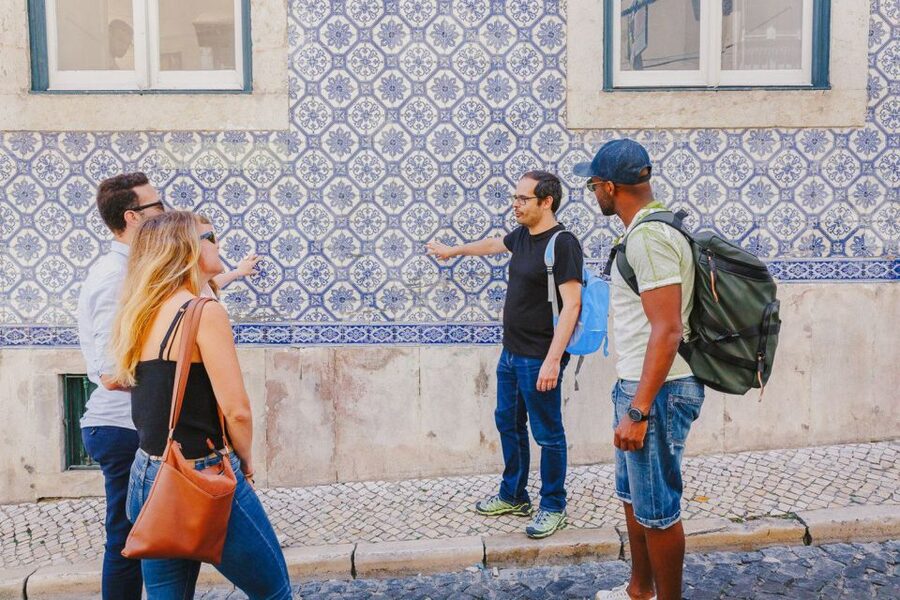
One useful detail from the guiding is the chance to ask about tiled facades in Alfama. The neighborhood’s tile-covered buildings are a good prompt for understanding how Lisbon’s streets are decorated and protected, and this is exactly the sort of question that can turn a passing view into a memorable detail.
The Alfama section lasts about 30 minutes, longer than most individual stops. That is a wise choice. It gives you time to see the district at street level instead of treating it as a quick photo backdrop.
Alfama can also be the most demanding section physically. The lanes wind, the surfaces are uneven, and the route may include slopes. If walking is difficult for you, ask about the route before booking. Pets are not allowed.
Ending at Praça do Comércio by the Tagus
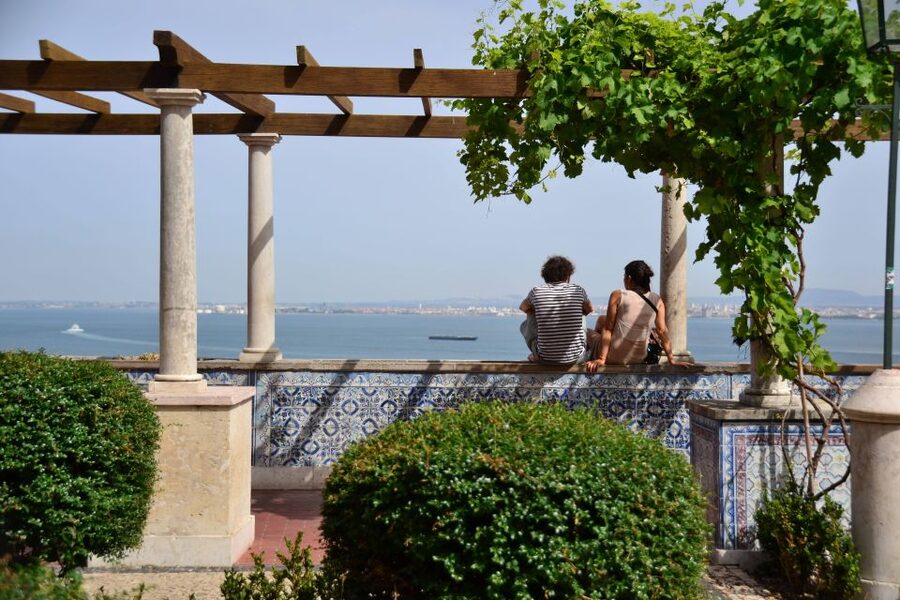
The tour ends at Terreiro do Paço, better known as Praça do Comércio. This huge riverside square was once the ceremonial entrance to Lisbon, and its open scale provides a strong finish after the tight lanes of Alfama.
The square is an excellent place to continue your day. You are left near the riverfront and within reach of the central city, so you can stop for lunch, explore nearby streets, or use the guide’s recommendations for the rest of your visit.
Ending here also gives the tour a clear visual arc. You start with Rossio, the meeting point between old and new Lisbon, and finish at the city’s formal river entrance. Along the way, you have seen a rebuilt downtown, an elegant commercial district, a revolutionary square, and a medieval neighborhood.
What $23 really gets you
At $23 per person, this is priced as an introductory city walk rather than a private or attraction-heavy tour. You are paying mainly for three hours with an English-speaking local guide, with a pastel de nata, a savory tasting, and wine included.
I consider that strong value if you want context and orientation. A good guide can save you time later by explaining where the districts connect, recommending places to eat, and pointing out shortcuts through the hills. Several guides, including Carlos, Daniel, Filipe, and Natalia, have been praised for offering practical tips alongside the historical material.
The limits are clear. Entrance fees are not included, and the tour does not provide a full meal or a dedicated visit inside major attractions. You will see and discuss the cathedral, station, squares, viewpoints, and neighborhoods, but this is primarily an outdoor walking experience.
The tour is also guide-dependent. The feedback is especially strong for guides who are funny, warm, and able to answer questions without overloading the group with facts. Names frequently praised include Maria, Filipa, Joana, Daniel, Martin, Carlos, Guilherme, and Natalia. You cannot assume which guide you will receive, but the range of positive experiences suggests a solid guiding team.
Who should book this Lisbon walk
I recommend it most for first-time visitors, especially if you want to understand Lisbon before choosing where to spend more time. It also suits you if you like history explained through streets and public spaces rather than through long museum visits.
Food-minded visitors will appreciate the three tastings, but you should see them as accents, not lunch. The tour also works well for people who enjoy meeting others, asking questions, and picking up local suggestions along the way.
You may want a different format if you dislike hills, prefer a private pace, or want extended time inside monuments. The three-hour schedule covers a lot, so photography stops are useful but brief.
Free cancellation is available up to 24 hours before the start, and you can reserve now and pay later. Starting times vary, so check availability when booking. The tour is conducted in English, and comfortable shoes are the one piece of preparation I would not skip.
Should you book the Best of Lisbon Walking Tour?
Yes, if you want an affordable and lively introduction to Lisbon’s center. The route covers the city’s essential districts, the history is tied to real places, and the custard tart, savory snack, and wine make the experience feel less like a lecture.
Book it early in your stay if possible. You will finish with a clearer sense of how Rossio, Baixa, Chiado, Alfama, and Praça do Comércio relate to one another, plus a list of places to revisit. Skip it only if a three-hour walk over Lisbon’s hills sounds tiring or if you need substantial interior sightseeing. For most visitors, $23 buys a very useful first chapter of the city.
FAQ
Where does the Best of Lisbon Walking Tour start?
The tour starts in Rossio Square, close to the statue of D. Pedro IV.
Where does the tour finish?
It ends at Terreiro do Paço, also known as Praça do Comércio.
How long does the tour last?
The listed duration is three hours, though some tours may run slightly longer depending on the guide and group.
What language is the tour conducted in?
The live tour guide conducts the experience in English.
What food and drink are included?
You receive one pastel de nata, one additional snack tasting, and one wine tasting. Codfish cake and green wine have appeared during the tastings, though the exact snack and wine may vary.
Are attraction entrance fees included?
No. Entrance fees and guiding inside attractions or sites are not included.
What should I bring?
Bring comfortable shoes and comfortable clothes for the three-hour walk.
Can I cancel the booking?
Yes. You can cancel up to 24 hours in advance for a full refund. You can also reserve now and pay later.
New around Lisbon
- Arrábida, Setúbal, Sesimbra, Olive with wine tasting★ 5.0 · 75 reviews
- Lisbon: Sunset Sailing Boat Cruise with Wine★ 5.0 · 75 reviews
- Lisbon Half Day Private Tour★ 5.0 · 75 reviews
- Private Half Day Tour to Fatima from Lisbon★ 5.0 · 75 reviews
- Fátima, Nazaré and Óbidos Private Tour from Lisbon★ 5.0 · 76 reviews
- Central Lisbon 3-Hour Guided E-Bike Tour★ 4.8 · 76 reviews
- Lisbon Historic City Tour by Tuk-Tuk★ 5.0 · 76 reviews
- Sintra World Heritage and Cascais Village Private Deluxe Tour★ 5.0 · 76 reviews
Walking Tours, compared.


Best of Lisbon Small-Group Guided Walking Tour
Read our review →

Porto Walking Tour, Lello Bookshop, River Cruise and Cable Car
Read our review →
Experience Porto’s Charm: 3-Hour Guided Walking Tour
Read our review →
Enjoy a Guided Levada Walk in the Rabaçal Valley
Read our review →
Browse the lists this tour appears in