

Reviewed · MUSEUMS
FC Porto: Museum & Tour
The most memorable part of the FC Porto Museum and Dragão Stadium visit is the sheer scale of the club’s story. You move from interactive displays and European trophies to the pitch, benches, media room, Presidential Box, and away dressing room at one of Portugal’s best-known stadiums. The museum’s 27 thematic areas give the club a proper setting rather than treating it as a simple trophy cabinet.
I like the excellent value at $23, especially since the museum alone can fill a good part of an afternoon. I also like the practical access: the stadium sits directly by Estádio do Dragão Metro Station, and the museum uses Portuguese and English captions throughout. The main consideration is that the stadium visit is not normally a guided tour, and access can change on match days, event days, or during maintenance.
Key points at a glance
- Twenty-seven museum areas: Interactive displays cover FC Porto, its titles, famous moments, and its close bond with Porto.
- Champions League trophies: The international silverware gives the visit real weight, even if you are not a devoted football follower.
- Pitch-side access: You can see the field, FC Porto bench, stands, and Presidential Box from viewpoints normally closed during a match.
- Museum first, stadium second: The museum is free-flowing, while the stadium section follows the available route and timing.
- Six language options: The app and rented audio guides are offered in Portuguese, English, French, Spanish, German, and Italian.
- Easy metro arrival: The entrance is just in front of Dragão Station, served by lines A, B, and F.
Why FC Porto’s museum is more than a trophy room
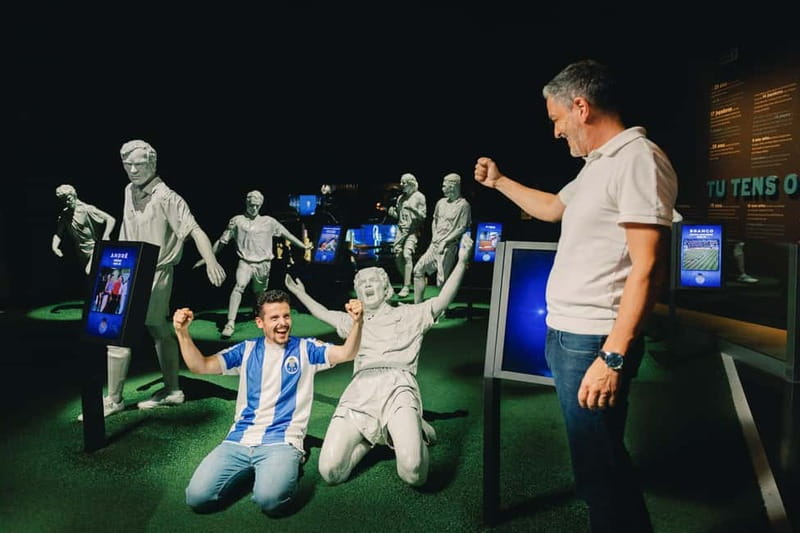
FC Porto is woven into the identity of Porto, and the museum makes that connection one of its main themes. This is not just a room lined with cups. The displays place the club’s achievements alongside the city, its supporters, and the moments that helped define the team at home and abroad.
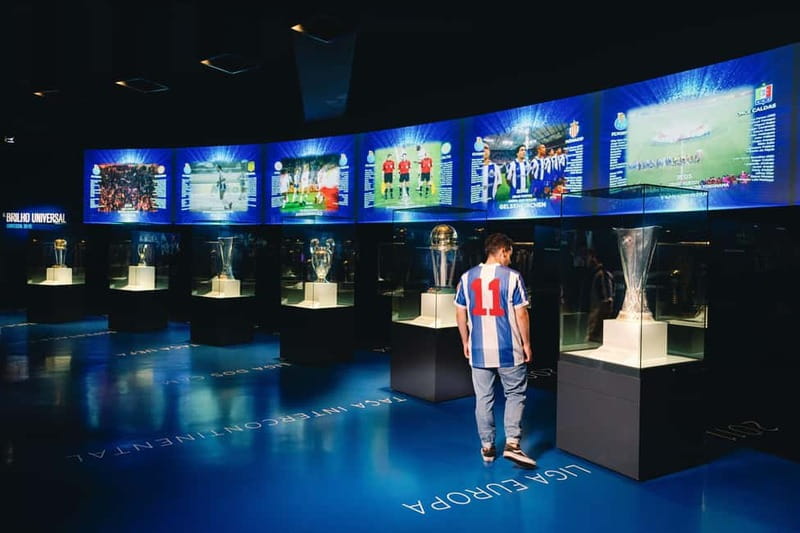
The collection includes international trophies, with the UEFA Champions League taking pride of place. I find this especially useful if you know FC Porto mainly as a famous Portuguese team but want to understand its reach beyond the domestic league. The silverware provides the headline, but the surrounding material explains why the club matters.
The museum is arranged across 27 thematic areas. That number matters because it gives you more to do than a short walk past framed shirts and old photographs. The experience uses video, interactive elements, memorabilia, and technology to keep the route moving.
You can wander through the museum without being tied to a fixed guided group during opening hours. That suits me because I can spend extra time with a display that catches my attention, then move on when I am ready. Families also have room to set their own pace, which helps when children want to try every interactive feature.
More Museums in Porto
- Porto: Cálem Cellar Tour, Interactive Museum & Wine Tasting
★ 4.5 · 4,113 reviews - Porto: Entry Ticket at WOW – The Wine Experience Museum
★ 4.7 · 356 reviews - Porto: 3D Fun Art Museum Porto Entry Ticket
★ 4.6 · 302 reviews
What you see inside the 27 museum areas

The museum’s greatest strength is variety. You can expect a mix of club history, trophies, film, and interactive material rather than one long wall of text. Captions are available in both Portuguese and English, so you do not need to rent an audio guide simply to understand the basic story.
Some displays are designed for quick viewing, while others reward more time. The interactive sections are particularly useful for children and for anyone who does not follow football closely. They give the visit a sense of participation instead of asking you to absorb facts passively.
I would allow at least an hour for the museum if you want a proper look. One possible itinerary is to arrive an hour before your stadium time, see the museum first, and then join the stadium route. That works well, but it can make the museum feel rushed if you want to read everything. If the schedule allows, you may prefer to return to the museum after the stadium visit and finish the areas you skipped.
The museum can also fill most of a rainy afternoon. That is a real advantage in Porto, where an indoor cultural stop with a clear focus is useful when the weather turns wet. The large collection means you are unlikely to feel finished after a quick ten-minute visit.
One caution: the museum’s sound and video elements can make the space noisy. If you use an audio guide and find the music too loud, standing closer to the display or using the written captions may be easier.
From European trophies to Porto’s football identity
The Champions League material is the obvious draw, but the museum’s city connection gives the visit more meaning. FC Porto is not presented as an isolated sports brand. Its story is linked to Porto itself, which helps you understand the pride attached to the club.
I like this balance. A football museum can become repetitive if every display simply celebrates another victory. Here, the club’s wider place in the city gives the exhibits a local point of view. You see why a visit to Dragão feels like part of experiencing Porto, not just a side trip for people who collect stadium tours.
The museum also helps put the stadium visit in context. By the time you reach the pitch and stands, you have already seen the titles and moments that made the building important. The stadium is no longer just a modern shell. It becomes the stage for the club’s biggest occasions.
If you are visiting with someone who is not a football fan, I would still consider the museum worthwhile. The technology, architecture, city connection, and major-event history give non-supporters enough to look at. The appeal is strongest for a mixed group when you let each person move at their own speed.
Inside Dragão Stadium, from the pitch to the Presidential Box
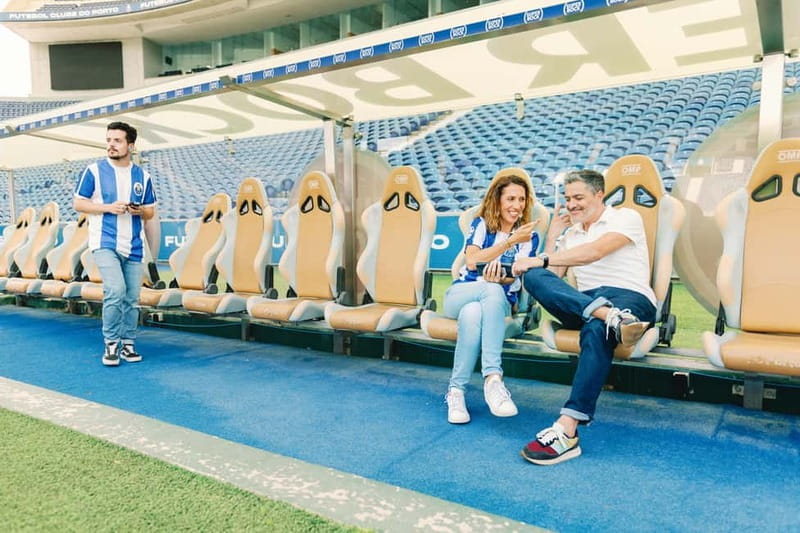
The stadium section shows you the working and ceremonial sides of Dragão. The route can include pitch side, the FC Porto bench, the stands, the Presidential Box, the media room, and the visiting team’s dressing room.
Pitch access is the highlight for most people. Seeing the field from ground level changes your sense of the stadium’s size, and it gives you the best photo opportunity of the visit. You can also look back toward the stands and understand how the venue feels on match day.
The FC Porto bench is another small but satisfying stop. You are seeing the place associated with the home team rather than viewing the stadium only from a spectator’s seat. The Presidential Box adds a more formal side of the building, with a different view over the pitch.
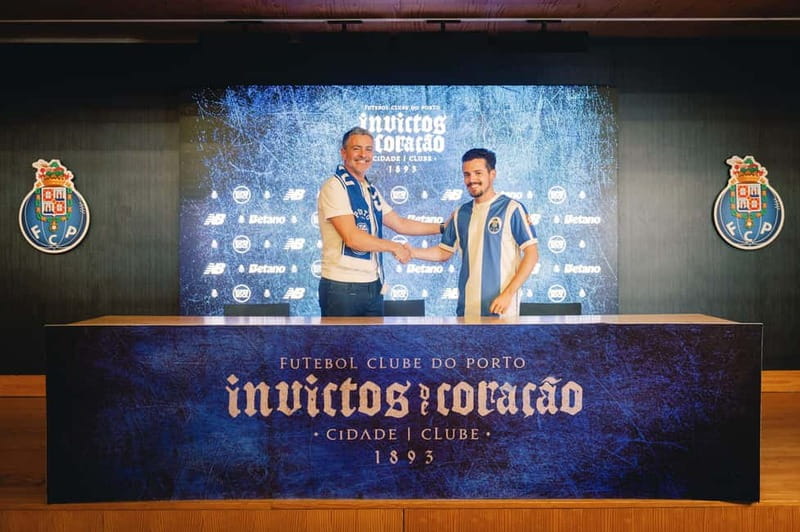
The media room helps explain how major matches are presented to the public. It is a useful addition because it shows the club’s public face beyond the players and supporters. The away dressing room is also included on the usual route.
A practical detail matters here: the home team dressing room is not shown on the standard visit described by the experience. You see the opposition changing room instead. If access to the home dressing room is important to you, do not assume it comes with the ticket.
The stadium portion often takes around 45 minutes to an hour, depending on the route and conditions. It is described as self-guided, with the FC Porto Museum and Tour App and rented audio guides available. At times, a staff-led element may operate, and individual guides such as Marta and Rodrigo have been praised for clear presentations. Still, you should book this expecting an unguided stadium route rather than a guaranteed personal tour.
More museums around Porto:
- Skip the Line: FC Porto Museum & Tour
★ 4.0 · 209 reviews - 3D Fun Art Museum Porto Ticket
★ 5.0 · 128 reviews - Porto: Wine Experience Museum with 3 Wine Tastings
★ 4.5 · 105 reviews - Lisbon: Luz Stadium Tour & SL Benfica Museum Ticket w/Scarf
★ 4.7 · 3,264 reviews
A stadium with a major-event past
Dragão Stadium was designed by architect Manuel Salgado. It was named European Project of the Year in 2003 and has received recognition for environmental management.
The building has also hosted major football events, including UEFA Euro 2004, the 2019 UEFA Nations League, and the 2021 UEFA Champions League final. Large concerts by the Rolling Stones, Coldplay, Muse, and One Direction have also taken place here.
These details give the stadium tour a wider role. You are not visiting only the home ground of a Portuguese Primeira Liga team. You are seeing a venue built for high-profile international football and major concerts, with the scale and facilities to match.
I find this useful context during the walk. A stadium can feel like a collection of standard stops, but knowing that Dragão has hosted a European Championship, a Nations League final, and a Champions League final gives the building more presence. You can picture the difference between an ordinary club fixture and a major international event.
How to plan the two-hour visit
The listed duration is two hours, and that is a sensible minimum for the combined experience. Your exact pace will depend on how much time you spend with the museum’s interactive displays and how quickly the stadium route is moving.
A good plan is to arrive about an hour before the stadium portion. Start with the museum, focus on the main trophy and interactive areas, then continue to Dragão. This lets you see both parts in one visit without wasting time between them.
There is also a case for doing the stadium first when that is possible. The museum is free-flowing, so you can return afterward and browse without worrying about missing a set departure. This may be the better choice if you are a serious football fan who wants to read every caption or try every interactive station.
Your voucher must be exchanged at arrival for the entrance tickets. Do not walk straight through assuming the digital voucher itself is the final ticket. Allow a little time at the FC Porto Museum reception, especially if you arrive early and want to make the most of the building.
The museum and tour begin and end at the FC Porto Museum, on Via Futebol Clube do Porto at Estádio do Dragão. The entrance is directly in front of the metro station, served by lines A, B, and F. For a city visit, this is one of the easiest stadium attractions to reach without arranging a taxi.
The experience is wheelchair accessible. Children up to four years old enter free. Audio guides are not included in the $23 price, so budget extra if you want one.
Language choices and the self-guided format
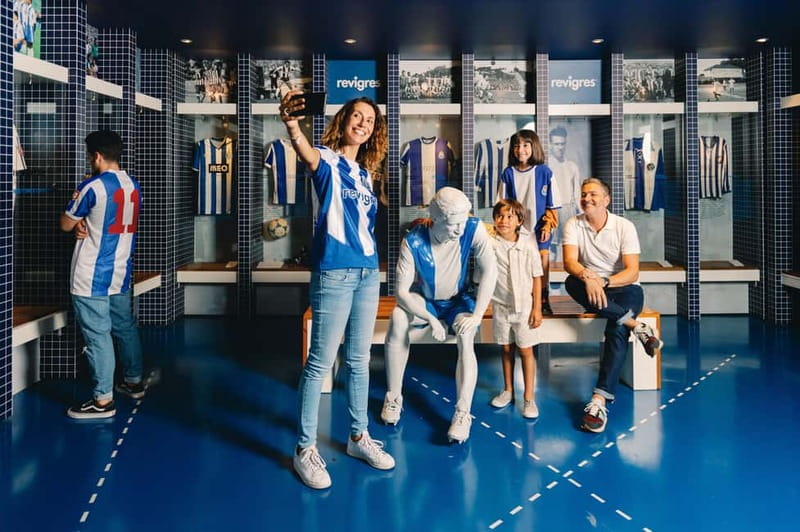
The museum captions are available in Portuguese and English, which covers the needs of most international visitors. For a fuller audio presentation, you can rent an audio guide in Portuguese, English, French, Spanish, German, or Italian.
The app offers another way to follow the stadium route. I like the choice because it keeps the basic ticket price reasonable while allowing you to add explanation if you want it. If you prefer a staff member to lead every stop, this may feel less satisfying than a traditional guided stadium tour.
The self-guided arrangement also gives you a little freedom. You are not forced to keep up with a long group, and you can spend more time taking photos at pitch side. The trade-off is that the level of explanation may be lighter, and one individual experience found the stadium portion less detailed without a stronger guide.
If you rent an audio guide, pay attention to the sound level in the museum. Music and video can be loud in some areas, which may make listening difficult. The bilingual written captions are a useful backup.
The best value for your $23
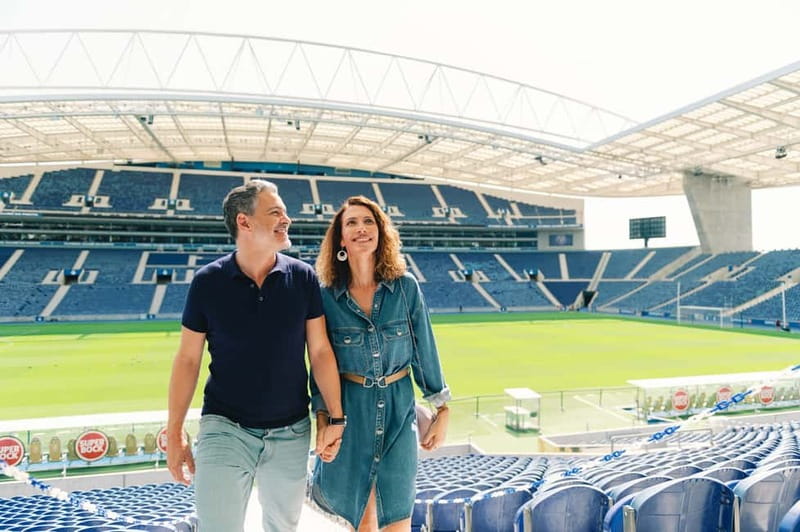
At $23 per person, this is strong value if you plan to spend close to two hours on site. The museum alone has enough material to justify much of the cost, while the stadium access adds the part many football fans most want: the pitch, bench, stands, and Presidential Box.
The price is also reasonable for families. Children who are not interested in reading every historical panel can use the interactive displays, and children up to four enter free. Older children can enjoy the stadium photos and the sense of being inside a real football venue.
For a solo visitor, the same price buys a structured indoor activity with plenty of freedom. You do not need to wait for a long group to move through the museum, and the metro stop makes the visit easy to fit into a day in Porto.
The value drops if you only want a guided stadium experience. This ticket does not include match tickets, audio guides, or other events at the museum and stadium. The Stadium Tour is also unavailable on match days, UEFA match day evenings, and when major events or maintenance affect the facilities.
Match days and possible changes
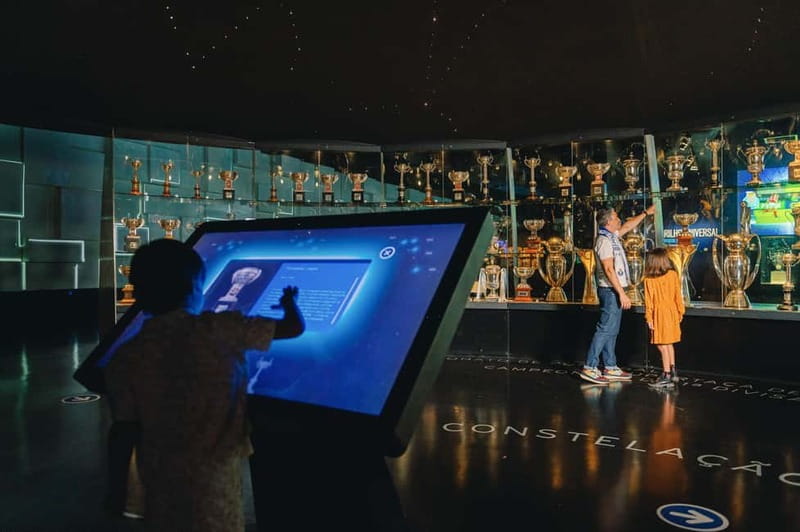
Check the date carefully before booking. Stadium tours are not available on match days or UEFA match day evenings, and major events on the pitch can cause changes. The stadium section can also be cancelled or altered without prior notice, and occupancy limits may apply.
On restricted dates, a Museum Tour Only option may be offered. That ticket includes the museum but not the Stadium Tour, and it is used on match days, UEFA match day eves, event days, or stadium maintenance days.
This distinction is important. If you are booking specifically to stand pitch side, do not assume every museum ticket includes stadium access. Confirm the option and date before you commit.
The museum itself is the more dependable part of the visit. Even if stadium access changes, you still have a sizeable collection, 27 thematic areas, interactive displays, and the club’s major trophies to explore.
Who will enjoy FC Porto Museum and Dragão Stadium
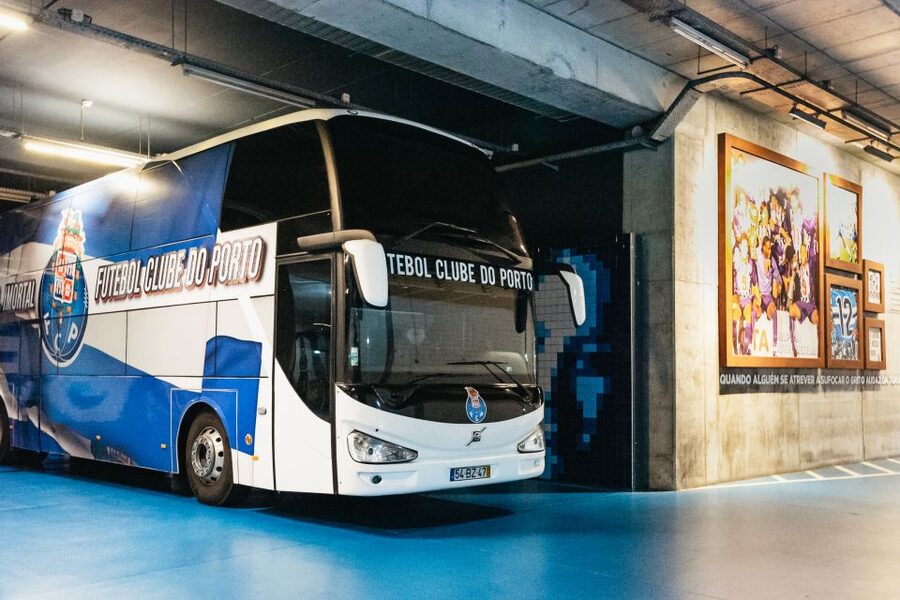
I would recommend this for several kinds of visitors:
- FC Porto supporters: The trophies, club milestones, and city connection make this the clear target audience.
- Football fans: If you enjoy stadium visits around the world, Dragão gives you the familiar pitch-side and backstage stops plus a particularly large museum.
- Families: The interactive exhibits and free entry for children up to four make the visit easy to share across generations.
- Mixed-interest groups: Non-fans can still enjoy the architecture, major events, technology, and city history.
- Rainy-day visitors: The museum can occupy a substantial part of an afternoon indoors.
I would be more cautious if you want a formal, highly detailed guided tour from start to finish. The stadium route is normally not guided, and the audio option costs extra. You should also skip it if your Porto schedule is too tight to allow at least two hours.
Should you book the FC Porto Museum and Stadium Tour?
Book it if you want a well-priced look at both the club’s achievements and its home ground. The museum is the safest reason to go: it is large, interactive, bilingual, and packed with trophies and visual material. The stadium adds the satisfying moments, especially the field, bench, stands, and Presidential Box.
I would book early in your planning if the stadium matters most, then check for match or event restrictions. Arrive with enough time to exchange your voucher and start in the museum. If you have a full afternoon, consider returning to the museum after the stadium route so you do not rush the 27 areas.
Skip it only if you want a guaranteed guided experience or if your date may clash with a match, UEFA event, or major stadium function. For most football fans, families, and curious Porto visitors, $23 buys a substantial and easy-to-reach experience.
FAQ
Where does the FC Porto Museum and Stadium Tour start?
It starts at the FC Porto Museum, Via Futebol Clube do Porto, Estádio do Dragão, 4350-415 Porto. The entrance is directly in front of Estádio do Dragão Metro Station.
How do I reach the museum by metro?
The museum is beside Estádio do Dragão Metro Station, which is served by lines A, B, and F.
How long does the experience take?
The listed duration is two hours. You may spend additional time in the museum because tours there are free-flowing during opening hours.
Is the stadium tour guided?
The stadium tour is normally not guided. The FC Porto Museum and Tour App and rented audio guides are available in Portuguese, English, French, Spanish, German, and Italian.
Is an audio guide included?
No. Audio guides are available to rent, but they are not included in the ticket price.
What areas of Dragão Stadium can I see?
The route can include the pitch, FC Porto bench, stands, Presidential Box, media room, and the visiting team’s dressing room.
Can I visit the stadium on a match day?
Stadium tours are not available on match days or UEFA match day evenings. Major events on the pitch and facility maintenance can also change or cancel stadium access.
Is the experience wheelchair accessible?
Yes, the activity is wheelchair accessible. Children up to four years old enter free.
New around Porto
- Porto: City Bike Rental★ 4.6 · 75 reviews
- Fado Concert with Welcome Drink★ 5.0 · 75 reviews
- Boat Trip to Régua Through the Douro Valley with Breakfast and Lunch★ 4.5 · 76 reviews
- Porto City Tour Half Day – Private★ 5.0 · 77 reviews
- Port : Private Cruise in the Douro — 6 Bridges & Sunsets★ 5.0 · 78 reviews
- Porto Private Airport Departure Transfer★ 4.5 · 78 reviews
- Douro Valley Small-Group Tour: 2 Wineries, Lunch, Optional Cruise★ 5.0 · 78 reviews
- Half-Day Walking Tour Tasting Local Food in Porto★ 5.0 · 78 reviews
Museums, compared.

Cálem Cellar Tour, Interactive Museum & Wine Tasting
Read our review →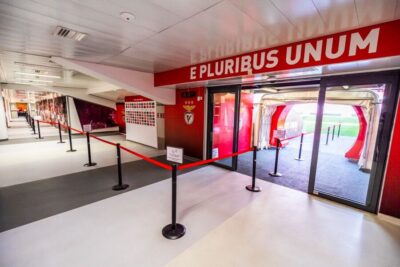
Luz Stadium Tour & SL Benfica Museum Ticket w/Scarf
Read our review →

Banksy Museum Permanent Exhibition Entry Ticket
Read our review →
Belem, Jeronimos Monastery, and Coach Museum Tour
Read our review →


Entry Ticket at WOW – The Wine Experience Museum
Read our review →Browse the lists this tour appears in