
Reviewed · HISTORICAL TOURS
Lisbon: History, Stories and Lifestyle Walking Tour
Lisbon’s story makes the most sense from its hills, lanes, churches, and viewpoints, and this tour links many of the city’s key pieces in three hours. You’ll begin in 16th-century Bairro Alto, look across the Tagus from São Pedro de Alcântara, ride a classic tram, and finish in Alfama by the cathedral.
I like the strong mix of history and everyday life, especially the stop for a bica and pastel de nata. I also like the range of guides, including Paulo, Ricardo, Anna, Beatrice, and João, whose humor and personal stories can turn a standard city walk into a more human introduction. The main drawback is physical: Lisbon’s hills, steps, and uneven lanes are part of the experience, and the three-hour schedule may run long.
Key points to know before booking
- Bairro Alto sets the historical stage: Learn how this 16th-century district changed after the 1755 earthquake.
- São Pedro de Alcântara gives you a superb city view: See Baixa and the south bank of the Tagus from one of Lisbon’s best lookout points.
- The tram ride adds real Lisbon atmosphere: The route climbs toward Portas do Sol, though service can be affected by breakdowns or bad weather.
- The Carnation Revolution comes alive at Carmo: The convent and church connect Lisbon’s architecture with the end of nearly 50 years of dictatorship.
- Alfama supplies the old-city character: Narrow streets, fado houses, saints’ festivals, and river views round out the walk.
- Coffee and cake are included: You get a simple local pause with a bica and pastel de nata, or an alternative when dietary needs require it.
A useful first look at Lisbon’s hills
This is a good orientation walk for your first day in Lisbon. Instead of spending three hours inside one museum or marching past sights with no context, you move through several districts and see how the city fits together.
The route covers Bairro Alto, São Pedro de Alcântara, San Roque Church, Carmo, Baixa, Santa Justa, Portas do Sol, Alfama, and Lisbon Cathedral. That is a lot of ground, but the pace includes regular stops, views, explanations, and a short coffee break.
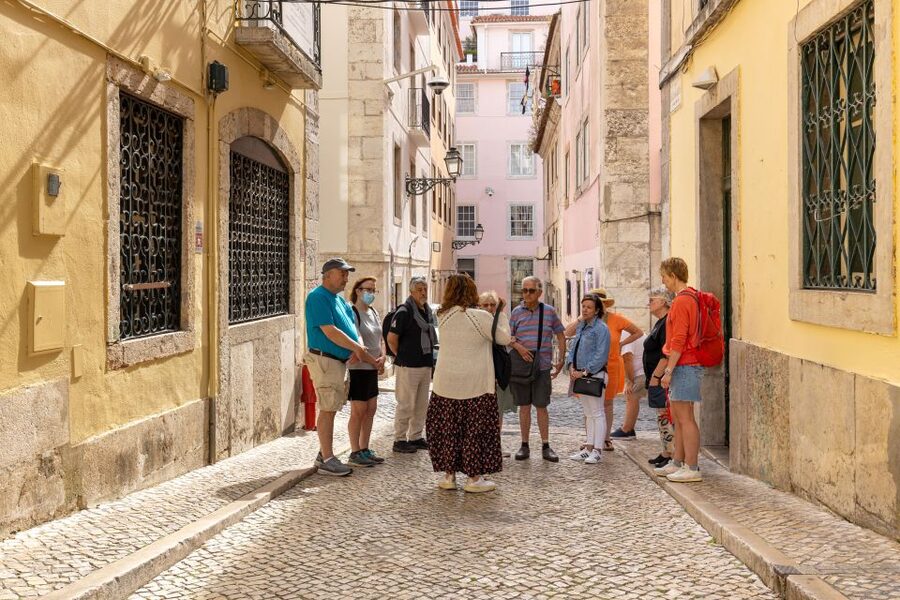
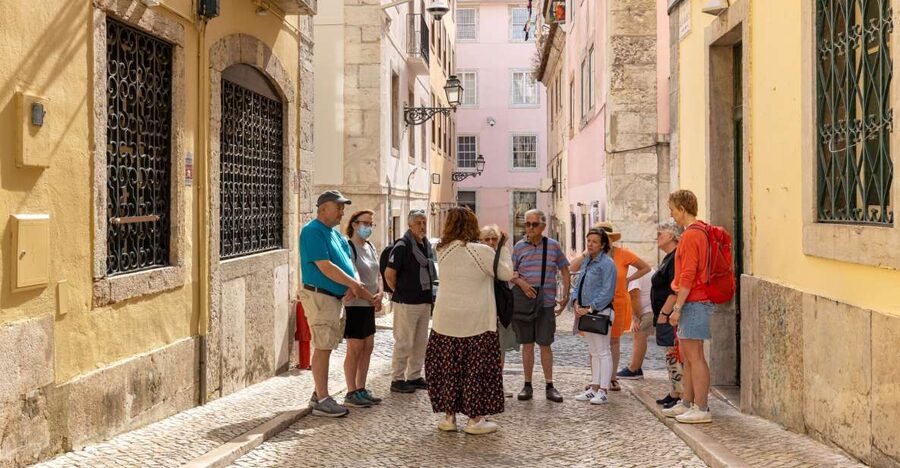
You should expect a guide-led experience rather than a quiet stroll. Guides speak Portuguese, Spanish, Italian, German, French, or English, depending on the departure. Private and small-group options are available, and group size matters here because narrow streets and busy viewpoints are easier to handle with fewer people.
The strongest part of the tour is the human explanation. Paulo, Ricardo, Anna, Beatrice, João, Lucia, and other guides have been praised for making the past easy to follow without turning the walk into a dry lecture. Paulo, in particular, has shared memories of growing up in Lisbon after living through the 1974 revolution as a child. That sort of local viewpoint gives political history more weight than a date on a plaque.
More Historical Tours in Lisbon
- Lisbon: Live Fado Show with Port Wine in Historic Center
★ 4.7 · 4,166 reviews - Lisbon: Fado Show with Wine in a Historic Venue
★ 4.8 · 1,294 reviews - Explore Lisbon by Tuk Tuk: History and Viewpoints
★ 5.0 · 840 reviews
Bairro Alto and the view from São Pedro de Alcântara
The walk begins in Bairro Alto, a district dating from the 16th century. Its name means Upper District, and the high position is not just a map detail. You feel Lisbon’s vertical shape right away.
The guide explains how the district evolved after the earthquake of 1755. Families from Baixa and nearby districts moved into or helped renew this area, and the rebuilding of Lisbon changed its streets, buildings, and social life.
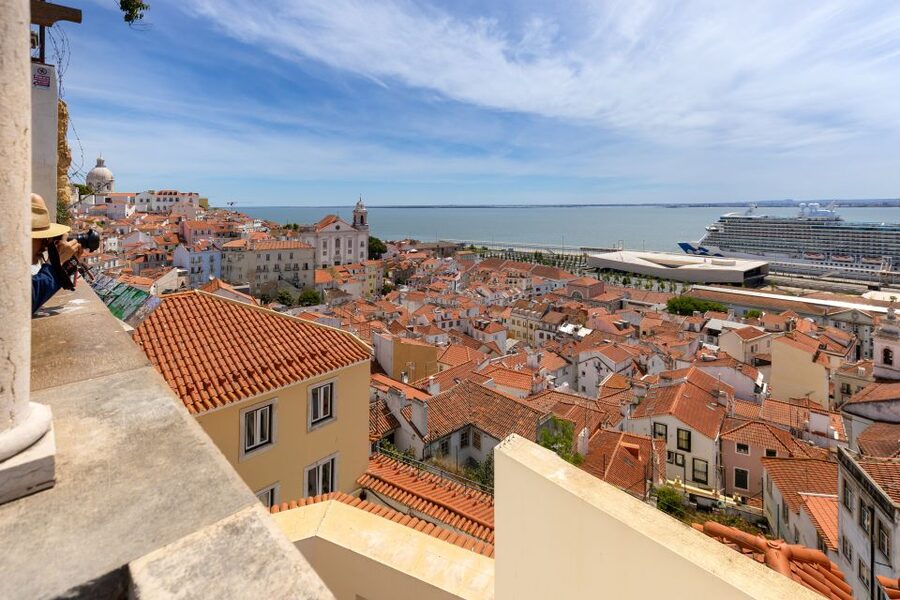
From there, you pass through the garden at Miradouro São Pedro de Alcântara. This is one of the tour’s best early stops because it gives you a clear view across Baixa toward the south bank of the Tagus. It is also a practical place to begin learning Lisbon’s layout. Your guide can point out the lower city, the river, and the hills you will cross later.
I like this part because it gives the rest of the walk a visual map. You are not just hearing names such as Baixa and Alfama. You are looking at their position from above and then gradually moving through them.
The viewpoint does come with a small trade-off. It can be busy, and the tour is not designed for a long, quiet photography session. You will have time for pictures, but keep listening for the next move.
San Roque Church and Lisbon’s layered faith
San Roque Church has a plain exterior that does little to prepare you for the interior. The church was built by the Jesuits, and inside you can see gilded decoration, tiles, and paintings linked to Mannerist and Baroque styles.
This contrast between an austere façade and an ornate interior is exactly the kind of detail that is easy to miss alone. A guide helps you look past the first impression and understand why the building is treated as both a church and a kind of art museum.
The stop also adds balance to the walk. Lisbon is often reduced to colorful streets, trams, and viewpoints, but its religious buildings explain much about the city’s art and public life. The guide can connect the church to broader Portuguese history and Catholic traditions without requiring you to spend an hour studying every side chapel.
Keep in mind that this is a guided visit within a larger route, not a dedicated church tour. If San Roque is high on your list, you may want to return later for a slower look.
Carmo Convent and the memory of 1974
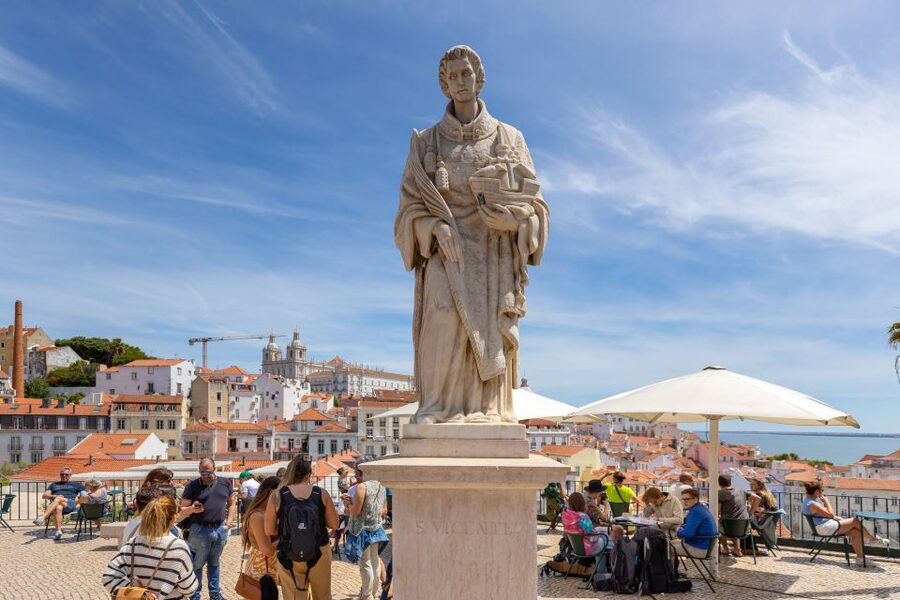
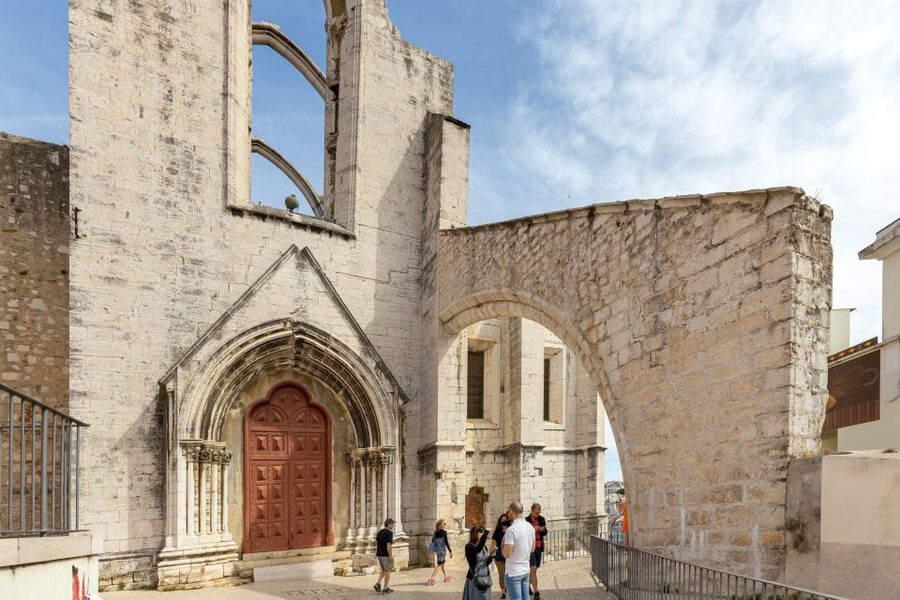
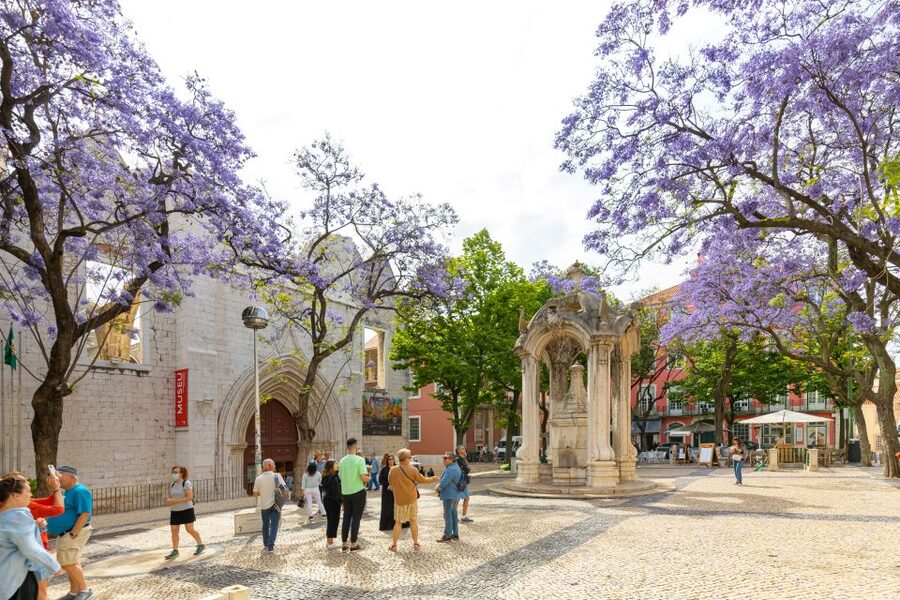
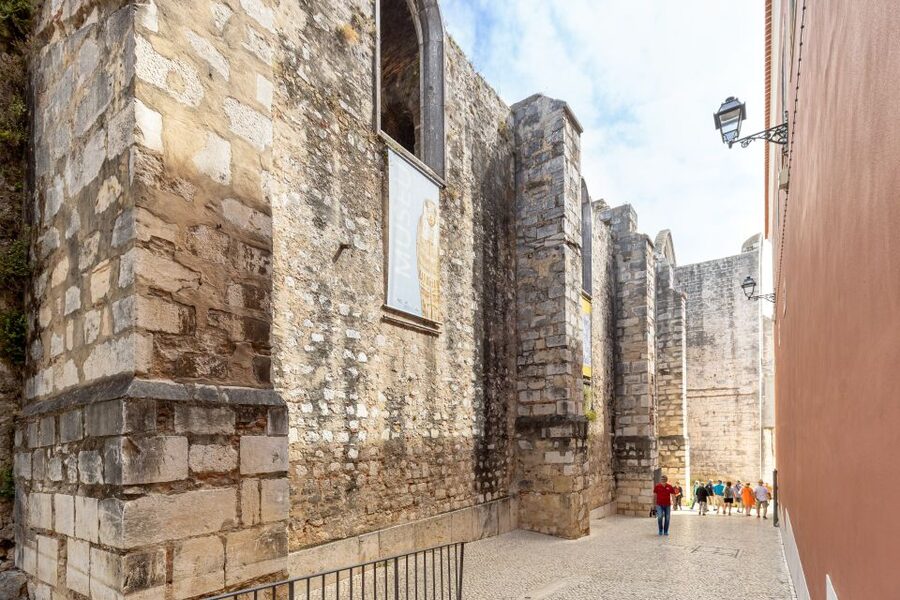
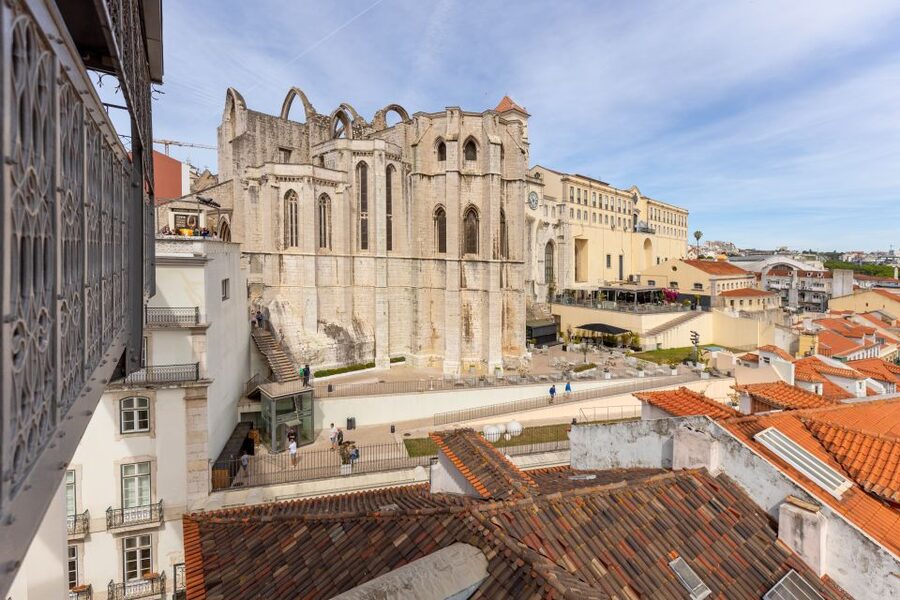
The route heads downhill toward Carmo Convent and Church, important examples of Lisbon’s Gothic architecture. The site is also tied to the Carnation Revolution, which began here in 1974 and ended nearly five decades of dictatorship.
That political connection gives the stop real force. You are not simply looking at old stone. You are hearing how a place in central Lisbon became part of a major change in the country’s modern life.
Several guides have made the revolution a highlight by explaining it in plain language. One guide’s personal connection to the period added a local perspective, while another guide used the subject as part of a wider discussion of Portuguese history and culture. The experience can vary by guide, but the itinerary gives the subject a firm place.
Carmo is also a useful reminder that Lisbon is not only an ancient city. Its medieval buildings and modern political story sit close together. That mixture is one reason this tour works better than a sightseeing route that lists monuments without linking them.
More Walking Tours in Lisbon
- Best of Lisbon Small-Group Guided Walking Tour
★ 5.0 · 4,869 reviews - Lisbon: Food and Wine Small Group Walking Tour
★ 4.9 · 4,082 reviews - Best of Lisbon Walking Tour: Rossio, Chiado & Alfama
★ 4.9 · 2,700 reviews - Age of Discoveries Walking Tour in Belém
★ 5.0 · 1,513 reviews
Santa Justa, Baixa, and the rebuilt city
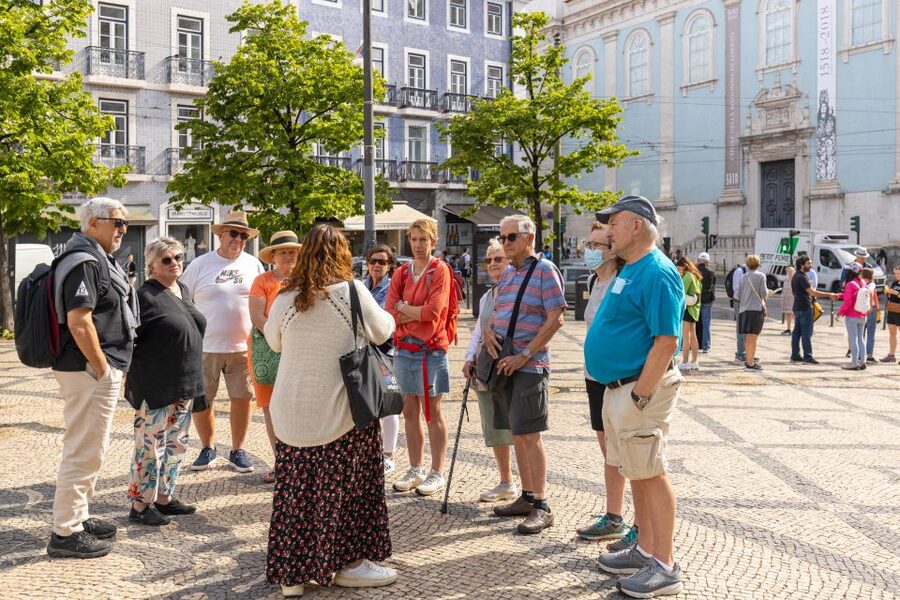
A short walk brings you to the Santa Justa elevator, one of Lisbon’s most recognizable structures. Built in the Gothic Revival style, it rises above the Baixa area and offers one of the city’s notable viewpoints.
The tour lets you see the elevator and understand its place in the lower city. You should not assume that this walking tour includes a long ride up Santa Justa itself. The included transport is the tram trip later in the route, so check the exact option if riding the elevator is important to you.
Baixa is the heart of central Lisbon, and the guide uses this stretch to explain the city’s rebuilding after the 1755 earthquake. The orderly character of the lower streets makes more sense once you know that Lisbon was reshaped after the disaster.
This is also where the tour includes a short break, coffee, and cake. The local pairing is typically a bica, a small Portuguese coffee, with a pastel de nata. It is a modest inclusion, but it improves the rhythm of the morning or afternoon. You get a chance to sit, ask questions, and reset before the second half.
Dietary needs may be manageable, but you should raise them with the guide. One guide arranged a vegan spinach snack instead of the usual pastry, showing that the stop need not be a problem for everyone who cannot eat the traditional cake.
The tram ride toward Portas do Sol
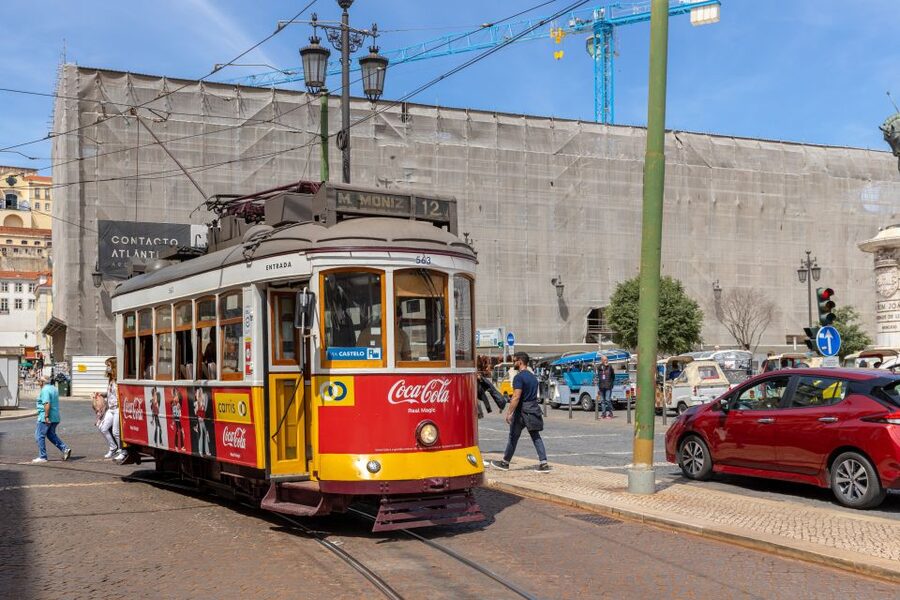
The tram segment is short, but it is one of the tour’s most appealing features. You ride up from the castle area toward Portas do Sol, adding a classic piece of Lisbon transport to an otherwise walking-heavy experience.
This matters because the tram is not only a way to get from one district to another. It shows how Lisbon’s public life works on steep streets and tight corners. You get a change of pace, a look at the city from street level, and a practical introduction to one of its best-known icons.
The route has been described as tram No. 12 on some departures, but services can change. One guide had to adjust the plan when the tram broke down, and another adapted the route during heavy rain. That is worth knowing before you book: the tram is included, but normal city transport is never fully under a guide’s control.
Bad weather can also affect the experience. Lisbon’s hills become less pleasant in pouring rain and wind, and wet paving can make the downhill stretches slower. The guides have shown a willingness to adjust the order or route, but you should wear shoes with a firm grip and bring a rain layer when the forecast looks uncertain.
Portas do Sol and the first look at Alfama
Portas do Sol is one of the great viewing points on the route. From here, you can see the Monastery of São Vicente de Fora, the National Pantheon, and the spread of Alfama as it drops toward the Tagus.
The viewpoint is valuable because Alfama can feel confusing when you are inside it. Streets twist, stairways change direction, and buildings hide the broader shape of the district. From above, the guide can give you a sense of how the neighborhood reaches from the hillside down toward the river.
This is also a good place to pause before entering the narrow lanes. The tour is not just rushing between monuments. It gives you a chance to understand the setting, take photos, and hear why the next neighborhood matters.
Portas do Sol is popular, so do not expect a private overlook. Still, a guide helps you get more from a crowded stop by naming what you are seeing and explaining its place in Lisbon.
Alfama, fado, and Lisbon’s oldest streets
Alfama is the tour’s most atmospheric district. It is one of Lisbon’s oldest and most traditional neighborhoods, known for narrow streets, fado houses, and celebrations connected with the popular saints, especially St. Anthony.
The walk through Alfama gives you the feel of a district that cannot be understood from a bus window. You move through lanes and passages, see the old urban pattern, and hear how music, religion, and local celebrations shape the neighborhood.
I like this section because it shifts the focus from major monuments to daily character. Your guide can explain the meaning of fado houses and the role of St. Anthony celebrations, giving you ideas for what to explore later in the evening or during another day.
The drawback is the surface underfoot. Alfama means slopes, uneven paving, narrow passages, and steps. One guide was praised for keeping an easy, relaxed pace and accommodating older members of the group, but the route still requires some walking ability. If you have limited mobility, ask about the exact route and meeting point before booking, since those details may vary by option.
Lisbon Cathedral and the end of the route
The tour ends at Lisbon Cathedral, built in 1150, three years after the city was retaken from the Moors. Its appearance reflects later changes, so you see a mixture of architectural styles rather than one perfectly unified design.
Ending here works well. The cathedral brings together several themes from the walk: the city’s medieval origins, the long influence of Christianity, the reshaping of Lisbon after disaster, and the layers added over many centuries.
Because the cathedral is the final stop, you can decide how much more time to spend there after the guide finishes. The tour is mainly about the exterior and the surrounding area, so check opening details separately if you want a full interior visit.
You finish in a central historic district rather than at your hotel. That is useful if you want to continue exploring Alfama, find lunch, or return to a viewpoint. It also means you need to plan your own way back.
How the guides shape the experience
The route is fixed enough to give you a useful city overview, but the guide makes the real difference. Paulo has been praised for storytelling, humor, and personal memories. Ricardo has been described as generous with recommendations and able to connect ancient history with present-day Lisbon.
Anna, Beatrice, João, Lucia, Helena, and others have also been singled out for clear explanations, patience, and a friendly manner. Beatrice has adjusted her pace for older people without leaving the rest of the group waiting, while Anna has handled rain and a failed tram with calm flexibility.
You should not expect every guide to tell the same stories in exactly the same order. That is part of the appeal of a local-led walk, but it also means the tone can vary. The common strength is the focus on Lisbon’s history, culture, politics, architecture, and local suggestions.
The best guides do more than recite dates. They answer questions, explain small details, and help you decide where to return. If you have a special interest in the Carnation Revolution, fado, architecture, or Portuguese food, ask about it during the walk.
Price, pace, and overall value
At $29 per person, this is good value for a three-hour introduction to central Lisbon. The price includes a live guide, the walking tour, the tram ride, coffee, and cake. Buying those pieces separately would not necessarily create the same useful route or historical connection.
The value is strongest for first-time visitors. You see several major districts, get a basic map of the city, and receive practical ideas for the rest of your stay. The tour also works for solo visitors because the small-group setting can make it easier to meet people without paying for a private guide.
A private option may suit families or groups that want more control over pace and questions. Small groups are especially helpful in Alfama, where it is easier to keep close to the guide and hear explanations in tight streets.
Allow a little extra time after the advertised three hours. Some departures have run over because the guide wanted to finish properly rather than hurry people away. That can be a benefit, but it matters if you have a restaurant reservation, museum ticket, or another tour immediately afterward.
Who should book this Lisbon walk?
I would choose this tour at the start of a Lisbon stay, especially if you want history with your sightseeing. It gives you enough background to make later visits to Alfama, Baixa, Carmo, or the viewpoints more rewarding.
It suits you if you like:
- City walks with regular stops rather than nonstop marching
- History explained through real places
- A mix of famous sights and neighborhood streets
- A short tram ride built into the route
- Local food in a simple coffee-and-pastry break
- Small-group or private touring
- Guides who can answer questions and suggest what to do next
You may want a different experience if you dislike hills, steps, uneven paving, or changing plans around public transport. It is also not the right choice if you want long interior visits at every church and monument. This is a broad city introduction, not a specialist architecture tour or a full-day historical study.
Should you book the History, Stories and Lifestyle Walking Tour?
Book it if you want to get your bearings quickly and understand how Lisbon’s districts connect. The mix of Bairro Alto, Carmo, Baixa, the tram, Portas do Sol, Alfama, and the cathedral gives you a solid first look for $29.
I especially recommend it for first-time visitors who want a guide with personality rather than a simple list of sights. Check the meeting point for your chosen option, allow extra time, wear comfortable shoes, and keep your schedule flexible in case the tram or weather changes the route. If that sounds workable, this is a smart, well-priced introduction to Lisbon.
FAQ
How long does the Lisbon walking tour last?
The tour lasts three hours, though you should allow some extra time because a departure may run over slightly.
How much does the tour cost?
The listed price is $29 per person.
What areas of Lisbon does the tour visit?
The route includes Bairro Alto, São Pedro de Alcântara, San Roque Church, Carmo Convent and Church, Baixa, Santa Justa, Portas do Sol, Alfama, and Lisbon Cathedral.
Is a tram ride included?
Yes. The tour includes a tram trip toward Portas do Sol.
Is coffee and cake included?
Yes. Coffee and cake are included, with the usual pairing described as a bica and pastel de nata.
Which languages are available?
Live guides are available in Portuguese, Spanish, Italian, German, French, and English. The language depends on the option you book.
Is hotel pickup included?
No. Hotel pickup and drop-off are not included.
Are private tours available?
Yes. Private and small-group options are available.
Can I cancel for a full refund?
You can cancel up to 24 hours in advance for a full refund.
Do I have to pay when I book?
The reserve-now, pay-later option lets you reserve a place without paying immediately. Availability and conditions depend on the selected option.
More Historic Sites in Lisbon
- Lisbon: Daytime or Sunset Boat Cruise with History and Wine
★ 4.9 · 819 reviews - Private Tuk Tuk Tour Through Lisbon’s Historical Streets
★ 5.0 · 734 reviews - Lisbon Sunset Sailing with Portuguese Wine and History
★ 5.0 · 668 reviews - Lisbon: Guided Tuk-Tuk Tour Along the Historic Tram Line 28
★ 4.8 · 475 reviews
New around Lisbon
- Arrábida, Setúbal, Sesimbra, Olive with wine tasting★ 5.0 · 75 reviews
- Lisbon: Sunset Sailing Boat Cruise with Wine★ 5.0 · 75 reviews
- Lisbon Half Day Private Tour★ 5.0 · 75 reviews
- Private Half Day Tour to Fatima from Lisbon★ 5.0 · 75 reviews
- Fátima, Nazaré and Óbidos Private Tour from Lisbon★ 5.0 · 76 reviews
- Central Lisbon 3-Hour Guided E-Bike Tour★ 4.8 · 76 reviews
- Lisbon Historic City Tour by Tuk-Tuk★ 5.0 · 76 reviews
- Sintra World Heritage and Cascais Village Private Deluxe Tour★ 5.0 · 76 reviews
Historical Tours, compared.
Historical Sites, Wine Experience, Lunch & Cruise
Read our review →
Live Fado Show with Port Wine in Historic Center
Read our review →


Explore Lisbon by Tuk Tuk: History and Viewpoints
Read our review →Browse the lists this tour appears in