

Reviewed · HISTORICAL TOURS
Lisbon: 3-Hour The Slave Trade – An Historical Walking Tour
Lisbon’s grand squares, churches, and Age of Discovery monuments look different once you understand the human suffering behind Portugal’s wealth. This three-hour walk with Rui Fernandes connects ordinary streets and famous sights to Portugal’s role in the Atlantic slave trade, a subject often left out of standard city tours.
I like two things here: the small group format, which gives you room to ask serious questions, and Rui’s clear, patient way of explaining a painful subject. The route also stays mostly flat or only gently inclined, a useful break from Lisbon’s famous hills. The main consideration is the pace of information. Three hours can feel long if you want a light sightseeing stroll rather than a serious history lesson.
Key points to know before booking
- Portugal’s role comes into focus: Learn how the Atlantic slave trade began under Portuguese leadership in the 15th century and shaped Lisbon’s growth.
- Rui Fernandes leads the walk: He is an African guide with training in history, political science, and economics, and he welcomes questions throughout.
- The city becomes your classroom: Alfama, public squares, churches, avenues, and older buildings all help explain the past.
- The group is small: The stated limit is six participants, making it easier to hear, ask questions, and discuss difficult topics.
- There is a short pause: One coffee and one restroom break are included, with a café stop built into the route.
- Bring sensible shoes: Lisbon’s streets can be cobbled, even though the route is described as mostly flat or gently sloped.
Why Lisbon’s postcard sights need a harder look
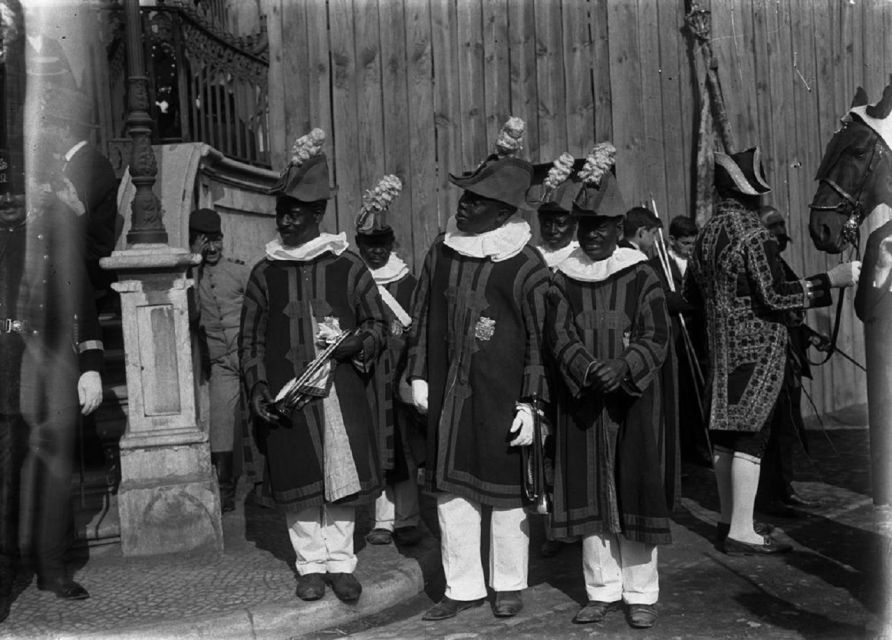
Many people come to Lisbon for tiled façades, river views, old trams, and the glamour of the Age of Discovery. This tour asks you to add another layer. Portugal’s maritime expansion was not only a story of navigation and trade in spices, gold, and goods. It also helped create a system in which millions of Africans were captured, sold, transported, and forced to work across the Atlantic.
The tour places that history inside the city rather than treating it as a distant subject. A church, street name, public square, or grand building can reveal how slavery touched daily life and national wealth. I value that approach because it helps you understand Lisbon as a lived-in city with both beauty and responsibility, not as a collection of attractive façades.
The subject is difficult, and the tour does not appear designed to soften it. That is a strength for anyone who wants a fuller understanding of Portugal. It may not be the right choice if your ideal morning involves only cheerful anecdotes and photo stops.
More Historical Tours in Lisbon
- Lisbon: History, Stories and Lifestyle Walking Tour
★ 4.8 · 10,902 reviews - Lisbon: Live Fado Show with Port Wine in Historic Center
★ 4.7 · 4,166 reviews - Lisbon: Fado Show with Wine in a Historic Venue
★ 4.8 · 1,294 reviews
Starting in Alfama at Largo do Chafariz de Dentro

The meeting point is Largo do Chafariz de Dentro, a square in Alfama, Lisbon’s oldest district. This is a fitting place to begin because Alfama’s older street pattern lets the tour move quickly from general history to the physical setting of the city.
Expect to begin with background on slavery in the Iberian Peninsula before the Atlantic system took shape. That opening matters. It keeps the story from suggesting that slavery appeared suddenly with overseas expansion, while also explaining what changed when Portugal began shipping enslaved Africans across the Atlantic.
From there, Rui places Lisbon within the wider story of the 15th century. Under the guidance of Prince Henry the Navigator, Portugal began the process now associated with the Atlantic slave trade. Over the next four centuries, between 12 and 14 million Africans were sold into slavery and taken across the ocean to the Americas.
That number is hard to grasp on its own. The walk makes it more meaningful by tying the system to streets and institutions in Lisbon. You are not simply memorizing a figure. You are considering how a city’s economy, buildings, politics, and social life were connected to the forced movement of people.
From the Age of Discovery to the business of human lives
Portugal’s Age of Discovery is often presented as a story of ships, maps, exploration, and national courage. Those subjects remain part of the tour, but they are placed beside the economic and political choices that made overseas expansion profitable.
Rui’s background in history, political science, and economics is especially useful here. The subject is not treated as a simple tale of individual cruelty. You look at the institutions that allowed slavery to grow, the financial interests that supported it, the religious arguments used to defend it, and the political power that protected the trade.
This broader frame is one of the strongest reasons to book the walk. You learn about Portugal’s role without reducing the subject to a list of dates. You also gain a better way to read other Lisbon sights after the tour. A monument connected with exploration may still be impressive, but its meaning becomes more complicated when you know who paid the price for the wealth it celebrated.
The experience also addresses the importance of Brazil. That connection is essential because Portugal’s Atlantic economy cannot be understood by looking only at Lisbon or the African coast. Brazil became central to Portuguese colonial power and to the wider system of forced labor and trade.
How slavery shaped everyday Lisbon
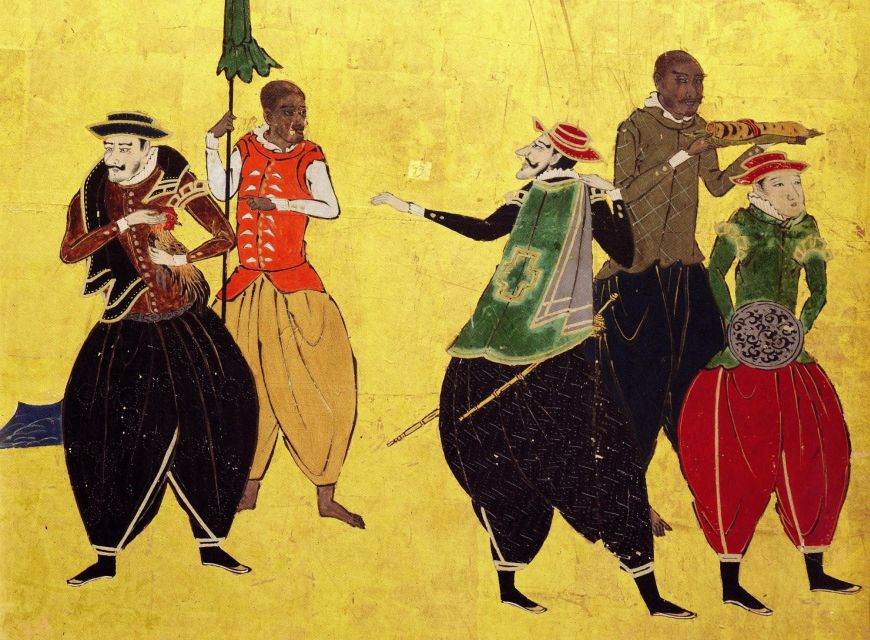
The tour is not limited to rulers and merchants. It also examines the daily life of enslaved people in historical Lisbon. That shift from official history to ordinary experience is important, since large economic systems can otherwise feel remote.
As you move along back streets, avenues, churches, and squares, Rui explains how enslaved Africans lived and worked in the city. The exact stops can vary, but the route is built around places that show how slavery was part of Lisbon’s daily life rather than a separate activity occurring somewhere far away.
You might notice building details, old uses of major structures, street names, and public spaces in a new way. The setting gives the stories weight. Instead of hearing only about colonial policy, you consider where people lived, labored, worshipped, and were bought or sold.
Rui has also used historical images during the walk to help make unfamiliar scenes easier to picture. That can be particularly helpful when modern Lisbon has covered or transformed the original setting. The city has changed, but visual material can bridge the gap between today’s streets and the past being discussed.
This part requires attention. The guide has a great deal to cover, and the subject includes moral, religious, economic, and political questions. The small group helps because you can pause, ask for clarification, and follow a point that matters to you instead of simply trying to keep up with a large crowd.
More Walking Tours in Lisbon
- Best of Lisbon Small-Group Guided Walking Tour
★ 5.0 · 4,869 reviews - Lisbon: Food and Wine Small Group Walking Tour
★ 4.9 · 4,082 reviews - Best of Lisbon Walking Tour: Rossio, Chiado & Alfama
★ 4.9 · 2,700 reviews - Age of Discoveries Walking Tour in Belém
★ 5.0 · 1,513 reviews
Churches, monuments, and the meaning behind the stone
Lisbon’s churches and monuments are not treated only as architectural attractions. The walk asks what these places represented, who funded them, and how religion and power interacted with slavery.
That does not mean every building is presented as a direct site of the slave trade. Rather, the tour uses the city’s landmarks to explain the systems surrounding it. Portugal’s colonial expansion involved religious institutions, royal authority, commercial networks, and public celebration. A church or monument can therefore help explain the ideas that supported Portuguese power.
This is also where the walk differs from a general city tour. A standard introduction to Lisbon may mention the Age of Discovery in a few minutes. Here, the same period becomes the central subject, with time for links that are usually skipped.
The guide’s delivery matters. Rui is described as clear and evenly paced, with regular opportunities for questions. He also makes an effort to remember participants’ names and include everyone in the discussion. That personal attention is especially valuable during a tour where some people may have family connections to slavery or may be encountering the history from different cultural viewpoints.
Brazil, African colonies, and the long road to abolition
The walk continues beyond the first growth of the trade. You learn about Brazil’s role, the eventual abolition of the trade in Portugal, Portuguese colonies in Africa, and African nationalist struggles for liberation.
This wider timeline prevents a common mistake: treating abolition as the end of the story. Ending the trade did not erase colonial rule, racism, economic inequality, or the effects of centuries of forced labor. By linking slavery to Portugal’s later colonial history and African liberation movements, the tour shows how these events belong to one connected account.
The political history is useful for visitors who want more than a heritage tour. Portugal’s empire lasted well beyond the height of the Atlantic slave trade, and African resistance continued in different forms. The walk gives you a way to connect Lisbon’s earlier prosperity with the country’s later relationship with its African colonies.
The focus remains on Portugal, but the tour also places Portuguese actions within the wider history of slavery around the world. That broader context helps avoid the idea that one country acted alone. At the same time, it does not blur Portugal’s specific role.
A guide who welcomes difficult questions
Rui Fernandes is the central reason this experience works. His African background gives him a personal connection to the subject, and he connects the history to his own family background. He also brings formal study in history, political science, and economics, which helps him move between personal stories and larger forces.
That combination can make a difficult topic more approachable. Rui is described as passionate but patient, and the repeated emphasis on his willingness to answer questions is worth noting. You are not expected to remain silent while he delivers a fixed speech.
The small group is a practical advantage. The stated maximum is six participants, although one booking detail gives a larger limit, so check the current capacity when you reserve. Either way, this is intended to be a small-group experience rather than a mass sightseeing walk.
Expect a serious discussion, but not a stiff lecture. Rui also offers advice about Lisbon restaurants, shops, public transportation, and places to visit elsewhere in the city. That local help is a nice extra, especially if you take the tour early in your stay and use his suggestions to shape the rest of your visit.
Three hours on Lisbon streets
The advertised duration is three hours, though the walk can run closer to three and a half hours. You should leave room in your schedule rather than booking a museum entrance or timed meal immediately afterward.
The walking pace is generally relaxed. The route is reported to be mostly flat or limited to small inclines, which makes it suitable for many ages. Still, you will be outdoors for several hours, and Lisbon’s cobbled streets call for comfortable shoes.
A coffee and restroom break are included. The pause gives you time to rest and process the subject, not just recharge physically. On hot days, Rui has adjusted the pace and sought shade for the group, though you should still bring water and protect yourself from the sun.
There is no hotel pickup or drop-off. You meet at Largo do Chafariz de Dentro, so allow time to reach Alfama. Since the tour begins in one of Lisbon’s oldest areas, it pairs well with further exploring in Alfama afterward, though you should remember that the district itself can include uneven paving and slopes beyond the tour route.
Pets are not allowed.
Is $35 a fair price?
At $35 per person, this is a strong value if you want a focused history experience rather than a broad overview of Lisbon. You are paying for three hours with a specialist guide, a small group, local taxes and fees, and a short café break.
The value comes from interpretation. You can walk through Alfama and central Lisbon on your own for free, but you would not easily know which buildings, streets, or public spaces connect to Portugal’s slave-trading and colonial past. The guide turns familiar scenery into a structured lesson.
It is also fair to note what the price does not include. There is no hotel transfer, and the coffee stop is included as a break rather than a full meal. The tour is conducted in English, so you need enough English to follow a detailed historical discussion.
With a 4.9 rating from 179 reviews, the experience has a strong record. The most consistent praise concerns Rui’s command of the subject, his clear English, his patience with questions, and the care he takes to present painful history respectfully. I would give those points more weight than a rating alone, because they address the parts of this tour that matter most.
Who will get the most from this walk?
Book this tour if you want to understand how Portugal’s wealth and global influence were tied to slavery and colonialism. It is especially useful for people interested in African history, the Atlantic world, international affairs, Portugal’s empire, or the way modern cities remember difficult pasts.
It also suits repeat visitors who have already seen Lisbon’s main monuments and want a more serious angle. Families with older children or teenagers may find the small group and question-based format helpful, though the subject is not light entertainment.
You may want to skip it if you prefer a short, casual orientation tour or if three hours of concentrated history sounds tiring. This is not a quick checklist of attractions. The landmarks are there to support the story, and the story comes first.
Practical booking advice for Lisbon
Reserve early if the small group matters to you. A maximum of six participants creates a much better setting for discussion than a large tour, especially when the topic calls for questions and reflection.
Choose a time when you can stay mentally present. Morning may work well before the heat builds, while an afternoon start could fit better after a relaxed lunch. Starting times vary, so check availability before planning the rest of your day.
Wear shoes that can handle cobbles and bring water. You should also plan for outdoor conditions, even though the route includes a café and restroom pause. If you have questions about Portugal, Brazil, African colonies, or present-day connections, write them down before you go. Rui’s willingness to discuss the subject is one of the tour’s best features.
Cancellation is free up to 24 hours in advance, and you can reserve now while paying later. Those options help if your Lisbon schedule is still changing.
Should you book The Slave Trade Historical Walking Tour?
I would book it if you want Lisbon to make more sense, not simply look attractive. The walk gives you a serious account of Portugal’s role in the Atlantic slave trade and connects that past to Alfama, central Lisbon, Brazil, African colonies, abolition, and liberation struggles.
The best reason to go is Rui Fernandes. His expertise, personal connection, patient delivery, and openness to questions make the subject easier to follow without making it feel less serious. At $35, the small group and three-hour format offer good value for a focused history tour.
Book it early in your Lisbon stay if you want help interpreting the city afterward. Skip it only if you are seeking a light sightseeing outing or do not have the attention for a difficult subject. For anyone who wants an honest account of how Lisbon’s prosperity was built, this is a worthwhile addition to the itinerary.
FAQ
How long does the walking tour last?
The advertised duration is three hours. Some information indicates that it may last around three to three and a half hours, so leave extra time afterward.
Where does the tour meet?
You meet your guide at Largo do Chafariz de Dentro, a square in Alfama.
Who leads the tour?
The tour is led by Rui Fernandes, an African guide with a background in history, political science, and economics. The experience is conducted by a licensed local guide.
What language is used?
The tour is conducted in English.
How many people can join?
The tour is designed as a small-group experience. The main information gives a maximum of six participants, while another detail mentions a limit of eight, so check the current booking information for the exact capacity.
Is hotel pickup included?
No. Hotel pickup and hotel drop-off are not included. You make your own way to the meeting point.
What should I bring?
Bring comfortable shoes for walking on Lisbon’s streets. A coffee and restroom break are included during the tour.
Can I cancel for a refund?
Yes. You can cancel up to 24 hours before the tour for a full refund. You can also reserve now and pay later.
More Historic Sites in Lisbon
- Explore Lisbon by Tuk Tuk: History and Viewpoints
★ 5.0 · 840 reviews - Lisbon: Daytime or Sunset Boat Cruise with History and Wine
★ 4.9 · 819 reviews - Private Tuk Tuk Tour Through Lisbon’s Historical Streets
★ 5.0 · 734 reviews - Lisbon Sunset Sailing with Portuguese Wine and History
★ 5.0 · 668 reviews
More 3-Hour Experiences in Lisbon
- Lisbon: 3-Hour Tour by E-Bike
★ 4.8 · 1,150 reviews - 3-Hour Lisbon 7 Hills Electric Bike Tour
★ 5.0 · 818 reviews - 3-Hour Guided Street Art Walking Tour of Lisbon
★ 5.0 · 278 reviews - 3 Hours Private Lisbon Food Tuk Tour
★ 5.0 · 145 reviews
New around Lisbon
- Arrábida, Setúbal, Sesimbra, Olive with wine tasting★ 5.0 · 75 reviews
- Lisbon: Sunset Sailing Boat Cruise with Wine★ 5.0 · 75 reviews
- Lisbon Half Day Private Tour★ 5.0 · 75 reviews
- Private Half Day Tour to Fatima from Lisbon★ 5.0 · 75 reviews
- Fátima, Nazaré and Óbidos Private Tour from Lisbon★ 5.0 · 76 reviews
- Central Lisbon 3-Hour Guided E-Bike Tour★ 4.8 · 76 reviews
- Lisbon Historic City Tour by Tuk-Tuk★ 5.0 · 76 reviews
- Sintra World Heritage and Cascais Village Private Deluxe Tour★ 5.0 · 76 reviews
Historical Tours, compared.
Historical Sites, Wine Experience, Lunch & Cruise
Read our review →
Live Fado Show with Port Wine in Historic Center
Read our review →

Browse the lists this tour appears in