Reviewed · PORTO TOURS
Porto: Tile Painting and Cocktails in Downtown Porto
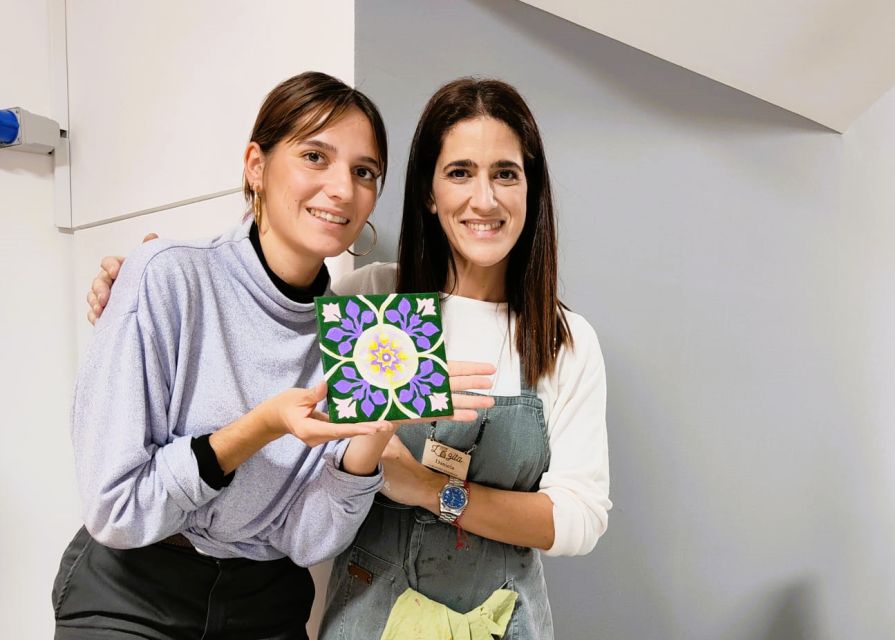
Porto’s tiled façades are not just pretty backdrops for photographs. At Boiler Studio, you learn why azulejos became such a defining part of Portuguese culture, then paint one yourself while sipping a cocktail. The history lesson gives the craft a point, and the hands-on work helps you notice tile patterns around the city with sharper eyes.
I like the calm pace and the patient instruction from hosts such as Daniella, Emmanuel, and Diogo. I also like that you can choose a prepared design or ask the studio to print a personal image. The main consideration is timing: your tile may need extra drying time, especially after an afternoon class, so ask when you can collect it before planning your next stop.
Key points at a glance
- Paint a large ceramic tile: All paint, brushes, materials, and paper packaging are included.
- Learn before you paint: The introduction covers Arabic influence, Portuguese tile traditions, colors, cities, and modern uses.
- Choose your level of creativity: Use a ready-made stencil or request a printed design of your own.
- Enjoy a local drink: A cocktail is included, with Porto Tonic and white port variations mentioned as popular choices.
- Meet at a central studio: Boiler Studio is at Rua Chã 77, on a typical street opposite Porto Cathedral.
- Take home a personal souvenir: Collection can be later the same day or another time, depending on drying and finishing.
Why Porto tiles deserve more than a photo
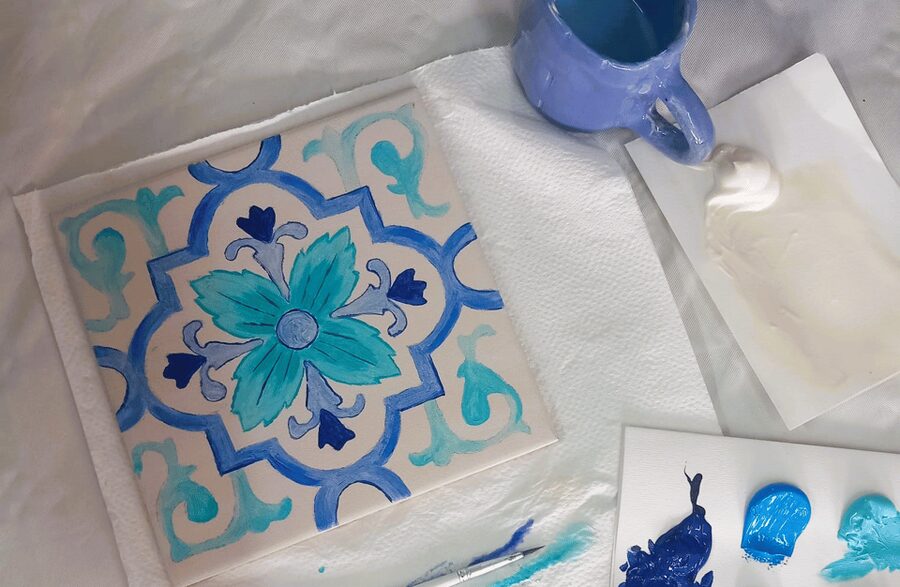
You see azulejos everywhere in Porto, from church exteriors to railway stations and ordinary homes. Their patterns can look decorative at first glance, but the workshop explains how they became part of the country’s visual language.
The word azulejo comes from an Arabic root meaning small polished stone. Tile traditions reached the Iberian Peninsula with the Arab invasion of lands now belonging to Spain and Portugal, as far back as the 13th century. In Portugal, azulejos took a stronger foothold during the 16th and 17th centuries.
The early forms were often simple geometric pieces in restrained colors, especially blue. Over time, Portuguese tile work developed into larger scenes, repeating patterns, religious art, architectural decoration, and practical wall coverings. That background makes the city’s tiled buildings easier to read. You begin to notice the difference between a repeated pattern and a painted scene, or between a bright modern design and an older blue-and-white style.
The introduction is not meant to replace a museum visit or a full architecture tour. It is a short, useful lesson that gives context before you pick up a brush. For many people, that is enough to turn a craft activity into a better way of understanding Porto.
A few other Porto half-days worth a look
- The Unvanquished Tour in Porto City Center
★ 5.0 · 26,497 reviews - From Porto: Douro Valley w/ Boat Tour, Wine Tasting & Lunch
★ 4.7 · 19,061 reviews - Complete Douro Valley Wine Tour with Lunch, Wine Tastings and River Cruise
★ 5.0 · 12,920 reviews
Finding Boiler Studio beside Porto Cathedral
The workshop takes place at Boiler Studio, Rua Chã 77, directly opposite the Cathedral. That puts you within easy reach of some of Porto’s best-known sights, including São Bento Train Station, the Dom Luís I Bridge, Time Out Market, and the Cathedral itself.
This location works well in a busy sightseeing plan. You can visit the Cathedral or São Bento before class, paint your tile, and continue toward the river afterward. The studio is also useful as a pause from Porto’s steep streets and cobbled lanes. Two hours seated indoors can be a welcome change after a morning of walking.
The setting has another purpose. Boiler Studio is also a shop selling handmade goods from local artists. You can browse before or after the class, but keep the shop separate from the workshop when judging the price. The included experience is the lesson, ceramic tile, paints, packaging, cocktail, and use of the other materials. Any extra shopping is optional.
The studio is wheelchair accessible. Smoking, fireworks, and explosive substances are not allowed, which is hardly a surprise in a paint workshop, but the rules are stated clearly.
The first part: stories, colors, and Portuguese influence
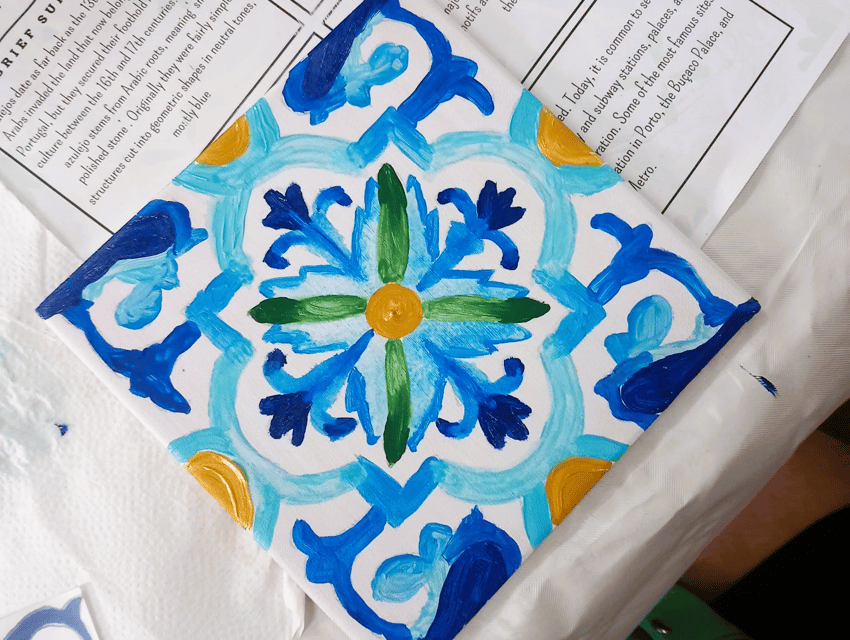
The class begins with information about Portuguese tiles. You learn who brought tile traditions to the region, how outside influences shaped local work, and how colors and patterns changed across different periods and cities.
The material also covers how tiles are used today. That modern link matters. Azulejos are not treated as a dead art form locked in the past. They remain part of Portugal’s streets, interiors, shops, religious buildings, and public spaces.
Your instructor speaks English or Portuguese. Several hosts are named in the available information, including Daniella, Emmanuel, and Diogo. The teaching style appears to be practical rather than formal. You receive guidance throughout the painting, and the hosts can adjust their help to different skill levels.
You do not need an art background. If you are uneasy about drawing, the stencil option takes away much of the pressure. If you enjoy making your own design, you have room to work more freely. The combination suits couples and mixed groups, since one person can follow a pattern while another tries a more personal idea.
Choosing a design without artistic panic
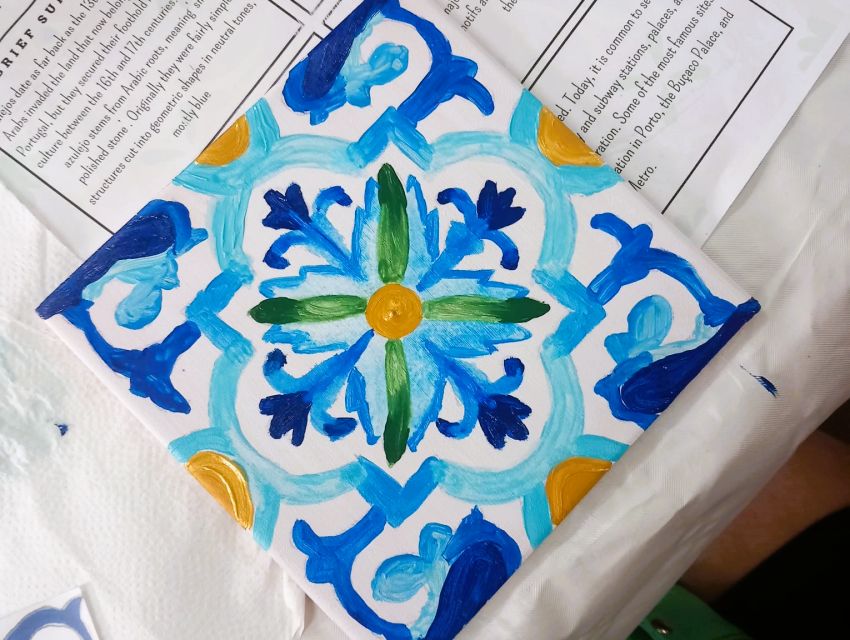
Once the introduction is finished, you choose what to paint. Prepared stencils and patterns are available, and the selection includes different colors and styles. You can also bring a photograph or another image and ask the studio to print it for use as a guide.
That choice is one of the workshop’s strongest features. You are not forced into a single class design, yet you are not left alone with a blank tile and a vague instruction to be creative. The staff can help with technique, placement, and color choices.
A stencil also makes the activity friendly to people who say they cannot draw. You still choose colors and apply the paint yourself, but the outline gives you a firm starting point. If you make a mistake, the hosts are there to help rather than simply demonstrate once and walk away.
Families should note the minimum age is 10. One available account describes a 9-year-old enjoying the class, but the official rule says children under 10 are not suitable, so you should follow the stated age limit when booking.
Same coastline, a completely different day out:
- Porto: Six Bridges Cruise
★ 4.2 · 11,680 reviews - Porto: Live Fado Show with Glass of Port Wine
★ 4.8 · 6,498 reviews - Porto: 6 Bridges Douro River Cruise
★ 4.3 · 6,472 reviews - Porto: Torre dos Clerigos Entrance Ticket
★ 4.6 · 6,395 reviews
Painting, sipping, and meeting other artists
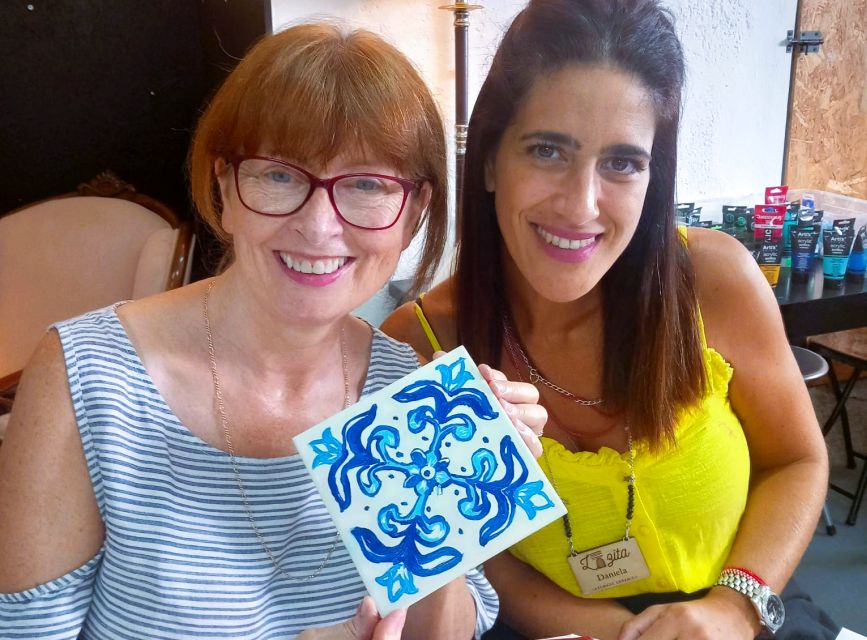
The painting session is the heart of the activity. You work on a ceramic tile with acrylic paints, brushes, and the other supplied materials. Calm music and a relaxed studio atmosphere keep the process from feeling like a timed school project.
A cocktail is included. Porto Tonic, made with white port and tonic, is specifically mentioned, and other accounts refer to a white port wine spritzer or a coffee alongside the drink. The exact serving may vary, so think of the cocktail as a pleasant part of the workshop rather than a full tasting session.
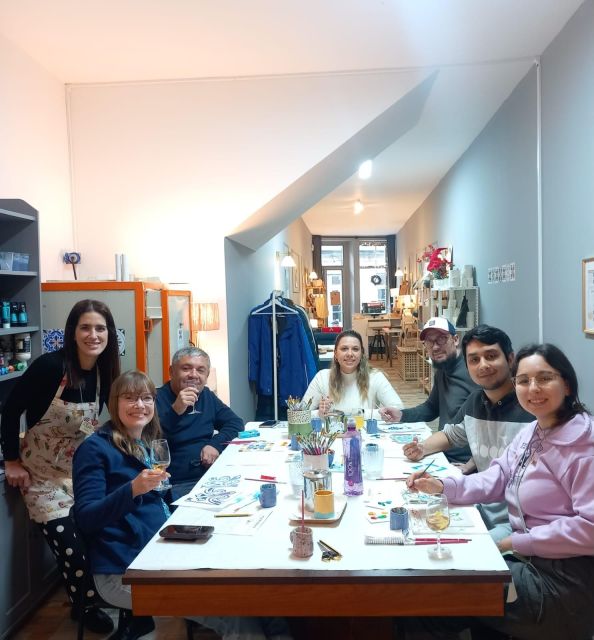
The social side is easy to overlook, but it adds value. You sit with a group of other people making their own designs, which gives the class a light, friendly feel. You can chat, compare ideas, or simply concentrate on your tile. The activity does not depend on group participation, so quieter visitors can enjoy it too.
I would not book this mainly for the drink. The cocktail helps set the mood, but the tile and instruction are what make the $41 price reasonable. If you only want a quick souvenir, a shop purchase will take less time. If you want to understand the craft and make something yourself, the workshop offers more.
How much guidance can you expect?
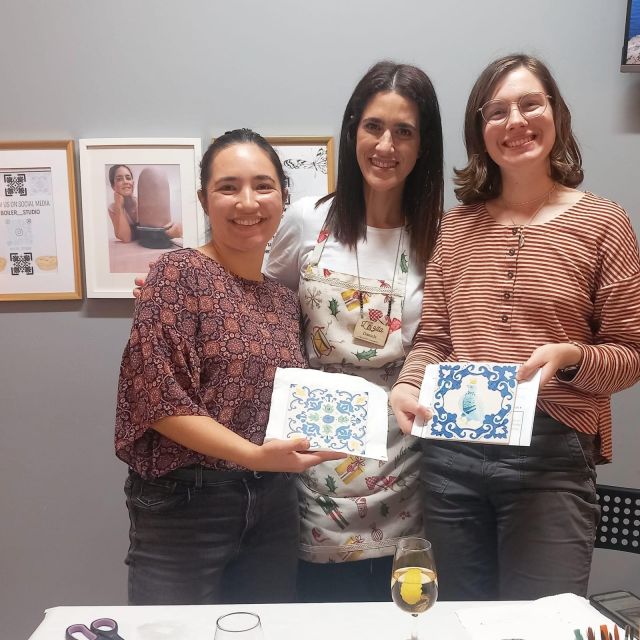
The instruction is hands-on. Hosts explain the basic painting method, show you how to work with the design, and step in when you need help. That matters because ceramic surfaces can feel less forgiving than ordinary paper, especially when you are trying to keep a repeating pattern neat.
The teaching also works for different skill levels. A potter or experienced painter may enjoy choosing a more detailed design, while a complete beginner can rely on a stencil and ask questions along the way. The available accounts repeatedly praise the patience and encouragement of the staff, particularly Daniella.
You should still expect a handmade result, not a factory-perfect tile. Small irregularities are part of making it yourself. The guidance improves the finish, but it does not turn the class into industrial production.
Some participants finish within the two-hour period. Others stay longer to complete details. One person was allowed to remain about 30 minutes extra, and several accounts describe a relaxed approach when a tile needed more time. Do not count on unlimited studio time, but the atmosphere appears more forgiving than a strict schedule suggests.
Collecting your tile after the class
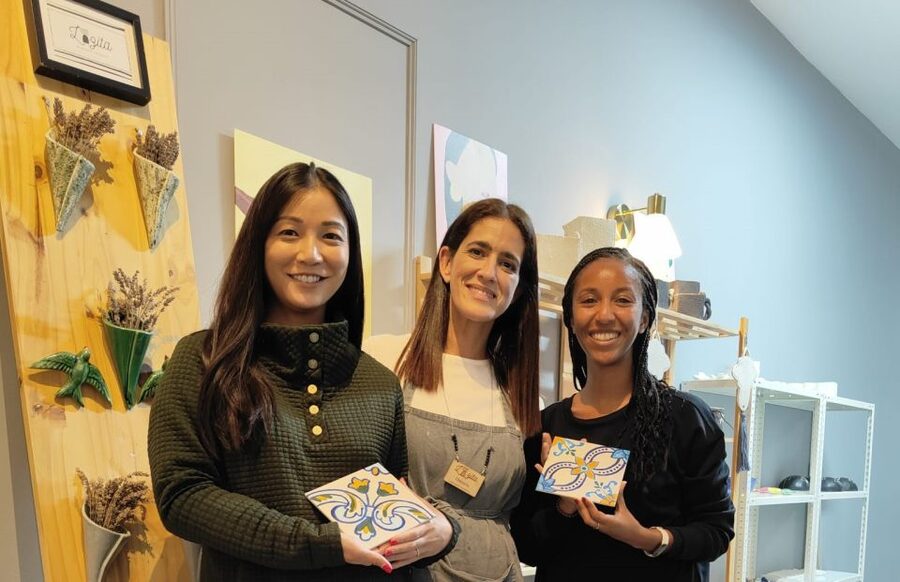
The tile is packaged in paper for transport. Some people take it home at the end, while others collect it after additional drying time. The timing depends on when you attend and how far the paint has progressed.
A morning class may allow collection later that day. An afternoon session may mean returning the next day. Ask the staff about the handover before leaving, especially if you are departing Porto soon or moving on to another city.
This is the one practical wrinkle in an otherwise simple souvenir. You may not be able to put the tile straight into your suitcase after the final brushstroke. The studio’s central location makes a return visit fairly manageable if your schedule allows, but you should not assume the tile will always be ready immediately.
The paper packaging helps protect it during transport, though you should still place it somewhere firm in your luggage. A handmade ceramic tile is a better keepsake than a fragile last-minute purchase only if you plan for carrying it.
The price and what you receive for $41
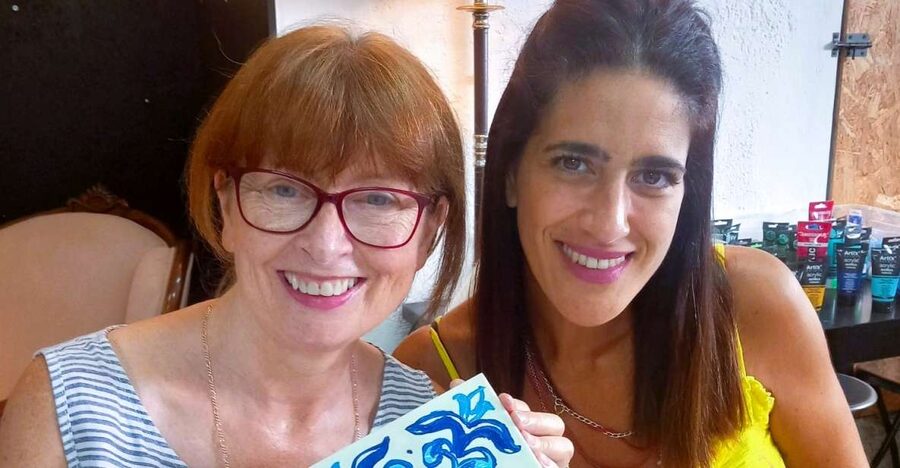
At $41 per person, this is not Porto’s cheapest rainy-day activity. The price makes more sense when you count the full package: a two-hour session, historical background, an individual ceramic tile, acrylic paints, brushes and other materials, packaging, a cocktail, and help from the instructors.
You are also paying for a central location and an organized creative session. You do not need to buy a tile, find separate supplies, or prepare a design in advance. The option to have your own image printed adds flexibility that a basic paint-and-sip class may not offer.
Value depends on your interests. If you love crafts, Portuguese architecture, or hands-on souvenirs, this is a fair use of two hours. If you prefer sightseeing outdoors and dislike structured activities, the same price may feel high for a class you will not enjoy.
The workshop also has good weather value. On a rainy afternoon, it gives you a useful indoor plan without cutting you off from Porto’s culture. On a sunny day, I would place it between major sights rather than giving up a prime sightseeing block.
Who will enjoy this workshop most?
I would recommend it to:
- Couples who want a shared souvenir rather than another shop purchase
- Families with children aged 10 and older
- People who enjoy craft activities but do not want a demanding art class
- Visitors curious about the tiles seen across Porto
- Anyone seeking a calm break from steep streets and crowded sights
- Solo visitors who like low-pressure group activities
It is also a good match for mixed-interest groups. A serious artist can work on details, while a reluctant partner can use a stencil and still produce something personal. The relaxed format removes much of the fear that comes with being asked to create from nothing.
You may want to skip it if you have very little time in Porto, cannot return for a tile that needs more drying, or want a highly technical ceramics course. This is a guided painting workshop, not a class in firing, glazing, or making the tile itself.
Practical planning for your Porto day
Set aside the full two hours, then leave a little space in your schedule in case you need to finish your design or collect the tile later. The start time varies, so check availability when selecting your date.
Rua Chã 77 is near the Cathedral, São Bento Station, the Dom Luís I Bridge, and Time Out Market. That makes it easy to link the class with a walking route through central Porto. A sensible plan is to explore the Cathedral and station area first, attend the workshop, then continue downhill toward the river or market.
The activity is offered in English and Portuguese. It is wheelchair accessible, and all materials are included, so you only need to bring your booking details and an idea of what sort of design you want. If you hope to use a personal image, have it ready on your phone and ask whether the studio can print it for you.
Free cancellation is available up to 24 hours before the activity for a full refund. You can also reserve now and pay later, which helps if your Porto plans are still shifting.
Should you book Tile Painting and Cocktails in Downtown Porto?
Book it if you want more than a photograph of Porto’s famous tiles. You get a short cultural lesson, personal guidance, a drink, and a handmade object tied directly to the city.
The strongest reasons to go are the friendly instruction, the choice of stencil or custom image, and the patient pace. Daniella, Emmanuel, and Diogo are among the hosts associated with the class, and the teaching is designed to support beginners as well as people with art experience.
Just plan around the drying time and remember that the $41 cost pays for an activity, not only a souvenir. For a rainy afternoon, a relaxed break, or a family-friendly cultural experience for children aged 10 and up, Boiler Studio is an easy choice. If your schedule is tight, confirm when the tile will be ready before you commit.
FAQ
Where does the tile painting workshop take place?
The workshop takes place at Boiler Studio, Rua Chã 77, on a typical street opposite Porto Cathedral in central Porto.
How long does the activity last?
The scheduled duration is two hours. Some people may need extra time to finish their designs, and collection timing can depend on drying.
What languages are available?
The instructors speak English and Portuguese.
What is included in the price?
The price includes the workshop introduction, ceramic tile, acrylic paints, other activity materials, paper packaging, and one cocktail.
Can I choose my own tile design?
Yes. You can choose from prepared designs and stencils, or ask the studio to print your own image for use as a guide.
Can I take the tile home immediately?
Sometimes the tile is ready at the end or later the same day. An afternoon session may require collection the next day, so ask the studio about drying time.
Is the activity suitable for children and wheelchair users?
The activity is wheelchair accessible. It is not suitable for children under 10 years old.
New around Porto
- Porto: City Bike Rental★ 4.6 · 75 reviews
- Fado Concert with Welcome Drink★ 5.0 · 75 reviews
- Boat Trip to Régua Through the Douro Valley with Breakfast and Lunch★ 4.5 · 76 reviews
- Porto City Tour Half Day – Private★ 5.0 · 77 reviews
- Port : Private Cruise in the Douro — 6 Bridges & Sunsets★ 5.0 · 78 reviews
- Porto Private Airport Departure Transfer★ 4.5 · 78 reviews
- Douro Valley Small-Group Tour: 2 Wineries, Lunch, Optional Cruise★ 5.0 · 78 reviews
- Half-Day Walking Tour Tasting Local Food in Porto★ 5.0 · 78 reviews
Porto Tours, compared.

Douro Valley w/ Boat Tour, Wine Tasting & Lunch
Read our review →
Complete Douro Valley Wine Tour with Lunch, Wine Tastings and River Cruise
Read our review →