
Reviewed · CITY TOURS
Lisbon: City Sightseeing Hop-On Hop-Off Bus Tour
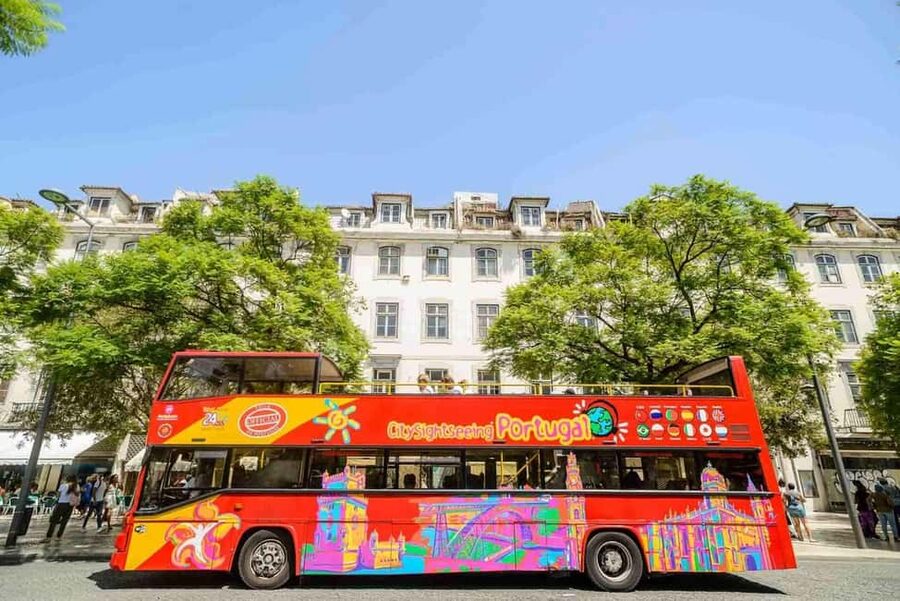
Lisbon reveals itself quickly from the top deck of this open-top double-decker bus. In one ride, you can move from grand Praça do Comércio to the tiled lanes near Alfama, then out along the Tagus to Jerónimos Monastery and Torre de Belém. It is a useful first look at a city that spreads across hills and waterfront districts.
I like the three routes and the freedom to use them over 24 or 48 hours. I also like the way the 48-hour ticket adds two walking tours and an evening panoramic ride, giving you more than a basic bus loop. The main caution is timing: the buses begin at 9:30 or 10am, some departures fill up, and the open upper deck can be rough in rain or strong sun.
Key points to know before you board
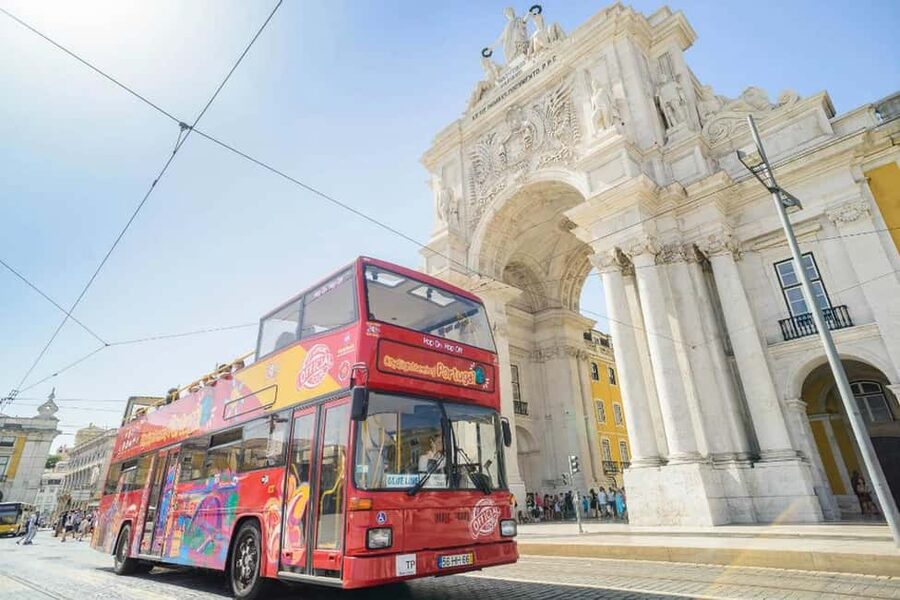
- Three routes reach more than 40 stops: The Red route covers Belém and the riverfront, the Blue route reaches the eastern district and Oceanário, and the Green route serves Castelo and Alfama.
- The 48-hour pass offers the best value: It includes a night tour and two guided walks, while a suitable ticket can also include a boat trip.
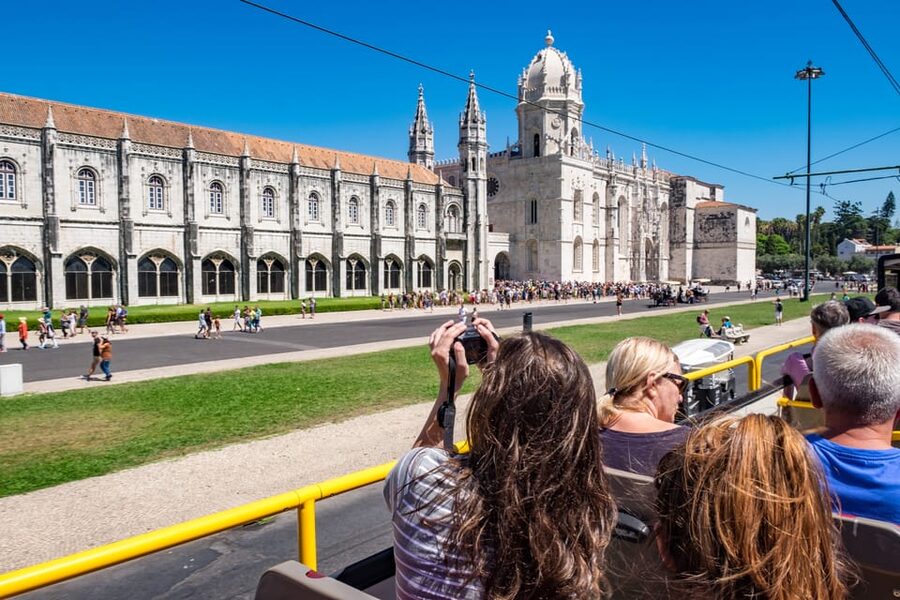
- The Red route is Lisbon’s essential sightseeing run: Jerónimos Monastery, Torre de Belém, the Discoveries monument, and the coach museum are its main prizes.
- The Green route handles Lisbon’s hills: Use it for São Jorge Castle, Miradouro da Graça, the National Pantheon, and Feira da Ladra.
- The audio commentary is useful but not lavish: It comes in 13 languages, yet wind and road noise can make it hard to hear on the upper deck.
- Plan around the schedule: The last regular departures leave at 5pm, and buses run every 30 to 40 minutes depending on the route.
Getting your bearings from Praça do Marquês de Pombal

The main departure point is Praça do Marquês de Pombal, at the top of Avenida da Liberdade. This is a practical place to begin because the routes fan out from central Lisbon, and the square is accessible by Metro.
The Red, Blue, and Green routes all begin here, but they do different jobs. A full loop on each route takes about 105 minutes, not counting stops. That sounds efficient, but you should not expect to complete all three routes with several major visits in a single day.
The pass is valid for 24 or 48 hours, depending on the option you choose. I would use the first ride as a city orientation, staying aboard long enough to understand the shape of Lisbon. Then I would return to the stops that match my interests.
The timetable matters. The Red route begins at 9:30am and runs until 5pm, with buses about every 30 minutes. The Blue and Green routes begin at 10am, also ending at 5pm. Blue buses run about every 40 minutes, while Green buses come about every 30 minutes.
That schedule is not ideal for an early start. If you like reaching major sights before the crowds, you will need to use other transport or walk before boarding. The bus works better as a daytime sightseeing tool than as an early morning transfer service.
More City Tours in Lisbon
- Lisbon City Center Tour – The Unmissable Lisbon
★ 5.0 · 22,234 reviews - Lisbon: Daytime/Sunset/Night City Sailboat Tour with Drink
★ 4.9 · 3,114 reviews - Lisbon: City Highlights and Viewpoints E-Bike Tour
★ 4.9 · 1,556 reviews
Red route: Belém, monuments, and the Tagus
The Red route is the one I would choose first. It connects central Lisbon with the western waterfront, where several of the city’s most famous sights are gathered.
The opening stops include El Corte Inglés, Parque Eduardo VII, Príncipe Real, and Bairro Alto. Parque Eduardo VII gives you one of Lisbon’s best long views down toward the river, while Príncipe Real and Bairro Alto are good areas to explore later on foot. Do not treat these central stops as simple bus markers. They put you near cafés, gardens, viewpoints, and evening streets.
At Cais do Sodré, the route reaches a major transport and dining district beside the river. This is a useful place to pause before continuing toward Belém. The nearby Praça do Comércio is not listed as a dedicated stop, but the central routes bring you close to the historic squares you will want to see on foot, including Praça do Município and Praça do Rossio.
The waterfront section is the real prize. At Pilar 7, you can explore the bridge experience if you decide to pay separately for entry. The Museu dos Coches, or Coach Museum, is another worthwhile stop for anyone interested in royal carriages and court life.
Then come Jerónimos Monastery and Torre de Belém, both UNESCO World Heritage Sites. These are not quick photo stops if you want to go inside. Entry is not included, so check how much time you want to spend at each before hopping off.
Jerónimos Monastery is the more substantial visit, with ornate Manueline stonework and a cloister that rewards a slow look. Torre de Belém is smaller and more atmospheric from the outside, especially when viewed with the river around it. The nearby Padrão dos Descobrimentos honors Portugal’s maritime expansion and offers another reason to spend time along this stretch.
The Red route also stops near MAAT, the Museum of Art, Architecture and Technology, Estação Fluvial, and the Docas waterfront. These stops suit you if you want modern art, river views, or a meal beside the water. The route then returns through Estrela, where the Basilica da Estrela and Jardim da Estrela offer a quieter break from the central streets.
The Red route ends its central loop through Restauradores. From here, you can walk toward Rossio, Praça da Figueira, and the lower streets of Baixa. Give this route at least half a day if you plan to visit Jerónimos Monastery and one other museum.
Blue route: Lisbon’s eastern waterfront and modern side
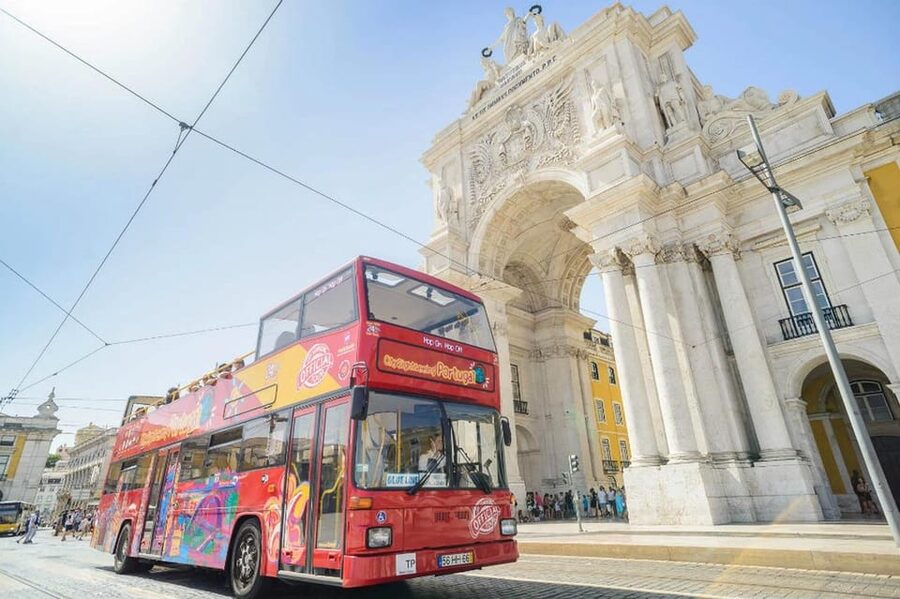
The Blue route gives you a different Lisbon. It begins through central stops such as Avenida Duque de Loulé, Campo Pequeno, Parque Eduardo VII, and El Corte Inglés, then heads east.
Santa Apolónia is a useful stop for reaching the riverfront and the Museu da Água. The Museu do Azulejo is one of the strongest reasons to take this route. Lisbon’s painted tiles are not just decoration. They shape the city’s streets, churches, and buildings, and this museum gives you a better eye for what you see elsewhere.
The route continues through Poço do Bispo toward the Parque das Nações district. Here, the Oceanário de Lisboa is the main attraction. The aquarium requires a separate admission, but the bus saves you a long cross-city trip if it is on your list.
Other stops include Centro Comercial Vasco da Gama, Torre Vasco da Gama, and Gare do Oriente. This is Lisbon’s modern side, with broad public spaces and major transport architecture rather than old lanes and tiled façades. It makes a useful contrast with Alfama and Belém.
The route also passes Entrecampos and the Jardim Zoológico, with stops near the José Malhoa hotels. Those locations may be particularly practical if you are staying in the northern part of central Lisbon, though the route itself is still mainly a sightseeing service.
I would not squeeze the entire Blue route into a day already devoted to Belém and Alfama. If the Oceanário, Museu do Azulejo, or Parque das Nações matters to you, use a separate block of time for this line. Its 40-minute frequency can also make casual hopping slower than expected, so check the next departure before leaving a stop.
Green route: Castelo, Alfama, and the city’s hills
The Green route is the most useful for Lisbon’s older neighborhoods. It begins at Marquês de Pombal, passes Parliament and Príncipe Real, and then moves toward Cais do Sodré, Restauradores, and Martim Moniz.
Its central stops put you near some of Lisbon’s best walking areas. From Restauradores, you can reach Rossio and Praça da Figueira. From Martim Moniz, the route heads toward São Jorge Castle, Miradouro da Graça, the National Pantheon, and Feira da Ladra.
This is a hilly part of the city. The bus is helpful if you want to avoid tackling every incline on foot, though the stops are not always right at the entrance to each sight. You may still face a steep walk after getting off, especially around the castle and viewpoints.
São Jorge Castle is the headline stop. The Green route does not include admission, but it places you close to one of Lisbon’s defining viewpoints and historic landmarks. Miradouro da Graça gives you another strong city view, with a different angle over rooftops and the river.
The National Pantheon is near Feira da Ladra, Lisbon’s well-known flea market. If you are there on market day, leave time to browse rather than rushing back to the bus. The route also reaches Rua da Palma and Praça da Figueira, making it useful for combining the hill districts with Baixa.
The Green route has a special advantage with the 48-hour pass: the Castle to Alfama walking tour departs at 5pm from Stop 4 on the Green route and lasts about an hour. That timing can work well after a daytime bus ride, but you need to arrive at the stated meeting point. The separate Carmo to Miradouro São Pedro de Alcântara walk begins at Rua do Carmo at 10am and also lasts about an hour.
A few other Lisbon half-days worth a look
- Lisbon: Private City Tour by Eco Tuk Tuk
★ 4.9 · 1,215 reviews - Lisbon: Tagus River Sailboat City Cruise
★ 4.9 · 1,212 reviews - Lisbon: Private City Tour by Tuk-Tuk
★ 5.0 · 789 reviews - Lisbon: City Tour by Tuk Tuk
★ 4.7 · 617 reviews
What the 48-hour ticket adds
The 24-hour ticket is a straightforward orientation pass. It can work if you want to ride one or two routes, identify the neighborhoods you want to revisit, and avoid paying for several short taxi or transit rides.
The 48-hour ticket is a different product. It gives you enough time to spread out the Red, Blue, and Green routes, and it includes a night tour plus two walking tours. If you use those additions, the higher price can make sense.
The night tour begins at Marquês de Pombal at 8pm every day and lasts about an hour. It is a panoramic bus ride rather than a replacement for an evening in Lisbon. You will still want to spend time in Chiado cafés or have dinner in Bairro Alto, but the night loop gives you another view of the city after dark.
The walking tours may be the most valuable extra. A bus can show you the city’s shape, but a walk lets you notice smaller streets and viewpoints at a human pace. The meeting details deserve care, especially for the Carmo walk, which uses Rua do Carmo as its meeting point. The provided information does not give a house number, so confirm the exact location when booking.
Some ticket types also include a boat tour. Do not assume every pass has it. Select the appropriate ticket if seeing Lisbon from the Tagus is important to you.
Audio, seating, sun, and rain
The audio guide is included with headphones and is available in English, Spanish, French, German, Italian, Dutch, Japanese, Chinese, Portuguese, Russian, Polish, and Ukrainian. That makes the tour easy to use without arranging a private guide.
The commentary is not constant or especially dense. You may get more place names and basic background than a full explanation of Lisbon’s past. On the top deck, wind can overpower the audio, and one practical fix is to sit downstairs when the sound becomes hard to follow.
The open upper deck is the reason many people choose this tour, but it comes with tradeoffs. On a sunny day, you can get a clear view of monuments and streets, yet the sun is strong enough to cause a quick burn. Bring protection and do not assume the breeze will keep you cool.
Rain is a bigger concern. At least one Green route vehicle may have little or no useful cover upstairs, and a wet ride can become unpleasant fast. Carrying an umbrella on a moving open-top bus is awkward, so check the weather before committing to the upper deck.
The service is wheelchair accessible, though the exact boarding conditions can vary by vehicle and stop. Pets and smoking are not allowed.
Crowds, queues, and stop locations
The buses are generally easy to reach from central Lisbon, but the stops are not always obvious. Some signs may be a block away from the place you expect, and a stop can be harder to spot in a crowded street.
At busy times, a bus may arrive full. You may need to wait for the next one, especially at popular stops where people are already lined up. Pay attention to the queue and allow extra time if you have a timed museum entry.
The audio may identify the location in Portuguese rather than announce a simple stop number. Keep a map open or note the stop name before you get off. This matters most on the Green route, where several destinations are close together but separated by steep streets.
The buses begin and end at the listed terminal points, but your own ride can finish wherever you choose. The activity itself returns to the meeting point only if you stay aboard for the full loop.
Is $37 a fair price?
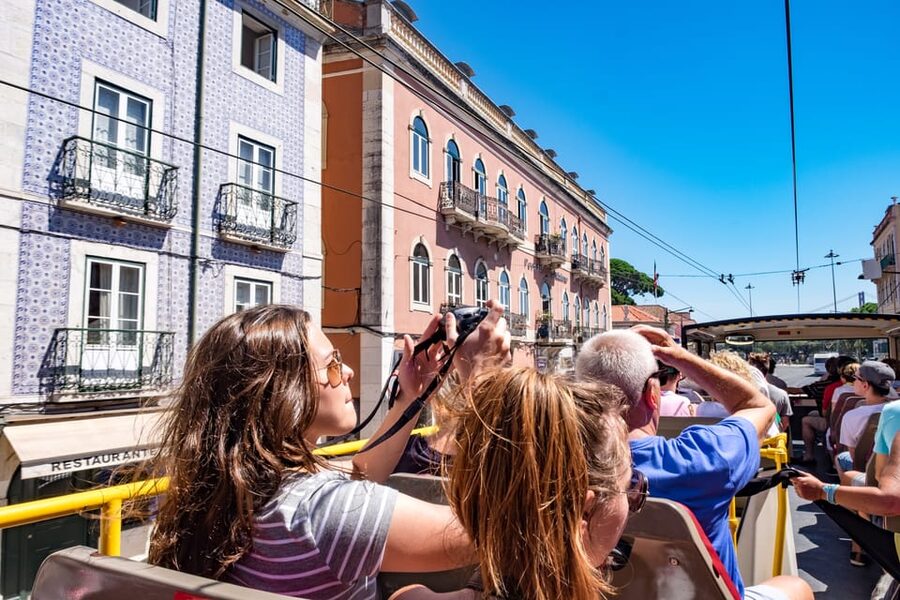
At $37 per person, the value depends on how you use the pass. A single ride around one route is not enough to justify the cost on its own. The price begins to make sense when you use the bus for several neighborhoods, especially Belém, Parque das Nações, and the castle area, which are spread across Lisbon.
The 48-hour option is the better buy for many people because it adds the night tour and two walks. You still pay separately for attractions, food, drinks, and hotel transport, so budget for museum and monument admissions.
I would choose the pass if you want an easy first look at Lisbon, have limited mobility, or prefer not to plan every connection on local transport. I would skip it if you mainly want Alfama, Baixa, and Chiado, since those central areas are better explored slowly on foot.
Free cancellation up to 24 hours before the activity and reserve-now, pay-later booking add flexibility. The starting meeting point can vary by the option booked, so check your voucher carefully before setting out.
How I would plan the two days
On the first morning, I would board the Red route and stay on through Belém. Get off for Jerónimos Monastery, Torre de Belém, and the riverside monuments. Return through Estrela and Restauradores, then spend the evening in Chiado or Bairro Alto.
On the second morning, I would take the Green route toward São Jorge Castle and Alfama. Use the late afternoon Castle to Alfama walk if the timing suits you, then take the 8pm night tour from Marquês de Pombal.
Use the Blue route for the remaining half day, especially if you want the Oceanário, Museu do Azulejo, or Parque das Nações. This plan leaves room for the boat tour if your ticket includes it, but it does not force you to race from one end of Lisbon to the other.
Who should book this Lisbon bus tour?
You should book it if you want to cover a wide area with little route planning, or if Lisbon’s hills make a full walking tour unrealistic. Families, first-time visitors, and anyone with only a day or two in town can get real value from the broad route network.
Choose the 48-hour ticket if you want the walking tours, night ride, or boat option. Choose 24 hours if your main goal is a quick orientation and a focused visit to Belém.
This is not the best choice for a slow, intimate look at Lisbon. The commentary is fairly light, buses can fill up, and poor weather can spoil the open-top appeal. But with sensible timing, the Red and Green routes give you an efficient introduction to the city, while the Blue route adds Lisbon’s museums and modern waterfront.
FAQ
How long is the Lisbon hop-on hop-off ticket valid?
You can choose a ticket valid for 24 or 48 hours.
How many routes are included?
The ticket includes access to three routes: Red, Blue, and Green.
How many stops are available?
The three routes provide access to more than 40 stops near Lisbon’s main sights, museums, gardens, and attractions.
Where does the tour start?
The main starting point is Praça do Marquês de Pombal, though the meeting point may vary depending on the option you book.
What time do the buses begin?
The Red route begins at 9:30am. The Blue and Green routes begin at 10am.
How often do the buses run?
The Red and Green routes run about every 30 minutes. The Blue route runs about every 40 minutes.
Is a night tour included?
The night tour is included with 48-hour tickets. It starts at Marquês de Pombal at 8pm and lasts about one hour.
Are walking tours included?
The 48-hour ticket includes the Carmo to Miradouro São Pedro de Alcântara walking tour and the Castle to Alfama walking tour. Each lasts about one hour.
Is admission to Lisbon’s attractions included?
No. Entry to attractions, food, drinks, and hotel pickup and drop-off are not included. A boat tour is included only with the appropriate ticket option.
New around Lisbon
- Arrábida, Setúbal, Sesimbra, Olive with wine tasting★ 5.0 · 75 reviews
- Lisbon: Sunset Sailing Boat Cruise with Wine★ 5.0 · 75 reviews
- Lisbon Half Day Private Tour★ 5.0 · 75 reviews
- Private Half Day Tour to Fatima from Lisbon★ 5.0 · 75 reviews
- Fátima, Nazaré and Óbidos Private Tour from Lisbon★ 5.0 · 76 reviews
- Central Lisbon 3-Hour Guided E-Bike Tour★ 4.8 · 76 reviews
- Lisbon Historic City Tour by Tuk-Tuk★ 5.0 · 76 reviews
- Sintra World Heritage and Cascais Village Private Deluxe Tour★ 5.0 · 76 reviews
City Tours, compared.

Lisbon City Center Tour – The Unmissable Lisbon
Read our review →
Daytime/Sunset/Night City Sailboat Tour with Drink
Read our review →
City Highlights 3-Hour Guided Electric Bike Tour
Read our review →


Browse the lists this tour appears in