
Reviewed · FADO SHOWS
Experience the Queen of Fado at Ah Amália Living Experience
Amália Rodrigues comes alive through music, film, digital effects, and a final hologram performance at Ah Amália Living Experience. I like the way the visit makes Fado accessible even if you know nothing about it, and I like that the short, guided format keeps the story moving. The price is also fair for a roughly one-hour cultural stop.
The main drawback is location. Praça David Leandro da Silva is outside Lisbon’s classic central sightseeing zone, so you will need to plan transport. Some wall text may feel slow for very young children, though the changing rooms, sound, and visual effects help keep older children interested.
Key points to know before you go

- A sensory introduction to Amália Rodrigues: Music, scenery, digital displays, and projected performance tell her story without relying on a traditional museum format.
- The final hologram concert is the highlight: The closing performance gives you a direct taste of Amália’s voice and stage presence.
- Good for first-time Fado listeners: You do not need prior knowledge of Portuguese music to follow the experience.
- A practical one-hour Lisbon activity: The visit takes about an hour, with some departures lasting closer to 75 minutes.
- A useful family choice: Children aged 10 to 14 have plenty of visual material to enjoy, including VR and changing room designs.
- Plan around its eastern Lisbon address: Pair it with the aquarium or Tile Museum, or allow time for a ride from the central sights.
Meeting Amália through sound, image, and memory

Fado is often introduced in a small restaurant, with a singer under a single light and a guitar tracing the edges of a sad, beautiful song. That can be a wonderful Lisbon evening, but it is not always easy for children, first-time listeners, or anyone who wants a little background before sitting through a full performance.
Ah Amália takes another route. Instead of asking you to understand Fado through a long explanation, it uses music, moving images, room design, and interactive technology to show why Amália Rodrigues became its most famous international voice.
The experience follows her artistic and personal legacy through a sequence of displays and staged settings. You move from one part to another with a guide, taking in information on the walls before entering more visual and musical rooms. The pace matters. You are not left in one gallery for an hour, reading labels and trying to connect dates and names.
The visit is designed as a meeting between the physical and digital worlds. Period scenery gives the story a sense of place, while projections, sound, and other technology create a more theatrical setting. You might find the approach more memorable than a conventional biography, especially if you respond to music through atmosphere rather than written facts.
More Fado Shows in Lisbon
- Lisbon: Live Fado Show with Port Wine in Historic Center
★ 4.7 · 4,166 reviews - Lisbon: Fado in Chiado Live Show
★ 4.6 · 3,095 reviews - Lisbon: Fado Show and Portuguese Dinner
★ 4.5 · 1,531 reviews
Why Amália matters to the story of Fado
Amália Rodrigues is presented here as the artist who carried Fado far beyond Lisbon. She is treated not simply as a singer, but as a figure who helped make Portuguese music known around the world.
You do not need to arrive knowing her songs. The experience gives you enough context to understand her role and to hear how her voice became linked with the identity of Fado. It also introduces the emotional side of her work, including her lyrics, stage presence, and connection to Portuguese culture.
That emotional focus is one of the exhibit’s strengths. A standard museum can tell you when Amália was born, where she performed, and how her career developed. Ah Amália tries to show what it felt like to encounter her as a performer.
This does mean the experience is more impressionistic than scholarly. If you want a detailed chronology, original documents, or a large collection of costumes and personal belongings, you may find the format limited. If you want a clear and memorable first contact with Amália, the blend of story and performance works well.
The opening rooms and the guided introduction
Your visit begins at Ah Amália, Living Experience, at Praça David Leandro da Silva 16 in Lisbon. After admission, a guide leads you through the exhibition.
The guide’s role is useful because the rooms combine several kinds of information. You may be reading about Amália in one moment, then watching a visual sequence or listening to music in the next. A guide helps connect those pieces and can answer questions as you go.
English is offered, and the guide may be able to handle several languages. That is particularly helpful for mixed-language families or groups. The exact size of your group can vary, but the format is more personal than entering a large, self-guided museum hall.
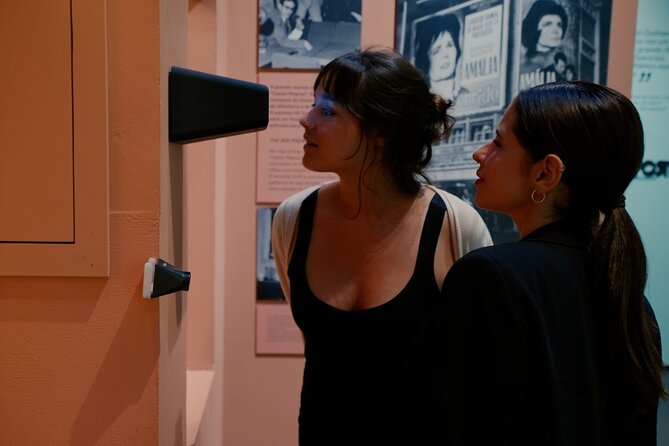
The opening material includes information on the walls. You will want a little patience here, especially if you are visiting with children who do not read comfortably. It is not an all-action attraction from the first second.
Still, the visit does not stay in text-heavy mode for long. The changing pace is part of the design, and the next rooms bring in more sound, movement, and visual material. I would advise you to let the guide set the rhythm rather than rushing through the first displays.
Period scenery gives the music a setting
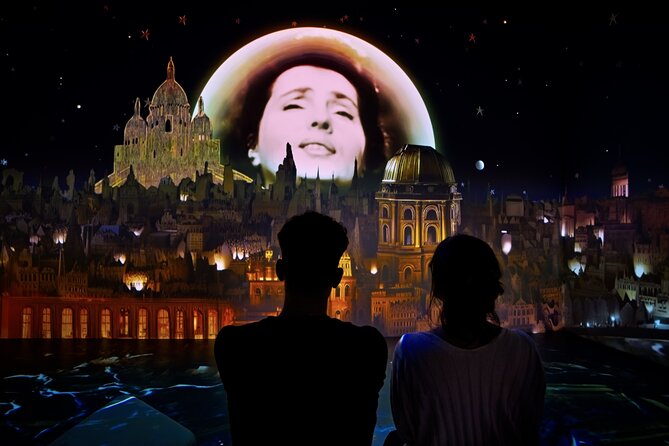
One of the more effective ideas is the use of period scenery. Rather than presenting Amália only through screens, the exhibit places you in rooms that suggest the time and world in which she lived and performed.
This helps you understand Fado as more than a playlist. The music is tied to voice, place, mood, clothing, performance, and memory. The scenery gives the technology something solid to work against, so the visit does not feel like a series of unrelated digital effects.
The atmosphere can be especially helpful if you are new to Portuguese music. You may not understand every lyric, but the presentation gives you clues about the feeling behind the songs and the importance of the performer.
Do not expect a complete portrait of Portugal or a replacement for a live Fado house. This is a focused experience about Amália and her artistic legacy. It offers a doorway into Fado, not the whole building.
More fado nights around Lisbon:
- Lisbon: Fado Show with Wine in a Historic Venue
★ 4.8 · 1,294 reviews - Lisbon: Alfama Tour and Live Fado with Traditional Dinner
★ 4.4 · 970 reviews - Fado in Chiado – Live Show in Lisbon on Stage for over 15 Years
★ 4.5 · 638 reviews - Lisbon: Fado Night with Dinner in a Typical Fado House
★ 4.3 · 365 reviews
Interactive technology, including the VR section
The technology becomes more prominent as you progress. Interactive content gives you a more active role than simply watching a film. One section includes VR goggles, which can be a strong moment for children and for adults curious about how the exhibit uses modern tools to present an older art form.
The VR portion is one reason this works well for families. It changes the pace and gives younger visitors something to do, not just something to watch. Children aged 10 and 14 have plenty of material here, although very young children may get less from the written sections.
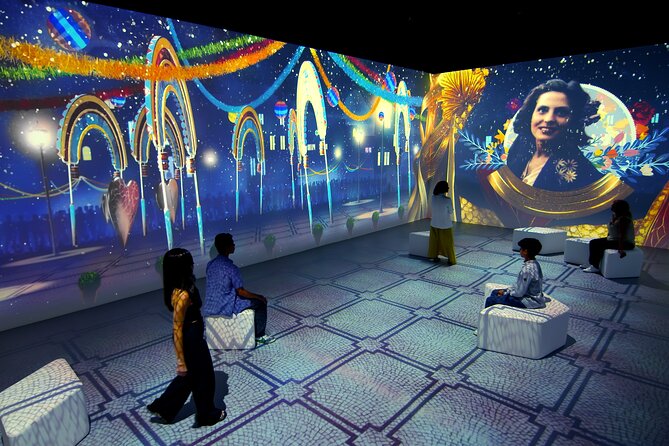
The room design also changes from one area to another. One particularly memorable setting uses orange and blue tones, creating a strong visual contrast with the darker, more traditional mood associated with Fado. These shifts prevent the visit from feeling like a standard museum tour.
Technology can sometimes overwhelm a subject. Here, its value depends on your expectations. If you want original objects and quiet reflection, the digital elements may feel like too much. If you want an introduction that holds your attention and makes Amália feel present, the interactive approach is a sensible choice.
The hologram concert brings the visit together
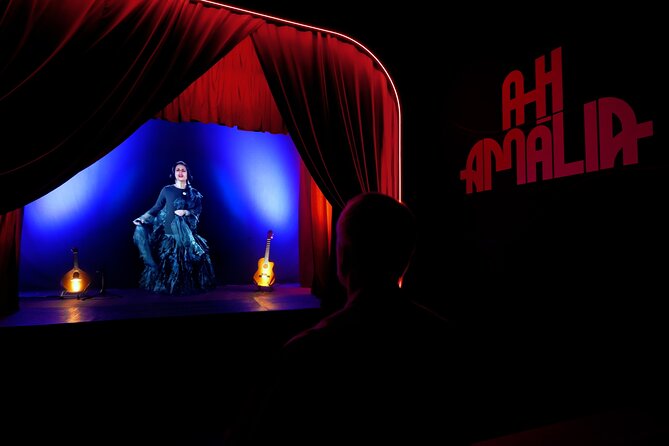
The closing show is the emotional center of Ah Amália. A hologram performance lets you experience Amália as a stage figure, not just as a name in a display.
This is where the music becomes the focus. The sound and visual presentation create a short concert-like ending, giving you a chance to hear and see the qualities that made her famous. The performance is not a substitute for seeing a living Fado singer in an intimate Lisbon venue, but it does give the visit a satisfying finish.
I would save your attention for this final section. The earlier rooms explain and prepare; the hologram gives the explanation a voice. It is also the part most likely to appeal to someone who is less interested in reading about music but responds immediately when the music starts.
The show can be moving, especially if you already know Amália’s work. If you are completely unfamiliar with her, it still functions as a concise introduction. You leave with a clearer sense of her voice, her presence, and the feeling Fado aims to convey.
Is the one-hour format enough?
The advertised duration is about one hour, while a complete visit may run closer to 75 minutes. That is a useful range for planning.
You can fit Ah Amália into a morning or afternoon without surrendering half a day. It also works well on a day when you have an airport departure, provided you leave enough time for transport and do not schedule it too close to your flight.
The short format is a strength for families and mixed-interest groups. You get a proper cultural experience without committing to a long concert, a lengthy museum visit, or an evening performance that requires everyone to sit quietly.
The tradeoff is depth. You will not cover every stage of Amália’s career in detail. The exhibit favors a concentrated emotional journey over a full academic account. For most first-time visitors, that is a reasonable exchange.
Getting there and planning your Lisbon day
The address is in eastern Lisbon, at Praça David Leandro da Silva 16. The venue is near public transportation, but it is not in the middle of the city’s most familiar cluster of sights.
You should think of this as an eastern Lisbon activity rather than a quick stop between the São Jorge Castle and Belém Tower. A rideshare or taxi may be the simplest option if you are staying in the central districts. Public transportation is available, but you will want to check the route from your hotel before setting out.
The location makes combination planning worthwhile. You might pair the visit with the Lisbon Oceanarium or the National Tile Museum, both of which are on the same broad side of the city. Check opening times before building your day, since the best pairing depends on your schedule.
Prebooking is useful because admission is included with your reservation and you do not have to worry about finding space at the door. The activity is booked, on average, about 16 days ahead, so I would reserve early if your Lisbon dates are fixed.
Is $24.20 a fair price?
At $24.20 per person, Ah Amália is not the cheapest short museum visit in Lisbon. The value comes from the combination of a guided introduction, changing exhibition rooms, interactive technology, and the final performance.
You are paying for more than access to wall displays. The visit includes a designed sequence with sound, scenery, VR, and a hologram show. For someone who wants to understand Fado but does not want a full evening concert, that package makes practical sense.
It is also a good use of money for a family group if everyone needs a compact activity. The visual sections help children stay engaged, while adults receive cultural background and music. A child who reads little may not enjoy every section, so consider the age and attention span of your group.
For serious Fado fans, the value depends on how much you already know. You may prefer a live performance or a more object-focused museum. Even so, the hologram and audiovisual presentation offer a different way to encounter Amália.
The experience has a 4.9 out of 5 rating from 171 published ratings, with 99 percent of visitors recommending it. Those figures suggest unusually consistent satisfaction, but they do not change the practical point: you should choose it for its multimedia presentation, not for a traditional museum collection.
Who will enjoy Ah Amália most?
I would recommend this experience to you if:
- You are curious about Fado but do not know where to begin.
- You want a short cultural activity rather than a full evening show.
- You are traveling with children or teenagers.
- You enjoy music presented through film, projection, VR, and staged rooms.
- You want to learn about Amália Rodrigues in a direct, easy-to-follow way.
- You have another reason to visit eastern Lisbon.
It is less suitable if you want a quiet, self-guided museum or a long live Fado concert. The guide-led movement and theatrical technology are central to the experience, so you should enjoy a more active presentation.
The staff is described as kind and accommodating, which matters in a small, guided venue. A helpful guide can make the difference when the material moves between biography, performance, and technology.
A practical verdict for your Lisbon itinerary
Book Ah Amália if you want a compact and memorable introduction to Amália Rodrigues and Portuguese Fado. The strongest reasons are the clear guided format, the family-friendly pace, and the closing hologram concert.
I would not make it your only Fado experience in Lisbon. If you have time, pair it with live music elsewhere so you can hear how Fado works in an intimate performance setting. Ah Amália gives you context and spectacle; a live singer gives you the human immediacy.
For a first visit, though, this is a smart choice. You can learn the basics, hear Amália’s music, and leave with enough curiosity to seek out more. Just allow time to reach the eastern part of the city, and reserve at least 24 hours ahead if you want the option of a full refund should your plans change.
FAQ
Where does Ah Amália, Living Experience take place?
The experience takes place at Ah Amália, Living Experience, Praça David Leandro da Silva 16, 1950-242 Lisboa, Portugal.
How long does the experience last?
The advertised duration is about one hour. A complete visit may take around 75 minutes.
Is the experience offered in English?
Yes. The experience is offered in English.
What is included in the ticket?
Admission to Ah Amália, Living Experience is included.
Is the experience suitable for children?
Most travelers can participate, and the interactive format has appealed to children aged 10 and 14. Younger children who do not read may find some wall text less engaging.
Can I cancel for a full refund?
Yes. You can cancel up to 24 hours before the experience start time for a full refund. Cancellations or changes made less than 24 hours before the start time are not accepted for a refund.
New around Lisbon
- Arrábida, Setúbal, Sesimbra, Olive with wine tasting★ 5.0 · 75 reviews
- Lisbon: Sunset Sailing Boat Cruise with Wine★ 5.0 · 75 reviews
- Lisbon Half Day Private Tour★ 5.0 · 75 reviews
- Private Half Day Tour to Fatima from Lisbon★ 5.0 · 75 reviews
- Fátima, Nazaré and Óbidos Private Tour from Lisbon★ 5.0 · 76 reviews
- Central Lisbon 3-Hour Guided E-Bike Tour★ 4.8 · 76 reviews
- Lisbon Historic City Tour by Tuk-Tuk★ 5.0 · 76 reviews
- Sintra World Heritage and Cascais Village Private Deluxe Tour★ 5.0 · 76 reviews
Fado Shows, compared.
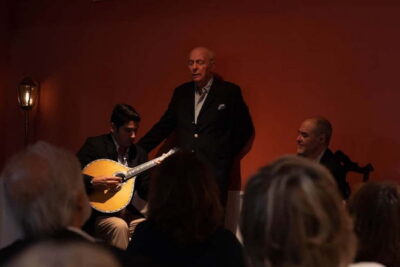
Live Fado Show with Port Wine in Historic Center
Read our review →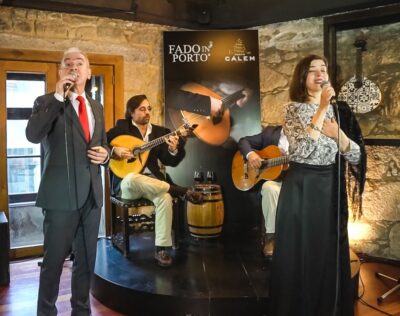
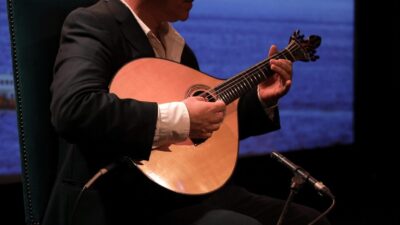
Authentic Fado Show, Port Wine & Handmade Instruments
Read our review →
Live Fado Concert with Glass of Tawny Port Wine
Read our review →

Browse the lists this tour appears in