Reviewed · ALGARVE TOURS
Cork Factory Tour
Cork is not just a wine stopper here. At Eco-Cork Factory near São Brás de Alportel, you see how tree bark becomes everything from bottle closures to fashion accessories, with the work still partly done by hand. The visit covers harvesting, quality checks, processing, and packing in a working factory.
I like the clear connection between Portugal’s cork forests and the finished products in the shop. I also like the price: at $20 per person, this is an easy half-day add-on, especially if you are already exploring the eastern Algarve. The main drawback is that the factory can be noisy and confusing at busy times, and some people find it hard to hear the guide in the open work area.
Key points to know before you go
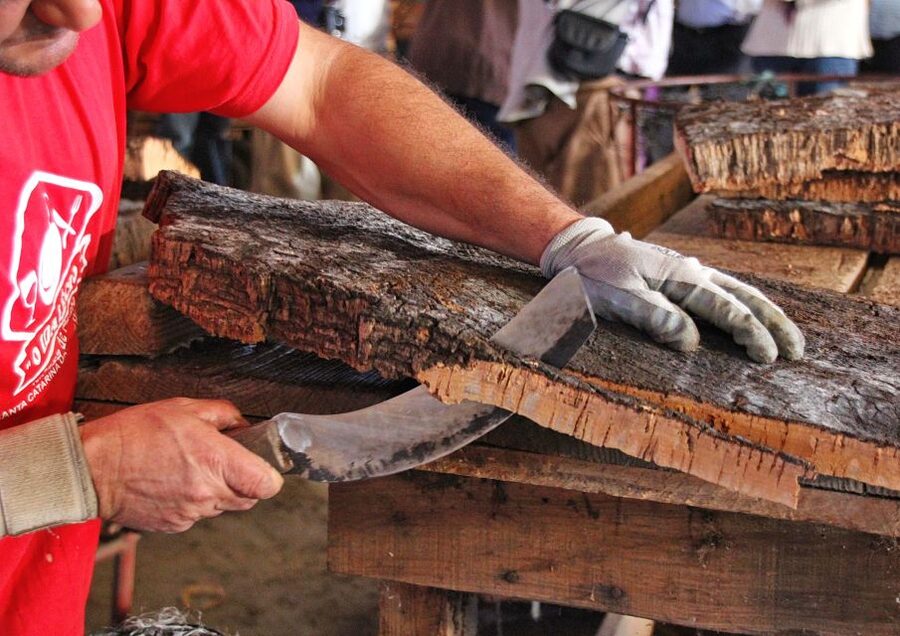
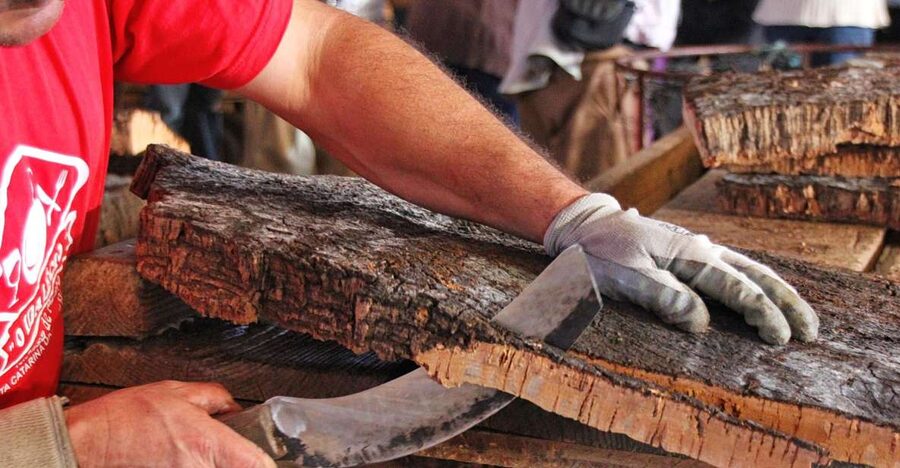
- See cork being shaped by hand: The factory visit can include an artisan working pieces of bark in front of you.
- Learn the full process: The explanation runs from growing and harvesting through grading, preparation, and packing.
- Expect a short, focused visit: The advertised duration is 50 minutes, though some visits last about an hour.
- Allow time for the shop: Cork bags, wallets, belts, jewelry, and other fabric goods show how far the material has moved beyond wine bottles.
- Plan your route carefully: A car is the easiest option, and the factory can be tricky to find for a first-time visitor.
- Ask questions: Guides such as Irina, Angelina, Belinda, and Angela have been praised for clear explanations in English.
Why this small factory tells a big Portuguese story
Portugal has more than 720,000 hectares of cork forests, and cork has major economic importance in the country. That context gives this short tour more weight than a simple stop at a gift shop. You are looking at a local industry tied to agriculture, manufacturing, rural employment, and Portuguese identity.
Cork comes from the bark of the cork oak, a tree found around the Mediterranean and especially common in Portugal. The bark can be removed without cutting down the tree, which is one reason cork attracts attention as a renewable material. The factory visit shows the practical side of that idea, including the care needed to prepare a natural product for commercial use.
I find the subject most interesting when the guide explains that quality is not uniform. Different pieces of bark have different grades and uses, and that affects both the manufacturing process and the final price. Seeing samples side by side helps you understand why one cork item costs much more than another.
The tour is not a grand industrial attraction with a huge production line. It is a relatively small working factory, and one account described the work as surprisingly manual, with only five employees handling the operation. That is part of its appeal. You get a closer look at people and materials, but you should not expect a large-scale automated plant.
A few other Algarve half-days worth a look
- Albufeira: 2.5-Hour Benagil Caves & Dolphin Watching
★ 4.6 · 10,710 reviews - Portimão: Benagil Caves Speed Boat Tour with Sunset Option
★ 4.8 · 9,329 reviews - Portimão: Benagil Sea Caves Speedboat Adventure Tour
★ 4.8 · 6,546 reviews
Arriving at Eco-Cork Factory near São Brás de Alportel
The meeting point is Eco-Cork Factory in Mesquita Baixa, at 8150-048 São Brás de Alportel. The listed coordinates are 37.140003, -7.855236. You will want to enter the location into your map before leaving, rather than relying on a quick glance at the booking information.
The factory is outside the main tourist centers, and finding it can take a little effort. I would arrive earlier than five minutes before the start, especially if you are driving in from Faro or another Algarve base. The entrance can feel unclear when a bus group is arriving, so give yourself time to identify where your group should gather.
A car is the simplest way to reach the site. Public transport from Faro is limited, though one visitor found that an Uber worked well. Transportation is listed as included, but the practical details of that inclusion are not explained in the supplied information, so check the exact meeting and transfer arrangements when you book. Do not assume there is a hotel pickup unless your confirmation says so.
The factory is wheelchair accessible. That is useful for visitors who need step-free access, though the noise and open factory setting may still affect comfort during the guide-led portion.
The introductory explanation makes the factory easier to understand
The visit generally begins with an introductory video or audio-supported explanation before you walk through the production area. This opening covers the cork oak, the harvesting process, and the many jobs cork can do. It gives you the basic vocabulary you need before seeing piles of bark, machinery, and finished pieces.
That short introduction matters. Without it, cork processing can look like a series of unexplained machines and worktables. With it, you can follow the path from raw bark to a usable product and understand why the factory pays close attention to thickness, appearance, and quality.
The booking information lists English and Portuguese, and the tour can be taken with a live guide in either language. English-language visits have been led by people including Irina, Angelina, Belinda, and Angela. The guide names vary by date, but the strongest part of the experience is the chance to ask questions as the process unfolds.
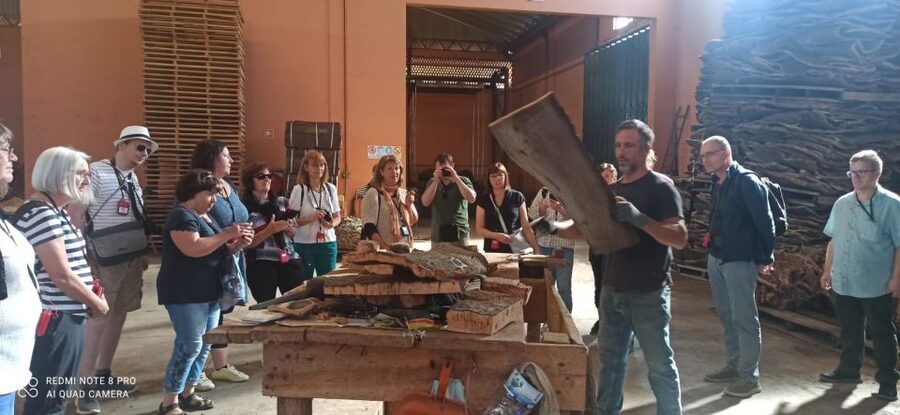
Bring your questions. The guides have explained everything from tree growing to harvesting and factory preparation, and the small-group format can allow time for answers. Groups are not always small, however. One visit had a particularly large group, so your ability to hear and interact may depend on the day.
Inside the factory, bark becomes a usable material
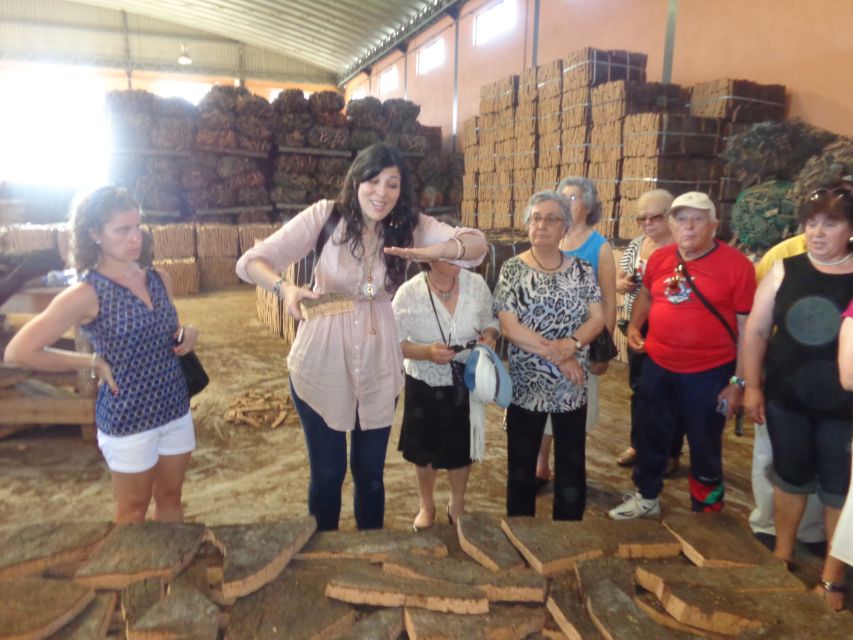
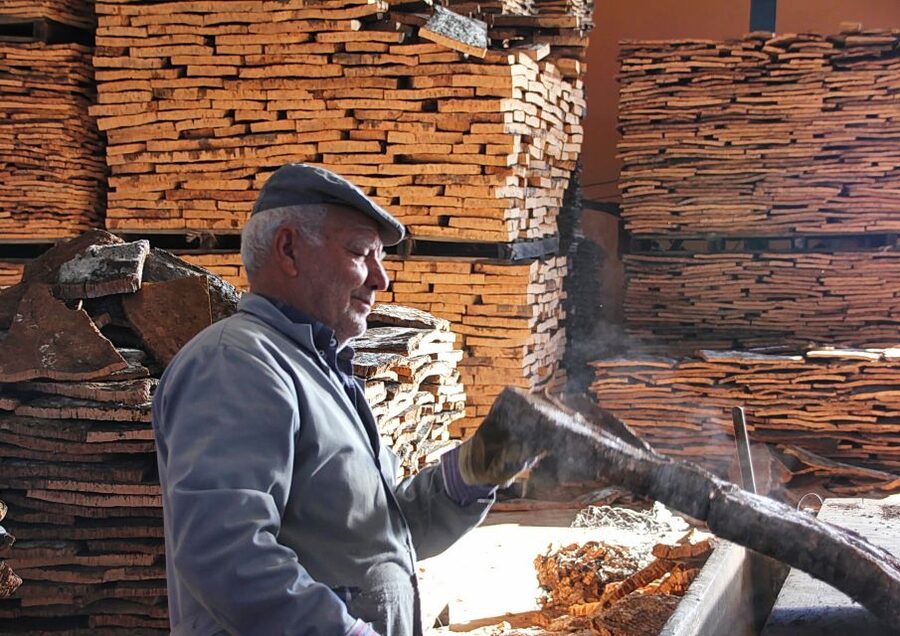
The factory section is the heart of the experience. You see how harvested cork is prepared, sorted, processed, and packed. The exact amount of activity can vary, but the setting gives you a real look at the work rather than a polished museum display.
One of the most interesting moments can be watching an artisan shape pieces of bark by hand. This helps correct the idea that cork is simply pressed into products by machines. Some tasks remain highly skilled and manual, and the worker’s decisions affect the shape and quality of the finished material.
You also learn why quality checks matter. Cork is a natural material, so it is not perfectly uniform. The factory uses visual examples to show different grades and explain how quality affects what the cork can become and what it will cost. That information is especially useful in the shop, where similar-looking items may have different prices.
The work area is large and open, which has one practical downside. Sound can carry poorly, and a guide may be difficult to hear when machinery or several groups are nearby. A microphone would help. Stand close to the guide when possible, and do not hesitate to ask for a point to be repeated.
The tour can feel quieter outside the harvesting season. Some stages may be demonstrated by video rather than seen live, and you may not see an actual cork tree on the visit. That is not a flaw in the factory itself, but it is worth knowing if your main goal is to watch the bark being stripped from a tree.
Same coastline, a completely different day out:
- Albufeira: Benagil Caves & Dolphin Watching Speed Boat Tour
★ 4.6 · 6,316 reviews - Albufeira: Dolphin Watching and Benagil Cave
★ 4.7 · 5,658 reviews - Dolphins Search and Benagil Caves from Albufeira
★ 5.0 · 4,814 reviews - Albufeira: Coastline and Benagil Caves Tour by Catamaran
★ 4.7 · 4,077 reviews
The shop shows cork’s modern side
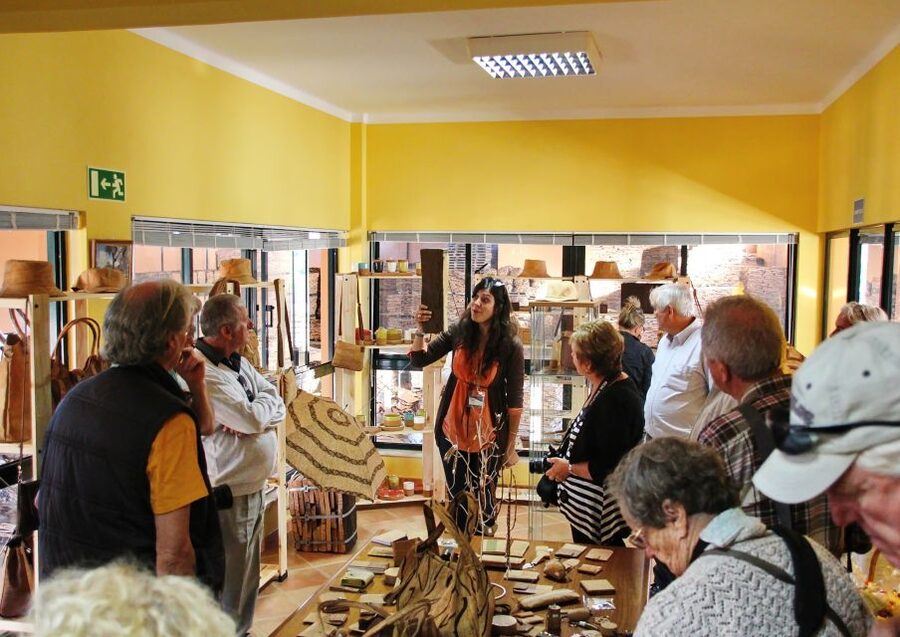
After the factory, you visit the cork shop. This is where the tour shifts from raw material to finished design. In addition to traditional cork goods, the shop displays items made from cork fabric, including fashion accessories and other products intended for daily use.
I like this stop because it puts the technical explanation into your hands. You can compare textures, colors, stitching, and construction after learning how the material is graded. Cork is light and flexible in some forms, so it can be used for products far removed from its familiar role as a bottle stopper.
The selection has included bags, wallets, belts, jewelry, and other cork products. The supplied information does not promise a fixed range, so the exact stock will change. Still, the shop gives you a chance to see why cork has become popular in fashion and souvenir design.
Prices vary with quality and workmanship. That makes the earlier factory explanation useful: you are less likely to judge an item only by its appearance. Some products are affordable, while others cost more because of their finish or the quality of the cork used.
The shop is also a practical reason to allow a few extra minutes after the official 50-minute schedule. You may want to browse without rushing, especially if you are looking for a useful souvenir rather than a decorative item.
The timing and price are strong points
At $20 per person, the tour is reasonably priced for a specialized factory visit. You receive an explanation of cork production, access to a working factory, and a shop stop in under an hour. For a material so closely linked to Portugal, that is a fair way to add local industry to an Algarve itinerary.
The value depends on your expectations. If you want a long, hands-on workshop or a visit to a cork forest, this will feel brief. If you want a clear introduction to cork production with real factory access, the time and price work well.
The advertised duration is 50 minutes. Some descriptions of the visit place it closer to an hour, which suggests the pace can vary with group size and questions. The experience is not rushed when the guide has time to explain samples and respond to the group.
There may also be additional workshops, such as making a cork bracelet for an extra fee, but that option is not included in the standard activity details. If that hands-on activity interests you, ask about availability before arriving. Do not count on being able to reserve it on the spot.
Cancellation is flexible: you can cancel up to 24 hours in advance for a full refund, and the reserve-now, pay-later option helps if your Algarve schedule is still changing. Those terms make it easier to fit the factory into a trip with uncertain weather or shifting day plans.
Who will enjoy this cork experience most
I would recommend this tour to anyone curious about how everyday materials are made. It suits adults, families, and visitors who enjoy seeing working places rather than only historic monuments. The subject is easy to follow, and the guides use physical samples and demonstrations to make the process clear.
It is also a good choice if you care about natural materials and sustainability. The tour does not ask you to accept broad claims without explanation. Instead, it shows the material, the grades, the work involved, and the range of finished goods.
Wine lovers may find the cork stopper story especially appealing, but you do not need an interest in wine to enjoy the visit. The bigger lesson is how a simple piece of bark supports a major Portuguese industry and can be turned into practical, attractive objects.
I would be more cautious if you have limited time in the Algarve and are staying far from São Brás de Alportel. The factory is not near the main beaches, and transport from Faro can be inconvenient unless you arrange a car or rideshare. The drive needs to be part of your plan, not an afterthought.
Large groups are another consideration. The best experience comes when you can hear the guide and get close enough to see the samples and manual work. If your time slot is full, the information may still be good, but the personal feel will be weaker.
Practical advice for a smoother visit
Arrive early. The location may be difficult to identify, and the entrance can become confusing when groups arrive together.
Use the exact factory name and coordinates in your navigation app. The address is Eco-Cork Factory, Mesquita Baixa, 8150-048 São Brás de Alportel, with coordinates 37.140003, -7.855236.
Stay near the guide in the factory. The open space can make speech hard to hear, and a busy day may bring a large group.
Ask about the workshop before your visit if you want to make a cork bracelet. It is an extra activity, not part of the standard ticket.
Leave room in your schedule for the shop. The official visit is short, but browsing the products is part of what makes the trip more useful.
Should you book the Cork Factory Tour?
Book it if you want a short, affordable look at one of Portugal’s most distinctive industries. The strongest reasons are the working factory, the clear explanation of cork quality, and the chance to see an artisan shaping bark by hand. The shop adds a practical finish, especially if you want a Portuguese-made souvenir with a story behind it.
Skip it if you expect a forest walk, a long industrial tour, or a guaranteed view of live harvesting. You may see some stages on video, and the factory is small enough that a large group or poor acoustics can reduce the impact.
For most visitors with a car and an interest in local production, I would make the stop. At $20 and roughly an hour, it gives you a useful understanding of a material you will notice all over Portugal, from wine bottles to handbags.
FAQ
Where is the Cork Factory Tour held?
The tour meets at Eco-Cork Factory in Mesquita Baixa, São Brás de Alportel, Portugal. The address is 8150-048 São Brás de Alportel, and the listed coordinates are 37.140003, -7.855236.
How long does the tour last?
The advertised duration is 50 minutes. Some descriptions place the visit at about one hour, depending on the pace and time spent answering questions.
How much does the tour cost?
The listed price is $20 per person.
What languages are available?
The activity is available in English and Portuguese. The tour information lists live guides in both languages.
Is transportation included?
Transportation is listed among the inclusions. The supplied details do not explain the transfer route or pickup arrangements, so check your booking confirmation for the exact transportation terms.
Is the factory wheelchair accessible?
Yes. The activity is listed as wheelchair accessible.
Will I see cork being harvested from a tree?
Not necessarily. The visit focuses on factory processing, and some harvesting information may be shown by video. One visit did not include seeing an actual cork tree.
Can I see workers processing cork?
Yes, the factory visit can include seeing workers handling cork, including an artisan shaping pieces of bark by hand.
Is there a shop at the factory?
Yes. The tour includes a visit to a cork shop with products such as fashion accessories made from cork fabric. The exact selection can vary.
Can I cancel the booking?
You can cancel up to 24 hours in advance for a full refund. A reserve-now, pay-later option is also available.
New around Algarve
- Exclusive Boat Tour to the Benagil Caves★ 5.0 · 74 reviews
- Surf’s Up in Albufeira: Learn to Ride the Waves★ 5.0 · 74 reviews
- Lagoa: Dolphins Expedition with biologist guide on board★ 5.0 · 75 reviews
- 2-hour Bird Watching Guided Boat Trip in Ria Formosa from Faro Algarve★ 4.5 · 75 reviews
- Lagos/Praia da Luz: Wine Tour, Tastings, Tapas, and Music★ 4.8 · 75 reviews
- Sunset Benagil Caves Boat Tour from Armacao de Pera★ 5.0 · 76 reviews
- Visit Secret Caves, Hidden Beaches and Snorkel in Alvor, Portugal★ 5.0 · 76 reviews
- Lagoa: 2.5-Hour Vineyard Dinner with Winetasting★ 4.5 · 77 reviews
Algarve Tours, compared.

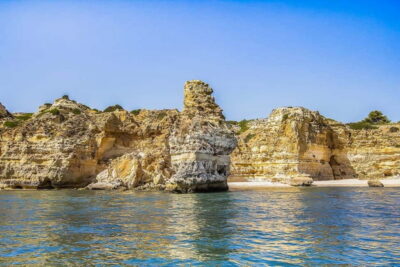
Benagil Caves Speed Boat Tour with Sunset Option
Read our review →

Benagil Caves & Dolphin Watching Speed Boat Tour
Read our review →

Dolphins Search and Benagil Caves from Albufeira
Read our review →
Coastline and Benagil Caves Tour by Catamaran
Read our review →