Reviewed · PORTO TOURS
Tile Painting and Cocktails in Downtown Porto
Porto’s famous blue-and-white tiles are more than pretty walls. In this two-hour workshop, Daniela explains how azulejos shaped Portuguese culture, then shows you how to make one of your own. You paint in a downtown studio, enjoy a local cocktail or juice, and leave with a personal souvenir instead of a factory-made trinket.
I like two things here: the tile is ready about an hour later, which suits a short Porto stay, and you can follow a prepared design or create your own. The main consideration is time. You may need to return to the studio after the class to collect the finished piece, and the acrylic process is quicker but less traditional than a kiln-fired tile.
Key points at a glance
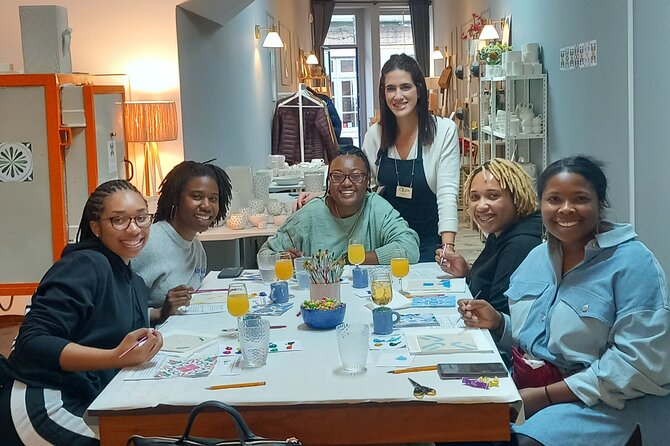
- Portuguese tile history comes first: Learn how tiles became important in Portugal, who influenced the tradition, and which colors appear most often in Porto.
- Daniela guides every skill level: You can use a supplied outline or work freehand, with step-by-step help throughout.
- A local drink is included: Sip a gin and Port cocktail or choose juice while painting.
- Your tile is ready quickly: The studio’s technique lets you remove the sealed tile about one hour after the workshop.
- A personal souvenir beats a shelf trinket: Paint a bridge, a traditional pattern, egg tarts, or another image that means something to you.
- Downtown location saves planning time: The studio at R. Chã 77 is close to several major sights and public transportation.
Why Porto tiles deserve more than a quick photograph
You can see azulejos all over Porto without taking a class. Church facades, railway interiors, house fronts, and small decorative panels turn an ordinary walk into a lesson in Portuguese design.
The workshop gives that tile tradition some useful context. Over two hours, Daniela talks about how Portuguese tiles became so important, the outside influences that shaped them, the colors most often used in Porto and Portugal, and the city sights where you can see the craft at its best.
That short talk matters because it changes how you look at Porto afterward. Instead of seeing only blue decoration, you start noticing patterns, repeated color choices, and the way tiles help tell a place’s story.
The history portion is an introduction, not a full museum lecture. If you want detailed art history, this activity will not replace a specialized tour or a visit to a tile museum. But it gives you enough background to make the city’s tiled buildings more meaningful, without taking up half a day.
A few other Porto half-days worth a look
- The Unvanquished Tour in Porto City Center
★ 5.0 · 26,497 reviews - From Porto: Douro Valley w/ Boat Tour, Wine Tasting & Lunch
★ 4.7 · 19,061 reviews - Complete Douro Valley Wine Tour with Lunch, Wine Tastings and River Cruise
★ 5.0 · 12,920 reviews
Entering the studio on R. Chã 77
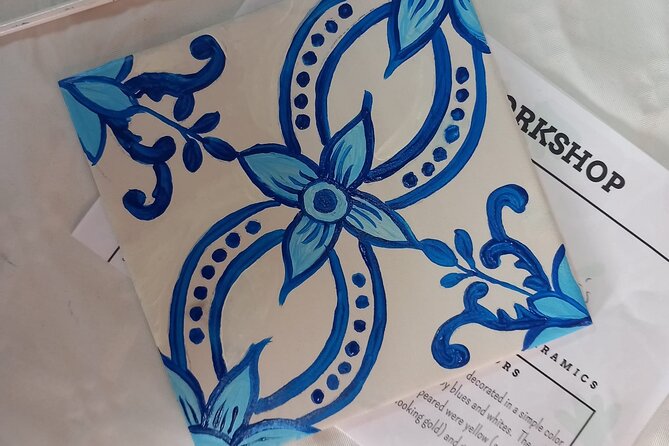
The meeting point is R. Chã 77, 4000-165 Porto, in the downtown area. The activity starts and finishes at the same place, which keeps the plan simple. It is near public transportation and close to several popular sights, so you can pair it with sightseeing before or after the class.
The studio is described as clean, spacious, well prepared, and easy to find. That practical detail matters. Painting needs room for materials, elbows, and a little creative uncertainty. A cramped table would make the class less pleasant, especially for families or larger groups.
The maximum group size is 20 people. That is not a tiny private lesson, but the class still has a social feel rather than the scale of a large bus tour. Smaller parties may share the room with other people, which can be part of the fun. Solo participants can chat while painting, and groups can work together without needing to organize a private event.
If you want to bring a larger group, contact the support team at least 24 hours ahead to check availability. Different dates and times may also be possible by contacting the studio.
The first hour: tile stories, colors, and ideas
The session begins with an explanation of Portuguese tiles. You learn where the tradition came from, who influenced it, and why azulejos became such a strong part of the country’s visual identity.
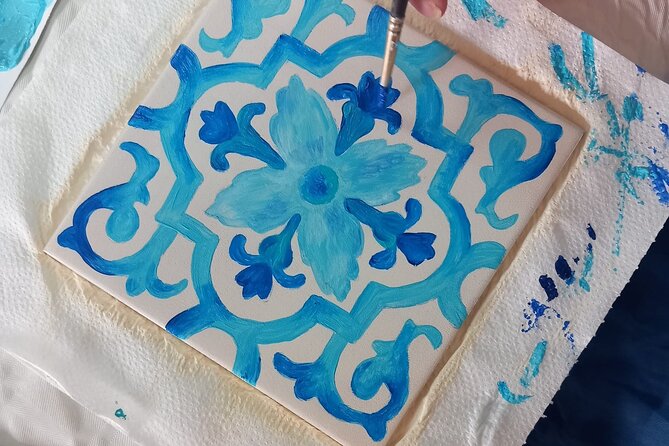
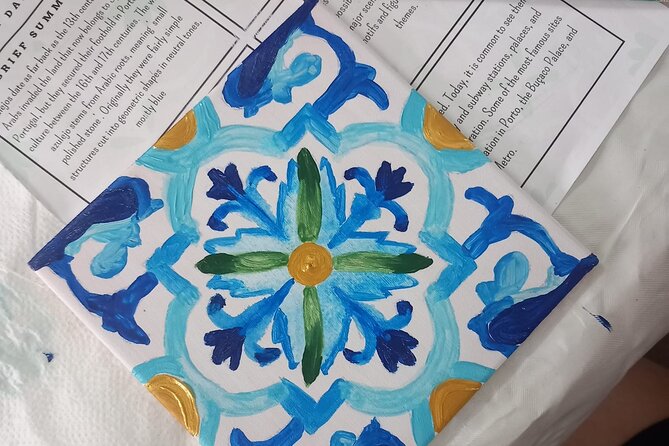
You also get guidance on common colors. Blue is the obvious Porto favorite, but the class gives you room to think beyond the standard blue-and-white souvenir. One family used a rainbow approach on a supplied pattern, while another participant painted the Dom Luís I Bridge. Someone else chose egg tarts as a playful subject.
That range is one of the workshop’s strengths. You do not have to copy a historic design if that is not your style. You can make a traditional-looking tile, paint a local landmark, or create something personal.
Daniela’s teaching style is patient and direct. She explains the process clearly and helps when a design becomes tricky. You can choose a supplied outline, which is a smart choice if you want a neat result without spending too much time deciding what to paint. You can also work freehand if you already have a clear idea.
Here is my practical advice: decide on a rough design before you arrive. The hardest part for some people is not painting. It is choosing what to paint from a room full of possibilities. A simple pattern is especially wise if you tend to fuss over every line or if your schedule is tight.
Painting your own azulejo, without needing art training
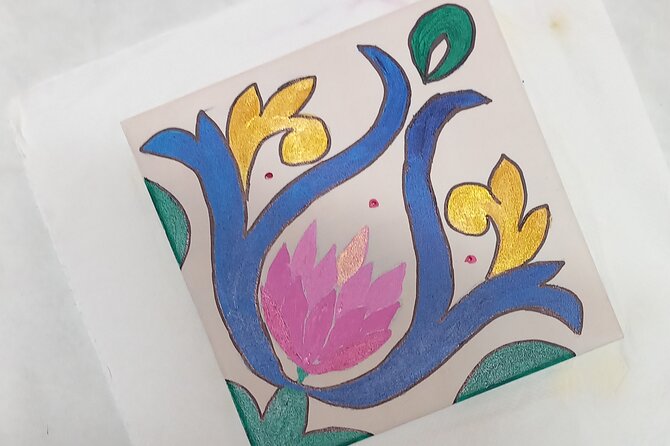
The hands-on part is designed for beginners. You receive instructions at each stage, and the teacher can help you turn a basic plan into something that looks finished.
You do not need formal art skills. The supplied patterns remove much of the pressure, and the guidance suits different levels of confidence. Children can take part, too. Families have used the class as a shared project, with children choosing their own subjects and colors rather than being pushed toward one exact design.
That flexibility makes the workshop work well for mixed-age groups. It has also suited birthday-style group outings and hen parties, while still being calm enough for a solo afternoon activity.
The painting itself uses acrylics, according to the detailed class description. The studio’s curing method seals the tile within a few minutes, allowing you to take it away roughly an hour after the class. This is a key difference from workshops that require kiln firing, shipping, or a long wait before collection.
There is a tradeoff. A quickly cured acrylic tile is convenient, but it is not the same process as making a traditional kiln-fired azulejo. If your priority is a historic ceramic method, ask the studio for current details before booking. If your priority is leaving Porto with a finished keepsake, the fast process is a major advantage.
Same coastline, a completely different day out:
- Porto: Six Bridges Cruise
★ 4.2 · 11,680 reviews - Porto: Live Fado Show with Glass of Port Wine
★ 4.8 · 6,498 reviews - Porto: 6 Bridges Douro River Cruise
★ 4.3 · 6,472 reviews - Porto: Torre dos Clerigos Entrance Ticket
★ 4.6 · 6,395 reviews
Cocktails, juice, and the social side of the class
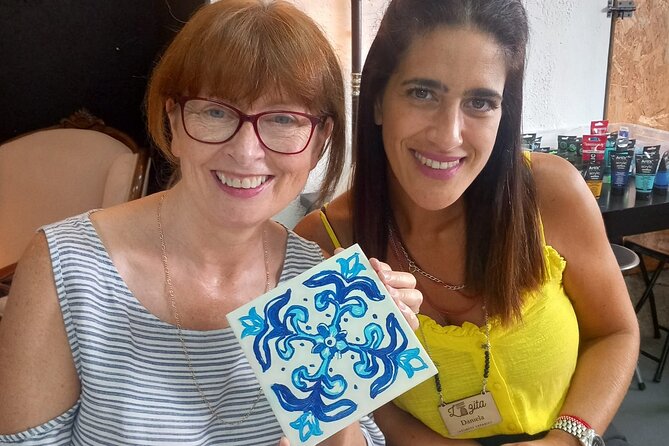
The drink is not the reason to book this activity, but it adds a pleasant rhythm to the two hours. You can choose a local gin and Port cocktail or juice, then sip while you paint.
The cocktail option fits the setting well. Port is one of Portugal’s best-known drinks, so including it connects the creative activity to local food and drink culture without turning the class into a tasting tour.
The drink also helps the room feel relaxed. You can talk with other painters, compare ideas, and hear about different Porto plans while waiting for paint to set. The atmosphere is friendly and informal, with plenty of help when you need it.
If you do not want alcohol, juice is available. That makes the activity easier to recommend for families and anyone who simply wants a nonalcoholic break from walking.
The finished tile and the one-hour wait
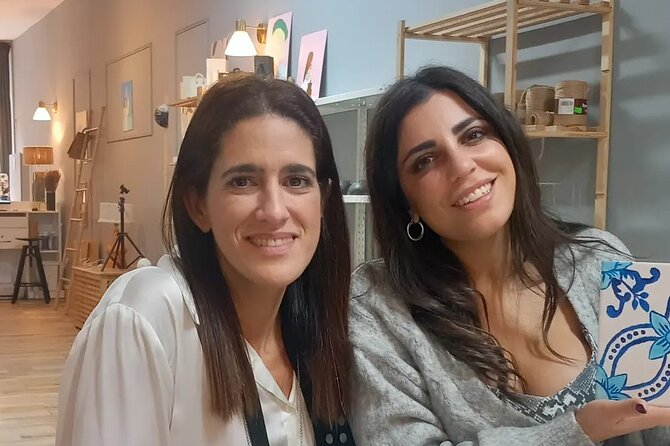
The most useful feature is the short turnaround. You can collect the sealed tile about an hour after the workshop, using the studio’s special technique.
Plan this carefully. The experience ends at the same meeting point, but the souvenir may not be ready the instant the class ends. You might use the hour for lunch, a nearby attraction, or a walk through central Porto, then return to R. Chã 77.
This timing works especially well if you have limited time in the city. You do not have to arrange shipping or stay for several days waiting for a firing process. It also gives you a finished object to pack before moving on to your next destination.
The tile is more meaningful than a ready-made souvenir because you made the design yourself. It may not look perfect, and that is part of its value. A slightly uneven line can remind you of the afternoon far better than another mass-produced magnet.
Pack it with care for the rest of your trip. The supplied information confirms that the tile can be taken home, but it does not give detailed packing or luggage advice.
Is $42.34 a fair price?
At $42.34 per person, this is not the cheapest way to spend two hours in Porto. You can walk past tiled buildings for free, and a basic souvenir costs much less.
The price makes more sense when you count what is included: a guided introduction to Portuguese tile culture, art materials, personal instruction, a drink, studio time, and a finished tile. You are paying for an activity as well as an object.
I see the best value for three kinds of people. First, it suits anyone who wants a hands-on cultural experience rather than another sightseeing stop. Second, it works for families or mixed groups who need an activity that does not depend on athletic ability. Third, it is useful for a short visit because the tile is available quickly.
The value is weaker if you dislike crafts, want a full technical ceramics course, or have no room in your schedule for the later pickup. It is also less appealing if your only goal is to see Porto’s famous azulejos. For that, a walking route may be enough.
The experience is available in English, which keeps the history talk and painting instructions clear for English-speaking participants.
Who should book this Porto workshop?
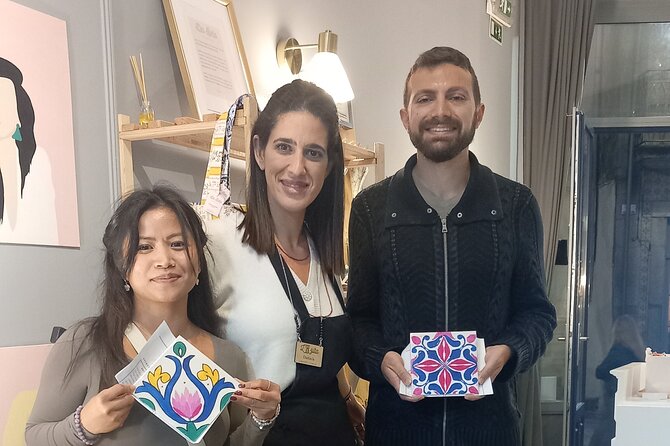
I would recommend it to couples, families, solo painters, friend groups, and anyone who wants a quiet break from Porto’s steep streets. Several ages can work together, and the class does not require previous skill.
It is also a good choice for a rainy day or for the middle of a sightseeing-heavy schedule. Two hours seated in a studio gives your feet a rest while still connecting you with local culture.
The class may suit perfectionists, but only if you choose a simple design and allow extra time. One participant needed longer than expected, and the instructor was accommodating. Still, do not select the most detailed pattern if you are rushing to catch a train or flight.
People who want privacy should ask about group size and private arrangements before booking. The maximum is 20, and the standard format may include people outside your own party.
Service animals are allowed, and most people can take part. The activity is near public transportation, though the supplied information does not provide detailed accessibility measurements or step-free route information. Contact the operator if you need specific access arrangements.
How to fit it into a Porto day
The central meeting point makes this easy to combine with nearby sightseeing. You can book the workshop during a gap between attractions, then return for the tile once it is ready.
Do not schedule it too tightly around another timed activity. The class lasts about two hours, and the tile collection adds a later stop. A flexible afternoon is better than trying to squeeze the workshop between fixed reservations.
You may also want to look at the studio’s other creative offering, a Pastel de Nata workshop. The information provided does not give full details for that activity, so treat it as a separate option rather than part of this booking.
For the smoothest visit, arrive with a general design idea, keep your schedule open for the one-hour collection window, and think about how you will carry the tile afterward.
Booking and cancellation details
The experience is booked in advance on average, so reserve early if your Porto dates are fixed. Confirmation normally arrives at booking. If you book within one hour of departure, confirmation comes as soon as possible and depends on space.
You can cancel for a full refund up to 24 hours before the local start time. Changes or cancellations inside 24 hours are not accepted for a refund. The activity also requires a minimum number of participants. If the operator cancels because that minimum is not met, you can choose another date or experience, or receive a full refund.
Should you book Tile Painting and Cocktails in Downtown Porto?
Book it if you want to make something, learn the basic story behind Porto’s tiles, and take home a souvenir that carries your own fingerprints. The friendly instruction, flexible design choices, local drink, and quick tile collection make this more useful than a simple craft demonstration.
Skip it if you want a serious ceramics course, a fully traditional firing process, or a sightseeing tour with no scheduled return. For most people with a spare afternoon, though, $42.34 buys a relaxed cultural activity and a personal reminder of Porto. I would choose a simple pattern, leave room in the schedule for pickup, and enjoy the fact that your tile will be unlike anyone else’s.
FAQ
Where does the tile painting workshop start?
It starts at R. Chã 77, 4000-165 Porto, Portugal.
Where does the activity finish?
The activity ends back at the same meeting point on R. Chã 77.
How long does the experience last?
The workshop lasts approximately two hours.
How much does it cost?
The listed price is $42.34 per person.
Is the workshop offered in English?
Yes. The experience is offered in English.
What drink can I have while painting?
You can choose a gin and Port cocktail or juice.
Do I need artistic ability?
No. You can use a provided outline, work freehand, and receive step-by-step help from the instructor.
Can children take part?
The provided information indicates that children have been included in the activity and that most people can participate.
When can I collect my finished tile?
The studio’s technique allows you to remove the tile about one hour after the workshop ends.
Can I cancel for a full refund?
Yes. Cancel at least 24 hours before the experience’s local start time for a full refund. Cancellations or changes made less than 24 hours before the start are not refunded or accepted.
New around Porto
- Porto: City Bike Rental★ 4.6 · 75 reviews
- Fado Concert with Welcome Drink★ 5.0 · 75 reviews
- Boat Trip to Régua Through the Douro Valley with Breakfast and Lunch★ 4.5 · 76 reviews
- Porto City Tour Half Day – Private★ 5.0 · 77 reviews
- Port : Private Cruise in the Douro — 6 Bridges & Sunsets★ 5.0 · 78 reviews
- Porto Private Airport Departure Transfer★ 4.5 · 78 reviews
- Half-Day Walking Tour Tasting Local Food in Porto★ 5.0 · 78 reviews
- Douro Valley Small-Group Tour: 2 Wineries, Lunch, Optional Cruise★ 5.0 · 78 reviews
Porto Tours, compared.

Douro Valley w/ Boat Tour, Wine Tasting & Lunch
Read our review →
Complete Douro Valley Wine Tour with Lunch, Wine Tastings and River Cruise
Read our review →