
Reviewed · CRUISES & BOAT TOURS
Port : Private Cruise in the Douro — 6 Bridges & Sunsets
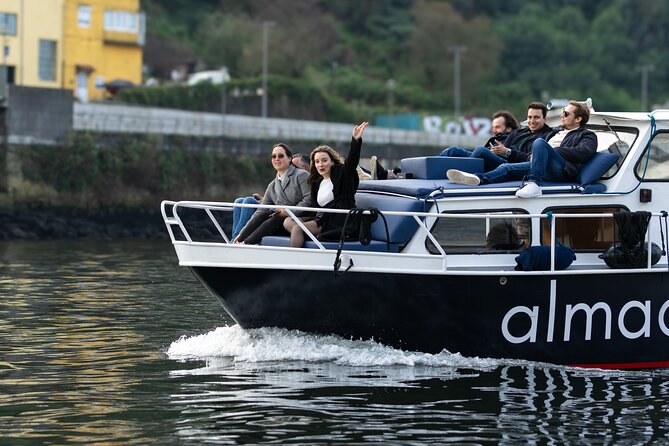
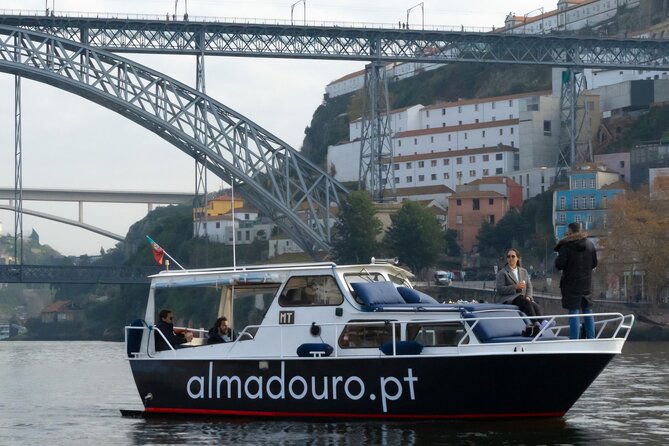
The best part of this private Douro cruise is the way it turns Porto into a waterside story. From the fishing quarter of Afurada to the Atlantic at Foz do Douro, you pass six bridges, old Port wine boats, churches, gardens, and grand riverfront buildings without fighting city traffic. Nadia and Paulo guide the ride in English and add local context as you go.
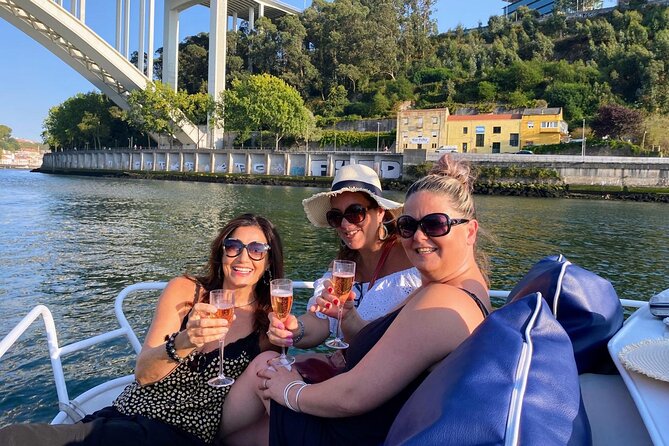
I like the small private setting, which lets your group choose a quiet, social, or family-friendly mood. I also like the thoughtful extras: comfortable cushions, blankets when the air cools, drinks, and a snack board with cheese, meat, fruit, and locally made treats. The main catch is the weather. Cloud can spoil the sunset, and the tour may be canceled in poor conditions.
Key points to know before you book
- Six bridges in two hours: See Arrábida, Dom Luís I, Infante, Maria Pia, São João, and Freixo from the river.
- Afurada departure: Meet at Marina da Afurada in Vila Nova de Gaia, then return to the same place.
- Sunset finale: The route reaches Foz do Douro, where the river meets the Atlantic.
- Private boat atmosphere: Only your group takes part, so the pace feels personal rather than crowded.
- Local food and drinks: Expect a snack board and drinks such as wine, sangria, beer, and other beverages.
- Comfort matters: The boat has cushions, a covered rear section, and blankets for cooler weather.
Why this cruise gives you a different Porto view
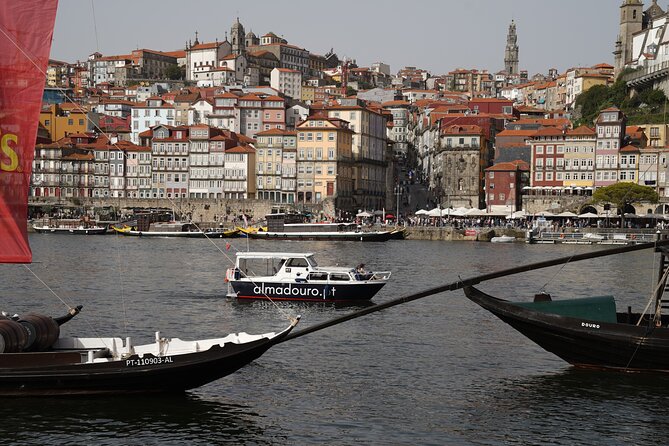
Porto is easy to admire from its hills, but the Douro changes the city’s scale. From the water, the steep banks, bridge arches, tiled facades, church towers, and wine lodges line up in one long view. You also see the working side of the river, especially around Afurada and Gaia, where fishing and Port wine remain part of daily life.
This is not a ferry crossing or a quick sightseeing loop. It is a private outing with time to settle into the boat, listen to stories, and watch the city move past at river speed. That matters in Porto, where walking between viewpoints can involve steep streets and crowds.
The two-hour length is well judged. You have enough time to travel beyond the central riverfront and reach Foz, but you are not committing half a day to a boat ride. The tour begins and ends at Marina da Afurada, so plan your route to that side of the river rather than assuming you will board near Ribeira.
More Boat Tours in Porto
- From Porto: Douro Valley w/ Boat Tour, Wine Tasting & Lunch
★ 4.7 · 19,061 reviews - Complete Douro Valley Wine Tour with Lunch, Wine Tastings and River Cruise
★ 5.0 · 12,920 reviews - Porto: Six Bridges Cruise
★ 4.2 · 11,680 reviews
Afurada starts the journey with local character
Afurada is a fishing neighborhood in Vila Nova de Gaia, set near the mouth of the Douro. Its colorful houses, narrow streets, fish restaurants, and traditional boats give the opening of the cruise a more local feel than a departure point in the busiest part of central Porto.
I would arrive early enough to enjoy the marina area before boarding. The meeting point is Marina da Afurada, at Rua da Praia 430. Since the activity returns there, you do not need to arrange a separate ride from the final viewing point.
The setting also explains why this is a good starting place. Afurada connects the river to the sea, fishing to tourism, and Gaia to Porto. As the boat leaves, you begin with working waterfront scenes before moving toward the city’s famous bridges and historic center.
Six bridges, six different chapters of the Douro
The bridge sequence is the backbone of the cruise. You do not simply see one famous crossing and turn around. The route gives you a broad look at how Porto and Gaia have connected over time, from Gustave Eiffel’s nineteenth-century ironwork to modern concrete traffic bridges.
Arrábida Bridge
The Ponte da Arrábida is a large bow bridge linking Porto and Gaia. Opened in 1963, it was once considered the world’s largest reinforced-concrete arch bridge.
From the river, its wide arch has a powerful shape. It also marks the shift from the outer river toward the more concentrated city views. The bridge is less ornate than Dom Luís I, but its engineering story gives you a useful reminder that Porto’s bridges are not all from the same period.
More boat trips around Porto:
- Porto: 6 Bridges Douro River Cruise
★ 4.3 · 6,472 reviews - Douro Valley: Wine Tour with Lunch, Tastings & River Cruise
★ 4.6 · 6,081 reviews - Porto: Guided Tour by Tuk-Tuk & Optional Douro River Cruise
★ 4.5 · 5,980 reviews - Douro Valley: Historical Sites, Wine Experience, Lunch & Cruise
★ 5.0 · 5,133 reviews
Dom Luís I Bridge
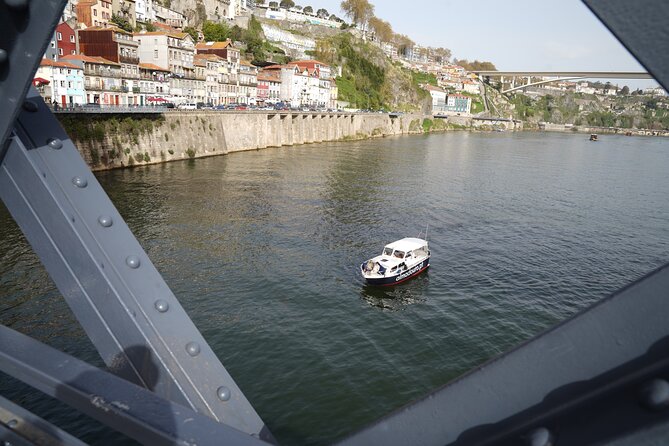
The Don Luís I Bridge is Porto’s star crossing, and the river gives you one of its best angles. Its iron structure links Ribeira with Cais de Gaia and has become one of the city’s defining symbols.
From below, you can appreciate the scale of the upper and lower levels in a way that is harder to grasp from the pavement. The bridge also frames the two riverbanks nicely: Porto’s steep, colorful Ribeira on one side and Gaia’s Port cellars on the other.
Infante Bridge
The Infante Bridge has a clean, modern concrete arch and a more restrained profile. It fits into the river corridor without competing with the older iron bridges.
This is a useful comparison point. The cruise lets you see how each bridge answers a different need and reflects a different age of engineering. You get the grand nineteenth-century structures, the mid-century concrete arch, and later road crossings in one continuous ride.
Maria Pia Bridge
The Maria Pia Bridge was designed by Gustave Eiffel and opened in 1877. At the time, its iron arch was the largest in the world.
Although it no longer carries regular rail traffic, it remains one of the most striking structures on the Douro. From the boat, its delicate iron lines contrast with the heavier modern bridges nearby. It is a particularly good moment for anyone interested in architecture, engineering, or the way old infrastructure remains part of a living city.
São João Bridge
Opened in 1991, the São João Bridge replaced Maria Pia as the main railway crossing. Its broad supports and smooth lines look practical rather than decorative.
That practical role is part of the story. Porto’s bridges are not just photo subjects. They carry rail, road, and pedestrian connections between Porto and Gaia, and each new crossing was built as the city grew.
Freixo Bridge
The Ponte do Freixo, opened in 1995, is the newest of the six. Its reinforced-concrete structure was built to reduce traffic pressure on the other crossings, including Dom Luís I and Arrábida.
The Freixo is farther from the central postcard views, but that is precisely why it adds range to the cruise. You see more of the Douro corridor instead of staying only in the historic center.
The riverfront sights between the bridges
The cruise includes more than bridge spotting. Along the way, the boat passes several places that help explain Porto’s character.
The Electric Car Museum occupies the former Massarelos Thermoelectric Power Station, built in 1915 to produce energy for Porto’s electric vehicles. Its collection focuses on electric cars and public transport, including historic trams. You may not visit the museum during this cruise, but seeing the building from the river gives you a glimpse of the city’s industrial and transport past.
The old trams are especially appealing because of their period details. Wooden and iron interiors, openable windows, and reversible seat backs belong to another era of urban travel. That small detail about the seats is worth remembering when you see Porto’s tram culture from the water.
The Gardens of the Crystal Palace cover about 10 hectares above the river. Their paths, greenery, and high viewpoint offer wide views across Porto and the Douro. From below, the gardens show how much the city rises from the water. They also provide a softer counterpoint to the bridges, warehouses, and dense old buildings.
The Church of Massarelos connects the riverfront to neighborhood life. Its location near the Douro reflects the area’s ties to fishermen and sailors. It is not the kind of landmark that demands a long stop, but it adds human context to the route.
The New Customs building, known for its Neoclassical design and roots dating to 1822, has been restored for congresses, exhibitions, concerts, conferences, and formal events. Its preserved exterior is another example of Porto giving older buildings new uses instead of leaving them behind.
Ribeira and Gaia from the water
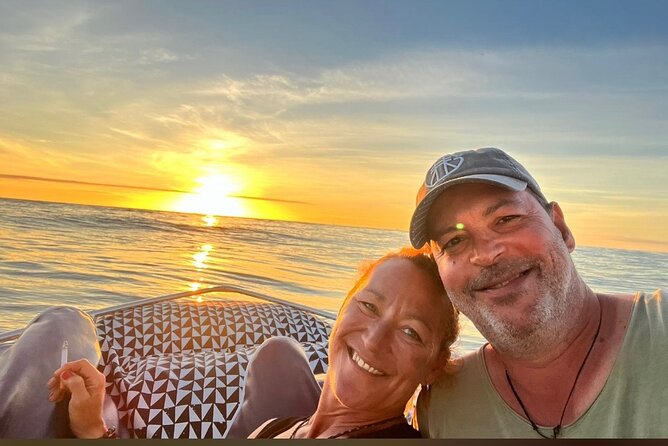
Ribeira is Porto’s most recognizable riverfront district. Its narrow streets, colorful buildings, and steep hillside make it one of the city’s most atmospheric areas, but the waterfront can feel crowded at street level.
A boat solves that problem for a while. You can look back at the facades without squeezing through the lanes or stopping every few steps for foot traffic. The river also gives you a clearer sense of how tightly Ribeira is packed against the slope.
Across the water, Cais de Gaia brings a different mood. The Port wine cellars line the south bank, and the traditional rabelos boats recall the days when wine barrels traveled along the Douro. Many of these boats are kept near the quay, adding a strong visual link between the river and the wine trade.
This section is likely to be the most familiar part of the cruise, but it is still valuable because you see both sides together. Porto supplies the dramatic hillside cityscape. Gaia supplies the cellars, boats, and broad riverfront promenade. The view makes the relationship between the two cities easy to understand.
Nadia and Paulo make the private format work

The strongest feature here is not only the boat. It is the hosting style of Nadia and Paulo. They provide commentary about Porto and Gaia, explain the sights, and keep the tone warm without forcing constant conversation.
That balance matters on a private tour. Some groups want detailed stories. Others want a quiet drink and time to watch the river. The format allows Nadia and Paulo to respond to your group instead of delivering a fixed presentation to a large crowd.
The small boat is designed for comfort, with cushions on top and a covered rear section. Blankets are available when the temperature drops. A family with a young child found the setting easy to manage, while couples and friends can settle into a more relaxed evening.
The hosts also add snacks and drinks. A typical spread can include cheese, cured meat, fruit, and homemade items, with wine, sangria, beer, and other beverages available. The food is more than a bonus. It makes the cruise feel like a hosted evening rather than a simple transport ride.
You should still remember that a boat is a boat. The river can become choppy, and moving around requires care. One account noted that the ride remained smooth and comfortable even in unsettled water, but conditions are not fully under anyone’s control. If you have reduced mobility, this experience is not recommended.
Foz do Douro brings the sunset payoff
The route finishes toward Foz do Douro, where the Douro meets the Atlantic. This is the natural place for a sunset cruise because the open water gives the sinking sun room to spread across the sky.
The timing will shape your experience. On a clear evening, you can watch the final light over the ocean from the boat. On a cloudy day, you may lose the classic sunset, but the river ride still works as a scenic evening outing. The covered rear section is useful if the sun is strong or the air turns cool.
I would choose the sunset option if your schedule allows it, but I would not book it only for a guaranteed photograph. The tour requires good weather, and poor conditions can lead to a new date or a full refund. That policy protects the quality of the outing, but you should keep some flexibility in your Porto plans.
Is $84.48 per person good value?
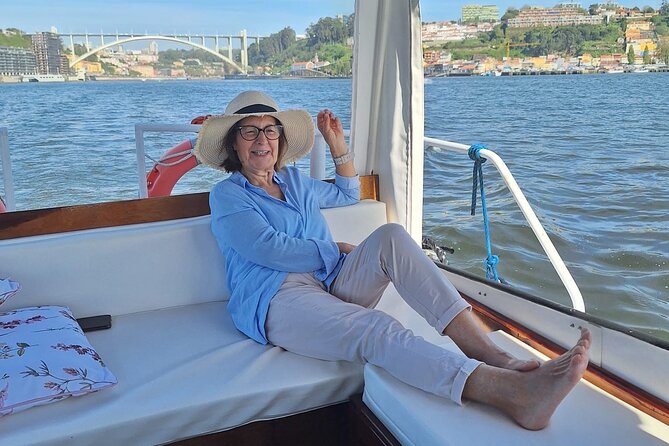
At $84.48 per person, this costs more than a standard public boat ride. The comparison is not quite fair, though. You are paying for a private activity, a two-hour route, a return to the same marina, personal hosting, commentary, snacks, and drinks.
For a couple or family that values space and a calm pace, the price can make sense. Group discounts may improve the deal further. The private format is especially useful if you dislike crowded sightseeing boats or want to mark a birthday, anniversary, or special evening.
If your only goal is to pass under Dom Luís I as cheaply as possible, a public cruise will likely be the better fit. If you want all six bridges, a run toward Foz, and an intimate setting with food and drinks included, this offers stronger value.
The tour is offered in English, and Nadia and Paulo have also been described as speaking Spanish and Portuguese. Confirmation arrives at booking, and free cancellation is available up to 24 hours before the start time. Within 24 hours, you will not receive a refund, so do not leave changes until the last minute.
Who should book this Douro cruise?
I would choose this experience for:
- Couples looking for a quiet sunset outing
- Families wanting a private boat rather than a large group
- Friends who prefer drinks and snacks with their sightseeing
- First-time visitors who want city context without a long walking tour
- Architecture fans interested in Porto’s six bridges
- Anyone who wants to see Ribeira, Gaia, and Foz in one compact trip
I would think twice if you have reduced mobility, dislike any possibility of choppy water, or need a fully fixed schedule despite changing weather. The activity is also less useful if you only want a short ride in the historic center and do not care about the outer river toward Foz.
Final verdict: a strong private choice in Porto
You should book this cruise if you want Porto in a relaxed, personal setting. Nadia and Paulo bring warmth, useful stories, local food, and practical comfort to a route that covers far more than the standard central river view.
The six bridges give the trip structure, while Afurada, the old tram district, Crystal Palace gardens, Ribeira, Gaia, and Foz keep it from feeling repetitive. Just leave room for weather changes and meet at the Afurada marina with realistic expectations about boat access.
For a special evening, a family outing, or a first look at Porto from the Douro, this is an easy recommendation. If the sunset disappears behind clouds, you will still have a good river journey, but the clearest evening is the one to aim for.
FAQ
Where does the private Douro cruise start?
The cruise starts at Marina da Afurada, Rua da Praia 430, 4400-554 Vila Nova de Gaia, Portugal.
Where does the activity end?
The cruise ends back at the meeting point at Marina da Afurada.
How long does the cruise last?
The activity lasts approximately two hours.
Is this a private tour?
Yes. Only your group takes part in the private tour or activity.
Which bridges can you see?
The route includes the Arrábida Bridge, Dom Luís I Bridge, Infante Bridge, Maria Pia Bridge, São João Bridge, and Freixo Bridge.
Is the cruise offered in English?
Yes. The activity is offered in English.
What happens if bad weather cancels the cruise?
The experience requires good weather. If poor weather causes a cancellation, you will be offered another date or a full refund.
New around Porto
- Porto: City Bike Rental★ 4.6 · 75 reviews
- Fado Concert with Welcome Drink★ 5.0 · 75 reviews
- Boat Trip to Régua Through the Douro Valley with Breakfast and Lunch★ 4.5 · 76 reviews
- Porto City Tour Half Day – Private★ 5.0 · 77 reviews
- Porto Private Airport Departure Transfer★ 4.5 · 78 reviews
- Douro Valley Small-Group Tour: 2 Wineries, Lunch, Optional Cruise★ 5.0 · 78 reviews
- Half-Day Walking Tour Tasting Local Food in Porto★ 5.0 · 78 reviews
- Fisgas de Ermelo Trail★ 5.0 · 78 reviews
Cruises & Boat Tours, compared.
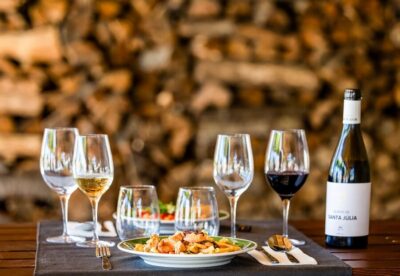
Douro Valley w/ Boat Tour, Wine Tasting & Lunch
Read our review →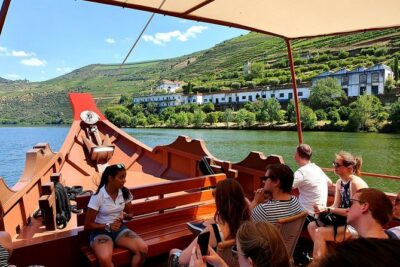
Complete Douro Valley Wine Tour with Lunch, Wine Tastings and River Cruise
Read our review →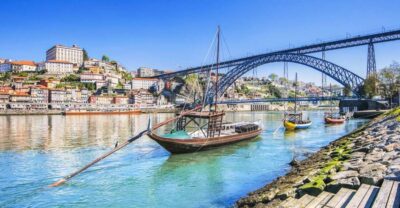

Sunset Boat Party Cruise with DJ and Open Bar
Read our review →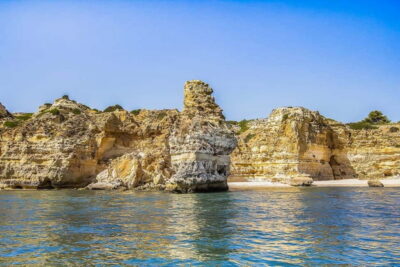
Benagil Caves Speed Boat Tour with Sunset Option
Read our review →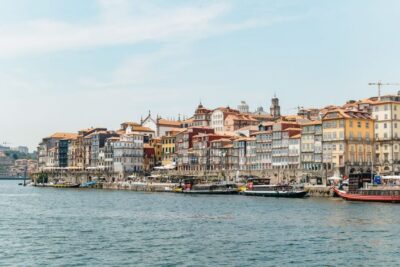
Benagil Caves & Dolphin Watching Speed Boat Tour
Read our review →
Wine Tour with Lunch, Tastings & River Cruise
Read our review →Browse the lists this tour appears in