
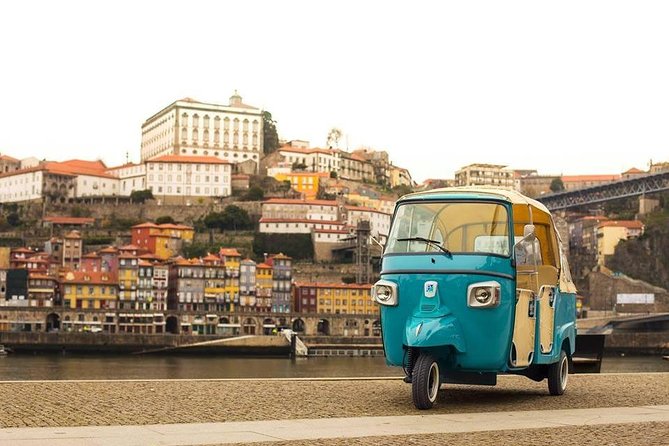
Reviewed · TUK-TUKS
Porto Half Day Private Tuk Tuk Tour
Porto reveals itself quickly from a tuk tuk. You glide through steep lanes, cross into Vila Nova de Gaia, and reach viewpoints that would take real effort on foot. Guides such as Ana, Fabio, Gabi, Rafaela, and Bernardo have been praised for warm, personal tours, useful restaurant tips, and easy adjustments to the route.
I like two things here: you see both Porto and Gaia without wrestling with the city’s hills, and a private booking lets you shape the outing around churches, gardens, views, or neighborhoods. The main caution is consistency. Some tours have felt thorough and well paced, while others ran short, skipped planned stops, or became shared rides despite the private booking.
Key points to know before booking
- Serra do Pilar gives you the big picture: Spend time above Gaia for wide views of Porto, the Douro, the Luís I Bridge, and the riverfront.
- The route packs in major sights: You pass churches, gardens, old markets, the Stock Exchange Palace, Clérigos Tower, Livraria Lello, and more.
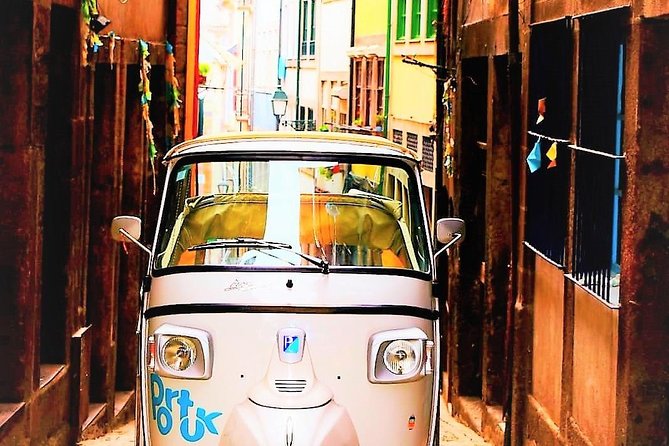
- A private tuk tuk is useful on Porto’s hills: The vehicle reaches narrow streets and saves your legs during a first look at the city.
- Your guide matters greatly: Ana, Fabio, Gabi, Rafaela, Bernardo, Gonçalo, and Johnny have all received especially warm praise for their explanations and personal help.
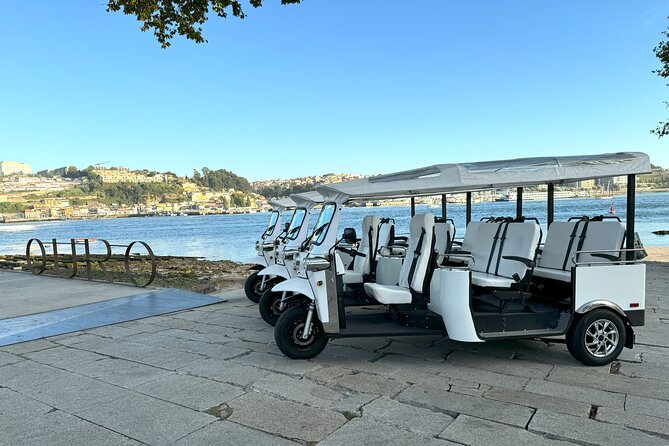
- The vehicle has limits: A tuk tuk holds two, three, or four adults of average height, up to 75 kilograms each, and its canopy can cloud your view.
- Confirm the essentials at the start: Ask about the full three-and-a-half-hour timing, the wine tasting, and whether your ride will remain private.
Why a tuk tuk works well in Porto
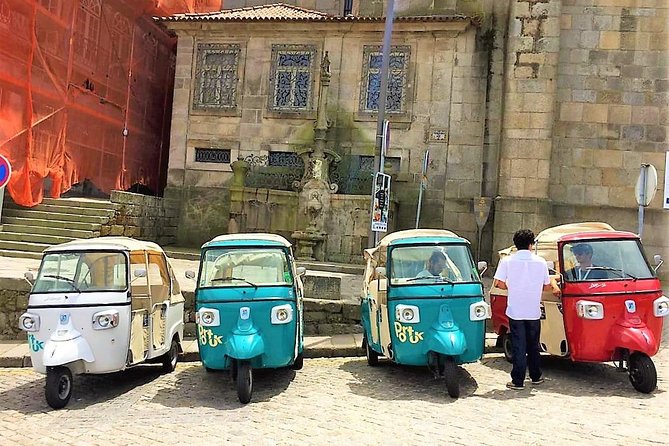
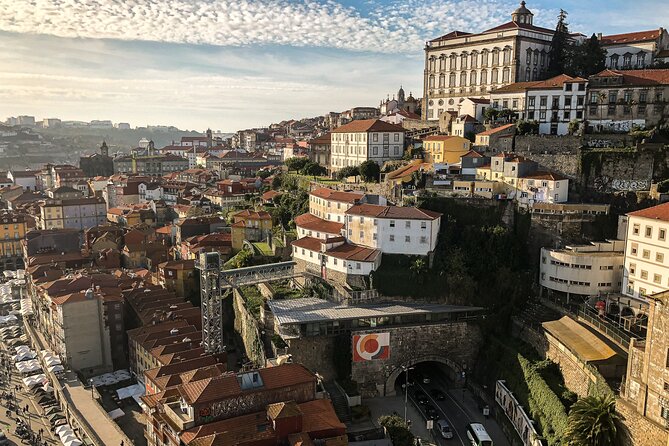
Porto is compact, but it is not flat. The historic center rises and falls sharply, and many of its best views come from roads that twist above the Douro. A tuk tuk gives you a quick orientation without turning your first day into a workout.
The vehicle can also use small streets that are awkward for a bus or car. That matters in the old center, where stone lanes, church façades, tiled houses, and sudden viewpoints appear around corners. You will not stop at every sight for a full visit, but you can get a useful sense of where everything sits.
This is a private tour of about three hours and thirty minutes, with live English commentary. The route is not just a drive past postcard sights. You get short walks and photo stops, plus time to look at selected places. Still, the experience depends heavily on the driver-guide. A strong guide turns a series of monuments into a story about Porto. A rushed guide can leave you looking at buildings without much context.
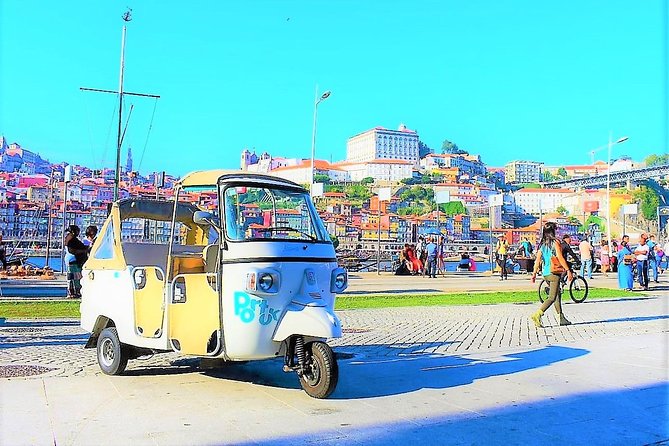
The usual vehicle fits up to four adults of average height and weight. If your group is larger, several tuk tuks travel together and stop at the same places. For a couple or small family, the private format should feel more personal than a large coach tour.
More Tuk-Tuk Tours in Porto
- Porto: Guided Tour by Tuk-Tuk & Optional Douro River Cruise
★ 4.5 · 5,980 reviews - Discover Porto’s Highlights on a 2-Hour Private Electric Tuk Tuk
★ 4.5 · 1,860 reviews - Historic Porto by Private Electric Tuk Tuk to Top Landmarks
★ 4.5 · 735 reviews
Starting above the river at Serra do Pilar
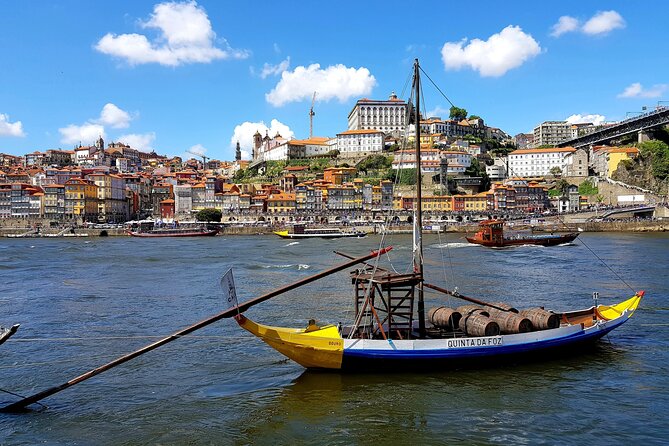
The Mosteiro da Serra do Pilar is one of the best opening points because it helps you understand Porto’s shape. The monastery sits across the river in Gaia, high above the water, with views toward Porto’s cathedral, the Luís I Bridge, the Ribeira area, Arrábida Bridge, Fontainhas, and São João Bridge.
Construction began in 1538 and continued into the seventeenth century. The church has a rare circular plan, and the circular cloister is formed by 36 Ionic columns. The monastery later became a military position during the Civil War of 1832 to 1834, a chapter that gives the site more weight than its fine views alone suggest.
You normally get about 15 minutes here, with no admission charge included or required for the scheduled stop. That is enough for photographs and a quick explanation, though not enough for a long visit inside every part of the complex.
This is also where the private format can pay off. Ask your guide to pause for a few minutes if the light is good or if you want a clearer explanation of what you are seeing across the river. The view is the point, so do not let the stop become a hurried glance.
Crossing the Luís I Bridge into Porto
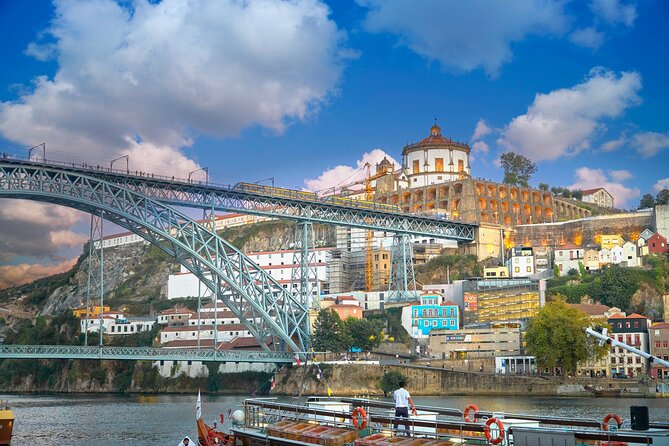
The Luís I Bridge is one of Porto’s defining structures. Designed by Teófilo Seyrig, a student of Gustave Eiffel, it opened in 1886 with two iron decks stacked one above the other. Its large forged-iron arch remains the bridge’s main visual treat.
The upper deck now carries Porto’s metro between the cathedral side of Porto and Gaia’s Garden of Morro. The bridge links the two cities in a practical way, but on this tour it also makes the geography clear. You see how Porto climbs on one bank while Gaia stretches along the opposite side.
Traffic, construction, police controls, or accidents can affect the route. A capable guide may need to alter the order of stops. That is reasonable in a city tour, but ask your guide to explain any major change so you know whether a missed sight will be replaced later.
Churches, gold, and the old commercial center
The Igreja de São Francisco is one of Porto’s great interior surprises. Its Gothic construction began in the fourteenth century, but the inside was transformed by extravagant gilded woodwork in the seventeenth and eighteenth centuries. The contrast between the plain exterior and the glowing interior is striking.
The Tree of Jesse and the catacombs are key details. The church became a National Monument in 1910 and forms part of Porto’s UNESCO-listed historic center. The tuk tuk stop lets you decide if you want to go inside, but the tour’s core timing does not appear to include a long interior visit.
Nearby, the Palácio da Bolsa presents another side of Porto. Built in a neoclassical style from 1842, it belongs to the Commercial Association of Porto and is known for its Arabian Room. The building is still used as a cultural and conference center, so it combines civic history with a working public role.
The small square beside the palace includes the Mercado Ferreira Borges and a monument to Infante D. Henrique. The market building began in 1885 and is an important example of iron architecture. It no longer serves as a traditional market in the old sense, but its later use as an entertainment venue gives the area a lively change of purpose.
You should think of these stops as an introduction, not a substitute for paid visits inside the monuments. If you want to see the Arabian Room, the gilded interior of São Francisco, or other interiors at length, return on foot after the tour.
More tuk-tuk rides around Porto:
- Porto Guided Tour to the Historical Center on a Tuk Tuk
★ 4.5 · 418 reviews - Porto: Private Sightseeing Tour by Electric Tuk Tuk
★ 4.8 · 305 reviews - Oporto Tuk-Tuk Tour: Fast, Fun & Flexible – 1H to Full Day!
★ 4.7 · 280 reviews - Porto Tuk Tuk: Clérigos, Seaside & Viewpoints – with Options
★ 5.0 · 202 reviews
A quiet pause at the Crystal Palace Gardens
The Jardins do Palácio de Cristal are among the most pleasant stops on the route. This is not one formal garden so much as a group of smaller garden spaces connected by paths. Lawns, fountains, sculptures, magnolias, camellias, cypress trees, and olive trees create a calmer break from the stone center.
The gardens also open onto fine views of Porto and the Douro. You get about 20 minutes, admission free. That is a useful amount of time for a short walk and photographs, though you will not cover every path.
If this stop matters to you, say so clearly at the beginning. The route includes many sights, and traffic or timing problems can force changes. One of the sharpest complaints about this type of tour is missing a place the group especially wanted to see. A private booking gives you a better chance of protecting the Crystal Palace Gardens, but it does not hurt to confirm the priority before setting off.
From Alfândega to Cordoaria
The Alfândega Nova do Porto, the former customs house, is a large nineteenth-century neoclassical building beside the Douro. Its two façades face different worlds, one toward the river and one toward the city. Iron was used with stone, brick, and wood in ways that suited each part of the building.
Today it houses the Museum of Transport and Communications and a congress center. Even if you do not enter, the building helps explain Porto’s long link with shipping, trade, and movement along the river.
The former Mercado Ferreira Borges is another reminder of changing city life. Built in 1885 to replace the old Ribeira Market, it had a brief life as a market before serving other purposes. Its iron frame is worth a glance, especially if you enjoy industrial architecture more than polished palace interiors.
The Jardim de João Chagas is better known as the Cordoaria Garden. Rope makers once worked in this area, and the municipality later turned it into a public garden. The nineteenth-century design includes statues and later contemporary sculptures, so the setting mixes old civic planning with modern art.
These are quick stops. I like them because they broaden the tour beyond the standard church-and-bridge circuit. The drawback is that short pauses can feel thin if your guide does not explain why the buildings matter. Ask direct questions about trade, the prison, or the garden’s sculptures and you will get more from the time.
Clérigos, Carmo, and the famous tiled façades
The Clérigos Tower is Porto’s most recognizable vertical marker. Its Baroque bell tower can be seen from many parts of town, and it helps you orient yourself as the tuk tuk moves through the center.
The tour gives you about ten minutes here, and admission is not included. That timing is enough to see the tower, take photographs, and hear its story. It is not enough to climb the tower. If you want the city view from the top, plan a separate visit and check the admission arrangements before you go.
The nearby Igreja dos Carmelitas dates from the seventeenth century, while its classical façade was added in the nineteenth century. Inside, its Porto rococo altarpiece is the main detail to notice. The church is a National Monument, and the stop lasts about five minutes.
The Igreja do Carmo is especially appealing from the street. Its side façade was covered with blue and white tiles in 1912, with scenes linked to devotion to Our Lady. The building itself dates from the second half of the eighteenth century and is known for its rococo decoration.
The Fonte dos Leões sits near the university area. This nineteenth-century fountain was cast in France and copies much of a fountain in Leicester, England. It is a small stop, but it gives you a chance to notice how Porto’s public spaces borrow ideas from beyond Portugal.
The old prison and Livraria Lello
The Antiga Cadeia da Relação was built in granite in the sixteenth century and rebuilt in the eighteenth century. Its 103 windows give the building a distinctive geometric pattern. It once held prisoners including the writer Camilo Castelo Branco and the thief known as Zé do Telhado.
The building now houses the Portuguese Centre for Photography. That change from prison to exhibition center is a good example of Porto reusing old structures without erasing their past. The tour passes close enough for a look at the façades, but a full exhibition visit would require more time.
Livraria Lello is the final named stop. Opened in 1906, the bookshop combines an Art Nouveau exterior with neo-Gothic details inside. Its painted plaster resembles wood, and its great staircase is the feature most people remember. The stained-glass skylight carries the shop’s monogram and the Latin motto Decus in Labore.
Admission is not included, and the stop lasts about ten minutes. That means you should treat it as an exterior look or a quick visit, not a leisurely browse. If the bookshop is high on your list, ask how entry will work and consider returning separately. The tuk tuk can introduce it, but it cannot give you unlimited time in one of Porto’s most sought-after interiors.
What the guides add, and where the experience can fail
The strongest part of this experience is the human element. Ana has been praised for explaining Porto’s neighborhoods and history with warmth. Fabio is valued for clear explanations and practical suggestions for the rest of a stay. Gabi has been singled out for adapting stops, taking photographs, and handling narrow streets and traffic with care.
Rafaela has also been praised for her energy and local knowledge, while Bernardo is known for recommendations on traditional food and restaurants. Gonçalo and Johnny have received similar praise for friendly conversation and useful advice.
That range matters because the tour is flexible by design. You can ask to focus more on Gaia, gardens, churches, local neighborhoods, or views. You should speak up early, especially if you have already seen some central churches and would rather explore areas such as Foz beside the Atlantic.
The weaker version of the experience has three clear problems: late arrival, poor communication while moving, and hurried driving. The canopy can also obstruct your view, particularly when its plastic windows are cloudy or weathered. On a rainy day, the cover is useful, but it may make sightseeing harder.
There have also been instances in which a private booking was combined with another couple because of overbooking. That is not what you paid for, so confirm the private arrangement at the meeting point and contact the booking company promptly if it changes.
The listed wine tasting is another point to verify. It is included in the tour details, but some itineraries have not delivered it. Ask when and where it will happen rather than assuming it will appear automatically.
Price, timing, and who gets the best value
At $83.48 per person, this is not the cheapest way to ride a tuk tuk in Porto. Its value depends on how much you care about a private vehicle, English commentary, a local guide, and seeing both sides of the river in one outing.
For two people, the price buys convenience and a tailored route, but it is a meaningful expense. For three or four people, the per-person cost feels easier to justify because the vehicle and guide are shared within your own group.
The tour is most useful on your first morning in Porto. You get a city map in your head, spot restaurants and neighborhoods to revisit, and learn which sights deserve a longer return visit. It also suits anyone who finds Porto’s hills tiring or who has only a short stay.
I would not choose it as my main cultural visit if I wanted extended time inside monuments. The stops are numerous, and several last only five or ten minutes. You are paying for coverage and orientation, not a museum-style examination of every building.
The meeting point is on Rua de Augusto Rosa 180, near public transportation, and the tour returns there. Confirmation is provided when you book. Service animals are allowed, most people can participate, and children must be accompanied by an adult.
Free cancellation is available up to 24 hours before the start time. Poor weather can lead to a new date or a full refund, since the activity requires suitable conditions.
Should you book the Porto tuk tuk tour?
Book it if you want a fast first look at Porto and Gaia, prefer sitting to climbing, and value a guide who can adjust the route. It is particularly useful for couples, families, and short-stay visitors who want the bridge, viewpoints, gardens, churches, and central landmarks in one compact outing.
Before paying, make three requests clear: keep the booking private, protect any must-see stop such as the Crystal Palace Gardens, and confirm the wine tasting. At the start, confirm the expected three-and-a-half-hour duration and ask your guide to speak clearly when the vehicle is moving.
Skip it if you want long interior visits, a slow walking tour, or complete certainty that every listed stop will receive equal time. The best outcome comes with an engaged guide such as Ana, Fabio, Gabi, Rafaela, or Bernardo, while the poor outcome can feel rushed and expensive.
FAQ
How long does the Porto tuk tuk tour last?
The tour lasts approximately three hours and thirty minutes.
Is the tour private?
It is intended to be a private activity for your group. However, some bookings have been combined with another couple because of overbooking, so confirm this at the start.
How many people fit in one tuk tuk?
Each tuk tuk holds two, three, or four adults of average height, with a stated limit of up to 75 kilograms per person. Larger groups use multiple vehicles and travel together.
Is the tour offered in English?
Yes. The tour includes an English-speaking driver-guide and live commentary on board.
Does the tour include a wine tasting?
Wine tasting is listed as included. Because it has not always taken place, ask your guide to confirm the timing and location.
Does the tour visit both Porto and Gaia?
Yes. The route includes Vila Nova de Gaia, Serra do Pilar, and the Luís I Bridge, along with sights in Porto.
Are entrance tickets included?
Not all entrance tickets are included. The itinerary specifically states that admission is not included for Clérigos Tower, Igreja do Carmo, and Livraria Lello. Several outdoor stops have free admission.
Where does the tour start and finish?
It starts at Rua de Augusto Rosa 180, 4000-528 Porto, Portugal, and ends back at the same meeting point.
Can I cancel for a full refund?
Yes, if you cancel at least 24 hours before the experience starts. Changes or cancellations made less than 24 hours before the start time are not accepted for a refund. If poor weather causes the operator to cancel, you can receive a different date or a full refund.
New around Porto
- Porto: City Bike Rental★ 4.6 · 75 reviews
- Fado Concert with Welcome Drink★ 5.0 · 75 reviews
- Boat Trip to Régua Through the Douro Valley with Breakfast and Lunch★ 4.5 · 76 reviews
- Porto City Tour Half Day – Private★ 5.0 · 77 reviews
- Port : Private Cruise in the Douro — 6 Bridges & Sunsets★ 5.0 · 78 reviews
- Porto Private Airport Departure Transfer★ 4.5 · 78 reviews
- Douro Valley Small-Group Tour: 2 Wineries, Lunch, Optional Cruise★ 5.0 · 78 reviews
- Half-Day Walking Tour Tasting Local Food in Porto★ 5.0 · 78 reviews
Tuk-Tuks, compared.
True 4Hour Private Tuk Tuk Tour: Discover Lisbon with a Local!
Read our review →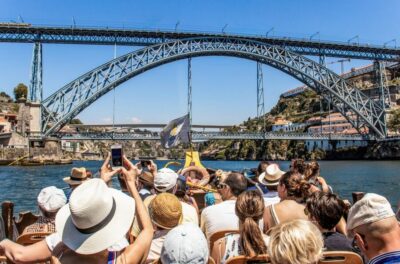
Guided Tour by Tuk-Tuk & Optional Douro River Cruise
Read our review →
Private Lisbon Sightseeing Tuk-Tuk Tour: Alfama, Belém & More
Read our review →
Lisbon Highlights: Private Tuk Tuk Tour Adventure Sightseeing
Read our review →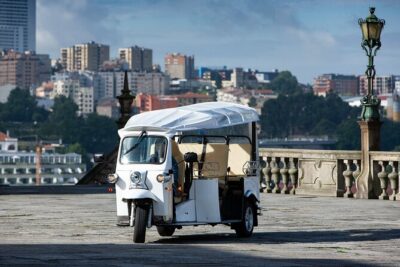
Discover Porto’s Highlights on a 2-Hour Private Electric Tuk Tuk
Read our review →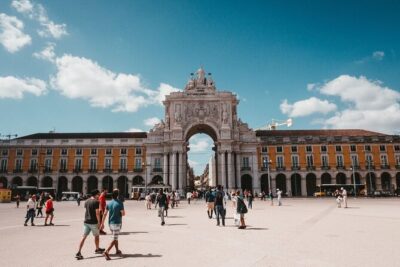
Welcome Lisbon Tour with Local Guide in Private Eco Tuk Tuk
Read our review →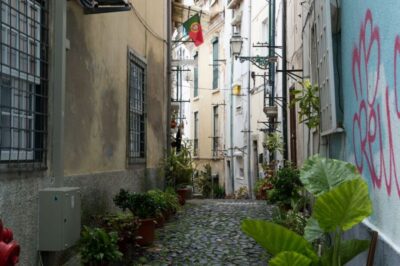
Browse the lists this tour appears in