
Reviewed · CYCLING TOURS
South Lisbon: 3-Hour Christ the King Electric Bike Tour
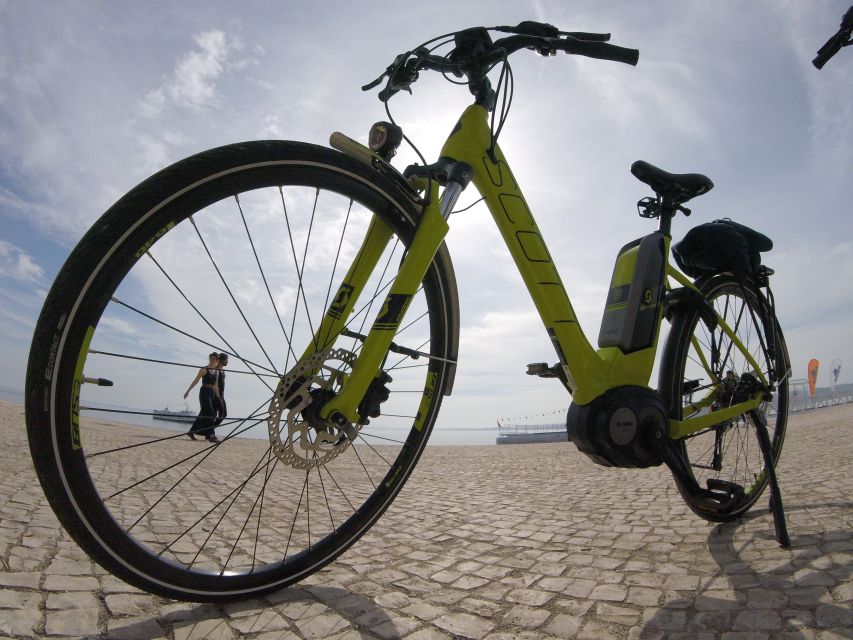
The best part of this tour is the change of scene. You begin among Lisbon’s central squares and tiled streets, cross the Tagus on an orange cacilheiro, then ride through Almada to the outstretched arms of Christ the King. The ferry crossing and south-bank ride turn a familiar Lisbon sightseeing day into something broader and more local.
I like the way the e-bike removes the pain from Almada’s hills, and I like the mix of sights: the Santa Justa Elevator, Ribeira das Naus, Cais do Ginjal, Casa da Cerca, and the Medieval Museum. Guides such as Bruno and Mathias bring useful local background, especially around Lisbon’s trade, Fado, and Islamic past.
The main consideration is pace and structure. This is a small, guided outing with many stops in only three hours, so it suits you if you enjoy variety and a guide-led route. It may feel too loosely organized if you want long, quiet visits at each sight.
Key points at a glance
- Cross the Tagus by cacilheiro: The orange ferry is part of the transport and part of the sightseeing.
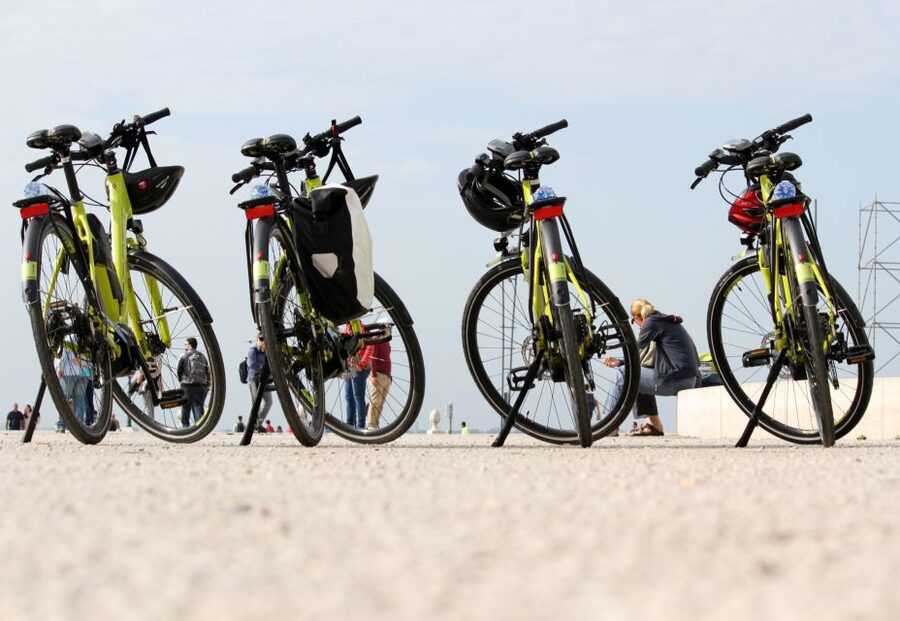
- Let the e-bike handle Almada’s climb: You can ride toward Christ the King without turning the tour into a hard workout.
- See Lisbon from across the river: The view from the sanctuary includes the Tagus and the 25 de Abril Bridge.
- Visit places many central tours skip: Cais do Ginjal, Casa da Cerca, Almada’s narrow streets, and the Medieval Museum add variety.
- Expect a small group: The tour is limited to 11 people, with guides available in English, Spanish, French, and German.
- Budget for a café stop: Coffee at Casa da Cerca is not included, though a bottle of water is provided.
Why the south bank changes your view of Lisbon
Lisbon is usually approached from its historic center, where the hills, trams, grand squares, and riverfront take most of the attention. This tour asks you to look back at the city from the opposite shore. That simple shift gives the day its character.
You start at Largo da Severa 7A, a pedestrian spot near Praça Martim Moniz. If you arrive by taxi, Uber, bus, or metro, use Praça Martim Moniz as your destination, then walk about two minutes to the meeting point. The opening safety briefing covers the e-bike and basic riding instructions.
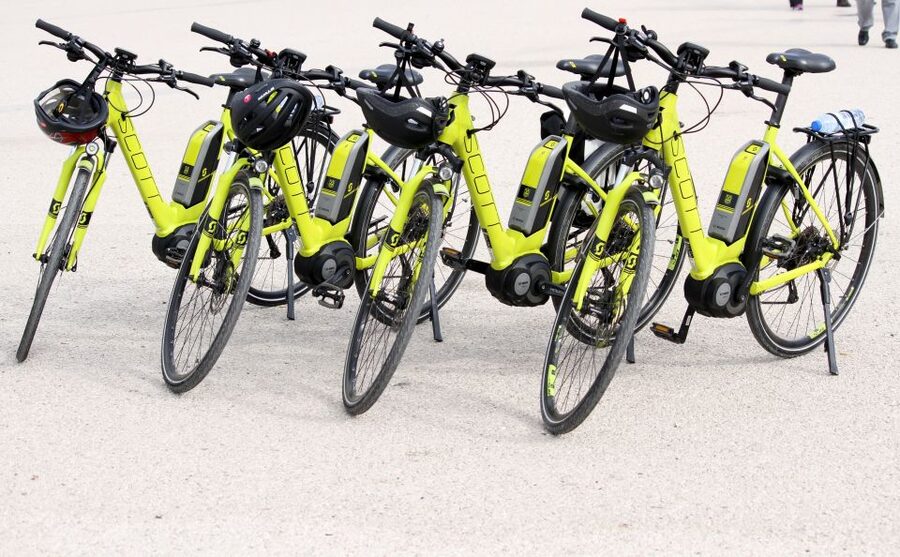
The group size is capped at 11 people. That matters on a bike tour, since a smaller group is easier to keep together at crossings and easier for the guide to address. It also leaves room for questions. Bruno has been praised for pointing out details at many stops, while Mathias has been singled out for a friendly and capable approach. Guides may vary, but the experience is offered in English, Spanish, French, or German.
More Bike Tours in Lisbon
- Lisbon: Hills, Alfama, and Mouraria Tour by Electric Bike
★ 4.8 · 3,438 reviews - Lisbon E-Bike Tour Commerce Square, Mouraria and Alfama
★ 4.5 · 1,688 reviews - Lisbon: 7 Hills Half-Day Electric Bike Tour
★ 4.9 · 1,592 reviews
From Praça da Figueira to Praça do Comércio
The first part of the route introduces central Lisbon before the tour heads across the river. At Praça da Figueira, your guide explains the square’s commercial past. It is a useful starting point because Lisbon’s grand spaces are not only pretty backdrops. They also show how trade and public life shaped the city.
The ride continues along Rua dos Douradores. This street is linked with Fernando Pessoa, whose work Livro do Desassossego was inspired by the area. That detail gives the route a literary layer without requiring a long museum visit.
You then pass the Santa Justa Elevator, one of Lisbon’s most recognizable pieces of ironwork. Its tall structure connects the lower Baixa district with the higher streets around Largo do Carmo. You may not ride it on this tour, but seeing it from street level lets you appreciate how practical transport and decorative design were combined in old Lisbon.
At Praça do Comércio, you reach Lisbon’s largest square. The open space faces the Tagus and marks the edge between the old city and the river. From here, the route follows the river toward Cais do Sodré.
This opening section is useful for first-time visitors, but it is not a full walking tour of central Lisbon. You stop for explanations and views, then keep moving. If you have already seen Baixa, the value comes from the guide’s added context and the way these streets lead into the ferry crossing.
Ribeira das Naus and the orange ferry
Ribeira das Naus was once a shipyard area. Portuguese ships that sailed toward new parts of the world were built here, so the waterfront carries an important connection to the country’s seafaring past.
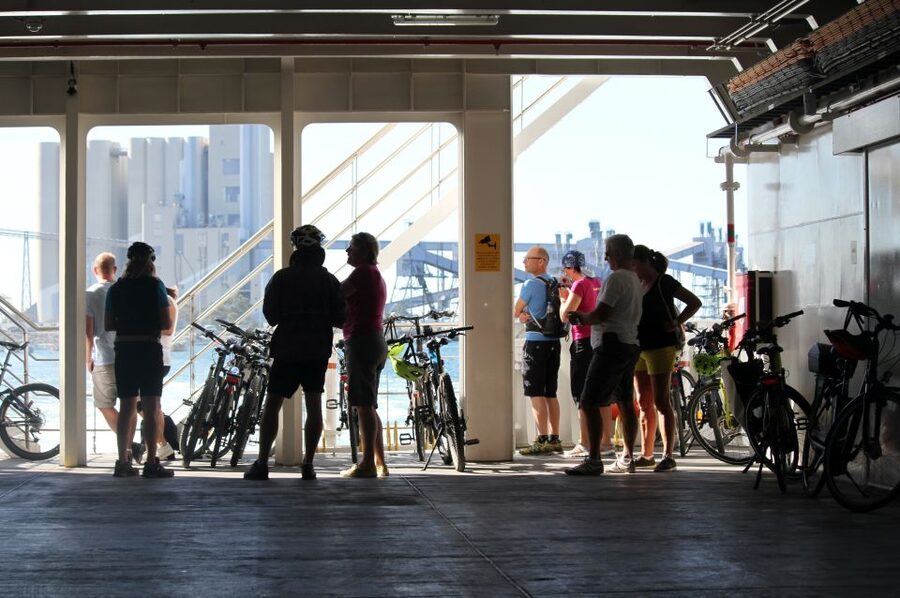
The route then reaches Cais do Sodré, where you board an orange cacilheiro for the crossing to the south bank. This is not a private sightseeing cruise. It is a regular river ferry, which makes the crossing feel like part of everyday Lisbon transport rather than a separate attraction.
Bring your camera, but also look back toward the city. The ferry gives you a different angle on the waterfront, the hills, and the 25 de Abril Bridge. The boat ticket is included, so you do not need to arrange this part yourself.
The ferry also breaks up the cycling in a smart way. You get a short change of pace before the hills of Almada. Since the whole activity lasts three hours, the crossing is not an excuse to linger for a long time. It is a practical link between the two halves of the route.
Cais do Ginjal, a waterfront with working roots
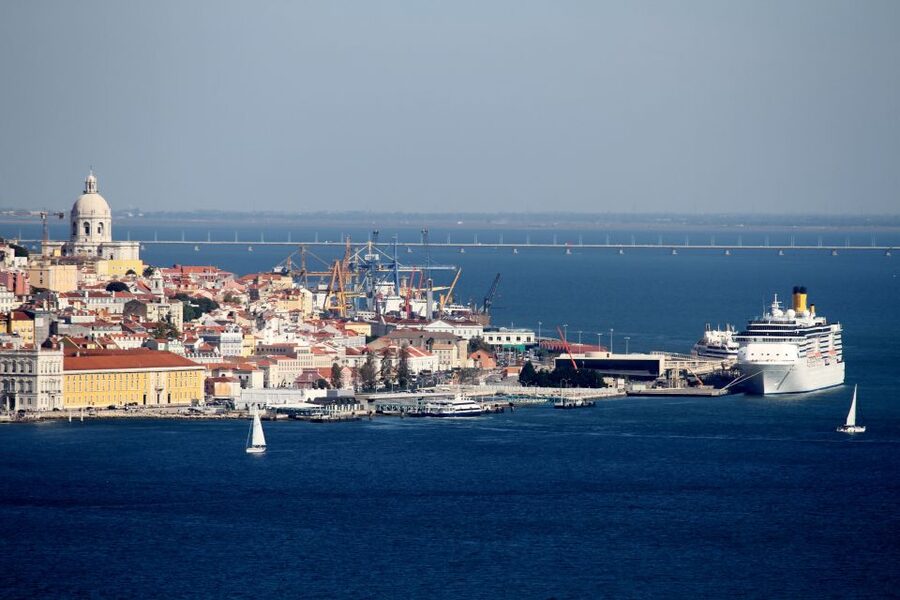
On the south bank, you ride through Cais do Ginjal. The area once held warehouses that supplied bait and ice to cod fishing boats from the North Seas. That past helps explain why this waterfront mattered, even if its role is less obvious today.
This is one of the most appealing parts of the route for anyone who wants more than Lisbon’s standard postcard stops. You are still close to the capital, but the story shifts from monumental squares and royal waterfronts to fishing, storage, and river trade.
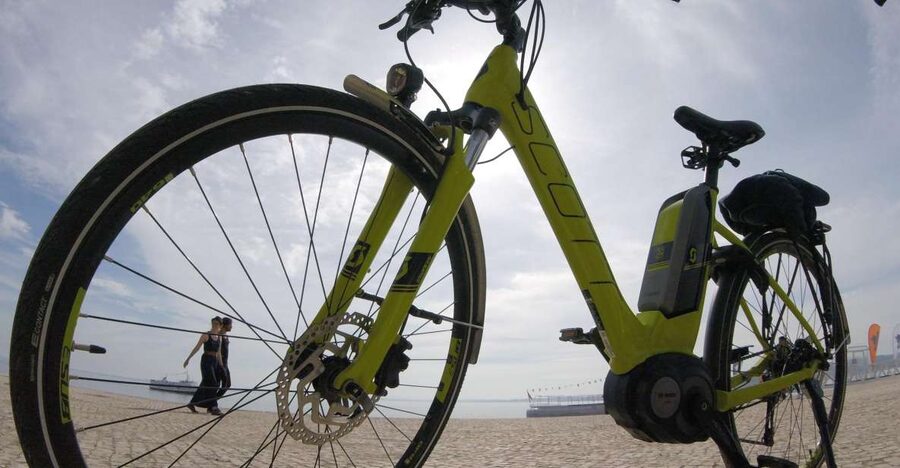
The cycling here also shows why an e-bike works well. You are covering ground between distinct parts of the south bank, rather than stopping at one viewpoint and returning immediately. The bike lets you see more in the available time without making the outing a test of fitness.
You should still wear comfortable clothes and shoes. An electric motor helps with effort, but you remain on a bicycle for much of the three hours. Biodegradable sunscreen is recommended, and the supplied mineral water is useful on a warm day.
More bike and e-bike rides around Lisbon:
- Lisbon: City Highlights and Viewpoints E-Bike Tour
★ 4.9 · 1,556 reviews - Lisbon: 3-Hour Tour by E-Bike
★ 4.8 · 1,150 reviews - 3-Hour Lisbon 7 Hills Electric Bike Tour
★ 5.0 · 818 reviews - Bike Tours Lisbon – Center of Lisbon to Belém
★ 5.0 · 686 reviews
The Boca do Vento lift and the climb to Christ the King
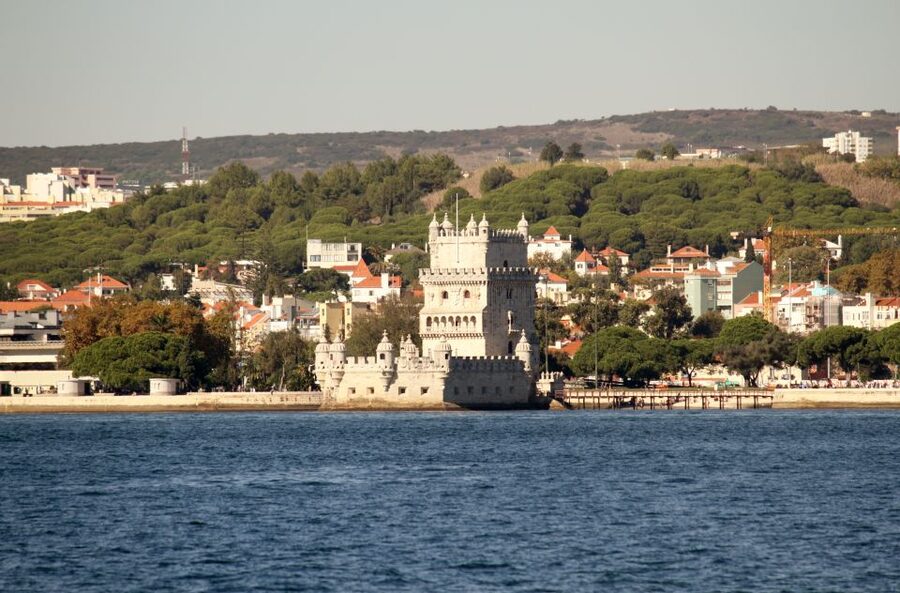
The Boca do Vento lift connects the lower riverfront with higher parts of Almada. Depending on the route and conditions, you can use the lift to get closer to Christ the King or ride the hill on the e-bike. Either option addresses the same problem: Almada rises sharply away from the river.
This is where the electric bike earns its place. A standard bicycle would make the climb more demanding, while the motor lets you focus on the views and the guide’s explanations. The activity is not designed for people with mobility impairments, and riders must be at least 145 centimeters tall, or 4 feet 8 inches. Those limits are worth taking seriously before booking.
At the top, the Sanctuary of Christ the King gives you one of the strongest views in the Lisbon area. The statue faces the capital across the river, and the outlook takes in Lisbon, the Tagus, and the 25 de Abril Bridge.
The sanctuary is more than a photo stop. Its position makes clear how closely Lisbon and Almada are tied together, even though they sit on opposite sides of the water. You see the city as a whole rather than as a series of narrow streets.
The route description promises time to climb to the top of the sanctuary for the best view. Since the tour lasts only three hours and includes several other stops, your exact time there may depend on the group and the day’s pace. If the view is your main reason for booking, tell the guide early that you would like a clear moment for photographs.
Coffee and a pause at Casa da Cerca
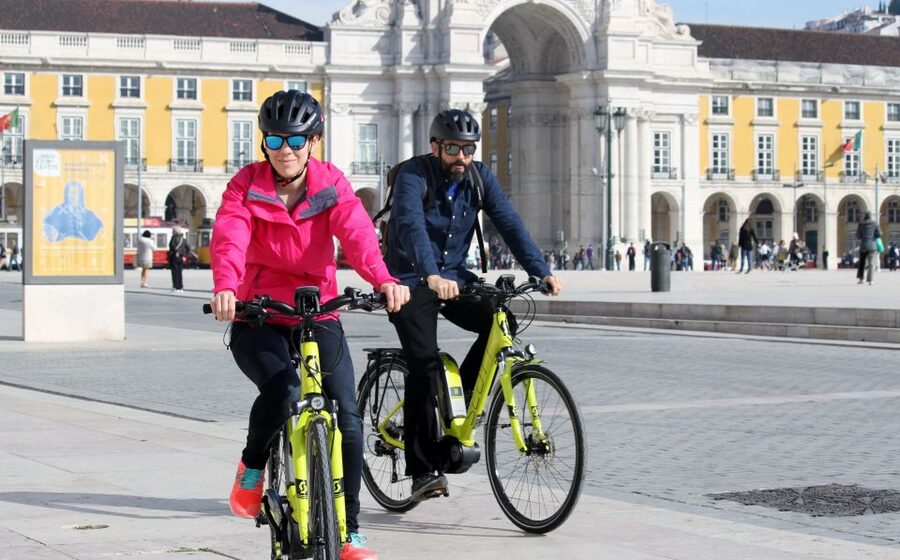
After the climb, the tour stops at Casa da Cerca’s botanic gardens for coffee. The setting offers a welcome pause after the uphill ride and a chance to take in the river view at a slower pace.
Coffee is not included, so bring a little money if you want one. This small extra cost is easy to overlook when comparing tours, but it is the only refreshment expense specifically identified. Water is included.
The stop also helps balance the schedule. A tour that moves from square to square can feel rushed, especially when bikes and ferry times are involved. A short café break gives you a chance to catch your breath, ask the guide about something you have seen, and enjoy the setting without pedaling.
Do not expect a long garden visit. Casa da Cerca is one part of a tightly packed route. Its value lies in the pause and the view, not in a full botanical tour.
Almada’s streets and the Medieval Museum
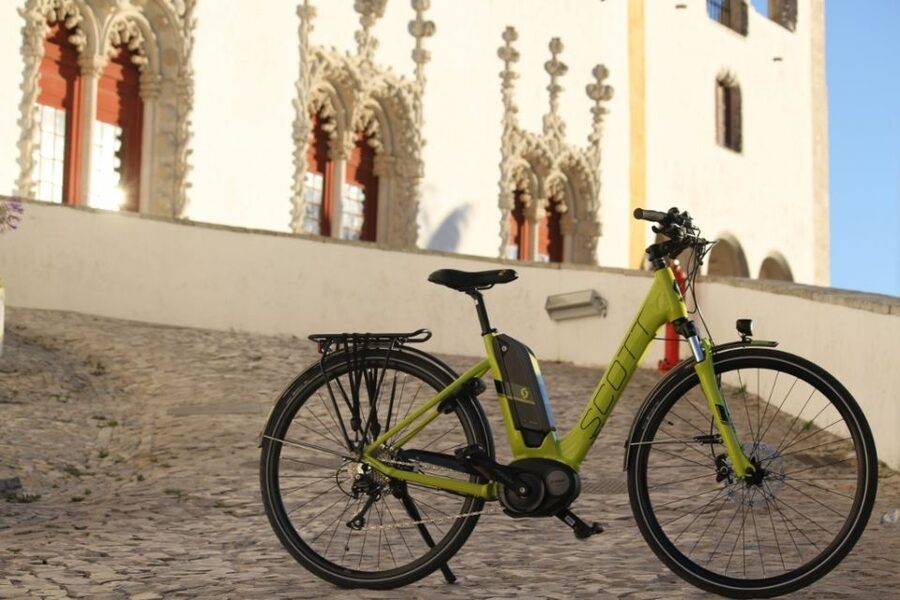
The ride back toward the river takes you through Almada’s narrow streets. This is a different experience from the broad spaces of central Lisbon. You get a sense of the south-bank town as its own place, rather than simply a viewpoint suburb across from the capital.
The Medieval Museum adds another layer. Its displays include relics connected with Islamic life in Portugal during the Middle Ages. That subject is especially useful because Lisbon’s past is often presented through later Christian and maritime chapters, while the Islamic period can receive less attention in a short city visit.
The museum ticket is listed as included in the tour package. One practical tip is to confirm this detail when booking, since one piece of booking feedback raised a question about the museum admission. The supplied tour information identifies the ticket as included, but checking avoids a surprise at the door.
Your museum visit will be brief compared with a dedicated museum outing. That is not a fault, as long as you view it as a focused stop within a wider day. The guide’s explanation can help connect the objects to the streets and city you have already seen.
What the three-hour format really means
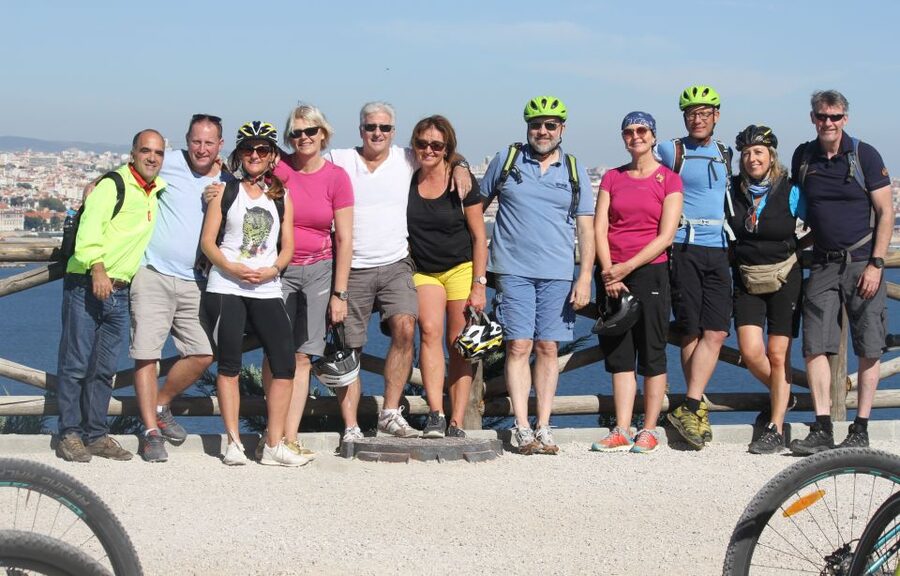
Three hours is enough to create a strong outline of Lisbon and Almada, but not enough for deep visits at every stop. The tour succeeds by linking many experiences: city streets, river transport, a former shipyard, an old fishing waterfront, a lift, a garden café, a major monument, and a museum.
I would choose it early in a Lisbon stay if I wanted orientation. The route shows how the center, the river, and Almada fit together. It can also work later in your trip if you have already seen the usual central sights and want a less familiar half-day outing.
The group is limited to 11 participants, which is a good fit for a route with several moving parts. Still, the French feedback makes an important point: the tour may feel less structured than a carefully timed museum program. If you like surprises, changing scenery, and a guide who adds stories along the way, that loose quality can be part of the fun. If you want a strict schedule with long, planned stops, you may prefer a more formal sightseeing tour.
The guides are a major part of the experience. Bruno has been praised for explaining many points of interest, and Mathias for combining friendly manner with strong command of the subject. Another guide may lead your departure, but the listed languages give you a useful choice when checking dates.
Is the $41 price good value?
At $41 per person, the price covers more than bike hire. You receive the guide, e-bike, helmet, boat ticket, Medieval Museum admission, a bottle of water, and liability and personal accident insurance.
The ferry crossing alone would not justify the cost, since it is a short public transport ride. The value comes from combining that crossing with a route you would be less likely to plan efficiently on your own. You would need to organize the bike, ferry, south-bank route, lift, Christ the King visit, Casa da Cerca, and museum separately.
The strongest value is for people who want transport and interpretation together. You are not just renting a bicycle. You are getting a guided route that links Lisbon’s commercial center with Almada’s riverfront and high viewpoints.
The price is less compelling if you only want to reach Christ the King and return. You could seek out the monument by another method, but you would miss the broader route and the guide’s context. Also remember that coffee is extra and transfers to the meeting point are not included.
Free cancellation up to 24 hours before the start and the option to reserve now and pay later make the booking less rigid. Starting times vary, so you need to check availability for your chosen date.
Who should book this ride?
I would recommend it to adults and older children who are comfortable on a bicycle and want a mixed sightseeing day. It suits you especially well if you have already seen Lisbon’s main central sights, since the south-bank stops give the outing a different feel.
It is also a good match if hills worry you but you still want to cycle. The e-bike handles the strain, while the route remains active and outdoors. You should be comfortable riding for much of the tour, getting on and off transport, and following a group through city streets.
I would not choose it for anyone with mobility impairments, anyone below the 145-centimeter height requirement, or anyone looking for a slow museum-focused experience. It is also not the right pick if you dislike switching between cycling, ferry travel, short stops, and uphill viewpoints.
Should you book the South Lisbon e-bike tour?
Book it if you want Lisbon by water, road, and viewpoint in one compact outing. The cacilheiro crossing, the ride through Cais do Ginjal, the lift at Boca do Vento, and the view from Christ the King give the tour a clear sense of place.
The best reason to go is not any single monument. It is the connection between the two sides of the Tagus. You see central Lisbon’s squares and waterfront, then understand the city from Almada’s side.
Choose it with realistic expectations. The schedule is full, the museum visit is short, and the route may feel flexible rather than tightly scripted. For $41, with the bike, guide, ferry, museum ticket, water, and insurance included, I think it offers solid value for an active visitor who wants a fresh angle on Lisbon.
FAQ
How long is the South Lisbon electric bike tour?
The tour lasts three hours. It includes cycling in central Lisbon and Almada, a ferry crossing, the Christ the King area, Casa da Cerca, and the Medieval Museum.
Where does the tour meet?
The meeting point is Largo Severa 7A, 1100-588 Lisboa. It is in a pedestrian area, so use Praça Martim Moniz as your destination if you arrive by Uber, taxi, metro, or bus. Largo da Severa is about a two-minute walk from there.
Is the ferry ticket included?
Yes. The boat ticket for the cacilheiro crossing of the Tagus is included.
Is the e-bike included?
Yes. The tour includes an electric bicycle and helmet, along with a guide, water, insurance, the boat ticket, and the Medieval Museum ticket.
Is coffee at Casa da Cerca included?
No. The coffee stop is included in the route, but you pay for your own coffee.
What languages are available?
The tour is offered with live guides in English, Spanish, French, or German. Guide availability depends on the departure you select.
Who cannot take this tour?
The activity is not suitable for people with mobility impairments or anyone under 145 centimeters tall, which is about 4 feet 8 inches. Comfortable shoes, comfortable clothing, and biodegradable sunscreen are recommended.
More Bike Days in Lisbon
- Lisbon Bike Tour: Downhill Downtown Lisbon to Belém
★ 4.7 · 655 reviews - Lisbon: Electric Bike Tour by the River to Belém
★ 4.8 · 431 reviews - From Lisbon: Sintra to Cascais Full-Day Guided E-Bike Tour
★ 4.9 · 375 reviews - Lisbon: Guided Tour of Historic Belém by Electric Bike
★ 4.8 · 369 reviews
More 3-Hour Experiences in Lisbon
- 3-Hour Guided Street Art Walking Tour of Lisbon
★ 5.0 · 278 reviews - Lisbon: 3-Hour The Slave Trade – An Historical Walking Tour
★ 4.9 · 179 reviews - 3 Hours Private Lisbon Food Tuk Tour
★ 5.0 · 145 reviews - Lisbon: 3-Hour Segway Sailor Tour to Belém
★ 4.9 · 140 reviews
New around Lisbon
- Arrábida, Setúbal, Sesimbra, Olive with wine tasting★ 5.0 · 75 reviews
- Lisbon: Sunset Sailing Boat Cruise with Wine★ 5.0 · 75 reviews
- Lisbon Half Day Private Tour★ 5.0 · 75 reviews
- Private Half Day Tour to Fatima from Lisbon★ 5.0 · 75 reviews
- Fátima, Nazaré and Óbidos Private Tour from Lisbon★ 5.0 · 76 reviews
- Central Lisbon 3-Hour Guided E-Bike Tour★ 4.8 · 76 reviews
- Lisbon Historic City Tour by Tuk-Tuk★ 5.0 · 76 reviews
- Sintra World Heritage and Cascais Village Private Deluxe Tour★ 5.0 · 76 reviews
Cycling Tours, compared.
Hills, Alfama, and Mouraria Tour by Electric Bike
Read our review →
City Highlights 3-Hour Guided Electric Bike Tour
Read our review →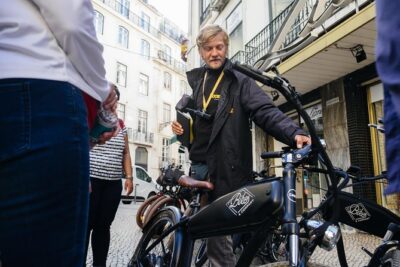
Lisbon E-Bike Tour Commerce Square, Mouraria and Alfama
Read our review →

Browse the lists this tour appears in