
Reviewed · WINE TASTINGS & DOURO VALLEY TOURS
Porto: Live Fado Concert with Glass of Tawny Port Wine
Fado na Baixa does more than put on a concert. In one brisk hour, it explains why this Portuguese music can feel so personal, then lets four performers show you the answer through songs from Lisbon, Coimbra, and later generations. The setting is a licensed auditorium in a 19th-century building near the Douro, right in Porto’s Ribeira district.
I especially like the clear storytelling, with short films and testimonials in several languages, and the contrast between Lisbon and Coimbra Fado. The glass of Tawny Port fits the subject nicely without turning the evening into a wine tour. One consideration: the historical material takes up part of the hour, so you get an introduction to Fado rather than a long, uninterrupted concert.
Key points to know before booking
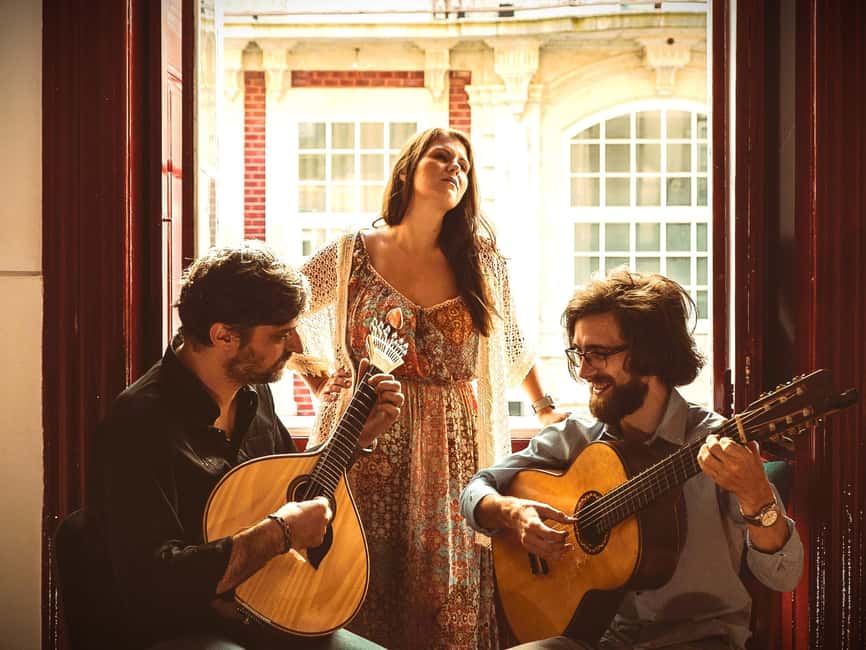
- One hour, four performers: Expect two singers and two musicians, with both male and female voices represented.
- Lisbon and Coimbra styles: You hear traditional Lisbon Fado, the Portuguese guitar, and Coimbra Fado sung by a former Coimbra University student.
- Short films help you listen: Multimedia sections explain the music’s story without requiring prior knowledge of Portuguese culture.
- A port pairing is included: Your ticket includes a glass of Tawny Port to enjoy during the performance.
- Central Ribeira location: Fado na Baixa is at Rua de São João 99, close to the Douro River.
- Useful for first-time listeners: The show is built to explain what Fado means to the Portuguese people, not simply present songs without context.
Why this one-hour Fado show works for first-time listeners
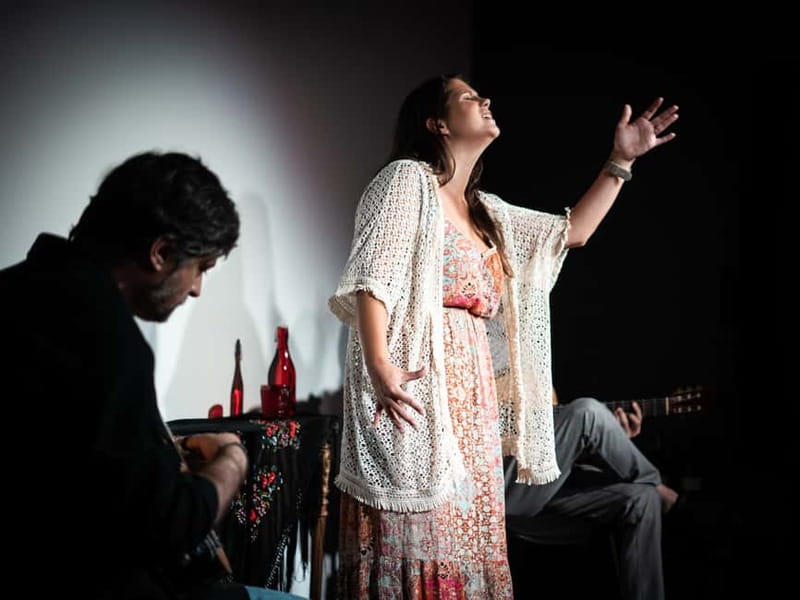
Fado can be hard to approach if you do not speak Portuguese. The melodies may sound beautiful, but the meaning behind them can remain at a distance. This performance solves that problem with brief testimonials, audio guidance, and video segments that explain the music in English, French, Spanish, and Portuguese.
I like this format because it gives you a way into the songs. You learn about the feelings and subjects connected with Fado, then hear the singers put those ideas into practice. The presentation is not a lecture followed by music. The explanation and performance alternate, so the story keeps pointing your ear toward what comes next.
The whole program lasts about an hour. That makes it easy to fit between dinner and an evening walk along the Ribeira, or into a busy sightseeing day. It also means you should book it for what it is: a polished cultural introduction, not a two-hour club performance with a long set list.
More Fado Shows in Porto
- Porto: Live Fado Show with Glass of Port Wine
★ 4.8 · 6,498 reviews - Porto: Cálem Cellar Tour, Fado Show & Wine Tasting
★ 4.4 · 3,530 reviews - Porto: Authentic Fado Show, Port Wine & Handmade Instruments
★ 4.8 · 2,737 reviews
Arriving at Fado na Baixa in Ribeira
The venue is in the heart of Porto’s Ribeira district at R. de São João 99, 4050-553 Porto. The auditorium occupies a 19th-century building near the Douro River, giving the event a sense of place before the first note is played.
The activity begins and ends at this same venue. You do not need transport between different parts of the city, and the central location makes it practical to combine with time around the riverfront. Check the available starting times when you book, since the schedule can vary.
The room is intimate rather than grand. That suits Fado, which depends on close attention and a direct connection between singer, musicians, and audience. One practical point is worth noting: the chairs have been described as vintage and could use an upgrade. Since the show lasts only an hour, this is a minor issue for most people, but it may matter if comfortable seating is a high priority.
The auditorium is wheelchair accessible. Host and greeter support is available in Portuguese, Spanish, English, and French, while the audio guide is offered in those same four languages.
The opening: traditional Lisbon Fado
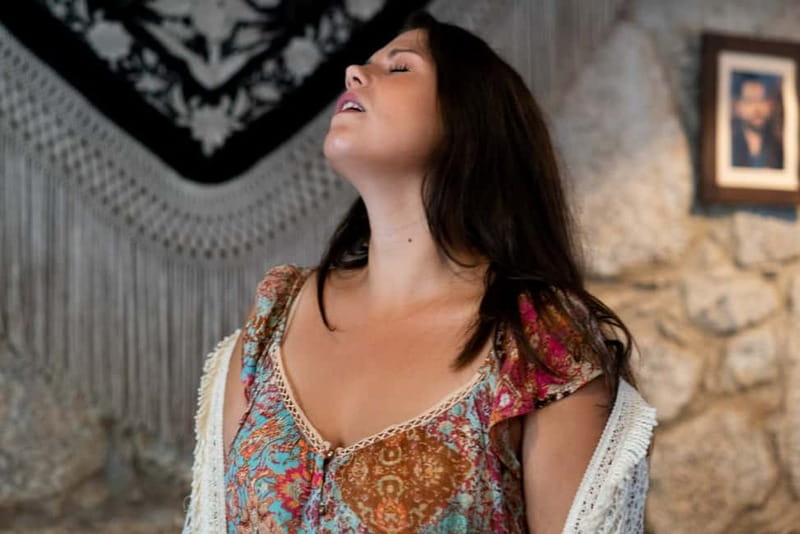
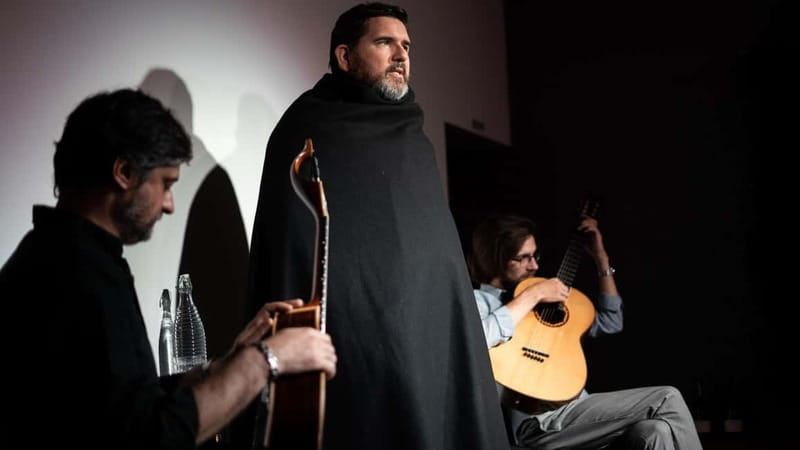
The program begins with traditional Lisbon Fado, the style most often linked with the city where Fado first developed. You hear the intense, highly recognizable form that many visitors expect when they first think of Portuguese Fado.
This opening gives you the emotional foundation for the rest of the show. The songs are connected with subjects such as fishermen and the people waiting for them, love, separation, longing, and fate. The point is not simply that Fado sounds sad. Its power comes from the way the singer gives shape to feelings that are difficult to say plainly.
The female and male voices create useful contrast. You can hear how a song’s color changes with the singer, even when the musical setting remains restrained. The performance is close enough to feel personal, yet structured enough for newcomers to follow.
You may notice that the musicians are as important as the singers. Fado relies on the conversation between voice, classical guitar, and Portuguese guitar. The instrumental lines do not merely fill the space behind the singer. They answer, frame, and sometimes sharpen the emotion of the vocal line.
Portuguese guitar and the first glass of Tawny Port
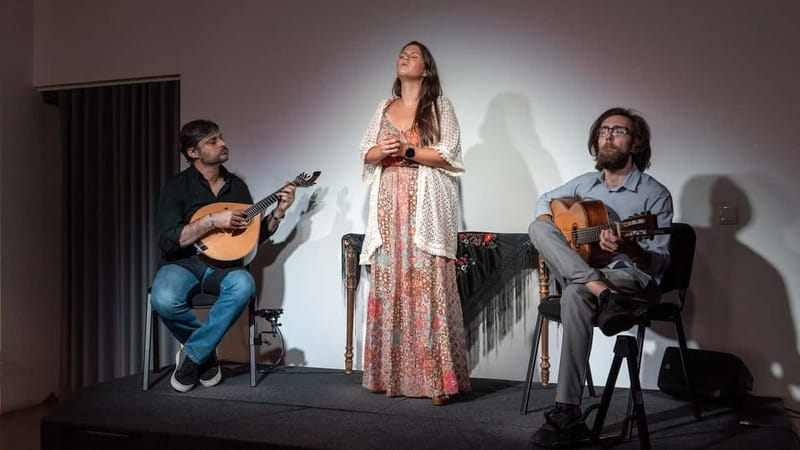
One of the show’s most appealing touches comes when the Portuguese guitar receives special attention. This bright, distinctive instrument has a sound that can seem delicate at first, then surprisingly forceful as the player works through the melody.
You taste a glass of Tawny Port during this part of the performance. It is a simple pairing, but a sensible one. Port connects the experience to the wider culture of northern Portugal, while the music gives you a reason to pause and listen rather than treat the drink as a separate tasting activity.
The program also points out differences between Lisbon and Coimbra playing techniques. This is valuable because the Portuguese guitar can sound unfamiliar to an international audience. Instead of hearing one general category called Fado, you begin to notice that the regional styles have their own habits and character.
Mário Henriques is singled out as an excellent Portuguese guitar player, and Rato is also part of the highly praised instrumental team. The strongest part of the show for many people is the musicianship, especially the way the guitar work supports the singers without overpowering them.
More fado nights around Porto:
- Porto: Fado Concert in Porto’s Most Beautiful House
★ 4.9 · 1,201 reviews - Porto: The highest-rated traditional fado concert (downtown)
★ 4.8 · 1,130 reviews - Porto: An Intimate Fado Show in a Historical Tavern
★ 4.8 · 1,093 reviews - Porto: Traditional Fado Show at Sao Bento with Port Wine
★ 4.9 · 882 reviews
Coimbra Fado and the university tradition
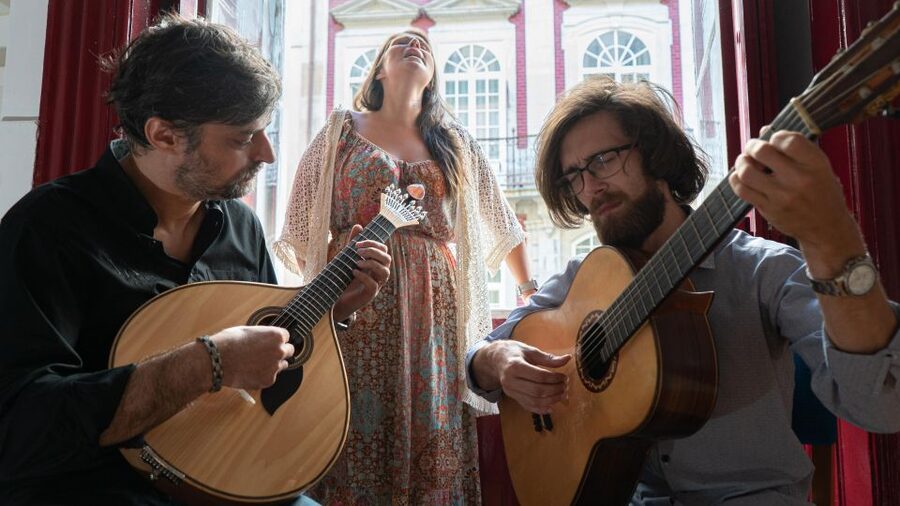
The next major section introduces Coimbra Fado. This is not simply Lisbon Fado performed in another city. It is a distinct tradition closely tied to Portuguese university life and the students of Coimbra.
The Coimbra song is performed live by a male singer who was formerly a student at Coimbra University, following the tradition associated with this style. That detail matters because Coimbra Fado is connected not just to musical form, but also to a particular social and academic culture.
The sound and mood offer a welcome change from the opening section. You hear another side of Portuguese song, with the male voice and university connection giving the performance a different identity. The contrast helps you understand that Fado is not one fixed style with one emotional setting.
I would pay close attention during this part, even if you do not understand the lyrics. The explanation gives you cultural context, while the performance lets you hear how that context changes the character of the music. For first-time listeners, this is one of the most useful sections because it prevents Fado from being reduced to a single Lisbon stereotype.
Amália Rodrigues and the music’s wider reach
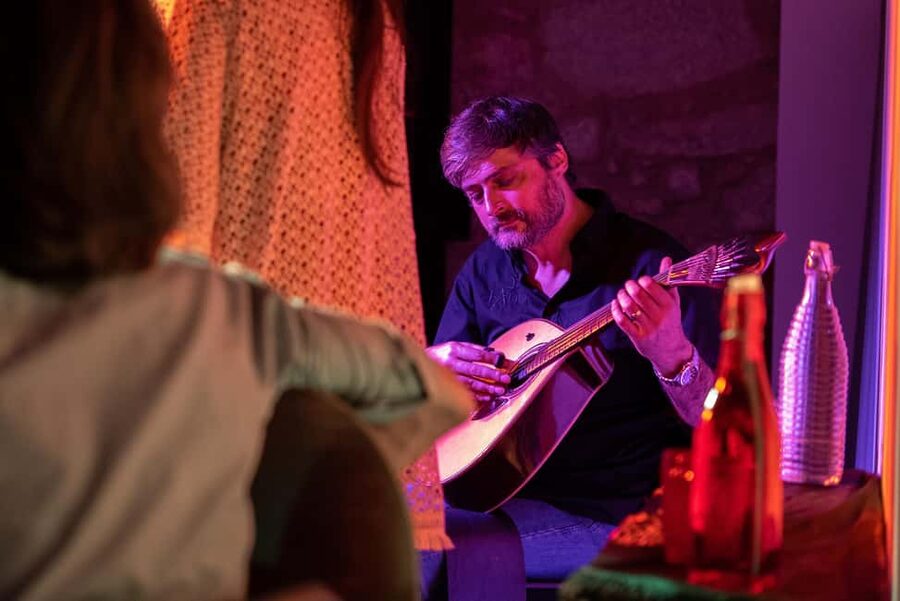
The show then turns to Amália Rodrigues, widely known as the queen of Portuguese Fado. Her role in the program is important because she helped transform traditional Fado and gave it recognition far beyond its earlier setting.
You see how Fado can honor its roots while changing through a major performer. This section gives the music a personal face and helps explain why Amália remains such a central name in Fado’s story.
The presentation uses short visual material between live numbers. These segments are designed to support the concert rather than interrupt it. They give you a moment to absorb dates, ideas, and personal accounts before the musicians return to the stage.
That balance is one of the show’s main strengths. The films make the history easier to follow, but the live singers and players remain the focus. If you prefer a completely uninterrupted concert, you may find the transitions a little formal. If you want to understand what you are hearing, the structure is helpful.
Traditional roots, modern changes, and audience connection
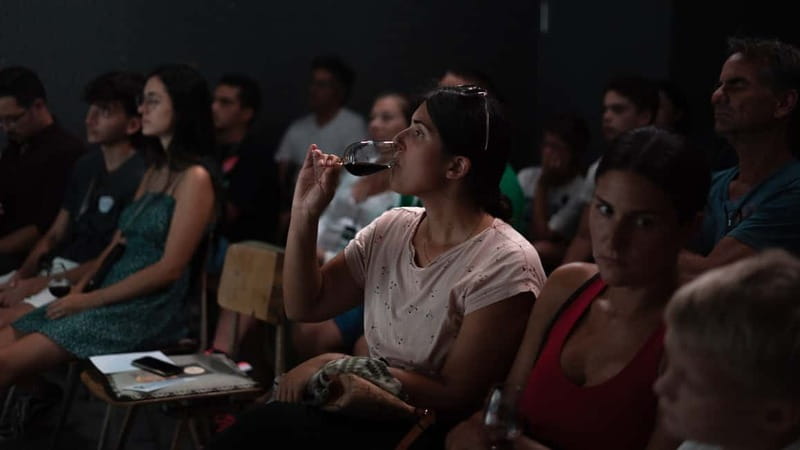
The final part looks at how Fado continues through the years. The music survives by honoring tradition while allowing new poetic themes and fusions with other genres.
This is an important ending because it keeps Fado from feeling like a museum piece. You see that preservation does not require every performance to sound identical. The style can change, borrow, and develop while keeping its central emotional force.
There may also be moments of audience participation or singalong. That gives the final section a more open, celebratory feel after the more concentrated early performances. One especially moving song noted in the program is Balada de Despedida, a piece that can carry strong associations for anyone familiar with Coimbra student culture.
The emotional effect depends partly on your own connection to the music. You do not need to understand every word to appreciate the voices and guitars, but the short explanations add weight to the songs. By the end, you have a basic map of Fado’s main forms and a better sense of why the music matters in Portugal.
The singers, musicians, and performance style
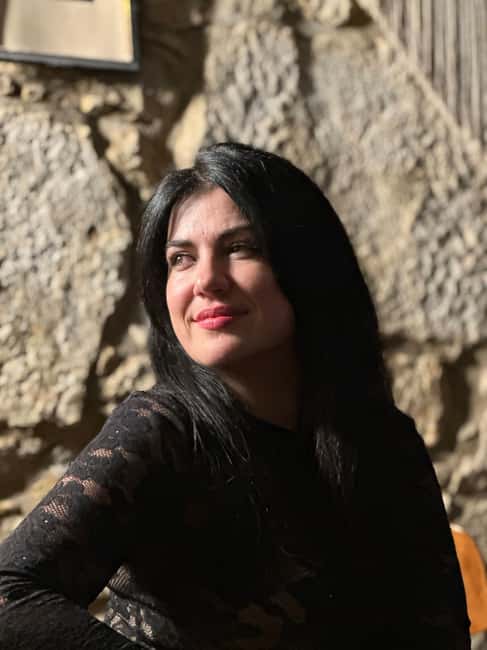
The cast includes two Fado singers, one woman and one man, along with two musicians. This gives the hour enough variety without making the event feel crowded or theatrical.
The female singer handles the traditional Fado side with the intensity you would expect from the style, while the young male singer brings the Coimbra tradition into the program. The contrast between the voices is one of the show’s most useful features. It lets you compare styles rather than hear a single interpretation from beginning to end.
The musicians receive strong attention as well. Mário Henriques is praised for his Portuguese guitar playing, and the mix of guitar styles is a key part of the experience. You should listen for the difference between the standard guitar’s support and the Portuguese guitar’s sharper, more ringing sound.
The setting keeps everything close. You are not watching a distant stage production with elaborate effects. Instead, the singers and players carry the hour through voice, posture, instrumental skill, and the meaning of the songs. That intimacy is a better match for Fado than a large concert hall would be.
What the $19 price includes
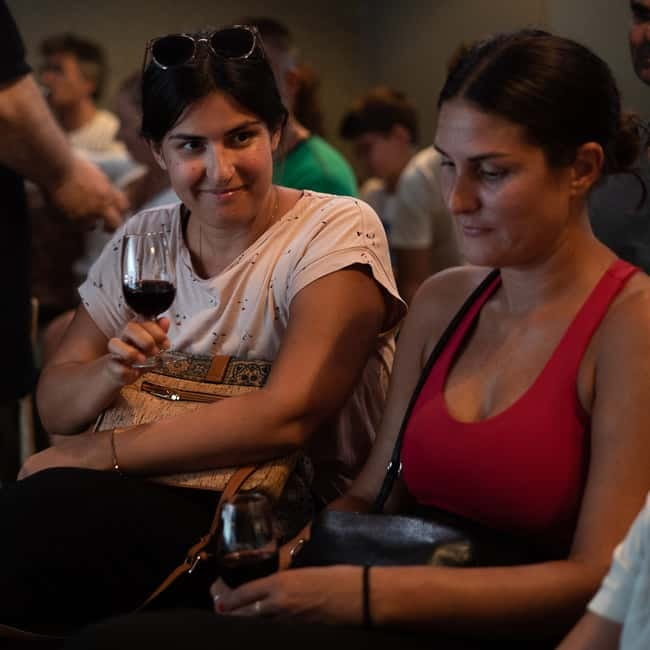
At $19 per person, this is good value if you want both a performance and an explanation of Fado. Your ticket covers the live show, multimedia content, audio guide, and one glass of Tawny Port.
A single concert ticket can cost more than this, especially when it includes skilled musicians in a central venue. Here, part of what you are paying for is the guided cultural context. The short films and multilingual material make the experience more useful than a bare concert if you are new to Portuguese music.
The value is strongest for a first visit to Portugal or Porto. You get an accessible introduction without committing a whole evening. It also works well for families with older children and teenagers, since the format changes between live music and visual explanation.
If you already know Fado well, the educational sections may feel familiar, and the one-hour length may leave you wanting more music. In that case, consider this a concise overview rather than your definitive Fado night.
Who should book this experience
I would recommend Fado na Baixa to you if you want a clear introduction, prefer a central venue, and like your cultural activities to explain what you are seeing. It is especially suitable if you do not speak Portuguese, since the audio guide and testimonials are available in four languages.
It is also a good choice for anyone who wants to compare Lisbon and Coimbra traditions in one sitting. The live Coimbra section, performed by a former Coimbra University student, is a detail you will not get from a generic music show.
Couples may appreciate the intimate room and port pairing, while families can benefit from the short duration. The accessible auditorium adds another practical advantage.
I would hesitate only if your main goal is a long, spontaneous night of Fado with no video or spoken context. This is a carefully arranged cultural program. Its strength is clarity, not informality.
Booking, timing, and practical details
The experience lasts one hour, and available start times are shown when you select a date. Since it ends where it begins, you can plan your next activity without arranging a return transfer.
Free cancellation is available up to 24 hours before the start time for a full refund. You can also reserve now and pay later, which helps if your Porto plans are still changing.
The venue is in Ribeira, so allow enough time to find R. de São João 99 in the old center. The supplied information does not give a required arrival time, so check your booking details for any instructions attached to your selected session.
The port is included, but this is not presented as a full wine tasting. You receive a glass to enjoy with the music. If you want a wider lesson in Douro wines, you will need a separate activity.
Should you book Fado na Baixa?
Book it if you want to understand Fado as well as hear it. The strongest reasons are the compact one-hour format, the contrast between Lisbon and Coimbra styles, the accomplished Portuguese guitar work, and the thoughtful use of multilingual films and testimonials.
The $19 price is fair because it includes the concert, cultural explanation, audio guide, and Tawny Port in a central Porto venue. Just keep your expectations realistic: some of the hour is devoted to the story of Fado, and the older chairs are not the room’s finest feature.
For a first Fado experience in Porto, I would choose this program over a performance that offers songs without context. You leave with more than a pleasant hour of music. You understand why the sound carries such weight, how Coimbra differs from Lisbon, and how Fado continues to change without losing its identity.
FAQ
Where does the Fado concert take place?
The concert takes place at the Fado na Baixa auditorium at R. de São João 99, 4050-553 Porto, in the Ribeira area near the Douro River.
How long is the experience?
The performance lasts one hour. Check availability for the starting times offered on your chosen date.
What is included in the ticket?
The ticket includes the live performance, multimedia content, a glass of Tawny Port, and an audio guide.
Which kinds of Fado are presented?
The program covers traditional Lisbon Fado, Coimbra Fado, the development of Fado through Amália Rodrigues, and later traditional and contemporary expressions.
Is Coimbra Fado performed live?
Yes. Coimbra Fado is sung live by a male performer who was formerly a student at Coimbra University, following the tradition associated with this genre.
What languages are available?
The host or greeter can assist in Portuguese, Spanish, English, and French. The audio guide is also available in Portuguese, Spanish, English, and French.
Is the venue wheelchair accessible?
Yes. The activity information states that the venue is wheelchair accessible.
Does the activity start and end at the same place?
Yes. The activity starts at the Fado na Baixa auditorium and ends back at the meeting point.
Can I cancel for a full refund?
Yes. You can cancel up to 24 hours in advance for a full refund.
Is payment required at the time of booking?
You can reserve now and pay later, so payment does not have to be made immediately when you book.
More Concerts in Porto
- Porto: The Authentic Fado Concert with Port Wine
★ 4.9 · 188 reviews - Fado Concert with Welcome Drink
★ 5.0 · 75 reviews - Lisbon Fado Experience: Walking Tour, Dinner and Live Music Show
★ 4.5 · 336 reviews - Lisbon: Lisbon Classical Nights Concert
★ 4.8 · 143 reviews
More Wine Tastings in Porto
- From Porto: Douro Valley w/ Boat Tour, Wine Tasting & Lunch
★ 4.7 · 19,061 reviews - Complete Douro Valley Wine Tour with Lunch, Wine Tastings and River Cruise
★ 5.0 · 12,920 reviews - Porto: 6 Bridges Douro River Cruise
★ 4.3 · 6,472 reviews - Douro Valley: Wine Tour with Lunch, Tastings & River Cruise
★ 4.6 · 6,081 reviews
New around Porto
- Porto: City Bike Rental★ 4.6 · 75 reviews
- Fado Concert with Welcome Drink★ 5.0 · 75 reviews
- Boat Trip to Régua Through the Douro Valley with Breakfast and Lunch★ 4.5 · 76 reviews
- Porto City Tour Half Day – Private★ 5.0 · 77 reviews
- Port : Private Cruise in the Douro — 6 Bridges & Sunsets★ 5.0 · 78 reviews
- Porto Private Airport Departure Transfer★ 4.5 · 78 reviews
- Half-Day Walking Tour Tasting Local Food in Porto★ 5.0 · 78 reviews
- Douro Valley Small-Group Tour: 2 Wineries, Lunch, Optional Cruise★ 5.0 · 78 reviews
Wine Tastings & Douro Valley Tours, compared.

Douro Valley w/ Boat Tour, Wine Tasting & Lunch
Read our review →
Complete Douro Valley Wine Tour with Lunch, Wine Tastings and River Cruise
Read our review →
Winner 2025 Undiscovered Lisbon Food & Wine Tour by Eating Europe
Read our review →
Wine Tour with Lunch, Tastings & River Cruise
Read our review →
Guided Tour by Tuk-Tuk & Optional Douro River Cruise
Read our review →
Historical Sites, Wine Experience, Lunch & Cruise
Read our review →Browse the lists this tour appears in