
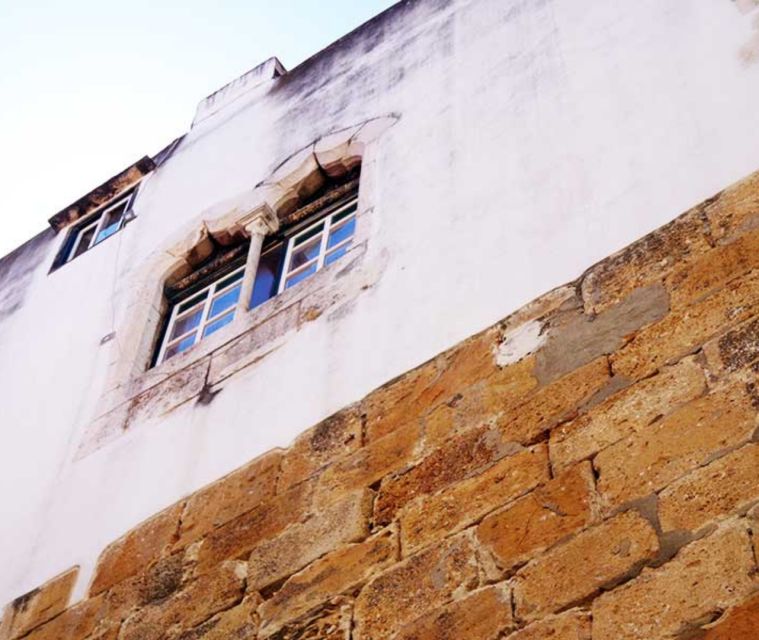
Reviewed · HISTORICAL TOURS
Lisbon: Jewish History Tour of Lisbon
Lisbon’s Jewish story is unusual because so little physical evidence remains. This private walking tour brings that vanished world back through streets, squares, surviving city neighborhoods, and carefully explained history, tracing Jewish life from medieval Lisbon to the forced conversions, the 1506 Pessah massacre, and the passage of refugees during World War II.
I like two things right away: the route connects Jewish history to the wider story of Lisbon, and the private format lets your guide adjust the pace and answer questions. Guides such as José, Filipa, Rita, Sofia, and Jorge are praised for clear storytelling and strong command of Portuguese history. The main drawback is plain but important: you will see few identifiable Jewish buildings or artifacts, so this is an oral and visual history walk rather than a tour of preserved monuments.
Key points to know before booking
- The tour lasts three hours, with a route through Praça do Comércio, Baixa, Rossio, Mouraria, and Alfama.
- The Jewish quarter is mostly gone, so your guide explains locations and historical context rather than pointing out many intact sites.
- The 1506 Pessah massacre at Rossio is one of the tour’s central and most sobering subjects.
- Lisbon’s forced conversions receive close attention, including the story of New Christians and their place in Portuguese society.
- The private group format allows the route and starting point to be adjusted for your schedule.
- Comfortable shoes matter, since this is a city walk across several historic districts.
Why Lisbon’s Jewish story is best understood on foot
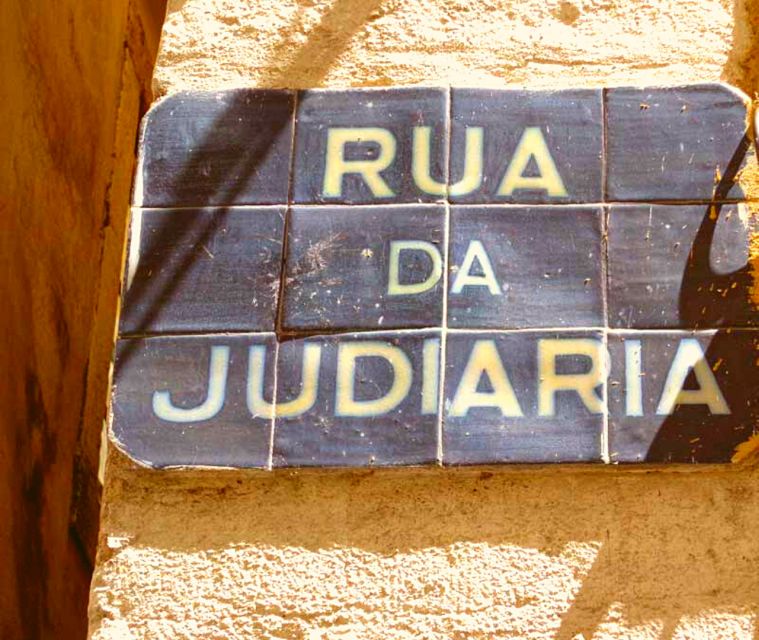
This is not a museum visit with a long row of labeled objects. It is a walk through the city where Jewish life once took place, with the past reconstructed through streets, squares, neighborhoods, and the guide’s explanation.
That approach works especially well in Lisbon. The city’s Jewish presence changed over centuries, and many traces disappeared through persecution, rebuilding, and the passage of time. You are not simply looking for a synagogue façade or an ancient inscription. You are learning how Jewish residents fitted into medieval Lisbon, where they lived, how segregation worked, and what happened when religious policy turned against them.
I like that the tour treats Jewish history as part of Portuguese history, not as a separate subject sealed off from the rest of the city. You hear about Jewish contributions to Portuguese culture, science, and gastronomy, then follow the story into the wider diaspora that spread from Lisbon toward the Atlantic, the Mediterranean, Asia, and northern Europe.
The guide’s storytelling makes a real difference here. José is noted for explaining both Jewish communities and Portugal as a whole, while Filipa and Philippa are praised for making the subject accessible and engaging. The strength of the experience depends less on what you can photograph and more on how well the guide connects each location to the events being discussed.
More Historical Tours in Lisbon
- Lisbon: History, Stories and Lifestyle Walking Tour
★ 4.8 · 10,902 reviews - Lisbon: Live Fado Show with Port Wine in Historic Center
★ 4.7 · 4,166 reviews - Lisbon: Fado Show with Wine in a Historic Venue
★ 4.8 · 1,294 reviews
Starting beneath the arch at Praça do Comércio
The meeting point is beneath the large triumph arch at Praça do Comércio, one of Lisbon’s easiest landmarks to find. Look for a guide carrying an orange backpack or a tote bag with the large Lisbon Walker logo.
Beginning here gives the tour a broad civic setting. Praça do Comércio is tied to the origin story of the Exodus for this experience, and it provides a useful starting point for discussing Lisbon as a port city connected to movement, trade, exile, and diaspora.
From the square, the walk continues toward Praça do Município, Rua do Comércio, Casa dos Bicos, and the Ribeira area. These stops help place the Jewish story in the center of Lisbon rather than confining it to Alfama alone.
You should expect explanation rather than a series of formal entrances. The value of this opening stretch is the way your guide builds a map in your mind. By the time you reach the older quarters, you have a clearer idea of how the city’s commercial and political life shaped the experience of its Jewish population.
Praça do Município, Rua do Comércio, and Casa dos Bicos
The route through Praça do Município, Rua do Comércio, Casa dos Bicos, and Ribeira gives the tour a useful change of scale. Instead of talking only about religious communities, your guide places Jewish residents within the working city, its streets, commerce, and public spaces.
Casa dos Bicos is included as one of the notable sights along the route. The building itself is not presented as a preserved Jewish monument, so you should not expect a clearly marked remnant of the old community. Its importance on the walk comes from the surrounding urban setting and the stories attached to the area.
This is one reason I would choose the tour early in a Lisbon visit. It gives you historical bearings for streets you may later cross on your own. You also see ordinary city spaces through a new lens, which is often more useful than collecting a list of isolated sites.
The guide may also point out other historic features along the way. One guide took the group to hidden Roman remains and churches, adding context beyond the Jewish subject. Those extra observations are a bonus, but they should not be mistaken for the main focus. The core experience remains Jewish Lisbon and its place in Portuguese history.
Alfama and the medieval Jewish quarter
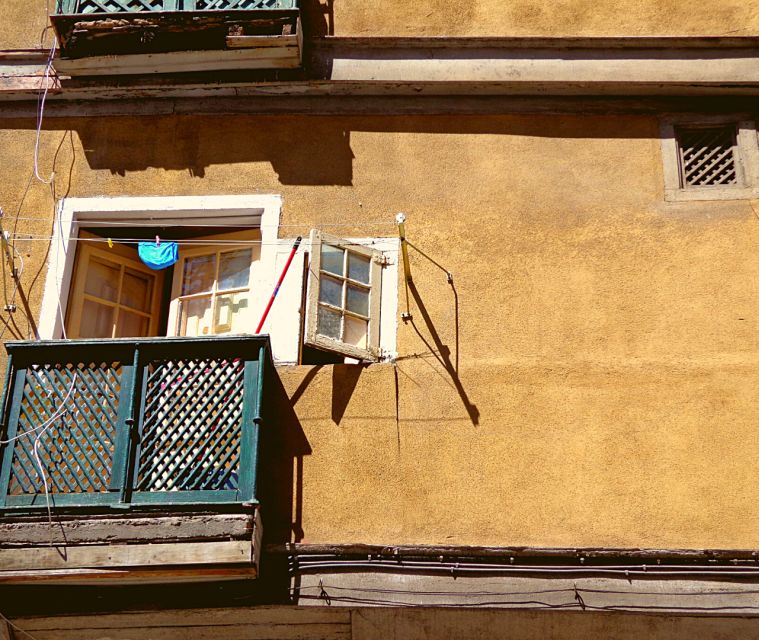
Alfama is one of the main reasons to book this walk. The route explores the former Jewish quarter and explains medieval segregation, helping you understand how the community was organized within the city.
The word quarter can sound tidy and harmless, but the history behind segregation is more complicated. Your guide explains the separation of communities and the way those arrangements affected daily life. Since few physical signs survive, you will rely on the guide to identify the historical setting and explain what once occupied these streets.
This is also where the walking format earns its keep. Alfama is not just a backdrop. The lanes and slopes help you picture the tightly arranged medieval city, even though the original Jewish buildings are largely absent.
Expect some uphill walking on the castle hill and through Alfama, although one guide adapted the pace for three older people on a hot day and another group described the hill climbing as limited. The most accurate advice is to bring comfortable shoes and tell your guide if you need a slower rhythm or rest stops. The tour is private, so adjustments are easier than they would be in a large group.
I would not book this experience mainly for photographs of Jewish architecture. I would book it to understand where the community lived, how the quarter fitted into medieval Lisbon, and why the lack of visible remains is itself part of the story.
More historic sites around Lisbon:
- Explore Lisbon by Tuk Tuk: History and Viewpoints
★ 5.0 · 840 reviews - Lisbon: Daytime or Sunset Boat Cruise with History and Wine
★ 4.9 · 819 reviews - Private Tuk Tuk Tour Through Lisbon’s Historical Streets
★ 5.0 · 734 reviews - Lisbon Sunset Sailing with Portuguese Wine and History
★ 5.0 · 668 reviews
Baixa and the painful history of forced conversion
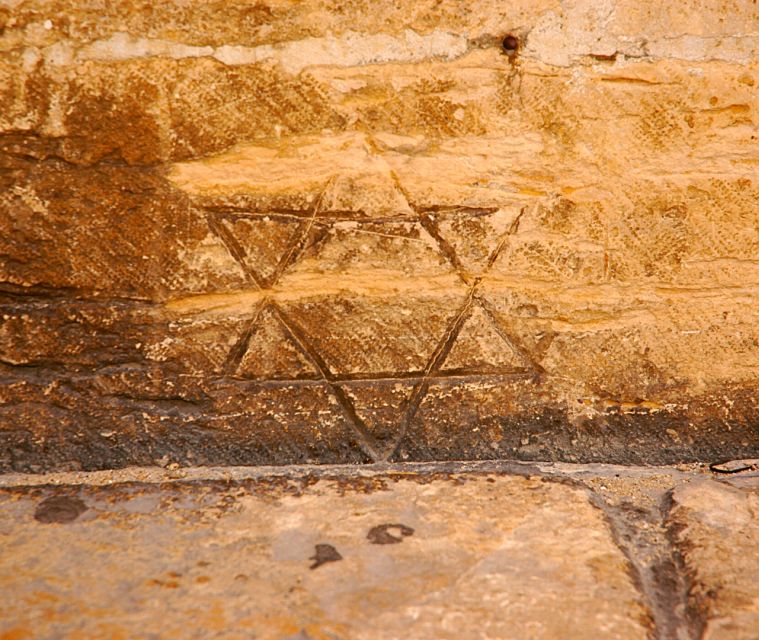
The Baixa portion turns toward one of the hardest chapters in Portuguese Jewish history: forced conversions. The guide explains how policy and persecution changed the lives of Jewish residents and created the category of New Christians.
This subject can easily become a list of dates and labels. The better guides make it personal and connected to the city around you. José, Jorge, and Filipa are particularly praised for explaining difficult material clearly and responding to questions rather than rushing through prepared remarks.
Baixa also shows how much Lisbon has changed. You are walking through a major modern district while discussing events that transformed the city’s Jewish community. That contrast can be striking, but it also reinforces the need for a guide. Without explanation, there may be little at street level to tell you what happened here.
I appreciate that the tour does not treat conversion as a simple ending. The story continues through Portuguese culture, science, gastronomy, and the diaspora. That broader treatment helps you see Jewish history as an ongoing influence, even after the community’s public identity was severely restricted.
Rossio and the 1506 Pessah massacre
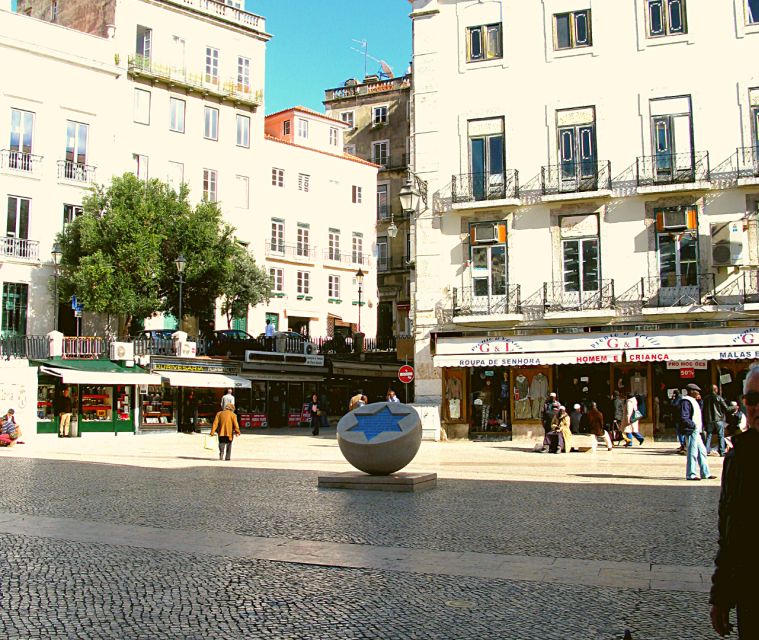
Rossio is the emotional center of the route. Here you learn about the 1506 Pessah massacre, a violent event that shaped the history of Lisbon’s Jewish and New Christian communities.
This is not a light sightseeing stop, and the subject deserves time and care. A good guide must explain the event without turning it into a rushed shock story. The strong feedback about this tour’s guides points to their ability to make history understandable and keep people engaged across the full three hours.
Rossio also demonstrates the central challenge of the experience. The square is a living part of Lisbon, but it does not function as a preserved memorial site for the medieval Jewish community. You are not touring a clearly marked massacre museum. You are standing in a public space while the guide supplies the historical meaning.
For me, that makes the guide’s role central. If you want a tour filled with visible artifacts, this stop may feel thin. If you want to understand how a familiar Lisbon square fits into a painful chapter of Portuguese history, it can be powerful.
Mouraria, Praça da Figueira, and the final stages of the walk
The route also includes Mouraria and Praça da Figueira before or around the Rossio section, depending on the precise order chosen by your guide. These districts widen the picture beyond the best-known central squares and Alfama.
Mouraria adds another historic neighborhood to the walk, while Praça da Figueira helps connect the older city to the public spaces of central Lisbon. Your guide uses these places to discuss the changing city and the long afterlife of Jewish history in Portugal.
The tour also covers Lisbon’s contemporary Jewish presence and the passage of refugees during the 1940s. That modern chapter matters because it keeps the experience from ending with medieval persecution. Jewish history in Lisbon is not presented as something that vanished forever. Instead, the walk follows the community’s changing place in the city and its links to people moving across Europe during wartime.
A Resistance museum stop is included in the route description. The supplied details do not say how long the group spends there or whether admission is part of the tour, so I would treat it as a contextual stop rather than plan your day around a museum visit.
What the private format adds
This is a private group tour, conducted in English or Portuguese. That matters most on a subject with few obvious landmarks, because you can ask your guide to clarify names, dates, religious terms, and the difference between Jewish identity and the later New Christian experience.
The route can be tailor made for different time frames and starting points. The standard experience is described as a three-hour guided walk, but the meeting point is set beneath the arch at Praça do Comércio. If you need a different start, ask before booking rather than assuming the change is automatic.
The guide names that appear in the experience include José, Filipa, Philippa, Rita, Sofia, Jorge, and Mr. Placa. José receives especially strong praise for his historical command and storytelling, while Filipa and Philippa are described as clear, warm, and able to keep a group engaged. The names are useful when you are arranging the tour, but guide assignment is not specified in advance.
I like that the walk can respond to the people in front of the guide. Older participants received pauses on a hot day, and groups were able to ask questions throughout. That flexibility is harder to achieve on a fixed coach tour.
The main limitation: expect stories, not preserved buildings
You should understand this point before paying $106 per person. Lisbon has few surviving physical markers of its earlier Jewish community, and several people specifically wished the description made that clearer.
The tour’s evidence is mainly the city itself, the locations of former Jewish quarters, and the guide’s explanation. You may see churches, Roman remains, streets, and squares that help establish context, but you should not expect a large collection of artifacts or a sequence of intact medieval Jewish sites.
That limitation does not make the tour poor. It changes the kind of experience you are buying. The price pays for a private three-hour guide who can interpret a difficult, partly erased story and connect it to the city you are walking through.
For a solo visitor or a small private group, $106 per person may feel high if you are comparing it with a general free walking tour. The value improves if your group cares strongly about Jewish history, wants a dedicated guide, and plans to ask questions. It also improves if the alternative is trying to piece together the story alone from scattered locations with little signage.
Food, drinks, hotel pickup, and drop-off are not included. You are paying for the guided walk, so plan your own transport to Praça do Comércio and bring water, especially in warm weather.
Who will get the most from this Lisbon walk?
I would recommend it most strongly to:
- You want Jewish history presented alongside Portugal’s political and social history.
- You prefer a private guide to a large scheduled group.
- You enjoy walking through real city districts more than visiting a single museum.
- You are willing to use imagination because physical remains are limited.
- You want to ask detailed questions about forced conversion, New Christians, diaspora, or 1940s refugees.
- You want a flexible route that can be adjusted for time and pace.
It may be less suitable if you need accessible monuments, many artifacts, or a short route with almost no walking. The tour crosses several districts and includes the castle hill and Alfama, so comfortable shoes are essential.
It is also a good choice for people who already know Lisbon’s major sights. Praça do Comércio, Rossio, Baixa, and Alfama are familiar to many visitors, but this tour gives them a different purpose. You begin to see the city not only as a place of grand squares and old lanes, but as a place shaped by displacement, religious pressure, migration, and cultural exchange.
Practical details before you reserve
The listed price is $106 per person for the three-hour guided experience. The activity is valid for one day, with starting times dependent on availability, so check the schedule that fits your plans.
You meet under the large arch at Praça do Comércio. Look for the orange backpack or Lisbon Walker tote bag. The guide speaks English or Portuguese, and the group is private.
Cancellation is free up to 24 hours before the start for a full refund. You can also reserve now and pay later, which is useful if you are still arranging a Lisbon itinerary.
Wear comfortable shoes. The route is a substantial city walk, though guides can adjust the pace and one account describes only modest hill climbing. No hotel pickup or drop-off is included, and food and drinks are your responsibility.
Should you book the Jewish History Tour of Lisbon?
Book it if you want an informed walking conversation about Lisbon’s Jewish past and you accept that much of the evidence has disappeared. The tour’s strongest feature is its guides, especially people such as José, Filipa, and Jorge, who connect the streets to the wider story of Portugal and keep the material understandable.
Do not book it expecting preserved Jewish monuments at every stop. The more useful expectation is a thoughtful route through Praça do Comércio, Alfama, Baixa, Mouraria, Praça da Figueira, and Rossio, with special attention to medieval segregation, forced conversion, the 1506 massacre, and 1940s refugees.
At $106 per person, I see the best value for a private group with a serious interest in history. If that describes you, this walk can give familiar Lisbon sights a much heavier and more meaningful past.
FAQ
How long does the Jewish History Tour of Lisbon last?
The guided tour lasts three hours. The activity is valid for one day, with starting times based on availability.
Where does the tour meet?
The meeting point is beneath the large triumph arch at Praça do Comércio. Look for a guide with an orange backpack or a Lisbon Walker tote bag.
Which areas does the tour visit?
The route includes Praça do Comércio, Praça do Município, Rua do Comércio, Casa dos Bicos, Ribeira, Mouraria, Praça da Figueira, Rossio, Alfama, and the castle hill.
Is the tour private?
Yes. The tour is offered for a private group.
What languages are available?
The live guide speaks English or Portuguese.
Are Jewish buildings and artifacts visible along the route?
The tour covers historical sites connected with Lisbon’s Jewish presence, but few physical remains or artifacts survive. Much of the experience is based on the guide’s explanation of former quarters, streets, and historical locations.
What is included in the price?
The price includes the three-hour guided tour. Hotel pickup and drop-off, food, and drinks are not included.
New around Lisbon
- Arrábida, Setúbal, Sesimbra, Olive with wine tasting★ 5.0 · 75 reviews
- Lisbon: Sunset Sailing Boat Cruise with Wine★ 5.0 · 75 reviews
- Lisbon Half Day Private Tour★ 5.0 · 75 reviews
- Private Half Day Tour to Fatima from Lisbon★ 5.0 · 75 reviews
- Fátima, Nazaré and Óbidos Private Tour from Lisbon★ 5.0 · 76 reviews
- Central Lisbon 3-Hour Guided E-Bike Tour★ 4.8 · 76 reviews
- Lisbon Historic City Tour by Tuk-Tuk★ 5.0 · 76 reviews
- Sintra World Heritage and Cascais Village Private Deluxe Tour★ 5.0 · 76 reviews
Historical Tours, compared.
Historical Sites, Wine Experience, Lunch & Cruise
Read our review →
Live Fado Show with Port Wine in Historic Center
Read our review →

Browse the lists this tour appears in