
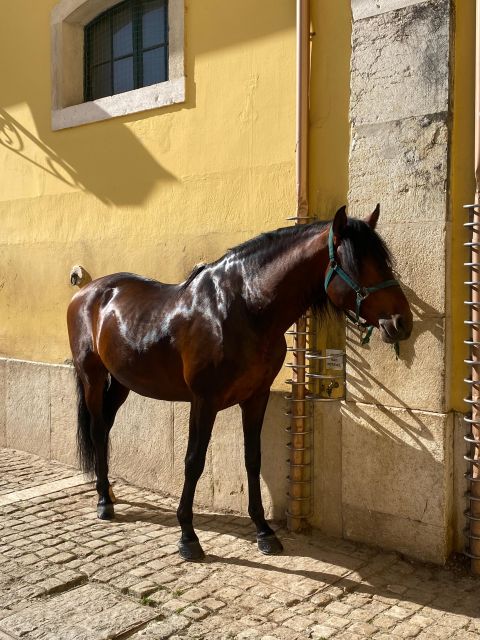
Reviewed · HORSES
Lisbon: Morning of Equestrian Art with Lusitano Horses
The striking part of this Lisbon experience is the chance to see Lusitano horses from the Alter Real Stud Farm before a gala performance. You watch riders in period costume guide the horses through warm-ups, training exercises, and carefully controlled movements, with 18th-century music adding a courtly feel.
I like the behind-the-scenes look at horse care, and I like that the training respects each horse’s rhythm, health, and physical needs. The $17 price is fair for a two-hour cultural visit, but the program can feel repetitive if you expect a fast-moving show rather than a working rehearsal.
- Watch genuine daily training instead of only a polished performance.
- See riders in period costume recreate the atmosphere of an 18th-century Portuguese court.
- Visit the Nora Patio and Henrique Calado Riding Ring, with different photography rules at each.
- Follow an audio guide in English, French, or Portuguese using your own charged smartphone and headphones.
- Allow 11 a.m. to 1 p.m., though 11 a.m. to 12:30 p.m. is the better window.
- Bring the correct Book N Tour ticket, since the GetYourGuide voucher or QR code is not accepted as the entry ticket.
Why Lusitano Training Is the Main Event
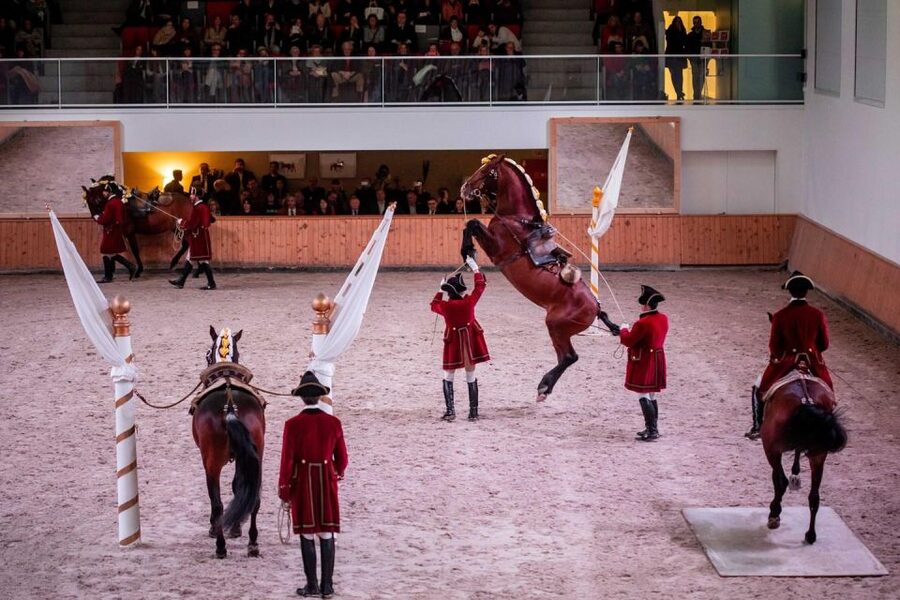
This is not simply a horse stable visit, and it is not quite a conventional performance. You are watching the Portuguese School of Equestrian Art at work, during the daily training and rehearsal of horses bred at the Alter Real Stud Farm.
That distinction matters. A gala show gives you finished choreography. This morning program lets you see the preparation behind it: warm-ups, exercises, rider control, and the gradual development of movements used in formal equestrian displays.
The horses are Pure Blood Lusitanos, a breed closely linked with Portuguese riding culture. The program presents this tradition as a living art rather than a museum display. You see the horses working, the riders responding to them, and the handlers caring for them between sessions.
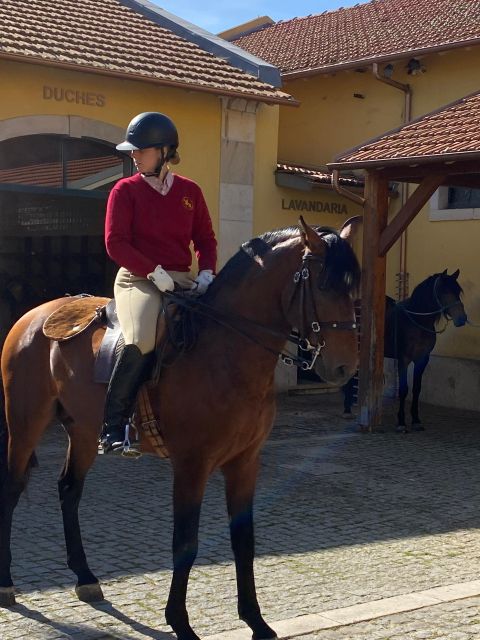
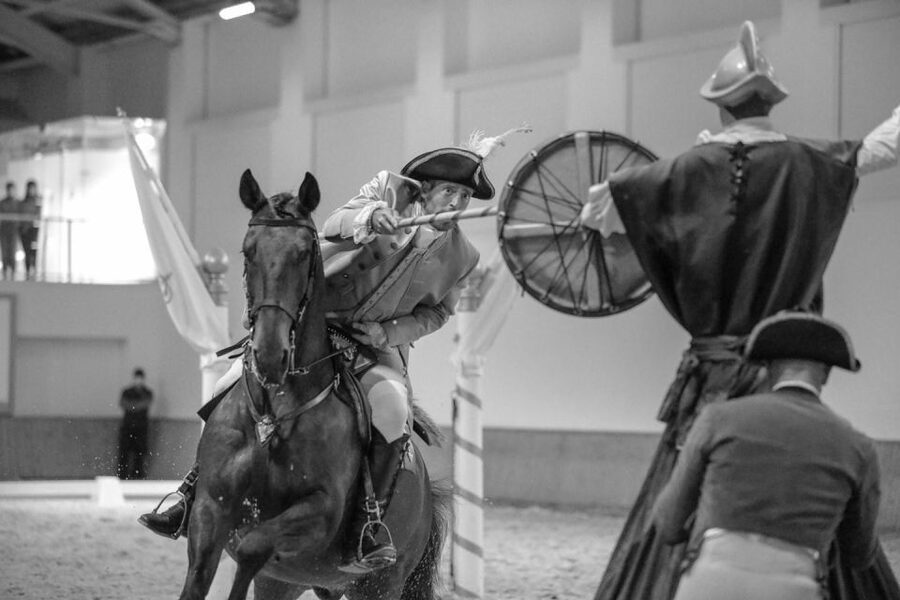
The atmosphere is deliberately old-fashioned. Riders wear period costume, and period music accompanies the work. The result is a glimpse of the 18th-century court recreated through horses, clothing, music, and precise riding.
I would choose this experience for its cultural value as much as for the animals. You are not just looking at beautiful horses. You are seeing how a formal equestrian tradition is practiced and maintained.
Starting in the Nora Patio
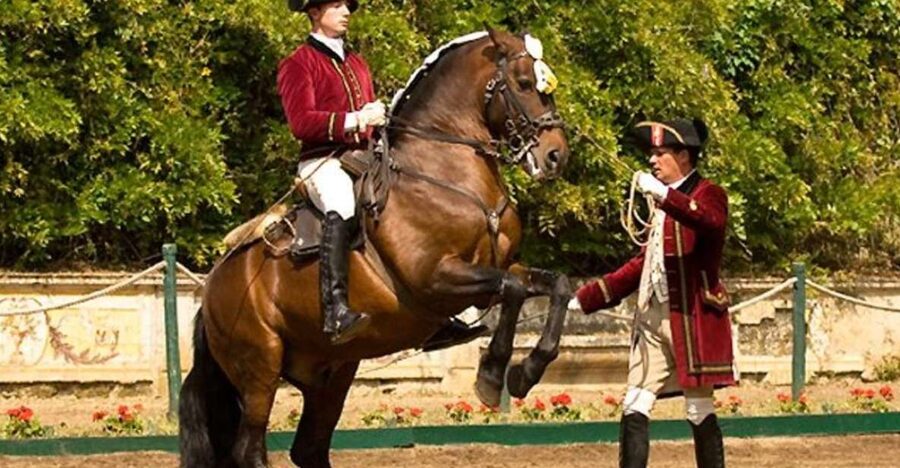
The visit includes time in the Nora Patio, which offers a more relaxed introduction to the school and its horses. This is also the one part of the experience where photographs and videos are allowed, provided you do not use flash.
That rule is useful to know before you arrive. If you want a few pictures of the setting, costumes, or horses, take them in the Nora Patio. Once you enter the Henrique Calado Riding Ring, photography and video are not allowed.
The Nora Patio also gives you a chance to get oriented before the training begins. Use this time to check that your audio guide is working, adjust your headphones, and listen for instructions from the reception staff or greeter. Hosts speak English and Portuguese, while the audio guide is available in English, French, and Portuguese.
Do not count on borrowing headphones. They are not included, so bring your own. You also need a charged smartphone and internet access, since the audio guide and ticket instructions are sent separately by email.
More horse rides around Lisbon:
- From Lisbon: Horseback Riding on Comporta Beach
★ 4.7 · 167 reviews - From Lisbon: Comporta and Setúbal Trip with Horseback Riding
★ 4.3 · 90 reviews - Algarve: 1-Hour Carrapateira Horseback Riding Tour
★ 5.0 · 295 reviews
Behind the Scenes With the Lusitano Horses
One of the most worthwhile parts of the morning is seeing how handlers care for the horses. The program takes you behind the scenes at the Henrique Calado Riding Ring, where the animals are prepared and managed as working performers.
The care element adds balance to the spectacle. It shows that the riding is not just about making a horse perform a difficult movement on command. The training is described as respecting each horse’s rhythm, health, and physical needs. For anyone interested in animal welfare, this is an important part of the visit.
You might find the stable and preparation section quieter than expected. That is part of its appeal, but it also means the experience asks you to pay attention. There may not be a new dramatic event every few minutes. You are watching a routine that depends on patience and repetition.
I would make this section a priority if you have an interest in riding, horse care, or traditional training methods. If you mainly want action, you may prefer a short gala performance instead.
Watching the 11 a.m. Warm-Up
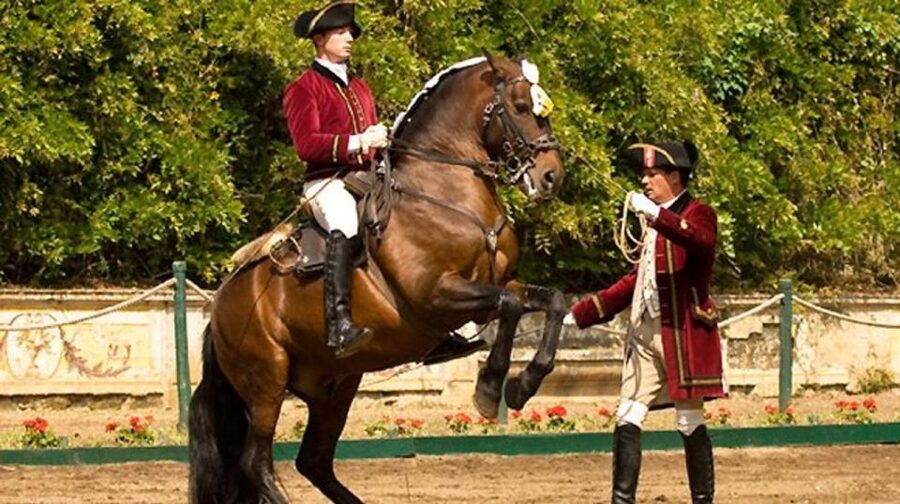
The activity takes place from 11 a.m. to 1 p.m., but the best time to visit is stated as 11 a.m. to 12:30 p.m. Arriving for the opening portion lets you catch the warm-up and the main exercises without treating the entire morning as one long wait.
The warm-up is not filler. It shows how riders prepare the horses before asking for more complex movements. You can observe the pace of the work and the communication between horse and rider before the formal exercises begin.
The riders wear period costume throughout the presentation, which changes the feel of the session. This is still a training environment, but the clothing and music connect the work to the school’s courtly tradition.
The strongest appeal is the mix of discipline and theater. You see a real working session, yet the music and costumes frame it as an art form. That combination gives the visit more character than a basic riding demonstration.
Still, set your expectations correctly. The program may repeat similar exercises as horses and riders work through their routine. One blunt assessment described the first hour of stable and pre-training activity followed by another hour of training with similar things to see. If you need constant variety, the two-hour format may feel long.
The Henrique Calado Riding Ring
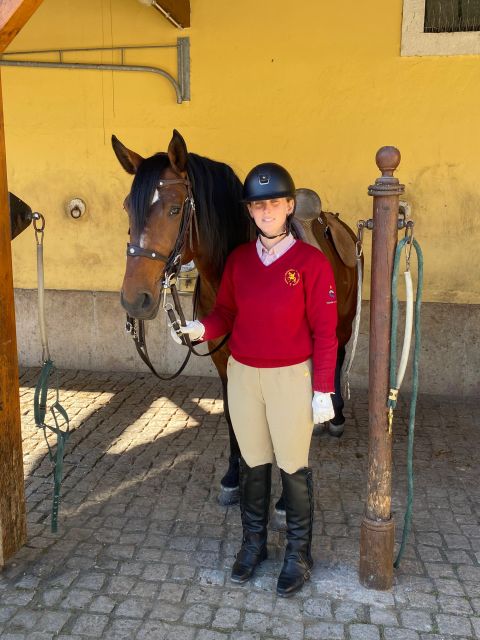
The riding ring is where the program reaches its main focus. Here, riders rehearse complex equestrian exercises and choreographies associated with the Portuguese School of Equestrian Art.
The setting is designed for concentration rather than casual sightseeing. You cannot take photographs or videos inside, and flash photography is not allowed anywhere it is prohibited. Put your phone away and watch the work directly. That restriction can be frustrating if you hoped to record the session, but it also keeps the presentation less distracted.
The audio guide is meant to help explain what you are seeing. Use it to understand the role of the exercises, the horses, and the school’s tradition. Because the guide is downloaded separately, check your email after booking and look in the spam folder if the instructions do not appear.
You may find the audio guide especially helpful if you know little about classical equestrian art. Without explanation, some movements can look like a sequence of controlled turns and stops. With context, you can better appreciate the training required to make the routine appear calm and precise.
The riding ring is also where the experience may feel less personal. The available information does not promise a long talk with a named guide or a private lesson. A host or greeter can assist in English or Portuguese, but much of the interpretation comes through the audio guide.
A few other Lisbon half-days worth a look
- Sailboat Tour in Lisbon with drinks included | Morning and Sunset
★ 4.5 · 867 reviews - Lisbon: Tagus River Cruise, Morning, Day, Sunset, or Night
★ 4.9 · 640 reviews - Funchal: Pico do Arieiro Sunrise Transfer Self-guided Hike
★ 4.9 · 2,798 reviews - From Portimão: Benagil Sea Caves Boat Tour at Sunrise
★ 4.8 · 1,304 reviews
Period Music and the 18th-Century Court
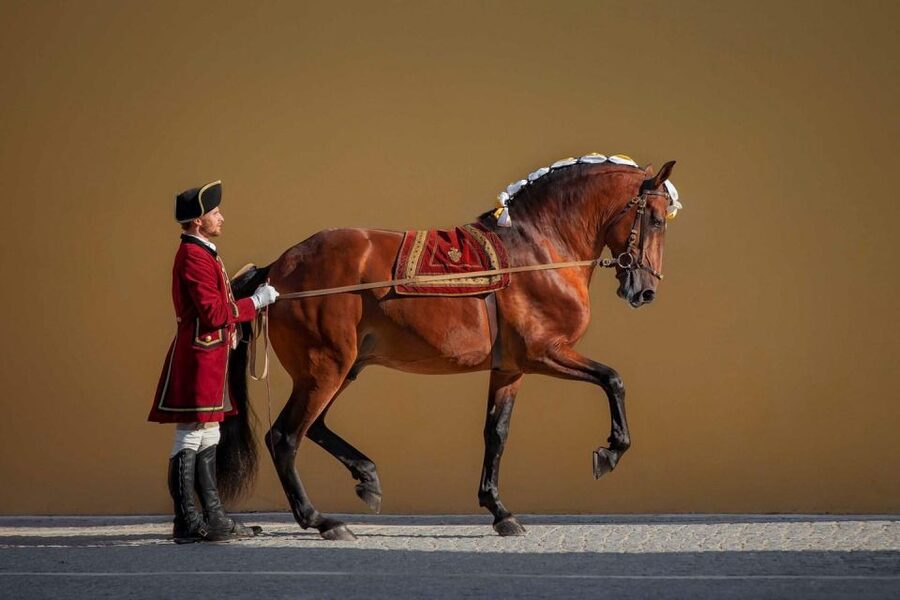
The music is more than background sound. It helps connect modern training to the formal courtly world the school aims to recreate.
As the horses and riders move through their exercises, the period music gives the session a sense of ceremony. The costumes reinforce that impression. You are seeing an artistic tradition presented through movement, sound, and dress rather than through displays behind glass.
This is one reason the experience can appeal to people who are not serious horse enthusiasts. The program is also a piece of Portuguese cultural heritage. You get a look at how an equestrian institution preserves a style linked with royal courts and formal riding.
At the same time, the courtly atmosphere is a presentation choice. The horses are still being trained, and the session does not turn every moment into a dramatic show. I would think of the music and costumes as a frame around the working practice, not as a promise of nonstop spectacle.
Is $17 Good Value in Lisbon?
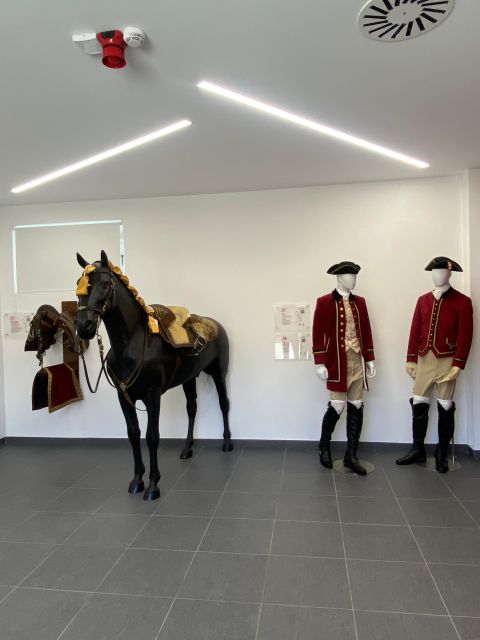
At $17 per person, this is one of the easier Lisbon activities to justify if you want something beyond the usual monuments and viewpoints. The ticket includes entry, daily training of the Alter Real Lusitano horses, and the audio guide.
The price does not include transportation, food, drinks, or headphones. Those exclusions are minor for most people, but they affect the real cost. You need to arrange your own way to the venue and bring the equipment needed for the audio guide.
Value depends on your interests. For someone who loves horses, the access to training and horse care may make the ticket an excellent buy. For someone who wants a polished, full-scale performance, the price may still be reasonable, but the format could disappoint because it centers on rehearsal and daily work.
The experience lasts up to two hours, which is enough time to see several stages of the morning. I like that you are not being rushed through a quick photo stop. The tradeoff is that repetition becomes more noticeable as the visit continues.
The activity also offers skip-the-ticket-line entry, which can save some time at reception. The key is to use the correct ticket. The GetYourGuide voucher is not the entry ticket. You must show the separate Book N Tour ticket to a reception staff member.
Ticket Instructions That Really Matter
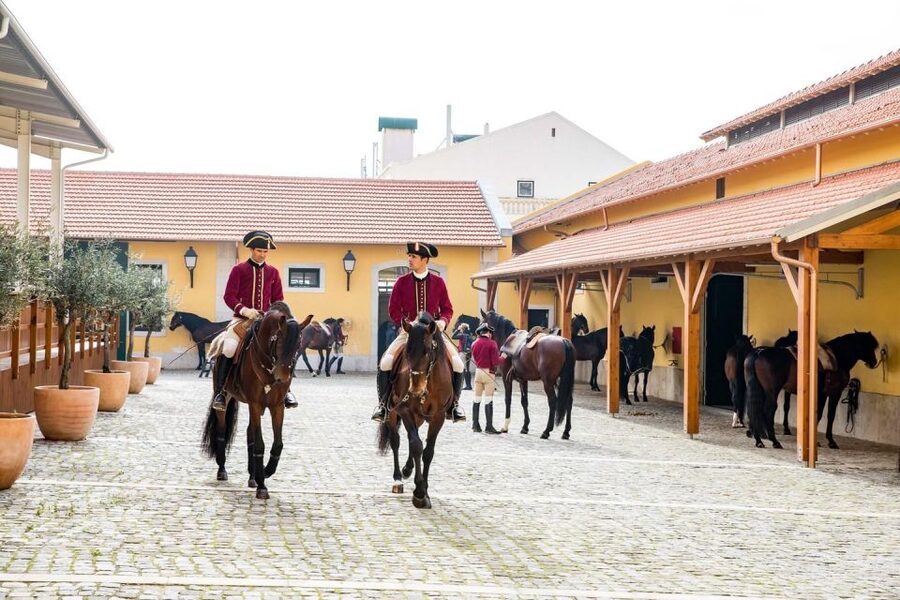
This booking has an unusual extra step. After booking, you receive a separate email with instructions for accessing and downloading your ticket and audio guide.
Check your inbox and spam folder. Bring the Book N Tour ticket, not the GetYourGuide QR code or voucher. Reception staff will help once you show the proper document.
Provide at least one working WhatsApp number or email address when booking. This gives the provider a way to contact you if ticket instructions or access details need attention.
The activity offers free cancellation up to 24 hours before the visit for a full refund. It is valid for one day, and you should check availability for the exact starting time before booking.
These details are not glamorous, but they can make the difference between a smooth arrival and a confusing one. Download everything before leaving your hotel, charge your phone, and bring headphones.
Who Will Enjoy This Morning Most?
I would recommend this activity to:
- Horse lovers who want to see training rather than only a finished show.
- Visitors interested in Portuguese cultural traditions and courtly arts.
- Families or couples looking for a calm indoor or covered cultural activity.
- People who enjoy photography in the Nora Patio but can accept a no-camera rule inside the riding ring.
- Anyone who appreciates careful animal handling and formal riding technique.
- Visitors who want a lower-cost Lisbon activity lasting most of a morning.
I would be more cautious if you need a highly interactive tour. The information does not promise hands-on contact with the horses, a riding opportunity, or extended personal instruction.
I would also think twice if you dislike repeated demonstrations. The program follows a working training schedule, so not every exercise will be completely different from the last.
The experience is wheelchair accessible, which makes it more practical for many visitors. Comfortable shoes are still a good idea, since you will be moving around the venue and spending time watching the sessions.
Practical Tips for a Better Visit
Arrive ready to begin at 11 a.m. The stated two-hour window runs from 11 a.m. to 1 p.m., but 11 a.m. to 12:30 p.m. is the preferred visiting period.
Bring comfortable shoes, a charged smartphone, headphones, and internet access. Download the audio guide in advance if possible. The audio guide languages are English, French, and Portuguese.
Do not bring food or drinks expecting them to be included. They are not part of the ticket. Smoking is not allowed.
Use the Nora Patio for permitted photographs, without flash. Do not plan to photograph or film inside the Henrique Calado Riding Ring.
Allow time to find the reception desk and present the Book N Tour ticket. Since transport is not included, plan your route to the Lisbon District venue before the morning of your visit.
Most important, treat the program as a training session with cultural presentation, not as a two-hour stunt show. That simple adjustment will help you appreciate the quiet work as well as the formal choreography.
Should You Book the Lusitano Horse Experience?
Book it if you want an affordable, focused look at Portugal’s equestrian heritage and you enjoy watching skilled work develop through repetition. The horses, period costumes, music, training exercises, and stable care create a distinctive morning that you will not get from a standard city sightseeing tour.
Skip it if you need constant action, extensive guide conversation, or permission to photograph the main performance area. The no-camera rule inside the riding ring and the repeated training format are real limitations.
For $17, I think the experience offers solid value, especially for horse enthusiasts and culture-minded visitors. Go early, bring your own headphones, download the separate ticket, and arrive with the right expectations. You are there to watch an art form being practiced, not simply to applaud a finished show.
FAQ
How long does the Lusitano horse experience last?
The activity takes place from 11 a.m. to 1 p.m. The best time to visit is stated as 11 a.m. to 12:30 p.m.
What does the ticket include?
The ticket includes entry to the Portuguese School of Equestrian Art, daily training of Lusitano horses from the Alter Real Stud Farm, and an audio guide.
Is transportation included?
No. You must arrange your own transportation to the venue.
Do I need to bring headphones?
Yes. Headphones are not included. You should also bring a charged smartphone and internet access for the audio guide.
In which languages is the audio guide available?
The audio guide is available in English, French, and Portuguese.
Can I take photographs during the visit?
Photographs and videos are allowed in the Nora Patio without flash. Photography and video are not allowed inside the Henrique Calado Riding Ring.
Which ticket should I show at the entrance?
Show the separate Book N Tour ticket to the reception desk. The GetYourGuide voucher or QR code is not the entry ticket.
New around Lisbon
- Arrábida, Setúbal, Sesimbra, Olive with wine tasting★ 5.0 · 75 reviews
- Lisbon: Sunset Sailing Boat Cruise with Wine★ 5.0 · 75 reviews
- Lisbon Half Day Private Tour★ 5.0 · 75 reviews
- Private Half Day Tour to Fatima from Lisbon★ 5.0 · 75 reviews
- Fátima, Nazaré and Óbidos Private Tour from Lisbon★ 5.0 · 76 reviews
- Central Lisbon 3-Hour Guided E-Bike Tour★ 4.8 · 76 reviews
- Lisbon Historic City Tour by Tuk-Tuk★ 5.0 · 76 reviews
- Sintra World Heritage and Cascais Village Private Deluxe Tour★ 5.0 · 76 reviews
Horses, compared.


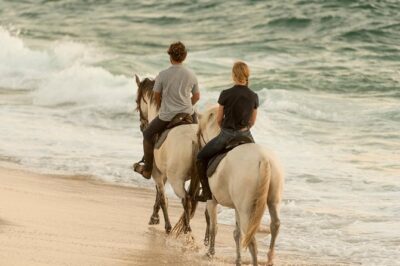

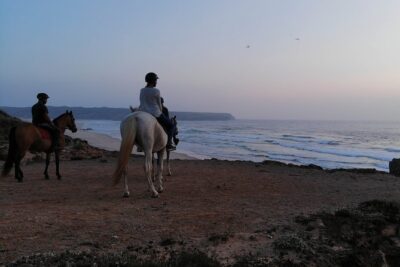
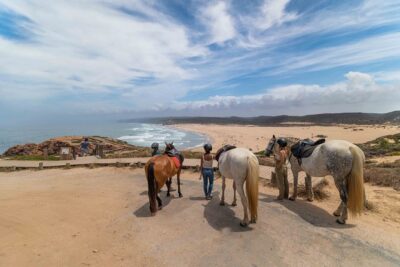
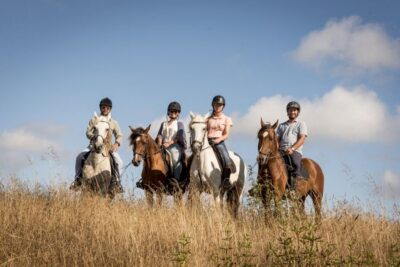
Melides: Horse Riding on the Beach with Wine Tasting
Read our review →Browse the lists this tour appears in